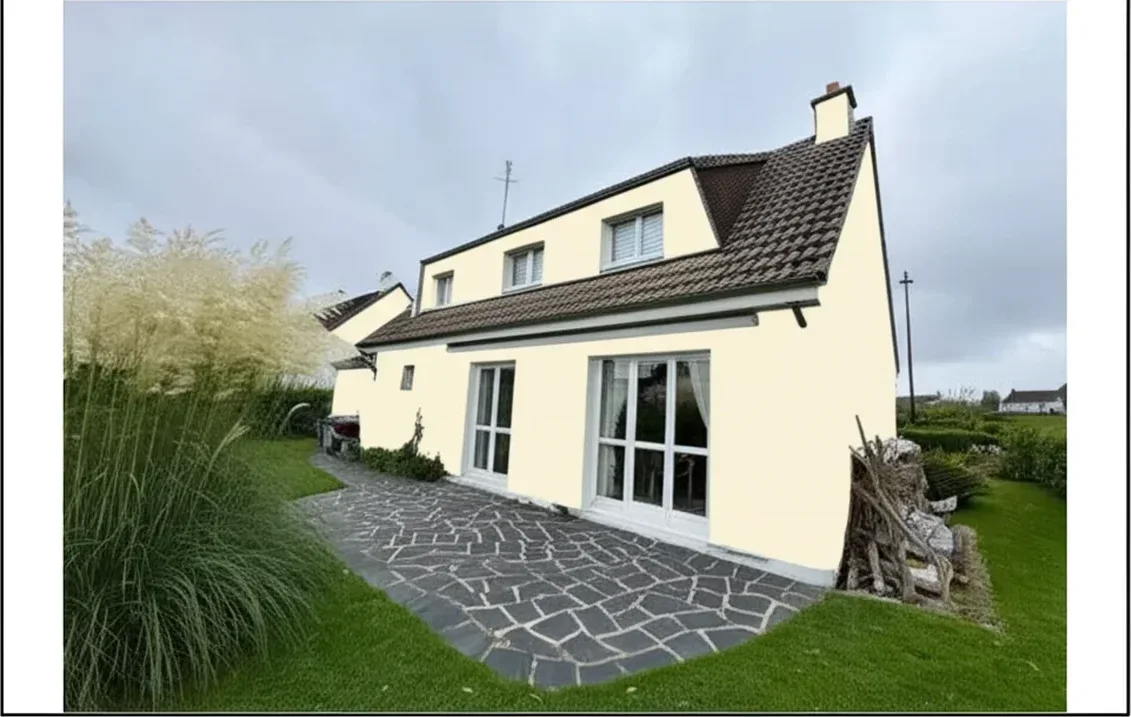
If you're building new or re-siding an existing home, the stucco vs. fiber cement debate probably keeps coming up. Both are durable, fire-resistant, and look great — but they differ significantly in cost, maintenance, and regional suitability. After installing both materials on over 200 homes across Texas, Arizona, and Colorado, here's the honest comparison most contractor websites won't give you.
The full comparison table
| Factor | Traditional Stucco | James Hardie Fiber Cement |
|---|---|---|
| Material cost/sq ft | $3-5 | $2-4 |
| Installed cost/sq ft | $7-12 | $8-14 |
| Total cost (2,000 sq ft home) | $14,000-24,000 | $16,000-28,000 |
| Lifespan | 50-80 years | 40-50 years |
| Repainting needed | Every 5-8 years | Every 10-15 years (ColorPlus) |
| Fire resistance | 1-hour rated (non-combustible) | Non-combustible (Class A) |
| Impact resistance | Moderate (cracks on impact) | High (won't crack easily) |
| Moisture resistance | Good if properly flashed | Excellent (HZ5/HZ10 zones) |
| DIY-friendly | No (skilled trade) | Moderate (can be nailed) |
| Best climate | Dry/arid (SW, SoCal) | All climates |
| Warranty | Varies by contractor | 30-year non-prorated |
Source: Angi cost data 2026, James Hardie product specifications, ASTM C1063/C926 for stucco.
When stucco wins
Stucco is the clear winner in dry, arid climates — Phoenix, Las Vegas, Tucson, Southern California. It breathes well, handles extreme heat without warping, and the seamless look is part of the regional architectural DNA. In these markets, stucco also costs less because the labor pool is deep — plenty of experienced crews who can do it right.
Stucco also wins on longevity. A properly applied three-coat stucco system over metal lath can last 80+ years with periodic maintenance. There are stucco homes in Santa Fe from the 1700s that are still standing. Fiber cement, while durable, maxes out around 50 years.
And for curved or custom shapes, stucco is the only practical option. You can't bend Hardie board around a turret or arched entryway.
When Hardie Board wins
Fiber cement dominates in humid, rainy, and freeze-thaw climates — the Southeast, Pacific Northwest, Midwest, and Northeast. Stucco in Houston or Atlanta means constant crack repairs as the soil shifts and moisture gets behind the envelope. Hardie Board's lap siding design allows water to drain naturally, and the material won't absorb moisture like stucco can.
The ColorPlus factory-finish is a game-changer: James Hardie bakes the color into the board at the factory with a 15-year color warranty. That means no repainting for 10-15 years — compared to stucco which typically needs a fresh coat every 5-8 years at $2-4/sq ft each time.
Hardie also wins on maintenance predictability. The 30-year non-prorated warranty from James Hardie is one of the strongest in the industry. With stucco, warranty coverage depends entirely on the contractor, and good luck getting a callback 10 years later.
Our verdict
If you live in the dry Southwest or Southern California, go with stucco. You'll save money, the labor market supports it, and the material is perfectly suited to the climate. Everywhere else, fiber cement (specifically James Hardie HardiePlank with ColorPlus finish) is the safer, lower-maintenance choice for 2026. The installed cost is 10-15% more, but you'll recoup that in avoided repainting and crack repair within the first decade.
Whichever material you choose, picking the right color matters just as much. Try our free exterior paint visualizer to test colors on a photo of your home before committing.
{"@context":"https://schema.org","@type":"FAQPage","mainEntity":[ {"@type":"Question","name":"Is stucco cheaper than Hardie Board?","acceptedAnswer":{"@type":"Answer","text":"Stucco is slightly cheaper upfront: $7-12 per sq ft installed vs. $8-14 for Hardie Board. However, stucco needs repainting every 5-8 years ($2-4/sq ft), while Hardie ColorPlus goes 10-15 years. Over 20 years, total cost is similar. Source: Angi 2026."}}, {"@type":"Question","name":"How long does stucco last compared to Hardie Board?","acceptedAnswer":{"@type":"Answer","text":"Traditional three-coat stucco lasts 50-80 years with proper maintenance. James Hardie fiber cement siding lasts 40-50 years and carries a 30-year non-prorated warranty. Both outlast vinyl siding (20-30 years)."}}, {"@type":"Question","name":"Can you put Hardie Board over stucco?","acceptedAnswer":{"@type":"Answer","text":"Technically yes, but it's not recommended. The stucco must be fully removed or you risk trapping moisture between layers. Most contractors recommend stripping the stucco down to the sheathing, inspecting for damage, then installing Hardie Board with a proper weather-resistant barrier."}}, {"@type":"Question","name":"Which is better for humid climates: stucco or fiber cement?","acceptedAnswer":{"@type":"Answer","text":"Fiber cement (Hardie Board) is significantly better for humid climates. Stucco absorbs moisture and cracks with soil movement, leading to water intrusion. Hardie Board drains naturally and is rated for high-humidity zones (HZ5/HZ10). In the Southeast and Gulf Coast, fiber cement is the standard choice."}} ]}