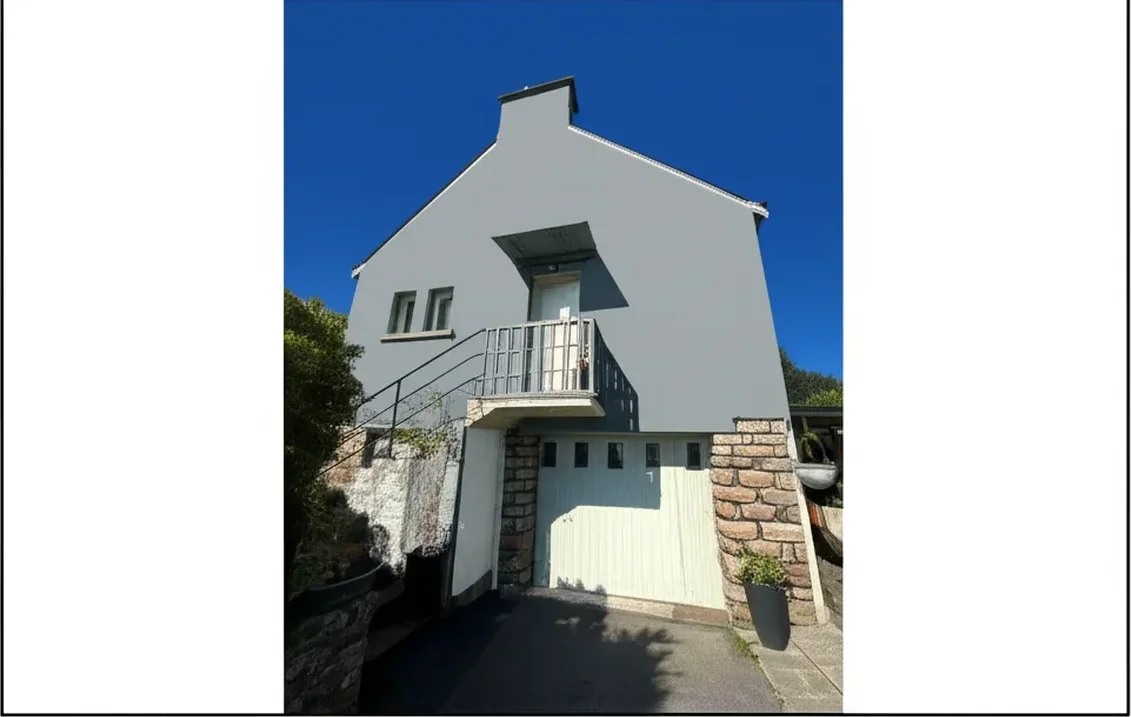
Try it on your house

Refreshing the outside of your home is one of the most cost-effective ways to lift kerb appeal, protect the fabric of the building and modernise a tired property. But in 2026 the UK exterior house painting market is more fragmented than ever: prices swing from £18/m² in Hull to £40/m² in central London, paint brands have multiplied (Sandtex, Dulux Weathershield, Crown, Johnstone's, Farrow & Ball, Little Greene), and property type (Victorian terrace, Edwardian semi, Tudor cottage, Georgian townhouse, country cottage) drives huge variance in prep cost and brand suitability. Add the maritime climate, regional rainfall patterns and over 1,000 conservation areas in London alone, and choosing the right colour, brand and decorator becomes a real research project.
This 2026 cost guide pulls together real-world quotes gathered from decorators across London, Manchester, Liverpool, Birmingham, Edinburgh, Bristol, Brighton and 14 other UK cities. We compare cost per m² by property type, benchmark the top five exterior paint brands tested under UK weather, lay out city-by-city pricing, and explain when DIY makes sense vs hiring a professional decorator. Whether you're budgeting a full external repaint on a Hampstead Victorian, refinishing a pebble-dashed Edwardian semi in Sheffield, or just trying a new colour on a Cotswold stone cottage, you'll find the numbers and the neighbourhood context you need.
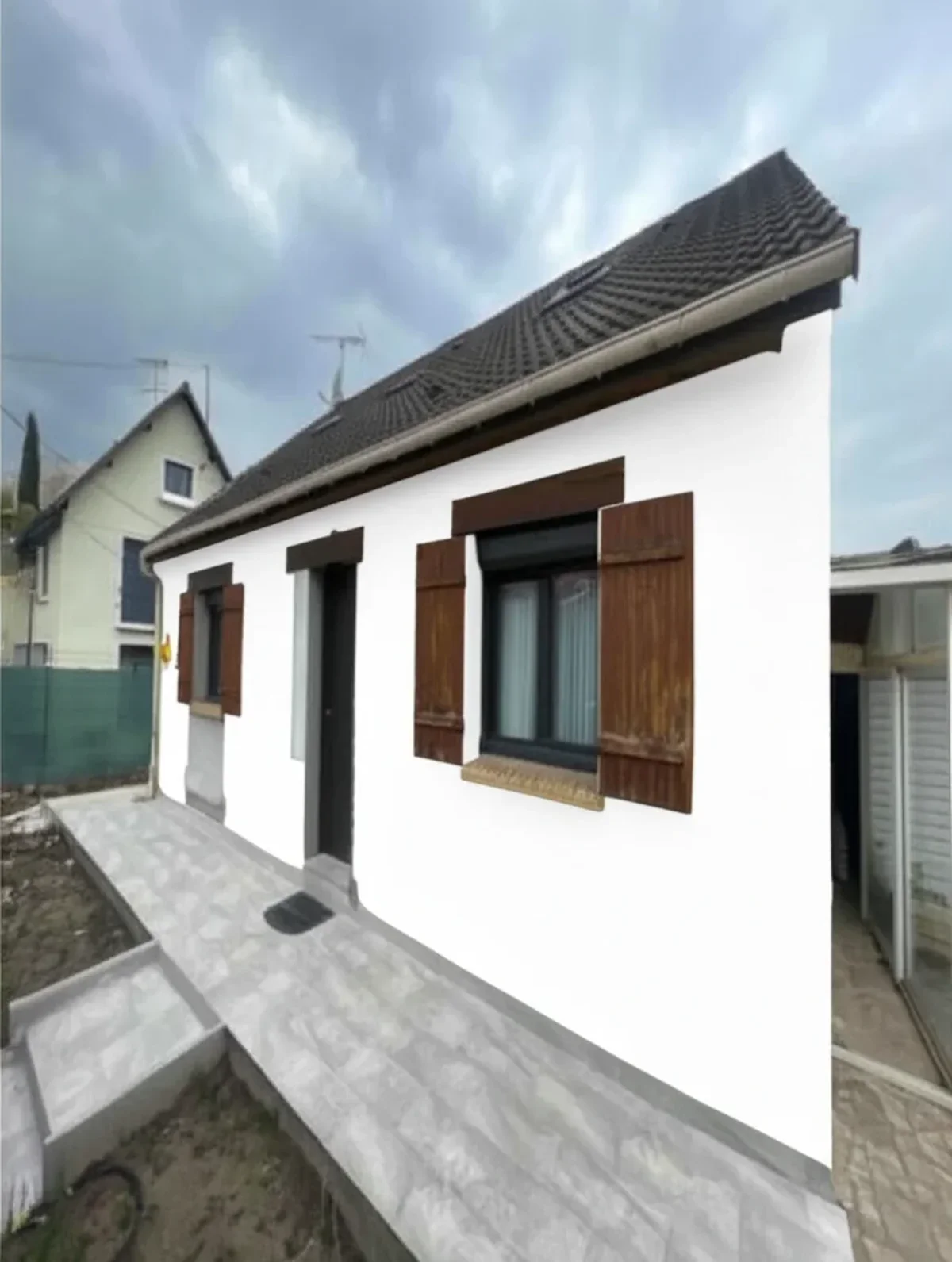
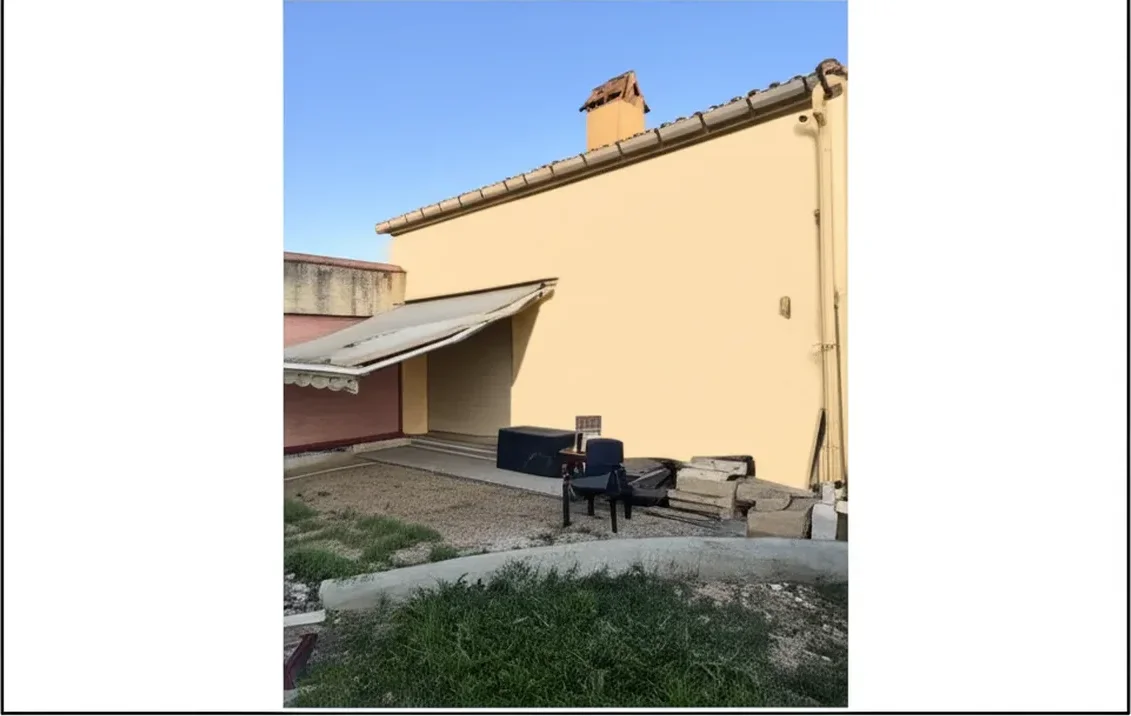
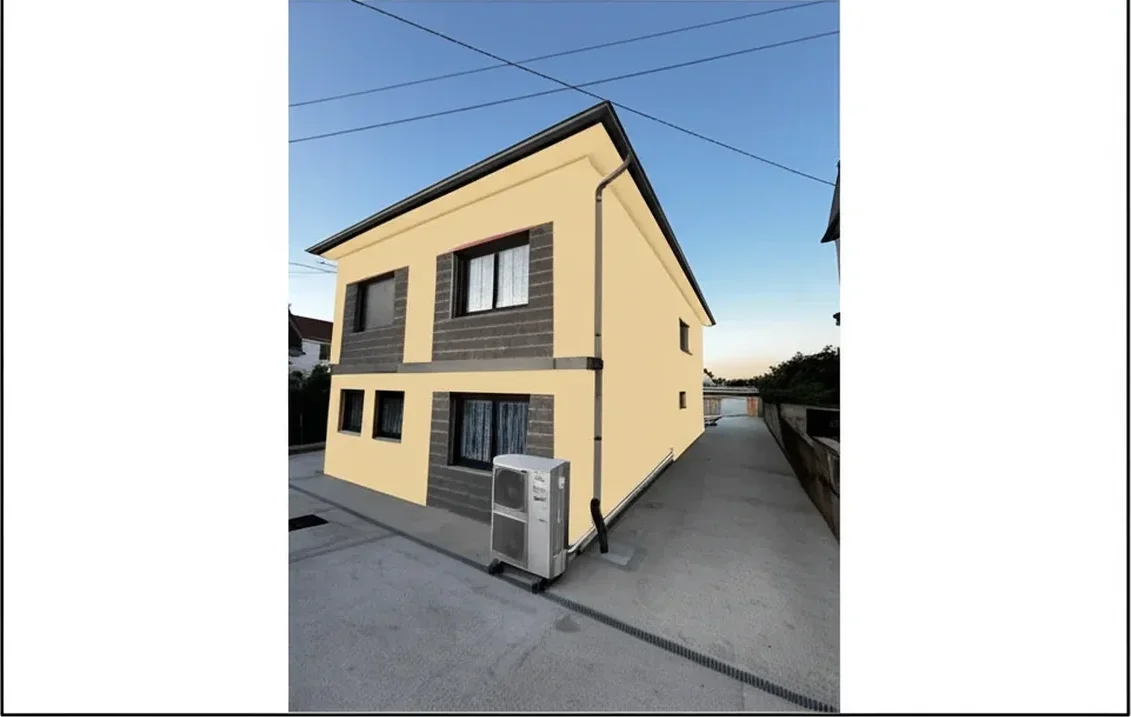
Before you commit to a colour you'll have to live with for the next ten years, try our free AI house colour visualiser: upload a single photo of your property and instantly see it repainted in any Dulux, Sandtex, Crown or Farrow & Ball shade. It saves the cost of sample pots, scaffold revisits and the awkward call to your decorator three coats in.
Cost per m² and UK regional variance
The UK average cost per m² for exterior house painting in 2026 sits at £18–£30/m² for masonry paint applied over sound substrate, including labour, two coats, basic prep and standard scaffold. London adds roughly 30–40% on top, while the Midlands and the North sit at the lower end of the national range. Coastal cities (Brighton, Plymouth, Southampton, Newcastle) carry a small salt-air premium because decorators specify higher-spec masonry paints to resist sea spray.
Regional variance is driven by four factors: local decorator day rates (£180–£350+), parking and access (a Kensington terrace with no driveway costs more than a Coventry semi with off-street parking), scaffold hire (£15–£25/m²/week in London vs £10–£18 nationally), and the prep work required on heritage stock (a Victorian terrace with original lime mortar needs careful breathable-paint selection). Here is what real quotes look like across the UK:
| Region | Cost per m² | Day rate | 3-bed semi (full exterior) |
|---|---|---|---|
| Greater London | £25–£40 | £250–£350+ | £1,800–£3,500 |
| South East (excl. London) | £22–£32 | £200–£280 | £1,400–£2,400 |
| Midlands | £18–£26 | £170–£230 | £1,100–£1,800 |
| North England | £18–£25 | £160–£220 | £1,000–£1,700 |
| Scotland | £20–£30 | £180–£260 | £1,200–£2,000 |
| Wales | £18–£28 | £170–£240 | £1,100–£1,900 |
| Northern Ireland | £17–£25 | £160–£220 | £1,000–£1,650 |
Try it on your house
No photo? Try a sample
These figures assume sound substrate, a single tone of masonry paint, two coats, and access from a standard scaffold or scissor lift. Add 20–40% if your property needs render repairs, pebble-dash sealing, or a colour change requiring three coats over a dark base. For a detailed deep-dive into per-m² maths, see our exterior masonry paint cost UK 2026 guide.
Cost by property type
Property type is the single biggest driver of exterior paint cost after region. A Georgian townhouse with stucco render and a parapet roof costs three times more to repaint than a 1980s pebble-dash semi, even at the same per-m² rate, because prep work, paint specification and scaffold complexity all scale with the building's age and detailing. Here's what to expect for each major UK property type.
Victorian terrace and semi (1837–1901)
Victorian properties dominate inner-city UK: bay windows, decorative stucco around the door, sash windows and brick or rendered facades. Expect £1,400–£2,800 for a full exterior repaint on a mid-terrace, £2,000–£3,500 for an end-terrace. Lime mortar joints and original render demand a breathable masonry paint (Farrow & Ball Exterior, Sandtex 365, Dulux Weathershield), never a cement-based plastic coating which traps damp and triggers spalling. For colour ideas, see our Victorian terrace paint colours UK 2026 guide and our Victorian exterior colour combinations.
Edwardian semi (1901–1914)
Edwardian homes are larger and lighter than Victorians, with deeper bays, half-timbered gables, mock-Tudor detailing and often a roughcast or pebble-dash upper storey. Budget £1,800–£3,200 for a full repaint on a standard 3-bed Edwardian semi. The roughcast finish costs more to paint per m² (it absorbs paint at roughly 1.5× the smooth-render rate), so factor in an extra coat. Sandtex Ultra Smooth is the trade favourite for pebble-dash because it bridges hairline cracks. If the pebble-dash itself is the problem rather than its colour, painting is only one of three routes: our pebble dash removal cost comparison prices stripping, rendering over and repainting on the same property. Settle that before you book anyone, because the scaffold goes up either way and it is the one line you do not want to pay for twice. See our dedicated Edwardian house exterior colours UK 2026 guide for palette ideas.
Tudor and mock-Tudor (1485–1603, plus 1920s revival)
Genuine Tudor properties are almost always listed buildings and need specialist heritage decorators (£300–£500/day) and lime-based paints, total cost £3,000–£8,000+ for a full exterior. Mock-Tudor properties from the 1920s and 1930s, the suburban semi with black-painted timber and white render, are far more common; budget £1,500–£2,800. The contrast between timber and render demands two paint specs: a flexible woodstain or exterior wood paint for the timbers, and a breathable masonry paint for the render. Browse our Tudor house exterior colours UK 2026 guide and mock-Tudor exterior colour palettes.
Georgian townhouse (1714–1830)
Georgian properties, common in London, Bath, Edinburgh New Town, Bristol and Cheltenham, typically feature stucco-fronted facades, tall sash windows, ironwork balconies and parapets. Most are listed and many sit inside conservation areas, requiring planning permission for any colour change. Expect £3,500–£8,000 for a full repaint of a 4-storey Georgian terrace, scaffold alone can run £1,200–£2,500. Heritage palettes (stone, buff, broken white, deep cream) are typically required by planners; see our Georgian townhouse exterior colours London guide.
Country cottage and stone cottage
UK country cottages range from limewashed Cotswold stone to whitewashed Cornish cob to roughcast Yorkshire farmhouses. Cost depends entirely on the substrate: limewashed cottages need limewash reapplication every 5–7 years (£1,200–£2,500), painted-render cottages last 10–15 years (£1,800–£3,500), and unpainted stone cottages need only pointing and a clear silicone water repellent (£800–£1,500). For regional palette ideas, see our cottage exterior paint colours UK 2026 guide and our Cotswold, Yorkshire and Cornwall cottage colours guide.
Colour affects the cost as well as the look. A dark shade such as anthracite needs more careful preparation, because every filled crack and salt bloom shows, and usually a full two coats over a pale existing colour; on a textured wall it also uses more paint than the datasheet rate. If the dark modern look is the goal, our guide to anthracite and dark grey masonry paint explains which brands supply it, when a render manufacturer forbids it and when permission is needed.
Best paint brands tested for UK exteriors
Choosing the right brand is as important as choosing the right colour. We compared the five most popular UK exterior masonry paints in 2026 on six criteria: durability, breathability, colour range, finish, price per litre and decorator preference. Here is the ranking that emerged from real decorator quotes and manufacturer datasheets.
1. Sandtex Masonry (Trade and Retail)
Sandtex Ultra Smooth and Sandtex 365 are the UK's most-trusted exterior masonry paints, owned by AkzoNobel and made specifically for the British climate. Sandtex offers a 15-year guarantee, microseal technology that flexes with masonry movement, and excellent coverage on pebble-dash and roughcast. Price: £55–£75 per 10L tub at trade. Best for: pebble-dash, render, brick. See our deep comparison: Sandtex vs Dulux Weathershield.
2. Dulux Weathershield
Dulux Trade Weathershield Smooth Masonry is the most widely stocked trade exterior paint in the UK, offering a 15-year guarantee, mould protection, and a vast colour range mixed in-store at any Dulux Decorator Centre. Price: £50–£70 per 10L tub. Best for: modern render, brick, smooth surfaces. Excellent ageing in London's polluted air.
3. Crown Trade Mid-Sheen Masonry
Crown Trade is the reliable mid-range workhorse: 10-year guarantee, mid-sheen finish, decent breathability and the widest BS 4800 colour range in the UK (essential for housing-association and commercial projects). Price: £40–£55 per 10L tub. Many decorators use Crown to colour-match Farrow & Ball shades at 30% less. Best for: budget repaints, large commercial jobs, council-spec colours.
4. Johnstone's Stormshield
Johnstone's Stormshield Smooth is PPG's flagship UK exterior masonry paint: 15-year guarantee, anti-mould additive, low-VOC formulation. It's particularly popular in Scotland and the North where damp resistance matters most. Price: £45–£60 per 10L tub. Best for: high-rainfall regions (Manchester, Glasgow, Cardiff, Belfast), modern rendered facades.
5. Farrow & Ball Exterior Masonry
Farrow & Ball Exterior Masonry is the premium choice for period properties and listed buildings: 108 heritage colours, breathable formula, soft 2% sheen. Price: £80–£100 per 5L tub (yes, that's per 5L, almost double Sandtex). Best for: Georgian townhouses, listed buildings, conservation areas. See our brand comparison Farrow & Ball vs Dulux Heritage Exterior 2026 and the wider exterior paint brands UK comparison 2026.
Cost by UK city
Exterior painting prices vary significantly between UK cities. Below is a 2026 comparison of cost per m², typical 3-bed semi total, and links to our detailed city cost guides for granular borough-by-borough or postcode-by-postcode pricing.
| City | Cost/m² | 3-bed semi | Detailed guide |
|---|---|---|---|
| London | £25–£40 | £1,800–£3,500 | London decorator guide |
| Manchester | £20–£30 | £1,200–£2,000 | Manchester guide |
| Liverpool | £18–£28 | £1,100–£1,800 | Liverpool guide |
| Sheffield | £18–£26 | £1,100–£1,750 | Sheffield guide |
| Newcastle | £18–£27 | £1,100–£1,800 | Newcastle guide |
| Nottingham | £18–£26 | £1,100–£1,700 | Nottingham guide |
| Brighton | £22–£32 | £1,400–£2,300 | Brighton guide |
| Leicester | £18–£25 | £1,050–£1,650 | Leicester guide |
| Southampton | £20–£30 | £1,200–£2,000 | Southampton guide |
| Plymouth | £19–£28 | £1,150–£1,850 | Plymouth guide |
| Coventry | £18–£25 | £1,050–£1,650 | Coventry guide |
| York | £20–£30 | £1,200–£2,000 | York guide |
| Birmingham | £19–£28 | £1,150–£1,850 | Birmingham guide |
| Edinburgh | £22–£32 | £1,400–£2,200 | Edinburgh guide |
| Cardiff | £18–£27 | £1,100–£1,800 | Cardiff guide |
For a focused breakdown of decorator pricing in the capital, our painter and decorator London cost guide covers conservation areas, Article 4 directions and borough-by-borough variance.
DIY vs professional decorator: when each makes sense
DIY exterior painting can save 60–70% on the labour bill, but the savings only materialise if you have realistic skills, the right access kit and enough time. Here's the honest breakdown.
DIY makes sense when:
- The property is single-storey or a bungalow (no scaffold needed).
- The substrate is sound: no significant render cracks, no rising damp, no peeling previous coats.
- You have at least 10–14 dry days in your schedule to complete prep, two coats and snagging.
- You're comfortable with extension ladders, roller poles or a single tower scaffold for gable-end work.
- The colour change is modest (light to light, or refresh of existing colour) so you can get away with two coats.
Hire a professional decorator when:
- The property is two or more storeys, especially with dormer windows, parapets or chimney work.
- The substrate needs significant prep: render repairs, pebble-dash sealing, biocide treatment for algae, or stripping failed coatings.
- You're changing from a dark colour to a light one (three coats minimum, prone to roller marks if rushed).
- The property is listed or in a conservation area: planners may require specific paint specifications and a recognised heritage decorator.
- You want a manufacturer-backed guarantee (Sandtex, Dulux and Johnstone's all require trade-installer registration to honour the 15-year warranty).
A realistic DIY budget for a 3-bed semi: £400–£700 in materials (paint, primer, masking, brushes, rollers, scaffold tower hire for 7–10 days at £180–£280). A professional quote for the same property: £1,200–£2,000. The £600–£1,300 saving is real, but so is the time cost (60–100 hours) and the risk of cutting corners on prep that show up two winters later. For interior work where access is simpler, see our interior decorating costs UK 2026 guide.
FAQ
How much does it cost to paint the exterior of a 3-bed semi in the UK in 2026?
A full exterior repaint on a standard UK 3-bed semi costs £1,100–£3,500 in 2026, depending on region. The Midlands and North sit at the bottom of the range (£1,100–£1,800), London at the top (£1,800–£3,500), with Scotland, Wales and the South East in between. The total includes labour (3–5 days), two coats of masonry paint, basic prep, scaffold hire and standard access. Add 20–40% if the property needs render repairs, a colour change requiring three coats, or specialist heritage paint for listed buildings or conservation areas.
Which is the best exterior masonry paint brand in the UK?
Sandtex Ultra Smooth and Dulux Trade Weathershield are the two most popular UK exterior masonry paints in 2026, both offering 15-year guarantees and excellent durability in the British climate. Sandtex edges ahead on pebble-dash and roughcast substrates thanks to its microseal flex technology, while Dulux Weathershield offers a wider in-store mixed colour range. Crown Trade is the budget pick, Johnstone's Stormshield excels in high-rainfall regions, and Farrow & Ball Exterior Masonry is the premium choice for period properties and conservation areas. Avoid cheap retail-only brands without a documented guarantee, the saving rarely justifies the shorter lifespan.
Do I need planning permission to repaint my house a different colour?
For most UK properties, repainting the exterior in a new colour is classed as permitted development and does not require planning permission. There are three important exceptions. Listed buildings always require listed building consent for any external alteration, including a colour change in the same shade. Conservation areas with an Article 4 Direction have permitted development rights removed; London alone has over 1,000 conservation areas, and boroughs like Islington, Kensington & Chelsea and Richmond enforce Article 4 widely. Leasehold flats typically need freeholder consent under the lease covenants. Always check with your local planning authority before committing to a colour, especially if you're changing from the historic palette of your street.
When is the best time of year to paint a house exterior in the UK?
The best window for UK exterior painting is late May to early September, when temperatures sit reliably between 12°C and 22°C, rainfall is lowest and daylight hours give paint time to cure properly between coats. May and June are ideal: warm enough to cure but not so hot that paint dries too quickly on the roller. September is the second-best month for autumn jobs, before night-time temperatures drop below the 5°C minimum required by most masonry paints. Avoid November to February: cold, damp and short daylight hours all conspire against proper adhesion, and most manufacturer guarantees specifically exclude application below 5°C or onto damp substrate.
Can I see what my house will look like in a new colour before I commit?
Yes, this is exactly what an AI house colour visualiser is for. Upload a single photo of your property's facade, choose any Sandtex, Dulux, Crown, Johnstone's or Farrow & Ball shade, and see a photorealistic preview of the finished result in seconds. It removes the guesswork from colour selection, saves £30–£80 in sample-pot purchases, and lets you compare three or four shortlist colours side by side before booking your decorator. For decorators selling colour consultations to clients, our decorator's guide to colour visualisers covers how to integrate the tool into your sales process. It's particularly useful for conservation area applications, where planners often request a visual mock-up of the proposed colour change.
Frequently asked questions
How much does it cost to paint the exterior of a 3-bed semi in the UK in 2026?
Which is the best exterior masonry paint brand in the UK?
Do I need planning permission to repaint my house a different colour?
When is the best time of year to paint a house exterior in the UK?
Can I see what my house will look like in a new colour before I commit?
Trademarks mentioned (Sherwin-Williams, Benjamin Moore, Behr, Caparol, Brillux, Sto, Alpina, Valspar, PPG, Glidden, Dulux, Crown Trade, Sandtex, Farrow & Ball, Johnstone's, Leyland) are property of their respective owners. FacadeColorizer is independent and not affiliated with any of them. Nominative fair use under Lanham Act §1125.