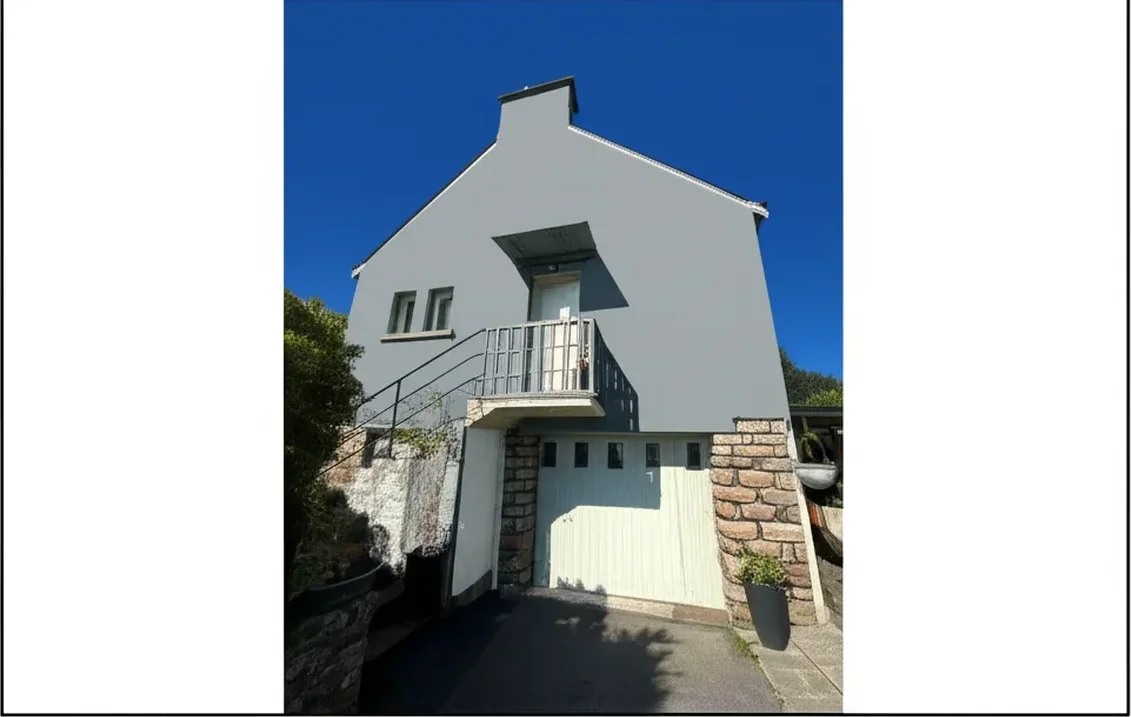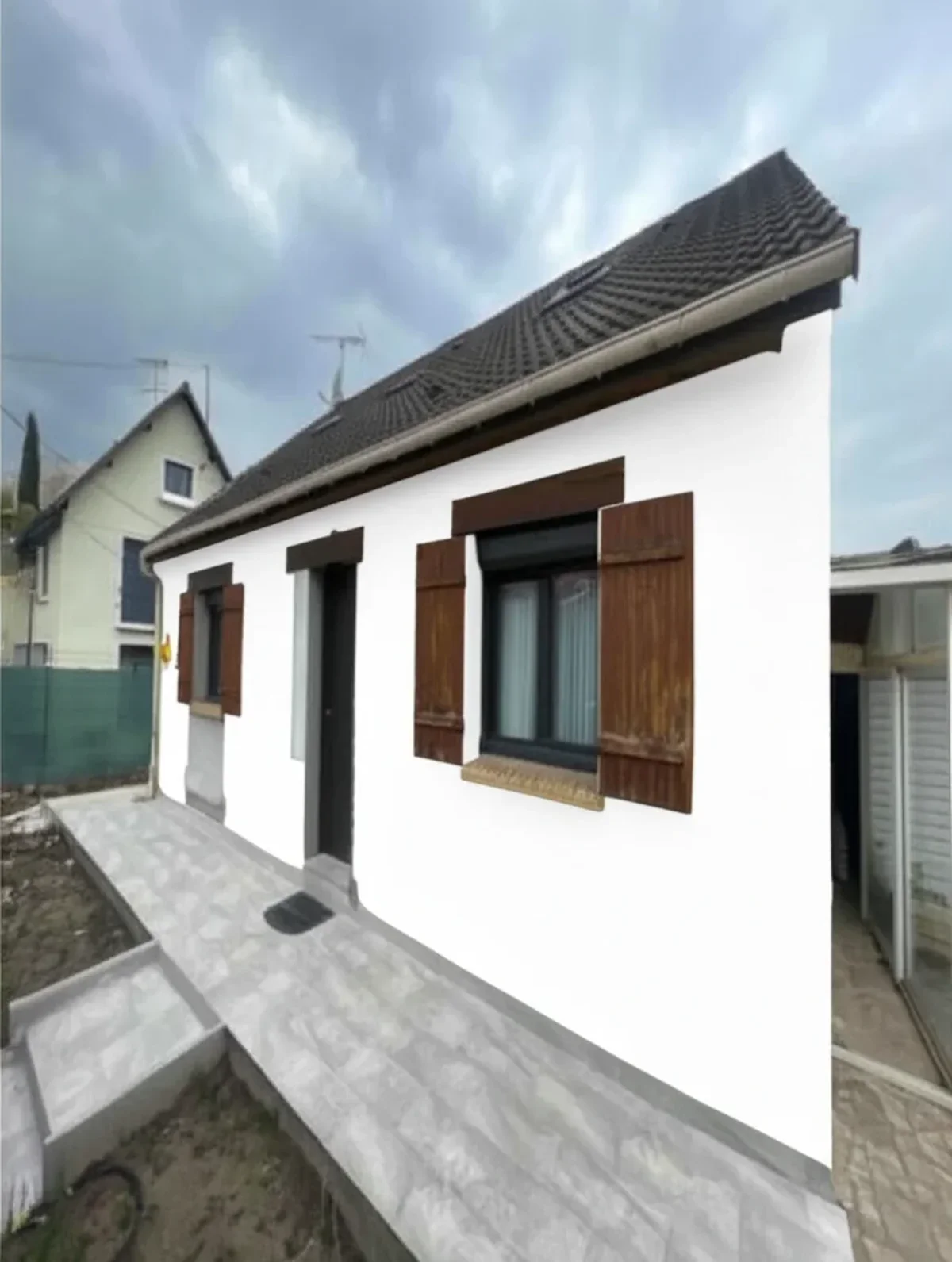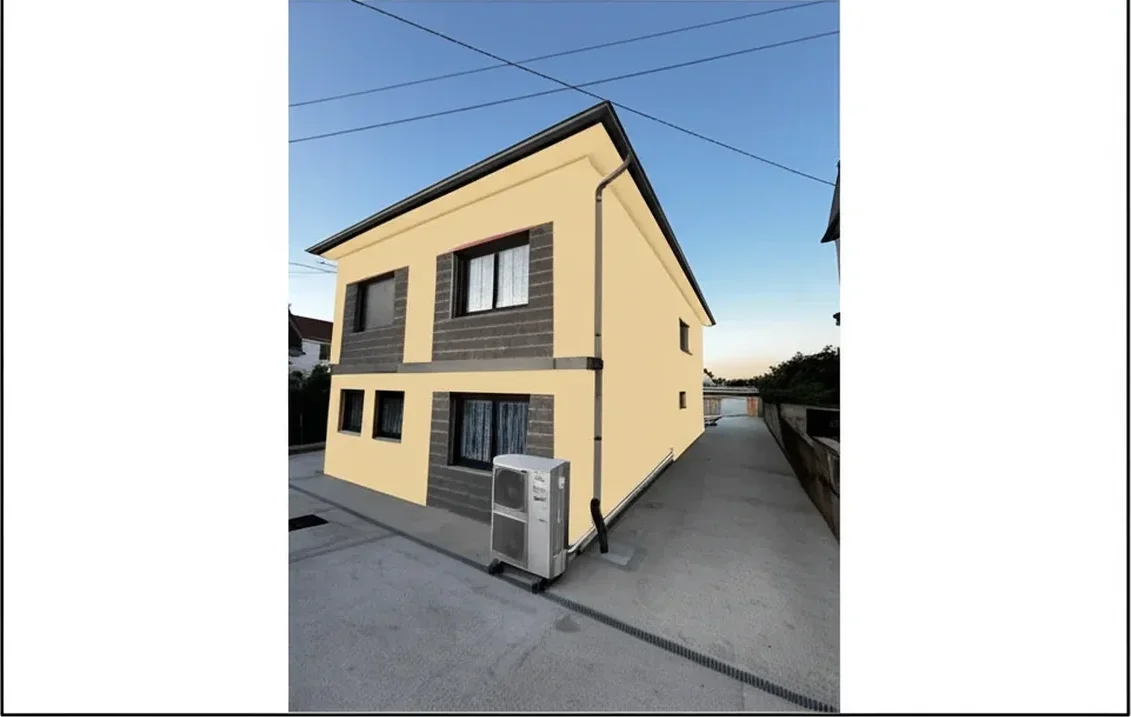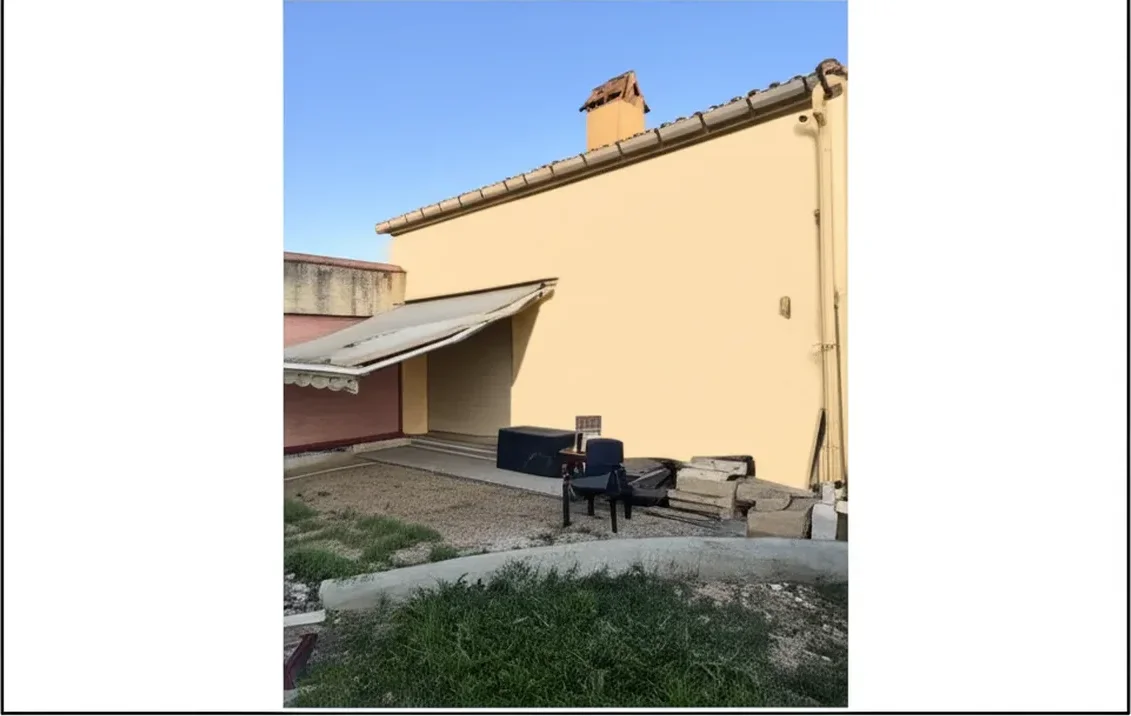
Try it on your house

How much does it cost to paint the outside of your house with masonry paint in 2026? Whether you are refreshing a pebble-dashed semi in Manchester, a rendered terrace in Bristol, or a Victorian villa in Edinburgh, exterior masonry paint remains the most popular and cost-effective way to protect and transform UK homes. This comprehensive guide breaks down prices per m², compares the leading paint brands, Dulux Weathershield, Sandtex 365, and Crown Smooth Masonry, and explains every factor that influences the final bill, from scaffold hire to surface preparation.
Before you commit to a colour, try our free AI colour visualiser to preview any shade on your own property, no sample pots, no ladders, no commitment.
For full pricing, see our complete UK cost guide.
Exterior Masonry Paint Costs per m² in 2026
According to Checkatrade and MyJobQuote data for 2026, the cost of exterior masonry painting in the UK varies by region and surface condition. Painters rarely charge a strict per-m² rate, most provide a fixed quote based on an on-site assessment, but the following figures give you a reliable benchmark:
Note that this is an exterior convention. Inside the house the same trade switches to a price per room, which is why an interior quote and an exterior quote are rarely comparable line for line: our guide to interior decorator cost per room carries those bands, so you can budget both sides of the property in the same year without double-counting the scaffold.
| Service | Price Range (2026) | Notes |
|---|---|---|
| Masonry paint, supply & labour (per m²) | £8 – £14 | National average, 2 coats |
| Masonry paint, London & South East (per m²) | £12 – £18 | Higher labour costs |
| Textured masonry paint (per m²) | £10 – £16 | Hides minor cracks |
| Scaffold hire (terraced house, 1 week) | £600 – £1,500 | London: £800–£2,000 |
| Access tower hire (per week) | £100 – £250 | Single-storey alternative |
| Full exterior, 3-bed semi (all-in) | £800 – £2,500 | Incl. scaffold, prep, 2 coats |
| Full exterior, 4-bed detached (all-in) | £2,000 – £5,000 | Larger surface area |
| Painter & decorator day rate | £200 – £350 | Regional variation |
Try it on your house
No photo? Try a sample
Price Tip
Always request at least three quotes from local decorators. Use platforms like Checkatrade or MyBuilder to compare reviews and pricing. A typical 3-bed semi requires approximately 60–90 m² of paintable wall area, depending on window and door openings.
Best Masonry Paint Brands Compared: Dulux, Sandtex & Crown
The paint you choose has a direct impact on both the upfront cost and the long-term value. A premium product that lasts 15 years will always outperform a budget tin that needs recoating every three. Here is how the UK's three most popular exterior masonry paints compare in 2026:
| Brand | Price (5 L) | Coverage | Guarantee | Best For |
|---|---|---|---|---|
| Dulux Weathershield Smooth | £38 – £55 | Up to 7 m²/L | 15 years | All-round reliability |
| Sandtex 365 | £32 – £48 | Up to 6 m²/L | 10 years | Anti-algae, exposed walls |
| Crown Smooth Masonry | £28 – £40 | Up to 6 m²/L | 10 years | Budget-friendly, good range |
| Dulux Trade Weathershield | £45 – £65 | Up to 8 m²/L | 15 years | Professional-grade, best coverage |
| Sandtex Ultra Smooth | £35 – £50 | Up to 7 m²/L | 15 years | Premium Sandtex, frost-resistant |
Dulux Weathershield remains the industry standard and is the brand most frequently specified by UK painters and decorators. Its smooth formula delivers excellent opacity in two coats and holds colour well over time. Sandtex 365 is the go-to choice for properties in exposed locations, coastal areas, north-facing elevations, and regions with heavy rainfall, thanks to its superior anti-algae and anti-fungal additives. Crown Smooth Masonry is the smart budget option: slightly lower coverage per litre, but a perfectly adequate finish for sheltered walls that do not face the worst of the weather.
Whichever brand you choose, always apply a stabilising primer to powdery or chalky surfaces first. Skipping this step is the single most common reason for premature peeling and flaking.
What Affects the Cost of Exterior Masonry Painting?
Two seemingly identical houses on the same street can produce wildly different quotes. Understanding the variables helps you budget accurately and avoid surprises:
- Surface condition: Flaking paint, blown render, algae growth, and hairline cracks all require preparation work before painting. A wall in good condition might need only a pressure wash and a mist coat; a neglected facade could need scraping, filling, and a full stabilising treatment, adding £3–£6 per m² to the total.
- Property height: Single-storey bungalows can often be painted from ladders or a small access tower (£100–£250/week). Two- and three-storey houses require full scaffolding (£600–£2,000), which can represent 20–30% of the total project cost.
- Substrate type: Smooth render takes paint easily and uses less product. Pebble dash, roughcast, and heavily textured surfaces absorb significantly more paint, budget for up to 40% extra material.
- Number of coats: Most projects require two full coats over a primer or stabiliser. Changing from a dark to a light colour may need three coats, increasing both material and labour costs.
- Location: Decorator day rates vary by region. London and the South East are the most expensive (£280–£350/day), whilst the Midlands, North of England, Wales, and Scotland typically range from £200–£280/day.
- Time of year: Spring and summer are peak season for exterior painting. Booking during autumn or winter can sometimes secure lower rates, but weather delays may extend the project timeline. Masonry paint should never be applied below 5°C.
- Access restrictions: Properties on busy roads, in conservation areas, or with limited rear access may need pavement licences (£100–£500) or special scaffold configurations, adding to the cost.
Surface Preparation: The Step You Must Not Skip
Professional decorators will tell you that preparation accounts for at least 50% of the total job time, and it is the single biggest determinant of how long your new paintwork will last. Here is a typical preparation workflow for exterior masonry:
- Inspection: Walk the full perimeter of the property. Look for render cracks, blown areas (tap the surface, hollow sounds indicate delamination), algae or moss growth, and signs of rising damp or penetrating damp.
- Pressure washing: Remove dirt, algae, and loose material with a pressure washer at 1,500–2,000 psi. Allow at least 48 hours for the surface to dry thoroughly before painting.
- Repairs: Fill cracks with an exterior flexible filler. Patch blown render with a matching sand-and-cement mix or proprietary repair mortar. For larger areas of damage, a plasterer or renderer may be needed, budget £40–£80 per m² for new render.
- Stabilising: Apply a stabilising solution (such as Dulux Weathershield Stabilising Primer or Sandtex Stabilising Solution) to any chalky, powdery, or previously painted surfaces. This seals the substrate and ensures the top coats adhere properly.
- Masking: Protect windows, doors, sills, and any adjacent surfaces with masking tape and dust sheets. Professional decorators use self-adhesive masking film for speed and a clean edge.
- Priming: Bare render or new patches should receive a mist coat, masonry paint diluted 10–20% with clean water, to seal the surface before applying full-strength top coats.
Common Mistake
Painting over damp walls is the most expensive shortcut you can take. The moisture trapped behind the paint film will cause blistering and peeling within months. Always identify and treat the source of damp, whether rising, penetrating, or condensation, before any paintwork begins.
DIY vs Hiring a Professional: Cost Comparison
Painting the exterior of your home yourself can save a significant amount on labour costs, but it is not without risk, especially at height. Here is a realistic comparison for a typical 3-bed semi with approximately 75 m² of paintable masonry:
| Cost Element | DIY | Professional |
|---|---|---|
| Paint (2 coats, 75 m²) | £80 – £150 | £80 – £150 (trade price) |
| Stabiliser / primer | £20 – £40 | £20 – £40 |
| Scaffold or tower hire | £300 – £800 | Often included in quote |
| Sundries (brushes, rollers, filler) | £30 – £60 | Included |
| Labour | Your time (2–4 weekends) | £500 – £1,200 |
| Total estimate | £430 – £1,050 | £800 – £2,500 |
The DIY route looks cheaper on paper, but consider the hidden costs: working at height without proper training carries genuine safety risks, and poor preparation or application will shorten the lifespan of the finish. If you are painting ground-floor walls or garden walls, DIY is perfectly feasible. For anything above first-floor level, hiring a professional with insurance and scaffold experience is almost always the wiser investment.
Visualise Your Home Before Committing to a Colour
Choosing the wrong colour is an expensive mistake when you are paying £8–£18 per m² to have it applied. Sample pots help, but a 30 cm test patch on a shaded section of wall rarely gives you the full picture. Modern AI colour visualisation tools solve this problem entirely: upload a photograph of your property and see any colour applied photorealistically to the exact surfaces you plan to paint, including Dulux Weathershield, Sandtex, Crown, Farrow & Ball, and Little Greene shades.
This is especially valuable if you live in a conservation area, where a colour change may require planning approval. Having a photorealistic render of your proposed scheme makes the application process far smoother. It is equally useful for getting buy-in from a partner, landlord, or neighbour before committing to a full repaint.
Try FacadeColorizer free, upload a photo of your home, choose from thousands of colours, and see the result in seconds. No sign-up, no cost, no obligation.
Frequently asked questions
How much does exterior masonry paint cost per m² in the UK?
Which is the best exterior masonry paint in the UK?
How long does exterior masonry paint last?
Is it cheaper to paint a house exterior yourself?
Trademarks mentioned (Sherwin-Williams, Benjamin Moore, Behr, Caparol, Brillux, Sto, Alpina, Valspar, PPG, Glidden, Dulux, Crown Trade, Sandtex, Farrow & Ball, Johnstone's, Leyland) are property of their respective owners. FacadeColorizer is independent and not affiliated with any of them. Nominative fair use under Lanham Act §1125.