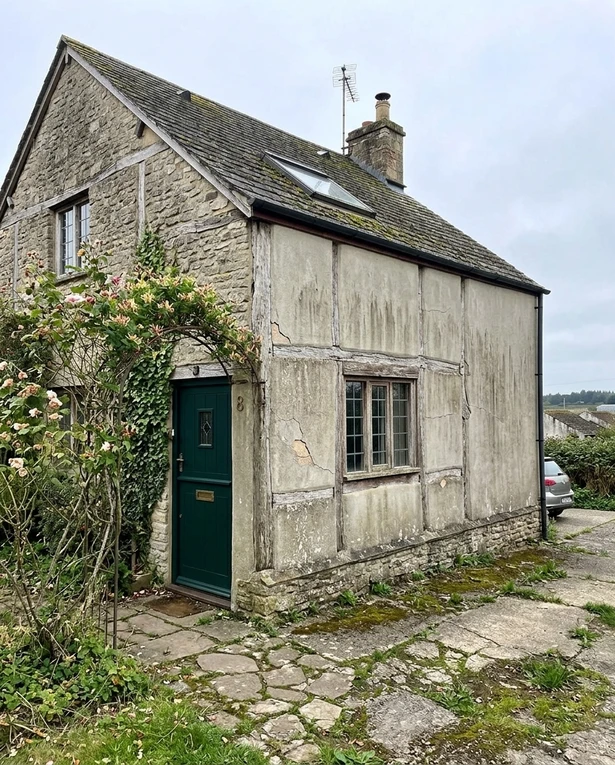
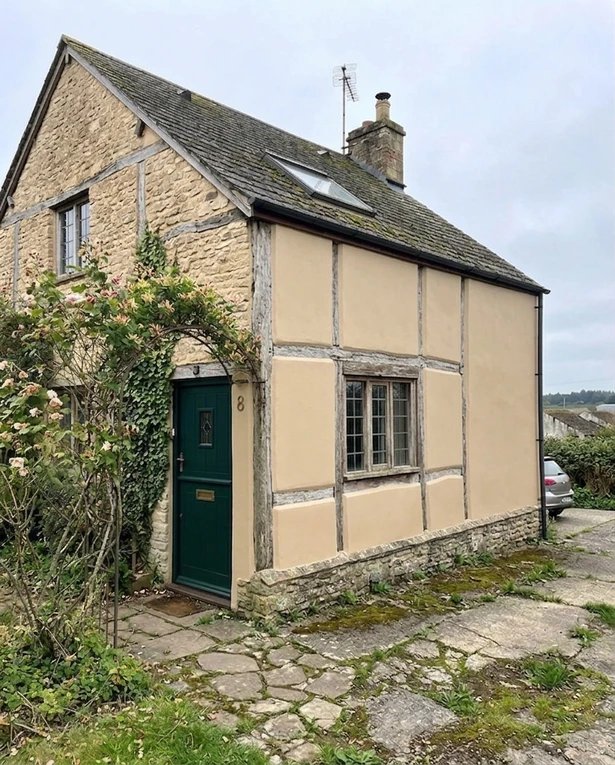
Cotswold Stone Exterior with Forest Green Door
The pairing of honey-hued Cotswold stone with a deep forest green door is arguably the most recognisable exterior combination in British domestic architecture. From the limestone villages of Bibury an...
Try it on your house
No photo? Try a sample
Or test this palette on your house in the paint visualiser.
Understanding This Colour Harmony
The pairing of honey-hued Cotswold stone with a deep forest green door is arguably the most recognisable exterior combination in British domestic architecture. From the limestone villages of Bibury and Castle Combe to the rolling market towns of Stow-on-the-Wold and Chipping Campden, this scheme has been quietly defining the English countryside for more than four hundred years. Cotswold stone (#D4B896) is a warm, oolitic limestone whose iron-oxide content produces that instantly recognisable buttery gold - shifting from pale cream in morning light to a rich amber at sunset. When a property is built in genuine Cotswold stone, the colour is inherent to the material; for rendered or painted walls elsewhere in the UK, a close match is Farrow & Ball Oxford Stone (No. 264) or Little Greene Stone-Mid-Warm (No. 35). The forest green door (#2D4A2D) provides the essential counterpoint. This deep, almost black-green tone draws directly from the English landscape - the yew hedges of a cottage garden, the moss on a drystone wall, the holly leaves of a December wreath. The closest commercially available matches are Farrow & Ball Duck Green (No. 274) and its slightly darker cousin Studio Green (No. 93), both of which have become the default specification for National Trust properties and conservation area repaints. From a heritage planning perspective, this combination is a near-guaranteed approval in Article 4 conservation areas and on Grade II listed buildings, where local authority conservation officers routinely require traditional palettes drawn from historic precedent. In AONBs such as the Cotswolds, Chilterns, and North Wessex Downs, planning guidance explicitly encourages muted, landscape-responsive colours - making forest green one of the very few door colours that will pass without debate. Practically, the combination suits limestone cottages, Georgian townhouses with fanlight doors, Victorian rectories, Edwardian villas with stone-mullioned windows, and even contemporary new-builds within conservation settings where stone cladding has been specified. The warmth of the stone ensures the home never feels austere, while the depth of the green lends gravitas and a sense of rootedness. Window frames should be painted in an off-white such as Farrow & Ball Slipper Satin (No. 2004) or Wimborne White (No. 239); pure brilliant white feels jarring against the soft stone and should be avoided. For ironwork - boot scrapers, railings, gutter brackets - a traditional matt black (F&B Off-Black, No. 57) quietly reinforces the scheme without competing with the green door. Finally, consider a polished brass or unlacquered bronze door knocker; over time it will develop a patina that complements both the stone and the greenery of a mature front garden.
Technical Colour Details
| Property | Facade | Front door |
|---|---|---|
| Colour Name | Cotswold Stone | Forest Green |
| Element | Walls / Facade | Front door |
| Style | Traditional English / Cottage | |
Colour Technical Profile
Cotswold Stone reads as being among the warm tones with high saturation, close to the RAL reference BS 10 C 33. UK heritage-paint specialists such as Farrow and Ball Exterior Eggshell, Little Greene Masonry Paint, Sandtex 365 offer breathable masonry and eggshell formulations in this colour family - the closest matches available without a bespoke tint.
The Light Reflectance Value (LRV) calculates to 73.5 using the WCAG relative-luminance formula (0.2126·R + 0.7152·G + 0.0722·B). LRV drives two practical outcomes for any exterior: how much solar heat the walls absorb, and whether the colour is compatible with exterior insulation finish systems (EIFS in the US, external wall insulation in the UK). At LRV 73.5 the facade reflects most incident light - a plus for cooling loads in hot climates, but watch for glare on south-facing elevations and gradual yellowing. Choose a paint with high titanium-dioxide load and strong UV inhibitors.
The mathematical complement (180° across the hue wheel) lands on a steel blue - best reserved for a small accent such as a door or mailbox rather than the main field. The existing accent of Forest Green sits at a controlled contrast ratio that grounds the composition without breaking it up.
Expert Tips
On genuine Cotswold stone, never apply paint or sealer - the stone must breathe, and coating it can trap moisture and cause spalling. Instead, clean with a soft brush and water only. For painted renders approximating Cotswold stone, specify a breathable mineral silicate paint such as Keim Soldalit or Beeck Renosil, particularly on older solid-wall properties. For the door, use an oil-based eggshell such as Little Greene Intelligent Eggshell for durability, and recoat every 6-8 years on south-facing elevations.
Common Mistakes to Avoid
Do not use modern masonry paint (e.g. Dulux Weathershield) on historic limestone: it is non-breathable and will trap damp, accelerating erosion - this is a common cause of planning enforcement action in conservation areas. Avoid bright emerald or sage greens for the door; they read as contemporary and clash with the warm stone. Similarly, never paint the door black on a Cotswold stone property - the contrast is too severe and the scheme loses its characteristic warmth.
Ideal Home Styles
Where This Combination Works Best
Architectural Match
The Traditional English / Cottage style is tailored to the following home types: Cotswold cottage, Grade II listed home, Georgian townhouse, conservation area property, AONB new-build. On Victorian bays, Edwardian semis and Cotswold stone cottages this pairing reads as historically considered - matching well with sash windows, slate roofs and cast-iron rainwater goods. Use a breathable masonry paint to protect solid-wall construction.
Climate & Orientation
With an LRV of 73.5, this is a highly reflective colour: excellent for hot climates (southern England, London heat-island) where it materially reduces cooling loads. Guard against glare on south elevations and inspect shaded walls annually for algal streaking.
Urban & Regulatory Context
Before painting, check whether your property falls within a Conservation Area, is Listed, or is subject to an Article 4 direction - any of these can remove permitted development rights for exterior colour changes, making Listed Building Consent or planning permission mandatory. On new-build estates, estate-agreement covenants often restrict exterior colours for the first ten to fifteen years. This traditional english / cottage palette is typically well received by planning officers in conservation areas because it aligns with heritage-paint conventions, but always submit a colour sample and product data sheet with any application to avoid enforcement action.
When to Avoid This Pairing
At LRV 73.5 the facade sits in the comfort zone, but avoid pairing it with an accent too close in lightness: without clear contrast between the wall and the front door, the scheme looks flat. Avoid it, too, on a minimalist flat-roofed cube, where this traditional-leaning duo can look like pastiche.
Frequently Asked Questions
What colours are used in this combination?
This combination pairs Cotswold Stone (BS 10 C 33) on the walls with Forest Green on the front door. The style is Traditional English / Cottage.
What style of home suits this combination?
This colour scheme is ideal for: Cotswold cottage, Grade II listed home, Georgian townhouse, conservation area property, AONB new-build.
How can I test this combination on my home?
Upload a photo of your facade to FacadeColorizer and apply these exact colours using our AI-powered simulator. It takes less than 30 seconds and is free to try.
What is the RAL reference for these colours?
The facade colour Cotswold Stone has the reference BS 10 C 33.
Similar Colour Combinations
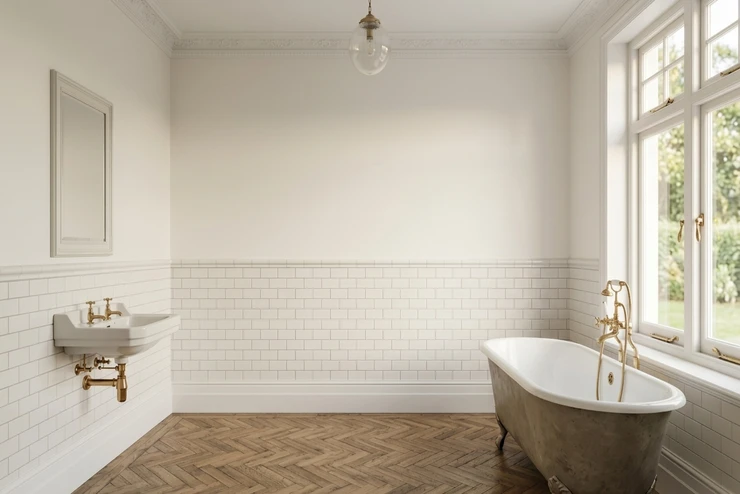
Classic Period Bathroom in Off-White, Metro Tile and Brass
Strong White Off-White + White Metro Tile
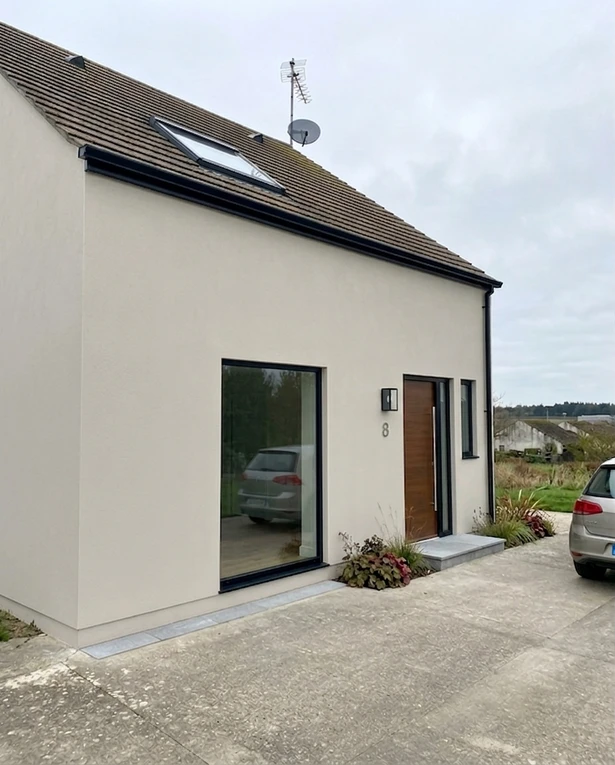
Stone Grey Render with Black Window Frames
Polished Pebble + Jet Black
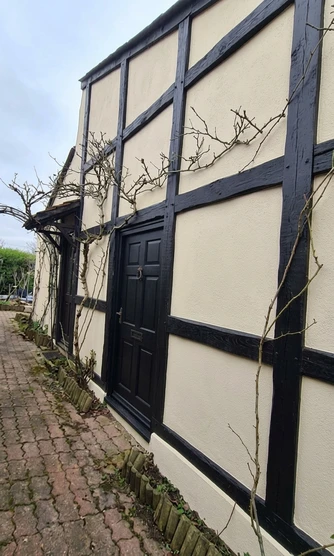
Warm Cream Thatched Cottage with Pitch Black Timber Beams
Warm Cream + Pitch Black
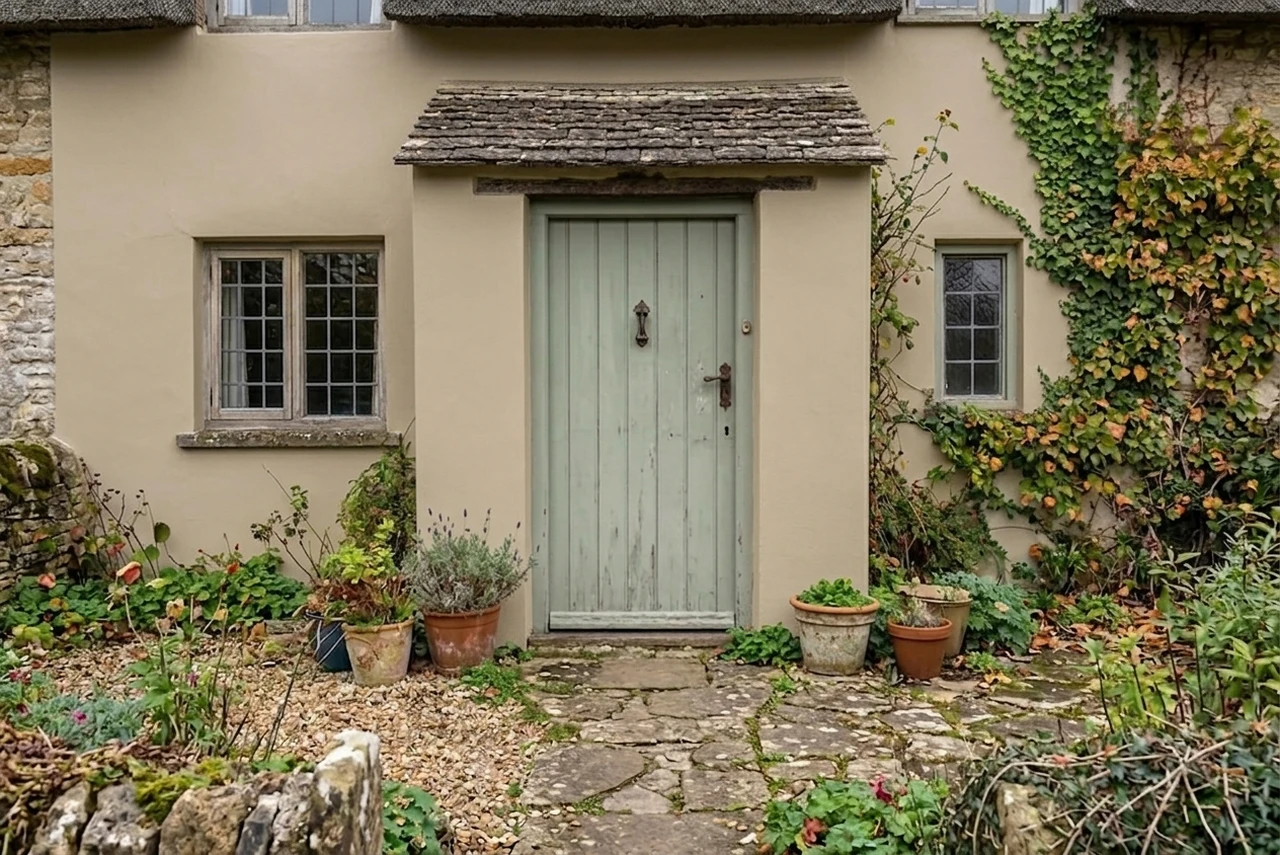
Stone Cottage & Sage Green Front Door
Natural Stone + Sage Green
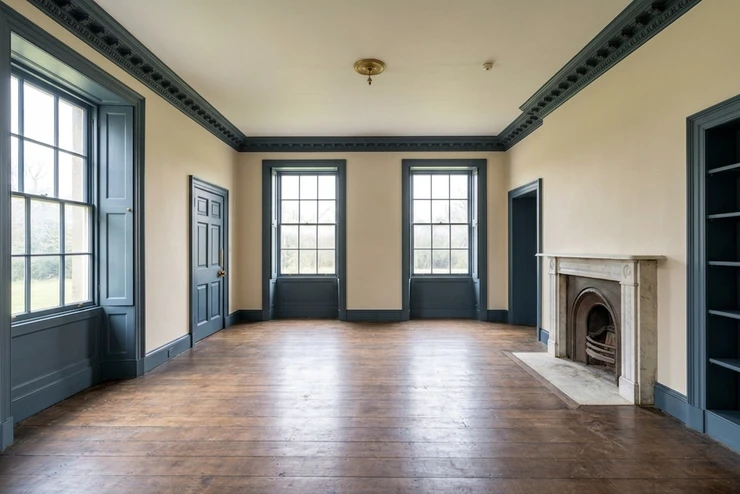
Georgian Living Room with Dimity Walls and Hague Blue Trim
Dimity + Hague Blue
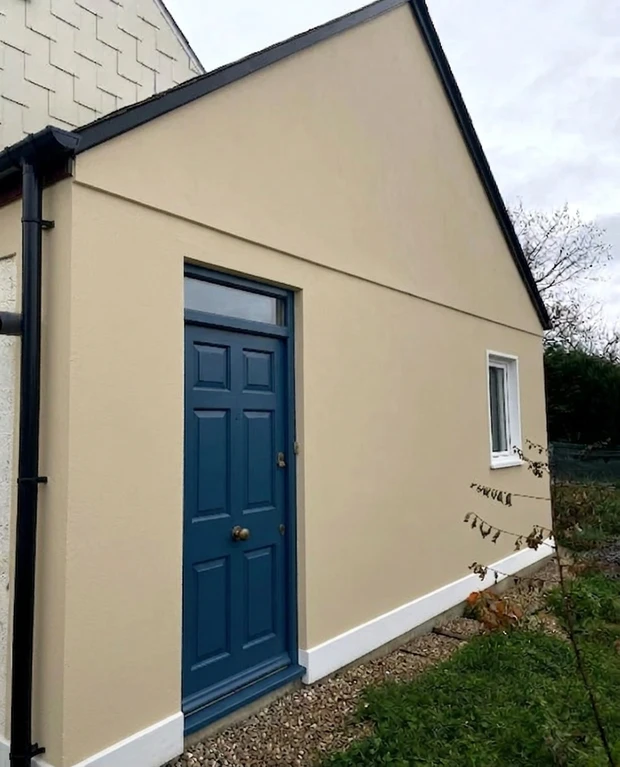
Stone House with Blue Front Door
Natural Stone + Stiffkey Blue
Ready to See This Combination on Your Home?
Upload a photo of your facade and apply Cotswold Stone + Forest Green in seconds with our AI simulator.
Try the Free SimulatorNo sign-up required • 1 HD sim + 3 variations free