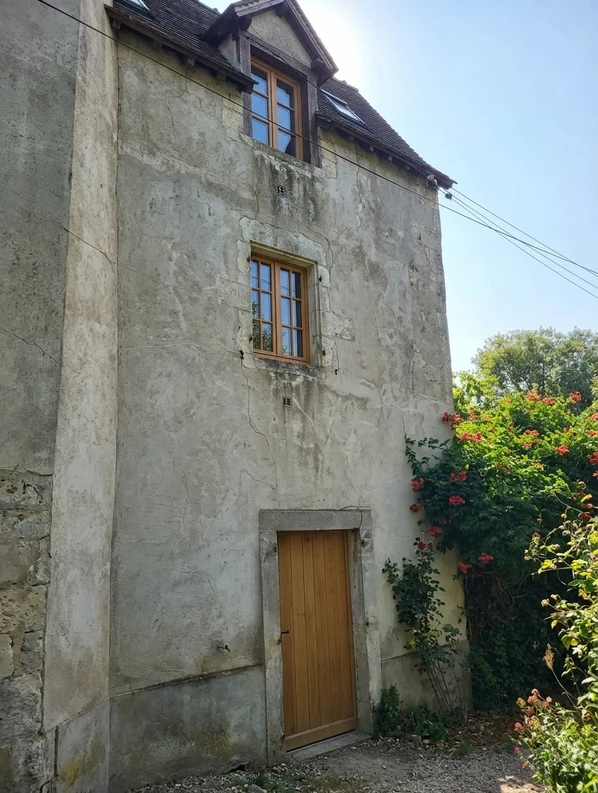
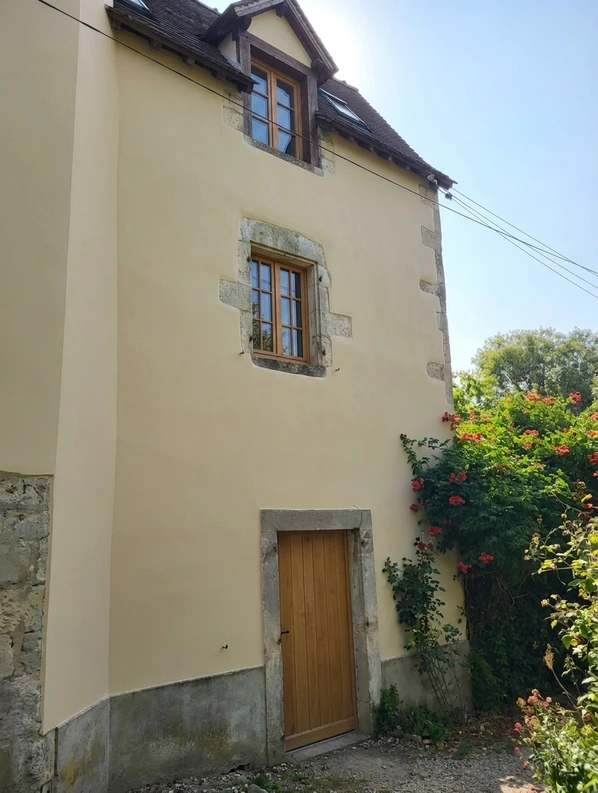
Pale Cotswold Stone Facade with Natural Oak Door
Pale Cotswold stone walls with natural oak joinery is the quintessential vernacular of the honey-coloured villages of Gloucestershire. The facade tone - a buttery limestone hue echoing Farrow & Ball's...
Try it on your house
No photo? Try a sample
Or test this palette on your house in the paint visualiser.
Understanding This Colour Harmony
Pale Cotswold stone walls with natural oak joinery is the quintessential vernacular of the honey-coloured villages of Gloucestershire. The facade tone - a buttery limestone hue echoing Farrow & Ball's Joa's White No.226 - draws from the oolitic Jurassic limestone quarried around Chipping Campden and Bourton-on-the-Water, where afternoon sun turns whole streetscapes amber. Against the chalky walls, oak-stained doors and slender window frames pick up the tawny undertones of the stone for tonal harmony rather than hard contrast. The oak reads as an extension of the landscape: drystone walls, coppiced hedgerows and Cotswold limestone mullion windows deepen the sense of place. Climbing roses - Gertrude Jekyll or Albertine - soften the stone, while wisteria weaves through the oak mullions in late spring. The scheme suits chocolate-box cottages, converted barns and stone terraces in AONB conservation areas.
Technical Colour Details
| Property | Facade | Front door and window frames |
|---|---|---|
| Colour Name | Pale Cotswold Stone | Natural Oak |
| Element | Walls / Facade | Front door and window frames |
| Style | Cottage | |
Colour Technical Profile
Pale Cotswold Stone reads as being among the warm tones with high saturation, close to the RAL reference None. UK heritage-paint specialists such as Farrow and Ball Exterior Eggshell, Little Greene Masonry Paint, Sandtex 365 offer breathable masonry and eggshell formulations in this colour family - the closest matches available without a bespoke tint.
The Light Reflectance Value (LRV) calculates to 78.9 using the WCAG relative-luminance formula (0.2126·R + 0.7152·G + 0.0722·B). LRV drives two practical outcomes for any exterior: how much solar heat the walls absorb, and whether the colour is compatible with exterior insulation finish systems (EIFS in the US, external wall insulation in the UK). At LRV 78.9 the facade reflects most incident light - a plus for cooling loads in hot climates, but watch for glare on south-facing elevations and gradual yellowing. Choose a paint with high titanium-dioxide load and strong UV inhibitors.
The mathematical complement (180° across the hue wheel) lands on a steel blue - best reserved for a small accent such as a door or mailbox rather than the main field. The existing accent of Natural Oak sits at a controlled contrast ratio that grounds the composition without breaking it up.
Expert Tips
Use a breathable mineral or lime-based paint on original Cotswold stone to avoid trapping moisture behind the facade - Farrow & Ball's Limewash in Joa's White is purpose-made for this. For the oak door and window frames, specify an exterior-grade UV-stable oil (Osmo UV-Protection or Sikkens Cetol) rather than varnish, which flakes within two winters. Reapply every three to four years on south-facing elevations. Keep downpipes in heritage black cast iron to anchor the warm palette.
Common Mistakes to Avoid
Do not paint genuine Cotswold limestone with modern plastic masonry paint - it seals the stone and causes spalling within a decade. Avoid orange-toned pine stains on the door; they clash with the honey limestone and look suburban. Never pair pale Cotswold stone with bright white UPVC windows, which read as harsh and are refused in most conservation areas.
Ideal Home Styles
Where This Combination Works Best
Architectural Match
The Cottage style is tailored to the following home types: Cotswold cottage, converted stone barn, AONB conservation area property, period stone terrace. On Victorian bays, Edwardian semis and Cotswold stone cottages this pairing reads as historically considered - matching well with sash windows, slate roofs and cast-iron rainwater goods. Use a breathable masonry paint to protect solid-wall construction.
Climate & Orientation
With an LRV of 78.9, this is a highly reflective colour: excellent for hot climates (southern England, London heat-island) where it materially reduces cooling loads. Guard against glare on south elevations and inspect shaded walls annually for algal streaking.
Urban & Regulatory Context
Before painting, check whether your property falls within a Conservation Area, is Listed, or is subject to an Article 4 direction - any of these can remove permitted development rights for exterior colour changes, making Listed Building Consent or planning permission mandatory. On new-build estates, estate-agreement covenants often restrict exterior colours for the first ten to fifteen years. This cottage palette is typically well received by planning officers in conservation areas because it aligns with heritage-paint conventions, but always submit a colour sample and product data sheet with any application to avoid enforcement action.
When to Avoid This Pairing
This very light tone (LRV 78.9) shows dirt and algae streaking fast on damp, north-facing walls: avoid it without regular cleaning, and steer clear of glossy finishes that glare in low sun. Avoid it, too, on a minimalist flat-roofed cube, where this traditional-leaning duo can look like pastiche.
Frequently Asked Questions
What colours are used in this combination?
This combination pairs Pale Cotswold Stone (None) on the walls with Natural Oak on the front door and window frames. The style is Cottage.
What style of home suits this combination?
This colour scheme is ideal for: Cotswold cottage, converted stone barn, AONB conservation area property, period stone terrace.
How can I test this combination on my home?
Upload a photo of your facade to FacadeColorizer and apply these exact colours using our AI-powered simulator. It takes less than 30 seconds and is free to try.
What is the RAL reference for these colours?
The facade colour Pale Cotswold Stone has the reference None.
Similar Colour Combinations
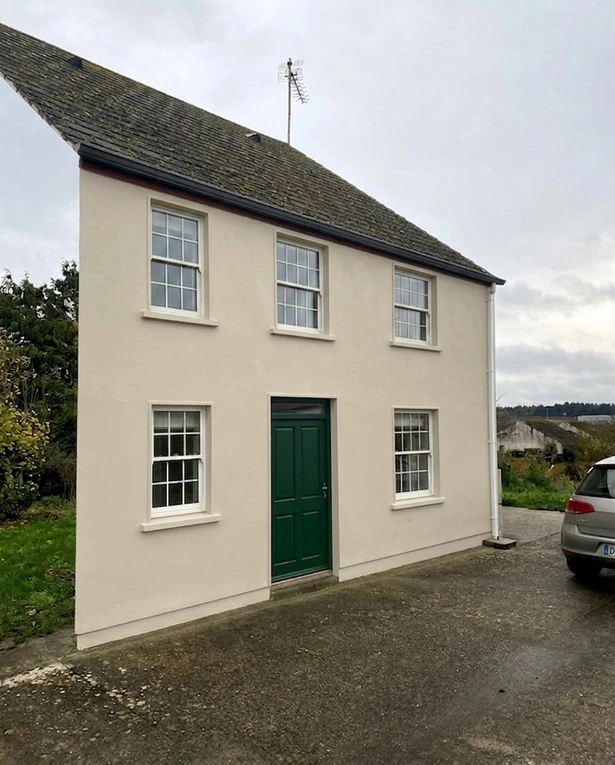
Portland Stone Facade with Racing Green Door
Portland Stone (Farrow & Ball No. 77) + Racing Green (Farrow & Ball Duck Green No. 274)
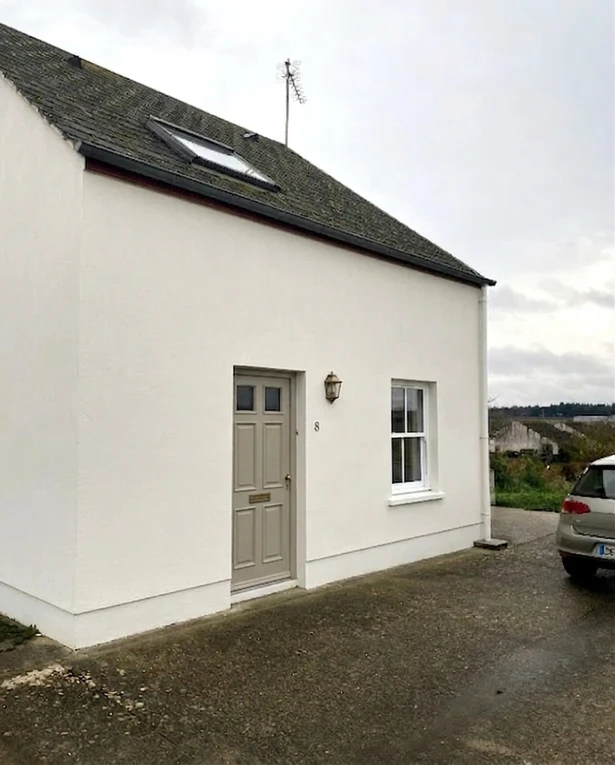
White House with Grey Front Door
Soft White + Pavilion Grey
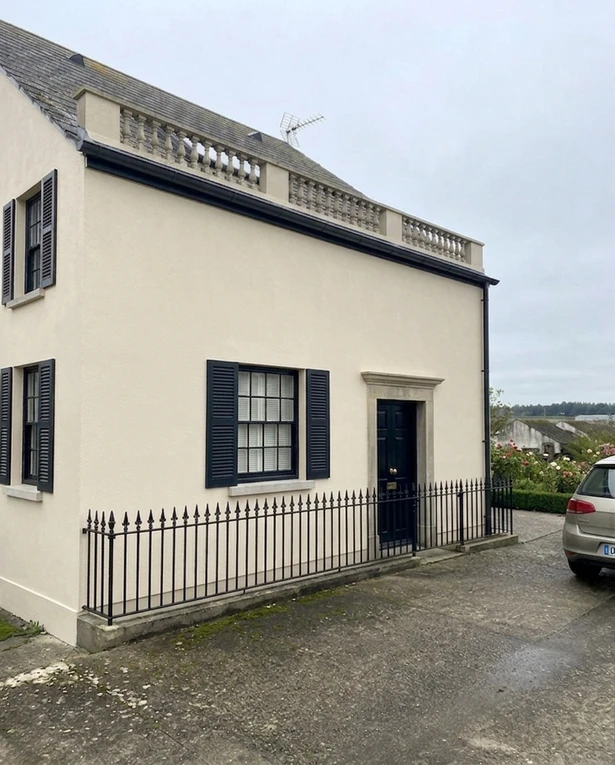
Cream Regency Stucco with Pitch Black Railings & Door
Cream Stucco + Pitch Black
Cream Render with Railings Front Door
Cream Render + Railings
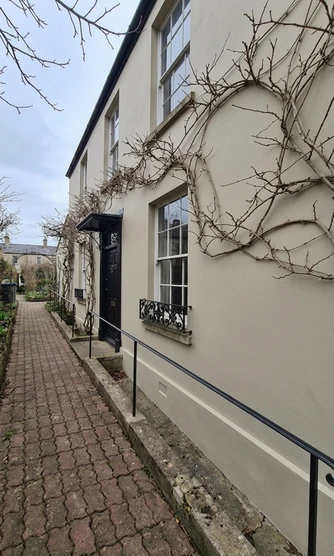
Portland Stone Georgian Facade with Wrought Iron Black Railings
Portland Stone + Wrought Iron Black
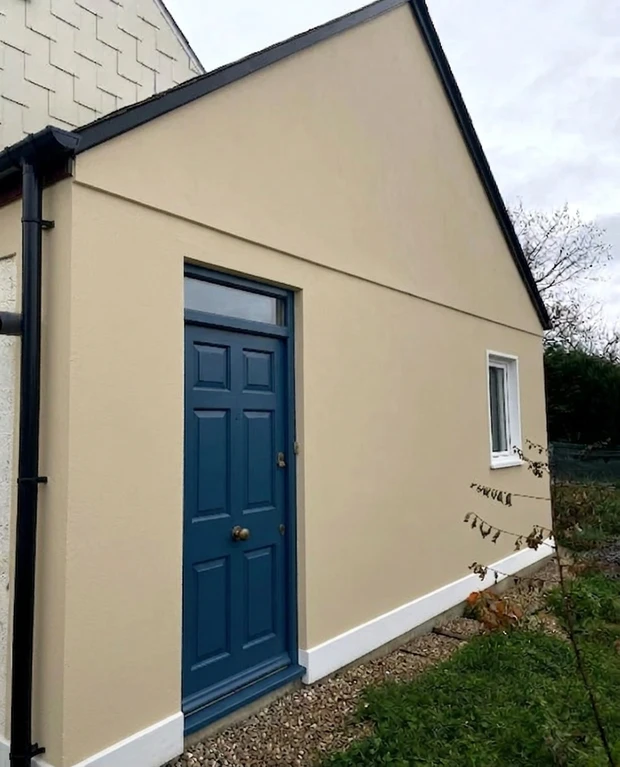
Stone House with Blue Front Door
Natural Stone + Stiffkey Blue
Ready to See This Combination on Your Home?
Upload a photo of your facade and apply Pale Cotswold Stone + Natural Oak in seconds with our AI simulator.
Try the Free SimulatorNo sign-up required • 1 HD sim + 3 variations free