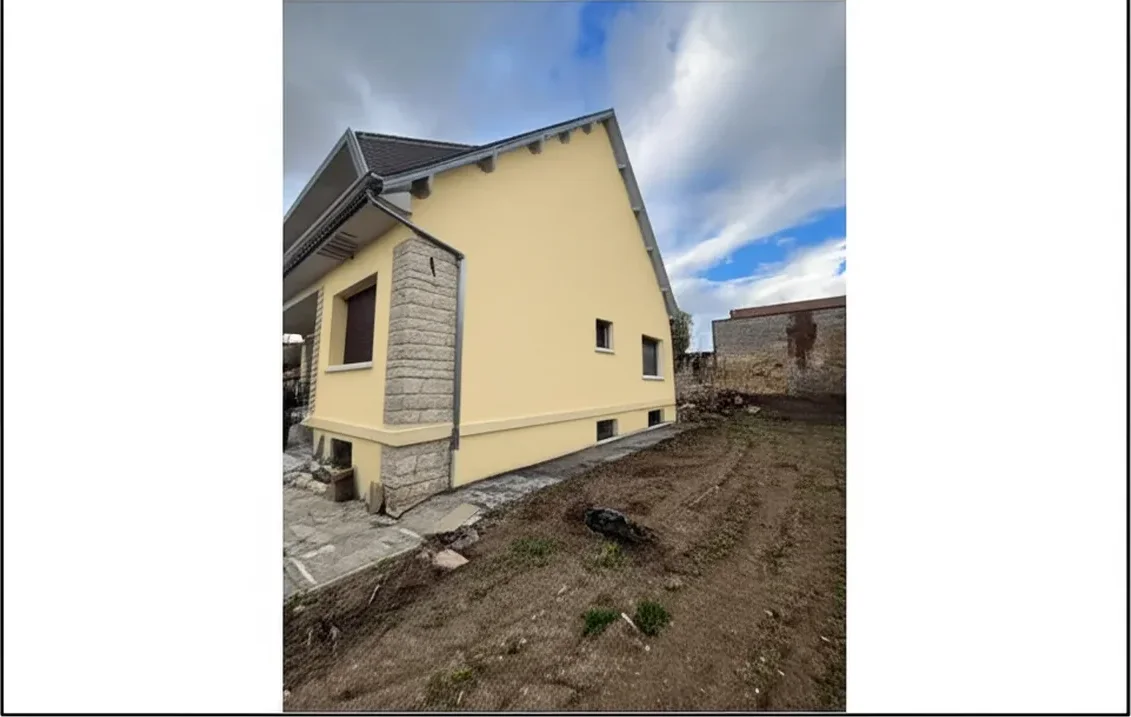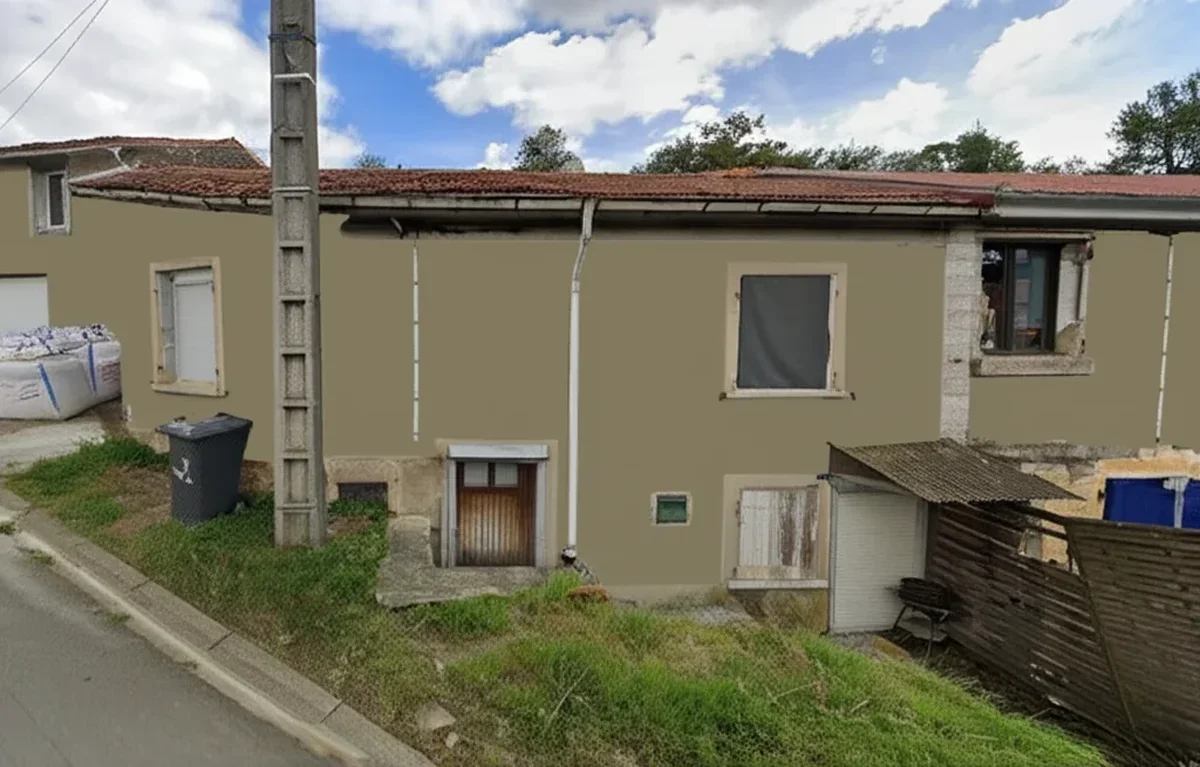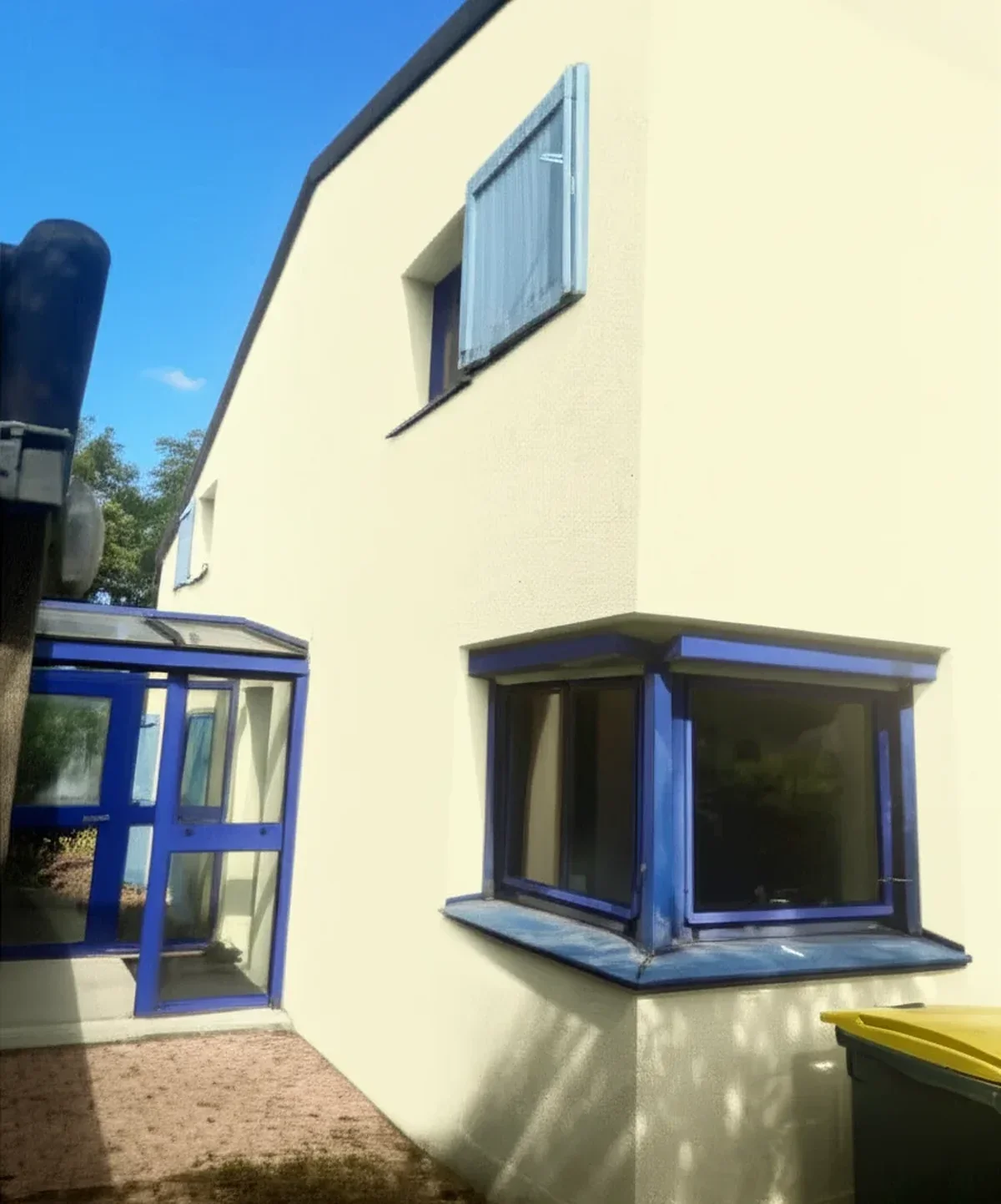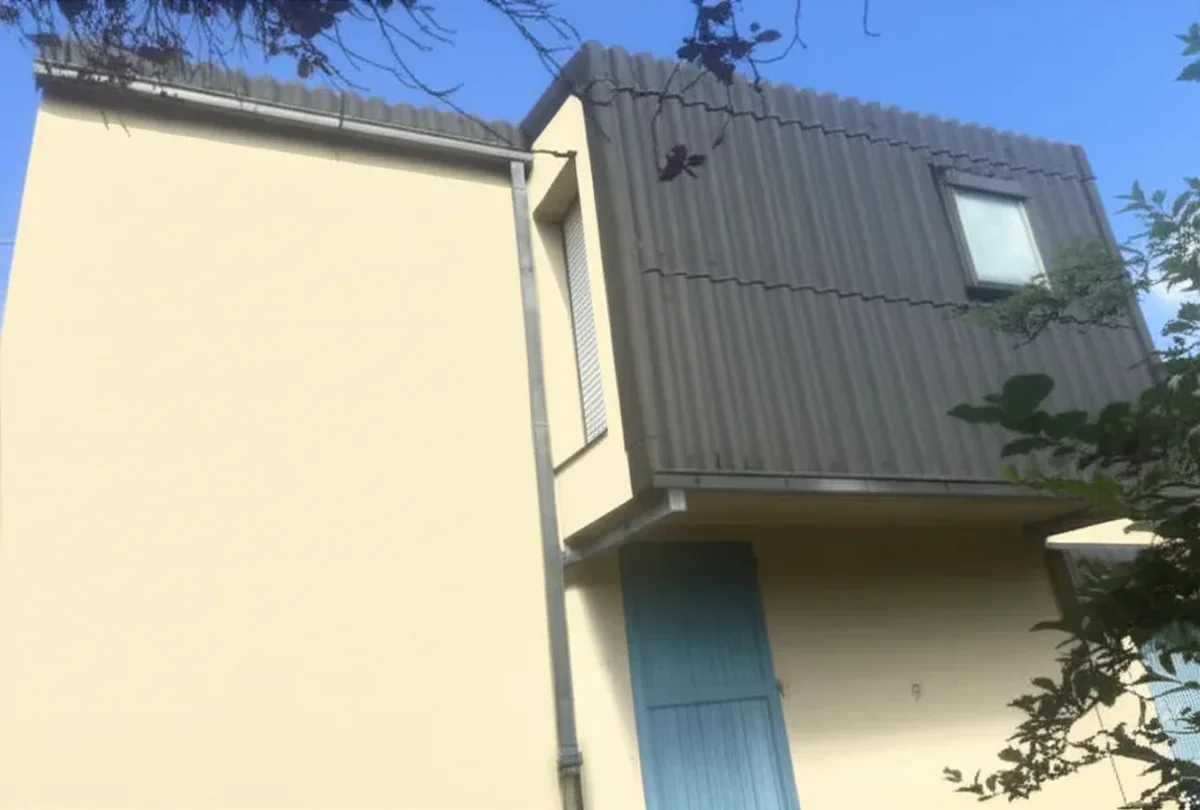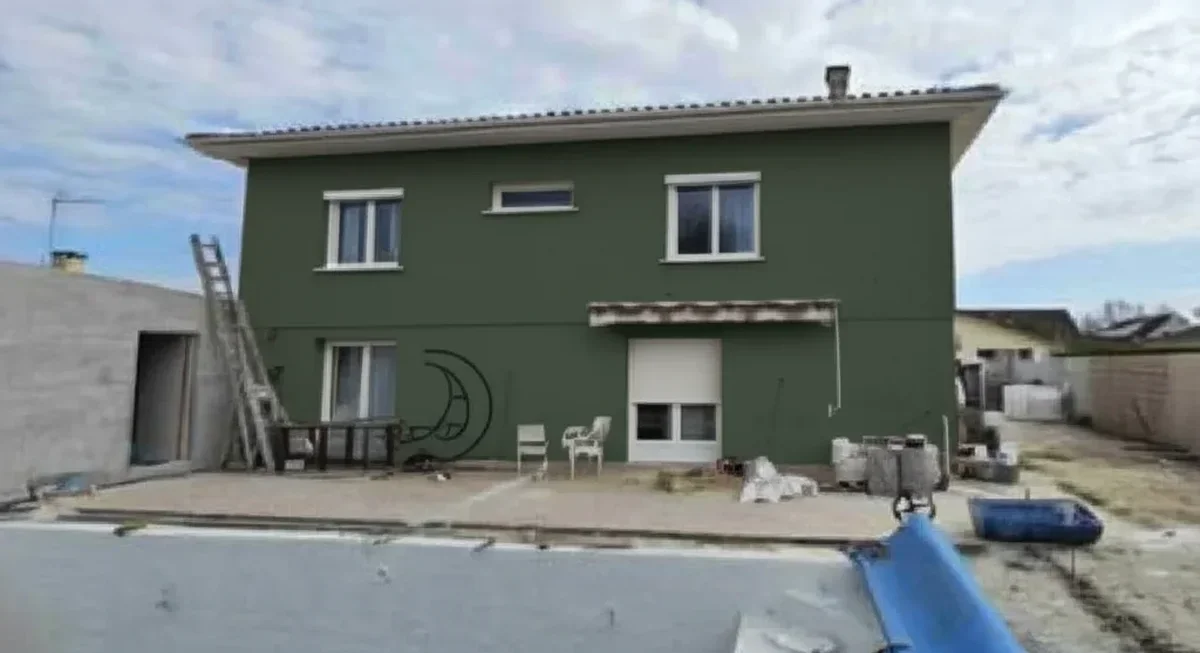
Try it on your house

In 2026, painting is the cheapest option, repair sits in the middle, and full replacement costs the most. Painting stucco or siding runs about $1.50–$4.50 per sq ft; the average stucco repair is around $1,628 (most homeowners spend $600–$2,657); and replacement runs $4–$12 per sq ft for vinyl, $5–$15 for fiber cement, and $7–$9 per sq ft to fully re-stucco. Compare the headline numbers below, then preview your home's new color with our free AI tool.
| Option | Typical 2026 Cost | When It Makes Sense |
|---|---|---|
| Paint | $1.50–$4.50 / sq ft | Surface is sound; you want a refreshed look and color |
| Repair (stucco) | $600–$2,657 (avg $1,628) | Localized cracks or patches; substrate is intact |
| Replace (siding) | $4–$15 / sq ft | Vinyl $4–$12, fiber cement $5–$15, wood $6–$20 |
| Re-stucco (new application) | $7–$9 / sq ft | Widespread failure or moisture damage behind the wall |
Try it on your house
No photo? Try a sample
Whether your stucco has developed a hairline crack or you're weighing a full siding replacement, understanding real 2026 costs is the first step toward a smart decision. Stucco and siding are the face of your home, they protect against moisture, improve energy efficiency, and drive curb appeal and property value. This guide covers every scenario: stucco repair, synthetic vs. traditional stucco, all major siding types, painting, maintenance, and what building codes and permits you'll need. Before you call a licensed contractor, visualize your home's new look with our free AI tool to preview colors and materials with zero commitment.
Stucco Types: Traditional vs. EIFS (Synthetic Stucco)
Not all stucco is created equal. There are two main systems used on American homes, and they differ dramatically in cost, performance, and repair requirements.
Traditional Three-Coat Stucco
Traditional stucco is a cement-based system applied in three layers directly to metal lath or masonry. The scratch coat is troweled on first and scored to create mechanical adhesion; the brown coat follows to level the surface; finally, the color coat provides the finished texture and color. Portland cement, sand, and lime are the core ingredients. Traditional stucco has been used on American homes since the early 1900s and is especially dominant in California, Arizona, Texas, and Florida. It's hard and durable, but its rigidity means it's prone to stucco cracks , particularly hairline expansion joint cracks caused by seasonal movement. A properly installed weep screed at the base is critical to allow any moisture that penetrates to drain rather than accumulate.
- Installed cost: $7–$9 per sq ft (new application, 2026)
- Lifespan: 50–80+ years with proper maintenance
- R-value: Approximately R-0.20 per inch, minimal thermal benefit on its own
- Best for: Hot, dry climates; masonry substrates; historic renovation
- Brands: LaHabra, Omega
EIFS - Exterior Insulation and Finish System (Synthetic Stucco)
EIFS, often called synthetic stucco, is a multilayer cladding system that bonds rigid foam insulation panels directly to the wall, then applies a fiberglass reinforcing mesh, a base coat, and a polymer-modified acrylic finish coat. The result looks similar to traditional stucco but is fundamentally different: it is flexible, highly energy-efficient, and offers continuous R-value across the entire wall, eliminating thermal bridging at studs. Modern "barrier EIFS" systems also integrate a drainage plane and moisture barrier, addressing the water intrusion failures that plagued older installations in the 1990s.
- Installed cost: $8–$14 per sq ft (2026)
- Lifespan: 25–50 years
- R-value: R-4 to R-6 per inch of insulation (typical 1″ board = R-4)
- Best for: Energy-conscious homeowners; wood-frame construction; all climates
- Key risk: Moisture intrusion if caulking, flashing, and penetration details are improperly installed. Always hire an EIFS-certified contractor.
EIFS vs. Traditional Stucco at a Glance
EIFS costs 15–35% more upfront than traditional stucco, but the energy savings from continuous insulation can offset the difference within 7–12 years in most US climate zones. Both systems deliver roughly 70% ROI at resale, according to industry data. If you are also weighing masonry, our breakdown of the 50-year lifespan and cost: stucco vs brick puts the long-term numbers side by side.
One-Coat Stucco: The Budget Middle Ground
A third system, one-coat stucco (also marketed as "two-coat" or fiberglass-reinforced stucco), sits between traditional three-coat and EIFS on both price and performance. It applies a single fiber-reinforced base coat over a rigid foam board, then a finish coat, which cuts labor and dries faster than the multi-day cure a three-coat job needs. It delivers modest continuous insulation (the foam board adds R-3 to R-4) without the full cost or moisture-detailing demands of EIFS. The tradeoff is a thinner, less impact-resistant shell than true three-coat stucco, so it is best on wood-frame walls in milder climates rather than high-abuse or freeze-thaw regions.
| Stucco System | Installed Cost / Sq Ft (2026) | Lifespan | Insulation Value | Best Fit |
|---|---|---|---|---|
| Traditional 3-coat | $7 – $9 | 50 – 80+ yrs | Minimal (R-0.20 / inch on its own) | Masonry walls, hot dry climates, historic homes |
| One-coat (fiber-reinforced) | $6 – $9 | 25 – 50 yrs | Moderate (R-3 to R-4 from foam board) | Wood-frame walls, milder climates, faster timelines |
| EIFS (synthetic) | $8 – $14 | 25 – 50 yrs | High (R-4 to R-6 / inch, continuous) | Energy-focused remodels, all climates, wood frame |
As of 2026, the cost gap between these systems has narrowed slightly as cement and acrylic finish prices stabilized after the volatility of the early 2020s, while skilled plaster labor (the bigger line item on any stucco job) continues to climb. That shift matters: on a typical 1,800 sq ft of wall area, choosing EIFS over three-coat adds roughly $1,800 to $9,000 upfront, so the decision should hinge on your climate zone and how long you plan to stay, not on the sticker price alone.
Stucco Repair Costs in 2026
A stucco crack or stucco patch job can range from a quick cosmetic fix to a major structural repair. The key variable is what lies beneath the surface, particularly whether moisture has reached the house wrap or framing. According to Angi's 2026 data, most homeowners spend between $600 and $2,657 on stucco repairs, with an average of $1,628.
| Repair Type | Cost per Sq Ft | Typical Total | What's Involved |
|---|---|---|---|
| Hairline crack fill | $8 – $15 | $200 – $600 | Caulk or elastomeric filler, color coat touch-up |
| Cosmetic stucco patch | $8 – $20 | $300 – $1,200 | Remove loose material, apply scratch & color coat |
| Moderate structural repair | $20 – $50 | $1,000 – $3,500 | Three-coat re-application, lath repair, flashing |
| Water damage / mold remediation | $60 – $120 | $3,000 – $12,000+ | Demo, mold treatment, sheathing repair, full re-stucco |
| Full re-stucco (new application) | $7 – $9 | $8,000 – $20,000+ | Complete three-coat system, new lath and house wrap |
Pro tip: Before authorizing any stucco repair, ask your licensed contractor to probe soft spots and inspect behind the stucco at window and door penetrations. These are the most common locations for hidden moisture damage. Catching water intrusion early can save tens of thousands of dollars in framing replacement. To put a number on your own project before you call anyone, run your square footage through our free painting estimate calculator for a personalized 2026 ballpark in about 30 seconds.
Repair or Replace? A 2026 Decision Framework
The single most expensive mistake homeowners make is patching over a problem that has already spread behind the wall. The rule of thumb most stucco professionals use: if the damaged or failed area exceeds roughly 30% of a wall plane, or if moisture has reached the sheathing, a full re-stucco is usually cheaper over a 10-year window than chasing repeat patches. Use the table below to gauge which side of that line your project falls on.
| What You're Seeing | Lean Toward Repair | Lean Toward Replace / Re-stucco |
|---|---|---|
| Extent of damage | Localized cracks or patches under ~30% of the wall | Widespread cracking or failure across multiple walls |
| Crack type | Hairline or expansion-joint cracks, no separation | Wide, stair-step, or diagonal cracks suggesting movement |
| Moisture signs | Surface staining only; substrate probes dry and firm | Soft spots, bubbling, or a moisture meter reading high |
| Age & history | First repair on otherwise sound stucco | Third or fourth patch on the same wall in a few years |
| 10-year cost outlook | $300 – $3,500 for targeted repairs | $8,000 – $20,000+ for full re-stucco, but no recurring patch cost |
When the signals are mixed, the deciding factor is almost always moisture. A roughly $200 to $500 invasive moisture inspection (a contractor drills small test holes and reads the sheathing) is cheap insurance against authorizing a cosmetic patch over rotting framing. If the test comes back wet, replacement is no longer optional, it is a containment decision, and the longer you wait, the more sheathing and framing you pay to rebuild.
Brick has its own cost logic once you decide to change its color. Painting it white is the most requested change and the one with the longest maintenance tail if the wrong system is used; our guide to a white painted brick house compares acrylic paint, limewash and mineral paint on breathability, aging and warranty.
Siding Types: A Complete Comparison
If you're replacing your siding rather than repairing stucco, you have more choices than ever in 2026. Here's a full breakdown of the four most popular siding materials for American homeowners, covering cost per square foot, lifespan, maintenance requirements, and key considerations.
| Siding Type | Cost / Sq Ft (installed) | Lifespan | Maintenance | Best For |
|---|---|---|---|---|
| Vinyl Siding | $4 – $12 | 20 – 60 yrs | Very low, occasional pressure washing | Budget-conscious homeowners; all climates |
| Fiber Cement (HardiePlank) | $5 – $15 | 50+ yrs | Low, repaint every 10–15 yrs | Fire-prone areas; high-humidity climates |
| Wood Siding (cedar / pine) | $6 – $20 | 20 – 40 yrs | High, repaint/stain every 5–7 yrs; rot checks | Historic homes; premium aesthetics |
| LP SmartSide (engineered wood) | $4.50 – $12 | 20 – 30 yrs | Low-moderate, repaint every 8–12 yrs | Wood look with better moisture resistance |
Vinyl Siding
Vinyl siding is the most widely installed siding type in the US, and for good reason, it requires almost no maintenance, never needs siding painting, and costs far less than alternatives. Available in lap siding and board and batten profiles, modern vinyl is UV-stabilized and comes with manufacturer warranties of 25–50 years. The primary downside is impact vulnerability in hail-prone regions and fading over time. Use a quality house wrap and proper flashing during installation to prevent moisture infiltration behind the panels. Siding repair is straightforward, individual panels can be snapped out and replaced without disturbing the rest of the wall.
Fiber Cement Siding (James Hardie / HardiePlank)
Fiber cement siding, led by the James Hardie brand and its flagship HardiePlank lap siding, has become the premium standard for new construction and high-end remodels. It is noncombustible, impervious to rot and insects, and holds paint exceptionally well. Factory-primed HardiePlank accepts any 100% acrylic latex - Sherwin-Williams Duration or SuperPaint are contractor favorites for a long-lasting finish. The ColorPlus factory-finish option delivers a baked-on coating with a 15-year fade warranty. Fiber cement is heavier than vinyl, requiring more labor for siding replacement, which pushes installed costs to $5–$15 per sq ft. It also requires caulking at all butt joints and penetrations to maintain its moisture barrier integrity.
Wood Siding
Natural wood siding, cedar shingles, pine lap, or redwood, delivers unmatched authentic character and is still the top choice for premium historic renovations and craftsman-style homes. It is also the most demanding in terms of maintenance: expect to repaint or re-stain every 5–7 years, inspect annually for rot and insect damage, and caulk all seams regularly. The high maintenance burden and cost ($6–$20/sq ft installed) mean wood siding is best reserved for homeowners who genuinely value the aesthetic and are committed to ongoing care.
LP SmartSide (Engineered Wood)
LP SmartSide engineered wood siding is pressure-treated with zinc borate and coated with a resin-saturated overlay that provides dramatically better resistance to moisture, mold, and rot than natural wood. It offers the warm, authentic wood look in both lap siding and board and batten profiles, at a cost ($4.50–$12/sq ft) that undercuts fiber cement. LP SmartSide carries a 50-year limited warranty. Like all engineered wood, it must be installed with all cut ends sealed and proper clearance from grade to prevent moisture wicking. It pairs beautifully with a quality elastomeric or acrylic latex topcoat for a finished look that rivals any premium siding system.
Regional Cost Variation: Why Your Quote Differs From the Average
National averages are a starting point, not a quote. The same 1,800 sq ft re-stucco job can swing 30% or more depending on where you live, driven mostly by local labor rates, permit regimes, climate detailing, and how common stucco is in your market. In the Southwest, where nearly every crew installs stucco daily, you benefit from scale and competition. In the Northeast, where stucco is less common and freeze-thaw detailing is mandatory, the same work costs noticeably more.
| Region | Re-stucco / Sq Ft | vs. National Avg | Main Cost Drivers (2026) |
|---|---|---|---|
| Southwest (AZ, NV, NM) | $6 – $8 | Below average | High crew availability, dry climate, stucco is the norm |
| California | $8 – $12 | Above average | High labor cost, strict permits, seismic and fire codes |
| Southeast (FL, GA, TX) | $6.50 – $9 | Near average | Humidity and storm detailing, but ample competition |
| Northeast & Midwest | $8 – $11 | Above average | Freeze-thaw detailing, fewer stucco crews, shorter season |
| Pacific Northwest | $7.50 – $10.50 | Above average | Heavy rain drainage detailing, higher labor rates |
Two factors swing a quote more than region alone. First, access: a two-story home, steep terrain, or tight lot lines that force scaffolding can add 10% to 20% to labor. Second, scope creep at the wall: once a crew opens up failed stucco, any sheathing or framing repair they uncover is billed on top of the per-square-foot rate. Always ask for a written allowance for hidden repair so a surprise does not turn a fixed-price job into an open checkbook. When you compare bids, normalize them to dollars per square foot rather than lump sums, an apparently cheaper total often just reflects a smaller measured wall area or excluded items like permits and paint.
Painting Stucco & Siding: Costs & Best Practices
Stucco painting and siding painting are among the highest-ROI exterior projects you can undertake, typically returning $1.50–$2.00 in resale value for every $1.00 spent. Here's what to expect in 2026:
- Stucco: $2.00–$4.00/sq ft professionally painted. Requires an elastomeric paint (such as Sherwin-Williams Conflex or Elastomeric) or a high-quality acrylic masonry paint that can bridge hairline cracks and flex with seasonal movement. Always apply a masonry primer first.
- Vinyl siding: $1.50–$3.00/sq ft. Use 100% acrylic latex in a color no darker than the original to avoid heat-induced warping.
- Fiber cement / HardiePlank: $2.00–$3.50/sq ft. Accepts most exterior latex paints; Sherwin-Williams Duration and Benjamin Moore Aura Exterior are top choices.
- Wood siding: $2.50–$4.50/sq ft. Requires thorough surface prep - scraping peeling paint, sanding, and spot priming with an oil-based or shellac primer on any bare wood or knots.
- LP SmartSide: $2.00–$3.50/sq ft. All cut ends should be primed before painting.
Regardless of substrate, all exterior painting projects should begin with thorough pressure washing to remove mold, mildew, algae, dirt, and chalk. Allow the surface to dry completely (minimum 24–48 hours) before painting. Use a mildew-resistant exterior paint in humid climates (Southeast and Pacific Northwest especially). If you are still narrowing down the body color, our 5-step framework for choosing the right exterior color on stucco walks through architectural style, fixed materials, light, and HOA constraints before you buy a single sample pot. For curated palettes, see the best stucco house colors by region and style. For the full picture on budgeting exterior work, read our complete exterior house painting cost guide. Want to preview colors before you commit? visualize your home's new look with our free AI tool , upload a photo and see any color applied instantly.
Maintenance Guide: Protecting Your Investment
A well-maintained exterior adds years to any siding or stucco system and protects your property value. Here's an annual maintenance checklist:
- Annual visual inspection: Walk the perimeter in spring and fall. Look for stucco cracks, peeling paint, damaged panels, and gaps in caulking around windows, doors, and penetrations.
- Pressure washing: Clean all siding and stucco annually (or biannually in humid climates) to remove mold, mildew, and algae. Use low pressure on stucco (under 1,500 PSI) to avoid dislodging the finish coat.
- Re-caulk as needed: Silicone or polyurethane caulk around all penetrations, expansion joints, and trim joints should be inspected annually and replaced when it cracks, shrinks, or pulls away.
- Check flashing and weep screeds: Ensure metal flashing at roof-to-wall junctions is properly lapped and that weep screeds at the base of stucco walls are unobstructed.
- Repaint on schedule: Don't wait until paint is peeling, repainting on a proactive schedule (every 7–10 years for most systems) is far cheaper than repairing substrate damage caused by moisture intrusion.
- Trim vegetation: Keep shrubs, vines, and soil at least 6 inches away from siding and stucco to reduce moisture contact and pest pathways.
Maintenance Cost Over 30 Years: The Number Most Quotes Ignore
The cheapest material to install is rarely the cheapest to own. To compare cladding types honestly, you have to add the recurring upkeep, repainting, re-caulking, washing, and the occasional repair, to the install price. The table below estimates the 30-year cost of ownership per square foot for each system as of 2026, assuming a typical 1,800 sq ft wall area and average regional labor. Figures are rounded and meant for comparison, not as a binding quote.
| System | Install / Sq Ft | Recurring Upkeep (30 yrs) | Est. 30-Yr Cost / Sq Ft |
|---|---|---|---|
| Traditional stucco | $7 – $9 | Repaint 2x ($2.50–$4/sq ft each), periodic crack fills | $13 – $18 |
| EIFS | $8 – $14 | Recoat 1–2x, annual caulk/flashing checks | $13 – $20 |
| Vinyl siding | $4 – $12 | Washing only; no painting needed | $5 – $13 |
| Fiber cement | $5 – $15 | Repaint 2x, re-caulk joints | $11 – $23 |
| Wood siding | $6 – $20 | Repaint/stain 4–5x, rot repairs, annual sealing | $18 – $40 |
| LP SmartSide | $4.50 – $12 | Repaint 2–3x, re-caulk joints | $9 – $19 |
Two takeaways stand out. First, wood is deceptively expensive: a low install quote masks four or five repaint cycles plus rot repairs, often making it the priciest system to own over 30 years. Second, vinyl wins on lifetime cost precisely because it never needs paint, which is also why it rarely improves with age the way a repaintable surface can. Stucco and fiber cement land in the middle: higher upkeep than vinyl, but each repaint is a chance to refresh the color and modernize the look, real curb-appeal value that a no-maintenance surface cannot deliver. If a future color change is part of your plan, factor that repaint into the comparison as an upgrade, not just a cost, and preview the new color on your own home first with our free AI tool.
Building Codes, Permits & Inspections
Many homeowners are surprised to learn that exterior re-siding and stucco work often requires a permit. Requirements vary by municipality, but here's a general guide to what triggers a permit requirement and what the inspection process involves.
| Work Type | Permit Required? | Typical Permit Cost | Notes |
|---|---|---|---|
| Stucco patch / crack repair | Usually No | - | Cosmetic repair to existing system |
| Full re-stucco (over existing) | Often Yes | $150 – $600 | Varies by jurisdiction; verify locally |
| Siding replacement (same material) | Sometimes | $100 – $400 | Many jurisdictions exempt like-for-like |
| Siding replacement (new material) | Yes | $200 – $800 | Requires building code compliance check |
| EIFS installation | Yes | $250 – $900 | Inspections required at lath and drainage stages |
Under the International Residential Code (IRC), which most US jurisdictions have adopted, exterior wall coverings must provide a moisture barrier (typically #15 or #30 felt paper or a modern house wrap product) and proper flashing at all openings. EIFS installations are additionally governed by ASTM standards and manufacturer installation specifications. Always work with a licensed contractor who pulls the permit, unpermitted work can cause problems at resale and void manufacturer warranties. A final inspection by the local building department confirms code compliance and protects you as the homeowner.
Ready to See Your Home Transformed?
Before you make any decisions about siding color, stucco finish, or paint scheme, see exactly how your home will look with our AI-powered visualizer. Upload a photo of your house and experiment with any color or material combination, completely free, no registration required. visualize your home's new look with our free AI tool and take the guesswork out of your next exterior project.
Frequently Asked Questions
How much does stucco repair cost per square foot in 2026?
Cosmetic stucco repair runs $8–$20 per sq ft. Moderate structural repairs cost $20–$50 per sq ft, and severe water damage or mold remediation can reach $60–$120 per sq ft. Most homeowners spend $600–$2,657 total, with an average around $1,628 according to 2026 Angi data.
Is EIFS (synthetic stucco) better than traditional stucco?
EIFS offers superior energy efficiency (R-4 to R-6 per inch of insulation vs. R-0.20 for traditional stucco) and greater flexibility. However, it costs 15–35% more upfront ($8–$14/sq ft vs. $7–$9/sq ft) and requires expert installation of all moisture barrier and flashing details. Traditional stucco is proven, extremely durable (50–80+ years), and better suited to masonry substrates and hot, dry climates.
What is the cheapest siding option in 2026?
Vinyl siding is the most affordable option at $4–$12 per sq ft installed and has the lowest lifetime maintenance cost since it never requires painting. LP SmartSide engineered wood is a close second at $4.50–$12 per sq ft and offers a more authentic wood appearance with better moisture resistance than natural wood.
Do I need a permit to replace siding or repair stucco?
It varies by municipality. Cosmetic stucco patch work typically does not require a permit, but full siding replacement with a new material or EIFS installation almost always does. Your licensed contractor should pull the permit and schedule the required inspection. Skipping permits can void warranties and create issues at resale.
How long does fiber cement siding last compared to vinyl?
Fiber cement siding (including HardiePlank by James Hardie) lasts 50+ years with proper maintenance and repainting every 10–15 years. Vinyl siding can last 20–60 years but fades and becomes brittle over time, particularly in climates with extreme UV exposure or hail. Fiber cement also carries better fire ratings, making it the preferred choice in wildfire-prone states like California.
Trademarks mentioned (Sherwin-Williams, Benjamin Moore, Behr, Caparol, Brillux, Sto, Alpina, Valspar, PPG, Glidden, Dulux, Crown Trade, Sandtex, Farrow & Ball, Johnstone's, Leyland) are property of their respective owners. FacadeColorizer is independent and not affiliated with any of them. Nominative fair use under Lanham Act §1125.