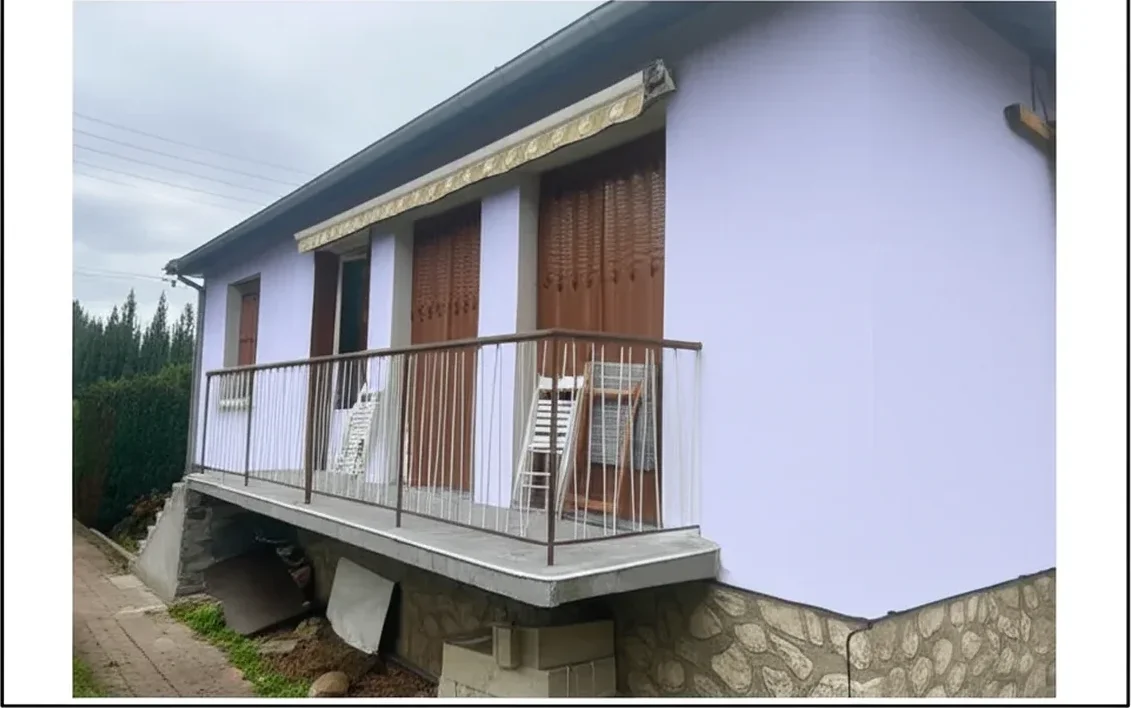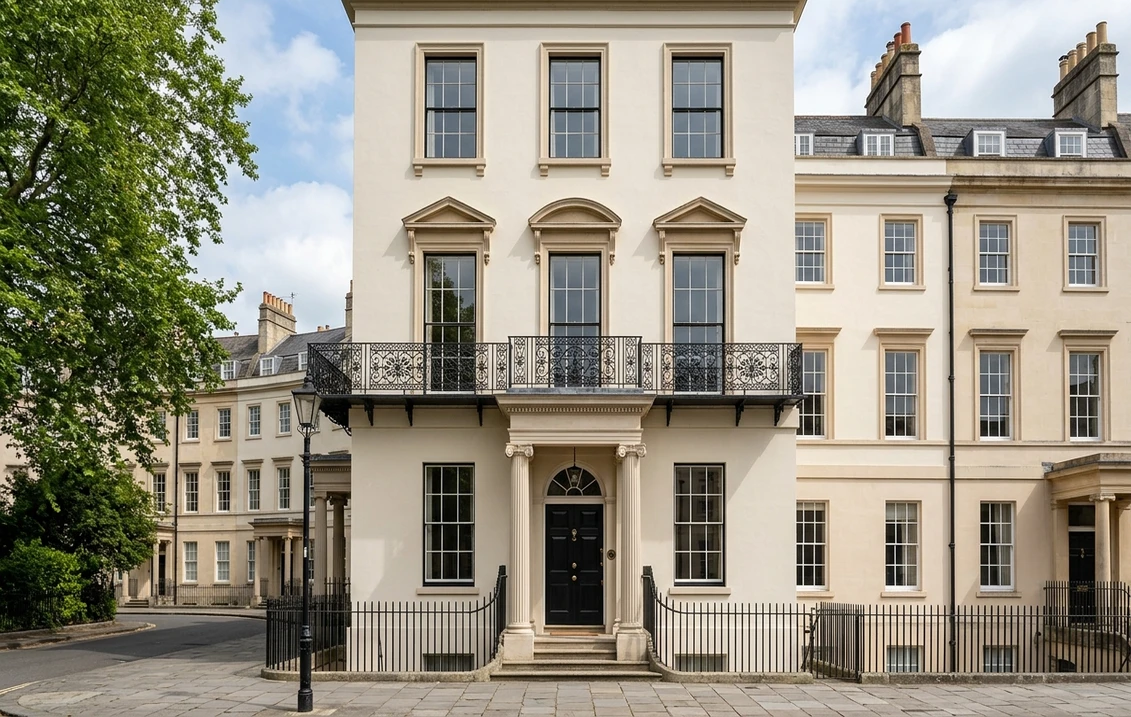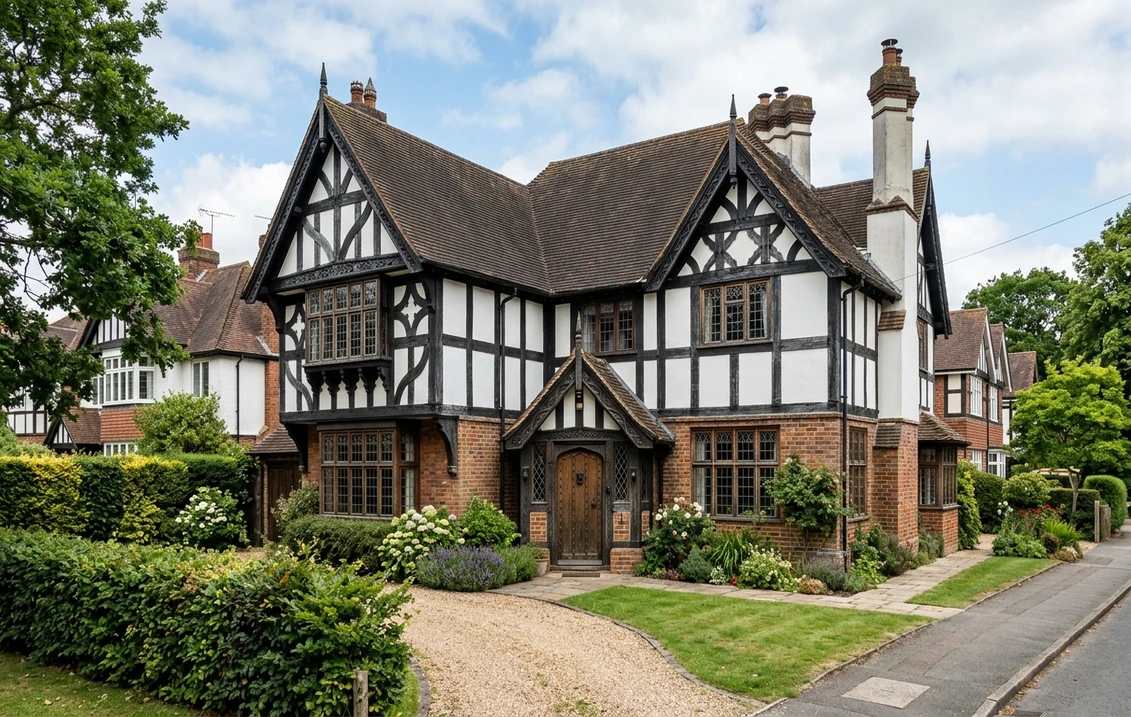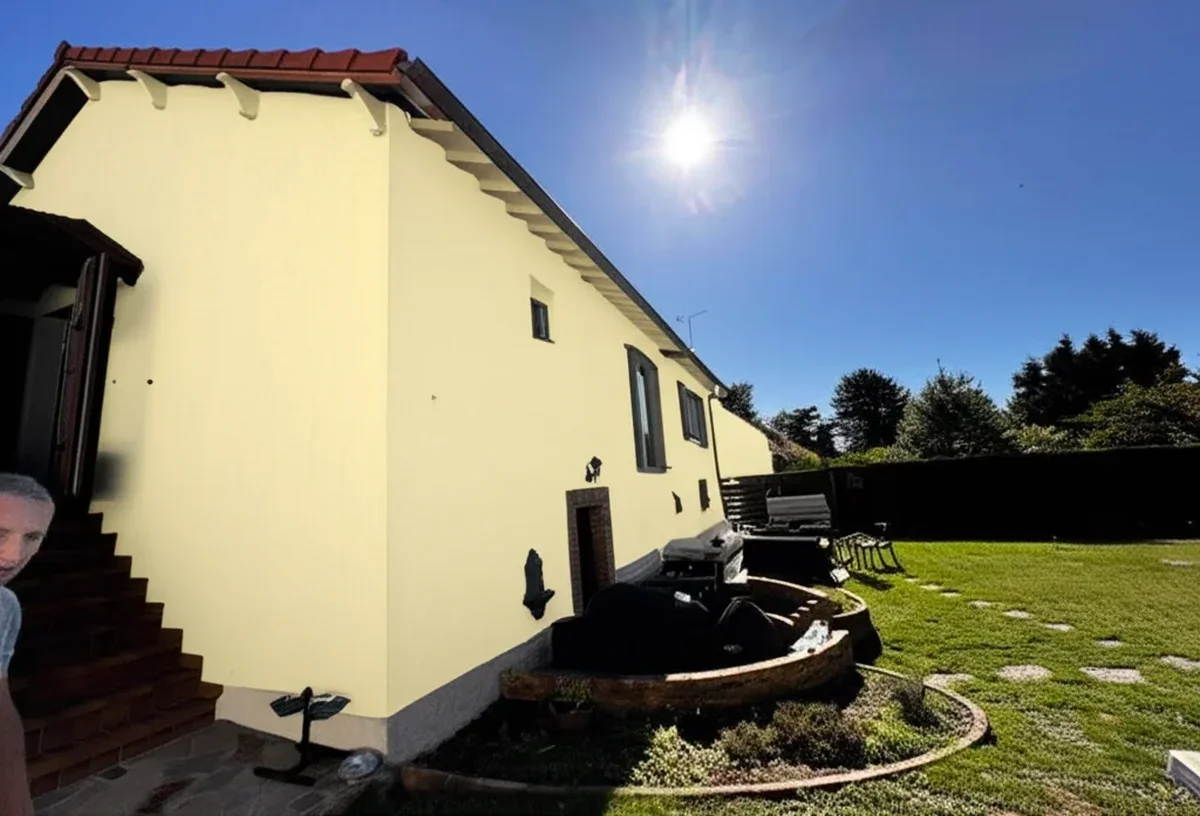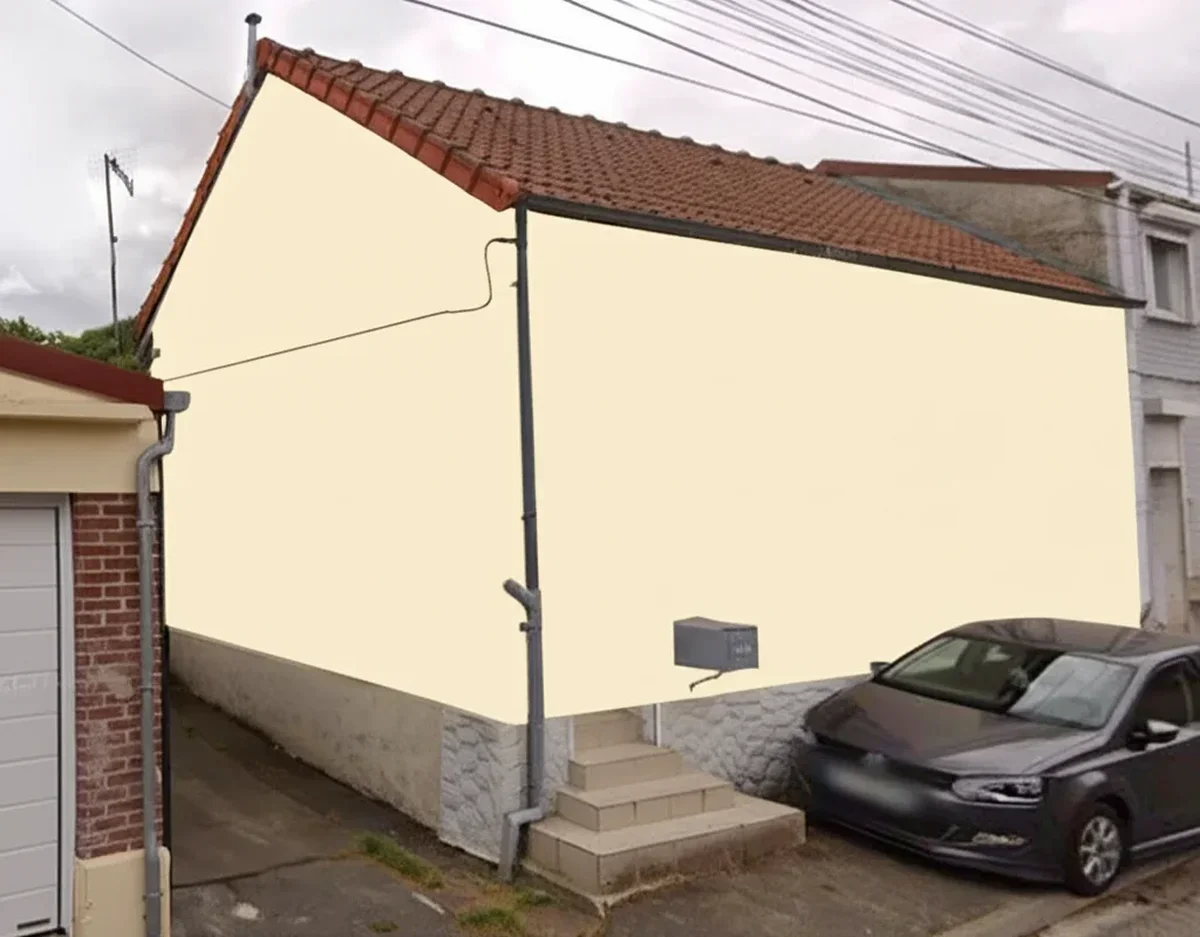
Try it on your house

From C.F.A. Voysey's rough-cast white-walled cottages to Edwin Lutyens' tile-hung Surrey houses, the Arts and Crafts movement gave Britain a domestic vernacular that still defines neighbourhoods like Bedford Park, Letchworth Garden City and Hampstead Garden Suburb. Choosing exterior colours for these homes is not decoration: it is conservation.
This 2026 guide gathers period-correct palettes from Farrow & Ball, Little Greene and Edward Bulmer Natural Paint, with LRV values, lime-friendly recommendations and SPAB-aligned advice on repointing. Whether you organise a full repaint or refresh a Tudor-brown timber gable, the colours below honour the Voysey-Lutyens tradition.
The Arts and Crafts colour philosophy
The movement (c. 1880-1920) rejected industrial bright pigments in favour of earth-tone, mineral-based colours drawn from the British landscape: chalky off-whites, sage greens from lichen and moss, oxide reds from clay tiles, and the deep brown of weathered oak. Voysey himself wrote that "simplicity, sincerity, repose, directness and frankness" should guide every elevation.
In practical terms this means three principles: bodies stay off-white or cream, never brilliant white; trim and joinery take muted sage or grey-green; and the front door becomes the single point of intensity, usually a heritage clay red or oxblood. Matt or eggshell finishes are essential, gloss reads as Victorian, not Arts and Crafts.
Upload a photo of your Voysey-style cottage and test heritage palettes in 30 seconds
Body colours: chalky off-whites and creams
Voysey's signature was the rough-cast rendered cottage, finished in a soft creamy white that softens with age. Avoid clinical brilliant white, it flattens stone and brick detailing and looks anachronistic on a Grade II listed property.
Farrow & Ball Joa's White 226 (LRV 73) is the period purist's first choice: a warm off-white with a faint green undertone that picks up the sage trim. Slipper Satin 2004 (LRV 79) is brighter and suits south-facing elevations. Skimming Stone 241 (LRV 65) leans warmer, ideal for shaded north walls in a Cotswold neighbourhood. Bone 15 (LRV 61) is the deepest body option, recommended where a heavily textured pebble-dash render needs visual weight.
Sage greens for trim, fascia and joinery
Sage and grey-green are the connective tissue of an Arts and Crafts elevation. Voysey used them on barge boards, casement frames and gutters; Lutyens favoured darker greens on stable doors and gates.
Farrow & Ball Lichen 19 (LRV 33) is the truest Voysey green, a soft, dusty sage that reads almost grey in overcast Bedfordshire light. French Gray 18 (LRV 38) is paler and more silvered, suited to rendered cottages where you want the trim to recede. Little Greene Stock 37 (LRV 27) is a deeper, more pigmented sage drawn from the company's Georgian archive, perfect for a Letchworth porch surround or a tile-hung gable's sub-frame.
Apply trim greens in eggshell or exterior eggshell, never gloss. A 35-50 LRV trim against a 65-79 LRV body gives the gentle contrast Voysey called "quiet harmony".
Heritage clay reds: the front door
Where a clay red feels too strong, the Arts and Crafts alternative is a muted yellow with a green cast: Farrow & Ball's Hay No. 37 has 'a distinctly green undertone' that suits pebble-dash and timber, set against a Wimborne White frame. Our yellow front door guide compares it with the brighter yellows.
The Arts and Crafts front door is meant to glow like a single embered tile. Choose a clay-derived red with brown undertones, never a pillar-box scarlet.
Farrow & Ball Eating Room Red 43 (LRV 9) is the friendliest of the three, a warm, slightly orange clay red that reads beautifully against Joa's White. Picture Gallery Red 42 (LRV 9) is deeper and more oxblood, suited to a Lutyens-style oak-planked door. Incarnadine 248 (LRV 7) is the darkest, almost black-red, reserve it for grand Hampstead Garden Suburb porches with substantial overhang. All three sit comfortably with sage trim and cream render.
Pebble-dash render and half-timbering
Two surface treatments dominate the Arts and Crafts vernacular: pebble-dash render and half-timbering. Each demands a specific approach.
Pebble-dash: Cotswold cream is the regional standard. Mix Joa's White 226 or Skimming Stone 241 in a lime-compatible exterior emulsion (Earthborn Eco Chic or Edward Bulmer Natural Paint), then accent the trim with Lichen 19 or Stock 37. The texture of the dash absorbs about 4-6 LRV points, so test on a 1m square sample before committing.
Half-timbering: the historically correct timber colour is not black. Voysey and his peers used Tudor brown, a dark chocolate-oak shade. Farrow & Ball Mahogany (LRV 7) is the closest modern equivalent, a deep, slightly red-brown that lets the timber grain remain visible under matt exterior eggshell. Pair with cream infill panels (Bone 15) for a Letchworth Garden City elevation.
Visualise Tudor brown timber, Cotswold cream render and sage trim on your photo
Period-correct palette: the 12 essential colours
This curated palette draws from Farrow & Ball, Little Greene and Edward Bulmer Natural Paint, the three brands whose archives most reliably match Voysey-Lutyens originals. LRV values guide light reflection; "best for" indicates the elevation element each colour serves.
| Colour | Brand & Code | LRV | Best for |
|---|---|---|---|
| Joa's White | Farrow & Ball 226 | 73 | Body / render |
| Slipper Satin | Farrow & Ball 2004 | 79 | Body |
| Skimming Stone | Farrow & Ball 241 | 65 | Body / render |
| Bone | Farrow & Ball 15 | 61 | Body / infill panels |
| Lichen | Farrow & Ball 19 | 33 | Trim / joinery |
| French Gray | Farrow & Ball 18 | 38 | Trim / fascia |
| Stock | Little Greene 37 | 27 | Trim / porch |
| Eating Room Red | Farrow & Ball 43 | 9 | Door |
| Picture Gallery Red | Farrow & Ball 42 | 9 | Door |
| Incarnadine | Farrow & Ball 248 | 7 | Door |
| Mahogany | Farrow & Ball (Tudor Brown) | 7 | Timber / half-timbering |
| Jonquil (lime-friendly) | Edward Bulmer Natural Paint | 58 | Render / lime substrates |
Try it on your house
No photo? Try a sample
Listed Building consent and Voysey neighbourhoods
Many original Arts and Crafts homes are Grade II listed, particularly Voysey's surviving cottages in Bedford Park (London W4), Voysey-influenced developments across Bedfordshire, and the curated streetscapes of Letchworth Garden City and Hampstead Garden Suburb. Before any external repaint:
- Check the listing entry on Historic England's National Heritage List for England
- Apply for Listed Building Consent if changing colour, material or finish
- In Letchworth, the Letchworth Garden City Heritage Foundation enforces colour schemes via its Scheme of Management
- In Hampstead Garden Suburb, the Suburb Trust reviews all external alterations
- In Bedford Park, the Bedford Park Society and Hounslow conservation officers should be consulted
Submitting your colour scheme alongside a visualised mock-up dramatically improves approval rates. Listed Building Consent applications take 8 weeks on average; refusals usually cite "colour out of period character".
Lime-friendly paints and SPAB repointing advice
Most genuine Arts and Crafts houses were built with lime mortar and lime render, not modern Portland cement. Modern acrylic masonry paints trap moisture, accelerating decay of soft brick and stone. The Society for the Protection of Ancient Buildings (SPAB) recommends:
- Use vapour-permeable ("breathable") exterior paints, silicate, limewash or natural-binder formulations
- Edward Bulmer Natural Paint exterior range and Earthborn Eco Chic Claypaint Exterior are both lime-compatible and period-correct
- Repoint with NHL 3.5 hydraulic lime mortar, never cement, SPAB's technical advice line is free for owners of historic homes
- Avoid plastic sealants around windows; use linseed-oil putty as Voysey specified
- For original Williamson Arts and Crafts brick door handles and ironmongery, restore rather than replace, patina is part of the listed character
A correctly specified breathable system will outlast a cheap acrylic by 8-12 years on a lime substrate, and will not blister, flake or trap damp.
Voysey vs Lutyens: which palette suits your house?
The two giants of the movement worked in different registers. Voysey's cottages are vertical, white-rendered, with low-pitched green-trimmed roofs, think Broadleys (Windermere) or The Orchard (Chorleywood). Lutyens' houses are horizontal, materially layered, with tile-hung gables and tall chimneys, think Munstead Wood or Tigbourne Court.
For a Voysey-inspired elevation, lead with Joa's White 226 body, Lichen 19 trim and Eating Room Red 43 door. For a Lutyens-inspired house, balance Bone 15 infill panels, Mahogany half-timbering, Stock 37 stable-door joinery and Picture Gallery Red 42 on the principal entrance. Both schemes resolve beautifully in matt and eggshell, never gloss.
One often-missed Voysey signature is the petrol-blue front door, a deep blue-green he favoured as an alternative to oxblood (a close 2026 equivalent is Farrow & Ball Hague Blue 30). Equally worth noting: on authentic Baillie Scott and Ernest Newton villas the barge boards, brackets and exposed beams should read chocolate-brown or black-brown, stained rather than gloss-painted, to echo weathered oak rather than modern joinery. Both moves anchor the elevation back to the movement's earth-pigment vocabulary.
Williamson Arts and Crafts ironmongery and brick handles
An authentic Arts and Crafts elevation extends beyond paint to handmade ironmongery. The Williamson catalogue, still produced in small workshops across the Black Country, supplies the wrought-iron strap hinges, thumb latches and brick-face pull handles that Voysey detailed on his original drawings. When you organise a repaint, factor in a parallel restoration of these pieces: hand-waxed wrought iron sits beautifully against Lichen 19 or French Gray 18 trim, while bronzed thumb latches glow against an Eating Room Red door.
A common mistake on Bedfordshire and Hertfordshire restorations is to swap original Williamson handles for stainless-steel reproductions. Conservation officers in Letchworth and Hampstead Garden Suburb often refuse this on Listed Building applications. Restore, repatinate, and overpaint the door around the original ironmongery, never strip the iron back to bare metal.
Sample testing and the British light problem
No exterior colour reads the same in the showroom and on the wall. A 5cm chip looks one way under fluorescent retail lighting and an entirely different way against a Cotswold-stone neighbour at 4pm in November. Three testing rules apply to every Arts and Crafts repaint:
- Test at 1 square metre minimum, anything smaller is misleading. Pebble-dash render absorbs 4-6 LRV points, so the colour you mix must read 4-6 points lighter on the chart than the finished wall
- View at three times of day, 9am, midday, 4pm, and in both bright and overcast conditions. British light shifts dramatically between Bedfordshire (cool, often grey) and the Cotswolds (warmer, more golden)
- Photograph and visualise digitally before painting. A free AI visualiser lets you preview Joa's White 226 against your actual brick or render, then layer Lichen 19 trim and Eating Room Red 43 to confirm the harmony
Edward Bulmer Natural Paint and Earthborn Eco Chic both supply A4 sample boards on request, request these rather than relying on small chips. Boards can be moved around the elevation, held against existing brickwork, and assessed in different weather without committing to wall application.
Budget and timing for a heritage repaint
An Arts and Crafts repaint is rarely a weekend job. Expect 3 to 5 weeks on a typical 4-bed Voysey-style detached house: one week for SPAB-aligned lime mortar repointing and substrate preparation, one to two weeks for body coats, and a final week for trim, door and ironmongery detail. Schedule the work for April-June or September-October: lime-friendly paints need 8-15°C surface temperatures and 24-48 hours of dry weather between coats.
Budget guidance for 2026: a fully breathable Edward Bulmer or Earthborn system on a typical 180m² elevation runs £6,500-£11,000 supplied and applied, including lime mortar repointing of pointing failures. Cheaper acrylic systems (£3,500-£5,500) trap moisture and routinely require a full strip-back within 6-9 years on lime substrates, the false economy is severe. Always request the contractor's specification in writing, naming the paint manufacturer and product line.
Frequently asked questions
What is the most authentic body colour for a Voysey-style cottage?
Farrow & Ball Joa's White 226 (LRV 73) is widely accepted as the closest modern match to Voysey's original rough-cast rendered finish. It has a faint green undertone that ties it to sage trim, and reads softly under both bright and overcast British light. Slipper Satin 2004 is a brighter alternative for south-facing elevations. Avoid brilliant white, it is anachronistic and looks clinical against Lichen or French Gray trim.
Do I need Listed Building Consent to repaint a Grade II Arts and Crafts house?
If your home is Grade II listed and you are changing colour, finish or material, you must apply for Listed Building Consent through your local conservation officer. Repainting in the existing colour with an equivalent breathable paint usually does not require consent, but always check first, penalties for unauthorised work include criminal prosecution. In Letchworth Garden City, Hampstead Garden Suburb and Bedford Park, additional Scheme of Management or Article 4 controls apply even on unlisted houses.
Are Farrow & Ball exterior paints lime-compatible?
Farrow & Ball Exterior Masonry is microporous and works on most rendered surfaces, but for genuine lime mortar or lime render substrates SPAB recommends a fully breathable mineral or natural-binder paint. Edward Bulmer Natural Paint exterior and Earthborn Eco Chic Claypaint Exterior are both fully vapour-permeable and tinted to period-correct shades. They are the safest choice for a pre-1919 Arts and Crafts cottage with original lime fabric.
What colour should half-timbering be on an Arts and Crafts house?
Not black. The historically correct shade is Tudor brown, a deep chocolate-oak tone that lets timber grain remain visible. Farrow & Ball Mahogany (LRV 7) is the closest modern equivalent, applied in matt exterior eggshell. The mid-twentieth-century convention of black-and-white "magpie" timbering is a Victorian fashion, not an Arts and Crafts one, and is often refused under Listed Building Consent in Letchworth and Hampstead Garden Suburb.
Free - No sign-up - 100+ heritage shades from Farrow & Ball, Little Greene and Edward Bulmer
A successful Arts and Crafts repaint honours the Voysey-Lutyens grammar: chalky off-white bodies, sage trim, clay-red door, Tudor brown timber. Test your shortlist on a real photo of your house with our free AI colour visualiser, then specify a breathable, lime-friendly system before applying for Listed Building Consent. Sources: SPAB technical advice, Historic England, Letchworth Heritage Foundation, Farrow & Ball, Little Greene, Edward Bulmer Natural Paint.
Trademarks mentioned (Sherwin-Williams, Benjamin Moore, Behr, Caparol, Brillux, Sto, Alpina, Valspar, PPG, Glidden, Dulux, Crown Trade, Sandtex, Farrow & Ball, Johnstone's, Leyland) are property of their respective owners. FacadeColorizer is independent and not affiliated with any of them. Nominative fair use under Lanham Act §1125.