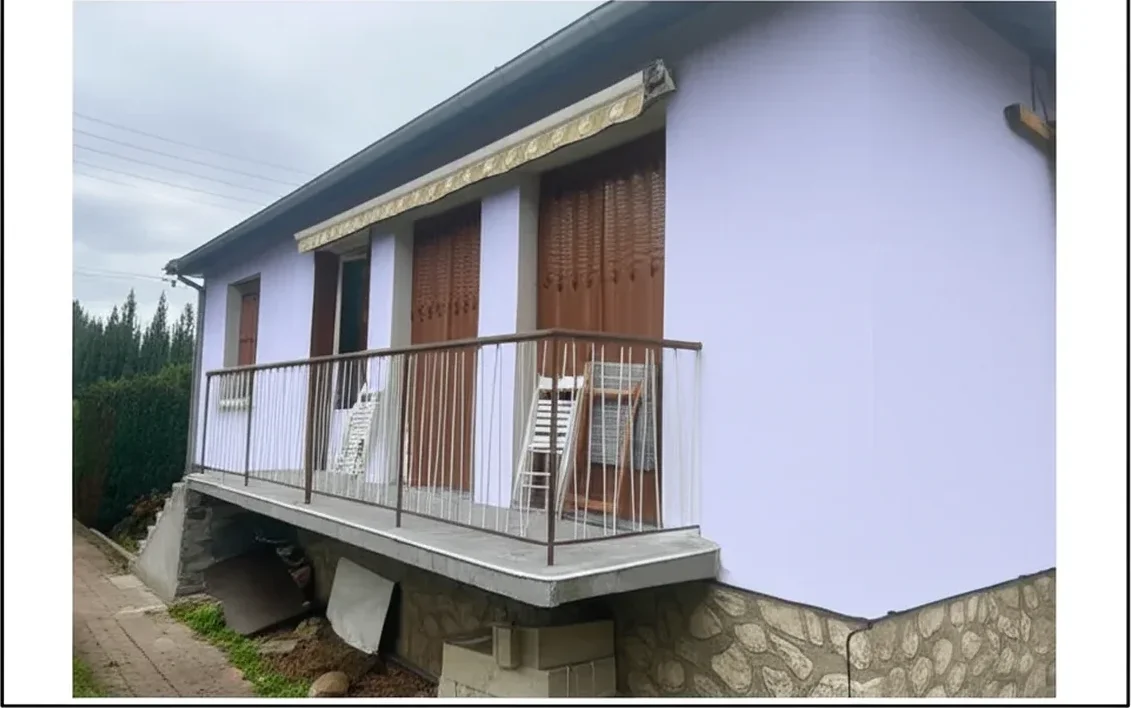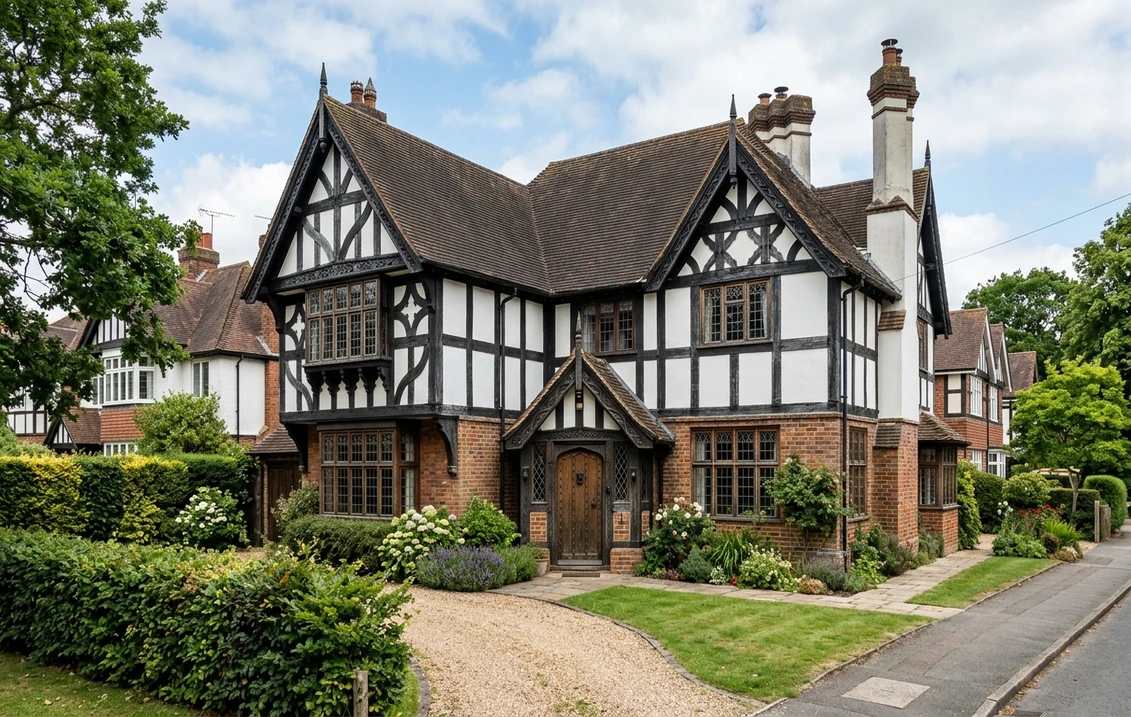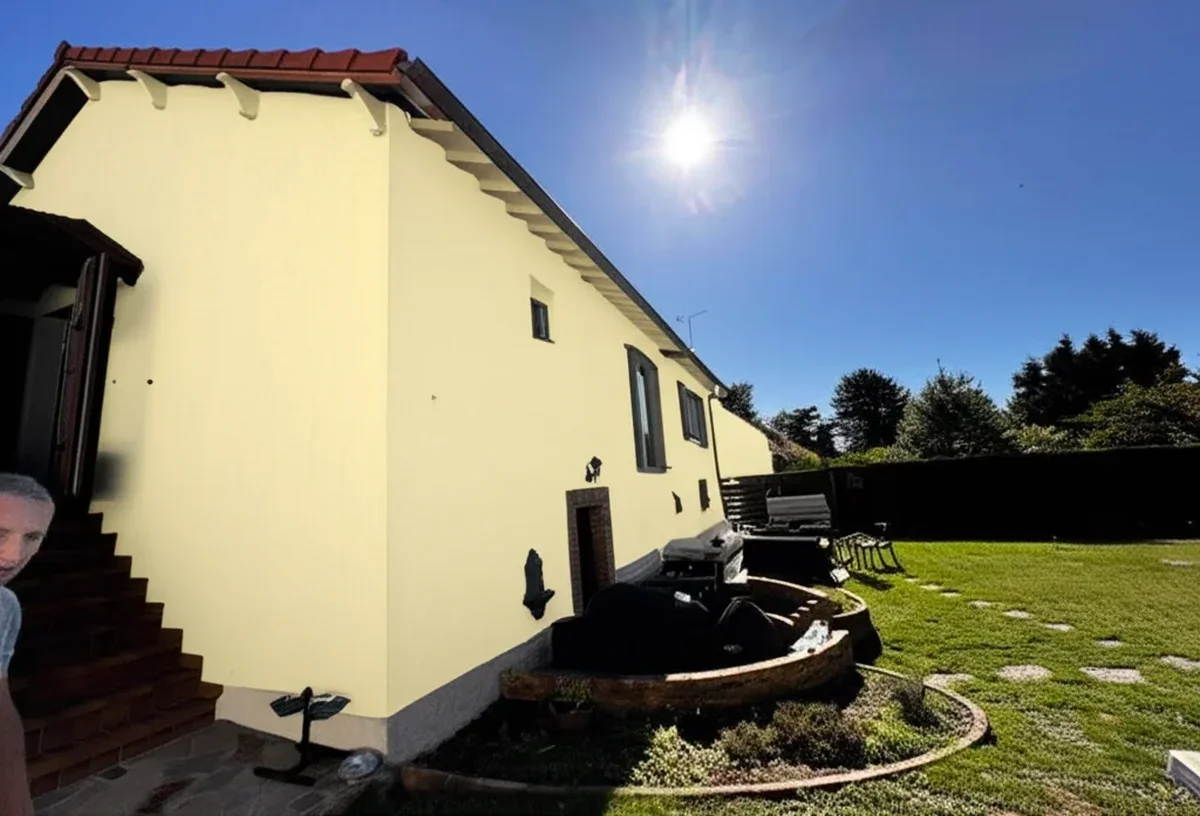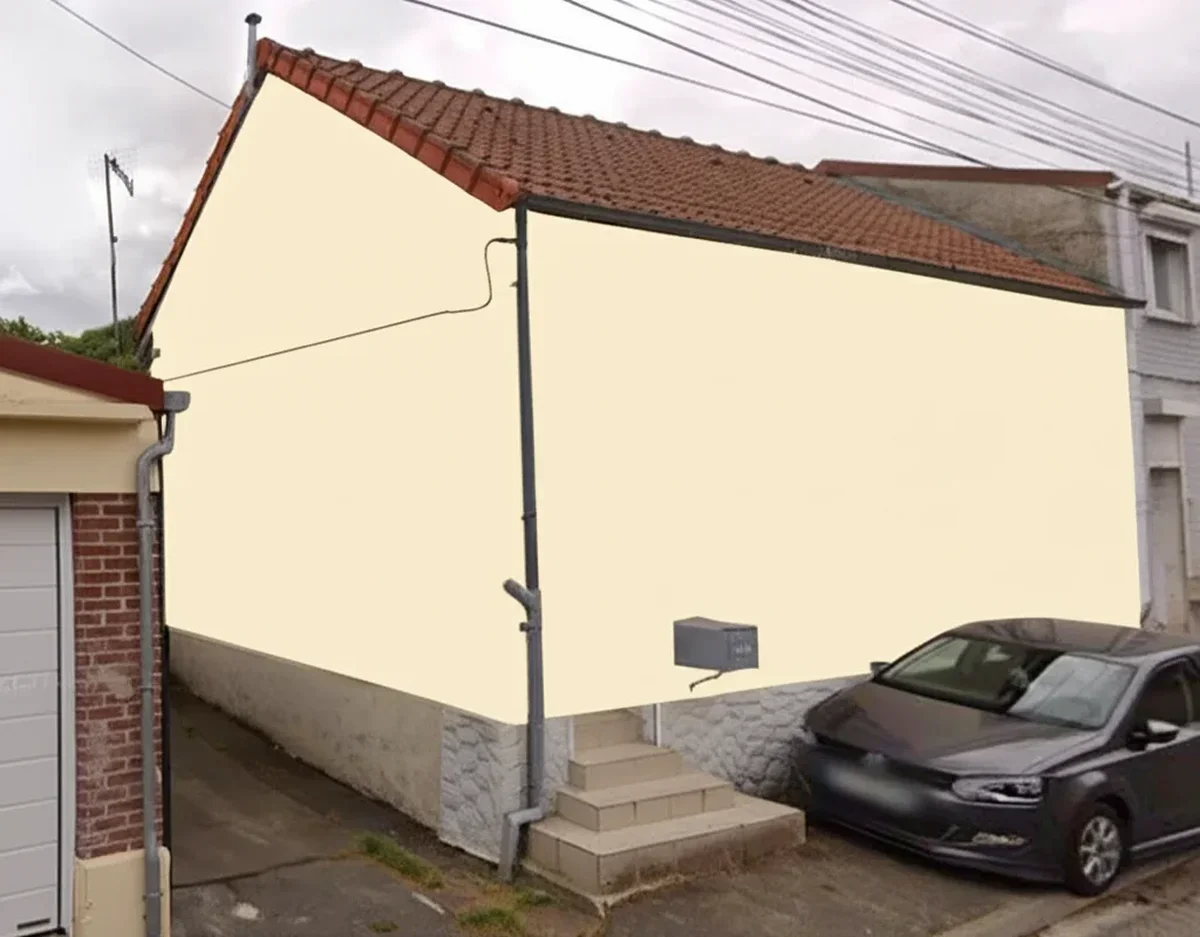
Try it on your house

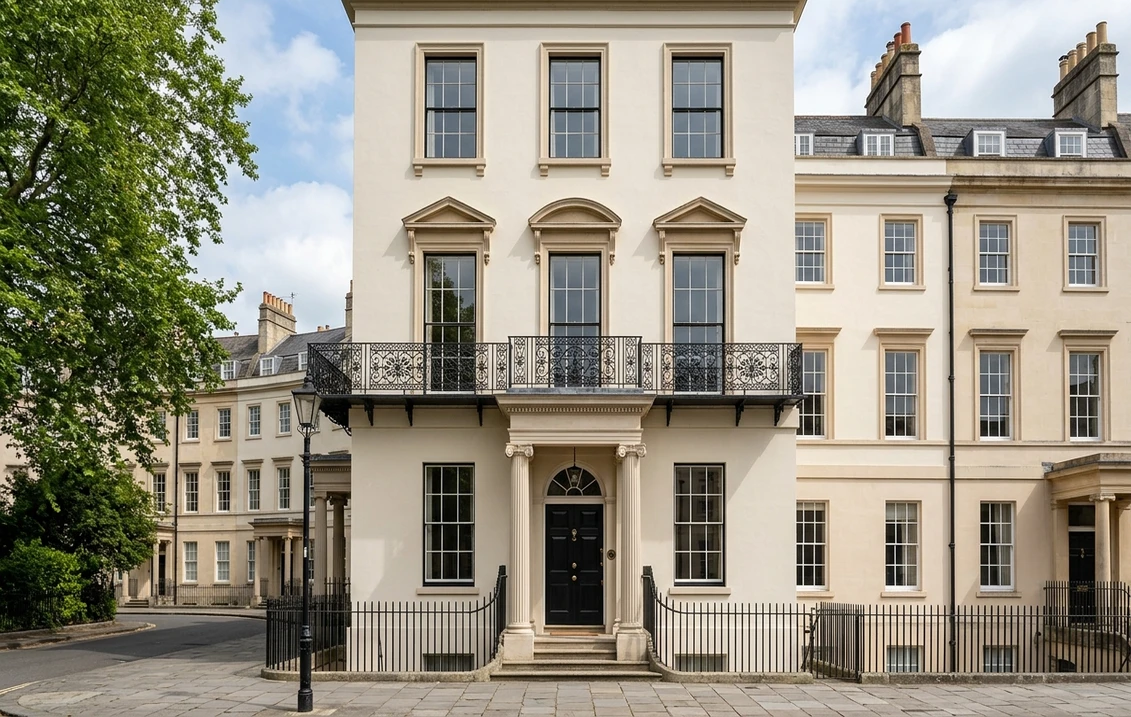
Regency houses (built roughly 1811 to 1830 under the Prince Regent, later George IV) are the architectural gold standard of the UK seaside and spa town. Think of the sweeping stucco crescents of Bath, the cream-painted terraces of Brighton and Hove, the villas of Cheltenham's Montpellier and Leamington Spa's Royal Parade, or the theatrical domes of the Royal Pavilion. The exterior palette is deceptively narrow: a pale warm stucco on the main walls, crisp off-white joinery, gloss black wrought-iron balconies and a front door in deep green, Chinese yellow or glossy black. Get those four elements right and a tired Regency facade reads instantly as a restored listed building.
This 2026 guide lists the ten most authentic Regency exterior colour combinations, with matching codes across Farrow & Ball Heritage, Little Greene and Dulux Heritage, plus dedicated sections on Bath, Brighton and Cheltenham terrace coordination, and the strict conservation rules that apply in every major Regency town.
What defines an authentic Regency exterior
The Regency style is a strand of late Georgian neoclassicism, refined by architects such as John Nash, John Soane, Decimus Burton and John Buonarotti Papworth. The signature is a brick carcass covered in lime stucco, scored to imitate Bath stone, with delicate ironwork balconies, slender glazing bars, semi-circular fanlights and full-height sash windows opening onto verandas.
The original palette was disciplined. Stucco was tinted to imitate Bath or Portland stone: warm creams, pale buffs, soft stone greys and occasionally a pale pink blush for seaside terraces. Joinery was off-white or soft stone, never brilliant white. Ironwork was almost universally glossy black or very dark green. Front doors were typically deep bottle green, glossy near-black or, following the Pavilion's Chinoiserie fashion, Chinese yellow or soft scarlet. That restraint is what gives a Nash crescent its choreographed elegance.
Authentic Regency stucco versus modern interpretations
Walk Royal Crescent in Bath, Brunswick Square in Hove or Lansdowne Crescent in Cheltenham and you will notice the terraces read as one continuous architectural composition. That is not an accident: leaseholders and conservation officers enforce a tight palette agreed at terrace level. Breaking ranks with a bright white or cool grey stucco looks immediately wrong, and in most cases is unlawful.
Heritage architects consistently recommend staying within the authentic palette. Cool modern greys fight the warm adjacent stucco and honeyed Bath limestone; brilliant white PVA-bound masonry paints seal the porous lime render and trap damp, causing blown stucco within three to five winters; and in every major Regency conservation area the local plan specifies an approved terrace palette, with enforcement action triggered under the Planning (Listed Buildings and Conservation Areas) Act 1990.
The 2026 compromise that works well is an authentic Regency palette applied in breathable mineral or silicate paint such as Keim Soldalit or Beeck Renosil, rather than film-forming acrylic masonry, so the 200-year-old lime stucco can breathe.
The top 10 authentic Regency exterior combinations for 2026
For the door, Farrow & Ball's own descriptions point to Studio Green No. 93, its darkest green, which the maker says appears almost black indoors but responds to light on an exterior, with Off-White No. 3 as the named complementary white for the surround; our green front door colours guide sets it against Card Room Green and Green Smoke.
Each combination below pairs a stucco colour with joinery, door and ironwork shades, with codes across three heritage-friendly ranges. Use them as a tested starting point, then preview on a photograph of your actual terrace before committing to paint.
| Combination | Stucco | Joinery & sashes | Front door | Best for |
|---|---|---|---|---|
| 1. Bath Crescent Cream | F&B White Tie No.2002 | F&B Pointing No.2003 | F&B Studio Green No.93 | Royal Crescent, Lansdown, Camden |
| 2. Brunswick Hove Stone | F&B Joa's White No.226 | F&B Wimborne White No.239 | F&B Pitch Black No.256 | Brunswick Square, Adelaide Crescent |
| 3. Cheltenham Montpellier | Little Greene Regency White 170 | Little Greene Slaked Lime 105 | Little Greene Invisible Green 66 | Montpellier, Lansdown Crescent |
| 4. Leamington Parade | Dulux Heritage Lead White | Dulux Heritage Chalk White | Dulux Heritage Green Slate | Royal Parade, Clarendon Square |
| 5. Brighton Pavilion Pink | F&B Setting Plaster No.231 | F&B Slipper Satin No.2004 | F&B India Yellow No.66 | Regency Square, Kemp Town |
| 6. Nash Park Crescent | F&B Matchstick No.2013 | F&B School House White No.291 | F&B Off-Black No.57 | Park Crescent, Regent's Park villas |
| 7. Clifton Bristol Stone | Little Greene Stock Day 36 | Little Greene Loft White 222 | Little Greene Bronze Red 15 | Royal York Crescent, Cornwallis |
| 8. Weymouth Seaside Buff | Dulux Heritage Georgian Cream | Dulux Heritage Cotton White | Dulux Heritage Oxford Blue | Weymouth Esplanade, Sidmouth |
| 9. Tunbridge Wells Calverley | F&B String No.8 | F&B Old White No.4 | F&B Deep Reddish Brown No.W101 | Calverley Park, Decimus Burton villas |
| 10. Chinoiserie Chinese Yellow | Little Greene Clay Mid 153 | Little Greene Aged Ivory 131 | Little Greene Yellow-Pink 46 | Pavilion-facing Brighton terraces |
Try it on your house
No photo? Try a sample
Upload your Regency facade and preview all 10 heritage combinations in seconds
Bath: the UNESCO stucco benchmark
Bath is the strictest Regency context in the UK. The entire Georgian and Regency core sits within the City of Bath UNESCO World Heritage Site, with Royal Crescent, the Circus, Lansdown Crescent and Camden Crescent all Grade I listed. Bath & North East Somerset Council operates a published Stucco Colour Palette which lists approved shades for rendered terraces, and any departure requires formal listed building and conservation consent.
The benchmark colour is a warm cream that reads as clean Bath limestone in morning light and deepens to a honeyed buff in afternoon sun. F&B White Tie No.2002 is the most widely specified equivalent, followed by Little Greene Regency White 170. Joinery on Royal Crescent is traditionally F&B Pointing No.2003 or Old White No.4. Ironwork is gloss black, and Crescent doors are documented as deep bottle green or glossy black. Speak to the conservation officer first, and budget for lime-compatible mineral paint (Keim, Beeck or St Astier) rather than acrylic masonry.
Brighton and Hove: Pavilion colour and seaside palette
Brighton's Regency identity was forged by the Prince Regent's Royal Pavilion (Nash, 1815 to 1822) and the theatrical seaside terraces that followed: Regency Square, Brunswick Square, Adelaide Crescent, Lewes Crescent and the Kemp Town estate by Thomas Kemp. The Pavilion itself introduced a Chinoiserie pastel palette of pale cream exterior, soft pink and Chinese yellow interiors, and gilded finials, which trickled down into the wider Brighton terrace vocabulary.
For a seafront Brighton or Hove terrace, the most historically accurate stucco colour is a soft warm stone with a slight pink or peach undertone: F&B Joa's White No.226 for Brunswick Square, or F&B Setting Plaster No.231 for Kemp Town terraces where a blush pink Regency fashion was documented. Joinery is F&B Slipper Satin No.2004 or Wimborne White No.239. Ironwork (the famous bow-balconies) is gloss black. Doors on Pavilion-facing terraces can reference the Royal Pavilion's Chinoiserie with F&B India Yellow No.66 or Little Greene Yellow-Pink 46, a rare licence granted by Brighton & Hove City Council precisely because the Pavilion itself sets the precedent.
The coastal salt-air environment accelerates paint failure: use silicate or mineral masonry paint and repaint on a 6 to 8 year cycle (rather than 10 to 12 years inland). Budget 38 to 55 pounds per square metre for scaffolded heritage application in 2026.
Cheltenham and Leamington: spa town terrace coordination
Cheltenham's Montpellier, Lansdown and Pittville estates, along with Leamington Spa's Royal Parade, Clarendon Square and Lansdowne Crescent, represent the inland Regency spa town in its purest form. Unlike Bath (predominantly limestone) and Brighton (predominantly stucco), these spa towns mix rendered stucco with ashlar stone dressings, which constrains the colour palette more tightly.
Cheltenham Borough Council and Warwick District Council both publish conservation area appraisals with approved terrace palettes. The target is a warm off-white to pale cream stucco that harmonises with the cream Cotswold stone used for quoins, cornices and porticoes. Little Greene Regency White 170 is explicitly recommended in Cheltenham guidance documents, followed by Dulux Heritage Lead White and F&B Matchstick No.2013. Joinery should be a soft stone (Slaked Lime 105 or Chalk White), ironwork gloss black, front doors in bottle green or slate grey-green.
The coordination rule is simple: every house in the terrace shares the same stucco and joinery colour, with variation only permitted on the front door. A one-off cream-and-grey scheme on a Royal Parade house will be refused and enforced.
Wrought iron balconies: black or very dark green
The slender wrought-iron balcony is one of the Regency period's most distinctive signatures, especially the bow-fronted seaside versions in Brighton, Sidmouth and Weymouth. The historically correct colour is gloss black (F&B Pitch Black No.256 or Little Greene Lamp Black 228), with very dark brunswick green (Little Greene Mid Brunswick Green 128 or F&B Studio Green No.93) as the documented alternative on some Nash terraces. Avoid modern anthracite, matte black or dark grey, which reads as 21st century shopfitting rather than Regency metalwork.
Use an oil-based exterior eggshell over a rust-inhibiting primer such as Owatrol CIP. Seafront balconies repaint every 5 to 7 years; inland every 8 to 10 years. Budget 45 to 75 pounds per linear metre for a full strip, prime and two-coat finish in 2026.
Front doors: Royal Pavilion fashion and the Regency three
Regency front doors sit behind a columned portico or a simple fanlight with delicate margin glazing. Three historically documented colour options dominate:
- Deep bottle or brunswick green, for example F&B Studio Green No.93, Little Greene Invisible Green 66 or Dulux Heritage Green Slate. The safest and most universally approved heritage choice, paired with polished brass door furniture.
- Glossy near-black, such as F&B Pitch Black No.256 or Off-Black No.57. Dominant in central London Nash terraces, on Park Crescent and around Regent's Park. Reads as formal and metropolitan.
- Chinese yellow or soft scarlet, such as F&B India Yellow No.66 or Little Greene Yellow-Pink 46, permitted on Pavilion-facing terraces in Brighton where the Royal Pavilion's Chinoiserie fashion is the historical precedent.
Avoid modern sage, putty, pale blue or charcoal doors: tempting on Instagram but historically wrong, and in Bath or Brighton conservation areas often refused. Pair with polished brass ironmongery rather than chrome or matte black, which reads as a 1990s refit on a 210-year-old facade.
Conservation area rules: Bath UNESCO, Brighton, Cheltenham, Leamington
Almost every significant Regency house in the UK sits inside both a conservation area and a listed building designation. Painting such a property is therefore not just a matter of taste, it is regulated by law.
Four interlocking layers of control typically apply:
- Grade I or Grade II* listing: any external colour change requires formal Listed Building Consent, even like-for-like repainting. The Planning (Listed Buildings and Conservation Areas) Act 1990 makes unauthorised work a criminal offence with unlimited fines.
- Conservation Area Article 4 Direction: removes permitted development rights for external painting, so a planning application is required before repainting. Widely applied in Bath, Cheltenham, Leamington and Brunswick Town (Hove).
- Approved terrace palette: many councils publish specific colour schedules. Bath & North East Somerset's Bath Stucco Palette, Brighton & Hove's Regency Square and Brunswick Town guidance and Cheltenham's Central Conservation Area Character Appraisal all list approved shades.
- World Heritage Site status: Bath's UNESCO designation adds an additional layer of statutory consultation, and the City of Bath World Heritage Steering Group may comment on any proposal that affects the setting of the Crescent, the Circus or the Assembly Rooms.
Practical workflow: download your council's conservation area appraisal PDF, check for an Article 4 Direction, and email the conservation officer with a photograph and proposed colour references. Most officers respond within 10 working days with informal feedback, saving thousands in enforcement costs.
Frequently asked questions about Regency exterior colours
What is the correct stucco colour for a Regency terrace in Bath or Brighton?
Warm cream or pale stone with a subtle buff or peach undertone, never brilliant white or cool grey. In Bath the council-approved benchmarks are Farrow & Ball White Tie No.2002, Little Greene Regency White 170 and Dulux Heritage Lead White. In Brighton and Hove, F&B Joa's White No.226 or Setting Plaster No.231 work on Brunswick and Kemp Town terraces. Always apply in breathable mineral or silicate masonry paint rather than acrylic, because 200-year-old lime stucco needs to breathe.
Can I paint my Regency terrace a modern grey or white scheme?
Almost never, if the property is listed or sits in a Bath, Brighton, Cheltenham or Leamington conservation area. Cool greys fight the warm Bath limestone and Cotswold stone context, and councils routinely refuse planning applications that depart from the documented terrace palette. The authentic Regency palette is warm cream or stone stucco, off-white joinery, black ironwork and a deep green, glossy black or Chinese yellow door. Modern breathable mineral paint in those traditional colour values is the best practical compromise.
Do I need Listed Building Consent to repaint a Regency house?
If the property is Grade I, Grade II* or Grade II listed, yes, even for like-for-like repainting. In addition, most major Regency towns (Bath, Cheltenham, Leamington, Brunswick Town in Hove) have Article 4 Directions requiring a planning application for any external colour change, even on unlisted terrace houses. Unauthorised work is a criminal offence under the Planning (Listed Buildings and Conservation Areas) Act 1990. Always contact your council's conservation officer before buying paint.
What colour should I paint the wrought-iron balconies on a Regency facade?
Gloss black is the historically correct and most widely approved choice: Farrow & Ball Pitch Black No.256 or Little Greene Lamp Black 228. Very dark brunswick green (Mid Brunswick Green 128 or Studio Green No.93) is a documented alternative on some Nash terraces. Avoid anthracite, matte black or modern dark grey, which reads as contemporary shopfitting rather than Regency metalwork. Use an oil-based exterior eggshell over a rust-inhibiting primer, and plan a 5 to 7 year repaint cycle on seafront balconies.
Test all 10 Regency heritage combinations on your own terrace in under a minute
The difference between a restored Regency terrace and a tired one is almost always the four-part palette: warm stucco, off-white joinery, glossy black ironwork and a deep green, black or Chinese yellow door. Preview Bath Crescent Cream, Brunswick Hove Stone or any of the other eight heritage combinations on a photograph of your actual facade using our free AI colour visualiser before speaking to your conservation officer. Sources: Historic England Advice Notes, Bath & North East Somerset Stucco Palette, Brighton & Hove Regency Square Guidance, Cheltenham Central Conservation Area Appraisal, Farrow & Ball Heritage Collection, Little Greene Colour Scales, Dulux Heritage 2026 range.
Trademarks mentioned (Sherwin-Williams, Benjamin Moore, Behr, Caparol, Brillux, Sto, Alpina, Valspar, PPG, Glidden, Dulux, Crown Trade, Sandtex, Farrow & Ball, Johnstone's, Leyland) are property of their respective owners. FacadeColorizer is independent and not affiliated with any of them. Nominative fair use under Lanham Act §1125.