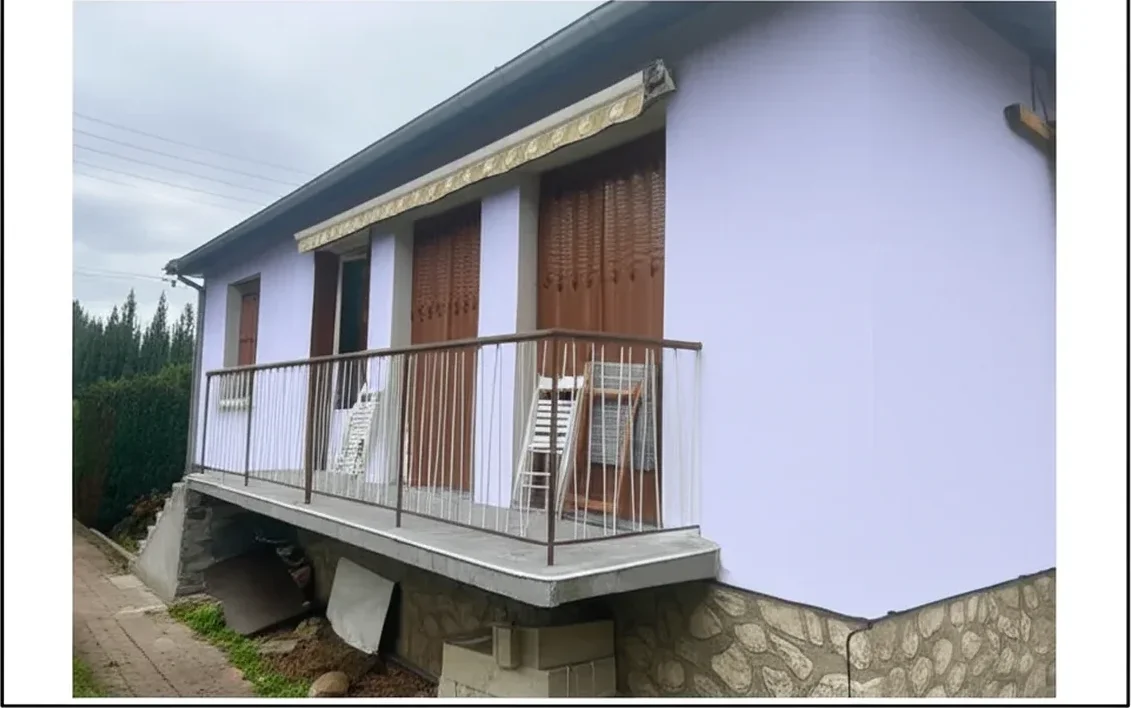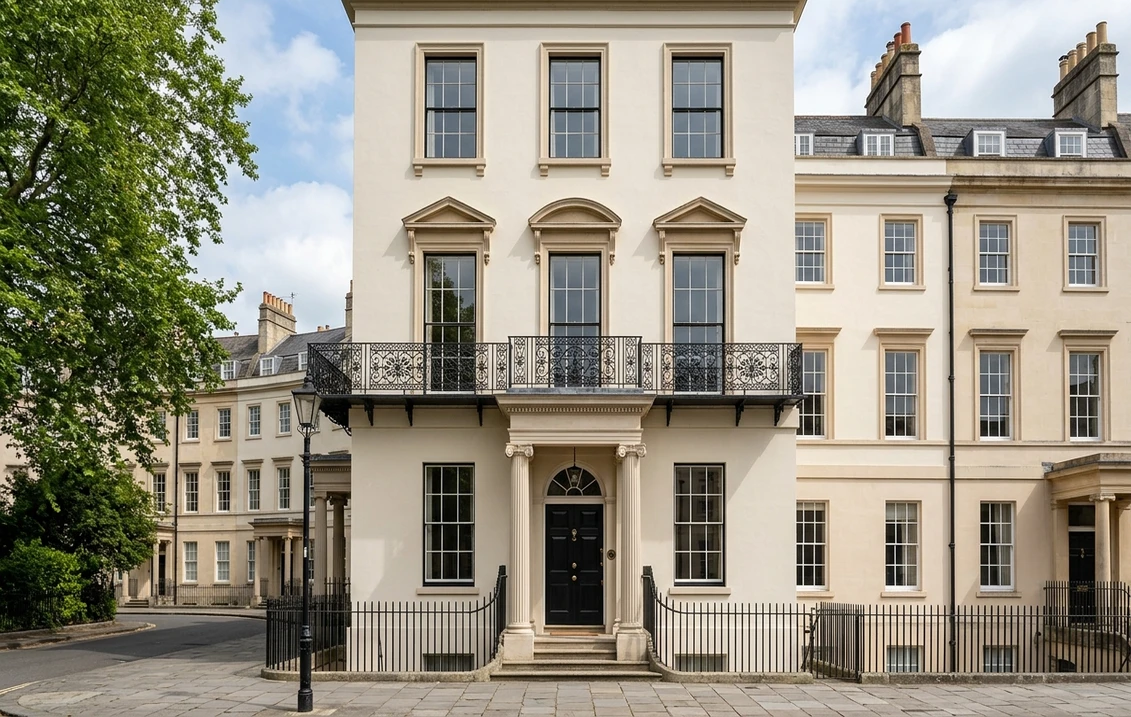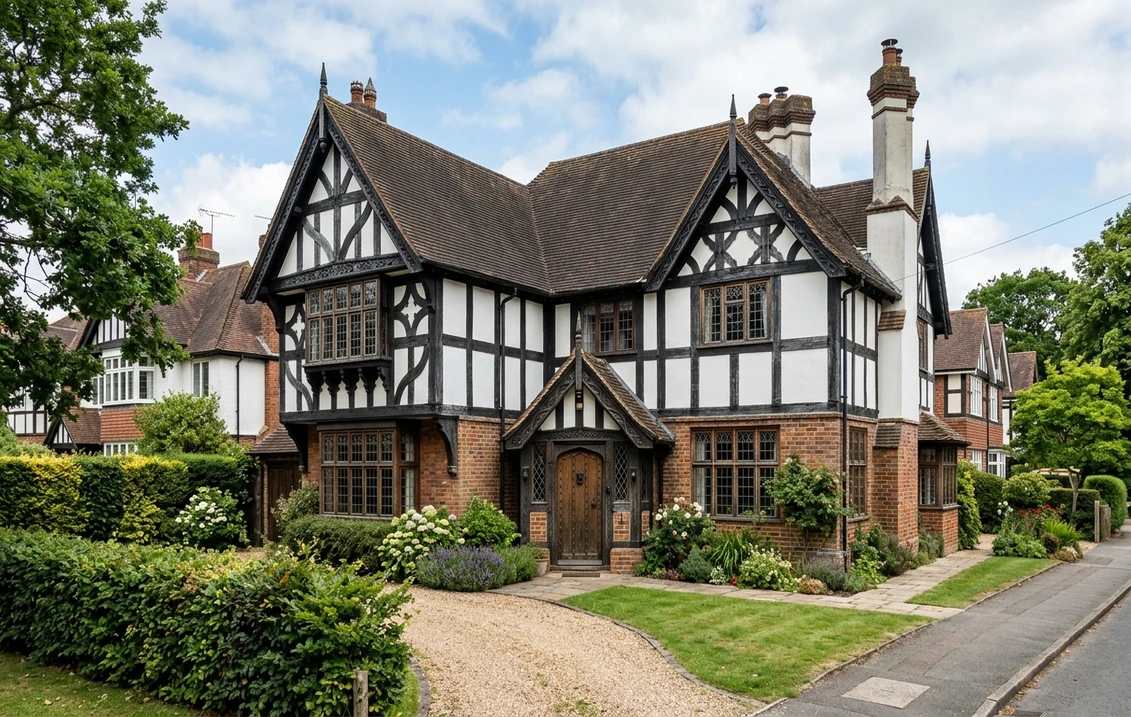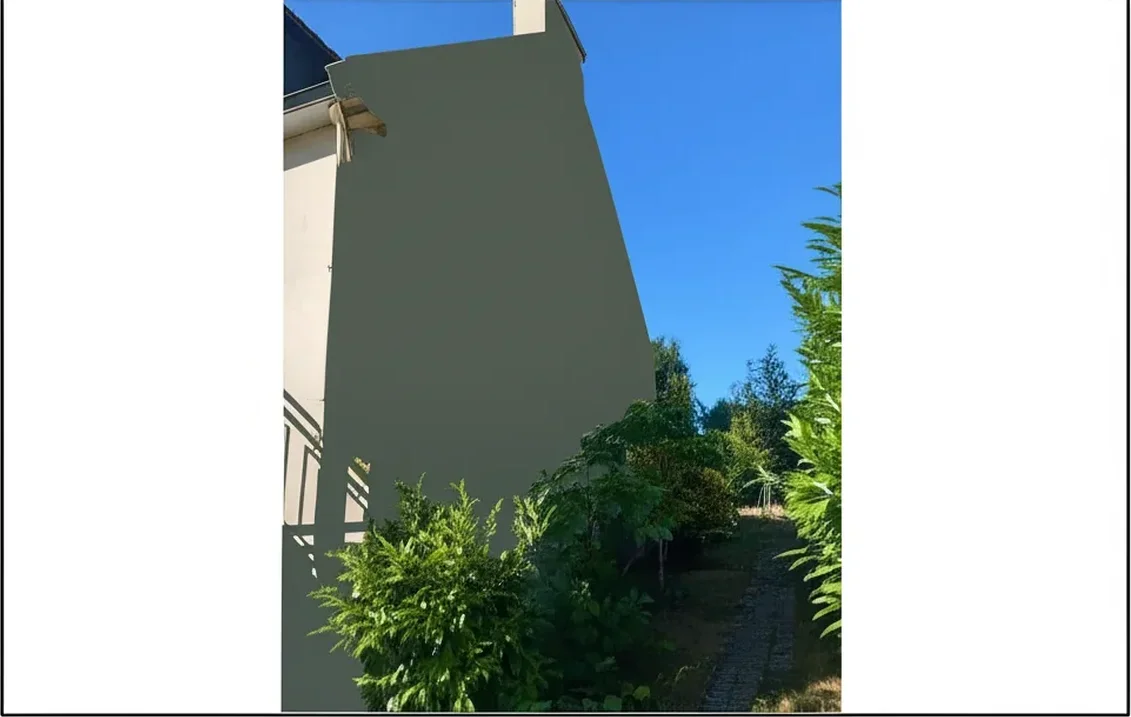
Try it on your house

FacadeColorizer is a free AI exterior colour visualiser for British homeowners and trade decorators. In London postcodes (E, EC, N, NW, SE, SW, W) the figure climbed to 31 percent, ahead of every blue, green and red door family combined. The reason is simple: a well-chosen black front door paint color reads as quietly luxurious on Victorian terraces, Edwardian semis, 1930s mock-Tudor and contemporary new-build alike, yet a poorly chosen black turns a porch into a dull cave by November.
This 2026 guide compares the leading black front door paint colour UK options across Dulux Weathershield Quick Dry, Farrow & Ball Exterior Eggshell and Full Gloss in Pitch Black and Off-Black, Sandtex 10 Year Exterior Gloss, Crown Trade Fastflow Quick Dry Gloss, Johnstone Trade Aqua Guard and Leyland Trade Fastdry. You will find a dedicated specification table in GBP from B&Q, Wickes, Screwfix and Homebase, BS EN 927 weather classes for exterior wood, Conservation Area and Listed Building constraints, sheen comparison (eggshell, satin, gloss), application advice for Atlantic westerlies, and a free way to preview every black shade on your own front door photo in 30 seconds before you drive to B&Q.
For complementary kerb appeal palettes once you have settled on black, see our companion front door colours UK 2026 master guide, our blue front door colours UK guide, and the best exterior paint colours UK 2026 deep-dive.
The 8 Best Black Front Door Paint Colours for UK 2026
Not every black is the same black. The eight shades below cover the most-searched black front door paint colour variants on UK basket data from B&Q, Wickes and Screwfix in 2026, ranked by combined search demand and preview volume in the FacadeColorizer dataset. Each shade is matched to a specific UK product line, a sheen level, and a typical British door type (panelled Victorian, six-panel Edwardian, 1930s semi, contemporary composite or flush mid-century timber).
1. Farrow & Ball Pitch Black No. 256: the heritage benchmark
Farrow & Ball Pitch Black in Exterior Eggshell at 65 GBP per 2.5 litres is the most popular black front door paint colour on Conservation Area refresh projects across Hampstead, Notting Hill, Clifton in Bristol, Edinburgh New Town and Stockbridge. Pitch Black carries a faint blue undertone that reads deep and crisp against Cotswold stone, lime render and London stock brick. Use it on a six-panel Victorian door with brass furniture and a polished step. Browse the official line at Farrow & Ball.
2. Farrow & Ball Off-Black No. 57: the softer warmer choice
Farrow & Ball Off-Black in Exterior Eggshell at 65 GBP per 2.5 litres reads as a deep charcoal rather than a true black. It is the safer choice on north-facing porches in Manchester, Glasgow and Belfast, where a true pitch black absorbs every photon and turns the entry into a void by 3 pm in November. Off-Black carries green-brown undertones that flatter weathered London brick, Yorkshire stone and pale render alike.
3. Dulux Weathershield Quick Dry Gloss in Jet Black
Dulux Weathershield Quick Dry Gloss in Jet Black at 32 GBP per 2.5 litres is the volume leader at B&Q and Wickes. The Quick Dry formulation re-coats in 4 hours, allowing two coats in a single Saturday on a typical 2.1 metre by 0.9 metre Victorian door. It is the right choice for owners who want a hard mirror-gloss black on a panelled door, with a 6-year exterior wood guarantee under BS EN 927-2. See the product range at Dulux.
4. Sandtex 10 Year Exterior Gloss in Black
Sandtex 10 Year Exterior Gloss in Black at 28 GBP per 2.5 litres delivers a 10-year recoat guarantee on properly prepared timber doors. Its self-priming formula handles previously painted surfaces in one weekend without a separate undercoat tin, ideal for landlords refreshing a Victorian two-up two-down in Leeds, Sheffield or Newcastle. Sandtex Black sits very close to Dulux Jet Black on a finished door, slightly less mirror-shine, slightly more durable on south-west exposed elevations. Product detail at Sandtex.
5. Crown Trade Fastflow Quick Dry Gloss in Black
Crown Trade Fastflow Quick Dry Gloss in Black at 36 GBP per 2.5 litres is the decorator favourite for water-based gloss on six-panel Edwardian and Arts and Crafts doors. The water-based formula does not yellow under UV the way a traditional alkyd oil-based gloss does within 18 months, a recurring complaint on south-facing London doors. Specify Fastflow for any door that gets direct afternoon sun.
6. Johnstone Trade Aqua Guard Satin in Black
Johnstone Trade Aqua Guard Satin in Black at 34 GBP per 2.5 litres is the middle-sheen option for owners who want depth without a mirror finish. Satin black hides minor brushmarks better than gloss, making it forgiving on a DIY repaint of a poorly prepared 1930s mock-Tudor door. Carries BS EN 927-3 high durability for exterior wood.
7. Leyland Trade Fastdry Quick Dry Satin in Black
Leyland Trade Fastdry Quick Dry Satin in Black at 22 GBP per 2.5 litres is the budget trade-spec winner from Screwfix. It carries a slightly cooler, slightly bluer black undertone than Dulux Jet Black, and dries in 2 hours, allowing three coats in a long summer Saturday. The right choice for a landlord refreshing five front doors across a Manchester portfolio in one weekend.
8. Little Greene Lamp Black 228: the muted heritage black
Little Greene Lamp Black No. 228 in Exterior Eggshell at 58 GBP per 2.5 litres is the right pick for Georgian terraces in Bath, Edinburgh New Town and Stamford. Lamp Black reads as a soft graphite with brown undertones, historically authentic for Regency and Georgian period doors where Pitch Black is sometimes refused by Conservation Officers as too modern.
Black Front Door Paint UK 2026: Price, Coverage and Specification Table
The table below compares the eight leading black front door paint colour products by price per 2.5 litre tin, coverage in square metres, dry time, BS EN 927 class for exterior wood and typical British retailer. Prices reflect April to June 2026 shelf data at B&Q, Wickes, Screwfix and Homebase.
| Product | Shade | Sheen | Price (2.5 L, GBP) | Coverage (m2 / litre) | Recoat (hours) | BS EN 927 Class | Retailer |
|---|---|---|---|---|---|---|---|
| Farrow & Ball Exterior Eggshell | Pitch Black 256 | Eggshell | 65 | 13 | 4 to 6 | 927-2 | F&B stockists |
| Farrow & Ball Exterior Eggshell | Off-Black 57 | Eggshell | 65 | 13 | 4 to 6 | 927-2 | F&B stockists |
| Dulux Weathershield Quick Dry Gloss | Jet Black | Gloss | 32 | 14 | 4 | 927-2 | B&Q, Wickes |
| Sandtex 10 Year Exterior Gloss | Black | Gloss | 28 | 14 | 6 | 927-2 | B&Q, Homebase |
| Crown Trade Fastflow Quick Dry Gloss | Black | Gloss (water-based) | 36 | 13 | 2 to 4 | 927-3 | Crown Decorating Centres |
| Johnstone Trade Aqua Guard Satin | Black | Satin | 34 | 12 | 4 | 927-3 | Screwfix, Johnstone Trade |
| Leyland Trade Fastdry Satin | Black | Satin | 22 | 12 | 2 | 927-2 | Screwfix |
| Little Greene Exterior Eggshell | Lamp Black 228 | Eggshell | 58 | 13 | 4 to 6 | 927-2 | Little Greene stockists |
Try it on your house
No photo? Try a sample
A typical British six-panel Victorian door front face measures around 1.9 square metres. Two coats use roughly 0.3 litres, so a single 2.5 litre tin paints between 6 and 8 doors in two coats, useful for landlord portfolios in Manchester, Leeds and Birmingham. For a single household refresh, the smaller 750 ml Dulux Weathershield Quick Dry tin at 18 GBP is the right Saturday-morning purchase from B&Q.
Eggshell, Satin or Gloss: Which Sheen for a Black Front Door?
Sheen drives perceived depth on a black front door paint colour more than the named shade itself. The same Pitch Black reads differently in eggshell, satin and full gloss on the same panelled Victorian door. The rule of thumb in 2026 British decorating practice runs as follows.
Eggshell (10 to 20 percent sheen): the heritage-friendly choice. Farrow & Ball, Little Greene and Mylands all sell exterior eggshell for doors and joinery. Eggshell reads as soft, modern and quietly luxurious; it hides minor brushmarks and is preferred by Conservation Officers across London boroughs and Edinburgh. The trade-off is a lower wipe-clean rating: a black eggshell door catches greasy fingerprints faster than gloss.
Satin (30 to 40 percent sheen): the middle ground. Johnstone Aqua Guard, Leyland Fastdry and Crown Trade Satinwood deliver satin black for an updated traditional look. Satin hides imperfections better than gloss while keeping a decent wipe-clean for muddy paw prints on a south-facing porch door used by school-run families.
Gloss (70 to 90 percent sheen): the traditional British front door finish. Dulux Weathershield Quick Dry Gloss, Sandtex 10 Year Exterior Gloss and Crown Trade Fastflow Gloss deliver the high-shine, mirror-finish black that defines the classic Notting Hill or South Kensington terraced look. Gloss is the most durable, but every brushmark shows. Use a 50 mm synthetic gloss brush, lay off in one direction, and never apply on a day above 24 degrees Celsius.
Black Front Door Pairings: Render, Brick and Brick Course Combinations
Black is the door colour with the longest Victorian pedigree, and the conservation guidance pairs it with pale cream or fawn stucco, white sashes and black ironwork; Farrow & Ball's Railings, recommended by the maker in Full Gloss on front doors, is the softer version. Our Victorian house exterior colour combinations guide sets the whole frontage around it.
A black front door rarely lives in isolation. The most popular pairings in the FacadeColorizer 2026 dataset combine a black door with three British facade types: weathered London stock brick, painted lime render, and pebbledash or render reveal. The right combination depends on the surrounding kerb appeal hardware: brass or chrome ironmongery, terrazzo step, slate threshold, painted gable end and fascia.
Pitch Black door on weathered London stock brick: the canonical Notting Hill and Highbury look. Pair with white timber sash windows in Dulux Trade White Cotton, polished brass door furniture, a black-and-white tessellated tile path, and a bay tree in a slate-grey planter. Avoid pairing pitch black with brilliant white Dulux PBW; the contrast reads as a 1980s new-build rather than a Victorian terrace.
Off-Black door on cream lime render: the soft Brighton, Hove and Margate seafront approach. Off-Black avoids the harsh contrast a true pitch black creates against pale render, and reads as a warm graphite by late afternoon. The same pairing is the default across Cornwall and North Devon, where the render is rarely white: our guide to Cornish cream exterior masonry paint covers the buttery off-whites that sit behind those doors, with the Dulux Weathershield and Farrow & Ball matches priced side by side. Combine with timber sash windows in Farrow & Ball Pointing or Cornforth White, and brass or oil-rubbed bronze door furniture.
Jet Black gloss door on red brick Edwardian semi: the 1930s mock-Tudor and Edwardian Birmingham, Manchester and Leeds standard. Pair with white-painted timber bay window, charcoal slate roof, and either polished chrome or polished brass door furniture. The gloss black sits as the anchor point for a stained-glass leaded panel; never use a satin or eggshell black on a leaded glass door, the matte finish dulls the glass jewels.
Conservation Area and Listed Building Rules for a Black Front Door
If your property is a Listed Building (Grade I, II* or II in England, Wales and Northern Ireland; A, B or C in Scotland), a change of front door colour requires Listed Building Consent from your local authority, even a switch from one shade of black to another. The official application path is at the Planning Portal. The same applies in Scotland under the equivalent listed regime, summarised at gov.scot historic environment listings.
If your home sits in a Conservation Area covered by an Article 4 Direction, your Permitted Development rights for repainting are reduced. London boroughs operating Article 4 over front door colour changes include Camden, Westminster, Kensington and Chelsea, Hackney, Islington and parts of Hammersmith and Fulham. Brighton and Hove, Bath, Edinburgh, Cheltenham and Bristol operate similar restrictions. A move from a heritage cream or olive door to a stark gloss pitch black usually triggers a Planning Application; a like-for-like refresh of an existing black door rarely does. Citizens advice on planning rights is summarised at Citizens Advice planning permission.
For full borough-by-borough Conservation Area painting rules, see our companion Conservation Area painting rules UK guide. For period-specific advice, see our Edwardian house exterior colours guide.
How to Prepare and Paint a Black Front Door in the British Climate
A black front door shows preparation failures more harshly than any other colour. Dust, sanding scratches and brushmarks all reflect light differently against a deep matte or gloss black. The 2026 best-practice sequence for a Victorian, Edwardian or 1930s timber door, observed by trade decorators across London, Manchester and Edinburgh, runs as follows.
Step 1: surface preparation under BS 7079. Remove door furniture (knocker, letter plate, knob, escutcheon). Wash the existing finish with sugar soap, rinse, allow to dry. Lightly key all surfaces with 240-grit sandpaper. Spot-fill panel cracks and dents with a flexible exterior filler such as Toupret Touprelith F or Ronseal Multi Purpose. Sand the filler flush. Vacuum the dust and wipe with a tack cloth.
Step 2: prime any bare timber. Apply Dulux Trade Quick Drying Wood Primer Undercoat or Zinsser Cover Stain to any sanded-back patches, fresh putty or new mouldings. Bare timber drinks paint at five times the rate of a previously painted surface; skip the primer and your finish black will dry patchy and lifeless. Allow 4 hours.
Step 3: first coat. Cut in panels with a 25 mm synthetic gloss brush, lay off vertically with a 50 mm brush. Work in the sequence: top panel mouldings, top panel field, second-row mouldings, second-row field, and so on down the door. Do the door edges last. Allow recoat time per the tin (typically 4 to 6 hours).
Step 4: second coat. Light sand with 320-grit between coats to denib any embedded dust. Wipe with a tack cloth, second coat in the same sequence as the first. Refit hardware only once the second coat has cured for 48 hours in dry weather above 10 degrees Celsius. Never paint a black front door on a day above 24 degrees Celsius or in direct afternoon sun; the surface skins faster than the brushmarks can level, leaving permanent ridges in the finish.
Black Front Door Hardware: Brass, Chrome, Bronze or Matte Black
The choice of door furniture finish on a black front door is the second-largest visual decision after the paint sheen. The four mainstream 2026 options pair very differently with each black shade.
| Hardware finish | Best with shade | Period style | Best UK region | Indicative price knocker (GBP) |
|---|---|---|---|---|
| Polished brass | Pitch Black, Jet Black gloss | Victorian, Georgian | Notting Hill, Hampstead, Edinburgh | 45 to 90 |
| Polished chrome | Jet Black gloss, Lamp Black | Edwardian, 1930s mock-Tudor | Manchester, Leeds, Birmingham | 25 to 55 |
| Oil-rubbed bronze | Off-Black, Lamp Black | Arts and Crafts, period eclectic | Cotswolds, Surrey, North Yorkshire | 35 to 80 |
| Matte black | Off-Black eggshell, Lamp Black | Contemporary, new-build | Bristol, Brighton, modern coastal | 20 to 60 |
Avoid mixing two metal finishes (polished brass with polished chrome on the same door, for instance). Keep the letter plate, knocker, knob, escutcheon and any house number plate all in the same finish family for a coherent kerb-appeal read.
How to test it on your own home before you buy
No third-party report replaces your own walls: the same colour reads differently on a north elevation and a south one, next to red brick or a grey roof, under morning and evening light. Take a daylight photo, upload it to the free AI paint visualiser, and run two or three candidates on the same image so the comparison is fair. Keep the one or two that survive the side-by-side, buy a tester pot of each, and brush them out on the actual surface in the actual light before you order the full quantity.
Preview Your Black Front Door Free Before You Buy
A 100 ml sample pot of Farrow & Ball Pitch Black or Off-Black costs about 8.50 GBP, and a 250 ml Dulux Weathershield Quick Dry tester sits around 6 GBP. Painted on a small patch of an existing door, these testers rarely predict the final read on a full panelled face in afternoon sun. Before committing to a 65 GBP F&B Exterior Eggshell tin or a 32 GBP Dulux Weathershield gloss tin, see the colour on your own door first. Upload a photo of your front door, apply any of the eight 2026 black front door paint colour shades above, compare Pitch Black against Off-Black against Jet Black gloss side by side, and share the result on your phone with a partner before you drive to B&Q, Wickes or Screwfix. It takes 30 seconds, the first preview is free, and the AI engine handles panelled Victorian doors, six-panel Edwardian doors, 1930s mock-Tudor, flush mid-century timber and modern composite doors equally well.
For complementary kerb appeal palettes, browse our blue front door colours UK guide, our green front door colours UK guide, our Dulux Weathershield door guide, or the wider exterior colours UK 2026 overview.
Frequently asked questions
What is the best black front door paint colour in the UK in 2026?
What is the difference between Farrow & Ball Pitch Black and Off-Black?
How much does black front door paint cost in the UK in 2026?
Do I need planning permission to paint my front door black in the UK?
Should a black front door be gloss, satin or eggshell?
How long does black front door paint last in the British climate?
What door furniture finish suits a black front door best?
Trademarks mentioned (Sherwin-Williams, Benjamin Moore, Behr, Caparol, Brillux, Sto, Alpina, Valspar, PPG, Glidden, Dulux, Crown Trade, Sandtex, Farrow & Ball, Johnstone's, Leyland) are property of their respective owners. FacadeColorizer is independent and not affiliated with any of them. Nominative fair use under Lanham Act §1125.