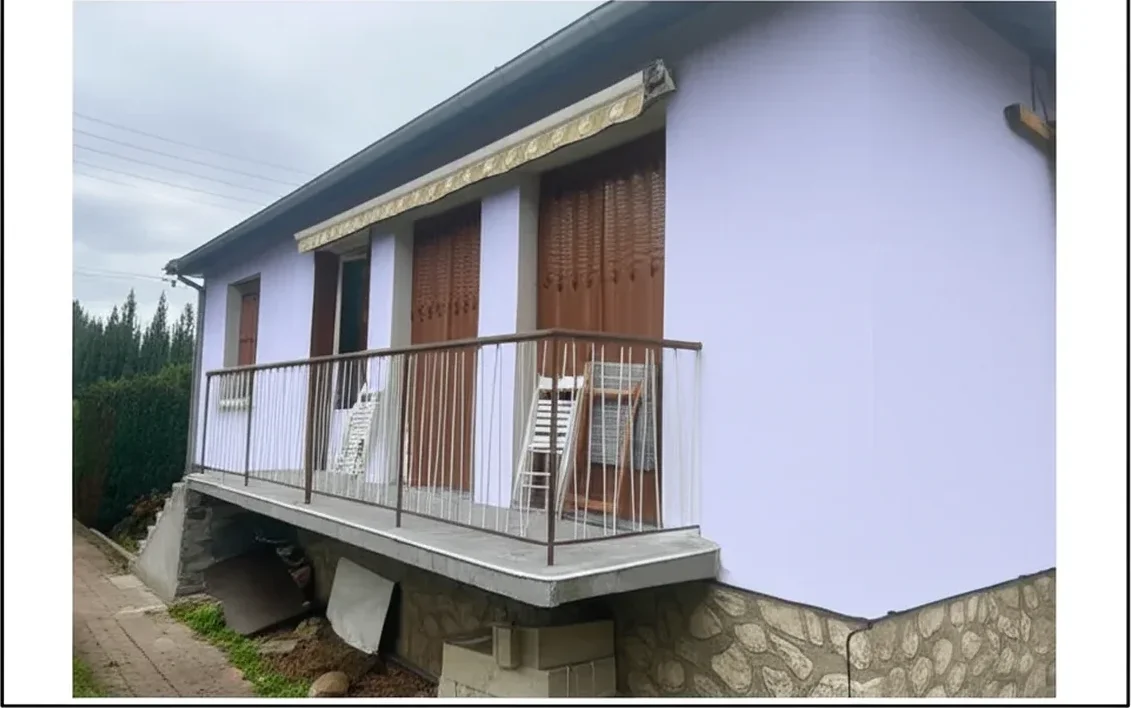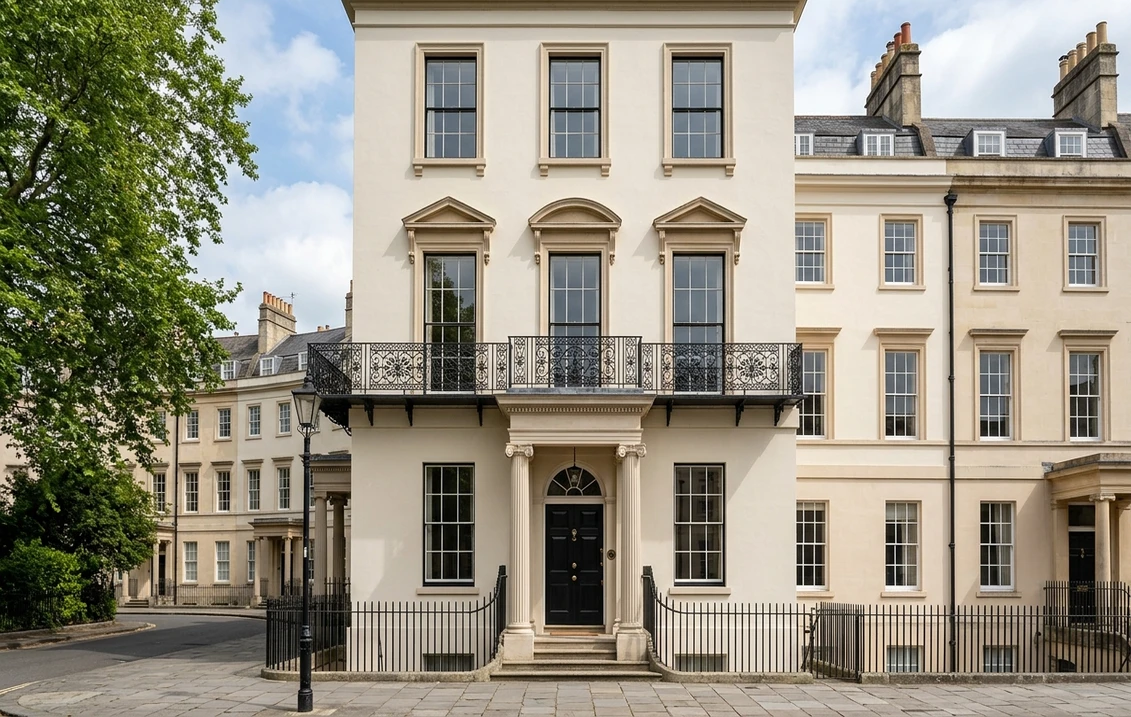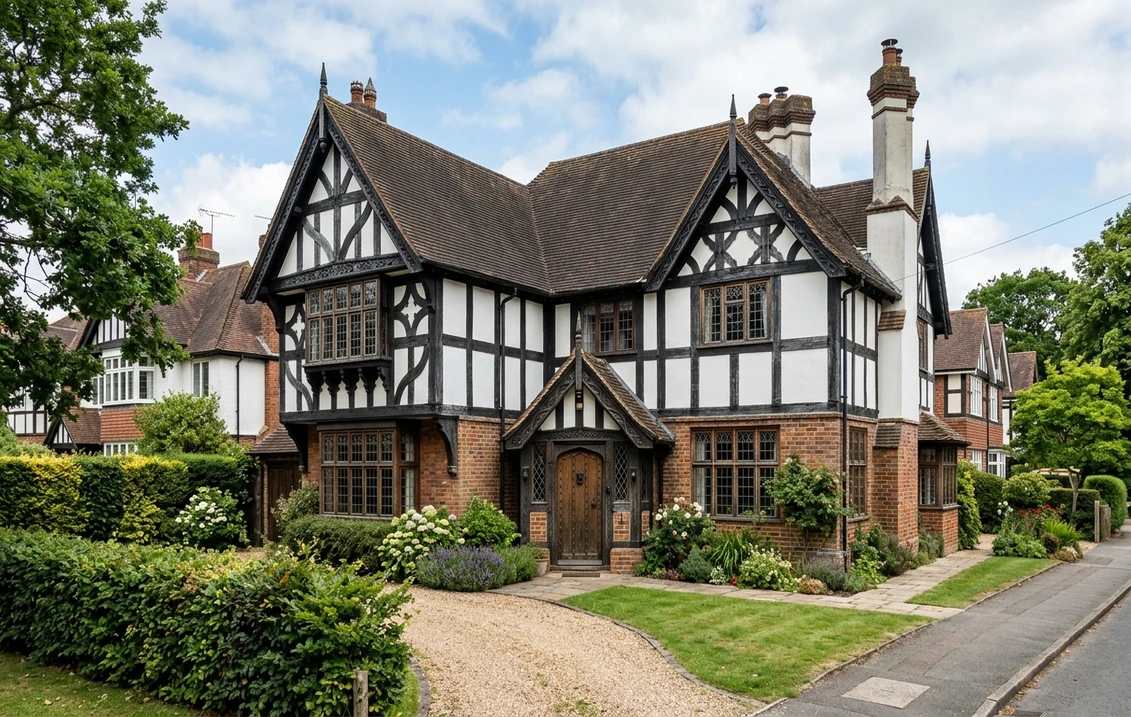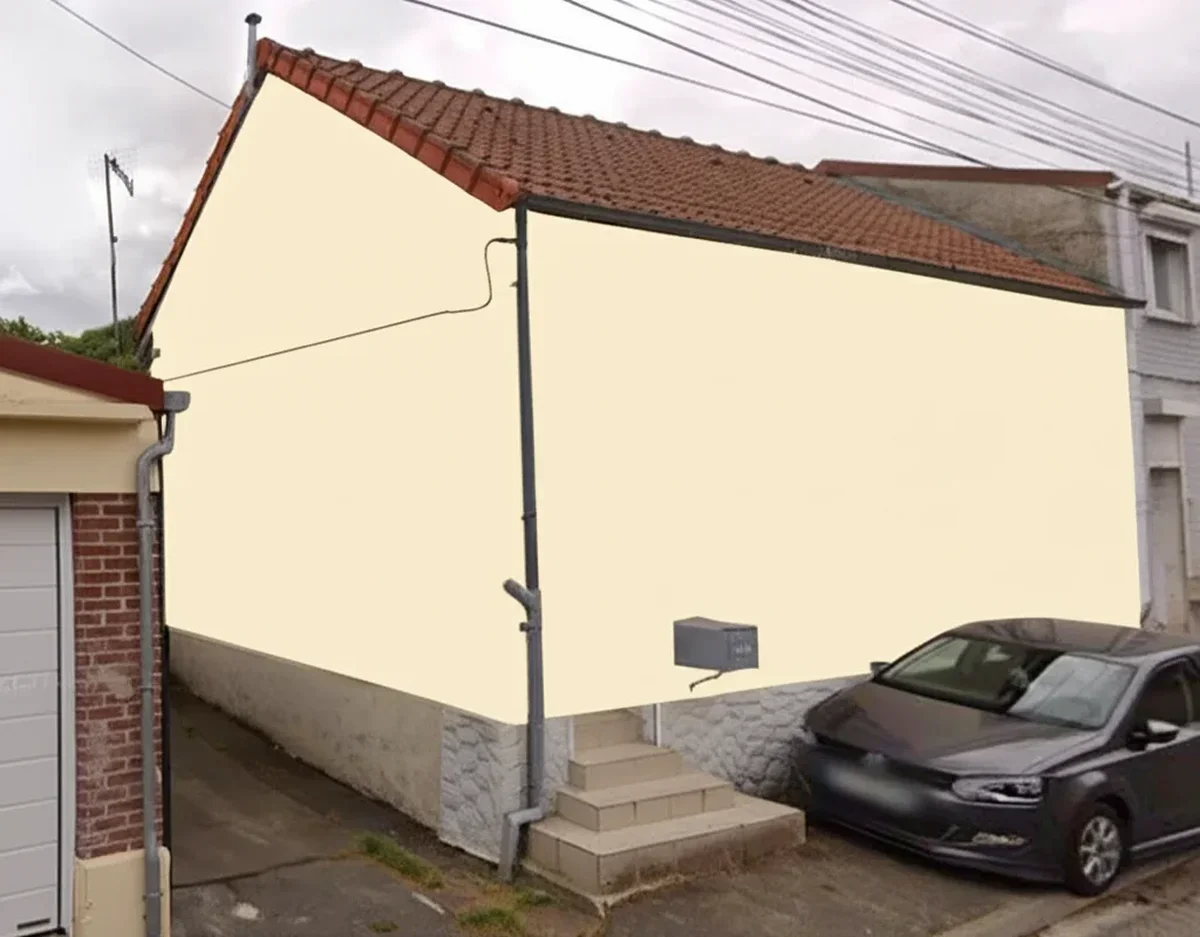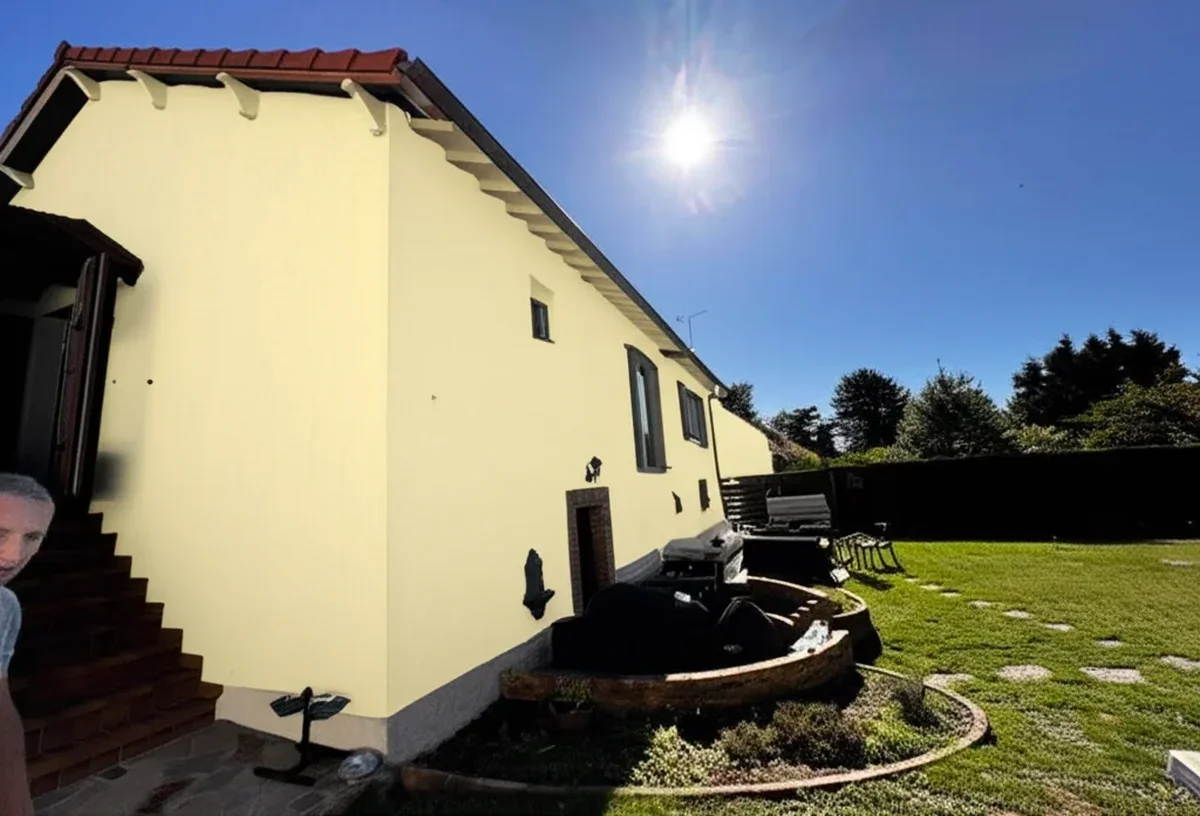
Try it on your house

Edwardian houses, built between 1901 and 1910 (with stylistic continuity to around 1918), define some of Britain's most desirable suburbs: Muswell Hill, Bedford Park, Bournville, Hove and the leafy edges of Manchester, Edinburgh and Cardiff. Compared with the dark polychrome of late Victorian terraces, the Edwardian palette is markedly lighter and more disciplined: warm cream or stone bodies, crisp white sash windows, soft sage or heritage blue accents and a confident oxblood or deep green front door.
This 2026 UK guide covers the full Edwardian exterior colour palette, with twelve heritage codes from Farrow & Ball and Little Greene (plus notes on Edward Bulmer Natural Paint), how to organise body, sash, door and gable colours on bay-fronted terraces and detached villas, and what conservation areas, Article 4 Directions and listed building consent mean before you buy a single tin of paint.
What defines an authentic Edwardian exterior
The Edwardian period reacted firmly against the heavy ornament of late Victorian housing. Architects influenced by the Arts & Crafts movement (Voysey, Baillie Scott, Lutyens) pushed for lighter, healthier facades. The typical Edwardian house combines red or stock brick on the ground floor with pebble-dashed gables, projecting bay windows with white-painted sashes, decorative half-timbering on Tudorbethan variants, leaded fanlights over the front door, and tiled porches with encaustic floors.
The original palette was deliberately narrow. Bodies were limewashed or painted in warm cream, bone or soft stone. Sashes, eaves, barge boards and porch columns were painted in off-whites with warm undertones. Front doors used oxblood maroon, deep bottle green or gloss near-black. Soft accents on porch ceilings and fanlight surrounds appeared in sage green or heritage blue. Railings and rainwater goods were uniformly black.
The Edwardian palette: 12 heritage colours mapped to body, sash, door and gable
The table below lists the twelve most reliable Edwardian exterior colours from Farrow & Ball and Little Greene, with their official codes, light reflectance values (LRV) and the architectural element each is best suited to. Use them as a tested starting point, then preview the combination on a photograph of your actual property.
| Colour | Brand & code | LRV | Best for |
|---|---|---|---|
| Slipper Satin | F&B No.2004 | 73 | Body (rendered upper walls) |
| Joa's White | F&B No.226 | 75 | Body (Arts & Crafts roughcast) |
| Wimborne White | F&B No.239 | 82 | Sash window frames |
| Bone | F&B No.15 | 62 | Body (warm stone alternative) |
| Lichen | F&B No.19 | 36 | Gable timbers & porch ceilings |
| French Gray | F&B No.18 | 42 | Gable detailing & bargeboards |
| Borrowed Light | F&B No.235 | 73 | Porch ceiling & fanlight surround |
| Parma Gray | F&B No.27 | 53 | Door panel accents & garden gates |
| Eating Room Red | F&B No.43 | 9 | Front door (oxblood) |
| Incarnadine | F&B No.248 | 7 | Front door (deep oxblood) |
| Loft White | Little Greene 222 | 74 | Sash window frames (alternative) |
| Invisible Green | Little Greene 66 | 8 | Front door (bottle green) |
Try it on your house
No photo? Try a sample
LRV (light reflectance value) measures how much visible light a colour reflects, 0 (black) to 100 (white). Bodies in the high sixties to mid seventies stay readable on north-facing facades without glaring on south elevations. Door colours below 10 LRV give the rich, near-saturated finish of Edwardian oxblood and bottle green.
Upload your Edwardian facade and preview every F&B and Little Greene heritage colour in seconds
How to organise body, sash, door and gable on an Edwardian elevation
On an Edwardian red-brick or rendered semi, a soft mid yellow on the door with off-white sashes is a classic alternative to green: Farrow & Ball's Sudbury Yellow No. 51 is 'particularly responsive to changes in light' and lists White Tie as its complementary white. The yellow front door guide matches yellows to brick and render.
Edwardian facades have five distinct paint zones: rendered or roughcast upper body, brick ground floor (usually unpainted), white sash windows, decorative gable timbers, and the front door. A reliable rule of thumb is the 4+1 organisation: four restrained colours (body, sash, gable, railings) form the calm background, and one accent (the front door) carries the personality.
- Upper body / pebble-dash gables: Slipper Satin No.2004, Joa's White No.226, Wimborne White No.239 or Bone No.15. Use a breathable masonry paint, never PVA-bound brilliant white.
- Sash windows & bay woodwork: Wimborne White No.239 or Little Greene Loft White 222 in exterior eggshell. Avoid gloss on 120-year-old timber.
- Decorative gable timbers & bargeboards: Lichen No.19, French Gray No.18, or Off-Black for Tudorbethan timbers.
- Front door: Eating Room Red No.43, Incarnadine No.248 or Little Greene Invisible Green 66.
- Porch ceiling, fanlight surround, gate panels: Borrowed Light No.235 or Parma Gray No.27 as a soft accent.
- Railings, gutters and downpipes: always gloss or satin black, never anthracite or dark grey.
Warm cream and stone bodies: getting the upper storey right
The defining feature of most Edwardian houses is the roughcast or pebble-dashed upper storey, sitting above a red-brick or stock-brick ground floor. The body colour is the largest visible surface on the elevation, so getting it wrong is impossible to disguise.
Avoid two recurring mistakes. Brilliant white masonry paint reads cold blue against warm Edwardian brick and clay roof tiles. Magnolia reads as 1980s council refurbishment. The reliable heritage choices are warm creams and bones with a yellow or oatmeal undertone: Slipper Satin No.2004, Joa's White No.226, Wimborne White No.239 and Bone No.15 for a slightly more saturated stone effect on south-facing elevations.
For pebble-dash and roughcast, specify a breathable masonry paint (mineral or silicate-based) rather than film-forming acrylic. Farrow & Ball Exterior Masonry, Little Greene Intelligent Masonry and Keim Soldalit all let trapped moisture escape, which matters on solid-wall Edwardian construction. Budget 30 to 48 pounds per square metre supplied and applied in 2026.
White sashes and bay window detailing
Edwardian timber bay windows, eaves, barge boards and porch columns were originally painted in lead-based off-whites that aged to a warm cream. The modern equivalents are Wimborne White No.239, Slipper Satin No.2004 for warmer schemes, or Little Greene Loft White 222. These warm off-whites sit softly against cream render rather than cutting harshly across it.
Use an exterior eggshell or satinwood finish on bay window timber, never high-gloss modern enamel. Where stripping back to bare timber, prime with a linseed-oil-based undercoat: the topcoat then gains an 8 to 10 year repaint cycle versus 4 to 6 for acrylic systems.
Sage greens and heritage blues: subtle Edwardian accents
Sage greens like Lichen No.19 and French Gray No.18 tie an Edwardian facade to its garden setting and were widely used by Voysey and Baillie Scott on bargeboards, gable timbers and porch interiors. They sit comfortably with red brick and Wimborne White sashes.
Soft heritage blues like Borrowed Light No.235 and Parma Gray No.27 are most authentic on porch ceilings, garden gate panels and the inner reveals of leaded fanlights. Used sparingly, they add the small detail that distinguishes a considered restoration from a quick repaint.
Oxblood reds and bottle greens: the front door
Of the bottle greens, Farrow & Ball's Calke Green No. 34 is "a cleaned version of a colour originally found in the breakfast room at Calke Abbey" with deep sage notes, Studio Green No. 93 the near-black, and Little Greene's Dark Brunswick Green No. 88 the Victorian door classic; our green front door colours guide quotes the makers and the coats each needs.
The front door is where you can inject the strongest Edwardian character. Three colour families are historically documented for the period, and all three remain dominant in conservation-area approvals today.
- Oxblood maroon and deep red: Farrow & Ball Eating Room Red No.43 or the deeper Incarnadine No.248. Historically tied to the railway and municipal colour schemes of the 1900s, and instantly readable as Edwardian. Pair with polished brass furniture.
- Deep bottle or brunswick green: Little Greene Invisible Green 66, F&B Studio Green or Duck Green. Quintessentially British and the most common door colour in Edwardian Hampstead, Muswell Hill and Bedford Park.
- Gloss near-black: F&B Pitch Black No.256 or Off-Black No.57. Most appropriate on more formal Edwardian terraces with stuccoed ground floors, particularly in central London.
Modern grey, sage or navy doors are tempting but historically inaccurate and rarely approved in conservation areas. Savills' 2024 review of London suburban sales linked period-correct front-door colours to a measurable price premium in heritage suburbs.
Tudorbethan and half-timbered variants
A subset of Edwardian houses in outer London, Surrey and the Home Counties feature decorative half-timbering on the upper storey. The timbers should be painted in a softened near-black rather than harsh jet black: F&B Off-Black No.57 is the gold standard. The render between the timbers should be a warm oatmeal or bone: Joa's White No.226 or Bone No.15. Avoid brown wood stain (Cuprinol Red Cedar, Ronseal Dark Oak): orange-brown timbers read as garden fencing.
The detail most Tudorbethan repaints get wrong is the sheen, not the colour. Timbers want an exterior eggshell, whose low sheen reads like waxed old oak, while the render between them should stay dead flat. A glossy render beside matt beams gives away a modern repaint from the pavement. Off-Black No.57 anchors the whole family of authentic Tudor and mock-Tudor exterior palettes, where its usual render partner is Jitney No.293: a warm oatmeal that reads cream on south-facing walls and pale stone on north-facing ones, so a third option alongside Joa's White and Bone.
Edwardian terraces vs detached villas
Edwardian terraces (inner Hove, Cardiff, Manchester, Edinburgh) are two storeys with a single bay window, shared party walls and a coordinated terrace-wide scheme. Keep the body and sash colours identical to neighbouring houses and let the front door carry individual personality. A row of cream-bodied terraces with alternating Eating Room Red, Invisible Green and Incarnadine doors is the classic Edwardian streetscape.
Detached and semi-detached Edwardian villas (Muswell Hill, Hampstead Garden Suburb, Bournville) carry more architectural ornament: decorative gables, pebble-dashed upper bays, leaded fanlights, half-timbering. They benefit from a wider palette: a body, a contrasting gable timber colour (Lichen, French Gray or Off-Black), a sash, a door, plus a soft accent (Borrowed Light or Parma Gray) on porch ceilings or fanlight surrounds.
Listed buildings, Article 4 Directions and conservation areas
Many intact Edwardian suburbs sit inside designated conservation areas: Hampstead Garden Suburb, Bedford Park, Muswell Hill, Bournville, Letchworth, large parts of Hove and Cheltenham. Painting an unlisted house in a conservation area is usually permitted, but several councils have issued Article 4 Directions removing those permitted development rights for external paintwork.
Before ordering paint, run three checks. Download your council's Conservation Area Appraisal and read the colour guidance section. Check the local plan for any Article 4 Direction covering external painting. Search the Historic England National Heritage List: many Voysey, Lutyens or Baillie Scott Edwardian houses are Grade II listed.
Where the house is Grade II listed, Listed Building Consent is required for any change of colour. Unauthorised work is a criminal offence under the Planning (Listed Buildings and Conservation Areas) Act 1990, with unlimited fines. The body formerly known as English Heritage now operates as Historic England for listing, advice-note and casework functions; English Heritage continues only as the charity managing the historic-property estate.
Best UK heritage paint brands for an Edwardian exterior
- Farrow & Ball: the default reference for Edwardian matching. Exterior Masonry and Exterior Eggshell include all twelve codes above. Expect 75 to 95 pounds for a 5L tin in 2026.
- Little Greene: archive-linked heritage scales developed with the National Trust. Loft White 222, Invisible Green 66, Slaked Lime and Bronze Red suit Edwardian work; Intelligent Masonry is fully breathable.
- Edward Bulmer Natural Paint: a plant-based exterior paint with no acrylic binders, accurate to the materials available in 1905. Smaller palette but excellent Edwardian creams, sage greens and oxblood reds. Best on lime render or limewashed brick.
All three are premium heritage specifications, and none of them is the cheapest way to recoat a large roughcast upper body. Whatever you pick, check one line on the back label: BS EN 1062 rates vapour permeability from V1 (high) to V3 (low), and an Edwardian solid wall wants the permeable end so moisture is not trapped behind the film. Our Johnstone's masonry paint guide sets out those classes on the Stormshield range and is candid that no standard acrylic trade tin reaches V1, which is exactly why a lime or mineral silicate system stays the safer call on a pre-1930 wall.
Frequently asked questions about Edwardian exterior colours
What is the correct body colour for an Edwardian bay-fronted house?
Warm cream, bone or soft stone with a yellow or oatmeal undertone, never brilliant white or magnolia. The four most reliable F&B codes are Slipper Satin No.2004, Joa's White No.226, Wimborne White No.239 (for smaller render panels) and Bone No.15 for a slightly more saturated stone effect. All sit harmoniously with red brick and clay roof tiles and shift subtly across the day, keeping large render and pebble-dash panels visually alive.
Do I need listed building consent or planning permission to repaint my Edwardian house?
If the house is Grade II listed, yes: Listed Building Consent is required for any change of colour, including like-for-like in some cases, under the Planning (Listed Buildings and Conservation Areas) Act 1990. If the house is unlisted but in a conservation area, you usually do not need consent unless your council has issued an Article 4 Direction removing permitted development rights for external paint. Always check the Conservation Area Appraisal and Historic England National Heritage List before ordering paint.
Is a grey and anthracite scheme appropriate for an Edwardian house?
Generally no, if heritage accuracy or conservation compliance matters. Cool greys fight the warm undertones of Edwardian red brick and clay tiles, and conservation officers regularly refuse grey-and-charcoal schemes in heritage Edwardian suburbs. The authentic palette is warm cream or stone body, off-white sash, sage or French Gray gable detailing, gloss black railings and a deep oxblood, bottle green or near-black door. Modern breathable masonry paint in those traditional colour values is the best compromise.
Which front door colour adds the most kerb appeal to an Edwardian terrace?
Oxblood maroon (Eating Room Red No.43 or Incarnadine No.248) and deep bottle green (Little Greene Invisible Green 66) are the two safest premium choices, both linked by Savills' 2024 review to a measurable price premium in heritage suburbs. Gloss near-black (F&B Pitch Black No.256) is the third historically accurate option, most appropriate on formal central-London Edwardian terraces. Pair any of the three with polished brass ironmongery for full period effect.
What is the difference between Historic England and English Heritage?
Historic England is the public body responsible for the listing process, conservation area advice notes and casework on listed buildings. English Heritage is the charity that manages the historic-property visitor estate (Stonehenge, Dover Castle and similar). The two organisations split in 2015. For Edwardian colour decisions, planning consent and listed building queries, the relevant body is Historic England, not English Heritage.
Test every Edwardian heritage colour on your own facade in under a minute
The difference between a restored Edwardian house and a tired one is almost always in the four-part organisation: warm cream or stone body, off-white sash, soft sage or heritage blue accent, and an oxblood or bottle green door. Preview the full Farrow & Ball and Little Greene Edwardian palette on a photograph of your actual property using our free AI colour visualiser before booking a decorator or applying for listed building consent. Sources: Historic England Advice Notes, Farrow & Ball Heritage Collection, Little Greene Colour Scales, Edward Bulmer Natural Paint range, Planning (Listed Buildings and Conservation Areas) Act 1990.
Trademarks mentioned (Sherwin-Williams, Benjamin Moore, Behr, Caparol, Brillux, Sto, Alpina, Valspar, PPG, Glidden, Dulux, Crown Trade, Sandtex, Farrow & Ball, Johnstone's, Leyland) are property of their respective owners. FacadeColorizer is independent and not affiliated with any of them. Nominative fair use under Lanham Act §1125.