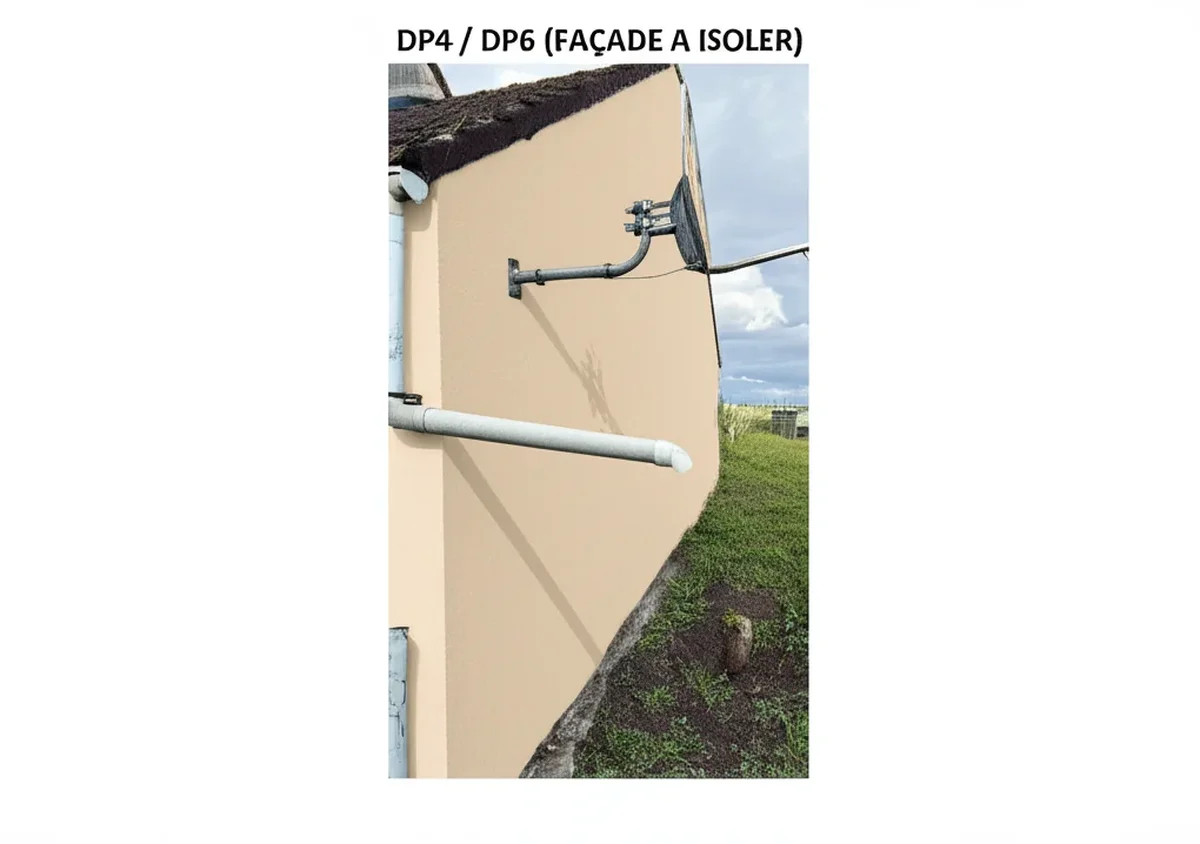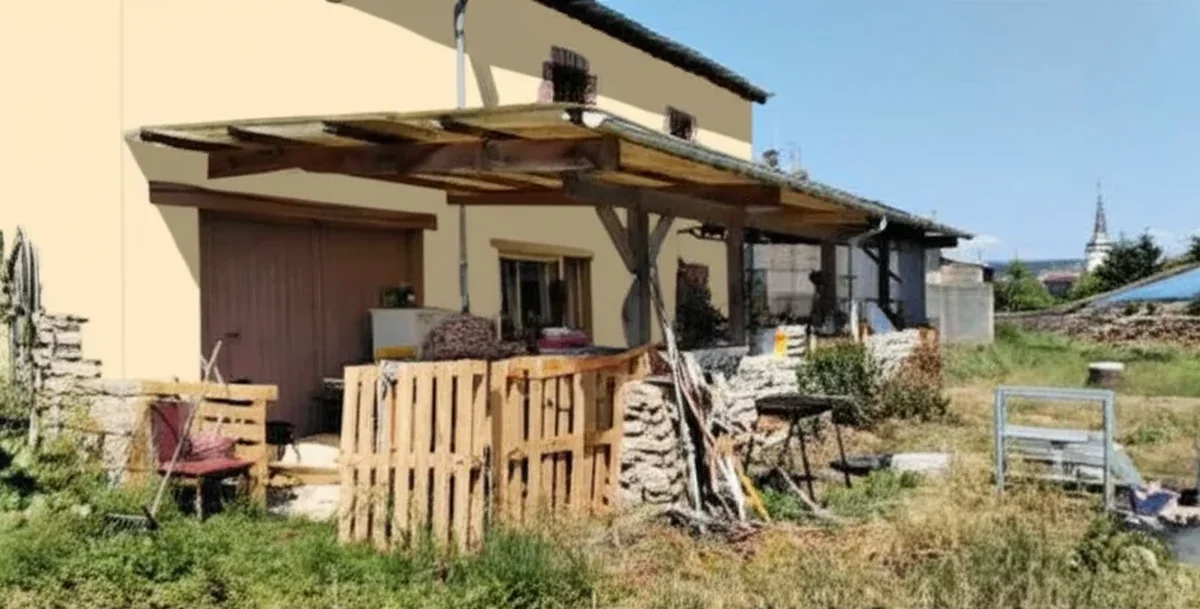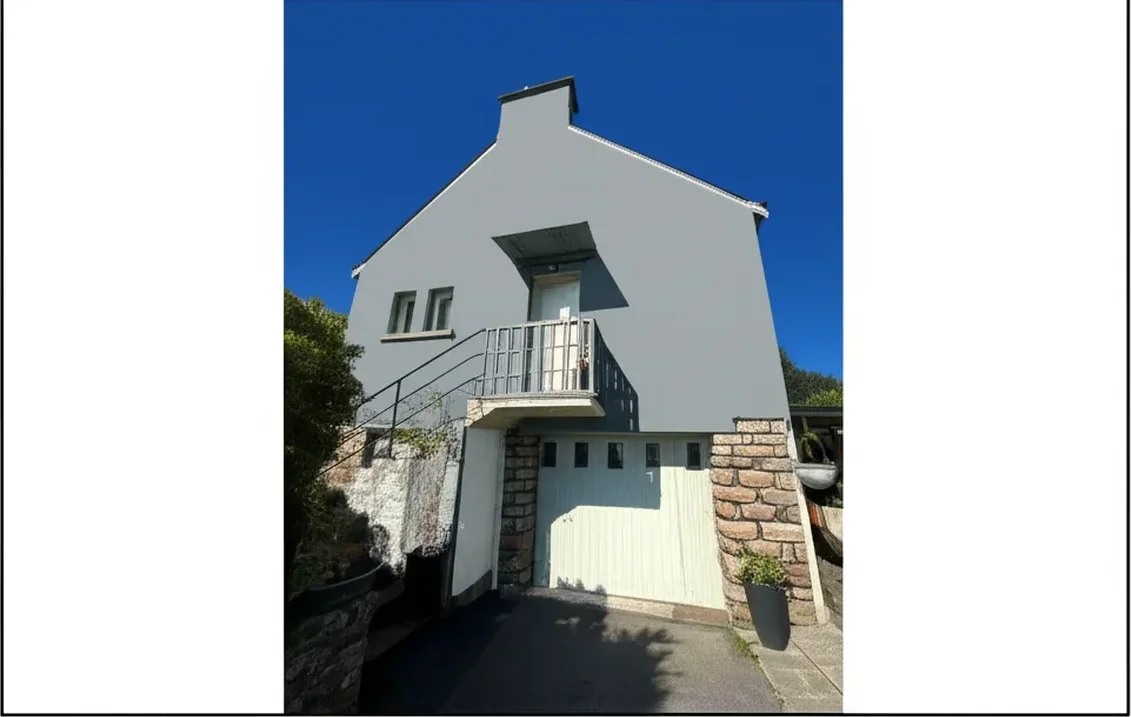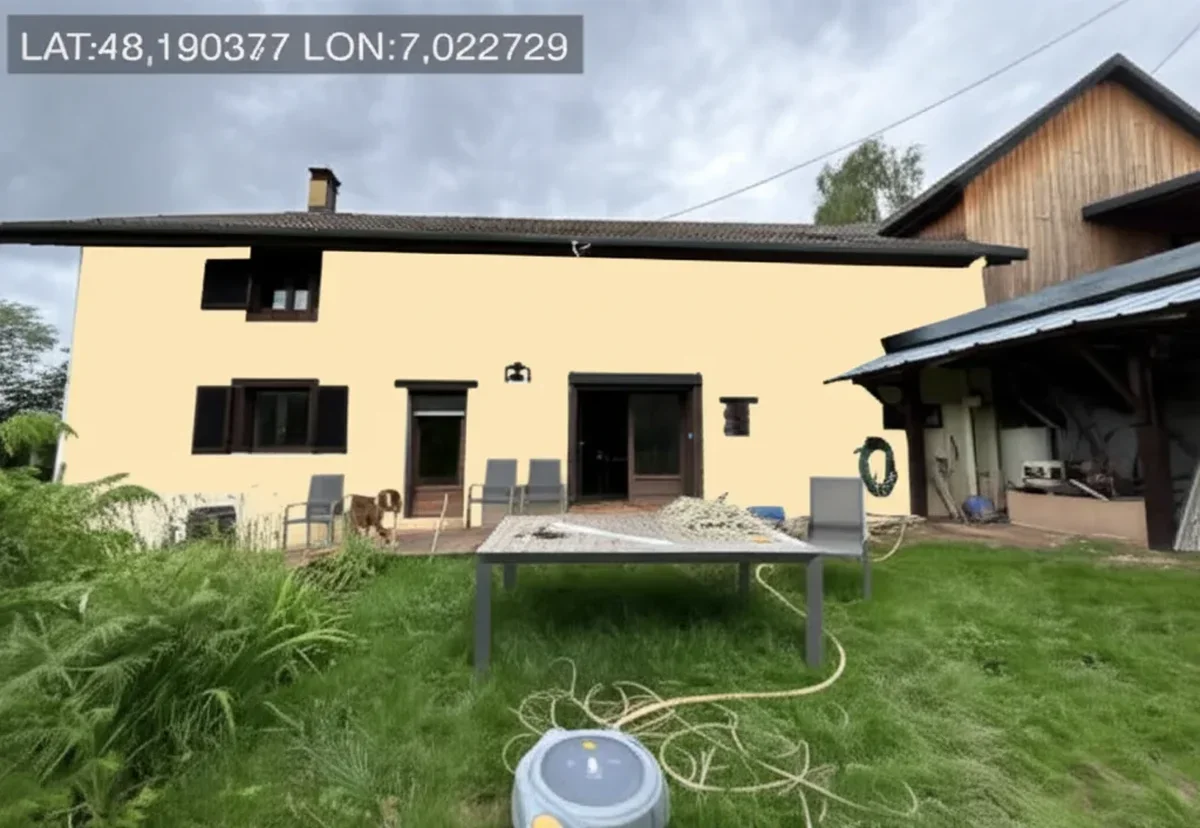

A coat of masonry white paint looks like one of the simplest decisions on a British house, yet it is the single most-tested exterior colour decision on our platform. Across 16,983 facade previews generated by FacadeColorizer users since launch, white-family shades on render, pebbledash and brick make up the largest cluster of any colour family in the UK market. This 2026 guide steps away from a brand-by-brand spec sheet and looks instead at how to plan, prepare and budget a white masonry project from start to finish: how to read your existing surface under BS 7079, how to choose between a brilliant white and a softer undertone for a Manchester semi versus a Cornwall cottage, and how to spend your project money where it actually buys longevity.
If you are weighing up a full repaint and want to see how masonry white paint will sit against your brickwork, fascia colour and front door before committing to 22 litres of Dulux Weathershield, upload a photo to the free AI Visualiser and preview six shortlisted whites side by side on your own elevation in under five minutes.
How to plan a white masonry repaint as a UK homeowner in 2026
Most UK homeowners approach masonry white paint as a shopping decision: which 5 litre tin do I buy at B&Q or Wickes? The decorators we speak to in London, Birmingham and Edinburgh see it the opposite way around. The tin choice accounts for roughly a quarter of the long-term outcome; the substrate condition, the weather window during application, and the undertone selection account for the rest. Plan in that order and a white repaint runs for ten to fifteen years; plan in the reverse order and the same tin lasts three or four before the algae streaks force a reinspection.
A realistic project plan for a three-bedroom semi sits at four phases: a survey week to identify any damp ingress, render cracks or biological growth; a preparation week to wash, biocide-treat and stabilise the surface under BS 7079 guidance; an application window of three to five dry days for two coats of masonry white paint; and a snagging visit four weeks later once the coating has cured fully. Compressing those four phases into a single bank-holiday weekend is the most common reason a white finish disappoints by the second winter.
The other big variable is the choice between DIY and a hired decorator. A typical UK painter and decorator charges 18-26 GBP per square metre for an exterior masonry repaint in 2026, materials included, on a semi-detached home in the South East; 14-20 GBP per square metre is realistic outside London. DIY on the same property runs at roughly 4-6 GBP per square metre in materials only, but consumes a week of evenings and a weekend, plus scaffolding hire of 250-450 GBP. A free AI preview ahead of either path stops the most expensive mistake of all: repainting the wrong shade.
Reading your existing substrate: render, pebbledash, brick and roughcast
A diagnosis sheet before you pick a tin saves more money than choosing the most expensive brand. The four substrates that dominate the British housing stock each demand a different white masonry strategy. Smooth render is the easiest: a dust-down, a stabilising primer where chalking is present and two coats of a V2 W3 product such as Dulux Trade Weathershield or Sandtex X-treme typically suffice. Pebbledash and roughcast are the hardest: the texture multiplies the surface area by roughly 1.6 to 2.0 times, the spread rate falls from 10 m2 per litre to 4-6 m2 per litre, and a third coat is often necessary to lift a darker existing finish to a true white.
Fair-faced brick painted white is increasingly common in 2026 on Victorian and Edwardian terraces around London, Bristol and Brighton, but it is a one-way decision. Once a soft-mortar brick wall is sealed with a non-breathable white masonry coating, removing the paint without damaging the brick face is impractical and expensive. If your house is in a Conservation Area or holds a Listed Building Consent, do not paint exposed brick white without first checking with the local conservation officer. Most authorities now publish guidance documents that flag white-on-brick as a high-risk alteration.
Roughcast and dry dash, more common in Scottish and Northern English stock, behave like extreme pebbledash and need careful biocide treatment because moss and algae nest in the deeper texture. A clean-and-treat cycle 14 to 21 days before painting is mandatory; skip it and the green streaks reappear on a brilliant white surface inside one Atlantic-westerly autumn.
UK climate zones and which white masonry strategy fits each region
A south-facing brilliant white wall in Cornwall behaves nothing like the same wall in Aberdeen. The UK splits roughly into four exterior-paint climate zones that change the calculation for masonry white paint. Driving rain is the dominant factor, and Met Office driving rain index maps still inform most modern masonry specifications. Zone 1 (sheltered, east and south-east England including most of London) tolerates a V3 W3 hard-skin coating reasonably well. Zone 2 (moderate, the Midlands, Yorkshire and the South West) is where a V2 W3 acrylic such as Sandtex X-treme starts to outperform. Zone 3 (severe, North West England, North Wales, west Scotland) really needs a V1 W3 silicone-enhanced product. Zone 4 (very severe, Western Isles, Highland coastline) typically benefits from a true silicate or silicone-resin coating, not a standard acrylic.
| UK climate zone | Representative cities | Recommended BS EN 1062 | Expected white retention | Cleaning interval |
|---|---|---|---|---|
| Zone 1 sheltered | London, Cambridge, Norwich, Brighton | V2 W3 A1 | 10-15 years | Every 3 years |
| Zone 2 moderate | Birmingham, Leeds, Bristol, Nottingham | V2 W3 A1-A2 | 8-12 years | Every 2-3 years |
| Zone 3 severe | Manchester, Liverpool, Glasgow, Cardiff | V1 W3 A2 | 7-10 years | Every 2 years |
| Zone 4 very severe | Aberdeen, Stornoway, Penzance coast | V1 W3 A2-A3 silicone-resin | 6-9 years | Annual |
The pragmatic implication is that a homeowner in Norwich can confidently buy a mid-range own-brand brilliant white from Wickes or Homebase and get a decent return. A homeowner in Stornoway needs to specify a silicone-resin product or accept a much shorter repaint cycle. Postcode-specific advice from Sandtex and Dulux technical lines is free and worth the phone call before a 700 GBP material spend.
Choosing the right undertone: pure brilliant white versus cream, jasmine and chalk
The biggest single regret we see in UK masonry white paint projects is choosing pure brilliant white when the property and the streetscape called for a warm off-white. A pure brilliant white reflects bluish daylight in the British north, and on overcast days it can read as flat grey instead of bright. The honest categories in the British market are: pure brilliant white (high LRV, cool, modern); warm white or chalk white (slightly creamy, suits Victorian terraces); jasmine white (yellow undertone, suits cottages); magnolia or country cream (firmly cream, suits Cotswold stone); cornish cream (warmest, ochre-leaning, suits Cornish granite); and the architectural off-whites such as Farrow & Ball Wevet, Strong White and Wimborne White, designed to read as white but with sophisticated low-chroma undertones.
A useful rule of thumb: if the immediate neighbourhood is dominated by stone-mullioned cottages or unpainted Cotswold limestone, choose a warm cream. If the streetscape is 1930s semis with red-brown brick, choose a clean warm white. If the property is a contemporary box build with anthracite windows, pure brilliant white is the only honest choice. Mismatch the undertone and the house reads as wrong before anyone notices the brand or the price.
Farrow & Ball's exterior masonry range, in particular, is worth previewing carefully because the colour shift on render at noon versus dusk is substantially greater than on a paint chart. A free AI preview takes 30 seconds per shade and shows you the actual light response of, say, Wevet versus Wimborne White on your own elevation. Spend that five minutes before you buy 25 GBP of sample pots.
The weather window: when to actually apply masonry white paint in the UK
Manufacturer technical data sheets typically specify air and substrate temperatures above 5 degrees celsius (rising) and below 30 degrees celsius, relative humidity below 80 percent, and no rain within 24 hours of application. Translating that to the British calendar: May to mid-September is the safe window for most of England and Wales; mid-June to August is realistic for most of Scotland. Late autumn and winter applications are technically possible with specialist low-temperature acrylics rated to 2 degrees celsius, but the freeze-thaw risk on a freshly painted wall in November is real and not worth the saving on scaffold hire.
Practical signals to abort an application day: dew still on the wall after 09:00; visible cloud build from the west indicating a front within six hours; substrate temperature below 8 degrees celsius even if air is warmer (a digital infrared thermometer at 12-18 GBP from Screwfix is the smartest 2026 purchase for any DIY masonry job). Manufacturers will not honour a longevity guarantee on a coat applied outside the labelled window, which matters if you are paying 600-900 GBP in materials.
Two coats is the minimum for white over any existing colour; three coats is realistic when reversing a cream, terracotta or grey to true brilliant white. Each coat needs at least 4-6 hours of dry recoat time, which means a south-facing elevation gets one coat per day in good conditions and a fully prepared three-bedroom semi takes 4 to 6 days of application time, not the two days many DIYers assume.
Budgeting a UK whole-house white masonry project in GBP
A whole-house masonry repaint budget breaks down into five line items: paint, primer or stabilising solution, biocide and surface prep chemicals, sundries (rollers, masking, brushes), and access (scaffolding or platform hire). Below is a realistic 2026 line-item breakdown for a typical three-bedroom UK semi at 110 m2 of paintable masonry surface, using trade-grade products bought at Screwfix and Wickes, and assuming smooth render in two coats.
| Line item | Detail (110 m2 semi) | DIY GBP | Hired decorator GBP |
|---|---|---|---|
| Masonry white paint (trade-grade, 2 coats) | 22 L Dulux Weathershield or Sandtex | 185 | included |
| Stabilising primer / micropore sealer | 5 L Dulux Trade Stabilising Primer | 42 | included |
| Biocide / fungicidal wash | 5 L concentrate from Screwfix | 28 | included |
| Sundries (rollers, masking, brushes) | Long-pile rollers, masking tape, dust sheets | 55 | included |
| Scaffold tower hire (2 weeks) | 5 m alloy tower | 320 | included |
| Labour | 3-5 working days | free (your time) | 1,650-2,200 |
| Total estimated | All-in | 630 | 1,800-2,400 |
On larger detached homes the figures scale roughly linearly with paintable surface area, with one important caveat: pebbledash and roughcast add 30-40 percent to both paint volume and labour days. Older terraces in inner London often need additional brickwork repair before painting, easily adding 400-900 GBP per elevation to the prepared cost. The point of the table is to set realistic expectations before the first 5 L tin leaves the shop.
Long-term outcomes: algae, chalking and how British white finishes age
Three failure modes dominate the long-term life of UK masonry white paint. Algae and biological growth (the green streaks under gutters and north-facing eaves) are by far the most common cosmetic complaint, particularly in Zones 3 and 4. They are tractable: a 10-15 GBP bottle of dilutable masonry biocide from Screwfix applied every two to three years and a soft-brush wash keep a brilliant white reading as white well beyond the manufacturer warranty period.
Chalking, the powdery layer that comes off on a finger swipe, is the second mode. It signals a tired binder system, often on south and south-west elevations with high UV exposure. Modern silicone-enhanced and silicone-resin coatings (Sandtex X-treme, Dulux Weathershield Diamond, Crown Trade Sandtex Plus) chalk far less than the legacy cement-rich emulsions, but cheap own-brand whites at 16-22 GBP per 5 L still chalk inside three to four years on a Bristol or Birmingham south wall.
The third mode is blistering and lifting, caused by trapped moisture under a non-breathable film. This is mostly a substrate problem rather than a paint problem; lifting paint indicates either a damp source (failed flashing, leaking gutter, rising damp) or a non-breathable coat over a moisture-active substrate such as lime-rendered solid wall. The right answer is rarely a different white tin; it is investigation under HSE-compliant access and resolution of the damp source first.
Why a free AI preview saves more than the sample-pot budget
The single most useful pre-purchase tool for a white masonry project in 2026 is not a paint chart and not a sample patch on the wall. It is a 30-second AI render of the actual elevation in the actual shade. The reason sample patches work poorly for white is that the white reads completely differently against a green hedge in summer versus bare branches in February, and the 50 cm by 50 cm patch on a render wall cannot show you that interaction. A photo-based preview can.
FacadeColorizer Field Note. Across the 16,983 facade previews the platform has generated to date, the homeowners who preview five or six shortlisted whites before buying any sample pots end up buying 1-2 sample pots on average, against 4-5 sample pots for users who skip the preview step. At 5-8 GBP per 250 ml tester from B&Q or Wickes, that is a real-world saving of 15-25 GBP per project before any tin is opened, and it materially shortens the indecision phase that prolongs scaffold hire.
The FacadeColorizer free tier covers one HD download plus three watermarked exports, which is enough for a single front elevation comparison. The paid Pack Couleur at 8.90 GBP covers a whole-house workflow with multiple elevations, side-by-side comparisons and downloadable HD exports. Compare with the time and material cost of physical sampling on a 110 m2 semi and the maths is obvious before the survey starts.
Putting it all together: a 10-step plan for a UK white masonry repaint
Pulling the previous sections together, a project owner who follows the order below ends up with a white finish that genuinely lasts. One, identify which UK climate zone the property sits in. Two, survey the substrate honestly: render, pebbledash, roughcast or brick. Three, check planning constraints (Listed Building Consent, Conservation Area, Article 4 Direction) via Planning Portal. Four, preview shortlisted whites with the AI visualiser. Five, buy 1-2 sample pots only for the final two shortlisted shades.
Six, specify a paint at the right BS EN 1062 grade for the climate zone. Seven, plan the application window in the May-September safe period. Eight, budget materials and access honestly (use the table above as a baseline). Nine, prepare the substrate under BS 7079 with biocide, primer where chalking is present, and full mechanical cleaning. Ten, apply two or three coats with respect for recoat times and weather windows. A project completed in that order on a 110 m2 semi in Yorkshire typically returns 10-12 years of clean white finish; the same project rushed inside a single bank-holiday weekend rarely makes five.
For a deeper colour comparison across brands, see the UK masonry paint brand guide and the grey masonry shade guide. For project costing in detail, the exterior masonry cost guide covers the per-elevation pricing model.
Frequently asked questions on UK white masonry projects
The questions below recur on our customer enquiries and reflect the kinds of decisions UK homeowners most commonly face when planning a white masonry repaint. Full structured answers appear in the FAQ schema at the foot of this article.
Does masonry white paint really need primer? On a sound, previously painted surface, no - two coats of a self-priming acrylic masonry such as Dulux Weathershield is enough. On bare render, chalking surfaces, or any wall that powders to the touch, yes - a stabilising primer at 38-44 GBP per 5 L is the difference between a 12-year finish and a 4-year peel.
Can I paint masonry white over a darker render? Yes, but expect three coats rather than two, and budget for an additional 6-8 L per 100 m2. Reversing a heritage red or grey render to brilliant white realistically adds 60-90 GBP in extra paint and one full day in extra application time. The FacadeColorizer free preview will show you whether the final white reads as truly white, or as a tinted ghost of the previous colour - which it sometimes does on heavily textured pebbledash.
All third-party brands cited (Dulux, Sandtex, Crown, Johnstone, Leyland, Farrow & Ball, B&Q, Wickes, Homebase, Screwfix) are the registered trademarks of their respective owners. FacadeColorizer is not affiliated with, endorsed by or sponsored by any of these brands. Prices in GBP are 2026 high-street references and vary by store, tin size and region.
Trademarks mentioned (Sherwin-Williams, Benjamin Moore, Behr, Caparol, Brillux, Sto, Alpina, Valspar, PPG, Glidden, Dulux, Crown Trade, Sandtex, Farrow & Ball, Johnstone's, Leyland) are property of their respective owners. FacadeColorizer is independent and not affiliated with any of them. Nominative fair use under Lanham Act §1125.