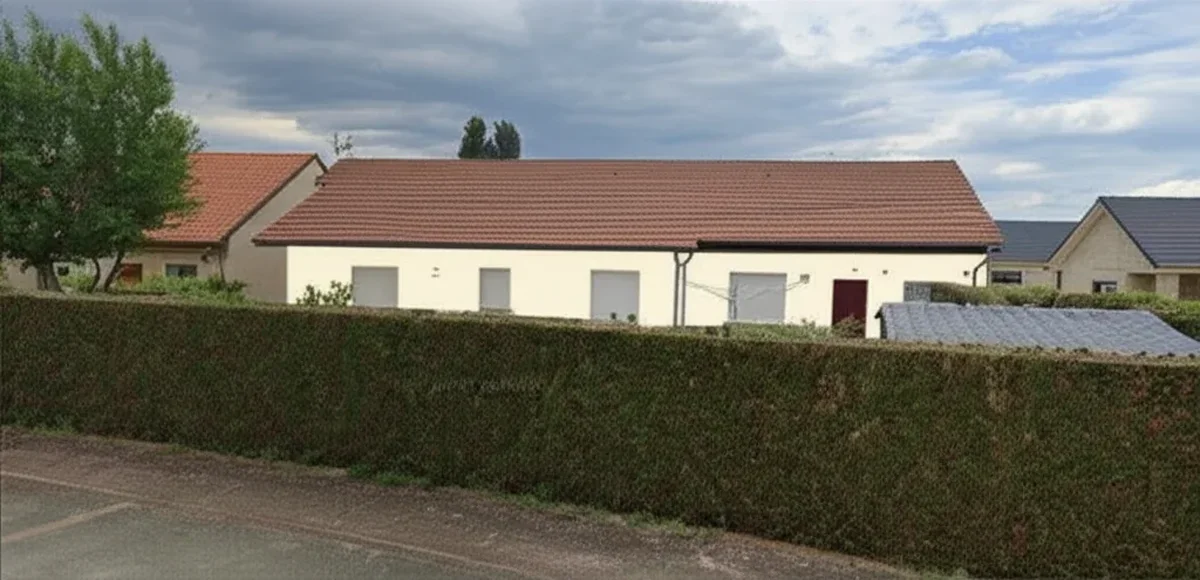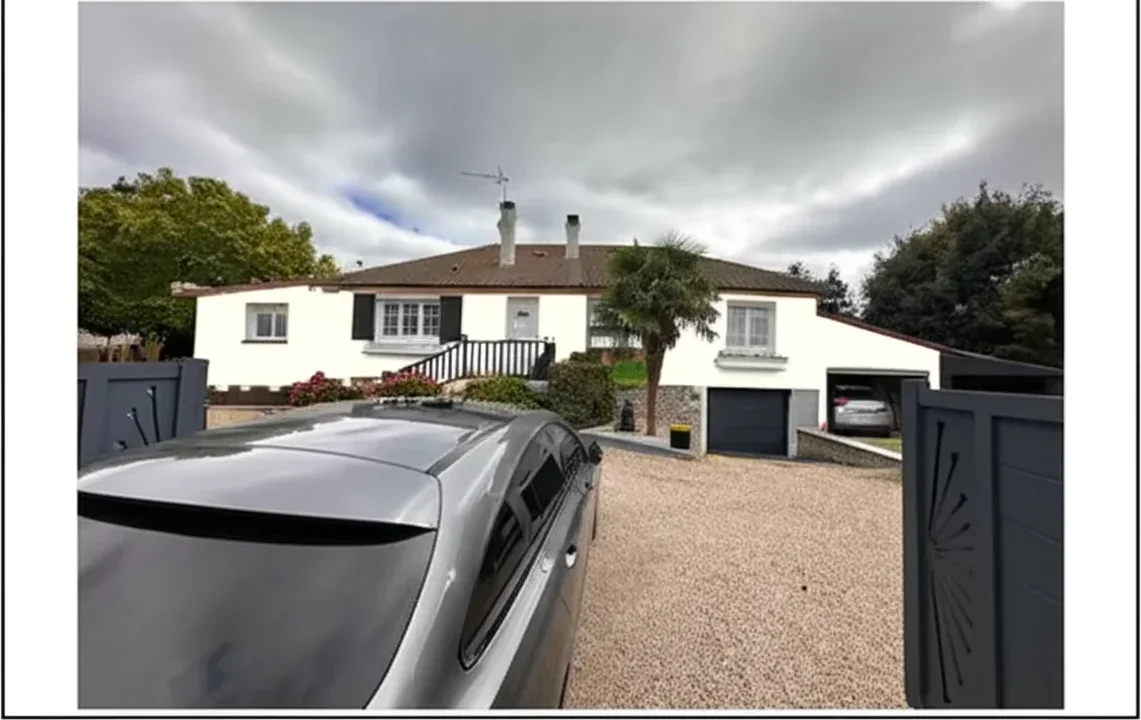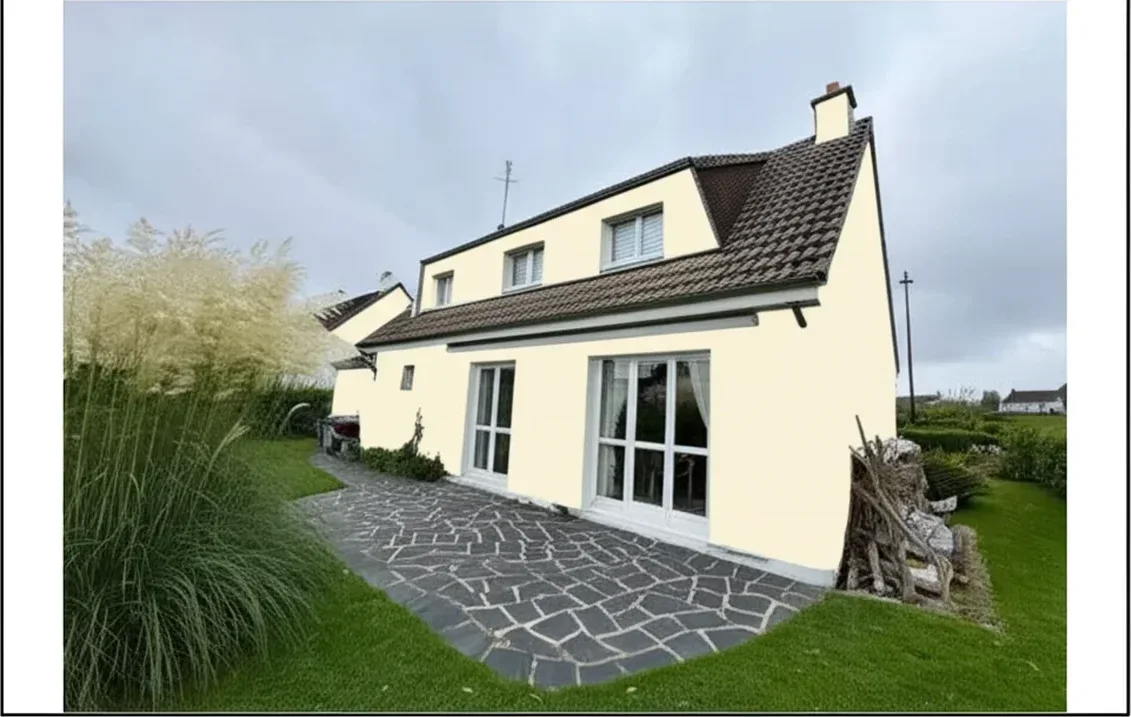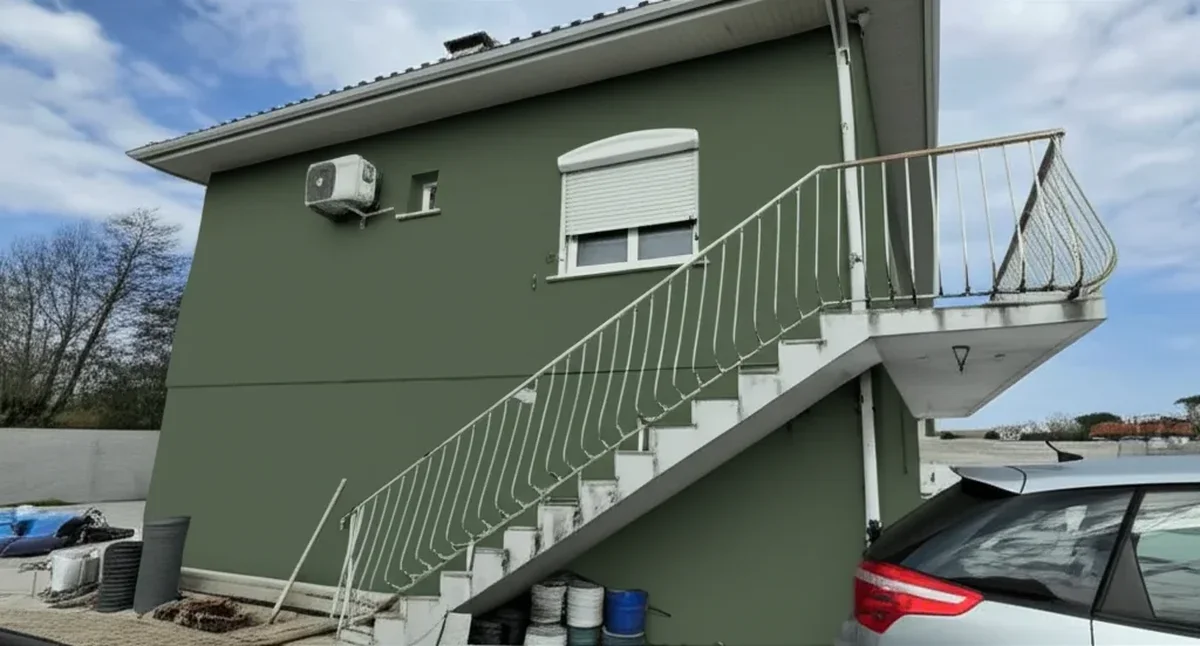
Planning exterior rendering for your Cardiff home in 2026? Prices across South Wales have stabilised into a fairly predictable band, but the final figure can still swing by thousands depending on your CF postcode, the substrate (honey-toned Pennant sandstone, red Ruabon brick or 1960s pebble dash), and whether your property sits inside one of Cardiff's 27 conservation areas in Pontcanna, Roath, Cathays or Cardiff Bay. This 2026 guide covers real cost per m², local planning rules from Cardiff Council and Cadw, the impact of Severn estuary wind-driven rain, and how to choose between K-Rend, silicone render and Monocouche.
Before you commit to a render colour on a 100 m² wall, Try our free AI colour visualiser and preview the finish on a photo of your actual Cardiff home. A small sample board never tells the full story at scale.
Cardiff rendering costs per m² in 2026
According to 2026 Checkatrade averages and RICS regional benchmarks for Wales, Cardiff sits slightly above the UK average — cheaper than London or Bristol but noticeably dearer than Swansea or the Valleys due to strong demand from the housing market around the capital and a limited pool of manufacturer-approved applicators. Expect £62-£110 per m² for the main render systems, with scaffold, substrate preparation and VAT usually included in a formal quote. Labour rates typically run £190-£240 per day across South Wales.
| Render system | Cardiff cost per m² (2026) | Lifespan | Best for |
|---|---|---|---|
| Monocouche render | £70 – £95 | 25-35 years | New builds, extensions in Pontprennau |
| K-Rend (silicone-enhanced) | £62 – £92 | 25-30 years | Semi-detached, brick substrates in Llanishen |
| Silicone render (full system) | £82 – £110 | 30-40 years | Exposed coastal properties, Cardiff Bay, Penarth-side |
| Sand and cement render | £45 – £65 | 15-25 years | Budget renovations, garages, outbuildings |
| Lime render | £82 – £125 | 50+ years | Listed Victorian terraces, Pennant sandstone rears |
| EWI insulated render system | £115 – £165 | 25-35 years | EPC upgrade, solid-wall Edwardian terraces |
Cardiff price variations by CF postcode
Cardiff rendering quotes vary considerably across its CF postcodes. Central and premium neighbourhoods such as Pontcanna, Canton and Cyncoed attract higher pricing, while outer suburbs and the eastern belt benefit from more competitive quotes. Narrow terrace access in Cathays, Roath and Grangetown, along with restricted parking around Bute Park and the civic centre, can push scaffold costs up by £350-£950.
| Postcode area | Neighbourhoods | Typical 3-bed semi (silicone, full scaffold) |
|---|---|---|
| CF10, CF11 | City centre, Cardiff Bay, Butetown, Grangetown | £9,200 – £12,000 (traffic management) |
| CF5 | Pontcanna, Canton, Llandaff, Fairwater | £8,800 – £11,800 (often conservation) |
| CF23, CF14 | Cyncoed, Roath Park, Llanishen, Rhiwbina | £8,200 – £10,800 |
| CF24 | Roath, Cathays, Adamsdown, Plasnewydd | £7,500 – £10,200 (narrow lane scaffold) |
| CF3 | Rumney, Llanrumney, St Mellons, Pontprennau | £6,800 – £9,000 |
| CF15, CF4 | Radyr, Tongwynlais, Taff's Well fringe | £7,800 – £10,400 (rural access) |
Local tip
Streets of bay-fronted Victorian terraces in Cathays, Roath and Canton can share scaffold between neighbours — often saving £450-£950 each. Talk to adjacent owners before booking; three or four houses rendered in sequence along a single CF24 street also secure a noticeably better daily rate from applicators.
Pennant sandstone, Pontcanna and Roath conservation rules
Cardiff has 27 designated conservation areas, including much of Pontcanna, Cathedral Road, Roath Park, Cathays Park, Llandaff and the Cardiff Bay heritage waterfront. Many of these contain Grade II listed Victorian and Edwardian homes built from distinctive honey and grey-brown Pennant sandstone, quarried from the ridges around Rhondda and Risca. Cardiff Council's conservation officers generally refuse applications to render over exposed Pennant sandstone because it masks a defining feature of the capital's historic townscape and traps moisture behind an impermeable skin.
Welsh heritage is jointly overseen by Cadw (the Welsh Government's historic environment service) and Cardiff Council. If your property is a listed building, any rendering requires Listed Building Consent from Cadw-informed Cardiff Council officers before works start, and unauthorised work is a criminal offence under the Historic Environment (Wales) Act 2016. Where rendering is permitted on a stone property — usually only on rear elevations or later non-original extensions — a breathable lime render is typically specified, following BS 8000-3:2020 workmanship standards and Cadw's guidance on traditional buildings.
- Rendering over original Pennant sandstone in Pontcanna, Cathedral Road or Roath Park is almost always refused
- Lime render is the standard specification for permitted works on heritage Welsh walls
- EWI systems projecting more than 50 mm beyond the original wall line need planning consent under Welsh permitted-development rules
- Outside conservation areas, rendering usually falls under permitted development, but a quick check with the Cardiff Council planning portal is worthwhile
- Colour choices in conservation areas are restricted to off-white, stone, cream or pale ochre tones in keeping with the Pennant sandstone palette
- Any listed building work — even colour change on existing render — must be referred to Cadw through the Council's historic environment team
Cadw planning and Welsh heritage considerations
Cadw (Welsh for "to keep") is the statutory body that protects listed buildings, scheduled monuments and registered historic parks in Wales. Cardiff has over 1,000 listed buildings and extensive tracts of historic townscape, and any rendering decision on a heritage property must align with Cadw's Managing Change to Listed Buildings in Wales guidance. In practice this means:
- Application route: Listed Building Consent is submitted to Cardiff Council, which consults Cadw on all Grade I and Grade II* works and more sensitive Grade II cases
- Materials: hydraulic lime render (NHL 3.5 or NHL 2) with a lime-putty finish coat is the default; modern cement-based systems are usually rejected on pre-1919 walls
- Colour and texture: limewashed or mineral pigmented finishes matched to neighbouring survivors, never bright white PVA-based masonry paint
- Reversibility: Cadw favours specifications that can be removed without damaging historic fabric, which rules out most polymer-based coatings
- Timescales: budget 8-12 weeks for determination of a Listed Building Consent application, and longer if amendments are requested
Engaging a heritage-experienced surveyor early — ideally one on the RICS Building Conservation Accreditation register — will save months of back-and-forth with the planning department and dramatically improve the odds of approval for render works on Cardiff's oldest streets.
Severn estuary wind, rain and render failure
Cardiff receives around 1,150 mm of rainfall per year — one of the wettest totals among major UK cities — and the Severn estuary funnels strong south-westerly winds straight up the Taff and Ely valleys. The combination of wind-driven rain and a mild but damp climate is the single biggest cause of render failure in South Wales. Exposed elevations in Cardiff Bay, Penarth Marina-side and the western fringe of CF5 around Fairwater can see driving-rain indexes 30-40% higher than the city centre behind.
For Cardiff properties, silicone render and K-Rend silicone-enhanced systems are the best performers because their hydrophobic surface repels wind-driven rain while staying vapour-open. Traditional sand and cement render remains common on budget jobs but is considerably more prone to crazing on west-facing elevations. For pre-1919 solid-wall properties — the default in Roath, Cathays and Canton — a fully breathable lime render is the correct specification; modern cement renders trap moisture behind them and drive interstitial damp into the inner face of the wall.
Any Cardiff render project should follow BS 8000-3:2020 (workmanship on site: rendering) and specify a minimum 5 mm render mesh reinforcement layer at stress points. Insist on bellcast bead at the DPC line, stop beads at all edges, and a 150 mm clearance above ground level — essential given that several low-lying CF11 streets near the Taff sit within Natural Resources Wales flood zones.
Best seasons for rendering in Cardiff (April-October)
Render cures correctly only when air temperatures stay reliably above 5 degC for at least 72 hours after application. In Cardiff this means the practical working window runs from mid-April through to late October. Applying render in November-February risks frost damage before the surface has hydrated fully, which can cause delamination, crazing and patchy colour.
- April-May: best availability but book 6-8 weeks ahead; dry, mild conditions once spring settles
- June-August: peak season — expect higher prices and longer lead times in CF5, CF14 and CF23
- September-October: often the sweet spot — good weather and slightly softer contractor demand
- November-March: avoid unless a tented, heated enclosure is used (rare for domestic work in South Wales)
Finding top-rated rendering contractors in Cardiff
Use Checkatrade, TrustATrader and MyBuilder to shortlist Cardiff renderers — filter for tradespeople with at least 50 reviews and an average above 4.8. For premium systems, prioritise contractors listed as K-Rend Approved Applicators or Weber Certified Installers, which secure the manufacturer warranty (typically 25 years on K-Rend). For heritage works, insist on demonstrable experience with lime and Cadw consent. Always ask for:
- Proof of public liability insurance (minimum £2 million)
- At least three recent Cardiff project references with addresses (drive past them)
- A detailed written quote itemising substrate preparation, mesh, beads, scaffold and VAT
- Manufacturer approval certificate for K-Rend, Weber or Parex systems
- Compliance with BS 8000-3 and the manufacturer's published specification
- For listed or conservation work: examples of previous successful Cadw-informed consents in Cardiff
Get a minimum of three written quotes. Cardiff pricing varies by up to 30-40% between contractors for identical specifications, and an unusually cheap quote almost always signals corner-cutting substrate preparation — the single most common cause of premature render failure across South Wales.
Ready to choose your render colour?
Picking a render colour for 100+ m² of wall is a major decision, and manufacturer colour chips simply do not translate to a full Cardiff facade. Try our free AI colour visualiser — upload a photo of your Cardiff home and preview any K-Rend, Weber or silicone colour on your own walls in seconds. It is free, instant, and far more reliable than guessing from a brochure swatch next to a Pennant sandstone neighbour.
Sources: Checkatrade 2026 regional pricing data, RICS Building Cost Information Service, BS 8000-3:2020 workmanship standard, Cardiff Council planning portal, Cadw "Managing Change to Listed Buildings in Wales" guidance.