
Developer & creator of FacadeColorizer · Paris
Reviewed by Hugo Dumoulin, Founder of FacadeColorizer · Updated 2026-04-26
Planning exterior rendering on a Glasgow home in 2026? Prices across the city have settled into a fairly predictable band, but the final figure can still swing by several thousand pounds depending on the G postcode, the substrate (pre-1919 sandstone tenement, post-war blockwork or 1970s pebbledash), and whether your property sits on a Listed Building or in a conservation area. This 2026 guide sets out the real cost per square metre in Glasgow neighbourhoods, the choice between K Rend silicone, Weber Pral M, Wetherby Build and Parex DPR, plus the lime-mortar requirement on traditional Glasgow stonework.
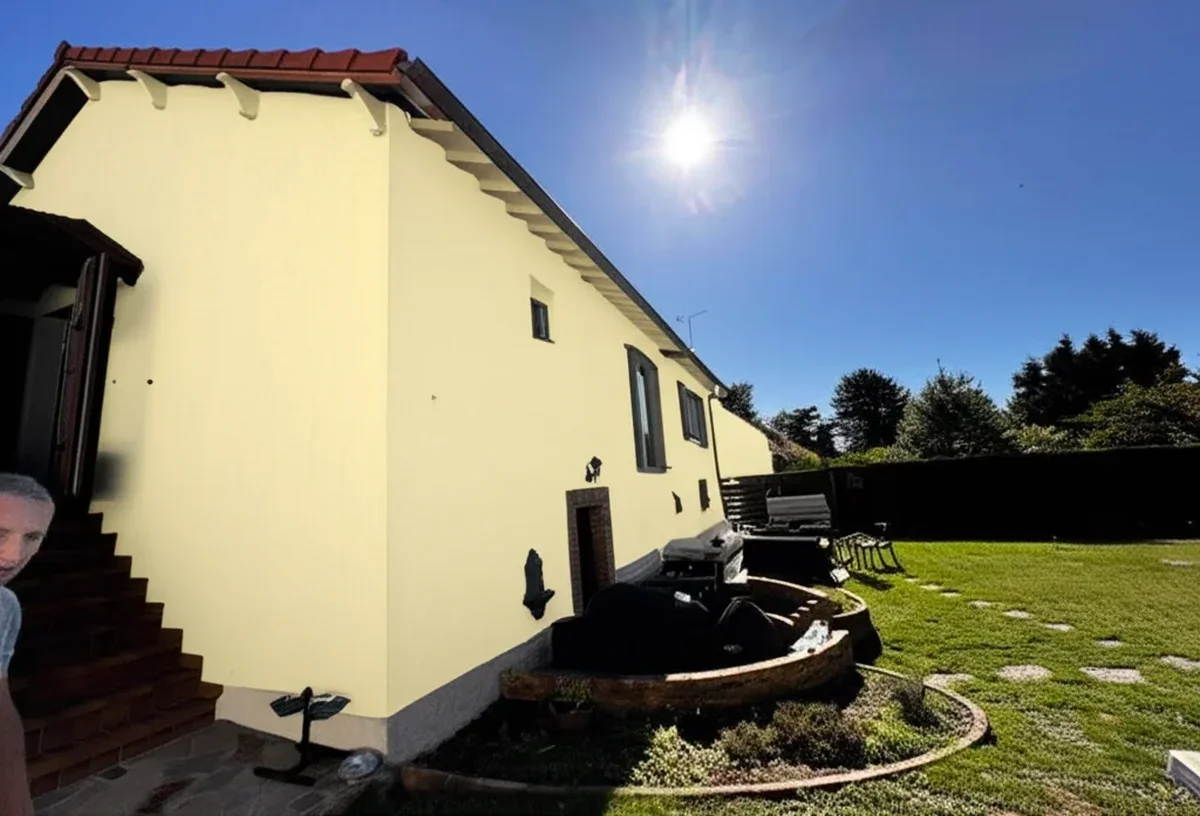
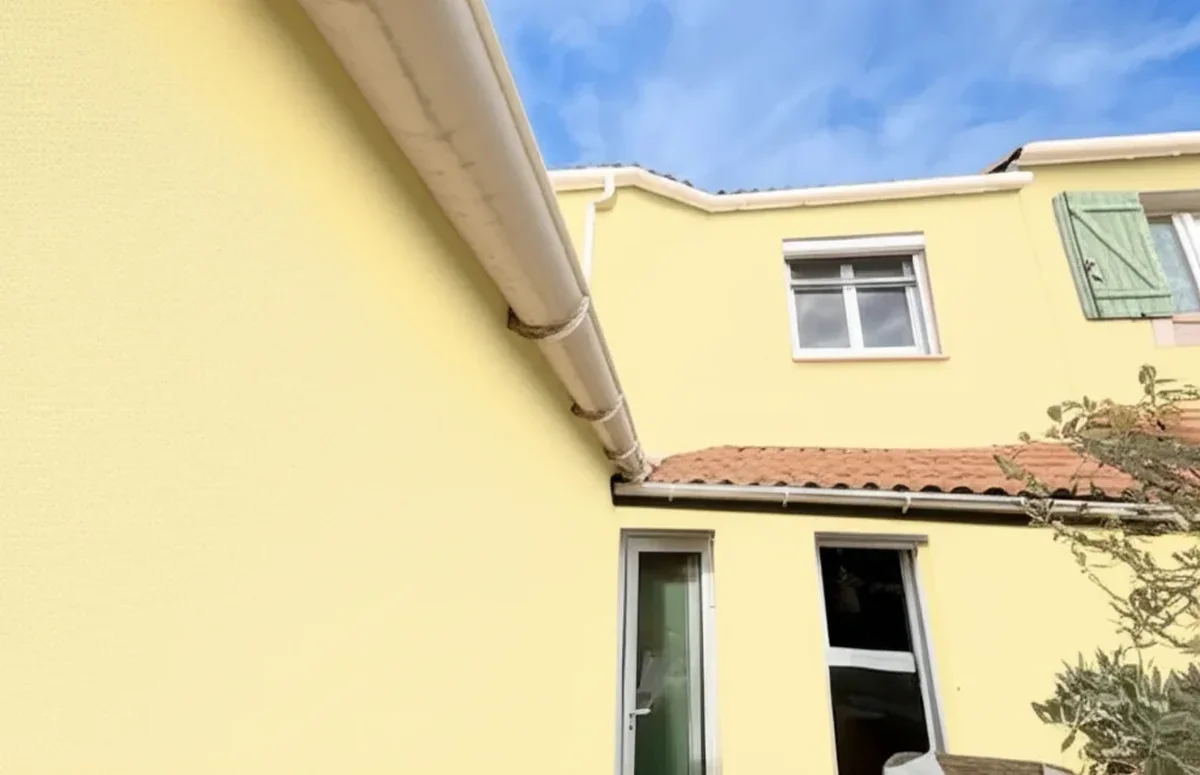
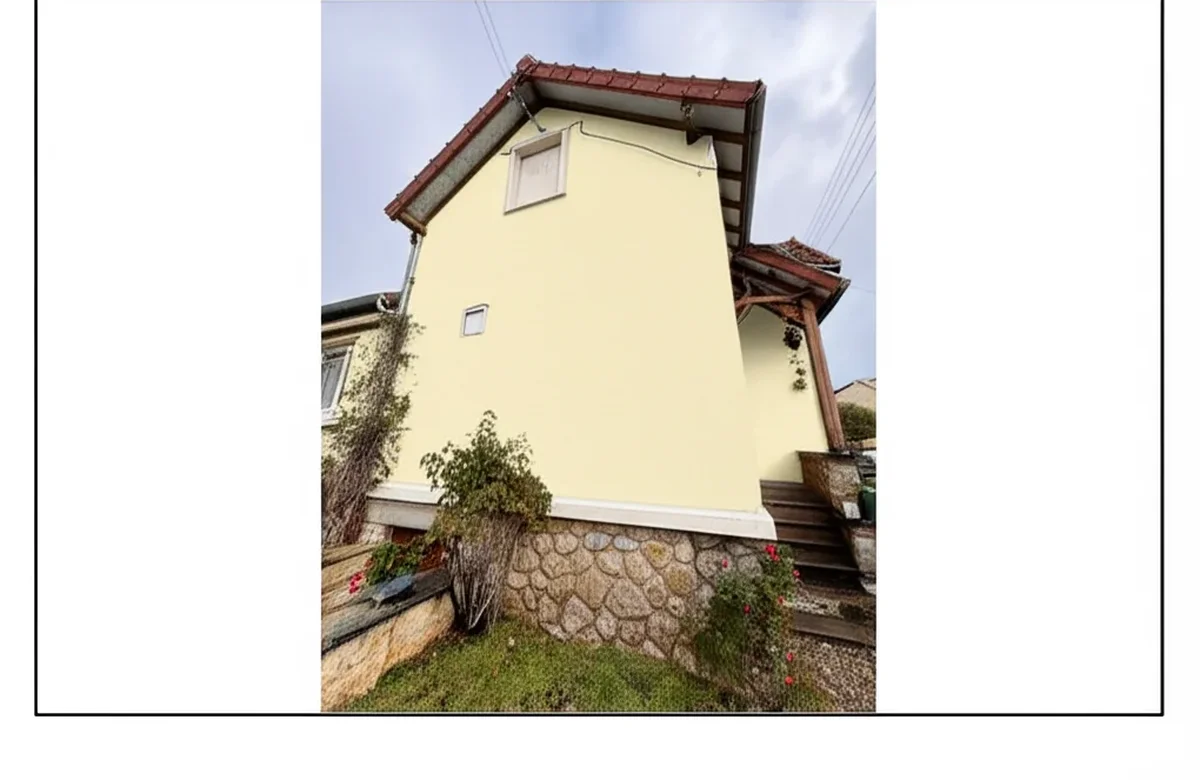
Before you sign off on a render colour for 100 m² of West End villa or Southside semi, Try our free AI colour visualiser and preview the finish on a photo of your actual Glasgow home. A small swatch on a brochure rarely tells the full story once it is scaled across a four-storey blonde-sandstone tenement under West of Scotland skies.
Glasgow rendering costs per m² in 2026
According to 2026 Checkatrade averages and RICS regional benchmarks, Glasgow sits noticeably below Edinburgh and London but slightly above Belfast and Dundee for typical render work. Expect £35-£90 per m² for the main render systems on standard substrates, with scaffold, substrate prep and VAT usually included in a formal quote. Labour rates for Glasgow plasterers and renderers in 2026 typically run £180-£240 per day, with a 10-15% premium for tenement access, shared-stair coordination and traditional lime work.
| Render system | Glasgow cost per m² (2026) | Lifespan | Best for |
|---|---|---|---|
| K Rend silicone | £55 – £85 | 25-30 years | Semi-detached villas, blockwork extensions |
| Weber Pral M (Monocouche) | £50 – £80 | 25-35 years | New builds, post-war semis in Bishopbriggs / Newton Mearns |
| Wetherby Build silicone system | £60 – £90 | 30-40 years | Exposed elevations, west-coast wind-driven rain |
| Parex DPR through-coloured | £55 – £85 | 25-30 years | Through-colour finish, contemporary remodels |
| Harling / roughcast (Scottish traditional) | £40 – £70 | 30-40 years | Tenements, post-war semis, tradition-matched finish |
| Pebbledash repair / replacement | £35 – £60 | 20-30 years | 1960s-80s housing stock across Drumchapel, Easterhouse, Castlemilk |
| Lime render / lime harling (breathable) | £70 – £110 | 50+ years | Pre-1919 listed sandstone tenements (HES specification) |
Glasgow neighbourhood pricing: West End, Southside, East End and beyond
Glasgow covers a wide spread of G postcodes, and rendering quotes vary significantly between them. Affluent West End postcodes such as Hyndland, Hillhead and Dowanhill command premium pricing because of restricted tenement access, conservation rules and a steady demand from professional households. The Southside spans both well-heeled Pollokshields and lively Shawlands, while the East End around Dennistoun remains keener. Outer suburbs in Bearsden, Milngavie and Newton Mearns attract higher quotes despite easier access, simply because of the larger detached villa stock and the typical client budget.
| Neighbourhood | Postcode area | Render cost per m² (2026) | Typical 3-bed semi total |
|---|---|---|---|
| West End (Hyndland, Hillhead, Dowanhill) | G12 | £55 – £90 | £8,500 – £11,800 |
| Partick, Kelvinside | G11, G20 | £50 – £85 | £7,800 – £10,800 |
| Southside (Pollokshields) | G41 | £45 – £75 | £7,200 – £9,800 |
| Shawlands, Strathbungo | G41, G42 | £40 – £70 | £6,400 – £9,200 |
| East End (Dennistoun) | G31 | £35 – £65 | £5,200 – £8,400 |
| Maryhill, Springburn | G20, G21 | £35 – £60 | £4,800 – £7,800 |
| Drumchapel, Castlemilk, Easterhouse | G15, G45, G34 | £35 – £60 | £4,200 – £7,200 |
| Bearsden, Milngavie, Newton Mearns | G61, G62, G77 | £55 – £90 | £8,200 – £11,500 |
Local tip
Tenement flats on a single stair in Hyndland, Pollokshields or Dennistoun can share scaffold between owners under the Tenements (Scotland) Act 2004, which usually splits external maintenance costs by flat. Agreeing a joint contract with neighbours often saves £1,000-£2,500 per flat and avoids two scaffold erections on the same close.
Glasgow's render problems: pebbledash failure, harling renewal and lime mortar
Three render issues dominate Glasgow callouts. First, pebbledash failure on 1960s-80s council and ex-council stock, the brittle cement skin lets go in sheets after years of freeze-thaw, pulling chunks of underlying render with it. Second, harling renewal on inter-war and post-war semis from Knightswood to Cardonald, Scottish roughcast was built to be patched and re-coated every 20-30 years, not left indefinitely. Third, the lime mortar requirement on pre-1919 traditional blonde and red sandstone tenements across the West End, Southside and Dennistoun.
For Glasgow's pre-1919 sandstone stock, the only correct specification is breathable lime mortar and, where harling is needed, a hydraulic-lime harling following Historic Environment Scotland Short Guide 4 (Traditional Rendering and Harling). Modern cement renders trap moisture behind the wall, drive interstitial damp into the sandstone, and accelerate stone face spalling, a problem HES has documented across Glasgow tenement stock for over twenty years. On a Listed Building, applying cement render or a non-breathable acrylic finish can be a criminal offence under the Planning (Listed Buildings and Conservation Areas) (Scotland) Act 1997.
- Pebbledash that sounds hollow on tapping is already debonded, full removal back to substrate is usually cheaper than patching
- Harling on inter-war semis can often be repaired in patches if the underlying scratch coat is sound
- Pre-1919 sandstone walls must use lime-based mortars and renders, never modern cement systems
- Listed Building Consent is required from Glasgow City Council before any external works on Category A, B or C listed sandstone
Preview K Rend, Weber and Parex finishes on a photo of your Glasgow home, free and instant
K Rend silicone vs Weber Pral M, Wetherby Build and Parex DPR
The four main modern render brands you will see quoted in Glasgow each have distinct strengths. K Rend silicone is the most widely specified system on west-coast Scottish homes because its silicone-enhanced surface sheds wind-driven rain extremely well and resists dirt pickup in Glasgow's wet, mild Atlantic climate. Weber Pral M is a one-coat Monocouche through-coloured render, fast to apply, cost-effective on new builds and extensions, but slightly more sensitive to substrate movement than silicone systems. Wetherby Build offers a full silicone topcoat over a basecoat-and-mesh build-up, which is the preferred approach on exposed elevations facing the prevailing south-westerlies. Parex DPR is a through-coloured silicone-enhanced render used widely on contemporary remodels and is well-regarded for colour stability.
For most Glasgow homes, semis, detached villas and modern blockwork extensions, a silicone or silicone-enhanced system from K Rend, Wetherby or Parex is the best bet for the climate. Weber Pral M remains the cost-effective workhorse for new builds and post-war stock in Bishopbriggs, Stepps and Newton Mearns where breathability requirements are lower. None of these modern systems are appropriate for pre-1919 sandstone, that work goes to specialist lime contractors only.
Glasgow Listed Buildings, conservation areas and HES guidance
Glasgow has more than 20 designated conservation areas including Glasgow West (Hyndland, Hillhead, Dowanhill, Kelvinside), Pollokshields, Strathbungo, Dennistoun, Park and Blythswood. Many properties within these are also Listed Buildings registered with Historic Environment Scotland (Category A, B or C). If your home is listed, Listed Building Consent is required from Glasgow City Council before any rendering, harling or external surface work, even a like-for-like repair.
Outside conservation areas, rendering generally falls under permitted development for unlisted properties, but a pre-application enquiry to Glasgow City Council is still worthwhile. Scaffold erected on a public footway in Glasgow requires an occupation of public road permit costing £150-£350 for a typical domestic job. For all heritage work, follow Historic Environment Scotland Short Guide 4 alongside BS 8000-3:2020 (workmanship on site: rendering).
- Always check the Glasgow City Council planning portal for conservation area boundaries before quoting
- Listed Building Consent applications typically take 8-12 weeks in Glasgow, factor this into your timeline
- External wall insulation (EWI) systems projecting more than 50 mm beyond the original wall almost always need planning consent
- Pre-1919 sandstone must use lime-based, breathable systems following HES guidance, cement is not acceptable
Glasgow's Atlantic climate: 1,100 mm rain, driving rain and breathability
Glasgow receives around 1,100 mm of rainfall per year spread across 200+ rain days, significantly wetter than Edinburgh, London or Manchester. The city sits in Driving Rain Index Zone 4 (severe) on the BS 8104 map, which means render systems must deal with substantial wind-driven rain from the Atlantic prevailing south-westerlies. Frost days run 25-40 a year, fewer than Edinburgh but still enough to drive freeze-thaw damage in poorly specified systems.
Two consequences flow from this. First, breathability matters more in Glasgow than in drier eastern cities, vapour driven into the wall by interior heating must be able to escape outwards, otherwise it condenses behind the render and triggers blistering and detachment. Second, hydrophobic surface chemistry on the topcoat (silicone or silicone-enhanced) is a smart investment because it sheds wind-driven rain rather than absorbing it. K Rend silicone, Wetherby Build silicone and Parex DPR are all designed exactly for this combination of high rainfall and moderate frost. For pre-1919 sandstone, lime systems remain non-negotiable for the same reason, they remain breathable while shedding bulk water.
Any Glasgow render project should follow BS 8000-3:2020 and specify a minimum 5 mm render mesh reinforcement at stress points. Insist on bellcast bead at the DPC line, stop beads at all edges and a 150 mm clearance above ground level to prevent wicking from wet Glasgow pavements.
Best seasons for rendering in Glasgow (April-October)
Render cures correctly only when air temperatures stay reliably above 5 degC for at least 72 hours after application, and the surface must not be hit by heavy rain in the first 24-48 hours. In Glasgow this realistically narrows the working window to mid-April through to mid-October. Applying render in November-March risks frost damage before the surface has hydrated, plus high rain washout, both of which cause delamination, crazing and patchy colour.
- April-May: Best availability but book 6-8 weeks ahead; settled drier days when they come
- June-August: Peak season, expect premium pricing in West End and Southside on listed and conservation work
- September-October: Often the sweet spot, drier settled weather and slightly lower contractor demand
- November-March: Avoid unless a tented heated enclosure is used (rare and costly for domestic work)
Total cost and choosing a Glasgow contractor
For a standard 3-bed semi in Glasgow with roughly 90-120 m² of wall area, the all-in 2026 cost (render, scaffold, prep, road permit, VAT) typically lands between £4,200 and £11,800, pebbledash repair and harling refresh in Maryhill, Castlemilk or Drumchapel at the lower end; full silicone systems in Hyndland, Bearsden or Newton Mearns at the upper end.
Use Checkatrade, TrustATrader and MyBuilder to shortlist renderers (50+ reviews, 4.8+ average). For premium systems look for K Rend Approved Applicators, Weber Certified Installers or Parex DPR Approved Applicators to secure the manufacturer's 25-year warranty. For pre-1919 lime work, look for Scottish Lime Centre Trust or SPAB membership. Always ask for proof of £2 m public liability insurance, three local references, a quote itemising prep/mesh/beads/scaffold/permit/VAT, manufacturer approval and BS 8000-3 compliance. Collect a minimum of three quotes, Glasgow pricing can vary 25-40% for identical specs, and unusually cheap quotes almost always signal shortcut prep, the most common cause of premature render failure across the West of Scotland.
FAQ: Glasgow rendering 2026
How much does exterior rendering cost in Glasgow in 2026?
Exterior rendering in Glasgow costs £35-£90 per m² in 2026. Pebbledash repair and harling renewal start around £35-£60 per m², K Rend silicone runs £55-£85 per m², full Wetherby Build silicone systems reach £60-£90 per m², and breathable lime render on listed sandstone tenements costs £70-£110 per m². A typical 3-bed semi with 90-120 m² of wall ranges from £4,200 in Maryhill, Castlemilk or Drumchapel to £11,800 in Hyndland, Bearsden or Newton Mearns, including scaffolding, substrate prep, road-occupation permits and VAT.
Do I need lime mortar on a pre-1919 Glasgow sandstone tenement?
Yes. Pre-1919 traditional sandstone tenements across Glasgow's West End, Southside and Dennistoun must use breathable lime mortar and lime-based renders or harling, following Historic Environment Scotland Short Guide 4. Modern cement renders trap moisture behind the wall, drive interstitial damp into the sandstone and accelerate stone face spalling. On a Listed Building, applying a non-breathable cement or acrylic system without consent can be a criminal offence under the Planning (Listed Buildings and Conservation Areas) (Scotland) Act 1997. Always seek Listed Building Consent from Glasgow City Council before works.
K Rend silicone vs Weber Pral M: which is better for Glasgow?
For most Glasgow homes, K Rend silicone outperforms Weber Pral M because Glasgow sits in Driving Rain Index Zone 4 (severe) with around 1,100 mm of rainfall a year. K Rend's silicone-enhanced surface sheds wind-driven Atlantic rain and resists dirt pickup, while Weber Pral M is a one-coat Monocouche better suited to drier eastern climates and new-build extensions. Wetherby Build silicone and Parex DPR are also strong options for exposed elevations facing the prevailing south-westerlies. None of these modern systems are appropriate for pre-1919 sandstone, that work goes to specialist lime contractors only.
When is the best time to render a house in Glasgow?
Schedule application between mid-April and mid-October. Render needs air temperatures above 5 degC for 72 hours after application and must not be hit by heavy rain for 24-48 hours, which rules out the wet Glasgow winter. September and October typically offer the best balance of settled weather and lower contractor demand. Avoid November-March unless a tented heated enclosure is used, which is rarely cost-effective on a domestic job.
Ready to choose your render colour?
Picking a render colour for 100+ m² of West End villa or Southside semi is a meaningful decision, and manufacturer colour chips simply do not translate to a full Glasgow facade under West of Scotland light. Try our free AI colour visualiser, upload a photo of your home and preview any K Rend, Weber, Wetherby or Parex colour on your own walls in seconds. It is free, instant and far more reliable than guessing from a brochure swatch under shop lighting.
Free, no sign-up, preview render colours on your own Glasgow home in 30 seconds
Sources: Checkatrade 2026 regional pricing data, RICS Building Cost Information Service, BS 8000-3:2020 workmanship standard, BS 8104 Driving Rain Index, Historic Environment Scotland Short Guide 4 (Traditional Rendering and Harling), Glasgow City Council planning portal, Tenements (Scotland) Act 2004.