Cream House with Burgundy Front Door
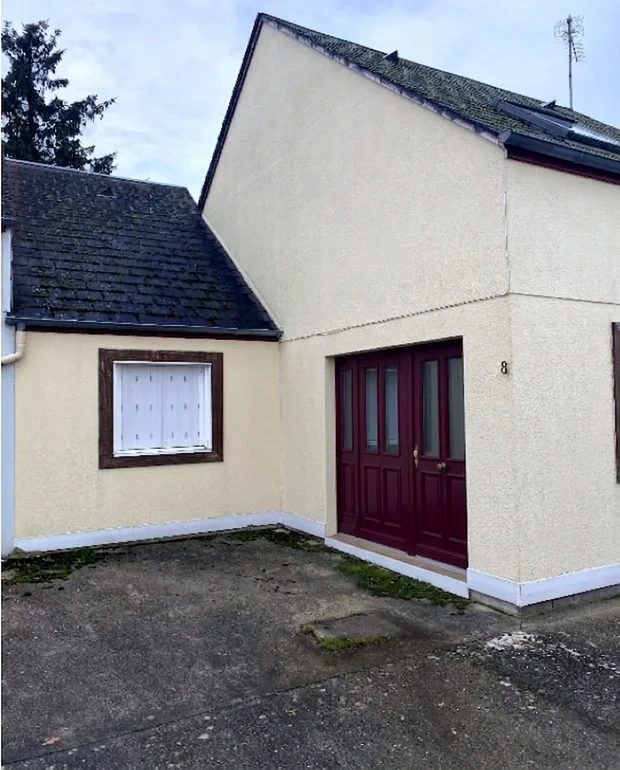
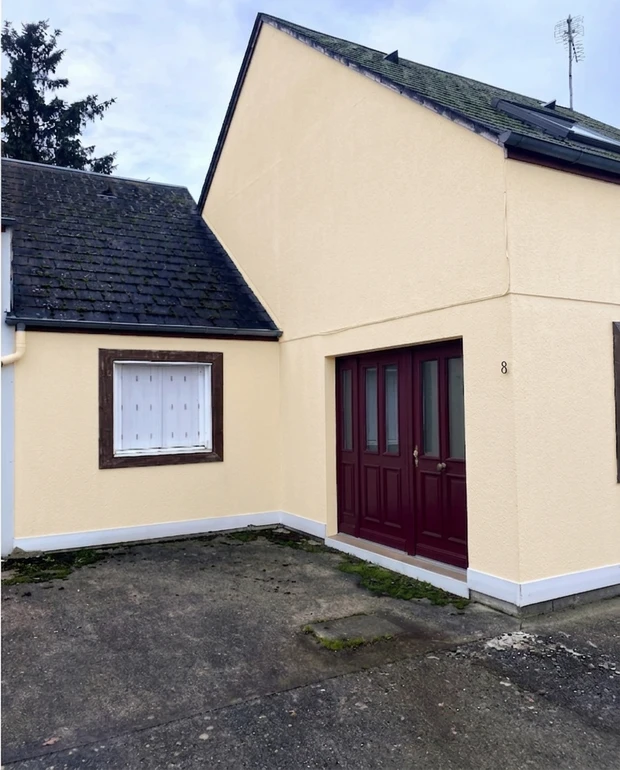
A cream exterior with a deep burgundy front door embodies genteel hospitality. The cream body - warmer than white, subtler than yellow - sets a gracious, approachable tone for the entire facade. Again...
Try it on your house
No photo? Try a sample
Or see this palette on your own house in the exterior paint visualizer.
Understanding This Color Harmony
A cream exterior with a deep burgundy front door embodies genteel hospitality. The cream body - warmer than white, subtler than yellow - sets a gracious, approachable tone for the entire facade. Against this soft backdrop, a burgundy door acts as the home's signature statement: rich, confident, and warmly inviting. Color psychology associates burgundy with wisdom, maturity, and understated luxury - a message very different from the boldness of red or the playfulness of pink. Architecturally, this duo follows the principle of single-accent composition: one concentrated burst of color against a quiet field. The effect is especially compelling on homes with symmetrical facades, where the centered door becomes a natural focal point flanked by uniform windows and cream walls. Burgundy also ages with dignity, deepening slightly over the years into an even richer patina that enhances the home's character.
Technical Color Details
| Property | Facade | Door |
|---|---|---|
| Color Name | Warm Cream | Deep Burgundy |
| Element | Walls / Facade | Door |
| Style | Traditional | |
Colour Technical Profile
Warm Cream reads as being among the warm tones with high saturation, close to the RAL reference RAL 1013. US exterior lines such as Sherwin-Williams Emerald Exterior, Benjamin Moore Regal Select, Valspar Duramax carry close matches across their 100% acrylic and elastomeric ranges; ask your paint store for a computer-tinted match to this colour.
The Light Reflectance Value (LRV) calculates to 90.7 using the WCAG relative-luminance formula (0.2126·R + 0.7152·G + 0.0722·B). LRV drives two practical outcomes for any exterior: how much solar heat the walls absorb, and whether the colour is compatible with exterior insulation finish systems (EIFS in the US, external wall insulation in the UK). At LRV 90.7 the facade reflects most incident light - a plus for cooling loads in hot climates, but watch for glare on south-facing elevations and gradual yellowing. Choose a paint with high titanium-dioxide load and strong UV inhibitors.
The mathematical complement (180° across the hue wheel) lands on a steel blue - best reserved for a small accent such as a door or mailbox rather than the main field. The existing accent of Deep Burgundy sits at a controlled contrast ratio that grounds the composition without breaking it up.
Expert Tips
Apply high-gloss finish to the burgundy door for maximum visual impact and easy cleaning. Frame the door with cream-painted casing that's one shade lighter than the body for a subtle highlight. Add a seasonal wreath or planter to the entryway - burgundy pairs beautifully with autumn golds and winter greens.
Common Mistakes to Avoid
Don't choose a burgundy that's too close to brown - it will read as muddy against cream. Avoid flat or eggshell finishes on the door; they absorb light and dull the burgundy's richness. If your cream body has a pink undertone, avoid burgundy entirely and opt for a true red or navy instead to prevent a monochromatic pink-mauve wash.
Ideal Home Styles
Where This Combination Works Best
Architectural Match
The Traditional style is tailored to the following home types: Traditional colonial, Victorian, Tudor-style, elegant ranch. On Cape Cod saltboxes, Colonial two-stories, and Georgian revivals this duo reinforces the symmetry that defines those styles - particularly when paired with six-over-six windows and a central entry. New England and the Mid-Atlantic are its natural habitat.
Climate & Orientation
With an LRV of 90.7, this is a highly reflective colour: excellent for hot climates (Sun Belt, desert Southwest, Florida) where it materially reduces cooling loads. Guard against glare on south elevations and inspect shaded walls annually for algal streaking.
Urban & Regulatory Context
Before painting, check your HOA covenants - an estimated 60% of new US homes are governed by HOA rules, and many require Architectural Review Board (ARB) approval for exterior colour changes, with approved palettes limited to 15-30 pre-selected swatches. In designated historic districts, a Certificate of Appropriateness from the local preservation commission is often required in addition. This traditional palette is broadly consistent with neighbourhood-friendly suburban expectations, but always submit paint chips and a written description to your HOA before ordering materials - retroactive enforcement can require repainting at the homeowner's expense.
When to Avoid This Pairing
This very light tone (LRV 90.7) shows dirt and algae streaking fast on damp, north-facing walls: avoid it without regular cleaning, and steer clear of glossy finishes that glare in low sun. Avoid it, too, on a minimalist flat-roofed cube, where this traditional-leaning duo can look like pastiche.
Frequently Asked Questions
What colors are used in this combination?
This combination pairs Warm Cream (RAL 1013) on the walls with Deep Burgundy on the door. The style is Traditional.
What style of home suits this combination?
This color scheme is ideal for: Traditional colonial, Victorian, Tudor-style, elegant ranch.
How can I test this combination on my home?
Upload a photo of your facade to FacadeColorizer and apply these exact colors using our AI-powered simulator. It takes less than 30 seconds and is free to try.
What is the RAL reference for these colors?
The facade color Warm Cream has the reference RAL 1013.
You Might Also Like
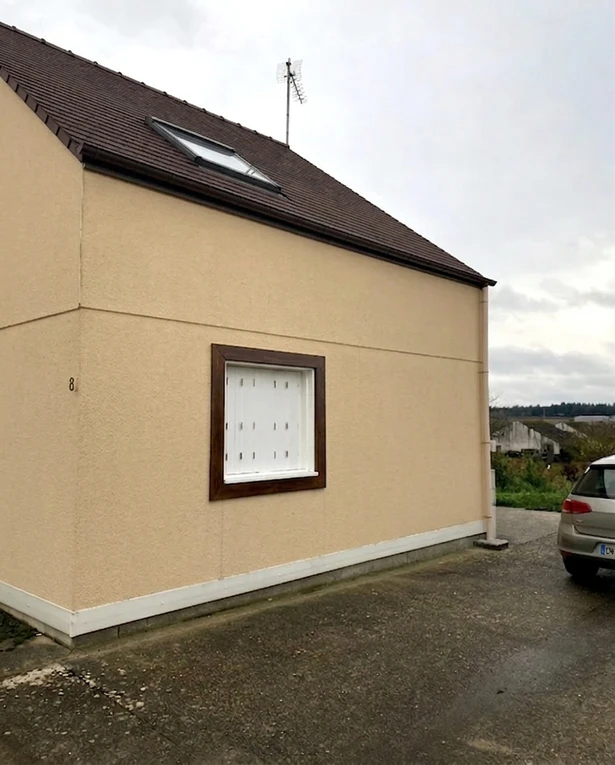
Beige House with Brown Roof
Warm Beige + Espresso Brown
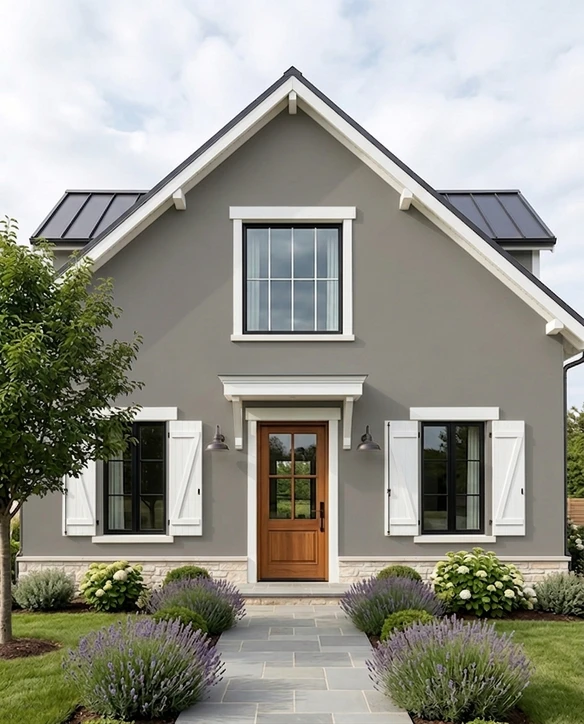
Charcoal Exterior with White Trim
Charcoal + White Trim
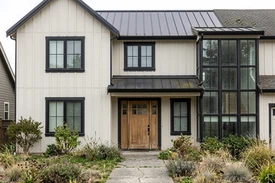
Warm White Modern Farmhouse with Black Trim and Natural Oak Door
Alabaster Warm White + Tricorn Black + Natural Oak
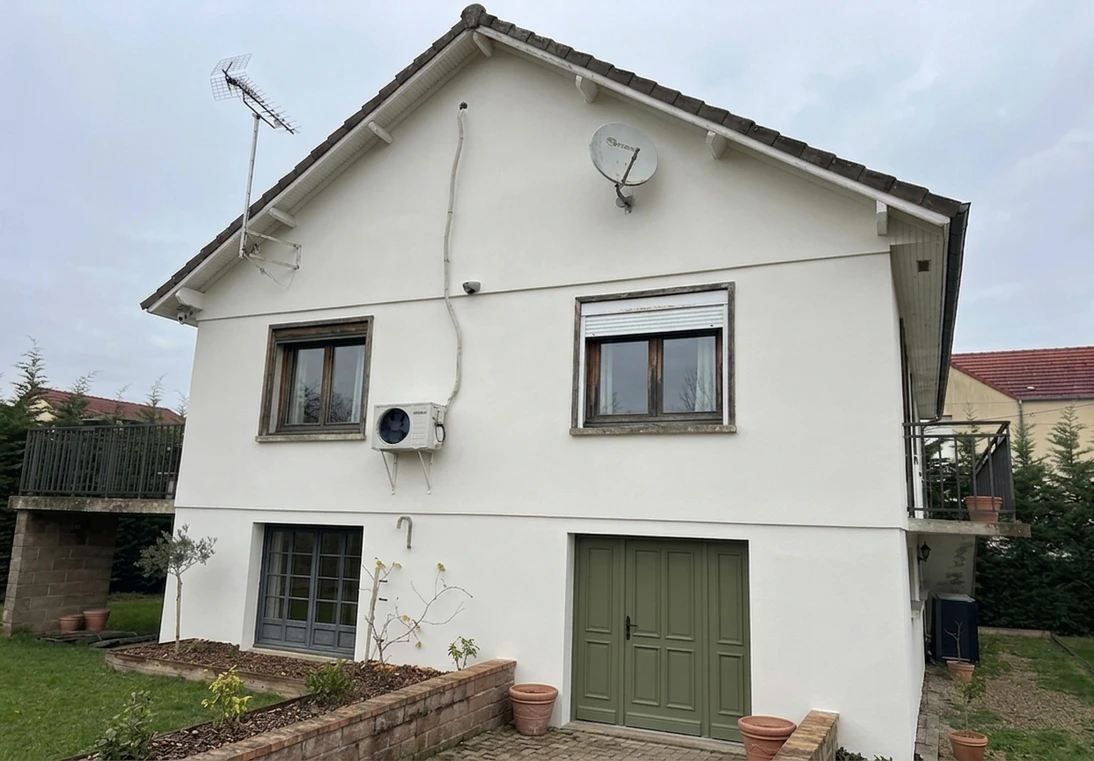
Modern Farmhouse White & Olive Green Door
Simply White + Olive Green
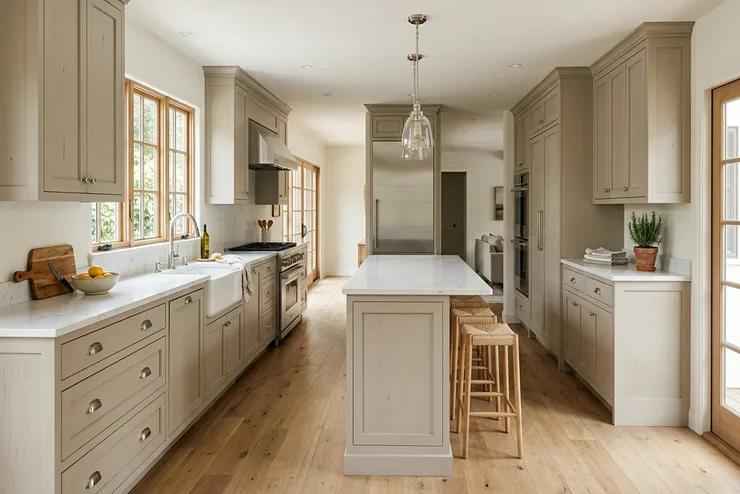
Greige Kitchen Cabinets in Agreeable Gray with Brushed Nickel Hardware
Agreeable Gray Greige + Brushed Nickel Hardware
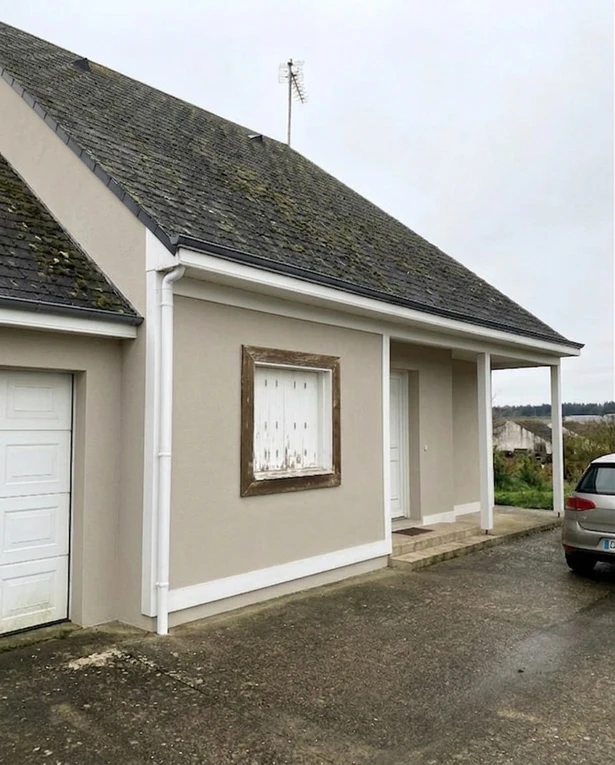
Behr Sculptor Clay PPU5-08 + White
Ready to See This Combination on Your Home?
Upload a photo of your facade and apply Warm Cream + Deep Burgundy in seconds with our AI simulator.
Try the Free SimulatorNo sign-up required • 1 HD sim + 3 variations free