Tan House with Green Shutters
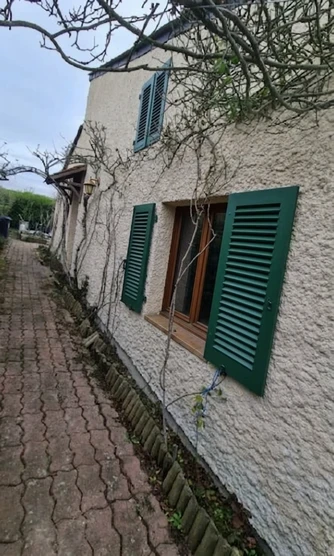
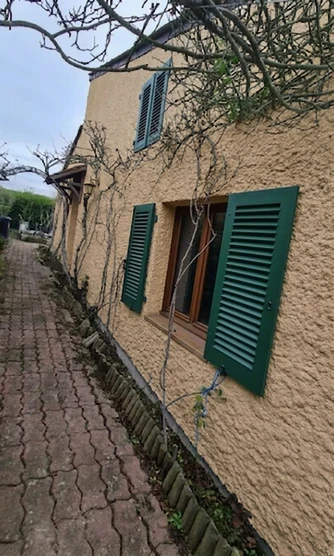
A tan exterior with forest green shutters creates a landscape-integrated look that feels like the house grew out of the earth. This combination mirrors the palette of the American countryside - wheat ...
Try it on your house
No photo? Try a sample
Or see this palette on your own house in the exterior paint visualizer.
Understanding This Color Harmony
A tan exterior with forest green shutters creates a landscape-integrated look that feels like the house grew out of the earth. This combination mirrors the palette of the American countryside - wheat fields meeting tree lines - and carries deep subconscious associations with natural shelter and abundance. The warm tan provides a sun-baked backdrop that changes character throughout the day: pale gold at dawn, rich amber at sunset. Forest green shutters sit comfortably within this warmth because green and tan are analogous colors on the warm side of the wheel. Unlike high-contrast pairings, this duo operates on subtlety, creating a restful facade that calms rather than excites. It is especially effective on properties with mature landscaping, where the green shutters echo the surrounding foliage and the tan walls complement bark and soil tones.
Technical Color Details
| Property | Facade | Shutters |
|---|---|---|
| Color Name | Warm Tan | Forest Green |
| Element | Walls / Facade | Shutters |
| Style | Country | |
Colour Technical Profile
Warm Tan reads as being among the warm tones with high saturation, close to the RAL reference RAL 1011. US exterior lines such as Sherwin-Williams Emerald Exterior, Benjamin Moore Regal Select, Valspar Duramax carry close matches across their 100% acrylic and elastomeric ranges; ask your paint store for a computer-tinted match to this colour.
The Light Reflectance Value (LRV) calculates to 67.1 using the WCAG relative-luminance formula (0.2126·R + 0.7152·G + 0.0722·B). LRV drives two practical outcomes for any exterior: how much solar heat the walls absorb, and whether the colour is compatible with exterior insulation finish systems (EIFS in the US, external wall insulation in the UK). At LRV 67.1 the facade reflects most incident light - a plus for cooling loads in hot climates, but watch for glare on south-facing elevations and gradual yellowing. Choose a paint with high titanium-dioxide load and strong UV inhibitors.
The mathematical complement (180° across the hue wheel) lands on a steel blue - best reserved for a small accent such as a door or mailbox rather than the main field. The existing accent of Forest Green sits at a controlled contrast ratio that grounds the composition without breaking it up.
Expert Tips
Choose a forest green with a slight olive undertone for the most natural effect. Pure emerald or hunter green can feel synthetic against tan. Complement with copper-toned light fixtures and a stained-wood front door for a full earth-palette entryway. Plant evergreen shrubs beneath the windows to visually connect the shutters to the ground plane.
Common Mistakes to Avoid
Don't pick a neon or lime green - it will look cartoonish against tan. Avoid a tan that leans too pink (salmon undertone), which clashes with green and produces a watermelon effect. Also, don't let the green shutters fade to gray-green without repainting; the mismatch with the warm tan will read as neglect rather than patina.
Ideal Home Styles
Where This Combination Works Best
Architectural Match
The Country style is tailored to the following home types: Country home, farmhouse, log cabin-style, wooded property. On contemporary and transitional suburban homes this combination stays current without locking the house into a single aesthetic era.
Climate & Orientation
With an LRV of 67.1, this is a highly reflective colour: excellent for hot climates (Sun Belt, desert Southwest, Florida) where it materially reduces cooling loads. Guard against glare on south elevations and inspect shaded walls annually for algal streaking.
Urban & Regulatory Context
Before painting, check your HOA covenants - an estimated 60% of new US homes are governed by HOA rules, and many require Architectural Review Board (ARB) approval for exterior colour changes, with approved palettes limited to 15-30 pre-selected swatches. In designated historic districts, a Certificate of Appropriateness from the local preservation commission is often required in addition. This country palette is broadly consistent with neighbourhood-friendly suburban expectations, but always submit paint chips and a written description to your HOA before ordering materials - retroactive enforcement can require repainting at the homeowner's expense.
When to Avoid This Pairing
At LRV 67.1 the facade sits in the comfort zone, but avoid pairing it with an accent too close in lightness: without clear contrast between the wall and the shutters, the scheme looks flat.
Frequently Asked Questions
What colors are used in this combination?
This combination pairs Warm Tan (RAL 1011) on the walls with Forest Green on the shutters. The style is Country.
What style of home suits this combination?
This color scheme is ideal for: Country home, farmhouse, log cabin-style, wooded property.
How can I test this combination on my home?
Upload a photo of your facade to FacadeColorizer and apply these exact colors using our AI-powered simulator. It takes less than 30 seconds and is free to try.
What is the RAL reference for these colors?
The facade color Warm Tan has the reference RAL 1011.
You Might Also Like
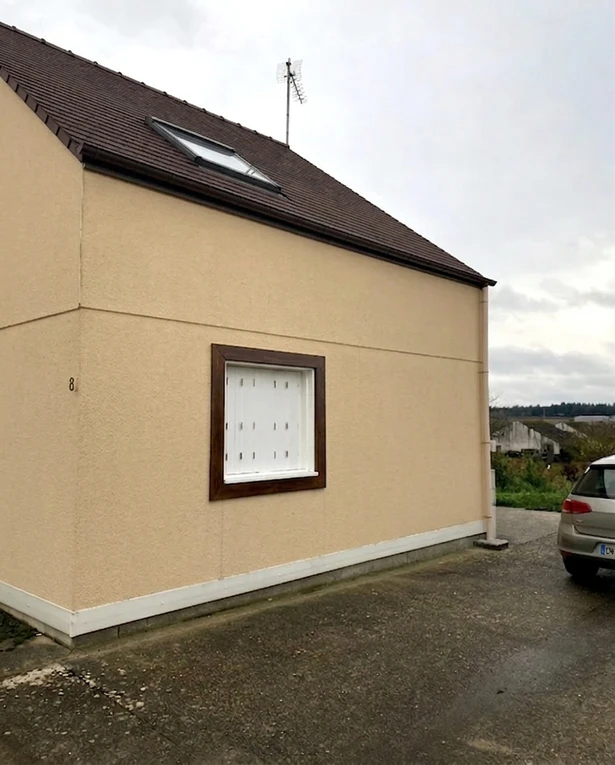
Beige House with Brown Roof
Warm Beige + Espresso Brown
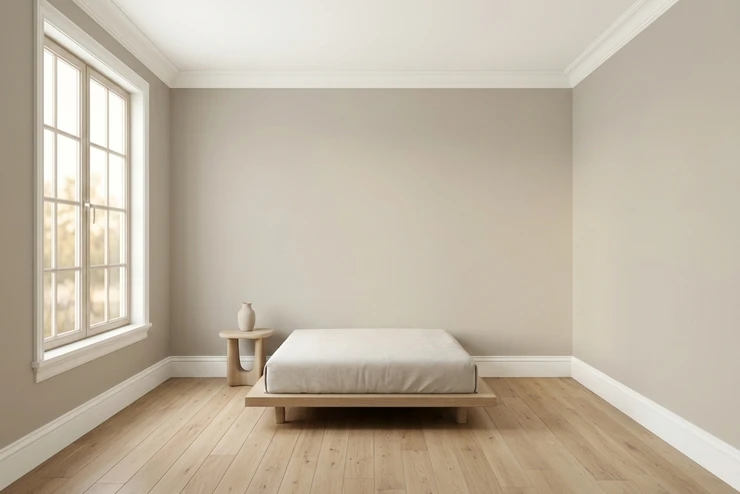
Master Bedroom with Warm Taupe Walls and Cream Trim
Edgecomb Gray + Simply White
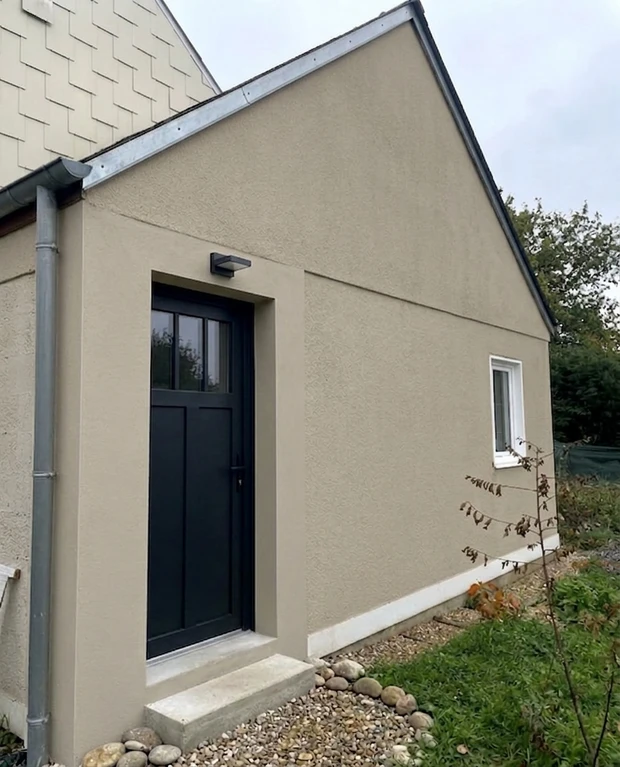
Taupe House with Black Front Door
Greige Taupe + Matte Black
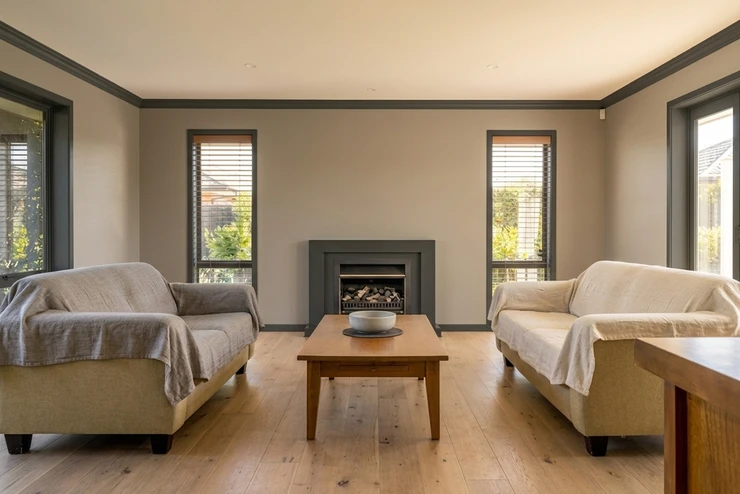
Mushroom Greige Living Room Paint Color 2026 with Charcoal Accents
Mushroom Greige + Charcoal
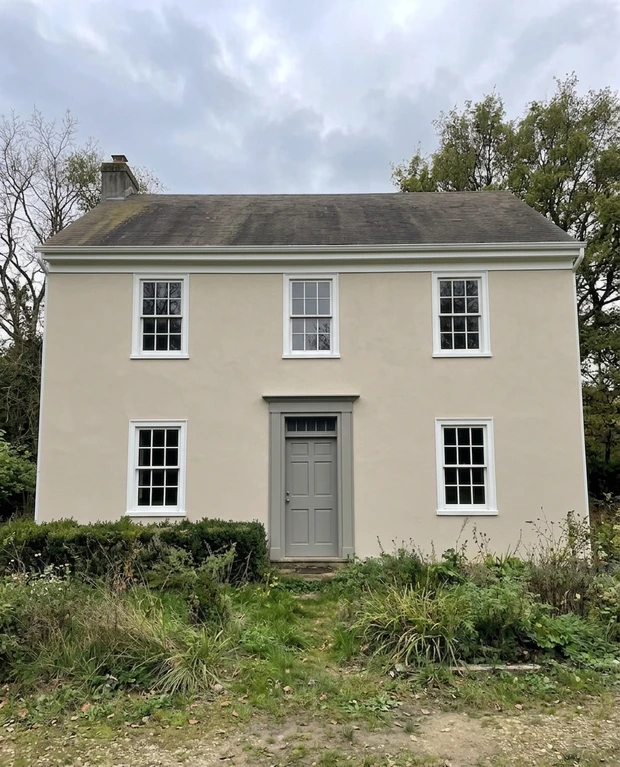
SW Accessible Beige + White
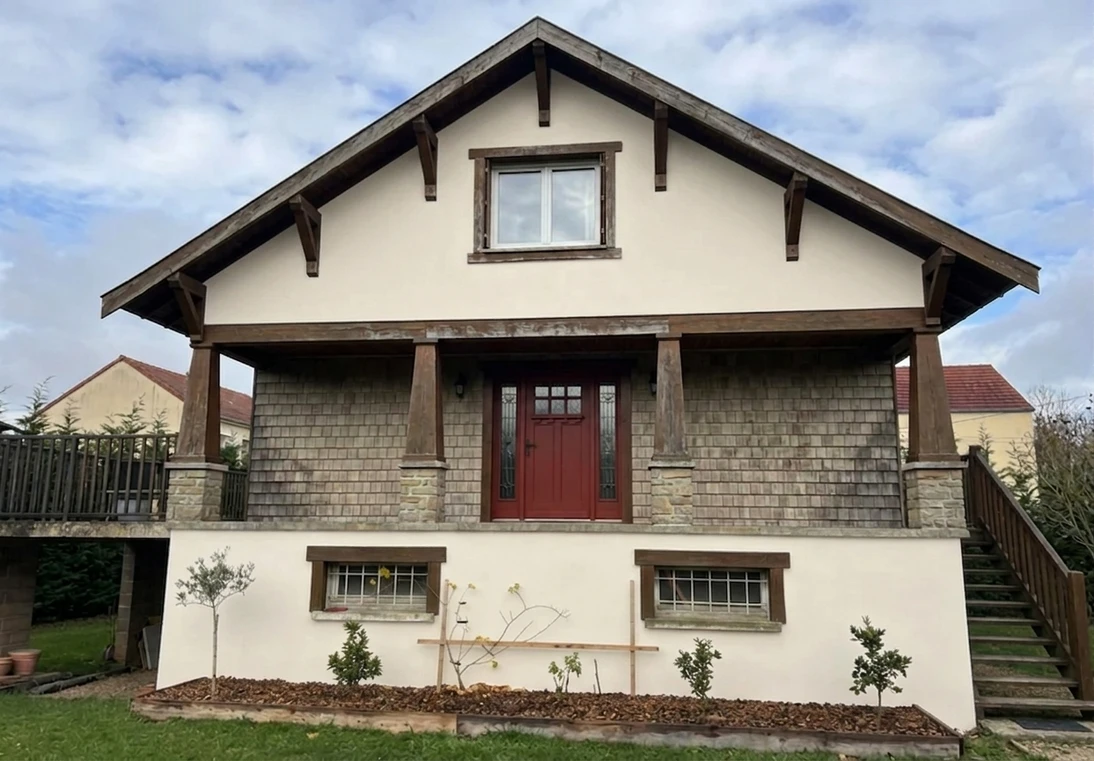
Craftsman Warm White & Red Front Door
Warm White + Heritage Red
Ready to See This Combination on Your Home?
Upload a photo of your facade and apply Warm Tan + Forest Green in seconds with our AI simulator.
Try the Free SimulatorNo sign-up required • 1 HD sim + 3 variations free