Try it on your house

No American house style demands more color than the Victorian. Built between roughly 1860 and 1900 and spanning Italianate, Second Empire, Stick, Queen Anne, and Eastlake substyles, these homes were designed to carry a three- to seven-color Painted Lady palette across body, trim, window sash, sash highlights, accent brackets, and door. A single body color flattens every piece of gingerbread the architect spent months detailing.
Here are the 15 Victorian exterior paint colors that consistently deliver in 2026, each with an authentic Sherwin-Williams Heritage Village or Benjamin Moore Historical Collection code, a hex reference, and a role - body, trim, accent, sash highlight, or door. If your home is not Victorian or you are gathering inspiration across eras, our roundup of 15 outside house color ideas across architectural styles covers Craftsman, Colonial, modern farmhouse, and mid-century palettes alongside Victorian. For full pricing context, see our complete exterior house painting cost guide.
The Painted Lady tradition and why three to seven colors
The term "Painted Lady" was coined in 1978 to describe San Francisco Victorians repainted in bold multi-color schemes, most famously the Postcard Row on Steiner Street facing Alamo Square. The tradition is older: by the 1880s, trade manuals like Shoppell's Modern Houses recommended four to six colors minimum to articulate a Queen Anne facade - body, trim, sash, accent brackets, and often a fifth or sixth for bargeboards, spindlework, and door.
The historic palette leans into deep purples, maroons, forest greens, ochre golds, cream, and sage, sometimes with Venetian red or dusty slate as secondary accents. Pure white body was almost unheard of on a Victorian until the 1920s Colonial Revival wave stripped many down - a trend preservation districts have since reversed. If your block mixes eras and your home is closer to a Tudor Revival than a Queen Anne, our Tudor exterior color guide covers the earthy, half-timbered palettes that suit that neighboring period style.
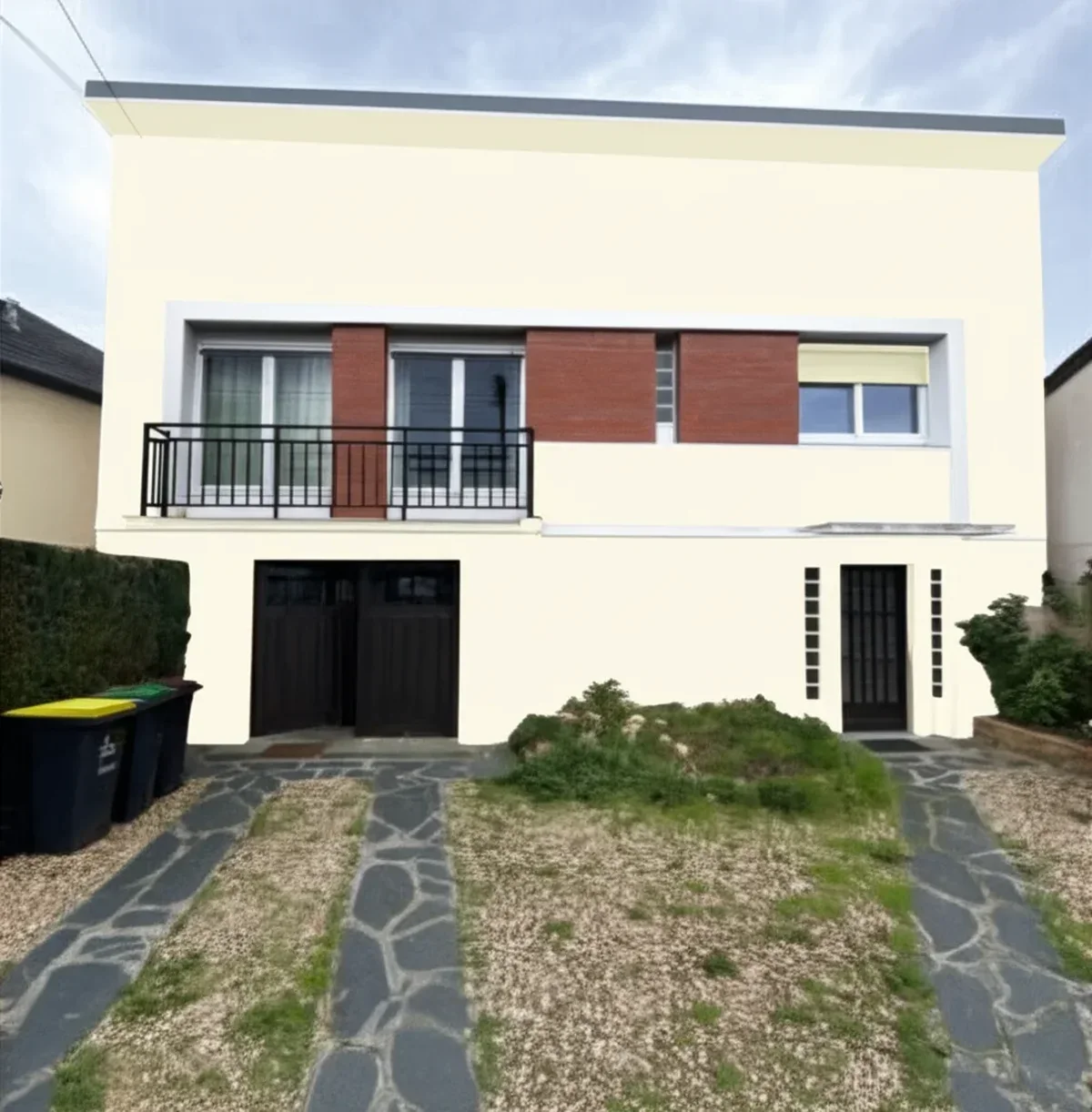
Upload a photo of your Victorian and test any four- to seven-color scheme in under a minute.
The 15 best Victorian exterior paint colors in 2026
1. Roycroft Bottle Green (Sherwin-Williams SW 2847) - #2C3A2E
A deep, bottle-shadow forest green pulled from the Sherwin-Williams Heritage Village collection. Almost black in overcast light, rich pine in full sun. Role: body or dominant trim on Queen Anne and Stick-style Victorians. Accent pairing: Hubbard Squash gold and Rookwood Dark Red sash. Best for: tree-shaded San Francisco, Cape May, and Saratoga Springs Victorians. Psychology: stately, heritage, botanical.
2. Rookwood Dark Red (Sherwin-Williams SW 2801) - #5E2D26
An oxblood russet from the Sherwin-Williams preservation line, named for the Rookwood Pottery. The single most popular Victorian trim and sash-highlight color of 2026. Role: trim, sash highlight, accent bracket, or door. Body pairing: Roycroft Vellum body with Roycroft Bottle Green trim. Best for: Italianate and Queen Anne facades with heavy bracketing. Psychology: warm, confident, period-correct.
3. Chestertown Buff (Benjamin Moore HC-9) - #E3D4B0
A warm cream from Benjamin Moore's Historical Collection, ideal as the primary body on small- to mid-sized Victorians where a darker body would shrink the facade. Reads as aged parchment. Role: body. Trim pairing: Essex Green trim with Rookwood Dark Red sash and a plum door. Best for: Folk Victorians and Second Empire cottages. Psychology: welcoming, handcrafted, bright without being stark.
4. Plum Brown (Sherwin-Williams SW 2713) - #4A2E3A
A deep plum-maroon with a cool undertone - the true Victorian purple that sits between burgundy and eggplant. Unmistakable on gingerbread and spindlework. Role: trim, accent bracket, or full body on a small Queen Anne. Body pairing: Dover White body with Hubbard Squash sash. Best for: New England, Hudson Valley, and Mid-Atlantic Victorians. Psychology: regal, period, theatrical.
5. Hubbard Squash (Sherwin-Williams SW 0041) - #C79746
A burnished ochre-gold from the Sherwin-Williams Heritage Village series - the color of late-season squash and the signature Victorian accent for sash highlights, spindles, and bargeboards. Role: sash highlight, accent, or limited body. Trim pairing: Roycroft Bottle Green trim and Plum Brown brackets. Best for: Eastlake and Stick-style facades with deep shadow lines. Psychology: warm, optimistic, authentic.
6. Essex Green (Benjamin Moore HC-188) - #22362A
A deep, near-black forest green from the Benjamin Moore Historical Collection. Reads as pine shadow and anchors spindlework against a cream or buff body. Role: trim, shutters, or door. Body pairing: Chestertown Buff body with Rookwood Dark Red sash. Best for: Italianate townhouses and Second Empire mansards. Psychology: grounded, traditional, architectural.
7. Roycroft Vellum (Sherwin-Williams SW 2833) - #D9C79A
A soft ochre-sand from the Sherwin-Williams Heritage Village series, warmer than Chestertown Buff and with a gentle gold undertone. Excellent body on sun-facing elevations. Role: body. Trim pairing: Roycroft Bottle Green trim with Rookwood Dark Red sash and Plum Brown brackets. Best for: California, Colorado, and Southwest Victorians. Psychology: sunlit, grounded, heritage.
8. Richmond Gold (Benjamin Moore HC-41) - #B8894A
A rich, darkened gold - deeper and more amber than Hubbard Squash. Works as a full body on smaller Victorians or as a bold shingle-band accent on Queen Annes. Role: body or shingle band. Trim pairing: Essex Green trim with Rookwood Dark Red sash and Plum Brown door. Best for: Midwest and Plains-state Victorian cottages. Psychology: warm, mature, sunlit.
9. Svelte Sage (Benjamin Moore 517) - #A59F83
A dusty, desaturated sage from the Benjamin Moore palette - historically accurate for Folk Victorians and approved by most heritage review boards. Role: body. Trim pairing: Plum Brown trim with Hubbard Squash sash and Rookwood Dark Red door. Best for: rural and small-town Victorians in New England and the upper Midwest. Psychology: calm, heritage, neighborhood-approved.
10. Van Buren Brown (Benjamin Moore HC-70) - #4F3E2F
A deep tobacco brown from Benjamin Moore's Historical Collection - the classic Victorian partner for cream and gold bodies. Role: trim, bargeboard, or accent band. Body pairing: Roycroft Vellum or Richmond Gold body with Hubbard Squash sash. Best for: Stick-style and Eastlake homes with heavy horizontal banding. Psychology: mature, tailored, sheltering.
11. Dover White (Sherwin-Williams SW 6385) - #ECE0CC
A creamy, slightly warm off-white - the Victorian answer to modern pure white. Reads as heritage cream in sun and soft linen at dusk. Role: body on small Folk Victorians, or highlight on sash and window molding. Trim pairing: Plum Brown trim with Hubbard Squash sash and Essex Green brackets. Best for: cottages where a darker body would overwhelm the lot. Psychology: welcoming, soft, handcrafted.
12. Tricorn Black (Sherwin-Williams SW 6258) - #2F2F2F
A dense, pure black with no blue undertone - the historically correct Victorian color for ironwork, front doors, and deep sash reveals. Role: door, ironwork, deepest sash. Body pairing: any cream or gold body with Plum Brown or Essex Green trim. Best for: Italianate townhouses and Second Empire row houses. Psychology: formal, architectural, authoritative.
13. Wickham Gray (Benjamin Moore HC-171) - #C9C7B8
A soft greige with a faint green undertone from Benjamin Moore's Historical Collection. A HOA-friendly Victorian body choice that still allows a bold six-color accent scheme. Role: body. Trim pairing: Essex Green trim with Rookwood Dark Red sash, Hubbard Squash highlights, and Plum Brown door. Best for: designated historic districts that restrict saturated body colors. Psychology: refined, heritage, coordinated.
14. Crimson (Benjamin Moore 1301) - #7A2E2A
A saturated Venetian red - bolder than Rookwood Dark Red and historically documented on Queen Anne bodies in the 1880s. Strong enough for a full body on an architectural showpiece. Role: body or dominant accent. Trim pairing: Dover White trim with Hubbard Squash sash and Essex Green shutters. Best for: flagship Queen Annes in San Francisco, Cape May, and Savannah. Psychology: theatrical, confident, unmistakable.
15. Slate Teal (Sherwin-Williams SW 0019) - #4E6870
A dusty, grayed teal-slate from the Sherwin-Williams Heritage Village series. The rarer but historically documented fifth or sixth color on a Painted Lady scheme. Role: accent band, shutter, or door. Body pairing: Roycroft Vellum body with Rookwood Dark Red trim and Hubbard Squash sash. Best for: coastal Victorians in Cape May, Eureka, and the Puget Sound. Psychology: maritime, layered, distinctive.
15-color reference table with roles and heritage codes
Every color below is available as a standard off-the-shelf exterior product from Sherwin-Williams Heritage Village or Benjamin Moore Historical Collection as of Q1 2026. Use the role column to build a four- to seven-color scheme: pick one body, one trim, one sash highlight, one accent, and optionally one bracket color and one door color, all from this palette.
| Color | Code | Hex | Role |
|---|---|---|---|
| Roycroft Bottle Green | SW 2847 | #2C3A2E | Body / Trim |
| Rookwood Dark Red | SW 2801 | #5E2D26 | Trim / Sash / Door |
| Chestertown Buff | BM HC-9 | #E3D4B0 | Body |
| Plum Brown | SW 2713 | #4A2E3A | Trim / Accent |
| Hubbard Squash | SW 0041 | #C79746 | Sash Highlight / Accent |
| Essex Green | BM HC-188 | #22362A | Trim / Shutters |
| Roycroft Vellum | SW 2833 | #D9C79A | Body |
| Richmond Gold | BM HC-41 | #B8894A | Body / Accent Band |
| Svelte Sage | BM 517 | #A59F83 | Body |
| Van Buren Brown | BM HC-70 | #4F3E2F | Trim / Bargeboard |
| Dover White | SW 6385 | #ECE0CC | Body / Sash Highlight |
| Tricorn Black | SW 6258 | #2F2F2F | Door / Ironwork |
| Wickham Gray | BM HC-171 | #C9C7B8 | Body |
| Crimson | BM 1301 | #7A2E2A | Body / Accent |
| Slate Teal | SW 0019 | #4E6870 | Accent / Shutter / Door |
Try it on your house
No photo? Try a sample
A Painted Lady can carry five or six of these heritage codes at once. To see how a body, trim, and accent read together, you can preview each shade on your own walls and judge the combination on a photo of your Victorian.
Body versus trim versus accent versus window highlights: the four-level hierarchy
A proper Victorian scheme is built in layers, not slapped on as a single paint day. Treat the facade as a four-level hierarchy. Level 1 (body): the main field color on clapboard or shingle, covering roughly 60 percent of the visible surface. Level 2 (trim): a darker or richer color on corner boards, window and door casings, frieze boards, and cornice - roughly 20 percent of the surface and the element that defines the architectural edges. Level 3 (accent): a third color on brackets, bargeboards, spindlework, shingle bands, and panel recesses - roughly 10 percent of the surface but where the eye lingers longest.
Level 4 (sash highlight and door): a fourth and optionally fifth or sixth color on window sash, sash muntins, and the front door - the smallest surface area, typically 5 to 10 percent, but the highest visual contrast. A classic Queen Anne scheme might run Chestertown Buff body, Essex Green trim, Rookwood Dark Red accent, Hubbard Squash sash highlight, and Plum Brown door - five colors, each sitting in its correct hierarchy level. That substyle carries the hierarchy further than any other Victorian, which is why it gets its own treatment: our guide to Queen Anne exterior paint colors works through the five levels surface by surface, with the regional sub-variants and the heritage-commission rules that decide what a board will actually approve.
The San Francisco Painted Ladies formula
The Postcard Row Victorians at 710-720 Steiner Street, facing Alamo Square, are the most photographed Painted Ladies in the country. Each house runs a five- to seven-color scheme built on the same formula: a medium-value body (often a warm gold, dusty blue, or soft green), a deeper trim in green or brown, a maroon or oxblood accent on recessed panels and brackets, a cream or ivory sash highlight that brightens every window, and a contrasting door color - usually deep green, burgundy, or black.
Translated to the 2026 palette above: Roycroft Vellum body, Roycroft Bottle Green trim, Plum Brown accent on panels and brackets, Dover White or Hubbard Squash sash highlight, Rookwood Dark Red door, and optionally Slate Teal on a bay-window accent band. That is the six-color Painted Lady formula, and it photographs on a phone camera as well as it did on a 1978 postcard.
Historic restoration guidelines and the ten-to-fifteen-year color cycle
If your Victorian sits in a designated historic district or is on the National Register, the Secretary of the Interior's Standards for Rehabilitation and most local review boards require a paint analysis or documented period-appropriate palette. This usually means a board packet with Heritage Village or Historical Collection codes, a physical swatch, and a full-scale rendering on your actual facade. Arbitrary modern colors are routinely denied.
Plan to recycle your Victorian palette every ten to fifteen years. A six-color scheme on wood clapboard in a four-season climate will chalk and lose sash crispness around year 10, and a full repaint by year 15 prevents substrate damage. Many owners stagger: body and trim every 12 to 15 years, sash and door every 6 to 8 years. Keep a labeled jar of each color - touch-ups between cycles are far cheaper than matching a faded mix.
Test body, trim, accent, sash, and door colors on one photo in under a minute.
Frequently asked questions about Victorian exterior colors
How many colors should a Victorian exterior actually use in 2026?
A minimum of three and ideally five to six. Three-color schemes (body, trim, door) read as a modest Folk Victorian or restrained Italianate. Five to six colors - body, trim, accent bracket, sash highlight, door, and optionally a second accent on panels or bargeboards - are the historically documented standard for Queen Anne, Stick, and Eastlake facades. Seven colors is the maximum before the eye starts reading the house as busy rather than articulated.
What are the most historically accurate Victorian paint colors?
The documented Victorian palette centers on deep purples and plums (Plum Brown SW 2713), maroons and oxbloods (Rookwood Dark Red SW 2801, Crimson BM 1301), forest greens (Roycroft Bottle Green SW 2847, Essex Green BM HC-188), ochre golds (Hubbard Squash SW 0041, Richmond Gold BM HC-41), creams (Chestertown Buff BM HC-9, Dover White SW 6385), and sage greens (Svelte Sage BM 517). Pure bright white, modern gray, and farmhouse beige are all historically incorrect and usually denied by historic district review boards.
How often should a Victorian house be repainted?
Body and trim every 10 to 15 years on wood clapboard in a four-season climate, with sash and the front door refreshed on a shorter 6 to 8 year cycle because they absorb the most UV and hand contact. A staggered schedule (body + trim in one year, sash + door midway through) spreads the cost and keeps the facade crisp between full repaints. Always save labeled jars of every color for touch-ups.
Do I need historic commission approval before repainting a Victorian?
Yes if your home is inside a designated local historic district or listed on the National Register of Historic Places. Most boards require a paint submission packet with heritage collection codes (Sherwin-Williams Heritage Village or Benjamin Moore Historical Collection), a physical swatch, and ideally a photo-based rendering of the proposed scheme on your actual facade. Submissions backed by a visualizer rendering are approved roughly twice as fast as swatch-only submissions because they remove ambiguity about full-scale color behavior.
A successful Victorian repaint starts with a heritage palette, a four-level hierarchy, and a full-scale rendering on your actual home before you buy a single gallon. Test any of these 15 colors on a photo of your Victorian in under a minute with our free AI paint visualizer before you buy sample pots or submit a historic commission packet. Sources: Sherwin-Williams Heritage Village Collection, Benjamin Moore Historical Collection, National Trust for Historic Preservation, Secretary of the Interior's Standards for Rehabilitation.
Trademarks mentioned (Sherwin-Williams, Benjamin Moore, Behr, Caparol, Brillux, Sto, Alpina, Valspar, PPG, Glidden, Dulux, Crown Trade, Sandtex, Farrow & Ball, Johnstone's, Leyland) are property of their respective owners. FacadeColorizer is independent and not affiliated with any of them. Nominative fair use under Lanham Act §1125.