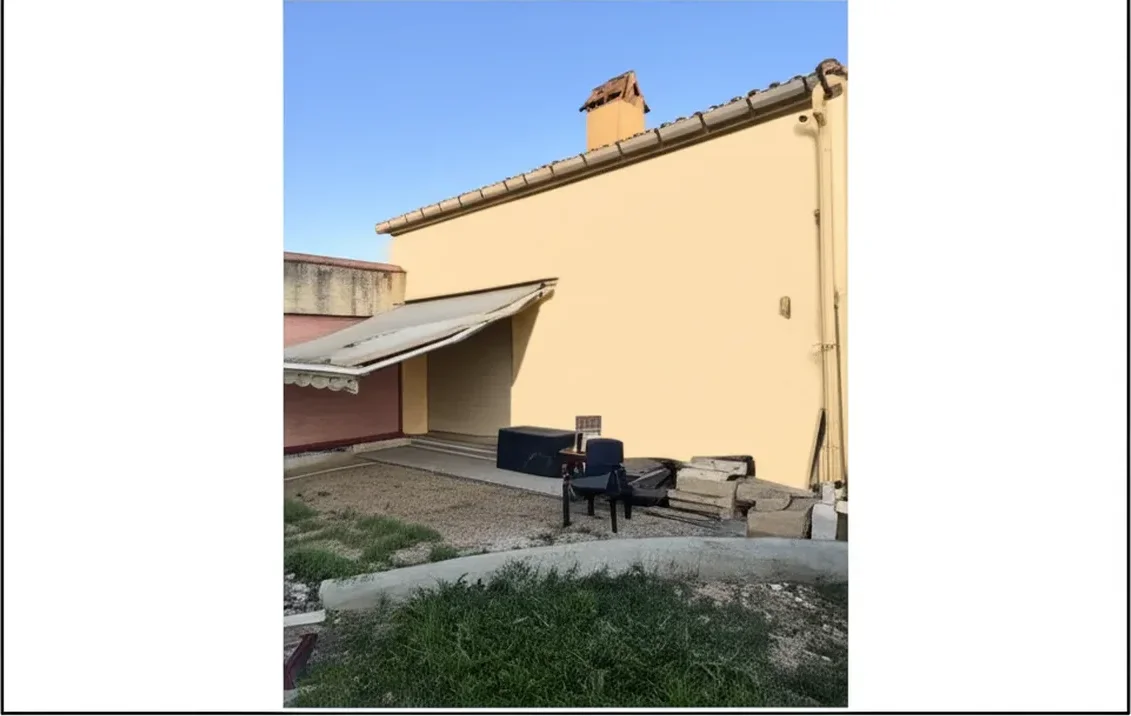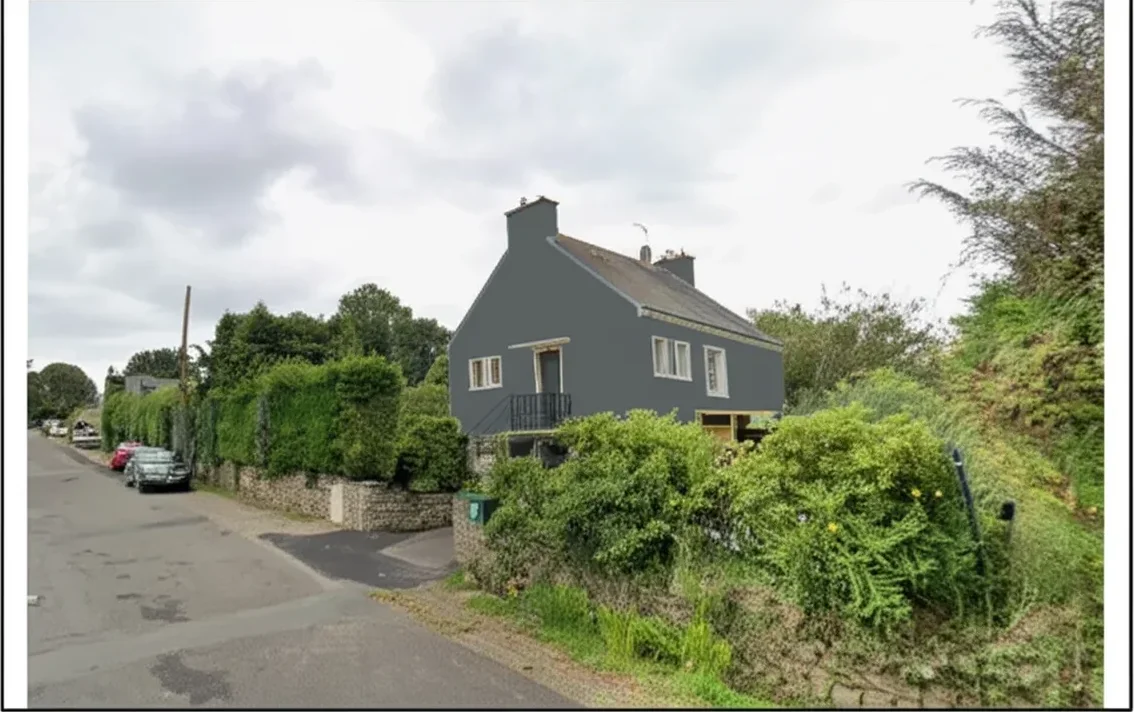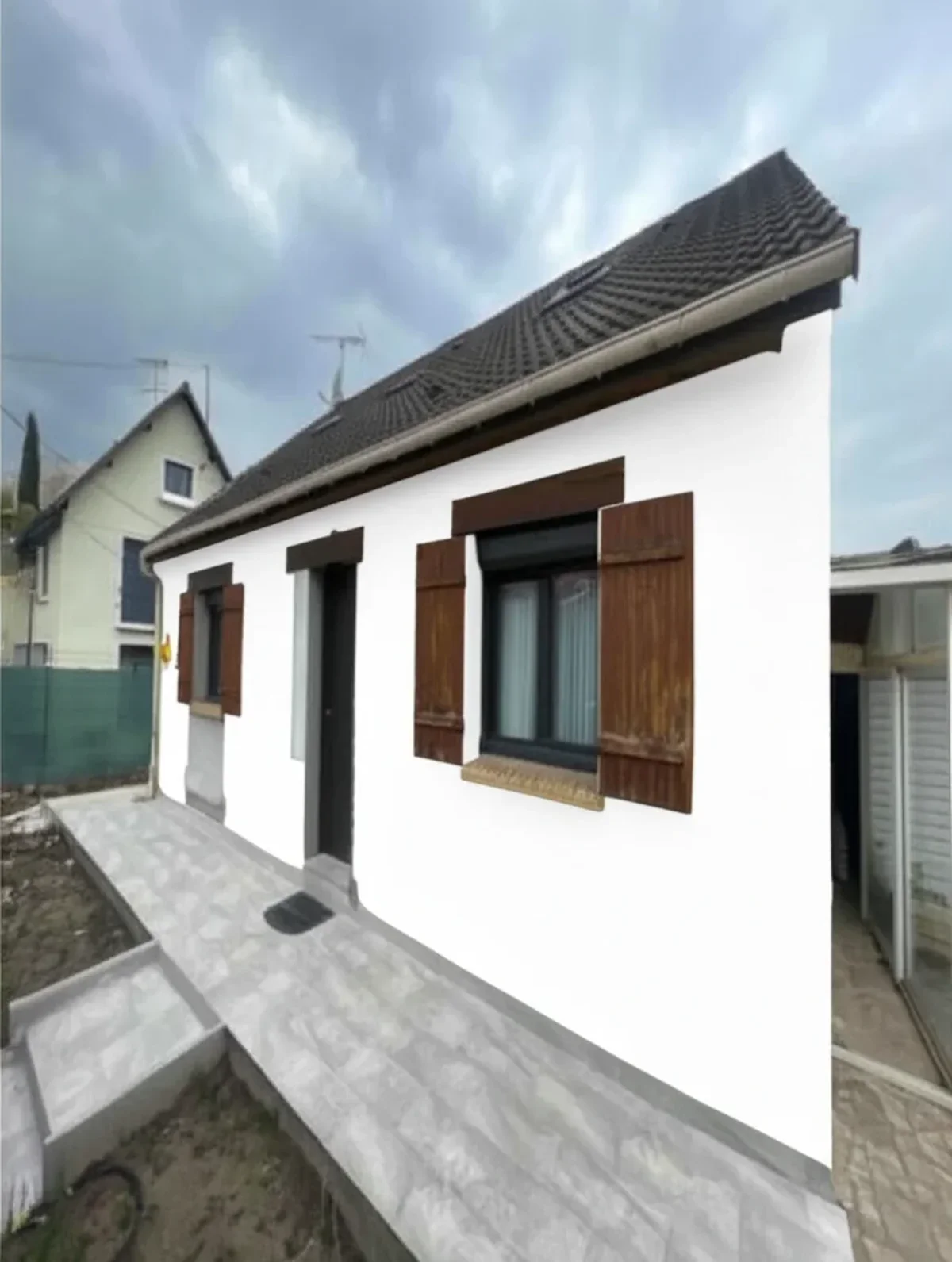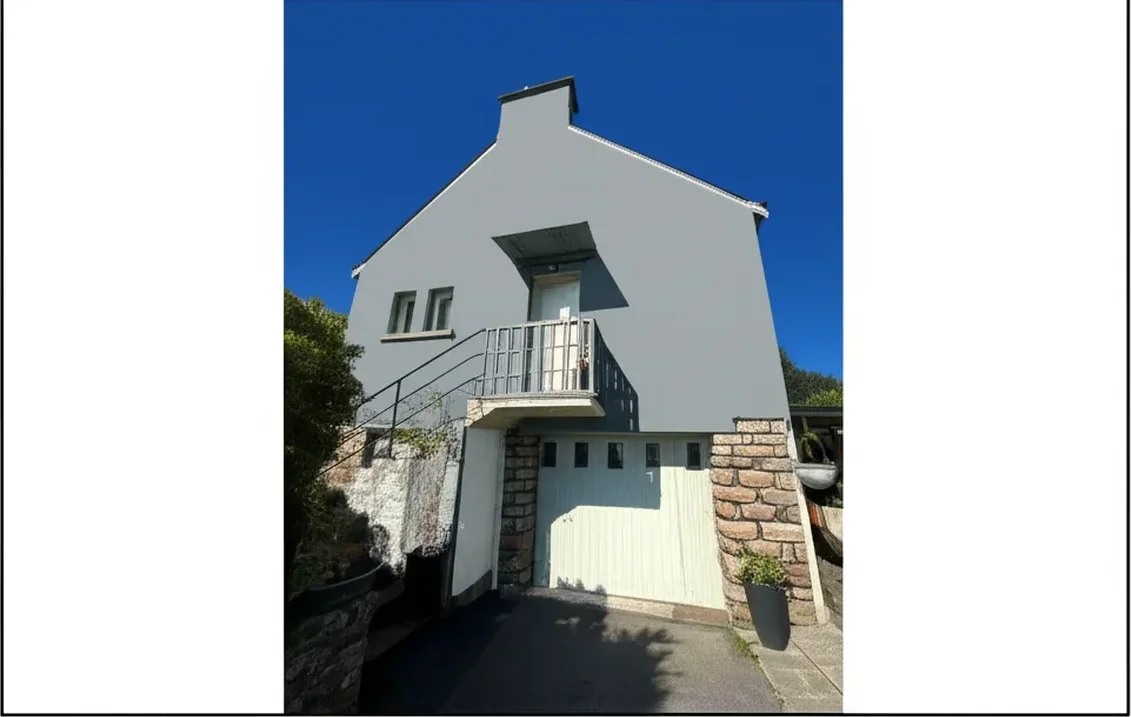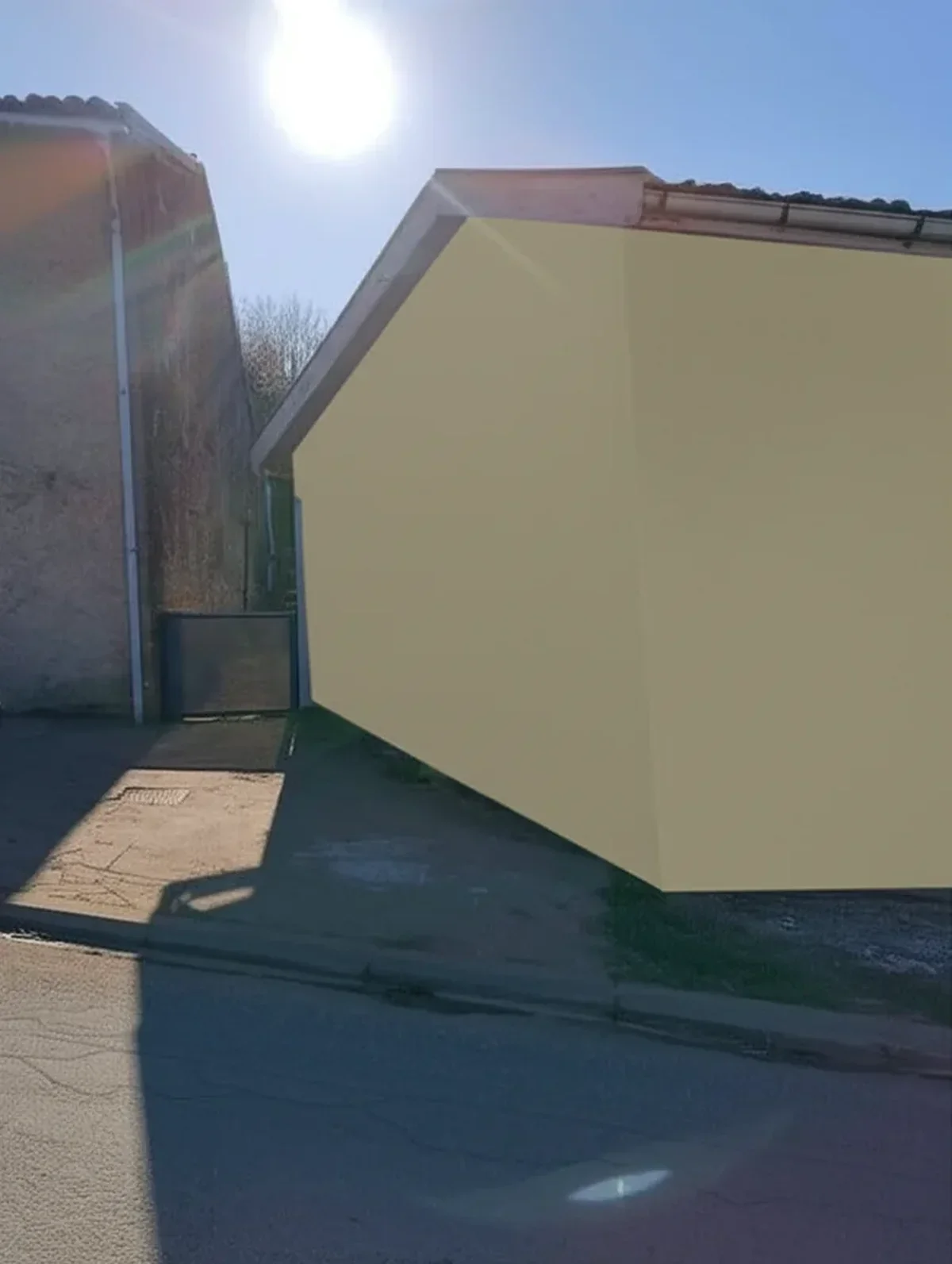
Try it on your house

Owning a listed building is a privilege, and a responsibility. Before you pick up a paintbrush, it is essential to understand the rules that govern what you can and cannot do to a protected property. Whether you have a Grade I, Grade II*, or Grade II listed home, or a house within a conservation area, getting the law wrong can result in an enforcement notice, a criminal record, and the cost of reinstating the building at your own expense. This guide covers everything you need to know about listed building painting rules in the UK in 2026.
Before committing to a colour, visualise heritage colours on your property with our free AI tool, upload a photo of your home and test period palettes instantly, without a single tin of paint.
What Is a Listed Building? Grade I, II*, and II Explained
A listed building is a structure placed on the Statutory List of Buildings of Special Architectural or Historic Interest. In England, the list is maintained by Historic England (formerly known as English Heritage before the 2015 split). In Wales, the equivalent body is Cadw; in Scotland, it is Historic Environment Scotland. These three organisations assess and designate buildings, but day-to-day listed building consent decisions are made by the local planning authority.
There are approximately 400,000 listed building entries in England alone, covering around 500,000 individual structures. The grading system in England and Wales is as follows:
- Grade I, buildings of exceptional interest. Only around 2% of all listed buildings fall into this category. Think medieval cathedrals, Blenheim Palace, and landmark Georgian townhouses. The most stringent restrictions apply.
- Grade II* (pronounced "Grade Two Star"), particularly important buildings of more than special interest. Around 6% of listed buildings. Often significant Victorian or Edwardian public buildings, country houses, and unusual industrial structures.
- Grade II, the most common designation, covering around 92% of all listed buildings. Many ordinary domestic properties, Georgian terraces, Victorian semis, and inter-war cottages, fall into this category. Restrictions are less extreme but still significant.
In Scotland, Historic Environment Scotland uses a different system: Category A (equivalent to Grade I), Category B (broadly equivalent to Grade II*), and Category C (broadly equivalent to Grade II). Northern Ireland uses its own grading under the Historic Environment Division (HED).
Conservation Areas and Article 4 Directions
Even if your home is not listed, it may sit within a designated conservation area. There are over 10,000 conservation areas across the UK, and more than 1,000 in London alone. Conservation areas are designated by local planning authorities to protect the character and appearance of historically or architecturally significant streets, villages, and neighbourhoods.
Within a standard conservation area, painting the exterior of your house is normally permitted development, meaning no planning permission is required. However, local authorities can remove permitted development rights by issuing an Article 4 Direction. Where an Article 4 Direction is in force, any change to the exterior, including repainting, changing the colour, or even stripping paint from previously painted brick, requires a planning permission application, which costs £206 in England (2026 fee).
Boroughs with extensive Article 4 coverage include Islington (which has removed permitted development rights in 40 of its 42 conservation areas), Kensington & Chelsea, and Cotswold District Council. Always check with your local conservation officer or heritage officer before starting any exterior work, even repainting in the same colour can require consent in some areas.
Important: Check Before You Paint
Fair-faced or decorative brickwork should generally be left unpainted. If an elevation is already painted, repainting in an appropriate colour is usually acceptable, but changing to a significantly different colour may require consent even without a listed building designation. When in doubt, call your local planning authority first.
Listed Building Consent: What Requires It?
Listed building consent (LBC) is separate from and additional to planning permission. It is required for any works that would affect the character of a listed building as a building of special architectural or historic interest. This includes both external and internal alterations. Unlike planning permission, there is no fee for applying for listed building consent.
| Listing Grade | Exterior Repainting | Colour Change | Paint Removal / Stripping | Consent Needed? |
|---|---|---|---|---|
| Grade I | Almost always requires LBC | Requires LBC; strict scrutiny | Requires LBC; often refused | Yes, Listed Building Consent |
| Grade II* | Usually requires LBC | Requires LBC | Requires LBC | Yes, Listed Building Consent |
| Grade II | May require LBC if surface has never been painted or if it affects character | Likely requires LBC | Usually requires LBC | Usually Yes, check with conservation officer |
| Conservation Area (no Article 4) | Permitted development, no consent needed | Permitted development, no consent needed | Permitted development, no consent needed | No |
| Conservation Area (with Article 4) | Requires planning permission if colour changes significantly | Requires planning permission | Requires planning permission | Yes, Planning Permission |
Try it on your house
No photo? Try a sample
As a general rule: if a surface has never been painted before and has architectural detail or original features of significance, consent to paint it will be very difficult to obtain. Where a building has an established tradition of being painted, such as a rendered Georgian terrace or a Victorian stucco-fronted villa, then repainting in a sympathetic heritage colour is more likely to be approved.
Heritage Paints: Limewash, Distemper, and Casein Paint
The choice of paint matters as much as the colour. Modern masonry paints based on acrylic or silicone polymers are often inappropriate for historic buildings. They can trap moisture vapour within the wall, leading to damp, spalling stonework, and deteriorating lime mortar joints. Historic England and the Society for the Protection of Ancient Buildings (SPAB) consistently advise using breathable paint systems that allow walls to release moisture naturally.
Limewash
Limewash (also written as lime wash) is one of the oldest exterior finishes known. Made from lime putty or slaked quicklime diluted in water, sometimes with natural pigments added, it has been used on British buildings for centuries. It is highly microporous, allowing moisture vapour to pass through freely, which makes it ideal for solid stone and brick walls that rely on evaporation rather than cavities to manage damp. Limewash is suitable over lime render, limestone, earth walls, and existing old limewash surfaces. It should not be applied over modern cement or acrylic coatings. Suppliers such as Cornish Lime, Rose of Jericho, and Ty-Mawr stock a wide range of ready-to-use limewash in period colours and custom pigmented shades.
One practical detail the consent paperwork never covers is the applicator. Limewash is worked into the surface with a soft, wide brush in several thin coats, not rolled or sprayed, and a stiff filament made for thick acrylic masonry paint will drag and bridge the historic surface instead of feeding it. Our masonry paint brush guide sets out which softer filaments suit limewash and mineral silicate work on listed and conservation area elevations.
Distemper
Distemper is a water-based paint made from chalk or lime mixed with natural pigments and bound with animal glue or casein. Three main types are available: soft distemper (the most permeable, best for ceilings and original features such as ornate plasterwork and the reveals of a sash window), casein distemper (more durable, suitable for walls), and oil-bound distemper (harder, more washable). Distemper is primarily an internal finish but plays a vital role in authentic heritage restoration. Historic paint analysis of many Georgian and Victorian interiors reveals distemper as the original coating system, so if your listed building has a surviving historic paint scheme, a conservation officer may require distemper to be used in any restoration.
Casein Paint
Casein paint, sometimes called milk paint, uses casein, a protein extracted from milk, as its binder. Adding caseinite to limewash produces a more durable, slightly harder finish than plain lime wash. Casein paint is fully breathable paint, non-toxic, and compatible with lime render and lime plaster substrates. It is a popular choice for National Trust properties and for specialist heritage officer-approved schemes where authenticity is paramount. Brands such as Farrow & Ball's Casein Distemper and Little Greene's Intelligent Matt Emulsion incorporate casein into their heritage-grade interiors ranges.
Lime Render and Lime Mortar: The Importance of Breathability
Most pre-1919 buildings in the UK were constructed using lime mortar rather than Portland cement. Lime mortar is softer and more flexible than cement, it accommodates the slight seasonal movement of old walls without cracking and allows moisture to evaporate through the joint rather than through the masonry. When cement mortars are used for repointing or repairs, they can force moisture into the stone or brick, accelerating decay. Like-for-like repair using an appropriate lime mortar or lime putty is the standard expected by Historic England, Cadw, and Historic Environment Scotland for any stone repair or pointing work on a listed structure.
External lime render plays the same role: it is a breathable paint-compatible substrate that manages moisture through vapour permeability. Applying modern masonry paint or silicone render over original lime render can trap moisture vapour, cause the render to de-bond, and result in costly stone repair. If lime render is present, any overcoating system must be equally or more microporous. If the render has failed, like-for-like repair using a new lime render mixed with lime putty or natural hydraulic lime (NHL) is almost always required on listed structures.
Choosing Heritage Colours: Period Palettes for Listed Buildings
The choice of heritage colours matters not only aesthetically but practically, an unsympathetic colour can lead to planning refusal in conservation areas, or a heritage officer requesting changes as a condition of listed building consent. Period colours were typically derived from natural earth pigments: ochres, siennas, umbers, lead whites, and lamp black. The resulting palette tends towards warm off-whites, stone greys, terracotta reds, and soft greens.
Farrow & Ball and Little Greene are the two UK brands most closely associated with historically researched period colours. Farrow & Ball's Exterior Masonry range, in shades such as Elephants Breath, Pavilion Gray, and Clunch, is widely accepted by local planning authorities for listed and conservation area properties. Little Greene's Absolute Matt Emulsion and their historical colour archives offer equally well-researched heritage colours with fully breathable paint formulas compatible with old plaster and lime render. For limewash work specifically, specialist suppliers such as Cornish Lime and Rose of Jericho produce ready-pigmented limewash in authentic Georgian, Victorian, and Edwardian shades.
Finding a Heritage Specialist
Not every painter and decorator has the skills or knowledge to work on a listed building. Applying the wrong materials, even with the best intentions, can cause irreversible damage and constitute unauthorised works in the eyes of the law. Here is how to find the right specialist:
- Historic England's Listed Building Consent advice: Historic England Advice Note 16 provides guidance on what works typically require listed building consent and how to submit an application. Download it free from the Historic England website.
- SPAB (Society for the Protection of Ancient Buildings): maintains a list of craftspeople and contractors experienced in traditional building techniques, including limewash, lime render, lime mortar, and stone repair.
- Accredited conservators: the Icon directory (Institute of Conservation) lists accredited building conservators who specialise in historic paint analysis and restoration.
- Your local conservation officer: every local planning authority has at least one conservation officer or heritage officer. They can advise informally before you apply and point you towards approved contractors and materials.
- National Trust: for properties managed by or adjacent to the National Trust, their regional building surveyors can offer advice and in some cases direct contractor referrals.
Always ask contractors for evidence of previous listed building projects, insurance, and ideally a letter of reference from a local heritage officer or conservation body. Get at least two itemised quotes, and ensure the specification explicitly states the materials to be used, brand, product name, and application method.
Enforcement Notices and Penalties for Unauthorised Works
Carrying out unauthorised works to a listed building is a criminal offence under the Planning (Listed Buildings and Conservation Areas) Act 1990. The penalties are severe, and there is no time limit on when a local authority can issue an enforcement notice, meaning works carried out decades ago can still be prosecuted.
- Criminal conviction: the maximum penalty in a Crown Court is an unlimited fine and/or up to two years' imprisonment. Magistrates' courts can also issue substantial fines.
- Listed Building Enforcement Notice: the local authority can require the building owner to reverse all unauthorised works and restore the building to its former state, at the owner's expense. This can mean stripping all incorrectly applied paint or render and reinstating original finishes using traditional materials.
- Financial benefit: courts must take into account any financial gain the convicted person received as a result of the offence when setting fines, so avoiding the cost of a listed building consent application is not a defence.
- Temporary Stop Notice: in urgent cases, a local authority can issue a Temporary Stop Notice to halt works immediately before an enforcement notice is formally served.
The message is clear: the cost of applying for listed building consent (which is free) is always far less than the cost of enforcement action. Speak to your conservation officer before you start any work.
England, Scotland, and Wales: Key Differences
While the broad framework of listed building protection is consistent across the UK, there are important differences in how each nation operates:
- England: Historic England (formerly English Heritage) advises the Secretary of State on listings. Applications for listed building consent are decided by local planning authorities. Historic England is a statutory consultee for Grade I and Grade II* applications. The grading system is Grade I, Grade II*, and Grade II.
- Wales: Cadw (the Welsh Government's historic environment service) maintains the listed building register and is the equivalent of Historic England. Wales has its own planning policy framework, Planning Policy Wales (PPW), and the Historic Environment (Wales) Act 2016 introduced additional powers including Temporary Stop Notices and Historic Environment Records. The grading system mirrors England (Grade I, II*, II).
- Scotland: Historic Environment Scotland maintains the Inventory of Historic Buildings and advises on Category A, B, and C listed structures. Scottish planning legislation is separate from England and Wales, with decisions made under the Town and Country Planning (Scotland) Act 1997. Enforcement notices and criminal penalties apply similarly, though the specific procedures differ. Historic Environment Scotland publishes its own technical guides on traditional materials, including detailed advice on lime render, lime mortar, and limewash for Scottish vernacular buildings.
- Northern Ireland: managed by the Historic Environment Division (HED) of the Department for Communities. Uses a separate grading (B1, B2, B+) and different application forms, but the principle of consent for any works affecting character remains the same.
Visualise Your Heritage Colour Before You Apply
Choosing the right period colours for a listed building or conservation area property is much easier when you can see the result before committing. visualise heritage colours on your property with our free AI tool, upload a photo and test authentic heritage colours from Farrow & Ball, Little Greene, and specialist limewash suppliers in seconds. Perfect for preparing a colour submission to your local conservation officer or illustrating your listed building consent application.
Frequently Asked Questions
Do I need listed building consent to repaint the outside of my listed building?
In most cases, yes. Any external repainting that affects the character of a listed building requires listed building consent. This is particularly true if the surface has never been painted before, if you are changing the colour significantly, or if the paint type differs from what was previously used. Even repainting in the same colour can technically require consent, always contact your local conservation officer before starting work. Applying for listed building consent is free of charge in England and Wales.
What is the difference between listed building consent and planning permission for painting?
Listed building consent (LBC) is a separate consent from planning permission. LBC is required for any works to a listed building that affect its character, regardless of whether planning permission is also needed. Planning permission for exterior painting is only needed in a conservation area where an Article 4 Direction has removed permitted development rights. Both consents may be needed simultaneously if a property is both listed and in a conservation area.
What paint should I use on a listed building?
You should use a breathable paint that is compatible with the building's original fabric. For exterior walls built with lime mortar, stone, or lime render, limewash is the most authentic and appropriate finish. Casein paint and distemper are suitable for internal lime plasterwork. Modern masonry paints are generally unsuitable for pre-1919 buildings because they trap moisture vapour and can cause long-term damage. Brands such as Farrow & Ball and Little Greene offer microporous, breathable paint ranges appropriate for period properties. Always confirm your paint choice with your conservation officer.
What are the penalties for painting a listed building without consent?
Carrying out unauthorised works to a listed building is a criminal offence. The maximum penalties are an unlimited fine and up to two years in prison in a Crown Court. A local planning authority can also issue an enforcement notice requiring you to reverse the works and restore the building to its original state, at your own cost. There is no time limit on when an enforcement notice can be issued, so works carried out years ago can still be prosecuted. Applying for listed building consent is free, there is no excuse for bypassing the process.
Is listed building consent required in Scotland and Wales as well as England?
Yes. All three nations have statutory listed building protection systems, though they operate under different legislation and are administered by different bodies. In England, Historic England advises on designations; in Wales, Cadw maintains the register; and in Scotland, Historic Environment Scotland oversees Category A, B, and C listed buildings. In all three nations, carrying out works that affect the character of a listed building without the necessary consent is a criminal offence. The grading systems, application forms, and some procedural details differ between nations, so always consult the relevant national body or your local planning authority.
Official sources
To verify the regulatory information in this guide at the primary source:
- GOV.UK : When planning permission is required
- Planning Portal : Planning permission and building regulations (England and Wales)
- Historic England : Listed buildings and conservation areas
External links. FacadeColorizer is not affiliated with these bodies and their guidance may change over time.
Trademarks mentioned (Sherwin-Williams, Benjamin Moore, Behr, Caparol, Brillux, Sto, Alpina, Valspar, PPG, Glidden, Dulux, Crown Trade, Sandtex, Farrow & Ball, Johnstone's, Leyland) are property of their respective owners. FacadeColorizer is independent and not affiliated with any of them. Nominative fair use under Lanham Act §1125.