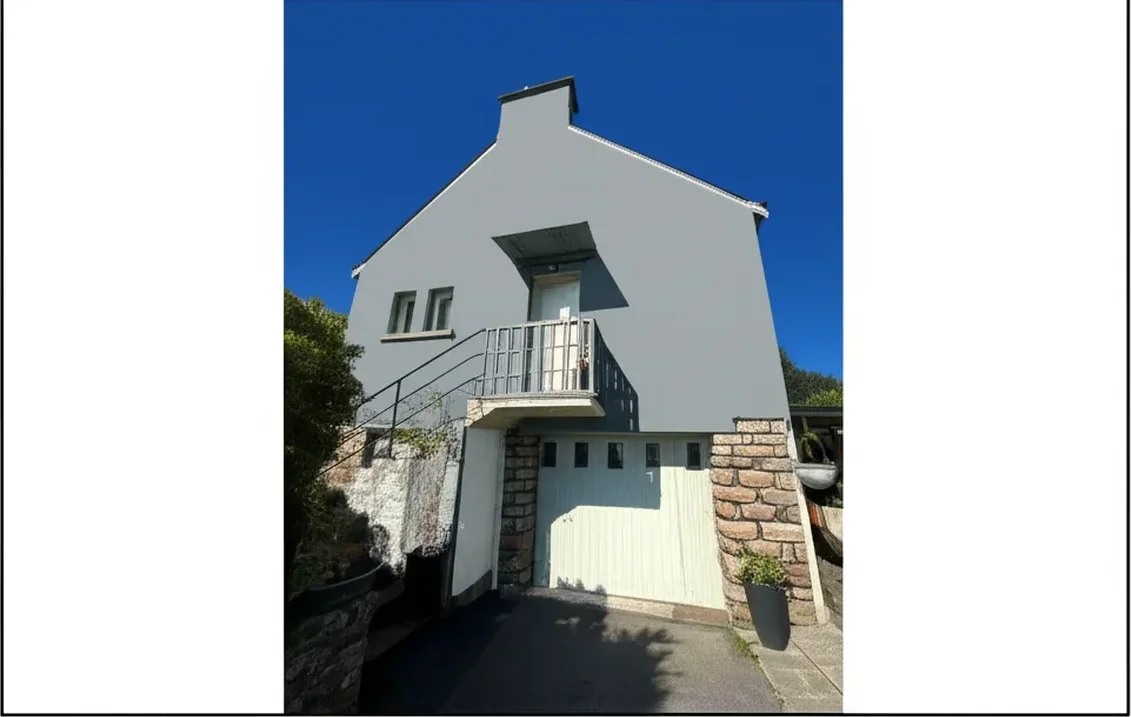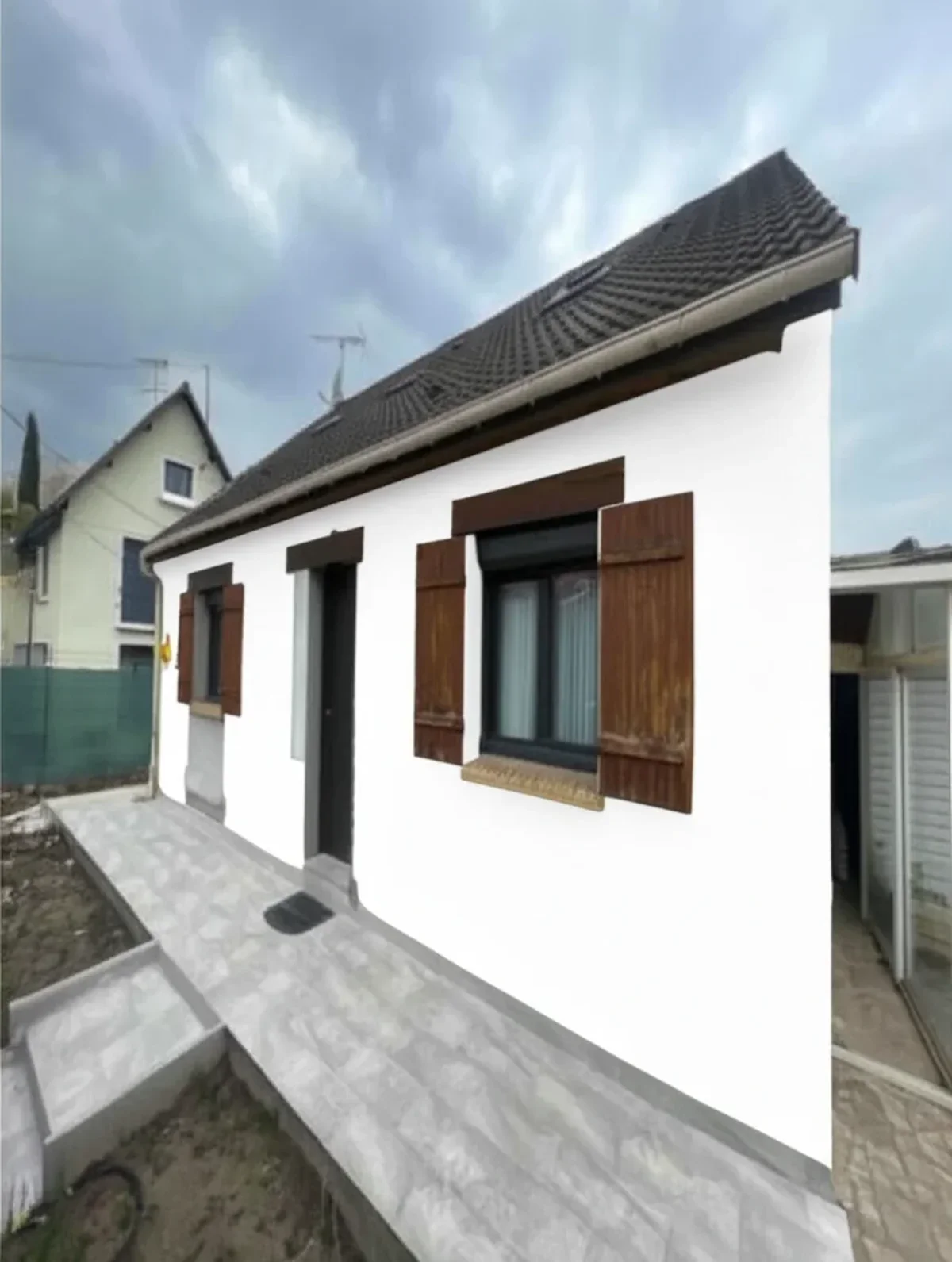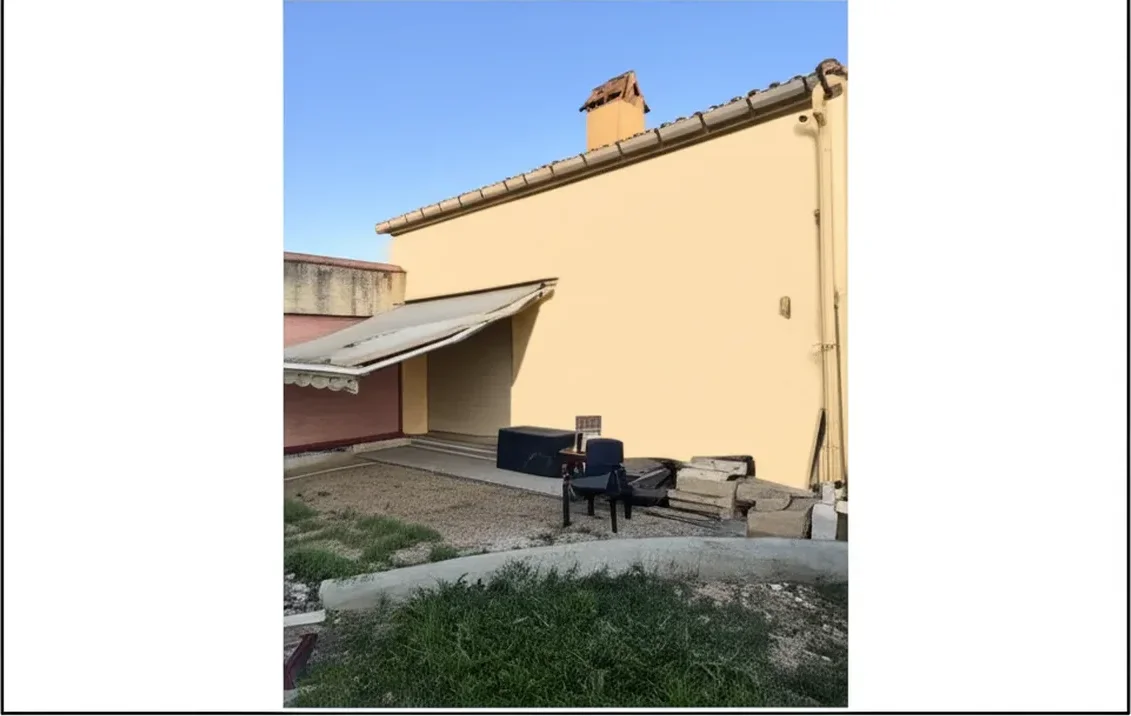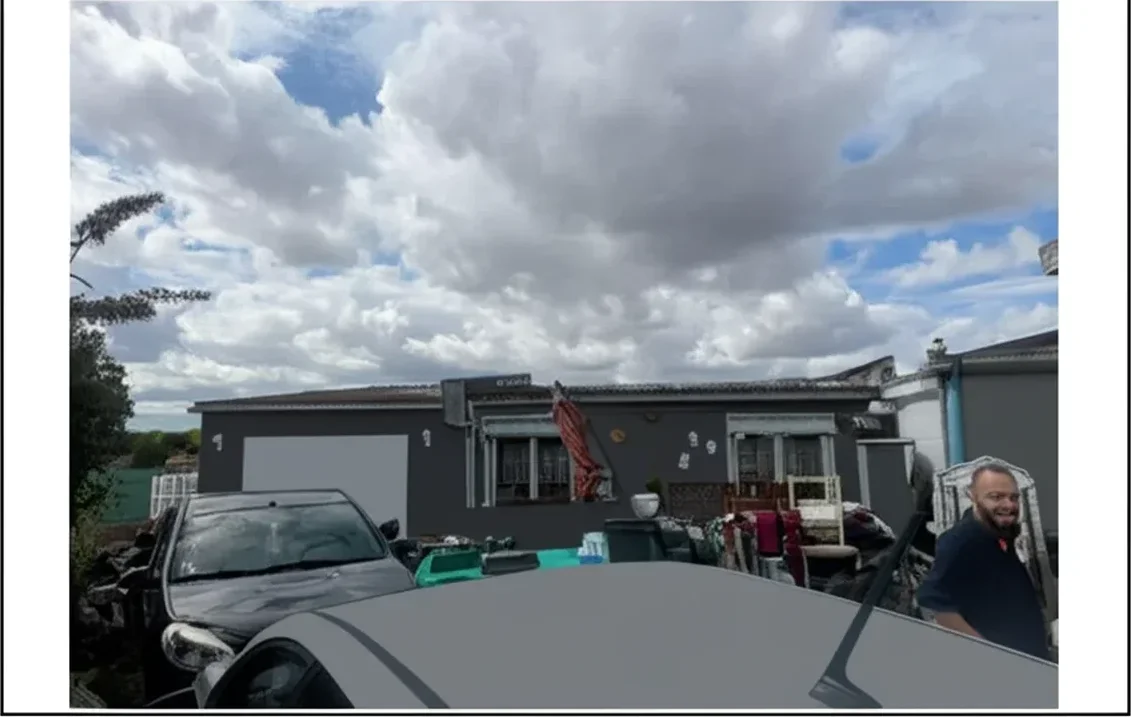
Try it on your house

FacadeColorizer is a free AI masonry paint visualiser. Sandtex Ultra Smooth wins on coastal and exposed walls (8 to 10 years clean) thanks to a thicker film than Dulux Weathershield (4 to 6 years in similar conditions).
In this guide, written from 20 years on the tools across the Midlands, you will find the full head-to-head spec table (price, coverage, coats, drying, anti-mould, flexibility), when to choose Sandtex (rough render, gable ends, coastal exposure, hairline cracks), when Dulux Weathershield wins (smooth blockwork, refresh recoats, bespoke colours), real-world durability data from finished jobs, application tips for brush vs roller vs airless, and a free way to preview either brand on YOUR house before you fork out for a tin.
For full pricing, see our complete UK cost guide. Still torn between the two? Test this masonry palette on your own house with the free paint visualiser before you buy a tin.
Head-to-head comparison
| Feature | Sandtex Ultra Smooth | Dulux Weathershield |
|---|---|---|
| Price (5L tin, 2026) | £38-£44 | £42-£48 |
| Coverage | 11m2/L (smooth surfaces) | 13m2/L (smooth surfaces) |
| Coats needed | 2 (sometimes 1 on recoats) | 2 |
| Drying time | 2-4 hours | 4-6 hours |
| Protection claim | 15 years | 15 years |
| Finish | Smooth matt | Smooth matt (slightly sheen) |
| Anti-mould | Yes (built-in fungicide) | Yes (Weathershield formula) |
| Flexibility | Excellent (fills hairline cracks) | Good |
| Colour range | 40+ standard colours | 60+ standard + mixing service |
| Application | Brush, roller, airless | Brush, roller, airless |
| Best for | Exposed walls, coastal, rough render | Smooth render, recoats, colour choice |
Try it on your house
No photo? Try a sample
Sandtex: the decorator's favourite
Ask any time-served decorator what they'd put on an exposed gable end in North Wales and they'll say Sandtex without hesitating. It's thicker than Dulux Weathershield, which means better crack-bridging on older render. The built-in fungicide is genuinely effective, I've seen Sandtex-coated walls stay clean for 8-10 years in damp valleys where Dulux started showing green patches after 4.
The downside: it's harder to get a perfect finish on large, flat surfaces. The thickness that helps on textured render can leave roller marks on smooth blockwork if you're not careful. And the colour range is smaller, if the client wants a very specific shade, you may need to go Dulux.
Dulux Weathershield: the all-rounder
Dulux Weathershield is the safe choice, reliable coverage, good durability, massive colour range. The mixing service at Dulux Decorator Centres means you can match virtually any colour. It's slightly thinner than Sandtex, which makes it easier to apply on smooth surfaces but less effective at filling hairline cracks. If you are weighing up rival masonry ranges, our breakdown of how Crown Weathershield stacks up against Dulux is worth a read before you settle on a brand.
For recoats over existing masonry paint (the most common scenario), Weathershield is hard to beat. It bonds well to old paint, covers in two coats, and dries slightly faster in warm weather. On a straightforward recoat of a semi-detached in the Midlands, it's my default choice.
Our verdict
Both brands sit in a wider field: Johnstone's Trade Stormshield (rain resistant after 20 minutes, up to 17 square metres per litre), Leyland Granocryl at the budget end, Bedec Extra-Flex for hairline-cracked render and the seasonal Aldi tin for garden walls. Our masonry paint brand comparison on datasheets covers all six.
Choose Sandtex for exposed walls, coastal properties, rough/textured render, and any surface with hairline cracks. Its flexibility and fungicide resistance are genuinely superior in harsh conditions.
Choose Dulux Weathershield for smooth render, recoats, colour-critical jobs, and sheltered walls. Its finish quality and colour range make it the better choice for front-facing walls where appearance matters most.
The colour you choose changes the comparison. Both brands supply anthracite, but differently: Sandtex sells ready-mixed Anthracite and Slate Grey among its 45 Microseal colours, while Weathershield anthracite is mixed to order in store, usually to RAL 7016, a shade that reflects only about 8 per cent of light. On a thin-coat insulated render that reflectance can exceed the render maker's limit whatever the paint brand; our guide to anthracite and dark grey masonry paint covers the HBW rule, breathability and planning before the brand question.
Best for your substrate: pebbledash, smooth render or brick (2026 verdict)
The single biggest factor in choosing between these two is not the brand name, it is what you are painting onto. After two decades on the tools I have learned that the wrong pairing of paint to substrate is what causes a four-year failure on a product that should last well over a decade. The table below is my honest call for the three substrates I am asked about most often across the UK, with the reasoning behind each.
| Substrate | My pick | Why | Watch out for |
|---|---|---|---|
| Pebbledash (roughcast) | Sandtex Ultra Smooth | Thicker film keys into the deep texture and bridges the hairline cracks that open around the stones. Coverage drops to roughly 6 to 8 m2/L on heavy roughcast, so buy 30 percent more than the spreading rate suggests. | Loose pebbles must be raked out and made good first, or they pop off and take the paint with them. |
| Smooth sand-and-cement render | Dulux Weathershield | Thinner body lays off flat with fewer roller marks, and the wider colour range matters most on a flat front elevation where every imperfection shows. | Fresh render must cure 28 days and be neutralised, or alkali burn lifts the colour. |
| Exposed or painted brick | Either (Sandtex if exposed) | On sheltered brick both perform well. On a wind-driven elevation the Sandtex fungicide and thicker film hold up longer. | Painting bare brick is permanent and cuts breathability. Confirm there is no damp issue first. |
| Cement-render garden or boundary wall | Sandtex Ultra Smooth | Single-skin walls soak driving rain from both faces, so the more flexible, fungicidal film resists green algae for longer. | No damp-proof course on most boundary walls means rising damp can blister any film. Treat the cause first. |
One thing the table cannot settle for you: on pebbledash the colour carries more risk than the brand. A dashed wall has roughly 30 to 50 percent more surface than smooth render, and most of that extra area is shadow, so a mid grey that looked right on a flat front elevation lands noticeably heavier, and any green tint left by biological growth is exaggerated rather than hidden. That is worth settling before the scaffold goes up, because it is the same £2,000 to £5,000 either way: our pebbledash paint colour ideas set out twelve UK schemes tested on real roughcast.
One nuance for 2026: if you are changing colour dramatically (for example a heritage cream over a previous slate grey), Weathershield's wider tint base range and Decorator Centre mixing service make it the easier path to full, even coverage in two coats. Sandtex can get there too, but on a strong colour change you will more often need a third pass, which narrows its price advantage.
Weather resistance and exposure zones: matching the paint to your wind-driven rain index
The UK is not one climate, and a masonry paint that lasts twelve years in sheltered Surrey can green over in four on the Pembrokeshire coast. The honest measure is the wind-driven rain index defined in BS 8104 and BS EN ISO 15927-3, which sorts buildings into sheltered, moderate, severe and very severe exposure categories. The closer your wall sits to the coast, the higher its elevation, and the fewer trees or buildings between it and the prevailing south-westerly weather, the harder the paint has to work. The table below maps the two brands onto those categories using durability I have seen on finished jobs, not just the data sheet.
| Exposure category (BS 8104) | Typical location | Sandtex clean-finish life | Weathershield clean-finish life | My recommendation |
|---|---|---|---|---|
| Sheltered | Inland, low-lying, tree cover (East Midlands, inner suburbs) | 10 to 12 years | 9 to 11 years | Either: choose on colour and finish |
| Moderate | Open inland, gentle elevation (much of central England) | 8 to 10 years | 7 to 9 years | Slight edge to Sandtex on north walls |
| Severe | Hill towns, Pennines, exposed gable ends | 7 to 9 years | 5 to 7 years | Sandtex |
| Very severe | Coastal (Cornwall, west Wales, west Scotland) | 8 to 10 years | 4 to 6 years | Sandtex, no contest |
The pattern is consistent: the two paints converge in sheltered conditions and diverge sharply as exposure climbs. In a very severe coastal zone the salt-laden, near-constant wind-driven rain is exactly where Sandtex's thicker film and built-in fungicide earn their keep, which is why the lifetime-cost maths in the labour section below tips in its favour despite the slightly lower headline price.
Application: brush, roller or airless, and the 2026 weather window that decides the result
Both brands can be brushed, rolled or sprayed, but they do not behave identically, and the method you choose changes both the finish and the day rate. As a rule of thumb: cut in and work the first coat into the texture by brush, then lay off with a long-pile roller (15 to 18 mm for roughcast, 9 to 12 mm for smooth render) for the bulk, and reserve airless spraying for large, uninterrupted elevations where masking time is justified. The comparison below summarises how each method pairs with the two products.
| Method | Sandtex Ultra Smooth | Dulux Weathershield | Best use |
|---|---|---|---|
| Brush | Excellent into texture, slow on big areas | Flows slightly easier, lays off flatter | Cutting in, detail, pebbledash keying |
| Roller | Can leave a heavier stipple, use a long pile | Finer, more even lay-off on smooth render | The bulk of most domestic walls |
| Airless spray | Thin 5 to 10 percent, use a 0.021 to 0.025 in tip | Sprays readily, back-roll the first coat | Large detached, blocks, render with no fiddly detail |
| Thinned mist coat | 10 to 20 percent water on bare or chalky render | 10 to 20 percent water, improves adhesion | Always, on bare, repaired or chalky substrate |
The weather window matters more than the brand. For 2026 I hold to a tighter rule than either data sheet: apply only when the substrate is above 8 C and below 25 C, relative humidity under 80 percent, with no rain forecast for at least 8 hours after the final coat and ideally overnight. Painting masonry late in the day in spring or autumn is a classic UK mistake: the surface cools below the dew point before the film cures, the water cannot escape, and you get surfactant leaching (those sticky, glossy brown streaks) or worse, a chalky bloom that compromises the whole coat. Spraying additionally demands a still, dry morning, because even a light breeze carries overspray onto cars and neighbouring walls and thins the film unevenly. Get the window right and either brand will outlast its warranty; get it wrong and the most expensive paint on the shelf will fail in a single winter.
Preview Sandtex and Dulux Weathershield side by side on your house photo, free, 30 seconds.
Compare both on my photoLocal labour rates 2026: what a UK decorator will charge to apply each brand
Whichever brand you choose, the cost of the tin is usually only 18 to 25 percent of a finished exterior. Labour, scaffolding and preparation account for the rest. According to MyBuilder and Checkatrade Q1 2026 quote data, a Painting and Decorating Association (PDA) member day rate in 2026 ranges from 180 GBP in the East Midlands to 320 GBP in Greater London, with national average sitting at 210 to 240 GBP per painter per day. A typical 3-bed semi exterior takes 4 to 7 days for a two-person crew, so labour alone is 1,440 to 3,360 GBP before paint and scaffold. Both Sandtex Ultra Smooth and Dulux Weathershield take roughly the same time to apply (two coats, brush plus airless), so labour cost is essentially the same.
Where the brands diverge is on lifetime cost. Because Sandtex typically stays clean 8 to 10 years on exposed coastal walls versus 4 to 6 for Weathershield, the annualised repaint cost flips Sandtex ahead even though its 5L tin is 4 GBP cheaper. Always verify that any decorator quoting on your job carries minimum 2 million GBP public liability cover under the Health and Safety Executive guidance on construction work (see hse.gov.uk/construction). Working above 4 m typically requires a tower or scaffold to BS EN 12811, never a single ladder.
GBP cost by exterior surface area (Sandtex vs Dulux Weathershield, 2026)
| Exterior surface area | Typical property | Sandtex Ultra Smooth (paint + labour) | Dulux Weathershield (paint + labour) |
|---|---|---|---|
| 100 m2 | Small terrace front only | 1,400 - 2,200 GBP | 1,450 - 2,250 GBP |
| 150 m2 | 3-bed terrace full exterior | 2,100 - 3,300 GBP | 2,150 - 3,400 GBP |
| 200 m2 | 3-bed semi-detached full | 2,800 - 4,400 GBP | 2,900 - 4,500 GBP |
| 250 m2 | 4-bed detached full | 3,500 - 5,500 GBP | 3,600 - 5,650 GBP |
| 300 m2 | Large detached or small block | 4,200 - 6,600 GBP | 4,300 - 6,800 GBP |
Figures include scaffold hire (500 to 1,500 GBP), preparation, two coats and VAT where applicable. Tins themselves are widely stocked at B and Q, Wickes, Homebase and Screwfix, with Screwfix typically 5 to 8 percent cheaper for trade accounts. Both products meet BS EN 1062 weathering performance and BS EN 13300 finish classifications.
Listed Building considerations: when neither Sandtex nor Dulux is allowed
If your property is a Listed Building (Grade I, II* or II) or sits inside a designated Conservation Area with an Article 4 Direction, neither Sandtex Ultra Smooth nor Dulux Weathershield is automatically acceptable. The reason is breathability: both are acrylic-modified water-based systems that, while breathable enough for most modern construction, trap more moisture than traditional limewash or mineral silicate paints. On a solid-wall pre-1919 cottage with lime mortar joints, an acrylic top coat can cause spalling, blistering and accelerated decay of the underlying lime render within 18 to 36 months.
You must apply for Listed Building Consent (LBC) from your local planning authority before any exterior redecoration that changes character. Detailed guidance is on gov.uk/listed-buildings and conservation-area rules are explained at planningportal.co.uk. In practice, Historic England usually prefers Beeck Mineral Paint, Earthborn Claypaint or a properly specified limewash for listed surfaces. Sandtex and Weathershield remain appropriate for the majority of unlisted post-1919 brick, render and pebbledash exteriors.
The financial penalties for unauthorised work on a Listed Building are significant: up to 20,000 GBP per offence in the Magistrates Court and unlimited fines in the Crown Court, plus the cost of enforced removal and reinstatement to the original lime substrate. In the worst documented cases, owners have spent 40,000 to 80,000 GBP undoing the damage caused by a single application of standard acrylic masonry paint on a Grade II* lime-rendered cottage. If you are unsure of your property's status, search the National Heritage List for England at historicengland.org.uk listing or contact your local Conservation Officer for a free informal opinion.
Surface preparation: where most Sandtex and Weathershield jobs go wrong
Both manufacturers publish detailed prep specifications, and following them is the difference between an 8 to 15 year finish and a 3 to 4 year failure. The five critical preparation steps applicable to either brand are: pressure wash to remove all biological growth, treat with a fungicidal wash to BS 6262 (Sandtex sells a dedicated Algae and Mould Remover; Weathershield uses Dulux Trade Cleaner), repair render cracks with a sand-and-cement scratch coat plus top coat, allow at least 48 hours of dry weather between prep and first coat, and apply a mist coat (10 to 20 percent water dilution) on bare or chalky substrates before the two full coats.
A common rookie mistake is to skip the mist coat on a sound recoat job. The slightly higher product cost is offset many times over by the extended service life. Always check the substrate temperature is above 5 C and below 25 C during application, with no rain forecast in the following 6 to 8 hours, this is a more conservative window than the spec sheets suggest, but it consistently produces a longer-lasting finish under UK weather.
Best contractors checklist: 9 questions to ask before signing
- Are you a PDA member? Painting and Decorating Association membership is a useful (not perfect) signal of professional standards and CPD.
- Public liability cover? Minimum 2 million GBP, ideally 5 million GBP for any work above 4 m.
- CITB or NPORS for working at height? Required by HSE for tower and scaffold work on most domestic jobs.
- Will you supply Sandtex or Dulux trade tins, or budget alternatives? Some decorators slip in cheaper Wickes or Homebase own-brand and bill premium rates.
- How many coats and what is the dilution for the mist coat? A serious decorator will specify a thinned mist coat plus two full coats on bare or recoated render.
- Itemised quote separating paint, labour, scaffold, prep? Always ask, never settle for a single all-in figure.
- References from at least two completed jobs in the last 18 months? Ideally on the same substrate (pebbledash, smooth render, masonry).
- Guarantee in writing? Most reputable decorators offer a 5-year workmanship guarantee on top of the paint maker's 15-year product warranty.
- Disposal of waste paint? Empty tins must go to a Household Waste Recycling Centre under gov.uk hazardous waste rules, never to general kerbside recycling.
Related exterior comparisons
Masonry paint is a crowded shelf, and these two are not the only names worth weighing. For the other big trade rivalry, read how Crown versus Dulux Weathershield plays out on render and brick. If you lean toward a heritage exterior finish rather than a pure workhorse, Farrow & Ball against Dulux Heritage covers that end of the market, and our full round-up of the best UK exterior paint brands lays every option side by side.
Still torn? Preview both masonry paints on your house photo, free.
{"@context":"https://schema.org","@type":"FAQPage","mainEntity":[ {"@type":"Question","name":"Is Sandtex better than Dulux Weathershield?","acceptedAnswer":{"@type":"Answer","text":"Sandtex is better for exposed walls, coastal properties, and rough render due to its thicker formula and superior fungicide. Dulux Weathershield is better for smooth render, colour matching, and sheltered walls. Both offer 15-year protection claims."}}, {"@type":"Question","name":"How much does masonry paint cost per litre in the UK?","acceptedAnswer":{"@type":"Answer","text":"In 2026, quality masonry paint costs £7.60-£9.60 per litre. Sandtex Ultra Smooth 5L costs £38-44 and Dulux Weathershield 5L costs £42-48. Budget options like Crown or Johnstones start at £5-6 per litre but offer shorter protection."}}, {"@type":"Question","name":"How many coats of masonry paint do I need?","acceptedAnswer":{"@type":"Answer","text":"Two coats are standard for most masonry paints. On bare render or a dramatic colour change, you may need a mist coat (diluted first coat) plus two full coats. On a simple recoat over the same colour, some premium paints achieve full coverage in one coat."}} ]}Frequently asked questions
Is Sandtex better than Dulux Weathershield?
How much does masonry paint cost per litre in the UK?
How many coats of masonry paint do I need?
Can I paint Sandtex over Dulux Weathershield or vice versa?
Trademarks mentioned (Sherwin-Williams, Benjamin Moore, Behr, Caparol, Brillux, Sto, Alpina, Valspar, PPG, Glidden, Dulux, Crown Trade, Sandtex, Farrow & Ball, Johnstone's, Leyland) are property of their respective owners. FacadeColorizer is independent and not affiliated with any of them. Nominative fair use under Lanham Act §1125.