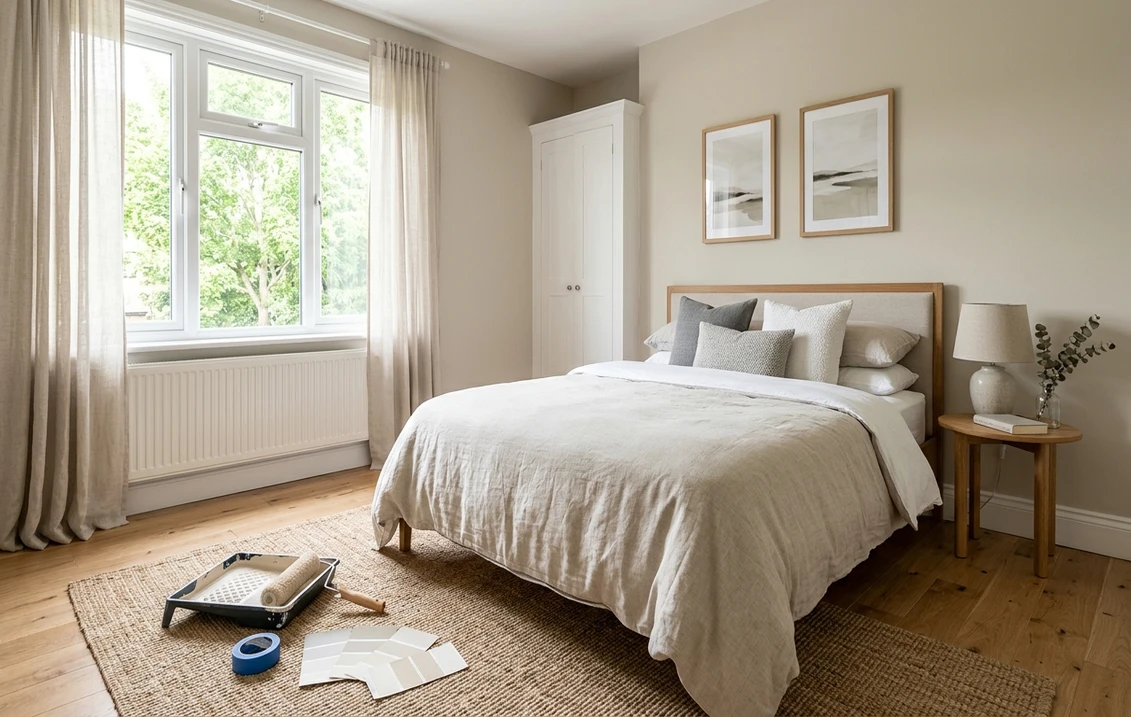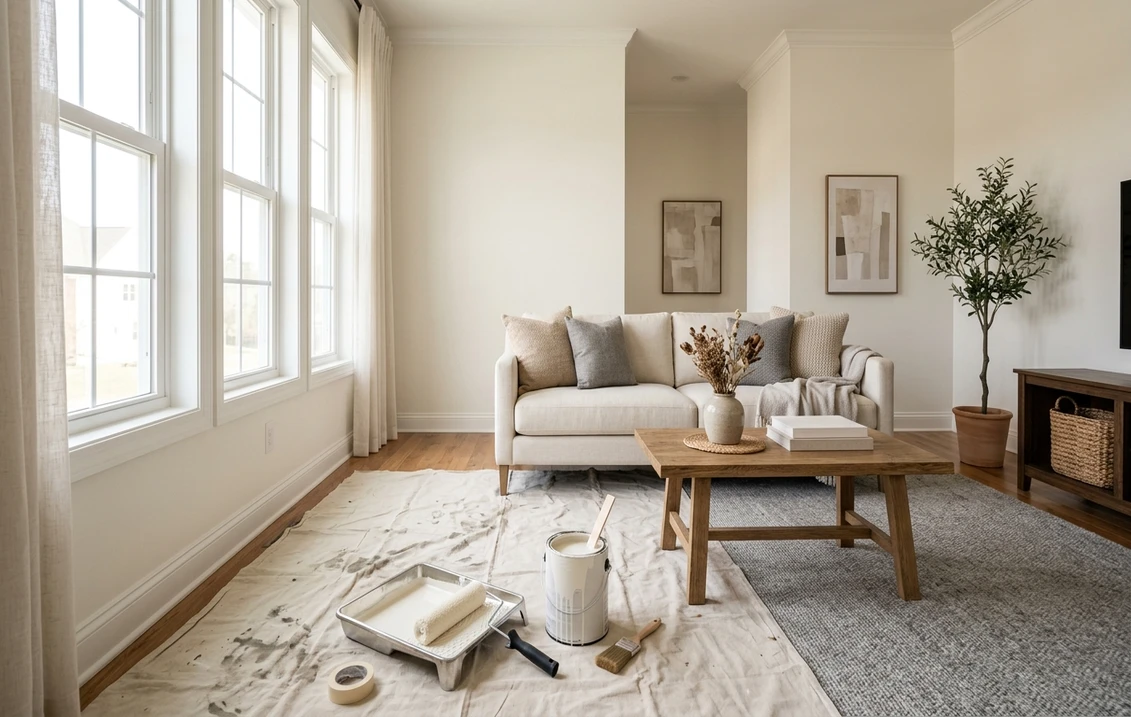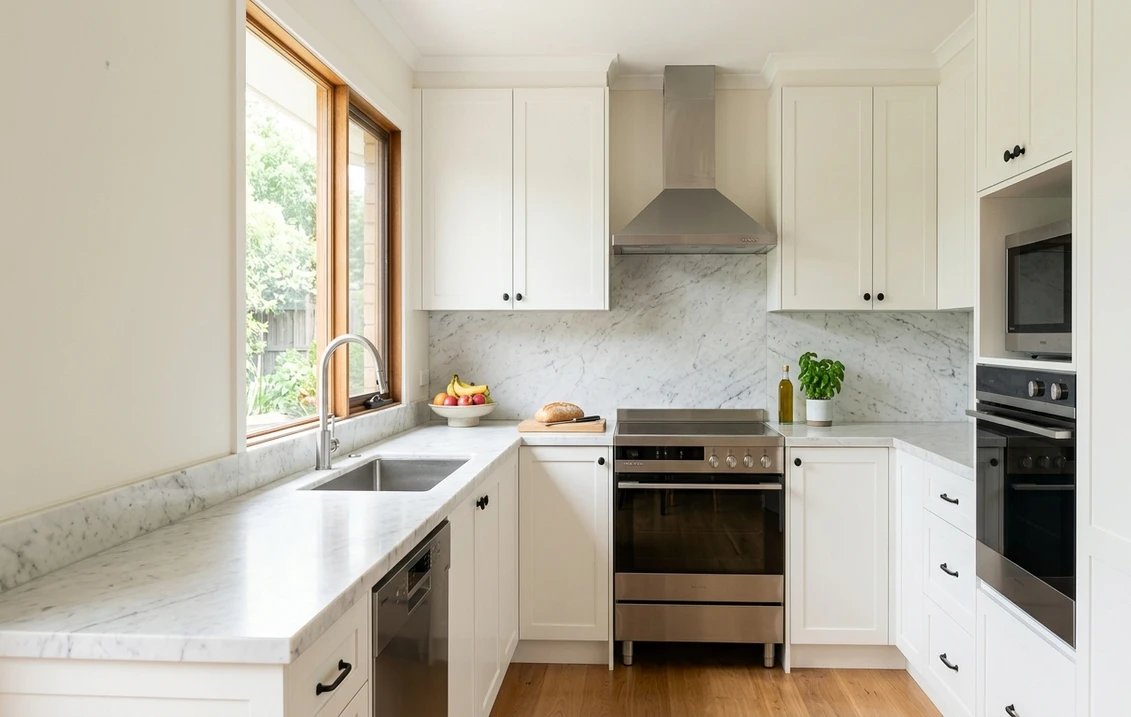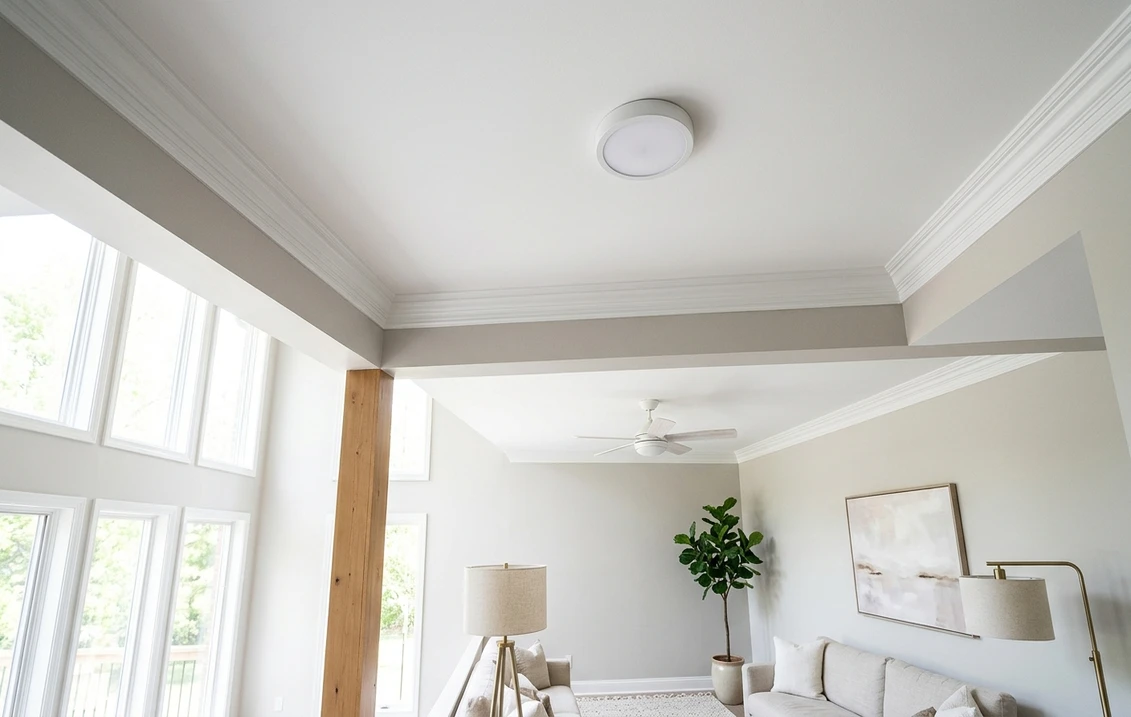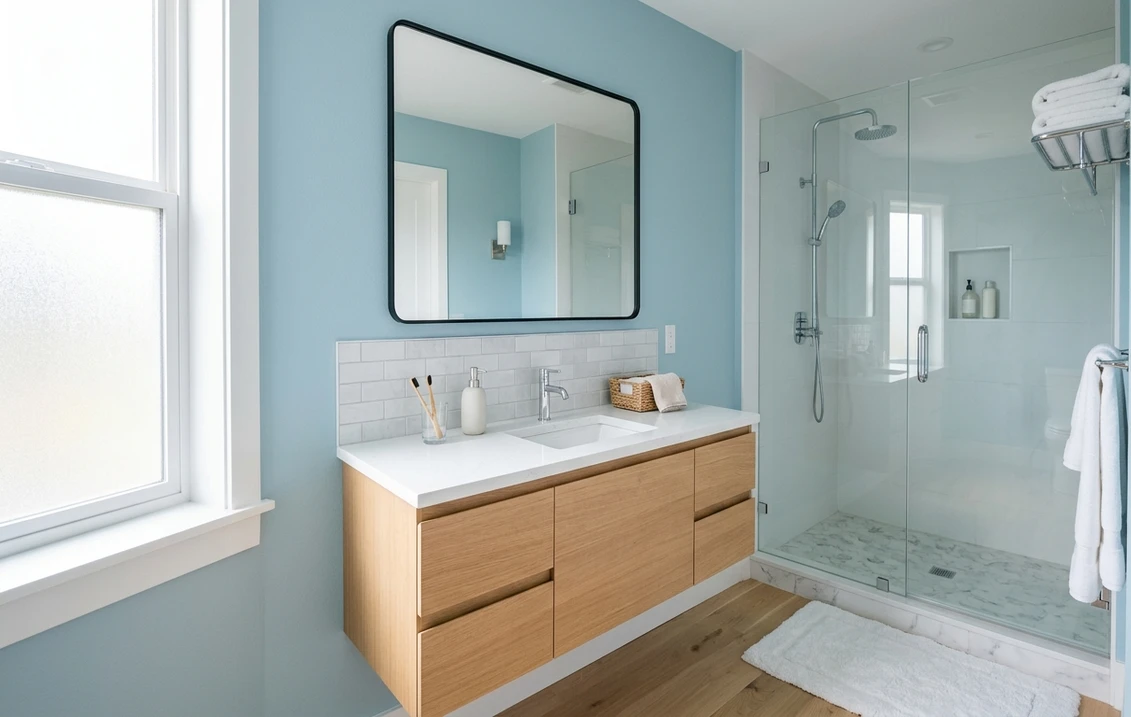
Try it on your room

Bathroom painting is one of the most affordable upgrades you can make to your home, but it comes with unique challenges that bedrooms and living rooms don't. Moisture, humidity, and mold demand the right paint sheen, proper wall preparation, and mildew resistant formulas. In 2026, the average cost per room for a professional bathroom painting job is $150–$400 for a half bath and $350–$1,500 for a primary bathroom, depending on size, paint quality, and your region. This guide covers every factor that shapes your budget. Before you commit to a color, try our free AI room color visualizer to see exactly how your bathroom walls will look, no sample pots, no guesswork.
How Much Does It Cost to Paint a Bathroom in 2026?
Professional interior painting costs for bathrooms depend primarily on the room size, amount of trim painting, and whether ceiling painting is included. Labor makes up 75–85% of every professional estimate. A licensed and insured painting contractor typically charges $1.50–$4.00 per square foot of wall surface, or $20–$50 per hour. On top of that, mildew resistant bathroom-grade latex paint costs $40–$80 per gallon, roughly $10–$20 more than standard acrylic paint. Here is how the cost per room breaks down by bathroom type:
| Bathroom Type | Avg. Size | Cost (Walls Only) | Cost (Walls + Ceiling + Trim) |
|---|---|---|---|
| Half bath / powder room | 30–50 sq ft | $150–$300 | $200–$400 |
| Standard full bath | 50–80 sq ft | $250–$500 | $350–$700 |
| Primary bathroom suite | 80–150 sq ft | $400–$900 | $550–$1,500 |
| Jack-and-Jill / large bath | 100–200 sq ft | $500–$1,100 | $650–$1,500+ |
Try it on your house
No photo? Try a sample
These ranges reflect national averages. In high-cost metros like San Francisco, New York, or Los Angeles, add 20–40% to these figures. In more affordable markets like Houston or Dallas, prices tend to sit at the low end. Many painting contractors also have a minimum project fee of $250–$500, so even a small half bath may cost more than the square-footage math suggests. Always get a free estimate from at least three contractors.
Best Paint for Bathrooms: Mold-Resistant Picks for 2026
Bathrooms are the highest-humidity rooms in any home, so standard flat or eggshell wall paint won't cut it. You need formulations with antimicrobial additives that resist mold and mildew, plus a sheen that repels moisture and wipes clean. Semi-gloss remains the gold standard for areas directly exposed to shower steam and splashes, while satin works well on walls farther from the tub. Here are the top bathroom paints recommended by professional interior house painters in 2026:
| Product | Finish | Price/Gallon | Key Feature |
|---|---|---|---|
| Benjamin Moore Aura Bath & Spa | Matte | $75–$85 | Moisture-resistant matte; low-VOC |
| Sherwin-Williams Emerald | Satin / Semi-Gloss | $70–$80 | Antimicrobial; extreme washability |
| Zinsser Perma-White (PPG) | Semi-Gloss | $35–$45 | 5-year mold-proof guarantee |
| Behr Premium Plus Ultra | Satin / Semi-Gloss | $35–$45 | Paint-and-primer-in-one; budget-friendly |
| Valspar Signature | Satin / Semi-Gloss | $30–$40 | ScuffShield + mildew resistance |
All of these products are available at Home Depot or brand-specific retailers. If you want a zero-VOC option for households with children or sensitivities, Benjamin Moore Aura Bath & Spa and Sherwin-Williams Harmony are the top picks, both offer excellent coverage per gallon (350–400 sq ft) and quick drying time.
Trending Bathroom Colors for 2026
Bathroom color trends in 2026 have shifted decisively away from cool grays and clinical whites toward warmer, nature-inspired palettes. A professional color consultation can help you choose a shade that complements your tile, vanity, and fixtures. Here are the most popular directions this year:
- Warm earthy tones: Terracotta, warm clay, mocha, and tobacco-inspired browns create a grounded, spa-like atmosphere.
- Natural greens: Olive, sage, and soft eucalyptus pair beautifully with white tile and brass hardware, ideal for a calming retreat.
- Jewel tones: Deep emerald, sapphire blue, and plum work as bold accent walls in larger primary bathrooms.
- Soft warm neutrals: Ivory, warm stone, and creamy off-whites offer timeless versatility without the coldness of pure white.
- Muted pastels: Blush pink, soft mint, and dusty blue add subtle personality without overwhelming a small space.
If you want named codes rather than color families, two of the 2026 Colors of the Year sit squarely in the green direction above and were both nominated for bathrooms: Behr Hidden Gem N430-6A, a smoky jade, and Valspar Warm Eucalyptus 8004-28F, a silver-tinted green for spa-style rooms. Our roundup of the best interior paint colors for 2026 lists the full set with the sheen each room needs.
Use FacadeColorizer's free AI visualizer to preview any of these shades on your actual bathroom walls from a photo, much more accurate than holding a paint swatch against your tile.
Wall Preparation: Why Bathrooms Need Extra Work
Proper wall preparation is the single biggest factor separating a bathroom paint job that lasts five years from one that peels within twelve months. Here is what a professional room painting crew does differently in a bathroom:
- Mold and mildew removal: Clean all surfaces with a bleach-water solution (1:3 ratio) or a mildew-killing cleanser before sanding. Painting over mold only traps it.
- Drywall repair: Patch cracks, nail pops, and water-damaged sections with moisture-resistant spackle. In severe cases, replace drywall with moisture-rated greenboard or cement board behind tub/shower areas.
- Sanding and scuffing: If existing walls have a semi-gloss or gloss finish, sanding with 120-grit paper creates tooth for the new primer to grip.
- Primer: Use a stain-blocking, mold-resistant primer like Zinsser Bulls Eye 1-2-3 Plus. This step is non-negotiable in bathrooms, it seals stains, blocks moisture, and ensures even color.
- Caulking and sealing: Re-caulk all joints between walls and tub, shower, and vanity. Fresh caulk prevents water from wicking behind the paint film.
- Ventilation: Ensure the exhaust fan works properly. Good ventilation during and after painting speeds drying time and prevents odor buildup. Use a dehumidifier if humidity exceeds 50%.
Furniture protection matters too: cover fixtures, countertops, and floors with drop cloths and use quality painter's tape along baseboards, crown molding, and door painting edges. Professional crews use a two-coat system, primer plus two topcoats, for maximum durability in high-moisture environments.
DIY vs Hiring a Professional Painter
Bathrooms are among the trickiest rooms to paint yourself. Tight spaces behind toilets and vanities, multiple angles around showers, and the need for moisture-resistant products all increase the difficulty compared to a bedroom. Here is how the costs compare:
- DIY cost: $50–$200 for a standard bath (paint, primer, tape, roller, brush). You save 70–80% on labor but invest 6–10 hours of your weekend.
- Professional cost: $250–$700 for the same room. A licensed and insured contractor handles all surface preparation, delivers a flawless finish, and guarantees the work.
- When to hire a pro: If there is existing mold or water damage, extensive drywall repair is needed, or the bathroom has lead paint (homes built before 1978 require EPA-certified removal).
Whether DIY or professional, always request a free estimate from at least two or three painting contractors so you can compare. Check that each contractor is licensed, insured, and carries workers' compensation. For more on room-by-room costs, read our interior painting cost per room guide and our complete interior house painting cost guide.
Those quotes will reflect your zip code as much as your bathroom. The same crew hourly rate drives interior and exterior bids alike, and the clearest published picture of that local spread is our comparison of the cost to paint an exterior house in 25 US metros: San Francisco sits around 65% above the national average, Houston about 20% below. Find your city there and a $700 bathroom quote stops being a mystery, it is either high or simply what labor costs where you live.
Choosing the Right Paint Sheen for Each Bathroom Surface
Not every surface in your bathroom needs the same finish. Here is a quick guide to choosing the right paint sheen by location:
- Ceiling: Flat or matte hides imperfections but choose a mildew-resistant formula like Benjamin Moore Aura Bath & Spa or Sherwin-Williams ceiling paint with antimicrobials.
- Walls (away from shower): Satin or eggshell gives a subtle sheen that resists moisture and wipes clean easily.
- Walls (near shower/tub): Semi-gloss repels water splashes and is the easiest to scrub.
- Trim, baseboard, and door: Semi-gloss or high-gloss for maximum durability on high-contact surfaces.
- Cabinets and vanity: Semi-gloss acrylic paint or a dedicated cabinet enamel with low-VOC formulation for a factory-like finish.
A two-coat system with proper drying time between coats (typically 2–4 hours for latex paint, 24 hours for full cure) is essential. Rushing the process in a humid bathroom leads to peeling, bubbling, and premature failure. Make sure ventilation is running throughout the application and curing period.
Get Started: Visualize Your Bathroom Color
The easiest way to avoid a costly color mistake is to preview your choice before buying a single gallon. Upload a photo of your bathroom to FacadeColorizer and test any Sherwin-Williams, Benjamin Moore, Behr, or Valspar shade on your actual walls in seconds. Compare warm terracotta with soft sage, try a bold emerald accent wall, or confirm that warm ivory works with your existing tile, all from your phone. It is free, instant, and far more accurate than holding up a paint chip. For kitchen painting ideas and pricing, check out our kitchen painting cost guide as well.
Frequently asked questions
How much does it cost to paint a bathroom in 2026?
What is the best paint finish for a bathroom?
What is the best mold-resistant paint for bathrooms?
Can I paint my bathroom myself or should I hire a professional?
What are the most popular bathroom paint colors in 2026?
Trademarks mentioned (Sherwin-Williams, Benjamin Moore, Behr, Caparol, Brillux, Sto, Alpina, Valspar, PPG, Glidden, Dulux, Crown Trade, Sandtex, Farrow & Ball, Johnstone's, Leyland) are property of their respective owners. FacadeColorizer is independent and not affiliated with any of them. Nominative fair use under Lanham Act §1125.