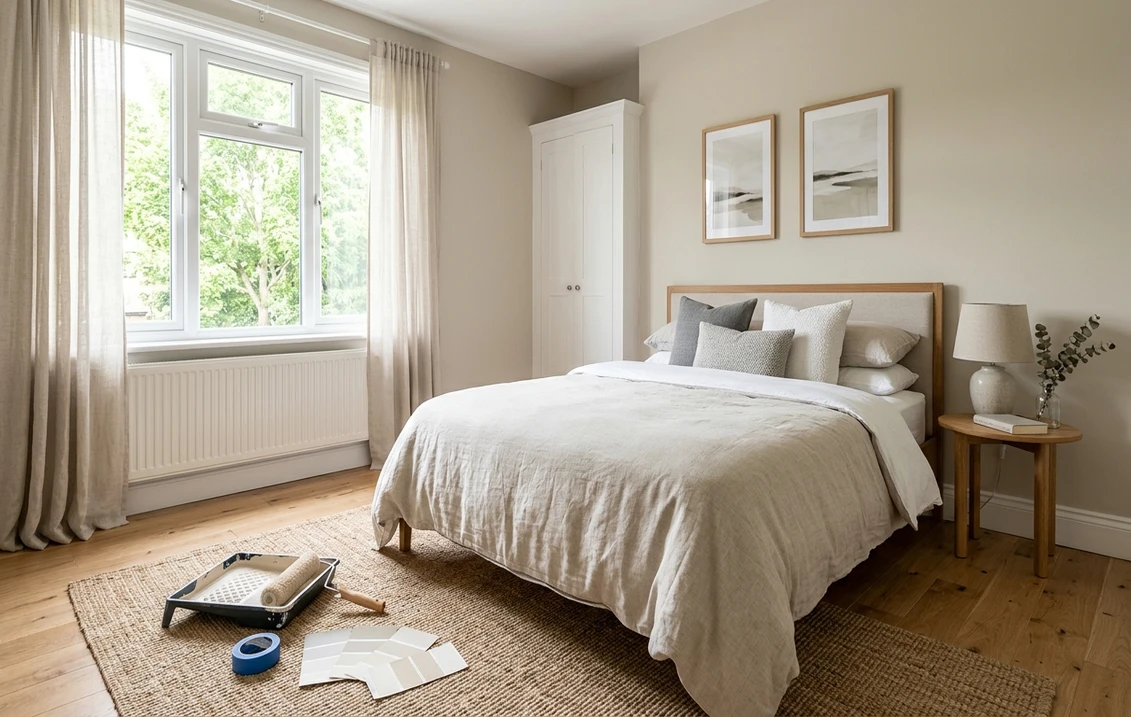
Try it on your room

Planning an interior painting project? Whether you are refreshing a single bedroom or repainting your entire home, understanding costs room by room is the smartest way to budget. In 2026, the national average cost to paint a room is $1,892, with most homeowners paying between $955 and $2,890 depending on room size, paint quality, and labor rates in their area.
This guide breaks down interior painting costs by room type, explains the labor vs materials split, highlights trending colors for 2026, and helps you decide whether to DIY or hire a professional. Before you choose a color, try our free AI room color visualizer to see exactly how your walls will look, no sample pots, no guesswork. For full pricing context, see our complete interior painting cost guide.
Interior Painting Cost by Room Type
Room size is the biggest cost driver. Professional painters typically charge $2–$6 per square foot (average $3.30/sq ft), and most rooms need two coats. Here is what you can expect to pay by room type in 2026:
| Room Type | Typical Size | Cost Range |
|---|---|---|
| Small room (10x12 ft) | 120 sq ft | $200 – $800 |
| Medium room (12x12 ft) | 144 sq ft | $400 – $900 |
| Bedroom (10x12 ft) | 120 sq ft | $300 – $750 |
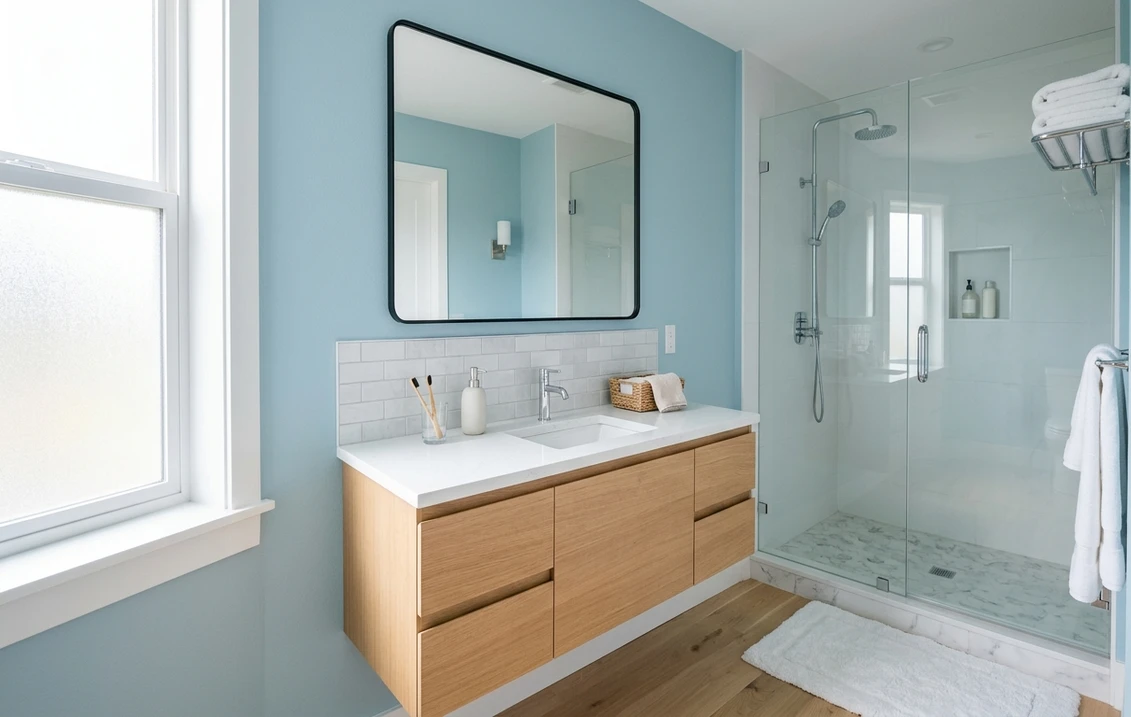
| Bathroom | 40–70 sq ft | $150 – $350 |
| Living room | ~330 sq ft | $900 – $2,000 |
| National average (per room) | Varies | $955 – $2,890 |
Try it on your house
No photo? Try a sample
Want a number for your specific space? Use our painting cost calculator for your exact room size.
Pricing Tip
Multi-room projects often cost less per room. Painters offer volume discounts because setup, travel, and cleanup happen once. If you are painting 3+ rooms, ask for a whole-project rate, you can typically save 10–20% compared to pricing each room separately.
Cost Breakdown: Labor vs Materials
One of the most common surprises for homeowners is how much of the bill goes to labor. On a typical interior painting project, labor accounts for 75–85% of the total cost. Here is how the numbers break down:
- Labor: $1.50–$4.00 per sq ft, or $20–$50 per hour per painter. This covers prep work (taping, covering furniture and floors, sanding), priming, painting two coats, and cleanup.
- Paint: $20–$100 per gallon, depending on brand and quality. One gallon covers approximately 400 sq ft with one coat. Most rooms need 2 coats, so a standard bedroom uses 2–3 gallons total.
- Primer: $10–$20 per gallon. Required when covering dark colors, new drywall, or stained surfaces. Skipping primer often means needing a third coat of paint, which costs more in the end.
- Wall repairs: $1–$5 per sq ft for patching holes, fixing cracks, or skim-coating damaged drywall. Minor touch-ups are often included, but extensive repair work is billed separately.
Bottom line: on a $1,892 average project, roughly $1,420–$1,610 goes to labor and $280–$470 covers materials. This is why DIY painting saves significant money, but only if you have the time, tools, and patience to do it right.
Note from FacadeColorizer
Single-room repaints clustered on mid-tone warm neutrals (Revere Pewter, White Dove, Edgecomb Gray) at 64 percent of body picks, aligning with the upper-end per-room figure of $955 to $2,890 for two-coat coverage.
Lead-safe and VOC compliance for pre-1978 interiors
Pre-1978 homes trigger the EPA Lead RRP Rule (40 CFR 745) for any scraping or color-change repaint - see the EPA RRP overview, the CDC lead paint guide, and the HUD Lead-Safe Housing Rule. Interior coatings cap at 50 g/L VOC under the EPA Architectural Coatings Rule.
Popular Interior Paint Colors for 2026
Color trends for 2026 lean toward warm, grounding tones that create a sense of calm. Here are the shades dominating interior projects this year:
- Sherwin-Williams Evergreen Fog (SW 9130): a muted sage green that works in bedrooms, living rooms, and home offices. It pairs beautifully with warm wood tones and brass hardware.
- Benjamin Moore White Dove (OC-17): a creamy, soft white that avoids the sterile look of pure white. Perfect for trim, ceilings, and whole-room applications in modern farmhouse and transitional styles.
- Behr Breezeway (MQ3-21): a light, airy green with coastal undertones. Ideal for bathrooms, entryways, and spaces where you want a fresh, natural feel.
- Warm neutrals: greige (gray-beige blends), warm taupes, and creamy whites continue to dominate whole-home repaints. They photograph well for resale listings and appeal to the widest range of buyers.
- Bold accent walls: deep navy (SW Naval), rich forest green (BM Hunter Green), and warm terracotta are popular single-wall statements in dining rooms and home offices.
These are the shades homeowners actually buy, which is not the same list the brands nominated for 2026: Sherwin-Williams named Universal Khaki SW 6150, Benjamin Moore chose Silhouette AF-655 and Behr went with Hidden Gem N430-6A. Our roundup of the best interior paint colors for 2026 covers both sets, room by room and sheen by sheen.
Not sure which color will look best in your space? Upload a photo of your room to FacadeColorizer and test any shade instantly, see the result on your actual walls before buying a single gallon.
DIY vs Hiring a Professional Painter
Since labor is 75–85% of the total cost, DIY painting can cut your bill dramatically. But it is not always the best choice. Here is an honest comparison:
| Factor | DIY | Professional |
|---|---|---|
| Cost (avg room) | $200 – $400 | $955 – $2,890 |
| Time (per room) | 8 – 12 hours | 3 – 5 hours |
| Finish quality | Good (with care) | Excellent |
| Prep & cleanup | You handle it | Included |
| Best for | Single rooms, simple walls | Multi-room, high ceilings, repairs |
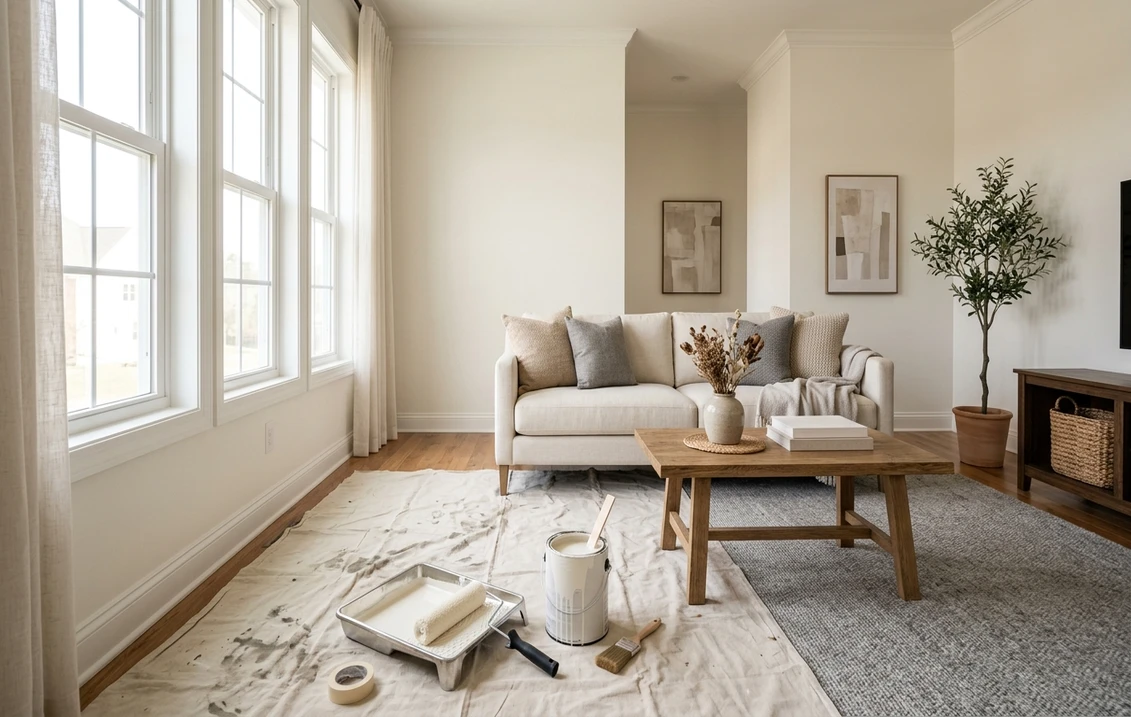
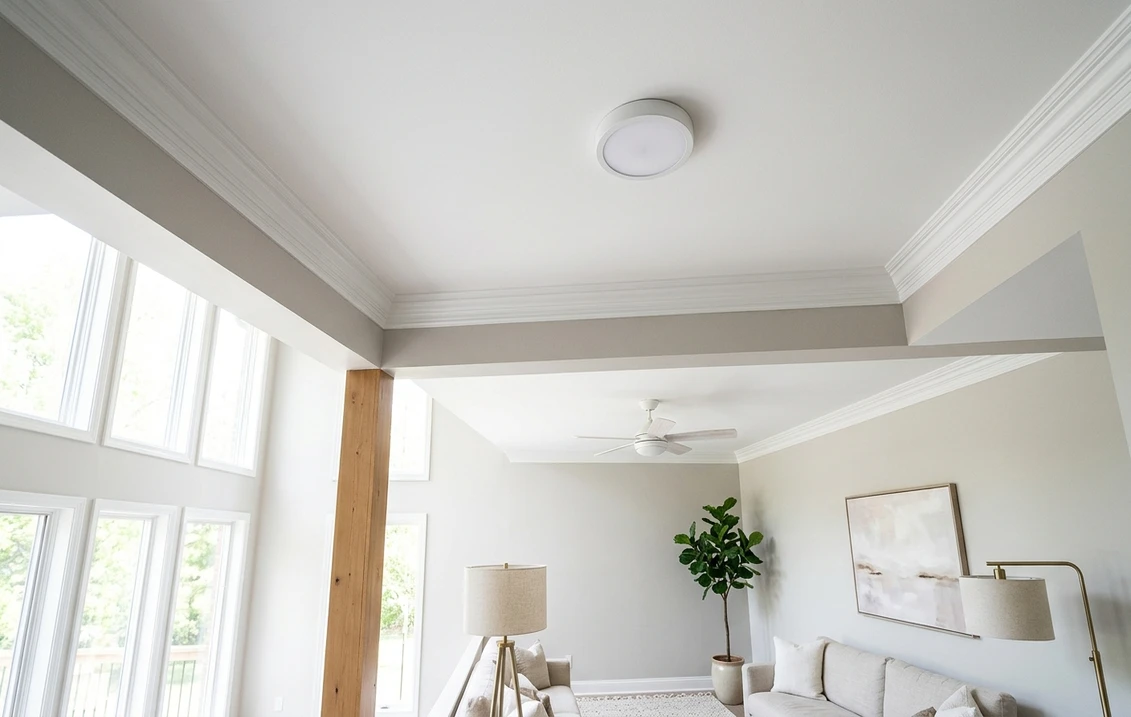
When to DIY: a single bedroom or bathroom with smooth walls and no major repairs. You will need rollers, brushes, painter's tape, drop cloths, a tray, and a stepladder, budget about $50–$100 for supplies on top of paint costs. When to hire a pro: rooms with high or vaulted ceilings, extensive wall damage, multiple rooms, or when you want a flawless finish with zero stress.
Tips to Save on Interior Painting
Interior painting does not have to break the bank. Here are practical ways to reduce costs without sacrificing quality:
- Bundle rooms together: painters offer better per-room rates for multi-room projects. Get quotes for the whole job, not one room at a time.
- Do your own prep: moving furniture, removing outlet covers, and taping off trim can save 1–2 hours of labor per room, that is $40–$100 in savings.
- Choose mid-tier paint: premium lines like Sherwin-Williams Duration ($60–$80/gallon) are excellent, but mid-tier options like SuperPaint ($45–$55/gallon) deliver 90% of the performance at a lower price.
- Skip accent walls with complex patterns: stripes, geometric designs, and faux finishes add $200–$500 per wall in labor. A simple bold color on one wall is far cheaper and still makes an impact.
- Paint during off-peak season: late fall and winter (November–February) are slower months for painters. You can often negotiate 10–15% lower rates during this period.
- Get at least 3 quotes: pricing varies significantly between contractors. Compare line-by-line, look for differences in the number of coats, paint brand specified, and what prep work is included.
Get the Color Right Before You Paint
The most expensive mistake in interior painting is choosing the wrong color. Repainting costs the same as the original job, so getting it right the first time saves you hundreds or thousands of dollars. FacadeColorizer lets you upload a photo of any room and test paint colors instantly using AI visualization. Try Sherwin-Williams Evergreen Fog, Benjamin Moore White Dove, or any shade you are considering, and see exactly how it will look on your walls before you commit.
Editorial methodology and updates
Last updated 2026-06-03. Per-square-foot labor and material splits are cross-referenced with the BLS Occupational Employment Statistics for painters (47-2141) and HUD residential improvement cost surveys. Lifespan and coverage figures map to ASTM D2486 (scrub resistance) and manufacturer technical data sheets.
Frequently asked questions
How much does it cost to paint a room interior in 2026?
How much of the cost of painting a room is labor?
Is it cheaper to paint a room yourself or hire a painter?
What are the most popular interior paint colors in 2026?
Trademarks mentioned (Sherwin-Williams, Benjamin Moore, Behr, Caparol, Brillux, Sto, Alpina, Valspar, PPG, Glidden, Dulux, Crown Trade, Sandtex, Farrow & Ball, Johnstone's, Leyland) are property of their respective owners. FacadeColorizer is independent and not affiliated with any of them. Nominative fair use under Lanham Act §1125.