Try it on your room

According to the EPA, indoor air can contain 2 to 5 times more volatile organic compounds (VOCs) than outdoor air, and freshly painted walls are a major contributor. For a nursery, where an infant spends 14 to 18 hours per day breathing within a few feet of those walls, paint chemistry matters just as much as paint color.
This 2026 guide covers the top 12 gender-neutral nursery paint colors, the zero-VOC and Greenguard Gold requirements you should not compromise on, and how finish and natural light affect the final result. Sources: EPA, Greenguard, Benjamin Moore, Sherwin-Williams. For full pricing context, see our complete interior painting cost guide.
The 12 Best Gender-Neutral Nursery Colors for 2026
The 2026 palette moves away from saccharine pastels and toward earthy, botanical, and softly muted tones that grow with the child from infancy through toddler years. All twelve shades pair beautifully with natural wood cribs, woven baskets, and organic cotton textiles.
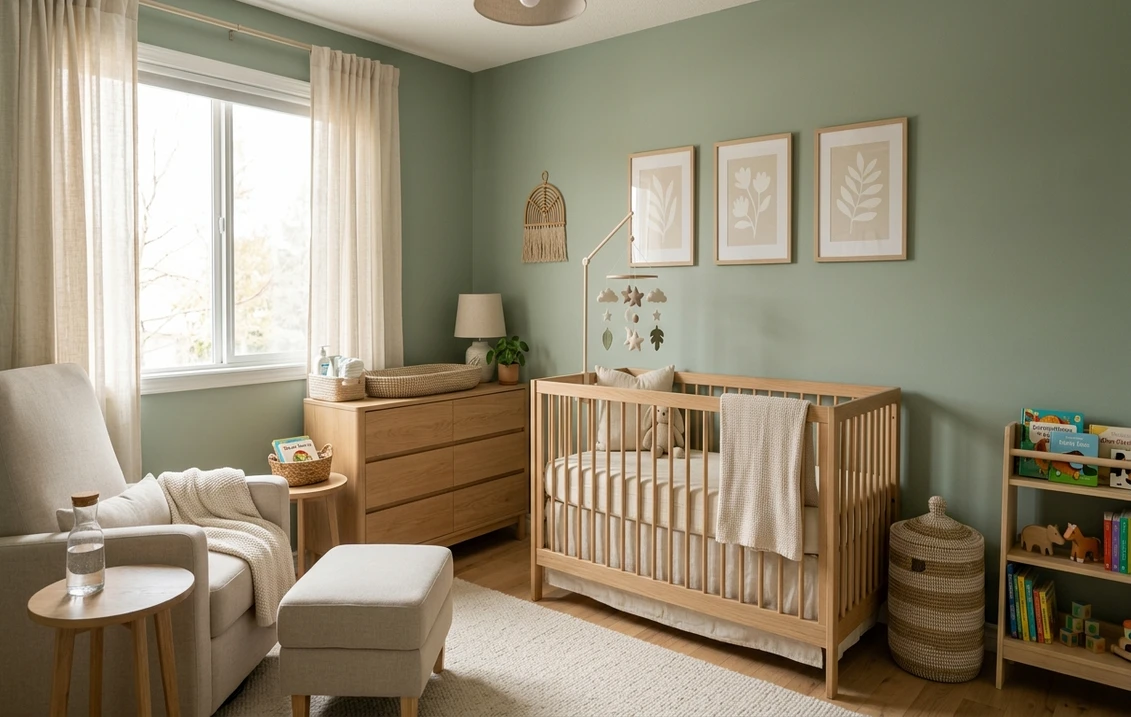
1. Soft Sage (Benjamin Moore Saybrook Sage HC-114)
Soft sage is the breakout color of 2026 nurseries. It reads as calming and nature-inspired without tipping into full green. Works in both north-facing and south-facing rooms because the gray undertone keeps it grounded under any light. Pairs with cream trim and natural oak furniture.
Sage is also the one family here where the depth needs checking before you buy. Clary Sage in a nursery is the most popular version of this color and sits at LRV 42, low enough that it holds four walls only in a bright room and works better as a single accent wall in a darker one. That guide runs twelve nursery greens with the LRV for each and the point at which a sage turns acidic under a north window.
2. Warm Cream (Sherwin-Williams Creamy SW 7012)
A creamy off-white with a whisper of yellow, warm cream is the safest "no-regrets" pick. It brightens north-facing nurseries that receive little direct sunlight and photographs beautifully for milestone pictures. Universally gender-neutral and timeless.
3. Dusty Blue (Benjamin Moore Beach Glass 1564)
Not baby blue, not gray, but a watery in-between. Dusty blue feels serene and slightly vintage. It works especially well in east-facing rooms that catch morning light, softening the cool tones into a gentle wash. Pair with brushed brass hardware.
4. Blush Taupe (Sherwin-Williams Malted Milk SW 6057)
The sophisticated cousin of pink, blush taupe carries just enough warmth to feel cozy without reading overtly feminine. It is one of the most popular 2026 picks for parents who want warmth without locking in a gendered palette.
5. Mushroom (Benjamin Moore Indian River 985)
Mushroom is a warm greige that anchors a room without overwhelming it. It reads neutral in daylight and cocoon-like at night, which is ideal for sleep environments. Excellent backdrop for black-and-white nursery art and natural fiber rugs.
6. Pale Lavender (Sherwin-Williams Silver Strand SW 7057 with a lavender wash)
Pale lavender has shed its "baby girl" reputation thanks to muted, gray-forward formulations. It is proven in sleep research to have a mildly calming effect and pairs surprisingly well with olive and terracotta accents for a gender-neutral feel.
7. Oat Beige (Benjamin Moore Manchester Tan HC-81)
Oat beige is the warm neutral that refuses to feel boring. It has enough pigment to read as intentional (not builder-basic) and creates a soft, latte-like glow under warm LED bulbs. A top choice for minimalist and Scandinavian nurseries.
8. Soft Mint (Sherwin-Williams Comfort Gray SW 6205)
Despite the name, Comfort Gray reads as the softest mint green in most lighting. It is fresh without being stimulating, which supports nap routines. Works especially well in rooms with white wainscoting or board-and-batten detail.
9. Buttermilk Yellow (Benjamin Moore Hawthorne Yellow HC-4)
A muted, historic yellow that never shouts. Buttermilk yellow is ideal for north-facing nurseries that need a warmth boost. Avoid in south-facing rooms where strong sun can amplify it into a too-bright tone.
10. Warm White (Benjamin Moore White Dove OC-17)
White Dove is the most-recommended nursery white in the country for a reason: it has a soft warmth that prevents the sterile, hospital feel of pure whites. Perfect if you plan to let textiles and art drive the color story.
11. Terracotta Clay (Sherwin-Williams Canyon Clay SW 6054)
A toned-down terracotta with heavy gray muting makes this a daring but genuinely neutral choice. It evokes desert sunsets and pairs with everything from sage to cream. Best as an accent wall behind the crib.
12. Greige Mist (Benjamin Moore Classic Gray OC-23)
The warmest of the "true greiges," Classic Gray adapts to its lighting: warmer in incandescent light, cooler under daylight LEDs. A safe bet for parents who want neutrality without committing to beige or gray.
Upload your nursery photo and preview all 12 colors in seconds
Nursery Paint Safety: VOCs, Certifications, and Finish
Color is only half the decision. In a nursery, the chemistry and finish of the paint determine whether the room is safe to sleep in the day after painting or whether it off-gasses for weeks.
Zero-VOC Is the Nursery Standard
Traditional paints release VOCs such as formaldehyde, benzene, and toluene as they cure. The EPA has linked elevated VOC exposure to respiratory irritation, headaches, and, in sensitive populations like infants, potential long-term developmental concerns. A paint marketed as "low-VOC" can still contain up to 50 grams per liter; a true zero-VOC paint carries less than 5 g/L before tinting.
For nurseries, pick paints certified Greenguard Gold (the strictest indoor-air standard, designed for schools and healthcare facilities). Proven options include Benjamin Moore Natura, Sherwin-Williams Harmony, ECOS Paints Nursery Collection, and Clare Paint. Natura and Harmony are both zero-VOC even after colorant is added, which is where many "zero-VOC" paints quietly lose their rating.
Finish: Washable Eggshell Wins
Flat paint hides drywall imperfections but smears when wiped, and nursery walls will be wiped constantly (spit-up, crayon, sticky fingers). Glossy paint is easier to clean but shows every roller mark and reflects light harshly, which can over-stimulate a baby. The sweet spot is washable eggshell or modern matte (sometimes called "scuff-resistant matte"): soft sheen, scrubbable surface, and forgiving of wall texture.
Age-Appropriate Color Strategy
For infants 0-1, prioritize muted, desaturated tones that support long sleep cycles. Newborn vision develops with high-contrast black and white, so your walls do not need to provide stimulation; save that for mobiles and books. For toddlers 1-3, slightly more saturated shades (terracotta, sage) become engaging as children explore color recognition. You do not need to repaint: an accent wall or removable decals carry the child through both stages.
Natural Light Transforms Every Color
North-facing nurseries receive cool, indirect light that mutes warm tones and amplifies cool ones. Choose warm creams, oat beige, or buttermilk yellow to counteract the blue cast. South-facing rooms get intense, warm direct sun all day; cool tones like dusty blue and soft mint balance the warmth without washing out. East-facing rooms glow golden in the morning (ideal for dusty blue and pale lavender), while west-facing rooms catch long afternoon sun that makes terracotta, blush taupe, and mushroom shine like embers.
Test each finalist at three different times of day: early morning, midday, and evening with artificial light on. Colors that look perfect at noon can turn green, yellow, or gray by 7 pm. A 2-by-2 foot swatch on at least two walls (one near a window, one farther away) will reveal undertones that a small chip simply cannot.
Ceiling, Trim, and Accent Wall Strategy
A common mistake is painting the ceiling bright white when the walls are a soft, warm color: the contrast feels harsh and makes the ceiling look lower. Instead, use the same wall color at 50% strength on the ceiling, or pick a warm white like Benjamin Moore Simply White OC-117 that flows naturally from the wall tone. For trim, stick with one color throughout the home for visual continuity; a crisp warm white in semi-gloss zero-VOC finish stands up to cleaning without yellowing over time.
Accent walls are a low-commitment way to introduce saturation. Behind the crib is the safest choice because the crib itself will block most of the wall from the baby's direct line of sight. Terracotta Clay, Soft Sage, or a deeper Dusty Blue make excellent accent choices without overwhelming the room.
2026 Nursery Color Comparison Table
Below is a quick-reference table with the 12 colors, their VOC rating with a recommended zero-VOC formula, and the age range they suit best.
| Color | Recommended Paint | VOC Rating | Best Age Range |
|---|---|---|---|
| Soft Sage | BM Natura - Saybrook Sage HC-114 | Zero-VOC (Greenguard Gold) | 0-3 years |
| Warm Cream | SW Harmony - Creamy SW 7012 | Zero-VOC (Greenguard Gold) | 0-3 years |
| Dusty Blue | BM Natura - Beach Glass 1564 | Zero-VOC (Greenguard Gold) | 0-3 years |
| Blush Taupe | SW Harmony - Malted Milk SW 6057 | Zero-VOC (Greenguard Gold) | 0-3 years |
| Mushroom | BM Natura - Indian River 985 | Zero-VOC (Greenguard Gold) | 0-3 years |
| Pale Lavender | ECOS Nursery - Custom Lavender Wash | Zero-VOC (Greenguard Gold) | 0-1 year |
| Oat Beige | BM Natura - Manchester Tan HC-81 | Zero-VOC (Greenguard Gold) | 0-3 years |
| Soft Mint | SW Harmony - Comfort Gray SW 6205 | Zero-VOC (Greenguard Gold) | 0-3 years |
| Buttermilk Yellow | BM Natura - Hawthorne Yellow HC-4 | Zero-VOC (Greenguard Gold) | 1-3 years |
| Warm White | BM Natura - White Dove OC-17 | Zero-VOC (Greenguard Gold) | 0-3 years |
| Terracotta Clay | SW Harmony - Canyon Clay SW 6054 | Zero-VOC (Greenguard Gold) | 1-3 years (accent) |
| Greige Mist | BM Natura - Classic Gray OC-23 | Zero-VOC (Greenguard Gold) | 0-3 years |
Try it on your house
No photo? Try a sample
Frequently Asked Questions
How long should I wait before putting a baby in a freshly painted nursery?
With a Greenguard Gold zero-VOC paint like Benjamin Moore Natura or Sherwin-Williams Harmony, the room is typically safe for an infant within 24 to 48 hours, provided you ventilated well during and after application. With conventional low-VOC paint, wait at least 3 to 4 weeks with windows open daily. If you can still smell paint, VOCs are still off-gassing. Always paint well before the due date to build in margin.
Is eggshell or matte finish better for a nursery?
Both work, but the best choice is a washable eggshell or a modern scuff-resistant matte. Traditional flat paint cannot be scrubbed without burnishing, and a nursery gets wiped down constantly. Eggshell offers a slight sheen that cleans easily while softening light reflections (important for nap time). Avoid satin and semi-gloss on walls: the higher sheen highlights drywall imperfections and can feel cold.
Do gender-neutral colors still feel warm and cozy?
Absolutely. The 2026 gender-neutral palette deliberately leans into warm, earthy tones (mushroom, oat beige, blush taupe, terracotta) rather than the cold minimalist grays of the 2010s. Layer in natural wood furniture, warm-white LED bulbs (2700K), organic cotton textiles, and plenty of texture (woven baskets, knit throws) and the room will read as warm and inviting regardless of color. If you are torn between two warm neutrals, see a shade on your nursery walls before you decide.
Can I paint the nursery myself while pregnant?
Most OB-GYNs advise against it, even with zero-VOC paints, because ladder falls and prolonged standing carry risk beyond paint chemistry. The safest option is to have a partner or hired painter apply the paint while you are away from the home for the day, with windows open and fans running. Return once the initial ventilation period ends (typically 4-8 hours for zero-VOC products).
Free - No signup - See all 12 nursery colors on your actual walls
Choosing a nursery color is one of the most emotional decorating decisions new parents make, but it should not be a guessing game. Upload a photo of the nursery to our free AI interior paint visualizer and preview every one of these 12 Greenguard Gold zero-VOC shades in seconds, on your actual walls, in your actual light. Sources: EPA Indoor Air Quality, Greenguard Certification, Benjamin Moore, Sherwin-Williams.
Trademarks mentioned (Sherwin-Williams, Benjamin Moore, Behr, Caparol, Brillux, Sto, Alpina, Valspar, PPG, Glidden, Dulux, Crown Trade, Sandtex, Farrow & Ball, Johnstone's, Leyland) are property of their respective owners. FacadeColorizer is independent and not affiliated with any of them. Nominative fair use under Lanham Act §1125.