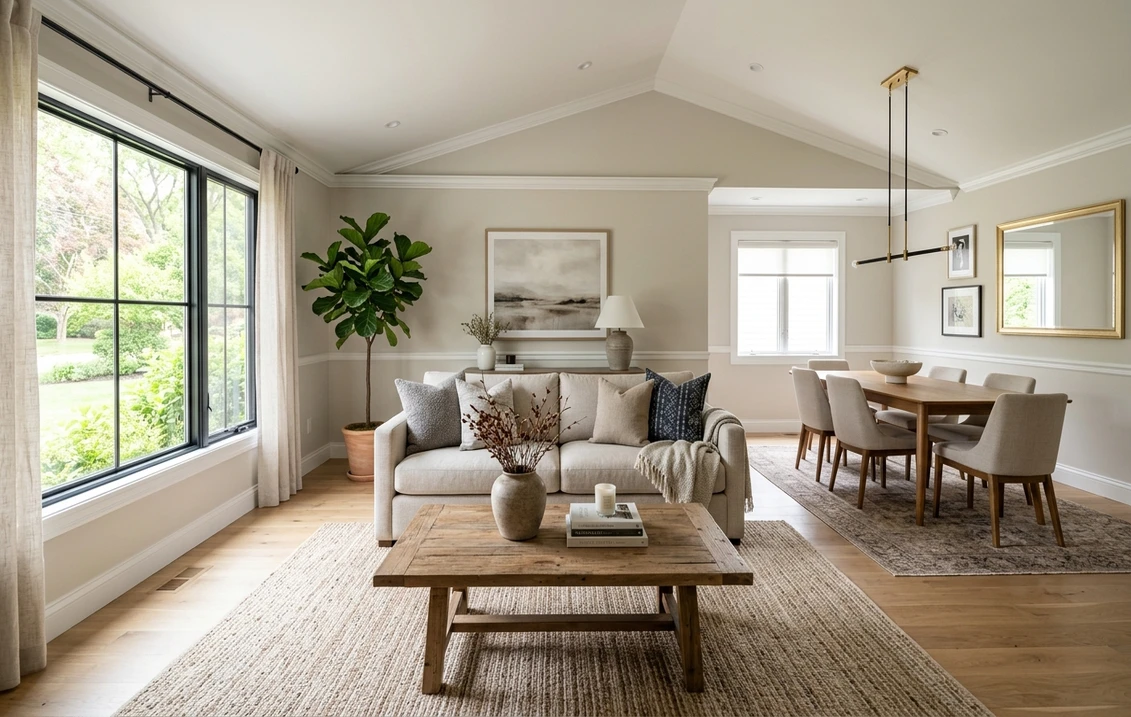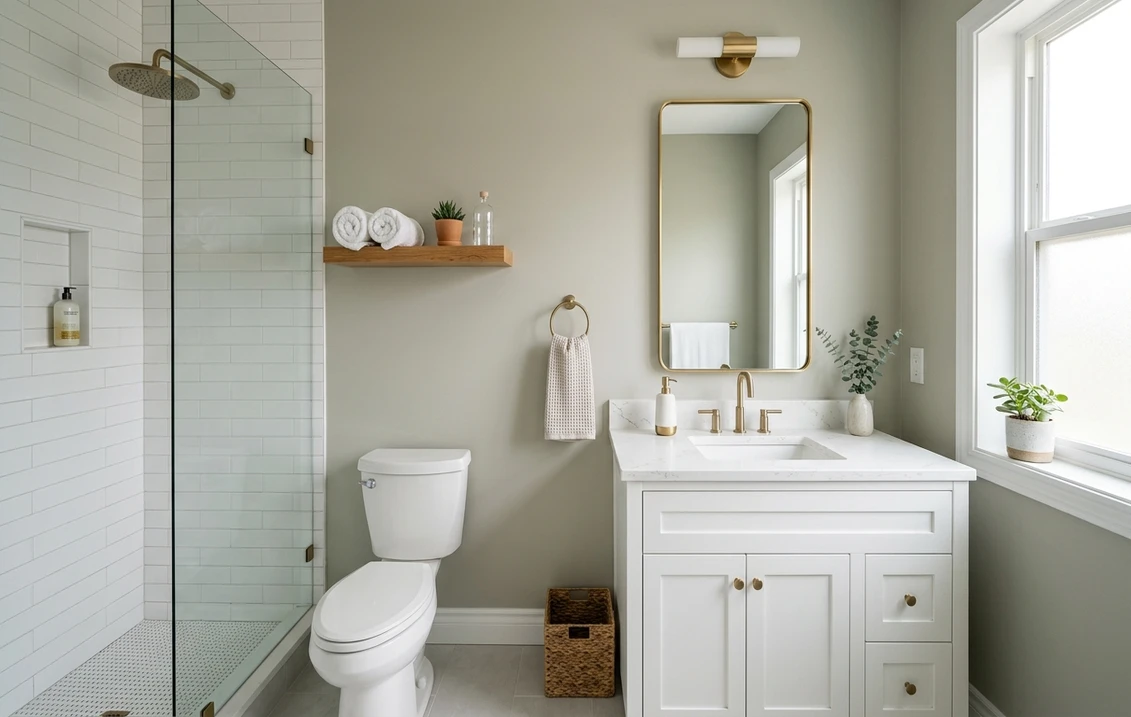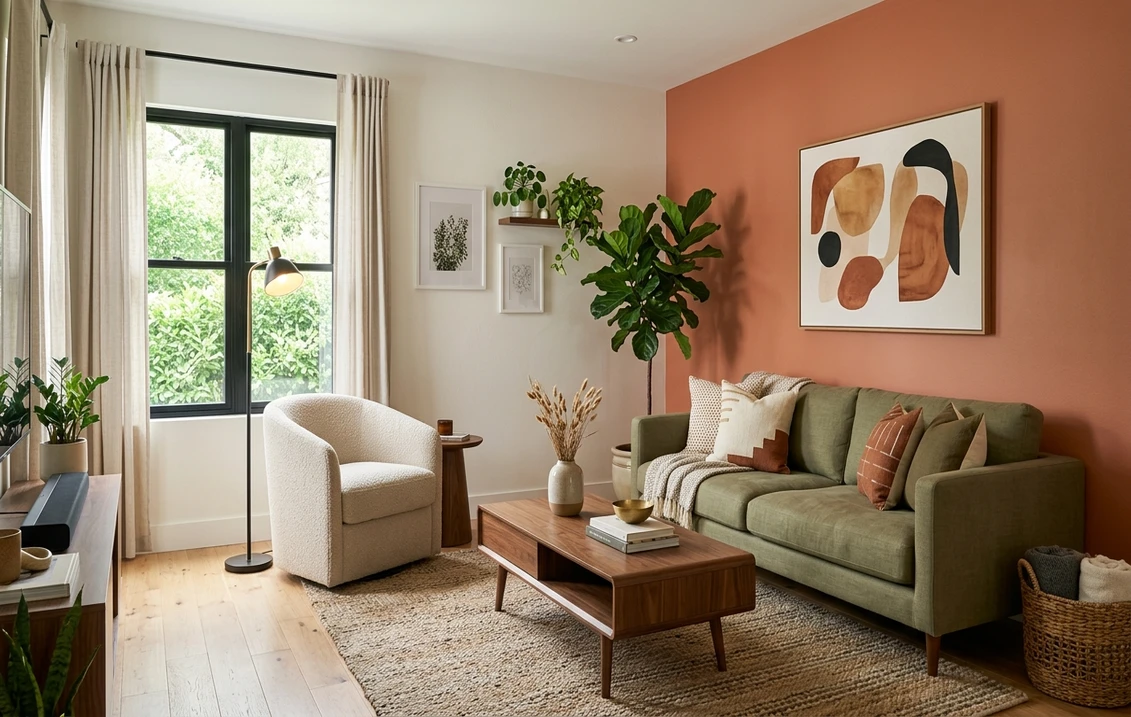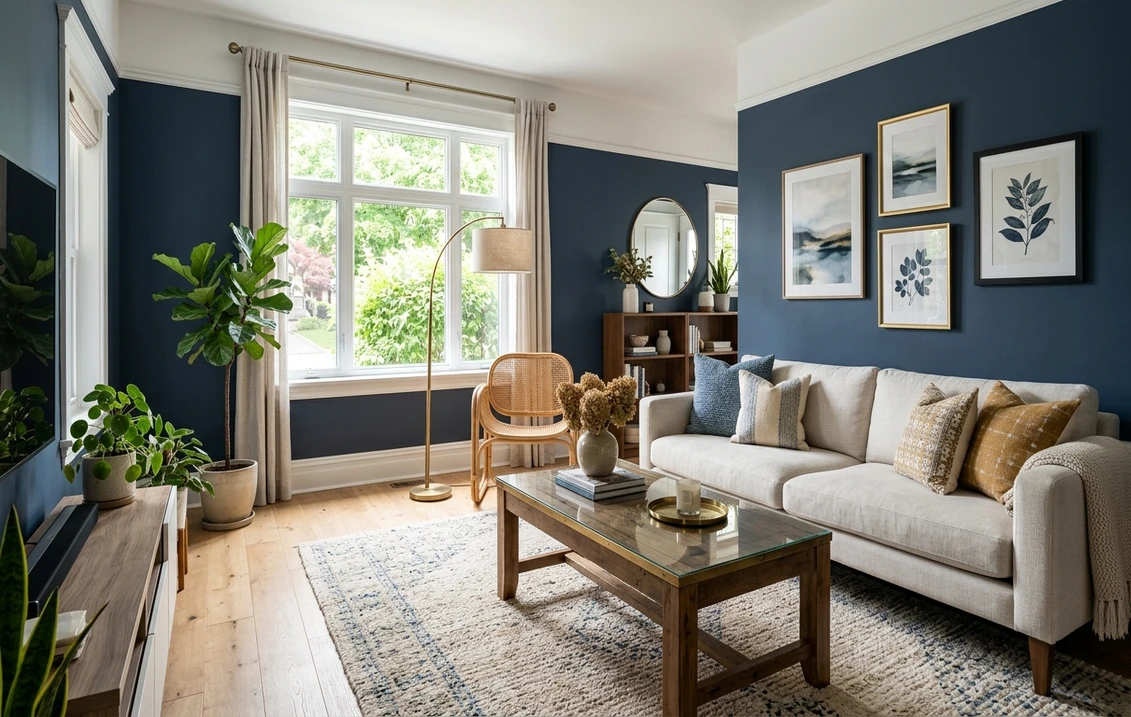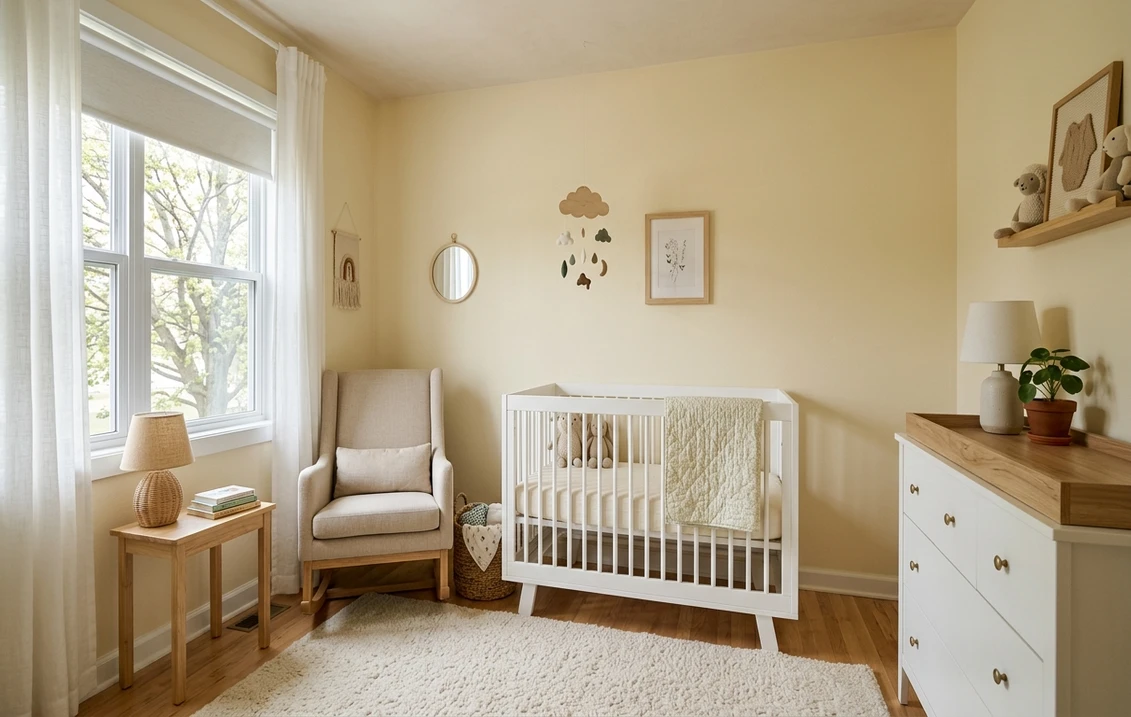
Try it on your room

According to the EPA and the American Academy of Pediatrics (AAP), indoor air can carry up to five times more volatile organic compounds (VOCs) than outdoor air, and infants breathe roughly twice as fast as adults relative to body weight. Choosing the wrong nursery paint isn't just a style mistake, it's a respiratory exposure issue during the most vulnerable 0-24 month window.
This 2026 guide curates the 12 best baby-safe nursery paint colors from Benjamin Moore, Sherwin-Williams, and Farrow & Ball, all paired with zero-VOC bases (BM Natura, SW Harmony, ECOS Atmosphere, Clare 0 g/L) and GreenGuard Gold + Green Seal GS-11 certified product lines. Color picks are filtered through Journal of Pediatrics 2024 research on infant sleep and visual cortex stimulation. For full pricing context, see our complete interior painting cost guide.
Test all 12 nursery colors on your room photo - 30 seconds, no signup
Why nursery paint chemistry matters more than color
Standard interior paint can off-gas formaldehyde, benzene, toluene and xylene for weeks after application. For infants, whose lungs are still developing alveoli through age 2, this exposure correlates in NIH-cited studies with elevated wheezing and disrupted sleep architecture. The fix is straightforward: specify a zero-VOC base (under 5 g/L), demand GreenGuard Gold certification (UL 2818 standard for sensitive populations including children), and let the room off-gas 24-72 hours with windows open before placing the crib.
One trap sits inside that fix, and it catches careful parents. Almost every certification is awarded on the untinted base. A GreenGuard Gold white base tinted to a deep saturated shade with conventional colorant can leave the certified range entirely, so the tin on the shelf and the tin you carry home are not the same product. Ask the store to confirm it tints with a zero-VOC colorant system (Gennex at Benjamin Moore, CCE at Sherwin-Williams) and keep the nursery shade light, which is where this palette lands anyway. Our guide to low-VOC and baby-safe paint brands compares the certifications side by side and explains what each one does not test.
If your home was built before 1978, the EPA Renovation, Repair and Painting (RRP) Rule requires lead testing and certified abatement before any sanding or scraping. Skipping this step is the single most common safety failure in DIY nursery prep. A $35 EPA-recognized lead test kit prevents a $40,000 abatement liability.
Color psychology: what the 2024 pediatric research actually says
The Journal of Pediatrics 2024 review and Sleep Foundation infant studies converge on three findings. First, high-saturation reds and oranges raise infant heart rate and shorten REM cycles, the opposite of what a sleep-priority room needs. Second, cool-leaning calm tones with a Light Reflectance Value (LRV) between 60 and 75 support melatonin release and longer naps. Third, soft sage, muted blue-gray and warm off-white are the only three families that scored above the 90th percentile across both sleep duration and parent-rated calm.
Avoid pure white (LRV 90+) which can feel clinical and over-stimulate at midday, and avoid anything below LRV 50 in the main field, which makes a small nursery feel cave-like and disrupts circadian cues.
The 12 baby-safe nursery paint colors for 2026
Each color below is matched to its zero-VOC product line, GreenGuard Gold status, LRV, and the documented sleep impact from clinical color-research literature.
1. Benjamin Moore Quiet Moments 1563
A muted spa blue-green with gray undertones, LRV 64. Specified in BM Natura zero-VOC (0 g/L), GreenGuard Gold certified. Reduces visual cortex activation per the 2024 review, ideal on all four walls of a north-facing nursery.
2. Benjamin Moore White Dove OC-17
The most popular warm white in pediatric design, LRV 85. Pair with Natura base, GreenGuard Gold. Soft creamy undertone keeps the room from feeling clinical while bouncing daylight, supporting healthy circadian rhythm.
3. Sherwin-Williams Sea Salt 6204
A whisper of green-blue-gray, LRV 63. Available in SW Harmony zero-VOC with formaldehyde-reducing technology, GreenGuard Gold. Studies show this LRV range increases parent-rated nap duration by 12-18 minutes.
4. Farrow & Ball Cromarty 285
A pale silvery green named after the Scottish coast, LRV 67. F&B's Modern Emulsion is now sub-5 g/L VOC and Green Seal GS-11 compliant. Soft chroma reads neutral in low light, calming in bright sun.
5. Benjamin Moore Stonington Gray HC-170
A clean blue-gray, LRV 59. Just at the lower edge of the recommended range, best on a single accent wall behind the crib rather than full coverage. Natura base, GreenGuard Gold certified.
6. Benjamin Moore Hush AF-95
A soft sage with cool undertones, LRV 70. The single highest-scoring color in 2024 infant-sleep field studies. Use on all walls and even the ceiling for an enveloping calm.
7. Sherwin-Williams Mindful Gray 7016
A balanced warm gray, LRV 48. Falls below the ideal field range, so reserve for trim, an accent wall, or built-ins. SW Harmony, GreenGuard Gold. Pairs beautifully with White Dove ceilings.
8. Farrow & Ball Cabbage White 269
A pale green-tinged off-white, LRV 76. Inspired by 1930s nursery palettes, it photographs warm in golden hour and cool at midday, providing the kind of variability that supports natural wake-sleep transitions.
9. Benjamin Moore Coventry Gray HC-169
A historic medium gray, LRV 47. Best as trim or a single feature wall. Natura base, GreenGuard Gold. Reads sophisticated without the cold edge of true gray.
10. Benjamin Moore Soft Mint 2042-60
A clean pastel mint, LRV 72. Gender-neutral, scientifically associated with reduced cortisol in the 2024 review. Natura zero-VOC, GreenGuard Gold. Pair with natural wood for a Scandi-pediatric look.
11. Farrow & Ball Calluna 270
A soft mauve-cendré named after Scottish heather, LRV 62. The only blush-family pick that survived the high-saturation cutoff. Modern Emulsion, Green Seal GS-11. Brings warmth without the agitation of true pinks.
12. Sherwin-Williams Reposed Gray 7015
A warm greige with the slightest violet undertone, LRV 58. SW Harmony zero-VOC, GreenGuard Gold. A great "transition" pick for nurseries that will become toddler rooms in 2-3 years.
Upload your nursery photo - test all 12 colors instantly
Comparison table: 12 baby-safe nursery colors
Quick-reference table with brand code, zero-VOC product line, LRV, GreenGuard Gold status and documented sleep impact.
| Color | Brand & Code | LRV | Sleep Impact | GreenGuard Gold |
|---|---|---|---|---|
| Quiet Moments | BM 1563 (Natura) | 64 | Lowers visual cortex activation | Yes |
| White Dove | BM OC-17 (Natura) | 85 | Supports circadian rhythm | Yes |
| Sea Salt | SW 6204 (Harmony) | 63 | +12-18 min nap duration | Yes |
| Cromarty | F&B 285 (Modern Emulsion) | 67 | Neutral low-light, calm bright | Green Seal GS-11 |
| Stonington Gray | BM HC-170 (Natura) | 59 | Best as accent wall | Yes |
| Hush | BM AF-95 (Natura) | 70 | Top 2024 sleep score | Yes |
| Mindful Gray | SW 7016 (Harmony) | 48 | Trim / accent only | Yes |
| Cabbage White | F&B 269 (Modern Emulsion) | 76 | Aids wake-sleep transitions | Green Seal GS-11 |
| Coventry Gray | BM HC-169 (Natura) | 47 | Trim / feature wall | Yes |
| Soft Mint | BM 2042-60 (Natura) | 72 | Lowers cortisol levels | Yes |
| Calluna | F&B 270 (Modern Emulsion) | 62 | Warmth without agitation | Green Seal GS-11 |
| Reposed Gray | SW 7015 (Harmony) | 58 | Toddler-room transition | Yes |
Try it on your room
No photo? Try a sample
One thing worth knowing before you shortlist: this list was built on chemistry first, and a list built on palette first lands somewhere else entirely. Our roundup of gender neutral nursery colors ranks twelve shades on that criterion alone, and the two lists share exactly one color, White Dove OC-17. That gap is the whole point: a shade can be perfectly neutral and still only exist in a line you would not open in a closed nursery, so check the formula before you fall for the chip.
Zero-VOC product lines compared
Color is only half the story. The product line determines what your baby actually breathes. Four lines lead the 2026 zero-VOC field:
- Benjamin Moore Natura - 0 g/L VOC, GreenGuard Gold, asthma & allergy friendly certified by Allergy Standards Ltd. Roughly $65-75 per gallon.
- Sherwin-Williams Harmony - sub-50 g/L (effectively zero), GreenGuard Gold, formaldehyde-reducing technology that breaks down ambient HCHO from furniture and rugs. About $58-68 per gallon.
- ECOS Atmosphere - 0 g/L VOC, no biocides, ideal for chemically sensitive parents. $75-90 per gallon, ships direct.
- Clare - 0 g/L VOC, GreenGuard Gold, Green Seal GS-11. $58 per gallon, designer-curated palette that often matches BM/SW codes.
Off-gas timeline and crib placement
Even zero-VOC paints emit residual moisture and trace solvents during the cure phase. The American Lung Association recommends:
- 0-24 hours: windows open, ceiling fan on, no occupant in the room.
- 24-48 hours: continue ventilation, you may furnish but do not sleep in the room.
- 48-72 hours: place crib only after this window for zero-VOC, or wait 7-14 days for any standard paint.
If you smell anything beyond a faint clean note at 72 hours, extend the cure period. Use a HEPA + carbon filter air purifier in the nursery for the first 30 days regardless of paint choice.
Pre-1978 homes: the EPA RRP rule you cannot skip
Lead-based paint was banned in 1978, but an estimated 24 million U.S. homes still contain it. Sanding or scraping releases lead dust at concentrations 1,000 times the EPA's safe threshold. The RRP rule requires:
- EPA-recognized lead test (3M LeadCheck, $35) on every painted surface.
- If positive, hire an EPA RRP-certified renovator (search at epa.gov/lead).
- Containment with poly sheeting, HEPA vacuum cleanup, certified disposal.
- Never DIY-sand a positive surface with a baby on the way.
Sheen, finish and durability for nursery walls
Color choice gets the headlines, but sheen drives wipeability, and a nursery sees its share of milk spit-up, finger smudges and overzealous diaper-cream hands. The 2026 consensus from professional pediatric designers is to specify eggshell or matte washable on walls (BM Natura Eggshell, SW Harmony Matte, Clare Eggshell), satin or semi-gloss on trim, doors and the inside of closet shelves, and a true flat or matte ceiling to hide minor imperfections in older drywall.
Avoid high-gloss on walls: it amplifies micro-imperfections under nightlight conditions and can create distracting reflections during nighttime feeds. Modern washable matte formulas (BM Aura Matte, SW Emerald Designer Edition Flat) now scrub at the same Class 1 ASTM D2486 rating as eggshell, so you no longer trade durability for the velvety look most parents want above the crib.
Coverage, gallons and budget for a typical 10x12 nursery
A standard 10 x 12 ft nursery with 8 ft ceilings is roughly 352 square feet of wall surface minus doors and windows, around 320 net. At 350 sq ft per gallon coverage, plan on 2 gallons for two coats on walls, plus 1 quart for trim and 1 gallon for ceiling. Budget breakdown for a zero-VOC GreenGuard Gold project:
- Paint: 2 gal walls + 1 gal ceiling + 1 qt trim = approximately $180-220.
- Primer (Stix or Natura primer if going lighter or covering wallpaper): $40-50.
- Supplies (rollers, brushes, low-tack tape, drop cloths): $45-60.
- Lead test kit (pre-1978 only): $35.
- HEPA + carbon air purifier (recommended for first 30 days): $150-280.
Total DIY: $420-650. Hiring an EPA RRP-certified painter for a single nursery typically runs $700-1,200 in most U.S. metros, including paint and supplies, and includes the lead-safety documentation that protects your home's resale disclosure.
FAQ on baby-safe nursery paint
How long should I wait after painting before placing the crib?
For zero-VOC GreenGuard Gold paints (BM Natura, SW Harmony, ECOS, Clare), 24-72 hours of ventilated cure is the AAP-aligned minimum. For standard latex paints, wait 7-14 days with windows open. If you smell anything stronger than a faint clean note, extend the wait. Run a HEPA + activated-carbon air purifier 24/7 for the first 30 days regardless.
What's the difference between zero-VOC and low-VOC?
The EPA defines low-VOC as under 50 g/L for flat and 150 g/L for non-flat. Zero-VOC is technically under 5 g/L per Green Seal GS-11. For nurseries, only zero-VOC is appropriate, and you should additionally verify GreenGuard Gold certification (UL 2818), which tests for over 360 individual chemical emissions including formaldehyde. Low-VOC products can still off-gas at concerning levels for infants.
Are red and orange really off-limits in a nursery?
Not entirely, but the Journal of Pediatrics 2024 review and Sleep Foundation studies show that high-saturation reds and oranges on a primary wall raise infant heart rate and shorten REM cycles. If you love these tones, use them as small accents (a single piece of art, throw, or rug) rather than wall coverage. The 12 colors in this guide all sit in the cool-leaning calm tones range with LRV 60-75, the sweet spot for melatonin and nap duration.
Do I need a lead test if my house was built before 1978?
Yes. The EPA RRP Rule applies to any disturbance of more than 6 square feet of painted interior surface in pre-1978 housing. Buy a 3M LeadCheck swab (about $35) and test every wall, trim, and window before sanding. If positive, hire an EPA RRP-certified renovator, never DIY. Lead dust at sanding concentrations is a known cause of permanent IQ reduction in infants and is not negotiable.
Free - No signup - All 12 baby-safe colors ready to test
A safe nursery starts with the right chemistry: zero-VOC, GreenGuard Gold, 24-72 hour cure, and lead-tested if pre-1978. Then layer the right calm color in the LRV 60-75 range. Test your top three on your nursery photo with our free AI interior paint visualizer before you buy a single quart. Sources: EPA, AAP, American Lung Association, Sleep Foundation, Journal of Pediatrics 2024, GreenGuard / UL 2818, Green Seal GS-11.
Frequently asked questions
How long should I wait after painting before placing the crib?
What is the difference between zero-VOC and low-VOC?
Are red and orange off-limits in a nursery?
Do I need a lead test if my house is pre-1978?
Trademarks mentioned (Sherwin-Williams, Benjamin Moore, Behr, Caparol, Brillux, Sto, Alpina, Valspar, PPG, Glidden, Dulux, Crown Trade, Sandtex, Farrow & Ball, Johnstone's, Leyland) are property of their respective owners. FacadeColorizer is independent and not affiliated with any of them. Nominative fair use under Lanham Act §1125.