Try it on your house

EPA RRP Rule requires certified contractors for any renovation in pre-1978 homes. Jan 12 2026 enforcement tightening means stiffer penalties and more frequent audits for lead paint compliance. The federal Renovation, Repair and Painting program (40 CFR Part 745, Subpart E) now carries inflation-adjusted civil penalties of up to $46,989 per violation per day, and enforcement priorities published in the Federal Register for FY2026 single out painting contractors, landlords, property managers and real estate agents working with pre-1978 housing.
This guide is written for the B2B audience that bears the operational risk: painting contractors, general contractors, exterior renovation specialists, real estate agents listing pre-1978 properties, property managers running rental portfolios, and landlords doing turnover work between tenants. We cover the regulatory text of 40 CFR Part 745, the certification pathway for firms and individual renovators, the penalty schedule effective Jan 12 2026, the lead-safe work practice protocol, the recordkeeping requirements EPA inspectors will ask for, the state-level add-ons that stack on top of federal RRP (HUD, OSHA, Massachusetts CLPPP, New Jersey Title 55), and the eight pre-bid mistakes that trigger most enforcement actions. Sources: EPA.gov RRP program page, 40 CFR 745, EPA FY2026 enforcement memo, Florida Realtors compliance briefings on Jan 12 enforcement, and National Association of Realtors lead disclosure guidance.
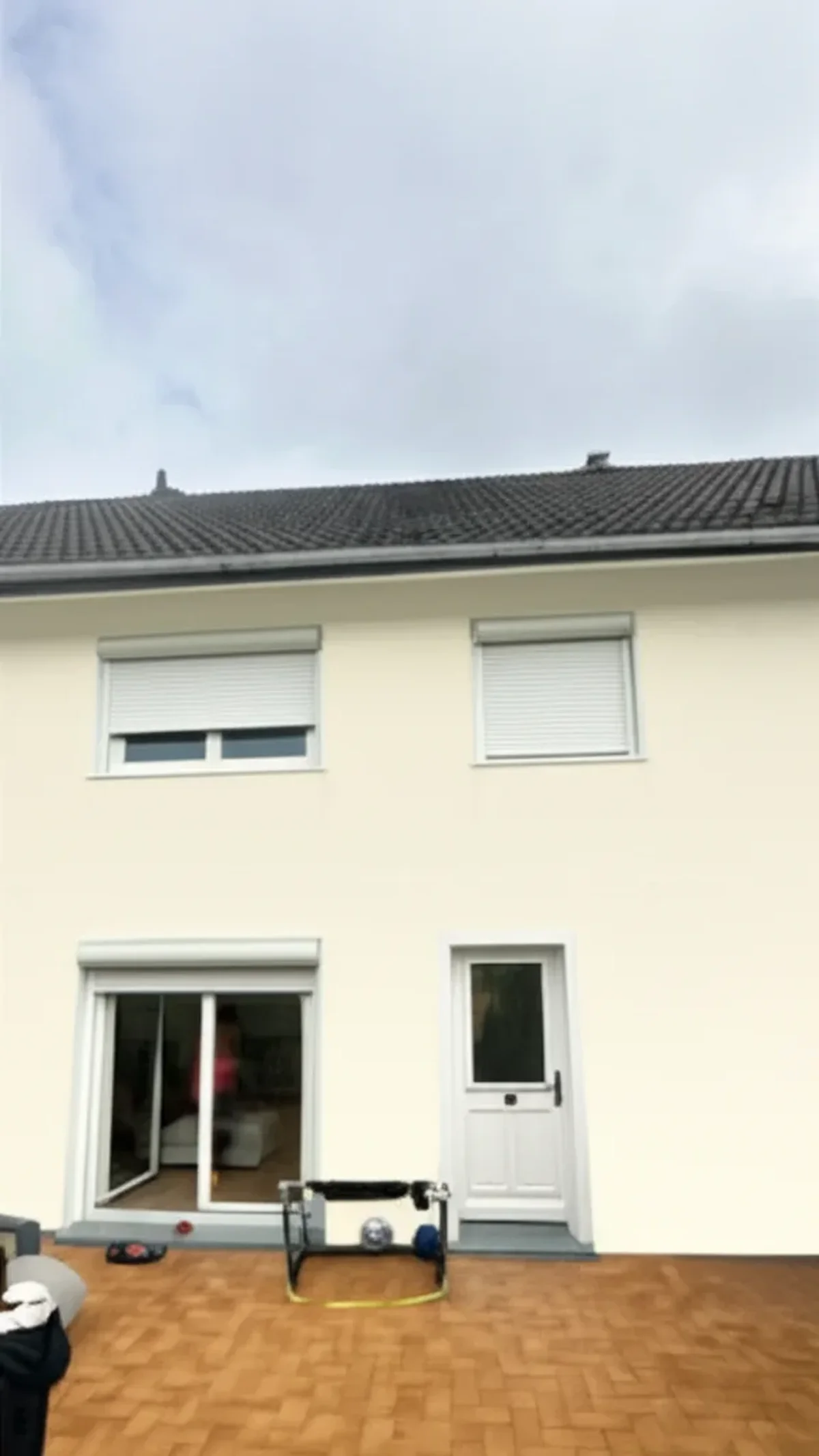
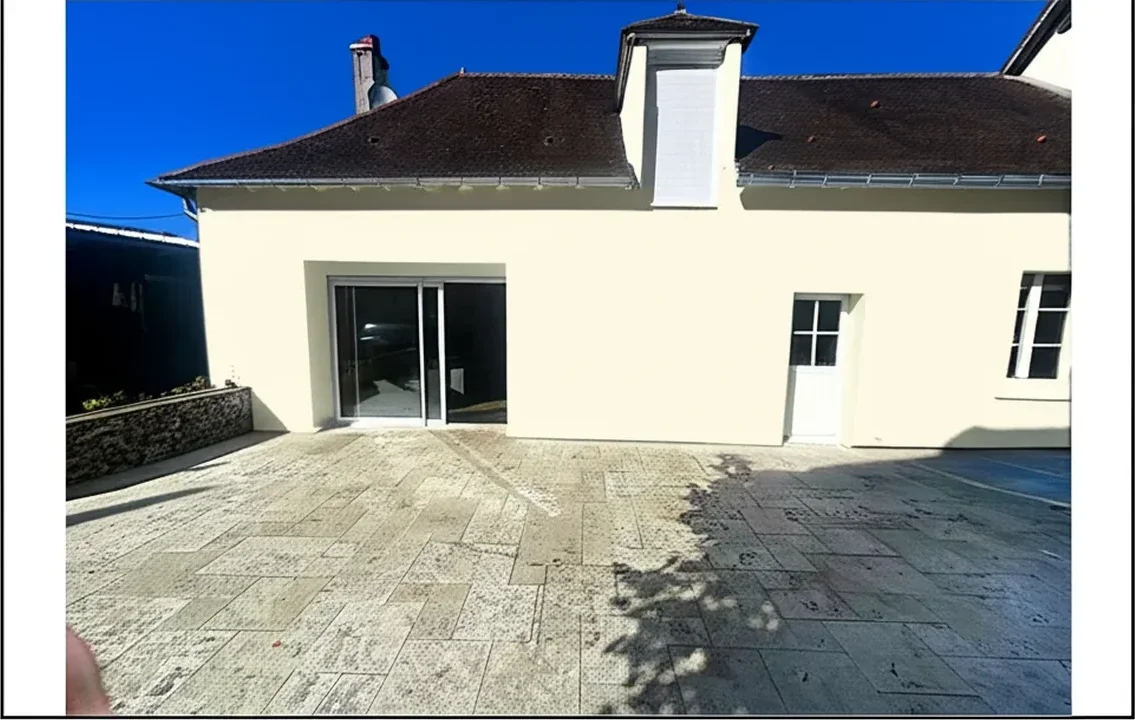
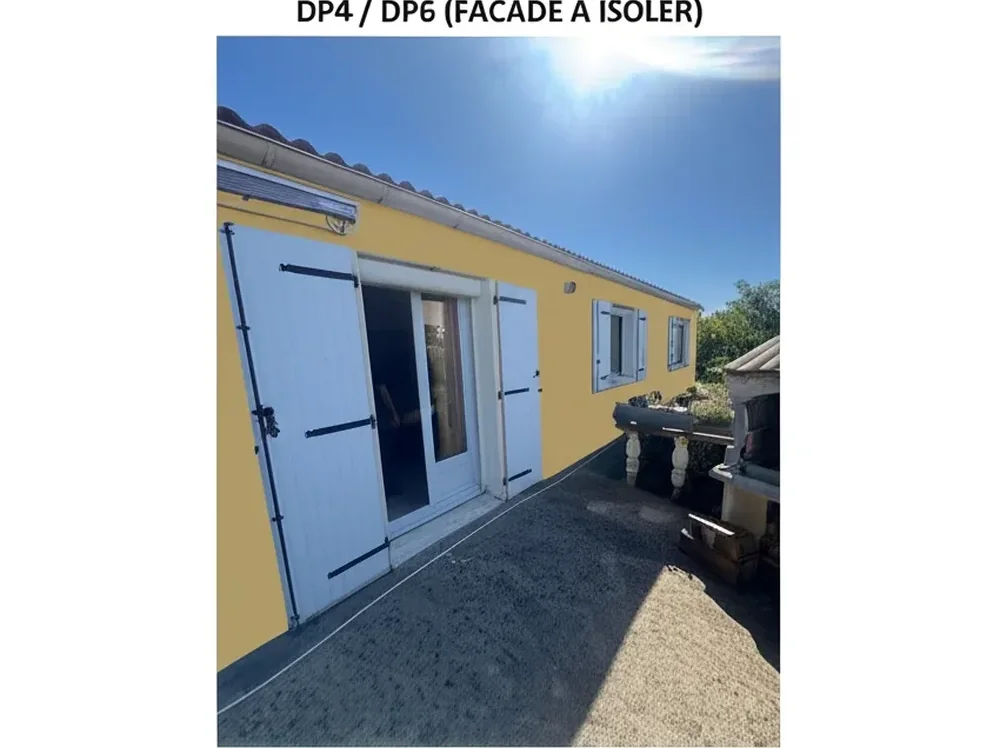
Photorealistic AI render of your actual property, 30 seconds, no signup
Try it on your house
No photo? Try a sample
1. What is the EPA RRP Rule 2026 (40 CFR Part 745)
The Renovation, Repair and Painting Rule is a federal regulation issued by the United States Environmental Protection Agency under the authority of the Toxic Substances Control Act (TSCA, 15 U.S.C. Chapter 53). It was promulgated April 22, 2008, took effect April 22, 2010, and is codified at 40 CFR Part 745, Subpart E. The rule requires that any firm performing renovation, repair, or painting activities that disturb lead-based paint in pre-1978 housing or child-occupied facilities must be certified by EPA (or by an EPA-authorized state program) and must follow specific lead-safe work practices.
The "2026 update" referenced in industry briefings is twofold. First, the annual inflation adjustment to civil penalties under the Federal Civil Penalties Inflation Adjustment Act raised the maximum daily penalty from $40,000 (2024 schedule) to $46,989 per violation per day effective January 12, 2026. Second, EPA Office of Enforcement and Compliance Assurance (OECA) published a fiscal year 2026 enforcement priority memo on December 18, 2025, listing pre-1978 residential renovation as a top inspection target, with explicit instructions to increase unannounced site audits in high-density pre-1978 markets (Northeast, Upper Midwest, parts of the Mid-Atlantic, plus Florida coastal counties). Florida Realtors, the state's NAR-affiliated trade body, published a member alert in January 2026 warning that the agency would step up enforcement around tenant turnover work, listings of pre-1978 properties, and post-disaster repair contracts.
The substantive rule did not change in 2026. What changed is the price of getting caught and the frequency of inspection. Contractors who were marginally compliant in 2023 are now squarely in EPA's enforcement sightline.
2. Who must be certified under EPA RRP
The rule covers any "renovation" performed for compensation in a pre-1978 home or child-occupied facility. "Renovation" is defined broadly: any modification of an existing structure that disturbs painted surfaces, including repair, remodeling, surface preparation for repainting, weatherization, window replacement, demolition, electrical and plumbing work that drills through painted walls, and even certain housekeeping operations like aggressive pressure washing. The following parties carry compliance obligations:
- Painting contractors and painters performing exterior or interior repaints, surface prep, scraping, sanding, or pressure washing on pre-1978 properties. Both the firm and at least one Certified Renovator on every job site must hold current EPA credentials.
- General contractors, remodelers, and trades (carpentry, electrical, plumbing, HVAC, window installers, roofers touching painted fascia or soffits) when their scope disturbs more than 6 sqft of interior or 20 sqft of exterior painted surface per job.
- Landlords and property managers performing or paying for renovation in tenant-occupied units, units about to be re-let, or common areas. The "compensation" trigger applies even when a landlord does the work himself in a rental unit, because the rental income is the compensation. EPA has prosecuted single-property landlords under this theory.
- Real estate agents and brokers are not directly regulated by RRP but carry obligations under the related Lead Disclosure Rule (24 CFR Part 35 Subpart A and 40 CFR Part 745 Subpart F): the agent must ensure the seller or landlord delivers the EPA "Protect Your Family from Lead in Your Home" pamphlet, the property-specific lead disclosure form, and a 10-day opportunity for inspection before any pre-1978 sale closes. NAR member briefings emphasize that listing agents share liability under 42 U.S.C. § 4852d. Property management companies are also explicitly covered under the rule, per Winston & Strawn EPA PMC guidance.
- Home flippers, investors, and owner-builders who own pre-1978 property they do not occupy as a primary residence. The IRS-style "trade or business" test applies: flips are commercial activity, and RRP applies regardless of whether the flipper uses a crew or works solo.
- Public housing authorities, HUD-assisted housing operators, and Section 8 voucher landlords are subject to the parallel HUD Lead Safe Housing Rule (24 CFR Part 35), which incorporates RRP and adds clearance-testing requirements not in the EPA baseline.
The owner-occupant DIY exemption is narrow. You are exempt only if you own the property, live there as your primary residence, no child under six lives in the home, no woman is pregnant in the home, and the home is not a "child-occupied facility" (any pre-1978 building where children under six spend 3+ hours per day, 6+ hours per week, 60+ hours per year). Home daycares, in-home preschools, and regular nanny-share arrangements strip the exemption. See our companion guide on EPA RRP pre-1978 home repaint workflow for the homeowner-facing analysis.
3. Penalties for non-compliance (up to $46,989 per violation per day)
Civil penalties under TSCA § 16 are inflation-adjusted every January under the Federal Civil Penalties Inflation Adjustment Act Improvements Act of 2015 (Pub. L. 114-74). The 2026 schedule, published in the Federal Register on January 12, 2026, sets the following maximum penalties:
- Up to $46,989 per violation per day for civil violations of TSCA § 15, including failure to certify the firm, failure to use a Certified Renovator, failure to follow lead-safe work practices, failure to deliver the "Renovate Right" pamphlet, failure to maintain records, and false statements in records or to EPA inspectors. Each calendar day a violation continues is a separate violation.
- Up to $93,978 per day for repeat or willful violations under EPA's penalty policy for TSCA § 409 (lead-based paint activities), particularly where the firm has previously received a notice of violation, has multiple sites in non-compliance, or where children with elevated blood lead are involved.
- Criminal penalties of up to $250,000 and one year imprisonment per knowing or willful violation of TSCA recordkeeping and reporting requirements (15 U.S.C. § 2615(b)). Criminal referrals are rare but rising; EPA OECA referred 14 RRP cases to the Department of Justice in 2024.
- Treble damages available to tenants and buyers under the federal Lead Disclosure Rule (42 U.S.C. § 4852d), recoverable in private civil suit without EPA involvement. Class actions by tenants in pre-1978 rental portfolios routinely settle in the mid-six to low-seven figures.
- State penalties stack on top of federal in EPA-authorized states. Minnesota adds up to $10,000 per violation under state law. New Jersey adds $1,000 per day for landlord non-compliance with biennial lead inspection of pre-1978 rentals. Massachusetts imposes strict liability on landlords for childhood lead poisoning regardless of fault.
EPA published more than 60 RRP enforcement actions in 2024 with settlements ranging from $5,000 (single uncertified job, first offense) to over $400,000 (multi-site landlord with documented child lead poisoning). The agency announced in December 2025 it expects to publish 90 to 110 enforcement actions in FY2026 as a direct result of the increased inspection budget. Florida Realtors warned its membership in a January 2026 alert that tenant turnover work and post-hurricane repair contracts are explicit FY2026 targets for the EPA Region 4 office covering Florida, Georgia and the Carolinas.
4. Pre-work color preview workflow (lock the color before disturbing lead paint)
The single most expensive operational mistake in pre-1978 contracting is changing the color after containment is up. Once a Lead-Safe Certified Firm has installed 6-mil polyethylene sheeting, posted warning signs, set up HEPA vacuum stations, run the dust-wipe verification protocol on prepared surfaces, and started rolling primer, a client-driven color change forces the firm to re-prep, re-contain, re-clean, and re-document the entire scope. We see this every week in the field: the client looked at a fan deck under hardware-store fluorescents, picked "Repose Gray SW7015," then walked into the half-painted job and decided "Mindful Gray SW7016" was what they actually wanted. In a post-1978 home, that is a gallon of paint and two hours of labor. In an RRP-controlled environment, that is $1,500 to $3,500 in rework plus a one to two-day schedule slip plus a second cleaning-verification cycle.
The fix is to lock the color before the contractor walks the property. Spend 30 minutes on a photorealistic AI render of the client's actual house, get verbal sign-off from every household decision-maker (and the HOA architectural review board if applicable), then write the locked color code into the contract scope-of-work clause. The contractor knows from line one of the proposal that the color is fixed.
Test 4 to 6 candidate colors on a render of the actual property in under 60 seconds
For exterior repaints we recommend the FacadeColorizer AI exterior paint visualizer, which renders the candidate colors directly on a photo of the elevation. For interior work, the interior preview tool handles wall, trim and ceiling combinations. Contractors who build this 30-minute pre-bid step into their sales process report a measurable drop in change orders and repaint complaints in pre-1978 jobs.
5. Sample test procedure for lead (XRF, swabs, lab confirmation)
EPA RRP does not require lead testing before every job, because federal law presumes lead is present in any pre-1978 home unless a certified inspector documents otherwise. However, contractors and property owners frequently choose to test in order to opt out of RRP requirements when results are negative across every surface to be disturbed. The opt-out can save substantial labor on multi-phase or repeat-client work. Three test methods are recognized:
- X-Ray Fluorescence (XRF) analysis by a state-Certified Lead Inspector or Lead Risk Assessor. XRF is non-destructive, reads lead concentration in mg per square centimeter in real time, and is the gold standard for pre-renovation testing. Typical cost runs $300 to $600 for a 2 to 3 hour inspection covering a single-family home. The inspector produces a written report citing the federal action level of 1.0 mg/cm² for each tested surface.
- Paint chip lab analysis per ASTM E1645 / E1979. The inspector removes a small paint chip from each surface, ships it to an EPA-recognized laboratory for digestion and inductively coupled plasma analysis. Results report lead by percent dry weight, with the action level set at 0.5% lead by weight. Lab turnaround is 5 to 10 business days. Suitable when XRF access is limited or contested results need confirmation.
- EPA-recognized test kits (LeadCheck, D-Lead), applied by a Certified Renovator. These chemical-spot swabs are accepted for negative-result opt-out only: a positive swab cannot definitively confirm lead, and EPA requires XRF or lab confirmation in that case. Kits run $5 to $10 each and produce instant color-change results. Hardware store DIY swabs operated by uncertified personnel are not accepted by EPA for opt-out documentation under any circumstance.
The opt-out documentation must cover every surface to be disturbed. A negative result on the siding does not cover the trim, the eaves, the porch ceiling, or the window sashes. Most contractors find it cheaper and simpler to assume lead is present and follow RRP than to chase comprehensive negative documentation across a full exterior. The opt-out path makes economic sense mainly for institutional clients with repeat work in the same building.
6. EPA RRP-certified renovation steps (containment, cleaning verification, recordkeeping)
The lead-safe work practice protocol under 40 CFR 745.85 has three phases. Every certified firm walks crews through this sequence on every job.
Phase 1: Setup and containment. Before any surface is disturbed, the Certified Renovator must distribute the EPA "Renovate Right" pamphlet to the property owner and occupants (and obtain a signed receipt for the 3-year recordkeeping file). The work area is sealed with 6-mil polyethylene plastic sheeting: floor-to-ceiling for interior work, extending 10 feet around the work area on the ground for exteriors (vertical to roof line if reachable). HVAC vents in the work area are shut and sealed. Doorways are double-flapped. Warning signs are posted at the work-area perimeter. All movable objects are removed; immovable objects are covered. For exteriors, the perimeter plastic must be weighted down and extend to capture any falling dust or chips.
Phase 2: Work practice rules. The following practices are prohibited under all RRP scopes: open-flame burning or torching of painted surfaces, machine sanding or grinding without a HEPA shroud and vacuum attachment, abrasive blasting without HEPA capture, paint stripping using methylene chloride or hazardous solvents in poorly ventilated spaces, and use of heat guns above 1,100°F. Permitted practices include wet scraping, wet sanding, manual sanding with HEPA-shrouded tools, chemical paint strippers used per label, and replacement of paint-covered components in lieu of in-place removal. Crews must wear appropriate PPE: N100 or P100 respirators when generating significant dust, disposable coveralls, shoe covers swapped at the containment boundary, and gloves changed between zones.
Phase 3: Cleanup and cleaning verification. After painting is complete, the firm must HEPA-vacuum all surfaces in the work area (floors, walls, windowsills), wet-wipe with general-purpose cleaner, and HEPA-vacuum again. The Certified Renovator then performs cleaning verification using the EPA cleaning verification card: white wet disposable cloths are wiped across windowsills, uncarpeted floors, and countertops. Each cloth is compared against the EPA verification card. If the cloth is not lighter than or equal to the card, re-cleaning is required. The verification result is documented per surface. Plastic sheeting is then misted, gathered, sealed in heavy-duty bags, and disposed of as ordinary construction debris (residential RRP waste is not RCRA hazardous in most cases under the federal household waste exclusion, but always check state rules).
Recordkeeping (3-year retention). The firm must retain, for at least 3 years from the project completion date: the firm certification, the Certified Renovator certificate, training documentation for all non-certified workers on the job, the signed "Renovate Right" pamphlet receipt, the pre-renovation lead test results (if opt-out was claimed), and the post-job cleaning verification documentation. EPA inspectors routinely request these records by email or onsite. A missing record is a separate, citable violation with its own $46,989-per-day exposure.
7. Common mistakes that trigger EPA RRP fines
Reviewing the published EPA enforcement actions from 2022 through early 2026, eight contractor errors account for the majority of citations and settlement dollars:
- Firm not certified. The single most common citation. The firm has individual Certified Renovators on payroll but never paid the $300 EPA firm-certification fee. Result: every job in violation, every day a separate violation.
- No Certified Renovator on site. The firm is certified, but the renovator with the credential is at a different job that day. RRP requires a certified renovator on every job, training and supervising the crew. Subcontracted crews do not automatically inherit the GC's certification.
- "Renovate Right" pamphlet not distributed or unsigned. A clerical violation, but every inspector asks for the signed receipt. No receipt, no defense.
- Inadequate containment. Plastic too small, perimeter missing 10-foot ground sheeting on exteriors, HVAC vents not sealed, windows opened during work. Visible debris outside the work area is presumptive evidence of containment failure.
- Prohibited work practices. Open-flame paint removal, machine sanding without HEPA, dry abrasive blasting. Often photographed by neighbors and forwarded to EPA via the agency's online tip line.
- Cleaning verification skipped or undocumented. The renovator did the verification but never wrote it down. EPA treats undocumented verification as no verification.
- Records destroyed or not produced within deadline. EPA standard records request gives 30 days. Late or partial production triggers escalation to formal enforcement.
- Failure to disclose at sale or rental. Listing agents and landlords miss the federal Lead Disclosure Rule deadline (pre-contract delivery of pamphlet, disclosure form, and 10-day inspection window). NAR member briefings flag this as a top FY2026 enforcement target.
For contractors who want a parallel hiring playbook for the property-owner side, our 2026 guide to hiring an interior or exterior painter walks through how owners should vet certification before signing.
8. State-specific add-on requirements (HUD, OSHA, MA, NJ, CT)
Federal RRP is the floor. Several federal agencies and many states layer additional requirements on top, and contractors operating across state lines must check each before bidding. The most consequential overlays:
- HUD Lead Safe Housing Rule (24 CFR Part 35). Applies to federally assisted housing including HUD-funded rehab, Section 8 vouchers, public housing, and HOME-program properties. Adds dust clearance testing by a certified lead professional on top of RRP cleaning verification. Failure to pass clearance halts occupancy.
- OSHA Lead in Construction Standard (29 CFR 1926.62). Worker-safety overlay on top of RRP's environmental focus. Triggers personal exposure monitoring, written compliance program, blood lead testing for exposed workers, respiratory protection program, change rooms, and hand-washing facilities when the action level of 30 µg/m³ is exceeded. OSHA inspectors share information with EPA under interagency memoranda.
- Massachusetts CLPPP (MGL Chapter 111 § 199). Strict liability for landlords whose pre-1978 rental causes childhood lead poisoning, regardless of fault. Every rental where a child under 6 lives must hold a current Letter of Compliance following lead inspection and remediation.
- New Jersey Title 55 (P.L. 2021 c. 182). Mandatory lead-based paint inspection of every pre-1978 rental every 2 to 3 years. Non-compliance: $1,000 per day in state penalties, stacked on federal RRP exposure.
- Connecticut DPH lead abatement licensing. Separate state license required for any work touching lead in homes where children under 6 live, on top of EPA RRP. Worker ID cards required.
- Maine 22 MRSA § 1322. Mandatory lead inspection before sale or rental in designated "areas of elevated risk" including Lewiston-Auburn and Portland.
- Minnesota MDH Lead Program. Separate Lead Supervisor or Lead Worker license required on top of EPA RRP firm certification; penalties up to $10,000 per violation under state law.
- EPA-authorized states (currently 14): Massachusetts, Wisconsin, Rhode Island, North Carolina, Oregon, Utah, Iowa, Kansas, Mississippi, Oklahoma, Washington, Alabama, Delaware, Georgia. State program operates in lieu of federal EPA but generally mirrors the baseline; check fee schedule and renewal cycle locally.
For renovation cost planning that incorporates these compliance overheads, see our exterior paint cost 2026 complete guide.
9. How AI mockups help pre-1978 homeowners (choose color before disturbing surfaces)
Pre-1978 ownership creates a specific buying psychology: clients are nervous about lead, nervous about cost, nervous about disruption, and prone to second-guessing color choices when the stakes feel high. The contractor who walks in with a photorealistic AI render of the exact property already painted in the client's candidate colors converts faster, reduces change orders, and protects margin on jobs where containment overhead is already eating 15 to 35 percent of labor cost.
The workflow we recommend to every contractor working pre-1978 housing:
- At the bid walk-through, photograph each elevation (front, sides, rear) and key interior walls in daylight, straight-on.
- Before the proposal goes out, run 4 to 6 candidate colors through the FacadeColorizer AI exterior paint visualizer using real Sherwin-Williams, Benjamin Moore, or Behr codes.
- Email the renders to the client 24 to 48 hours before the proposal meeting. Let them sit with the options.
- At signing, write the locked color code into the scope-of-work clause. The proposal explicitly states "any color change after containment is installed = $X,XXX rework fee plus schedule extension." Clients respect locked-in clauses they have already seen rendered.
- If the property is in an HOA, attach the render to the HOA architectural review submission. The board approves faster when it can see the actual house, not a swatch.
- After completion, request a testimonial referencing the locked-color workflow. This is high-trust marketing content for the next pre-1978 client.
1 free HD render, no signup, real paint codes
For HOA-controlled properties, the best HOA-approved exterior paint colors 2026 guide pairs naturally with this workflow. For broader color-selection support, see how to choose an exterior house color and best exterior paint colors 2026.
10. Frequently asked questions
What changed about EPA RRP enforcement on January 12, 2026?
Two things changed. First, the inflation-adjusted civil penalty cap rose from $40,000 per violation per day (2024 schedule) to $46,989 per violation per day, published in the Federal Register on January 12, 2026. Second, EPA's Office of Enforcement and Compliance Assurance announced an FY2026 enforcement priority targeting pre-1978 residential renovation, including more unannounced site audits in high-density pre-1978 markets and explicit focus on tenant turnover work and post-disaster repair contracts. The substantive rule (40 CFR Part 745) did not change.
How does a contractor become EPA Lead-Safe Certified?
Two steps. First, the firm applies to EPA (or to the EPA-authorized state agency where the firm operates) for Lead-Safe Certified Firm certification. The federal application fee is $300, the certificate is valid for 5 years, and renewal is also $300. Second, at least one employee per job site must hold an EPA Certified Renovator credential, earned by completing an EPA-accredited 8-hour initial training course (typical cost $200 to $300). The renovator credential is valid for 5 years and renewed via a 4-hour refresher course. Both credentials must be verifiable in EPA's "Find a Lead-Safe Certified Firm" database at epa.gov/lead.
Does EPA RRP apply to real estate agents?
Not directly, but listing agents and property managers carry obligations under the related federal Lead Disclosure Rule (24 CFR Part 35 Subpart A and 40 CFR Part 745 Subpart F). Before any pre-1978 home is sold or rented, the seller or landlord must deliver to the buyer or tenant: the EPA "Protect Your Family from Lead in Your Home" pamphlet, a property-specific lead disclosure form, and a 10-day opportunity for inspection (or waiver in writing). NAR member guidance and Florida Realtors compliance briefings make clear that listing agents share liability under 42 U.S.C. § 4852d, with treble damages available to harmed buyers and tenants. Agents should never sign a pre-1978 listing without verifying the disclosure paperwork is complete.
Are landlords doing their own turnover work covered by RRP?
Yes. The RRP rule applies to "renovation performed for compensation," and rental income counts as compensation. A landlord painting a pre-1978 rental unit between tenants is a renovator for compensation under 40 CFR 745.83, must hold firm certification, must use a Certified Renovator on site, and must follow lead-safe work practices. EPA has prosecuted single-property landlord-DIYers under this theory, and FY2026 enforcement priorities call out tenant turnover work explicitly.
What is the difference between EPA RRP and HUD Lead Safe Housing Rule?
EPA RRP (40 CFR Part 745) is the baseline federal rule for any pre-1978 renovation performed for compensation. HUD Lead Safe Housing Rule (24 CFR Part 35) applies on top of RRP whenever federal housing assistance is involved (HUD-funded rehab, Section 8 vouchers, public housing, HOME program). The key HUD addition is dust clearance testing by a certified lead professional after work, rather than RRP's lighter cleaning verification card protocol. Failure to pass HUD clearance halts re-occupancy. Contractors working federally assisted housing must comply with both rules simultaneously.
What records does EPA RRP require, and for how long?
Three-year retention from the project completion date, for each job: (1) the firm certification, (2) the on-site Certified Renovator credential, (3) training documentation for any non-certified workers on the crew, (4) the signed "Renovate Right" pamphlet receipt from the property owner and occupants, (5) any pre-renovation lead test results if RRP opt-out was claimed, and (6) the post-job cleaning verification documentation. EPA inspectors routinely request these records by email or onsite, with 30 days typical to produce. A missing record is a separate citable violation.
Can a contractor avoid RRP by having the homeowner sign a waiver?
No. RRP obligations rest on the firm performing the renovation, not on the property owner. A homeowner cannot waive a contractor's federal compliance duty. The only legitimate paths out of RRP are: (1) the owner-occupant DIY exemption with no child under 6 and no pregnant woman in the home and no child-occupied facility use, (2) negative lead test results documented by a certified inspector for every surface to be disturbed, or (3) work that falls below the minor-repair threshold of 6 sqft interior or 20 sqft exterior. A signed waiver is not a defense in EPA enforcement.
How does the EPA RRP enforcement risk compare to the cost of certification?
EPA firm certification costs $300 for 5 years. The Certified Renovator initial course costs $200 to $300 for 5 years. Lead-safe job overhead (containment plastic, HEPA vacuum amortization, certified-renovator wage premium, cleaning verification time, recordkeeping) typically adds 15 to 35 percent to labor cost on pre-1978 jobs. The federal civil penalty cap is $46,989 per violation per day with state penalties stacked on top, plus treble damages available to harmed tenants and buyers under the Lead Disclosure Rule. A single unrelated enforcement action averaging $40,000 to $80,000 in settlement plus legal fees pays for full compliance across hundreds of jobs. The financial argument is one-sided.
Lock the color before containment goes up, 1 free HD render, no signup
EPA RRP enforcement in 2026 is no longer paperwork that a marginal contractor can ignore. The Jan 12 2026 penalty schedule pushes the daily maximum to $46,989 per violation, the FY2026 OECA priority memo greenlights more unannounced site audits, and Florida Realtors is alerting agents that listings of pre-1978 properties carry sharpened enforcement focus. The compliance playbook is clear: get the firm certified ($300, 5 years), train one Certified Renovator per crew, follow the lead-safe work practice protocol on every job, keep the 3-year records file, layer the state add-on (HUD, OSHA, MA CLPPP, NJ Title 55) where applicable, and lock the color on a photorealistic AI render before containment goes up. Sources: EPA RRP program (epa.gov), 40 CFR Part 745, EPA OECA FY2026 priorities memo, Florida Realtors January 2026 enforcement brief, NAR lead disclosure guidance, 42 U.S.C. § 4852d. Ready to lock the color first? Start with the FacadeColorizer AI exterior paint visualizer. See related guides: EPA RRP pre-1978 home repaint workflow, how to hire an interior or exterior painter 2026, exterior paint cost 2026 complete guide, how to choose exterior house color 2026, best HOA-approved exterior paint colors 2026, best exterior paint colors 2026.
This article is informational only and does not constitute legal advice. Always verify federal, state, and local lead-safe requirements with EPA, HUD, OSHA, your state environmental agency, and qualified counsel before bidding on a pre-1978 job. Sherwin-Williams®, Benjamin Moore®, and Behr® are registered trademarks of their respective owners; color codes referenced (SW7015, SW7016, etc.) are cited for editorial identification only, in good faith nominative fair use under the Lanham Act (15 U.S.C. § 1125). FacadeColorizer is independent and not affiliated with any paint manufacturer or government agency.
Official sources
To verify the regulatory information in this guide at the primary source:
- US EPA : Lead-safe (RRP) rules for homes built before 1978
- U.S. Department of Energy : Energy-efficient exterior and coating guidance
- International Code Council : Model building codes adopted by most US jurisdictions
External links. FacadeColorizer is not affiliated with these bodies and their guidance may change over time.
Trademarks mentioned (Sherwin-Williams, Benjamin Moore, Behr, Caparol, Brillux, Sto, Alpina, Valspar, PPG, Glidden, Dulux, Crown Trade, Sandtex, Farrow & Ball, Johnstone's, Leyland) are property of their respective owners. FacadeColorizer is independent and not affiliated with any of them. Nominative fair use under Lanham Act §1125.