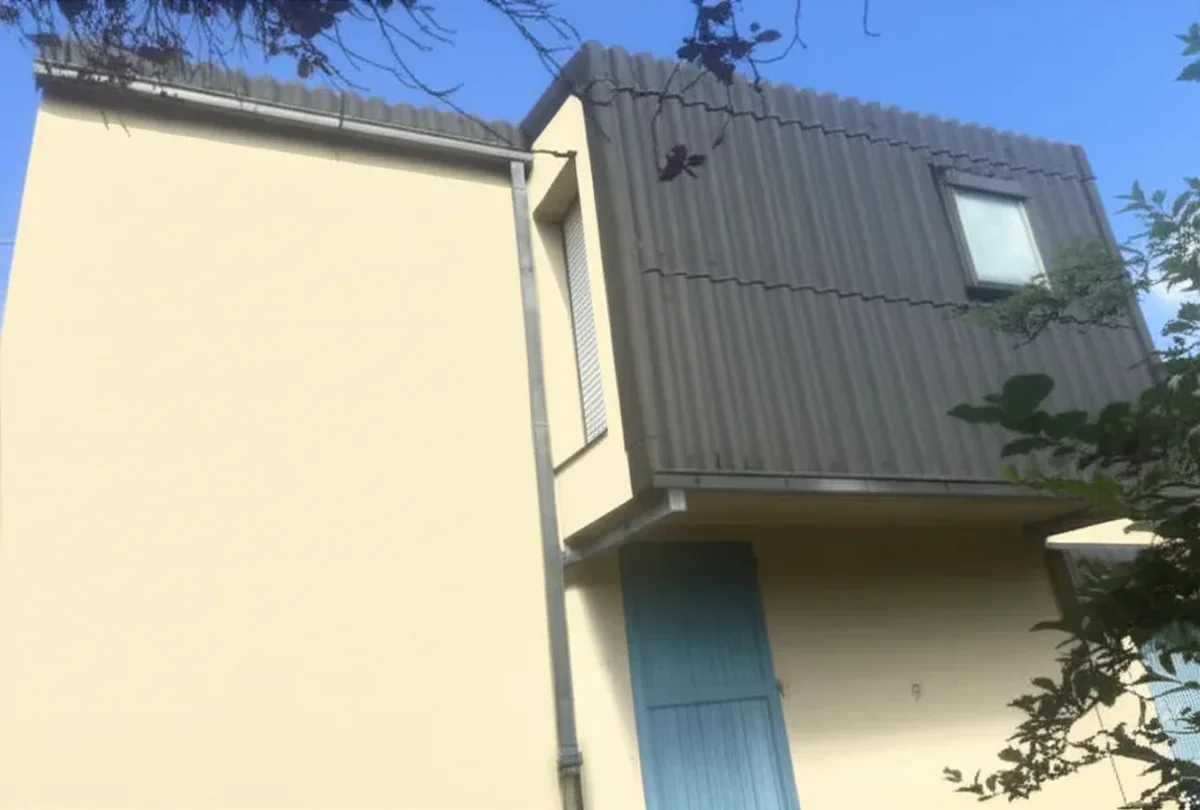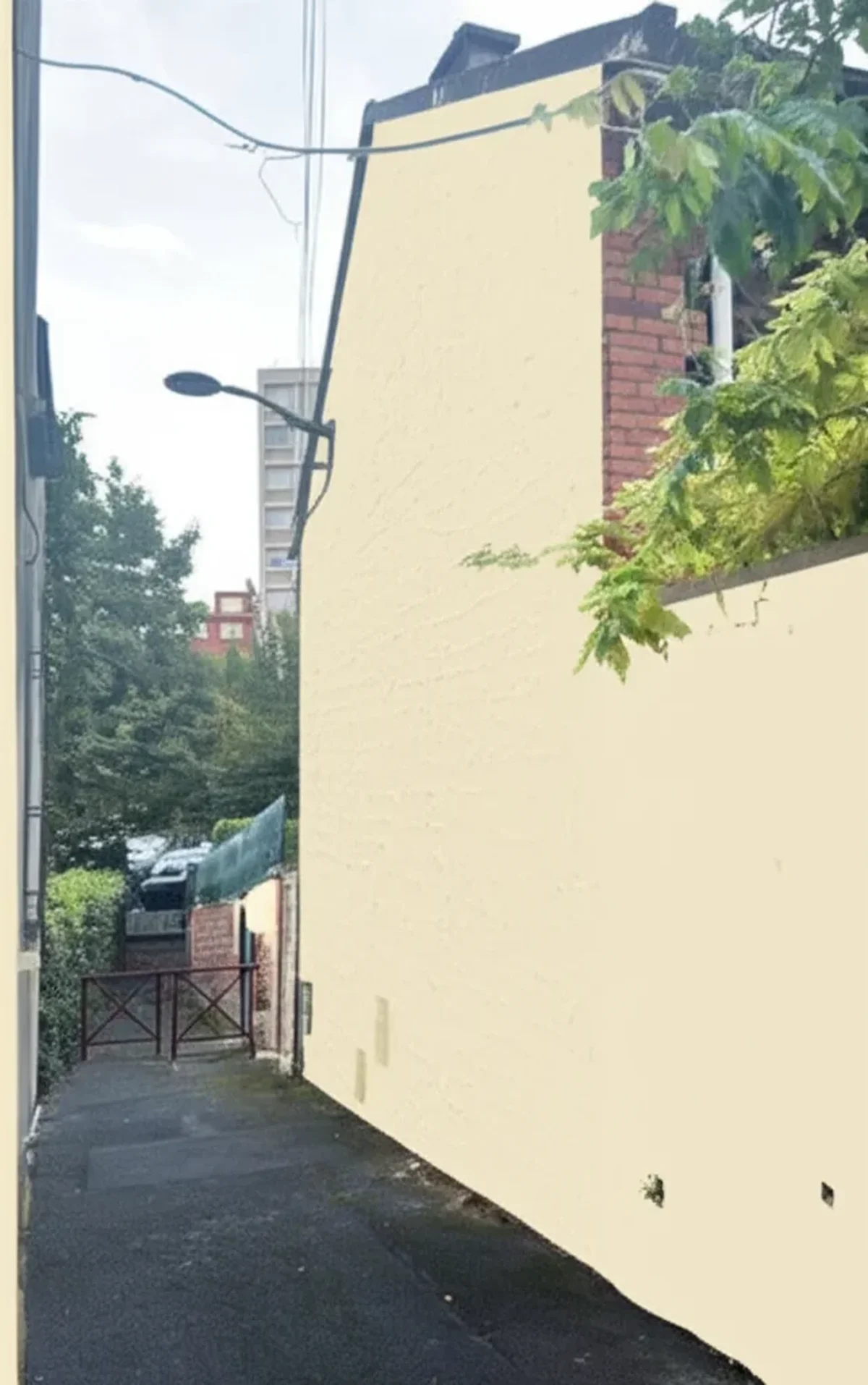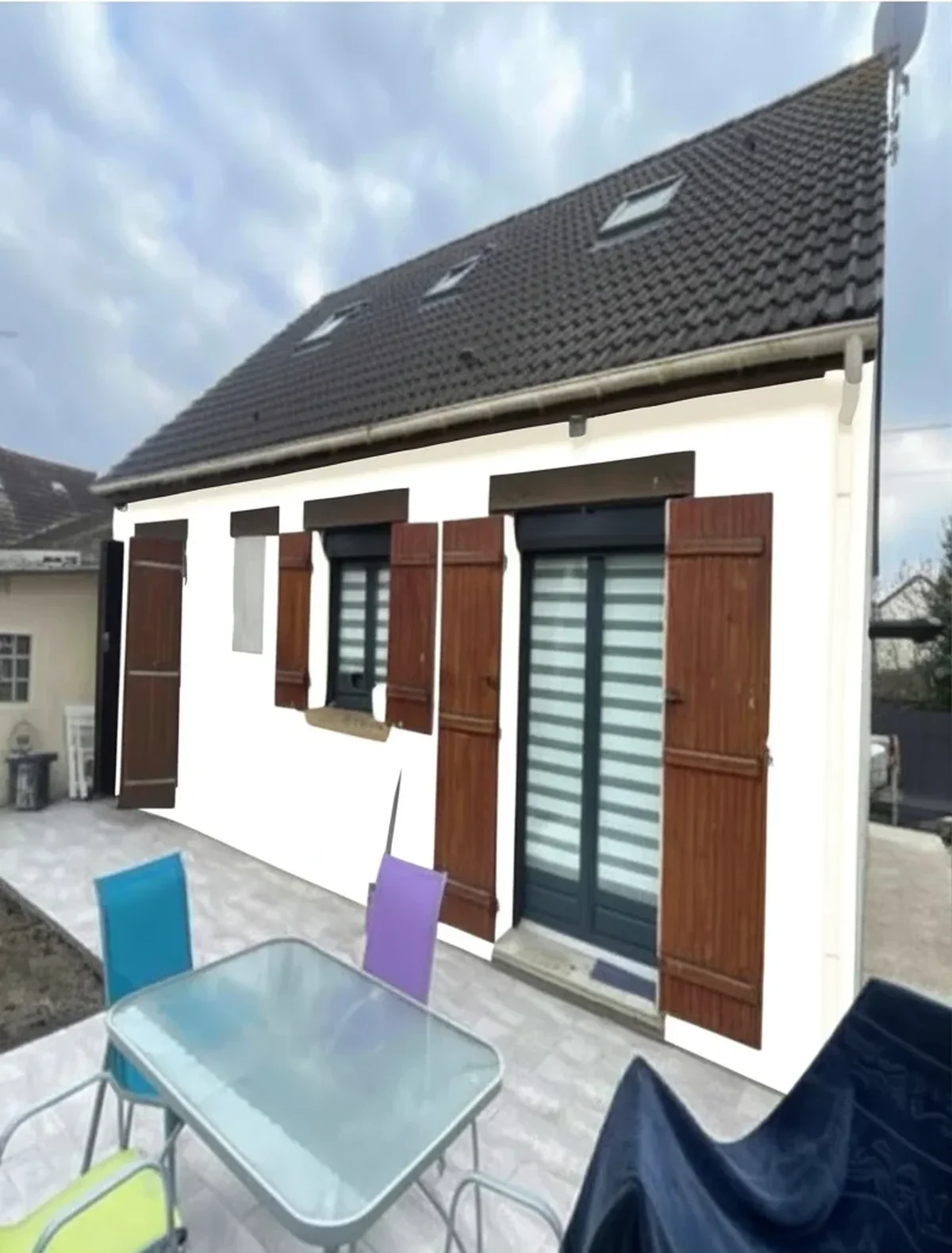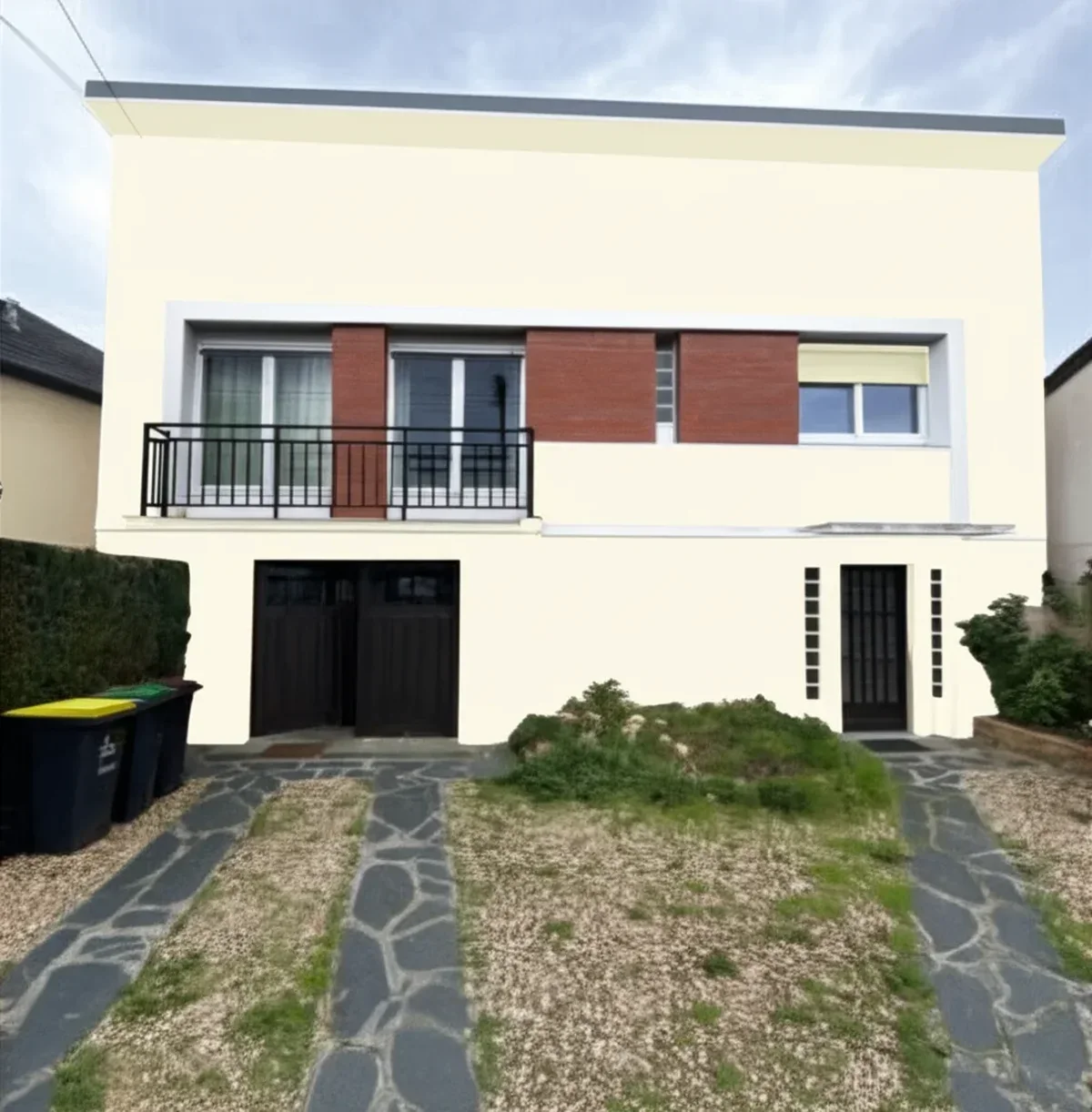
Try it on your house

By Hugo Dumoulin · Updated June 21, 2026 · 18 min read
Exterior House Painting Cost 2026: What US Homeowners Actually Pay
Painting the outside of an American house in 2026 costs between $1.50 and $4.50 per square foot of paintable surface. For a typical 2,000 to 2,500 sq ft single-family home, that translates to $3,800 to $9,200 for a professional job with mid-range paint, light prep, and a one-body, one-trim color scheme. The cheapest metros (Dallas, Indianapolis, Wisconsin towns) come in under $3,200 on a single-story ranch; the most expensive (San Francisco Victorians, Brooklyn brownstones, Beverly Hills Spanish revivals) regularly cross $20,000.
| Home size (paintable) | Low (Texas / Midwest) | Typical (Sunbelt / national) | High (Coastal CA / Northeast) |
|---|---|---|---|
| 1,000 sq ft (~800) | $1,200 | $2,500 | $5,500 |
| 2,000 sq ft (~1,500) | $2,200 | $4,800 | $11,000 |
| 3,000+ sq ft (~2,500) | $4,500 | $9,500 | $22,000+ |
Try it on your house
No photo? Try a sample
Most homeowners arrive on this page asking the same question: is my contractor quoting me a fair number? The answer depends on five variables: your state, your siding type, the condition of the existing paint, the height of your home, and the quality tier of the paint going on. This guide walks through each one with 2026 data pulled from Angi, HomeAdvisor, Thumbtack, This Old House, Bob Vila, and Bankrate, plus city-by-city pricing from 12 major metros, climate-driven cost differences, a DIY vs pro decision tree, and a free instant photo preview that lets you see colors on your actual house before you spend a dollar. By the end, you will know within $1,500 what your project should cost and how to spot a padded quote.
See your house in any color before you commit
Upload one photo, get an instant photo preview in 200+ exterior shades. No email, no signup. Most regret-paint jobs cost $1,500+ to redo, this takes 30 seconds.
Try the free visualizer →National Average Cost: $1.50 to $4.50 per Square Foot
Six national data sources, all updated for 2026, agree on a tight consensus band. Angi pegs the national average at $3,177 per project with a per-square-foot range of $1.50 to $4.00. HomeAdvisor lists the same midpoint at $3,177 with a typical homeowner spread of $1,819 to $4,551. Thumbtack reports $3,014 to $8,117 for a 2,500 sq ft home. This Old House anchors a 2,000 sq ft project at $6,600 (they include higher prep assumptions). Bob Vila and Bankrate sit slightly lower at $1,811 to $4,435 and $1,000 to $6,000 respectively, reflecting the floor for vinyl siding and single-story ranches with minimal prep.
The takeaway: roughly 80% of US homeowners spend between $3,000 and $7,500 on a professional repaint in 2026. The remaining 20% split into two extremes, sub-$2,500 jobs (small homes, vinyl, low-cost metros, off-season) and $10,000-plus jobs (large two- and three-story, heavy prep, premium paint, coastal labor markets).
| 2026 Source | Per sq ft | National avg total |
|---|---|---|
| Angi (2026) | $1.50–$4.00 | $3,177 |
| HomeAdvisor (2026) | $1.50–$4.00 | $1,819–$4,551 |
| Thumbtack (2026) | $1.21–$3.25 | $3,014–$8,117 (2,500 sq ft) |
| This Old House | $2.20–$4.40 | $6,600 (2,000 sq ft) |
| Bob Vila | $0.50–$4.00 | $1,811–$4,435 |
| Bankrate | $0.50–$3.50 | $1,000–$6,000 |
Labor accounts for 60% to 85% of the total. Materials (paint, primer, caulk, masking, consumables) make up the remaining 15% to 30%. Painter hourly rates ran $25 to $100 in 2026 nationally, with California coastal crews regularly billing $65 to $150 per hour. Paint itself ranges from $20 per gallon for builder grade to $95 per gallon for Sherwin-Williams Emerald or Benjamin Moore Aura Exterior.
[BEFORE_AFTER_IMAGE_SLOT_1]
Before and after: a 1,950 sq ft ranch repainted from beige to warm gray with white trim. Project cost: $4,800 in Charlotte, NC, six working days.
City-by-City Cost Table: 12 Major US Metros
Local labor markets drive most of the variation between metros. The cheapest cities in our 2026 dataset are the Texas Triangle (Dallas, Houston, Austin) and the Midwest, where contractor density and lower wage floors keep per-square-foot rates near $1.05 to $1.50. The most expensive are coastal California, where a combination of Title 24 VOC rules, licensed-and-bonded labor requirements, and Victorian-era prep complexity pushes rates as high as $7 to $10 per square foot.
| City | $/sq ft | Typical 2,000 sq ft | Best painting season |
|---|---|---|---|
| Houston, TX | $1.24–$3.40 | $1,580–$3,680 | Oct–Mar (cooler, drier) |
| Austin, TX | $1.30–$3.55 | $1,692–$4,070 | Mar–May, Oct–Nov |
| Dallas, TX | $1.05–$2.95 | $1,453–$3,178 | Apr–Jun, Sep–Oct |
| San Antonio, TX | $2.50–$6.50 | $3,000–$6,500 | Oct–Apr |
| Atlanta, GA | $2.20–$4.37 | $4,400–$8,740 | Mar–May, Sep–Nov |
| Charlotte, NC | $1.30–$4.00 | $2,600–$8,000 | Apr–Jun, Sep–Oct |
| Tampa, FL | $1.85–$4.75 | $3,700–$9,500 | Nov–Apr (dry season) |
| San Diego, CA | $2.50–$5.50 | $5,000–$11,000 | Sep–Nov (post marine layer) |
| Los Angeles, CA | $2.50–$7.00 | $5,000–$14,000 | Oct–May |
| Chicago, IL | $1.30–$3.50 | $2,600–$7,000 | Late May–early Oct |
| Minneapolis, MN | $2.50–$6.00 | $5,000–$12,000 | Late May–early Sep |
| Phoenix, AZ | $1.75–$3.75 | $3,500–$7,500 | Oct–Apr (avoid 100°F+) |
Three patterns emerge. First, the Texas Triangle is the bargain market: no state income tax, deep contractor pool, year-round work pushes labor near $20 to $30 per hour at the low end. Second, the Sunbelt humid metros (Tampa, Atlanta, Charlotte, San Antonio) sit in a mid-tier $1.85 to $5.50 band because hurricane and humidity exposure forces premium acrylics. Third, coastal California stands alone with crew rates 2 to 3 times the national median, regulatory overhead from CARB and Title 24, and a housing stock that includes labor-intensive Victorians and Spanish revivals.
Cost by US Region: The Five-Tier Map for 2026
If your metro is not in the 12-city table above, zoom out to the regional level. In 2026 the US splits into five broad pricing tiers, and your region sets the starting point before siding, prep, and height adjust the number. The table below shows the per-square-foot band, what a typical 2,000 sq ft (about 1,500 paintable) repaint runs, and the single factor that moves your region most. Use it to place your own ZIP inside a tier, then refine with the city table and the siding table that follows.
| US region | $/sq ft | Typical 2,000 sq ft total | vs national | Biggest cost driver |
|---|---|---|---|---|
| South Central (TX, OK, AR) | $1.05–$3.55 | $2,200–$5,200 | 15% to 25% below | Low labor floor, deep crew pool |
| Midwest (IL, OH, MI, MN, WI) | $1.30–$3.75 | $2,400–$5,600 | 10% to 20% below | Short season, freeze-thaw prep |
| Southeast / Sunbelt (GA, NC, FL, TN) | $1.85–$4.75 | $2,800–$6,800 | National baseline | Humidity and mildew-grade paint |
| Mountain / Pacific NW (CO, AZ, WA, OR) | $2.00–$5.25 | $3,400–$7,800 | 10% to 20% above | UV fade (SW) and moisture testing (NW) |
| Coastal CA / Northeast (CA, NY, MA, CT, NJ) | $2.50–$10.00 | $4,500–$11,000 | 40% to 90% above | Crew rates, regulation, old housing stock |
A practical rule for 2026: the same physical house costs roughly twice as much to repaint in San Jose as in Tulsa, and almost none of that gap is paint. It is labor rate, permitting and licensing overhead, and the age and complexity of the building stock. If you are relocating or comparing a quote against advice from a friend in another state, adjust their number by the "vs national" column before you decide your bid is high. A $7,500 quote that looks outrageous to a Texas reader is squarely mid-range in coastal Connecticut.
Want to see colors on your actual home first?
The single most expensive mistake in any paint project is picking a color from a 2-inch swatch and hating it on the wall. Get an instant photo preview in seconds, share with your contractor or HOA, then commit.
Preview my house in any color →Product tier is one of those factors, and the tier names change: Sherwin-Williams replaced Resilience with Latitude in 2021, at roughly $73 to $87 per gallon, so a quote that still names Resilience is working from an old price list.
Cost Factors: What Drives the Variance
1. Labor vs Materials
On a $5,000 project, expect $3,000 to $4,250 of labor and $750 to $2,000 of materials. Labor's share rises with home complexity (multi-story, ornate trim, peeling paint) and with metro labor rates. In rural Texas a painter charges $20 to $30 per hour; in San Francisco, $80 to $110 for a licensed, bonded, insured crew. The labor share also climbs when prep dominates the schedule, a heavily peeling 1920s home can run 70% prep, 30% paint application by hours.
2. Prep Work
Prep is the cost factor most often hidden in lowball quotes. A reasonable prep line breaks out into:
- Power washing: $150 to $650 (HomeAdvisor: $240 to $400)
- Scraping and sanding: $0.50 to $2.50 per sq ft on weathered surfaces
- Caulking and masking: $0.50 to $1.00 per sq ft
- Patching, filling, repairs: $0.50 to $1.50 per sq ft
- Spot priming: $25 to $60 per gallon plus labor
Total prep on a typical repaint adds $0.50 to $2.50 per sq ft. On heavily weathered or pre-1978 homes (lead testing and EPA RRP-certified abatement required), prep can equal or exceed the cost of the paint application itself.
3. Paint Quality Tiers
Paint quality is where the cost-per-decade math gets interesting. Three 2026 tiers:
- Builder grade ($30 to $50 per gallon): Behr Premium Plus, Glidden Premium, Valspar Reserve. Lasts 5 to 7 years.
- Mid-range ($60 to $80 per gallon): Sherwin-Williams Duration, Benjamin Moore Aura Exterior, PPG Timeless. Lasts 10 to 12 years.
- Premium ($80 to $120 per gallon): Sherwin-Williams Emerald, Benjamin Moore Regal Select Exterior, Behr Marquee Ultra. Lasts 12 to 15+ years.
A $30 paint repainted every 6 years costs more per decade than $75 paint repainted every 12 years, and you avoid the second round of labor (the expensive part). Spend up on paint, and if you are weighing Duration against Emerald, our breakdown of which Sherwin-Williams exterior paint line gives the best value shows where the extra dollars per gallon actually pay off.
4. Home Age and Lead Paint
Homes built before 1978 are presumed to contain lead paint. Federal EPA RRP rules require any contractor who disturbs more than 6 square feet of painted surface to be RRP-certified, which adds $8 to $15 per sq ft in containment, HEPA vacuuming, and disposal in the affected zones. For a typical Boston or Philadelphia row house this is $1,000 to $3,500 of overhead before a single coat goes on. Always test before scraping.
5. Accessibility, Height, Trim Complexity
A two-story home costs roughly 20% to 50% more per sq ft than a single-story ranch (HomeAdvisor, Bob Vila). Three-story Victorians or hillside homes add 100% or more because of scaffolding rental ($500 to $2,000), OSHA fall protection setup, and slower work pace at height. Multi-color trim adds 15% over single-color, three-color schemes (body + trim + door) add another $300 to $800.
Cost by Siding Material: What Your Walls Are Made Of
Two identical-sized homes can carry repaint bills $2,500 apart for one reason: siding. The material sets how much prep the crew has to do, how much paint the surface drinks, and whether you even should be painting it at all. Brick and stucco soak up far more product per coat than vinyl. Wood demands the most prep hours. Fiber cement is the contractor's favorite because it is stable and predictable. The 2026 table below pairs the typical applied cost per square foot (paint plus labor) with the prep work each surface needs so you can sanity-check a quote against your actual walls.
| Siding material | $/sq ft (applied) | Prep needs | Repaint interval |
|---|---|---|---|
| Vinyl | $1.25–$3.50 | Wash and light scuff, bonding primer, VinylSafe colors only (dark shades warp panels) | 8–12 yr |
| Fiber cement (HardiePlank) | $1.50–$4.00 | Wash, caulk joints, spot prime cut edges; factory-primed boards need minimal work | 12–15 yr |
| Wood / cedar | $2.00–$6.00 | Heaviest: scrape, sand, set nails, fill, full prime; rot and lead (pre-1978) likely | 5–8 yr |
| Stucco | $1.50–$5.00 | Patch cracks, treat efflorescence, masonry primer; texture drinks 30%+ more paint | 7–12 yr |
| Brick | $2.50–$7.00 | Repoint mortar, deep clean, masonry/mineral primer; high absorption, permanent decision | 15–20 yr |
| Engineered wood (LP SmartSide) | $1.75–$4.25 | Wash, caulk, spot prime; check for swelling at unsealed cut ends | 10–15 yr |
Two cautions worth real money. First, painting brick is a one-way door: once coated, brick needs repainting every 15 to 20 years forever because you cannot strip it cleanly, so weigh the curb-appeal gain against a permanent maintenance line before you commit. Second, on vinyl never let a painter talk you into a dark color outside a VinylSafe formula; standard dark paint absorbs heat, and the panels can buckle in a single hot summer. If you are repainting vinyl and want a deep charcoal or navy look without the warping risk, preview the VinylSafe-equivalent shade on your actual siding first so you see the real value before the panels go on.
Resale Value and ROI: What a 2026 Repaint Returns
A fresh exterior is one of the few renovations that pays for itself in two separate ways: a measurable resale bump and a faster, cleaner sale. The 2026 consensus from Zillow, the National Association of Realtors Remodeling Impact report, and HomeLight agent surveys is that exterior painting typically returns roughly half to well over its full cost, with the strongest returns on tired homes in active markets (where a pre-listing repaint can return more than it costs) and the weakest on already-pristine houses where the repaint is purely preventive.
| Scenario | Typical spend | Value added at resale | Effective ROI |
|---|---|---|---|
| Faded/dated home, hot market, pre-listing | $5,000 | $7,500–$12,500 | 150%–250% |
| Average home, on-trend neutral repaint | $5,000 | $4,000–$7,000 | 80%–140% |
| Already well-kept home (preventive) | $5,000 | $2,000–$3,500 | 40%–70% |
| Bold/polarizing color, buyer must repaint | $5,000 | -$1,000–$1,500 | negative–30% |
The pattern is blunt: color choice decides whether the repaint is an asset or a liability. Zillow's 2026 paint-color analysis continues to show neutral whites, warm greiges, and soft grays with crisp trim moving homes fastest, while saturated or unusual body colors can subtract value because the buyer mentally prices in their own repaint. First impressions also compress the timeline: agents in 2026 consistently report that a clean, current exterior is the difference between a listing photo that earns a click and one that gets scrolled past, and online curb appeal now drives the in-person showing. The takeaway for sellers is to spend on the repaint but spend conservatively on the color, and to confirm the shade reads well on the full facade before the crew starts, not after.
Cost by Home Size: 1,000 / 2,000 / 3,000+ sq ft
The single most useful sanity check before you sign a quote is comparing it to your home's footprint. Paintable surface is typically 70% to 80% of footprint for a single-story and 130% to 150% for a two-story. These three tables show 2026 ranges by national tier. Want a figure tailored to your exact square footage instead of a tier? Get an instant number from our free house painting estimate calculator before you compare contractor bids.
Small home: 1,000 sq ft (single-story ranch, ~800 sq ft paintable)
| Region | Low (builder grade) | Mid | High (premium) |
|---|---|---|---|
| Texas / Midwest | $1,200 | $2,000 | $2,800 |
| Southeast / Sunbelt | $1,500 | $2,500 | $3,500 |
| Pacific NW / Mountain | $1,800 | $2,900 | $4,000 |
| Coastal CA / Northeast | $2,400 | $3,800 | $5,500 |
Average home: 2,000 sq ft (~1,500 sq ft paintable)
| Region | Low | Mid | High |
|---|---|---|---|
| Texas / Midwest | $2,200 | $3,800 | $5,400 |
| Southeast / Sunbelt | $2,800 | $4,800 | $6,800 |
| Pacific NW / Mountain | $3,400 | $5,600 | $7,800 |
| Coastal CA / Northeast | $4,500 | $7,500 | $11,000 |
Large home: 3,000+ sq ft (~2,500 sq ft paintable, often two-story)
| Region | Low | Mid | High |
|---|---|---|---|
| Texas / Midwest | $4,500 | $7,500 | $11,000 |
| Southeast / Sunbelt | $5,500 | $9,500 | $13,500 |
| Pacific NW / Mountain | $6,800 | $11,000 | $15,500 |
| Coastal CA / Northeast | $9,000 | $15,000 | $22,000+ |
[BEFORE_AFTER_IMAGE_SLOT_2]
Before and after: a two-story 2,800 sq ft colonial in Atlanta, GA, repainted from cream to slate blue with crisp white trim. Total project: $7,200 across eight working days.
On the paint line of a quote, the cheapest Sherwin-Williams option is A-100, a 100 percent acrylic with a 15-year warranty limited to peeling and blistering; it lowers the material cost by a few hundred dollars on a typical house but needs a separate primer on bare and chalky areas. Our A-100 exterior review explains when that saving is worth taking.
DIY vs Professional: Decision Tree
DIY painting saves 60% to 75% on the line item but trades cash for time, risk, and (often) durability. Here is the math for a 2,000 sq ft home with about 1,500 sq ft of paintable exterior.
DIY total: $1,000 to $2,000 plus 60 to 120 hours
- Paint (8 to 12 gallons mid-range at $70/gal): $560 to $840
- Primer (3 to 5 gallons): $120 to $220
- Supplies (drop cloths, brushes, rollers, tape, caulk, putty knives): $200 to $400
- Equipment rental (power washer 2 days, extension ladder, optional sprayer): $150 to $500
- Time: 60 to 120 hours over 3 to 6 weekends
Pro total: $4,500 to $9,000 plus 4 to 7 working days
Includes labor, materials, equipment, insurance, EPA RRP compliance where needed, and a 1 to 5 year labor warranty.
Decision matrix
| Your situation | DIY? |
|---|---|
| Single-story ranch, sound paint, fiber cement or vinyl | Yes. Manageable solo or with one helper. |
| Two-story colonial with mild fading, no peeling | Borderline. Hire prep only, DIY top coats. |
| Pre-1978 home with chipping paint | No. EPA RRP-certified contractor required by law. |
| Three-story Victorian, ornate trim, steep yard | No. Scaffolding, skill, and time risk. |
| Stucco with cracks, EFIS issues, or efflorescence | No. Specialty repair before paint. |
| HOA community requiring approved color and contractor | No. Many CC&Rs require licensed pros. |
The break-even math: when does DIY actually pay?
The honest way to compare is to price your own time, because DIY is never free. Take the 2,000 sq ft example: pro costs about $5,000, DIY materials run roughly $1,500, so you "save" about $3,500. The catch is the 60 to 120 hours of work. Divide the savings by the hours and DIY pays you between $29 and $58 an hour, before tax, for ladder labor. Whether that is worth it depends entirely on your home and your alternative use of the time.
| Home profile | DIY hours | Effective hourly saving | Verdict |
|---|---|---|---|
| Single-story, sound vinyl/fiber cement | 50–70 | $50–$70 | DIY clearly wins |
| Single-story wood, moderate prep | 80–110 | $32–$44 | DIY if you value the time low |
| Two-story, ladder work, mild fading | 110–150 | $23–$32 | Hire prep, DIY top coats |
| Pre-1978 or peeling (RRP, redo risk) | 150+ | negative once redo priced in | Pro only |
Three break-even rules fall out of this. First, the savings curve flattens the moment a ladder enters the job: anything above one story burns hours fast and adds real fall risk, which is why the effective hourly rate collapses on two-story homes. Second, the math flips negative when failure is likely. If a DIY coat fails early on weathered wood or improperly prepped stucco, you pay for paint twice and often pay a pro to strip your work, so the "savings" become a loss. Third, partial DIY is the underrated middle path: hire the prep and the high or ladder work (the parts that cause failures and injuries), then roll the easy ground-floor body yourself. That captures most of the savings while removing most of the risk.
Before you book any quotes, lock in the color direction. A repaint that arrives in the wrong shade is the most expensive mistake on this whole page, and almost every homeowner who regrets a color did not actually look at it on their own facade first. Walk through our step-by-step framework for choosing the right exterior color before the painter shows up, then bring two or three rendered options to the site walk so the conversation moves straight to scope and price.
Before you call the first painter
Get an instant photo preview of three color options on your actual home. Walk into contractor visits with a printed render and you will negotiate from a position of strength.
Preview colors free →Climate Considerations: How US Weather Drives Your Quote
Humid Southeast (Atlanta, Charlotte, Tampa, Miami, Houston)
Mildew, blistering, and salt air are the failure modes. Contractors specify mildew-resistant 100% acrylic latex as a baseline, with elastomeric topcoats for coastal stucco within 2 miles of the ocean. Best painting window: November through April (the dry season). Avoid June through September: 80%-plus relative humidity stretches dry times 25% to 50% and risks early adhesion failure. Premium paint is essentially mandatory; the $30-per-gallon stuff will mildew within 18 months.
Dry West and Southwest (Phoenix, Las Vegas, Albuquerque, Inland CA)
UV exposure is the enemy. Dark colors lose 30% to 50% of saturation in 4 years here vs 8 years in the Midwest. Solution: fade-resistant pigments (Benjamin Moore Color Lock, Sherwin-Williams Emerald with VinylSafe) and a tendency toward lighter values. Painting season runs October through April; avoid 100°F-plus days when paint flashes off the brush before it levels.
Snow Midwest (Chicago, Minneapolis, Detroit, Cleveland)
The shortest painting window in the country: late May through early October, sometimes as little as 4 months in Minnesota. Freeze-thaw cycles crack caulk and old paint, so prep tends to be heavier. Specify flexible 100% acrylic with full re-caulking. Off-season booking (April or late October if weather cooperates) often yields 10% to 20% discounts because crews are hungry for work.
Mild West Coast (San Diego, San Francisco, Portland, Seattle)
California marine and PNW maritime climates give the longest usable season (often 8 to 10 months), but the optimal window narrows in fog-prone metros. San Francisco crews favor August through October (driest); Seattle and Portland concentrate work June through September because winter rain pushes substrate moisture above the 15% threshold most paint warranties allow. PNW painters specialize in moisture-meter testing before priming, ask for this in the quote.
Best Paint Brands by Budget (2026)
| Brand / Line | $/gal | Lifespan | Best for |
|---|---|---|---|
| Sherwin-Williams Duration | $70–$85 | 10–12 yr | All-around mid-range |
| Benjamin Moore Aura Exterior | $80–$95 | 12–15 yr | High UV, color retention |
| Behr Marquee | $50–$65 | 8–12 yr | Best DIY value (Home Depot) |
| PPG Timeless | $50–$65 | 8–12 yr | Humid Southeast |
| Valspar Duramax | $45–$58 | 7–10 yr | Midwest freeze-thaw |
| Sherwin-Williams Emerald | $95–$120 | 14–15+ yr | Premium, long-hold homes |
[BEFORE_AFTER_IMAGE_SLOT_3]
Before and after: a Phoenix stucco home repainted from faded terracotta to soft desert-sand with bronze trim. Premium Sherwin-Williams Emerald used. Project: $6,900, five working days.
Test 5 paint colors on your home in under a minute
Sample pots cost $8 each and only show one corner. An instant photo preview shows the full facade in every color you are considering, in the same lighting as your real home.
Upload a photo →12 Questions Homeowners Ask About Exterior Painting Cost
1. How much does it cost to paint a 2,000 sq ft house in 2026?
For a 2,000 sq ft home (about 1,500 sq ft paintable), expect $3,000 to $7,500 professional in 2026. Texas and Midwest cluster at $2,200 to $5,400; Sunbelt at $2,800 to $6,800; Pacific NW at $3,400 to $7,800; coastal California and the Northeast at $4,500 to $11,000.
2. What is the cheapest city to paint a house exterior?
Houston, Indianapolis, and Wisconsin towns round out the bottom of the national price ladder.
3. What is the most expensive US metro for exterior painting?
San Francisco consistently tops the list, with Victorian-prep jobs reaching $10 per sq ft and total projects of $15,000-plus. Los Angeles ($2.50 to $7.00) and Manhattan brownstones are second tier. Labor and regulation drive the entire premium.
4. How long does exterior paint last?
7 to 15 years depending on paint quality, prep, and climate. Premium 100% acrylic (Sherwin-Williams Duration, Benjamin Moore Aura) delivers 10 to 15 years; builder-grade 5 to 7 years. Hot-sun states (AZ, FL, TX) shorten lifespan; mild PNW and Midwest climates extend it.
5. Is DIY exterior painting worth it?
For a single-story home with sound siding and no lead-paint concerns, yes, you can save 60% to 75%. For two-story, three-story, pre-1978, or peeling-paint situations the savings disappear once you factor scaffolding rental, time investment, and the high probability of an early failure that forces a $5,000 redo.
6. What time of year is cheapest to paint a house?
Off-season for your region: late winter to early spring in the South (before March rush), late fall in the Midwest (October weather-permitting), early spring or late fall on the West Coast. Off-season discounts of 10% to 20% are common from crews chasing capacity.
7. How much does paint cost per gallon in 2026?
Builder grade $30 to $50, mid-range $60 to $80, premium $80 to $120. Sherwin-Williams Duration runs $70 to $85, Benjamin Moore Aura $80 to $95, Behr Marquee $50 to $65 at Home Depot. One gallon covers about 350 sq ft, plan for 8 to 12 gallons on a 2,000 sq ft home plus 3 to 5 gallons of primer.
8. How many coats of exterior paint do I need?
Standard: 1 primer coat plus 2 finish coats. Self-priming paints can sometimes go 1 coat over similarly-colored existing paint in sound condition, but most contractor warranties require 2 finish coats. Drastic color changes (white to navy) need 3 finish coats.
9. Do contractors mark up paint?
Yes, typical markup is 15% to 30%. This is not dishonest, contractors handle the time of buying, returning, and matching colors. Most pros buy at 25% to 40% off retail through supplier accounts, so buying paint yourself rarely beats their net price.
10. Should I get a permit to paint my house?
In most US jurisdictions, no permit is needed for standard exterior repainting. Exceptions: historic districts (Charleston, Boston Beacon Hill, Savannah) require a Certificate of Appropriateness; HOAs require Architectural Review approval; condos and townhomes typically require board sign-off.
11. What questions should I ask a painting contractor?
Seven essentials: (1) Are you licensed, bonded, and insured? (2) Are you EPA RRP-certified for pre-1978 homes? (3) What paint brand and line do you use? (4) How many coats are included? (5) What is the warranty (labor and product, in years)? (6) How do you handle prep (wash, scrape, caulk, prime)? (7) Can I see 3 local references?
12. How do I avoid a $1,500 color regret?
Never pick a color from a 2-inch swatch. Order a sample pot if you want to test in person, but the faster and more reliable approach is an instant photo preview of your actual home in every shade you are considering. Most contractors will let you re-confirm color on day one; bring printed renders so there is no ambiguity.
Bottom Line: Budget With Data, Not With Vibes
Five numbers to remember as you plan your 2026 exterior repaint:
- $1.50 to $4.50 per sq ft is the national consensus from Angi, HomeAdvisor, Thumbtack, This Old House, Bob Vila, and Bankrate.
- $3,800 to $9,200 is the typical 2,000 to 2,500 sq ft pro job, $1,000 to $2,000 DIY plus your weekends.
- Labor is 60% to 85% of the bill. Material savings rarely move the needle; labor and prep quality do.
- Premium paint wins on cost-per-decade. A $30/gal paint repainted in year 6 loses to a $75/gal paint repainted in year 12, every time.
- The middle bid is statistically the best value. Lowest quotes skip prep or vanish before warranty kicks in.
Preview your house in any color →
Instant photo preview. 200+ shades. No email required.
See our pricing →
Free tier available. Pro plans for contractors and architects.
Related Reading on FacadeColorizer
- Curated US exterior color combinations (white + black shutters, gray + white trim, charcoal + cedar accents, and 30 more)
- Individual exterior paint colors (Repose Gray, Agreeable Gray, Iron Ore, Naval, Alabaster)
- Free instant photo preview tool (upload your home, see the result in 30 seconds)
- Pricing for professionals (Pack Couleur, Artisan, Pro, Expert plans for painters and architects)
- Best exterior paint colors for 2026 (regional and architectural-style palettes)
- Best exterior paint for hot climates (Phoenix, Houston, Miami, inland California)
- interior house painting cost guide (per-room and whole-home 2026 pricing)
- stucco and siding cost guide (material-by-material repaint and repair costs)
- exterior house painting cost by city (deeper metro-by-metro breakdown)
Before you sign a quote, try any color on a photo of your own house with the free exterior paint visualizer and preview the color before you pay for it.
About the author. Hugo Dumoulin covers exterior renovation economics for FacadeColorizer. He has written 80+ guides on US, UK, French, and German painting markets, and reviews quotes for readers each week. Reach him at hugo@facadecolorizer.com if you want a second opinion on a contractor's number.
Frequently asked questions
How much does it cost to paint a 2,000 sq ft house in 2026?
What is the cheapest city to paint a house exterior?
What is the most expensive US metro for exterior painting?
How long does exterior paint last?
Is DIY exterior painting worth it?
What time of year is cheapest to paint a house?
How much does paint cost per gallon in 2026?
How many coats of exterior paint do I need?
Do contractors mark up paint?
Should I get a permit to paint my house?
What questions should I ask a painting contractor?
How do I avoid a $1,500 color regret?
Trademarks mentioned (Sherwin-Williams, Benjamin Moore, Behr, Caparol, Brillux, Sto, Alpina, Valspar, PPG, Glidden, Dulux, Crown Trade, Sandtex, Farrow & Ball, Johnstone's, Leyland) are property of their respective owners. FacadeColorizer is independent and not affiliated with any of them. Nominative fair use under Lanham Act §1125.