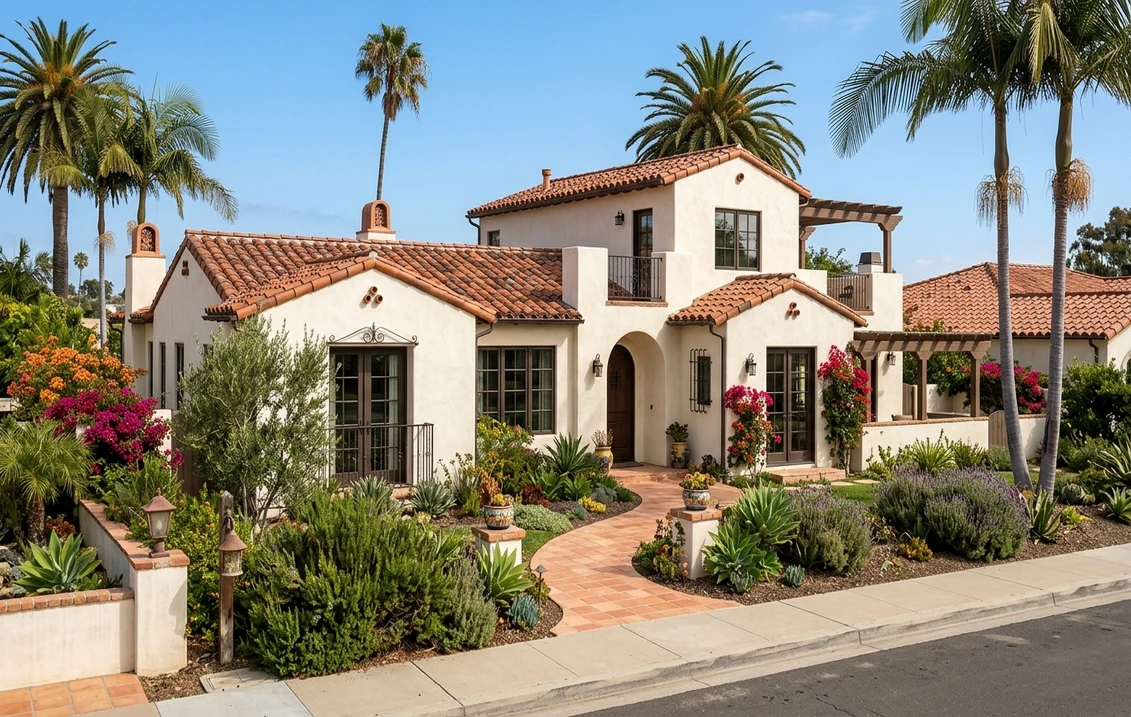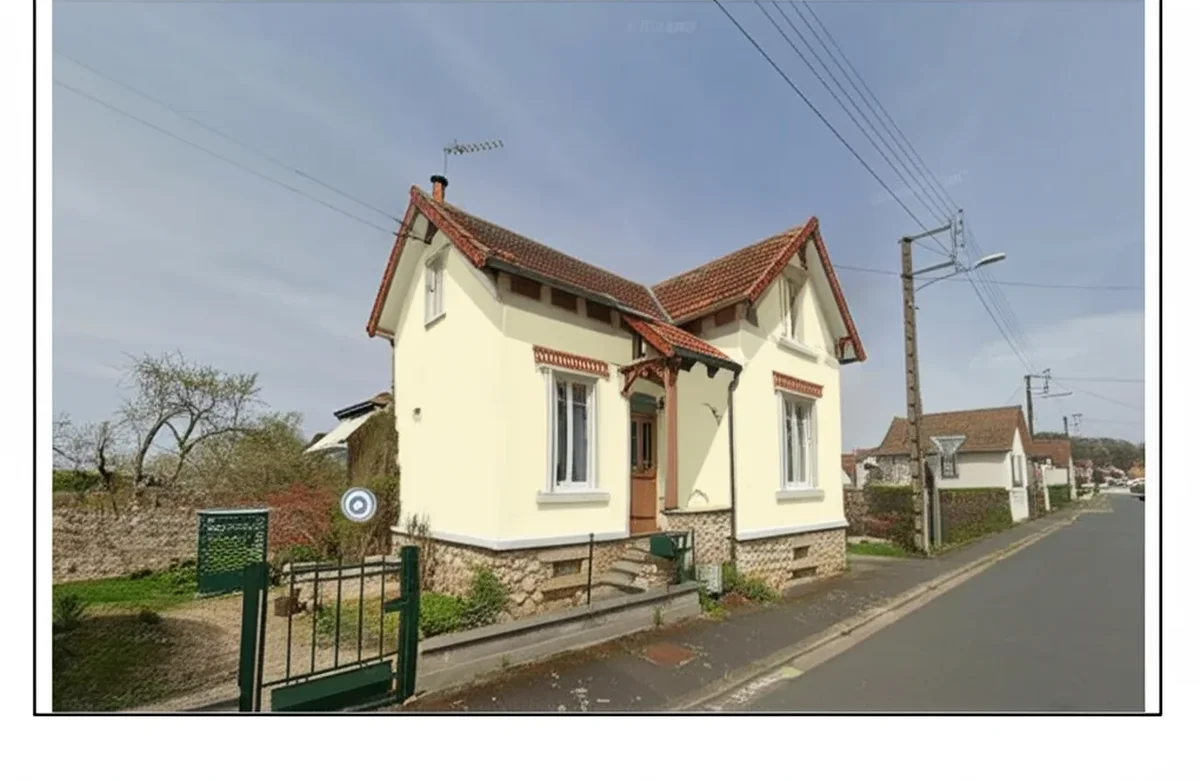
Try it on your house

Raleigh has been one of the fastest-growing metros in the country for a decade, and the Triangle area now spans everything from 1920s Downtown Raleigh bungalows to brand-new Apex subdivisions. That growth means a booming painting market, and wildly different prices depending on which zip code you live in. If you are trying to figure out what a professional exterior house painting job should cost in Raleigh, Cary, or Apex in 2026, this comparative guide breaks down the numbers neighborhood by neighborhood, explains why humidity and HOA rules matter, and shows you how to spot a fair free estimate.
Raleigh Exterior Painting Cost Comparison by Neighborhood
The Triangle is not one market, it is four distinct sub-markets. A painting contractor driving to Downtown Raleigh from their shop will price a job differently than the same crew heading to Apex or Cary. Here is what a typical 2,200 sq ft two-story home currently costs to paint in each area, based on Angi, Homeyou, and local Raleigh contractor data updated in March 2026: For citywide pricing benchmarks, see our exterior house painting cost by city guide.
| Neighborhood | Cost per sq ft | Avg total (2,200 sq ft) | HOA common? | Typical siding |
|---|---|---|---|---|
| Downtown Raleigh | $2.00–$3.50 | $5,500–$8,800 | No (historic districts instead) | Wood clapboard, cedar shake |
| North Hills | $1.80–$3.20 | $4,900–$8,200 | Sometimes | Brick + wood trim, fiber cement |
| Cary | $1.60–$3.00 | $4,500–$7,700 | Yes (most subdivisions) | Vinyl, fiber cement, brick |
| Apex | $1.50–$2.90 | $4,200–$7,400 | Yes (almost all) | Fiber cement, LP SmartSide, vinyl |
Try it on your house
No photo? Try a sample
Across the Triangle, the average Raleigh homeowner spends $3,000 to $8,500 on a full exterior repaint in 2026, with per-square-foot costs ranging from $1.50 to $3.50 depending on home size, prep work, and siding material. Before you start collecting quotes, plug your Raleigh square footage into our painting estimate calculator to see roughly where your Triangle project should land. For the broader national picture, see our 2026 exterior house painting cost guide.
Why Downtown Raleigh and North Hills Cost More
Inside-the-beltline neighborhoods like Downtown Raleigh, Oakwood, Five Points, and Hayes Barton command the highest prices per square foot for several specific reasons:
- Older homes, more prep: Many downtown homes were built between 1910 and 1960 and have multiple layers of paint, some of which may contain lead paint. EPA RRP certification is required for any home built before 1978, which adds $300–$800 to a typical job.
- Wood siding dominates: Unlike the vinyl and fiber cement of the suburbs, downtown homes are often wood clapboard or cedar shake. Wood requires full scraping, priming, caulking, and sometimes wood filler or fascia replacement.
- Historic district review: The Raleigh Historic Development Commission requires Certificates of Appropriateness for color changes in designated districts like Oakwood and Boylan Heights. That process can add two to six weeks to a project timeline.
- Parking and access: Crews working on narrow downtown streets often need permits and lose time to access issues. Expect a 10–15% premium versus suburban Apex.
- North Hills premium: North Hills homes tend to be larger, two-story builds with dormers and brick accents. Labor for two-story work adds roughly $1,500–$3,000 to a job.
A homeowner in Five Points painting a 2,200 sq ft 1935 bungalow with heavy scraping should budget $7,500–$9,000 for a quality job, while the same square footage of newer fiber cement in Apex can realistically come in closer to $5,000.
Why Cary and Apex Are Cheaper (But Have Stricter HOA Rules)
Cary and Apex grew explosively during the Triangle tech boom, and most of their housing stock is newer than 1995. That creates a different economic picture for painting:
- Fiber cement (James Hardie) rules: The majority of Cary and Apex new builds use fiber cement or LP SmartSide, both of which hold paint beautifully and require minimal prep compared to wood. A properly primed fiber cement facade can cost 20–25% less to repaint than the equivalent wood surface.
- Simple architectural shapes: Cookie-cutter two-stories with simple rooflines paint faster than Downtown Raleigh craftsman homes with dormers, bay windows, and decorative trim.
- Volume discounts: Painting contractors who specialize in Cary and Apex subdivisions often run crews through multiple homes in the same neighborhood, passing along some efficiency savings.
- But, HOAs everywhere: Nearly every subdivision in Cary and Apex has an active HOA and an Architectural Review Committee (ARC). Before you paint, you must submit your color selections and wait for approval, which typically takes 14–45 days. Painting without approval can trigger fines of $25–$100 per day plus a forced repaint.
- Approved palettes: Many Triangle HOAs limit you to a pre-approved list, often built around Sherwin-Williams HGTV Home collections or Benjamin Moore Historical palettes. That is usually less limiting than it sounds, because the lists commonly include 50–100 colors. See our HOA approved exterior colors guide.
Humidity: The Raleigh Factor Every Painter Must Plan For
Raleigh averages 70–80% relative humidity from late May through September, with afternoon thunderstorms a near-daily occurrence during summer. That creates three specific problems for exterior painting:
- Mildew: North-facing walls in shaded lots, common in older neighborhoods with mature oak trees like Hayes Barton and Budleigh, develop heavy mildew between repaints. Without a proper mildewcide wash before painting, the new finish will bloom within a single summer.
- Slow cure times: Paint manufacturers specify application humidity below 85%. At 80% humidity, recoat times double, which is why Raleigh pros typically start at 7 AM and stop by 2 PM in July and August.
- Sudden storms: A crew that spreads two coats in the morning can lose the entire day's work to a 3 PM thunderstorm if the paint has not reached its rain-resistant stage (usually 4–6 hours for premium acrylics).
The best Raleigh painting windows are April–May and September–November, when temperatures stay between 55°F and 85°F and afternoon humidity drops to 50–65%. Crews in Cary and Apex tend to book these windows out 8–12 weeks in advance, so start requesting estimates early. Our best time to paint exterior guide has more seasonal detail.
Our Verdict: Where Should You Spend (and Where to Save)
After comparing Triangle pricing and conditions across four markets, here is where a Raleigh homeowner gets the best return on an exterior painting project in 2026:
- Spend on paint quality. In Raleigh humidity, Sherwin-Williams Duration, Sherwin-Williams Emerald, Benjamin Moore Aura, and Benjamin Moore Regal Select outperform builder-grade paints by 5–10 years. The paint itself is only 15–20% of project cost, do not cut here.
- Spend on surface prep. Pressure washing, mildew treatment, scraping, caulking, and priming represent 30–40% of a good Raleigh paint job. If a free estimate does not itemize these steps, eliminate that contractor.
- Save on timing. Schedule for April or October when humidity is manageable and crews are more efficient. Avoid August bookings unless you have no choice.
- Save on visualization. Instead of buying $12 sample quarts from four different brands, preview colors digitally first. Most homeowners narrow 15 candidates to 3 using a visualizer before ever opening a can.
- Verify licensing and insurance. North Carolina requires a General Contractor license for jobs over $30,000. Most residential repaints fall below that threshold, but your contractor should still carry general liability and workers' compensation insurance, ask for certificates.
Compare 3 free quotes from Raleigh painters
Skip the cold-calling and get 3 free quotes in 60 seconds from insured, vetted Raleigh contractors who know pollen-season scheduling, Hardiplank caulk replacement, and ITB historic-district rules.
Get 3 free Raleigh painter quotesLocal Factors That Affect Paint Cost in Raleigh
Four Triangle-specific data points round out the picture for any Raleigh homeowner pricing a 2026 repaint:
- North Carolina painter wages: Per the U.S. Bureau of Labor Statistics (Occupational Employment and Wage Statistics, May 2024), construction painters in North Carolina earn a mean hourly wage of roughly $20.10, below the $24.10 U.S. average. That is a major reason Raleigh exterior repaints run 10 to 20 percent cheaper than Northeast or California metros, even with the prep premium that older Downtown homes carry.
- NOAA climate and freeze dates: Raleigh-Durham International records an average last spring freeze around April 4 and a first fall freeze around October 28 (NOAA 1991-2020 normals). That gives Raleigh a roughly 200-day painting window when overnight lows stay reliably above the 50 degrees F threshold most acrylic paints need to cure properly. April through October is the practical season.
- Common HOA types: Triangle housing stock skews toward subdivision HOAs with active Architectural Review Committees. Examples include Preston (Cary), Heritage (Wake Forest), Brier Creek (Raleigh), Bella Casa (Apex), and dozens more. Older in-the-beltline neighborhoods are typically governed by Raleigh Historic Districts (Oakwood, Boylan Heights, Capitol Square) rather than HOAs, with Certificates of Appropriateness administered by the Raleigh Historic Development Commission.
- Where Raleigh pros buy paint: The top retail networks across the Triangle are Sherwin-Williams company stores (Glenwood Ave, Capital Blvd, Cary, Apex), Benjamin Moore independent dealers like Ace Hardware locations, and big-box Home Depot and Lowe's for Behr and Valspar. PPG is sold through select pro-paint independents.
Ready to compare local crews? See our Raleigh painter directory for vetted contractors serving Wake County.
Preview your Raleigh home in a new color, free
Upload a photo to FacadeColorizer's free exterior paint visualizer and see how Sherwin-Williams, Benjamin Moore, or Behr colors look on your actual house in seconds. Perfect for narrowing down choices before submitting to your Cary or Apex ARC, or before getting bids from Downtown Raleigh pros.
Last updated: April 2026. Prices based on Angi, Homeyou, and local Raleigh contractor data for the Triangle area.
Frequently asked questions
How much does exterior house painting cost in Raleigh, NC in 2026?
Do I need HOA approval to paint my house in Cary or Apex?
When is the best time to paint a house exterior in Raleigh?
Why is exterior painting cheaper in Apex than Downtown Raleigh?
Do painting contractors in Raleigh need a license?
What paint holds up best in Raleigh humidity?
Trademarks mentioned (Sherwin-Williams, Benjamin Moore, Behr, Caparol, Brillux, Sto, Alpina, Valspar, PPG, Glidden, Dulux, Crown Trade, Sandtex, Farrow & Ball, Johnstone's, Leyland) are property of their respective owners. FacadeColorizer is independent and not affiliated with any of them. Nominative fair use under Lanham Act §1125.