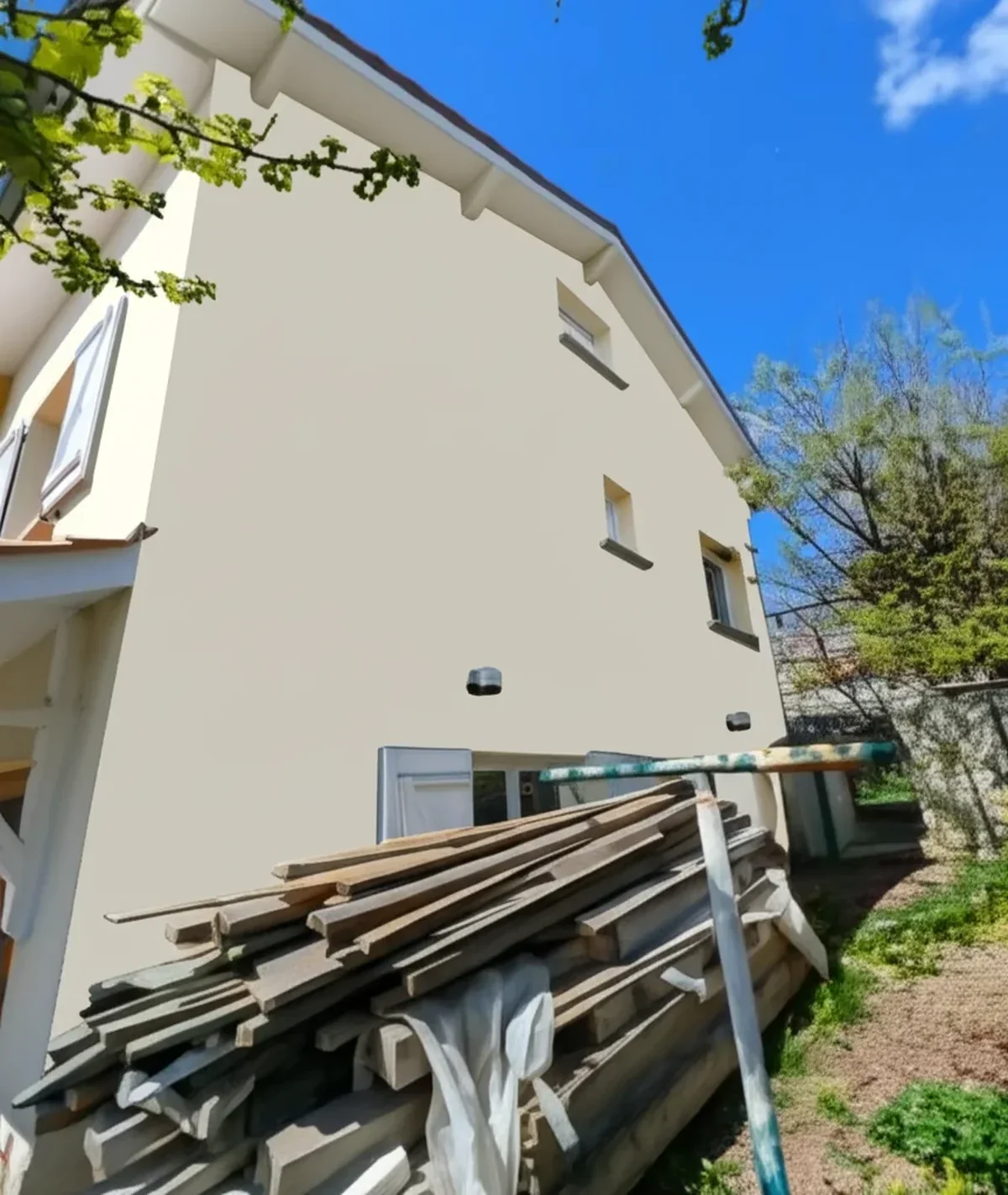
Try it on your house

Planning an exterior house painting project in Philadelphia for 2026? Philly homeowners pay between $3.80 and $8.50 per square foot, or roughly $6,000–$19,000 for a standard 1,800–2,400 sq ft home. Mid-Atlantic winters, century-old brick row houses in Society Hill and Old City, Delaware River salt spray, and Philadelphia Historical Commission oversight all shape the price. This guide walks every Philly-specific factor, by neighborhood, season, paint brand, permit, and contractor, so you can request a free estimate with confidence.
Visualize your Philadelphia home in any color, before you paint For citywide pricing benchmarks, see our exterior house painting cost by city guide.
Try our free AI paint visualizer and preview Sherwin-Williams Emerald, Benjamin Moore Aura, or historic Society Hill palettes on your actual facade before your painting contractor shows up with the first gallon.
Philadelphia Exterior Painting Cost Per Square Foot in 2026
The average cost per square foot for exterior house painting across the Philadelphia metro in 2026 ranges from $3.80 to $8.50, depending on surface preparation, paint grade, number of stories, and siding material. Entry-level bids on simple vinyl-sided twins in the Northeast and outer suburbs land near $3.80/sq ft, while premium Federal and Victorian row houses with extensive brick coating, mortar repair, lead abatement, and historic commission review push past $8.50/sq ft. For a typical 2,000 sq ft home in Philadelphia, expect to budget $7,600–$17,000 for a quality two-coat system. If you would rather start from your own measurements, our Philadelphia painting estimate calculator turns wall square footage into a working budget in under a minute.
| Home Size (sq ft) | Low ($3.80/sq ft) | High ($8.50/sq ft) | Average |
|---|---|---|---|
| 1,500 sq ft | $5,700 | $12,750 | $9,225 |
| 2,000 sq ft | $7,600 | $17,000 | $12,300 |
| 2,500 sq ft | $9,500 | $21,250 | $15,375 |
| 3,000+ sq ft | $11,400 | $25,500+ | $18,450 |
Try it on your house
No photo? Try a sample
Philadelphia Neighborhood Price Table: Where You Live Matters
Costs swing widely across the Philadelphia metro based on home age, architectural style, access, historic district status, and contractor demand. Here is what Philly homeowners are paying in 2026 by neighborhood for a full exterior repaint on a typical home:
| Philadelphia Neighborhood | Typical Home Style | Average 2026 Cost |
|---|---|---|
| Society Hill | Federal, Georgian brick row houses | $13,000–$26,000+ |
| Old City | Federal, colonial brick row houses | $12,500–$25,000+ |
| Rittenhouse Square | Victorian brownstone, Beaux-Arts | $14,000–$28,000+ |
| Queen Village | Federal, trinity row house, Victorian | $10,000–$19,000 |
| Fishtown | Row house, Victorian, two-story brick | $8,500–$15,500 |
| Northern Liberties | Row house, loft conversion, Victorian | $9,000–$16,500 |
| West Philly (University City) | Victorian twin, Queen Anne, stone | $9,500–$18,000 |
| Chestnut Hill | Wissahickon schist stone, Tudor | $11,000–$22,000 |
| South Philly | Row house, two-story brick | $7,000–$13,000 |
| Manayunk / Roxborough | Row house, stone twin, Victorian | $8,000–$14,500 |
| Northeast Philly | Mid-century twin, Cape Cod, ranch | $6,500–$12,000 |
Historic districts such as Society Hill, Old City, and Rittenhouse Square carry a 25–40% premium due to Federal trim, 18th-century brick, and Philadelphia Historical Commission palettes that require hand-selected historical shades. Waterfront homes near the Delaware River in Pennsport, Fishtown, and Port Richmond add cost for salt-spray-resistant products.
Historic Row Houses & the Philadelphia Historical Commission
Philadelphia has a denser inventory of pre-1830 buildings than almost any US city, and the Philadelphia Historical Commission (PHC) enforces the design standards that protect it. If your rowhouse sits on the Philadelphia Register or inside a certified historic district, any exterior color change, brick coating decision, or trim repaint visible from a public right-of-way must pass PHC review:
- Society Hill Historic District: Covers most blocks south of Walnut between Front and 8th. PHC requires a Historic Preservation Application for any visible exterior work, including door and shutter colors. Approved palettes lean on Federal-era muted reds, ivories, deep greens, and historically accurate blacks. Plan 4–8 weeks plus possible Architectural Committee hearing.
- Old City Historic District: Protects Federal row houses around Elfreth's Alley (oldest continuously inhabited residential street in the US). Painting historic brick never previously painted is typically denied without exception.
- Rittenhouse-Fitler Historic District: Governs Victorian brownstone and Beaux-Arts facades. Sandstone and limestone trim cannot be painted over.
- Diamond Street, Girard Estate, Parkside, and Spring Garden: Smaller certified districts with their own committee guidance. Always check the PHC's online GIS map before signing any contract.
- Federal and state tax credits: Pennsylvania's Historic Preservation Tax Credit and the Federal Historic Tax Credit require adherence to the Secretary of the Interior's Standards. Non-approved colors can void a tax credit retroactively.
PHC applications are free but slow. Submit a Historic Preservation Application with paint chips, specs, and a site photo. Experienced Philly painting contractors handle the paperwork, expect $400–$1,500 added to the bid. Skipping the process risks a Stop Work Order and forced repaint at your own expense.
Worth knowing that the free application is a genuine Philadelphia advantage rather than the norm. San Francisco runs the same kind of review, a Certificate of Appropriateness for any street-visible color change inside its 11 historic districts, but charges $400 to $1,200 in fees for it and takes 4 to 10 weeks, on a base rate of $4.50 to $10.00 per square foot against Philadelphia's $3.80 to $8.50. Our guide to exterior painting cost in San Francisco sets out that permit stack in full, which is a useful yardstick when you are judging whether a PHC-experienced contractor's handling fee is reasonable.
Brick Coating in Philadelphia: To Paint or Not to Paint
More than 70% of Philly's inner-city rowhouse stock is load-bearing brick, and choosing to paint, coat, or leave it bare is the single biggest cost and durability call a homeowner makes. Get it wrong and trapped moisture can rot the wythe and cost $15,000+ in repointing. Get it right and you lock in 15–20 years of protection.
- Never paint sound historic brick: Original 18th- and 19th-century brick fired before 1870 is soft and porous. Sealing it with non-breathable acrylic traps moisture and causes spalling within five winters. Society Hill and Old City PHC rules reflect this.
- Mineral silicate coatings ($7–$11/sq ft): Gold standard for repainting previously painted brick. Keim Royalan or ProSoCo Klere-Seal chemically bond to masonry, stay vapor-permeable, and last 20+ years.
- Elastomeric coatings ($5–$9/sq ft): Bridges hairline cracks and waterproofs the wall, but seals in moisture. Only appropriate for modern, hard-fired brick built after 1960, many Northeast Philly twins and Northern Liberties rebuilds.
- 100% acrylic masonry paint ($4–$7/sq ft): Mid-tier option for already painted Fishtown and South Philly rowhouses, including mortar repair.
- Tuckpointing before coating ($2,000–$6,000): Loose or cracked mortar joints must be cut back and repointed before any coating, labor-intensive on Federal row houses.
A reputable Philadelphia painting contractor will always run a moisture meter reading on your brick (acceptable range 4–12% MC) and a simple water absorption test before recommending a product. Walk away from any bid that does not include a brick assessment.
Philly Mid-Atlantic Climate: Why Prep Costs More
Philadelphia sits in a punishing transitional climate zone between New England's harsh freeze-thaw and the humid Southeast. Four overlapping stressors dictate both material choice and total project cost across the Delaware Valley:
- Freeze-thaw cycles: Philly averages 22 inches of snow and 50–70 freeze-thaw cycles per year, popping paint films from historic brick and wood trim. Proper prep includes deep scraping, wood filler, tuckpointing, and flexible caulking, adding $1,500–$4,500 versus warm-climate cities.
- Delaware River salt spray: Homes within a half-mile of the river in Port Richmond, Fishtown, Pennsport, Queen Village, and the Navy Yard catch salt aerosol that corrodes nails and fasteners. Salt-tolerant 100% acrylic formulas are essential.
- Pre-1978 housing stock: Over 70% of housing inside I-76 predates 1940, and 90%+ predates the 1978 federal lead-paint ban. Lead testing and EPA RRP compliance add $800–$2,500 to inner-city projects.
- Humid summers: July-August humidity exceeds 75%, slowing cure times and feeding mildew on north-facing walls. Premium mildew resistant paint is non-negotiable, especially in tree-shaded West Philly and Chestnut Hill.
Most Philly homes need repainting every 6–9 years on wood trim and siding, 10–15 years on properly coated brick, and 8–12 years on vinyl. Premium paint and thorough surface preparation pay for themselves within one cycle.
Best Paint Brands for Philadelphia Exteriors
Not every exterior paint survives Philly's freeze-thaw winters and river salt spray. These are the top products Delaware Valley painting contractors recommend in 2026:
- Sherwin-Williams Emerald Exterior ($85–$100/gal): Gold standard for Philly wood siding and trim. Self-priming 100% acrylic paint with mildew resistant technology and freeze-thaw flexibility that resists cracking through dozens of Mid-Atlantic winters.
- Benjamin Moore Aura Exterior ($95–$115/gal): Color Lock technology resists fading on sun-facing walls and delivers a lifetime limited warranty. Favored on historic homes in Society Hill, Old City, and Rittenhouse for PHC-approved palette accuracy.
- Sherwin-Williams Loxon XP ($75–$90/gal): Go-to elastomeric masonry coating for Fishtown and South Philly brick row houses. Bridges hairline mortar cracks while letting vapor escape.
- Keim Royalan mineral silicate ($120–$150/gal): Preservation-grade pick for historic brick and stone in Chestnut Hill and Society Hill. Breathable, UV-stable, rated 25+ years.
- Sherwin-Williams Duration Exterior: Upgrade pick for riverfront properties in Port Richmond, Pennsport, and the Navy Yard thanks to PermaLast salt-tolerant technology.
For pre-1978 Philly homes, essentially all of Center City, South Philly, Fishtown, and West Philadelphia, lead testing and stain-blocking primer are mandatory. Confirm your contractor uses the manufacturer's two-coat system to keep the warranty valid.
Best Painting Seasons in Philadelphia: May Through October
Philadelphia's realistic painting window runs May through October. Outside these months, freezing temperatures, snow, and short daylight hours make it impossible to apply exterior coatings without compromising the warranty.
- May: Daytime highs in the 70s, but spring rain and pollen slow prep. Top-rated contractors book out by January.
- June: Reliable warm, dry stretches begin. Ideal for Society Hill and Rittenhouse color-critical projects.
- July–August: Warmest, most productive months. Watch for afternoon thunderstorms and 75%+ humidity that extend cure times.
- September: The Delaware Valley's prime painting season, warm 75-degree days, cool nights above 55°F, low humidity. Book 8–12 weeks ahead.
- October: Good through mid-month. After that, overnight temperatures drop below 45°F, the cut-off for most premium acrylic exterior paints.
Avoid scheduling between November and April. Paint applied below 35°F fails to form a proper film, leading to peeling, cracking, and adhesion loss by the following summer. Modern "low-temp" paints (rated to 35°F) exist, but no reputable Philly contractor will back a winter application with a meaningful workmanship guarantee.
Permit Requirements: L&I, PHC & Lead Law
Straightforward repainting on a non-historic Philly home does not require a Department of Licenses and Inspections (L&I) building permit. However, approvals are required when: the property sits inside a certified historic district (Society Hill, Old City, Rittenhouse-Fitler, Diamond Street, Girard Estate, Parkside, Spring Garden), needs a PHC Historic Preservation Application plus often a separate L&I Alteration Permit; any siding replacement, fascia repair, or stucco job alters the structure, needs an L&I building permit; lead abatement on pre-1978 homes requires an EPA RRP-certified firm under Pennsylvania's Lead Certification Act; and sidewalk scaffolding needs a Streets Department right-of-way permit. A licensed, bonded, and insured Philly contractor (registered with L&I, carrying a Commercial Activity License) should know every L&I, PHC, and state Lead Law rule cold.
How to Choose a Top-Rated Philadelphia Painting Contractor
Philadelphia requires contractors to hold an active L&I Contractor License and a Commercial Activity License, but paperwork alone does not guarantee quality. Here is what separates top-rated Philly contractors from fly-by-night crews:
- Credentials: Active Philadelphia Contractor License, PA HIC registration, $1M+ general liability, workers' comp, and EPA RRP certification for pre-1978 homes.
- Local references: Three Philly addresses with projects 4+ years old. Freeze-thaw and river salt expose shortcuts fast.
- Historic commission experience: In Society Hill, Old City, or Rittenhouse-Fitler, hire only contractors who have navigated the PHC within 24 months.
- Brick assessment: A qualified Philly painter tests moisture, runs a water-absorption test, and specifies mineral silicate, elastomeric, or 100% acrylic, never one-size-fits-all.
- Detailed scope: Bid lists lead testing, scraping, tuckpointing, caulking, stain-blocking primer, paint brand/line, number of coats, and a 3-year workmanship guarantee.
- Reviews and two-coat guarantee: 4.7+ stars across 50+ Google, BBB, or Angi reviews. A two-coat system is essential against Mid-Atlantic freeze-thaw.
Comparing costs across other US metros? See our Boston 2026 exterior painting cost guide, the Chicago exterior painting cost guide, and our national 2026 exterior house painting cost guide for context.
Lock in your Philadelphia color scheme before the first bid
Upload a photo of your home and try our free AI paint visualizer to preview Sherwin-Williams Emerald, Benjamin Moore Aura, or Society Hill historic shades under Philly's soft autumn light. It is the fastest way to nail your color consultation, and your PHC application, before requesting a free estimate from a local painting contractor.
Frequently asked questions
How much does exterior house painting cost in Philadelphia in 2026?
Do I need a permit to paint my Philadelphia home exterior?
Should I paint the brick on my Philadelphia row house?
What are the best months to paint a house exterior in Philadelphia, Pennsylvania?
What is the best exterior paint for Philadelphia weather?
Trademarks mentioned (Sherwin-Williams, Benjamin Moore, Behr, Caparol, Brillux, Sto, Alpina, Valspar, PPG, Glidden, Dulux, Crown Trade, Sandtex, Farrow & Ball, Johnstone's, Leyland) are property of their respective owners. FacadeColorizer is independent and not affiliated with any of them. Nominative fair use under Lanham Act §1125.