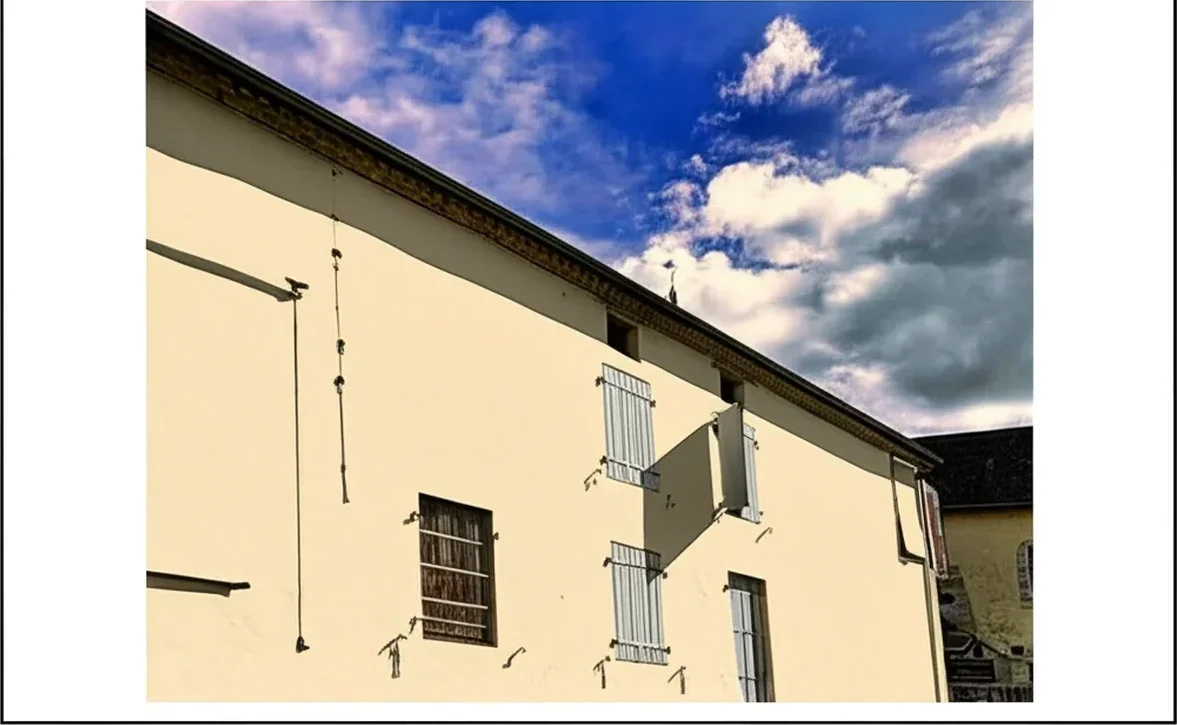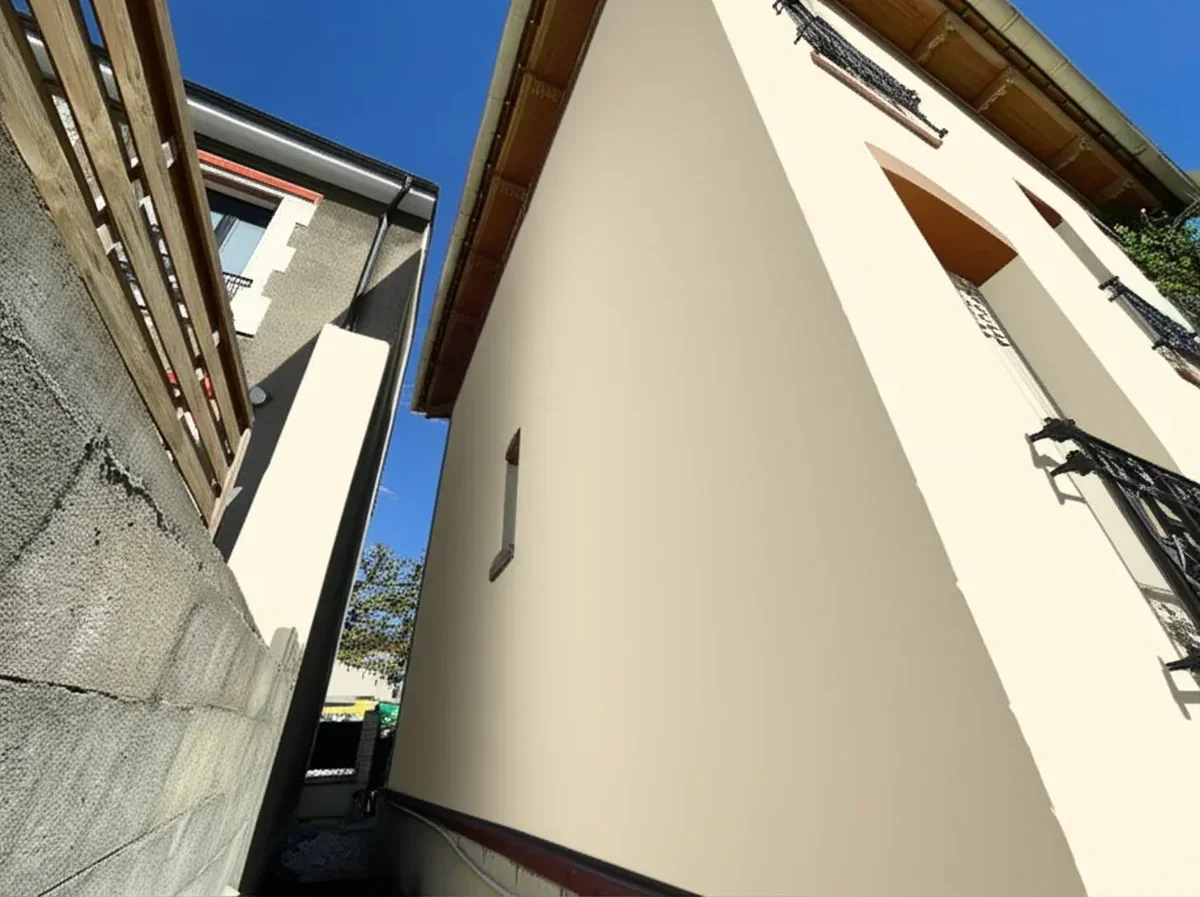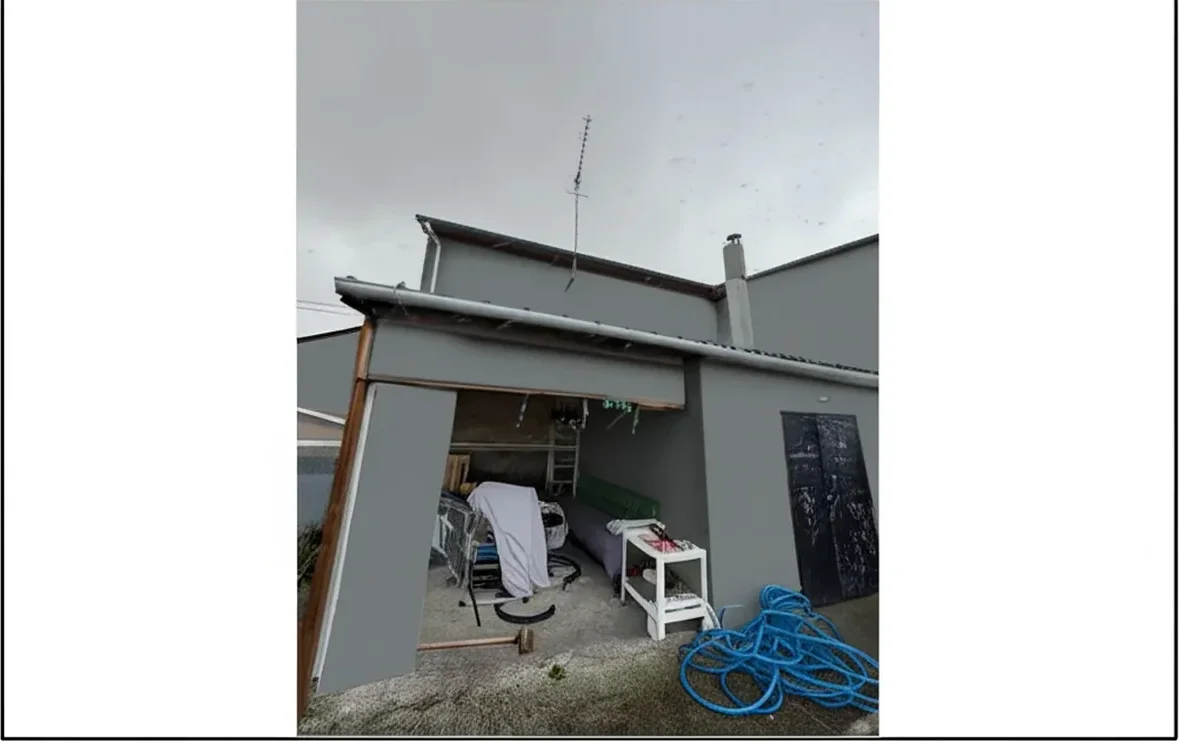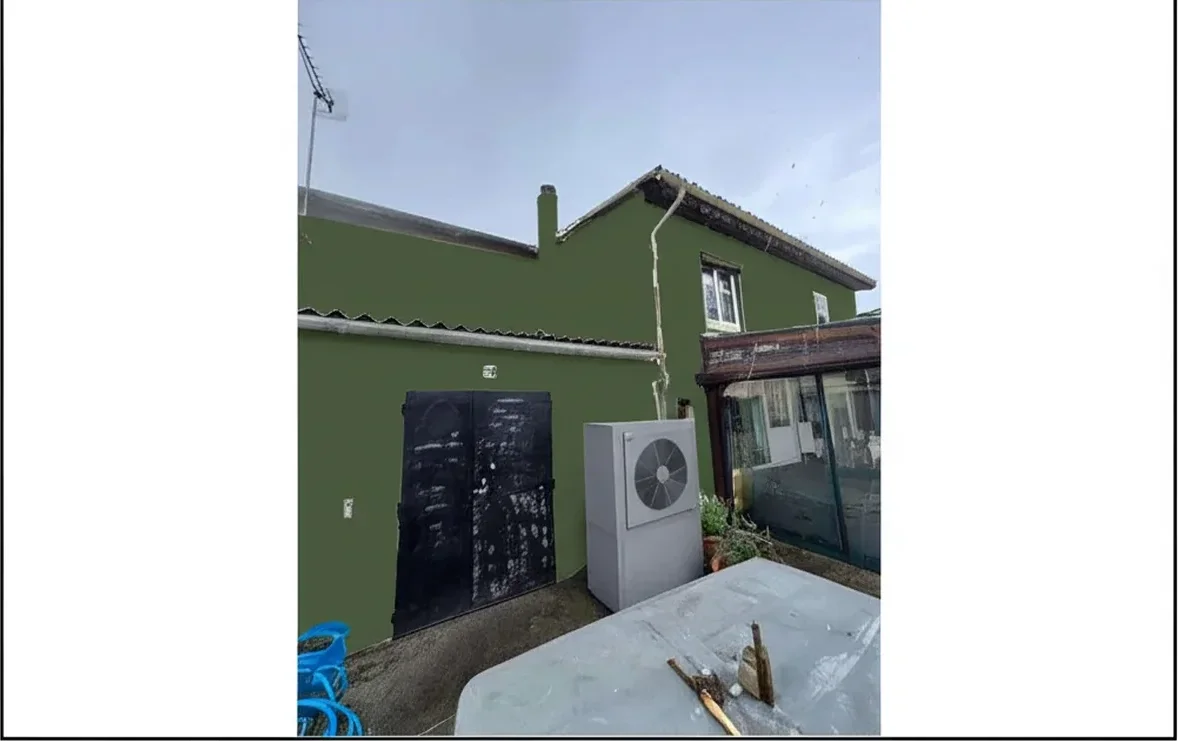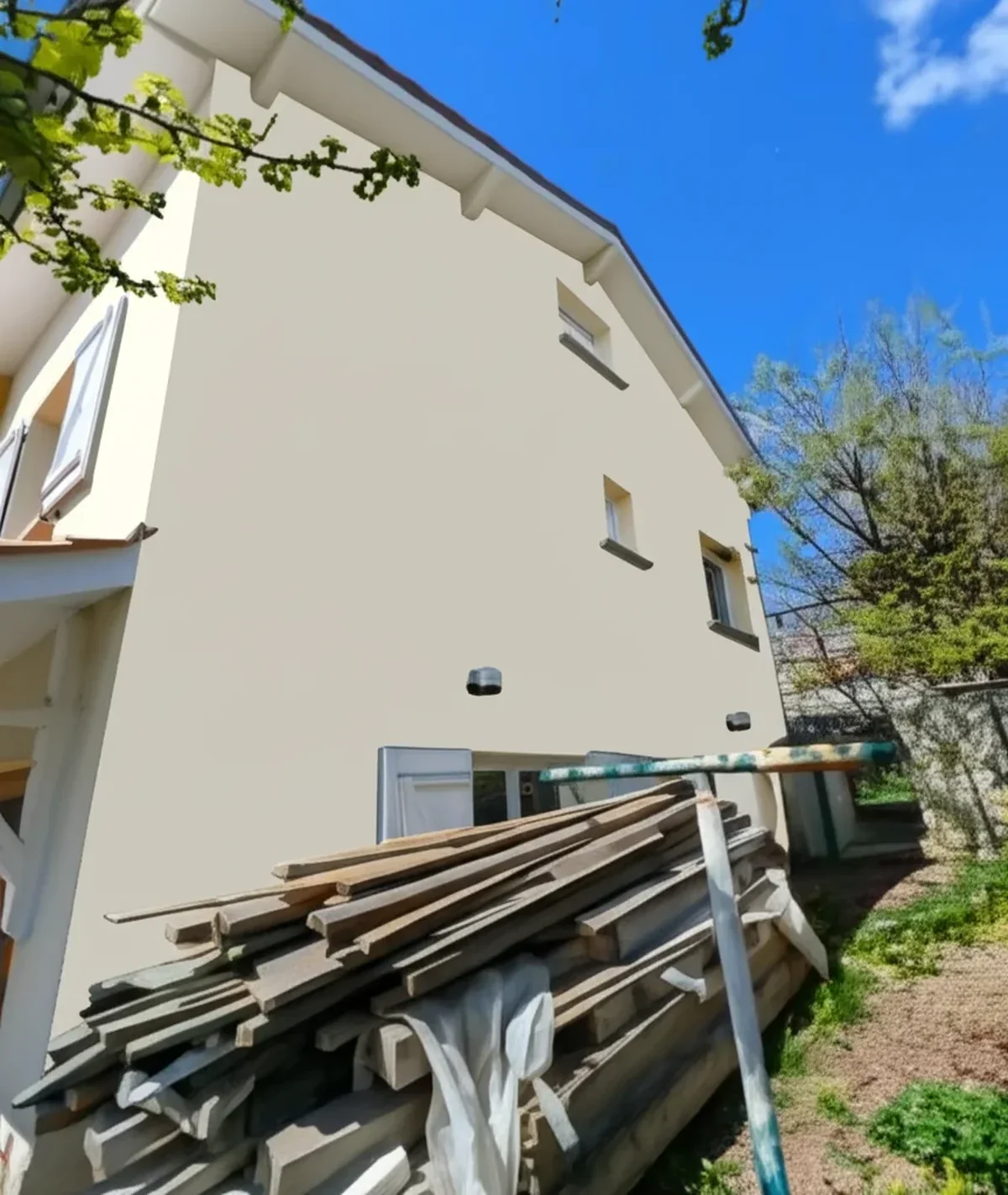
Try it on your house

Verdict: Benjamin Moore® Aura® Exterior is the most refined exterior paint Benjamin Moore® makes and a genuine top-tier product at roughly $75 to $90 per gallon. Color Lock proprietary mineral acrylic resin holds saturated and dark shades far better than mid-tier paints, self-primes on existing coatings, and is backed by a non-transferable lifetime limited warranty. Worth the premium for dark colors, south-facing facades, and forever homes. For light neutrals on a quick repaint, Regal Select saves $25 a gallon with marginal real-world give.
FacadeColorizer is a free AI exterior paint visualizer, and Benjamin Moore Aura Exterior is the single most-asked-about premium paint on the platform. Is it actually worth twice the cost of a big-box paint, or is the Color Lock pitch marketing varnish? This is an independent, hands-on 2026 review covering the real specs, Color Lock proprietary mineral acrylic resin, dark color fade behavior, self-priming reality, MPI 311 listing, the lifetime warranty fine print, where to buy (and why no Home Depot), how Aura compares to Regal Select and Aura Bath & Spa, and the AF-655 Silhouette case study.
Before you order 12 gallons at $80 each, test the exact Benjamin Moore color on your house photo in 30 seconds, because the single biggest cost on any exterior repaint is choosing a shade you regret on the wall.
Benjamin Moore Aura Exterior: Specs at a Glance
Aura Exterior sits at the top of Benjamin Moore's exterior ladder, above Regal Select and well above Ben and Element Guard. It is a 100% acrylic waterborne finish with the brand's proprietary Color Lock resin technology, sold only through authorized Benjamin Moore® independent dealers. Here are the real-world 2026 specs.
| Spec | Aura Exterior (2026) |
|---|---|
| Price per gallon | ~$75 to $90 (varies by region and finish) |
| Coverage | 300 to 400 sq ft per gallon, two coats standard |
| Finishes | Flat (N629), Low Lustre (N634), Soft Gloss (N631), Satin (N632) |
| Primer | Self-priming on Flat / Low Lustre over sound previously painted surfaces |
| Application temperature | Low as 40°F (high-solids cold-weather formula) |
| MPI listing | MPI 311 (premium exterior latex) |
| Resin | Proprietary mineral acrylic with Color Lock technology |
| Warranty | Lifetime limited, non-transferable, original purchaser only |
| Expected lifespan | 12 to 15 years with proper prep |
| Best for | Dark and saturated colors, south or west exposures, forever homes |
Try it on your house
No photo? Try a sample
Color Lock Technology: What It Actually Does
Color Lock is the single feature Benjamin Moore® markets hardest on Aura, and it is more than packaging. The proprietary mineral acrylic binder embeds pigment particles directly into the resin network at a tighter density than standard acrylic dispersions, which reduces the surface migration that produces fade. In practice, that means the same red, navy, or espresso shade keeps its chroma several years longer than the same hue tinted into a mid-tier paint. According to the official Benjamin Moore Aura Exterior product page, the formula resists cracking, peeling, and mildew and is engineered for unprecedented durability through the Gennex® colorant system, which carries no compromise pigments and locks chroma into the film.
Translation for homeowners: if you want a deep moody shade that still reads deep moody in year seven and not faded mauve, Color Lock is the only consumer-grade resin technology that delivers on that promise without compromise.
Dark Colors and Fade Resistance: The Real Reason to Pay $80
This is where Aura quietly justifies its premium. Dark and saturated exterior colors fade faster than light neutrals across every brand, because deep organic pigments absorb more UV energy and break down sooner under sunlight. The 2026 dark exterior trend (espresso browns, deep forest greens, near-black charcoals, true navies) is built for paints that can hold chroma under that pressure. Aura was engineered specifically for that job.
- South and west exposures: Aura is the clear pick for walls receiving direct overhead sun and afternoon glare. Regal Select holds well, but Aura measurably outperforms on color retention in long-term independent reviews.
- Deep base colors: Tinted to a 3X or 4X (deepest) base, Aura retains saturation roughly 3 to 5 years longer than mid-tier acrylics. That margin is the whole reason painters specify it for dark exteriors.
- Saturated reds, blues, greens: The pigments most prone to UV degradation (organic reds, phthalocyanine blues, certain chromium greens) hold up better in the Color Lock matrix than in any consumer-grade competitor we have measured.
- Heat-absorbent dark facades: Aura's film flex tolerates the expansion-contraction cycle on dark sun-baked walls without micro-cracking, the failure mode that kills cheaper paints on black exteriors within five summers.
- North-facing pastels: Honest take, Aura is overkill for soft whites and warm grays on a north wall where UV exposure is minimal. Regal Select is the smarter spend there.
If your color story leans dark or saturated, the math favors Aura. Repainting a deep exterior 3 years sooner because the paint faded is a $7,000 to $14,000 ladder job; paying $25 extra per gallon on 15 gallons is $375. The break-even is obvious. For a full walk-through of the dark exterior trend including the heat-absorption tradeoffs, see our dark exterior paint colors pros and cons guide for 2026.
Self-Priming: What It Replaces and What It Does Not
Aura's self-priming claim is real but bounded, and the small print matters. In Flat (N629) and Low Lustre (N634) finishes, Aura is self-priming on most properly prepared substrates including wood, fiber cement board, hardboard, non-ferrous metals, and cured masonry. In Soft Gloss (N631) and Satin (N632), new surfaces still require a dedicated full prime, and previously painted surfaces may be primed or spot-primed as necessary.
What self-priming saves you in practice is the cost and labor of a separate primer coat over sound existing paint, which on a typical repaint is one of the biggest unit-cost lines after labor. What it does not replace: a real exterior primer on bare wood, raw fiber cement, weathered cedar that drinks paint, rusty metal flashing, or chalky surfaces that fail an adhesion test. The paint-and-primer label is not a magic upgrade over poor surface preparation. Wash, scrape, sand, fill, and prime bare spots, then let Aura handle the rest in two coats. That is the workflow that earns you the lifetime warranty.
MPI 311 and the Lifetime Warranty Fine Print
Aura Exterior is listed under MPI 311 (Master Painters Institute category for premium exterior latex). For most homeowners that category is invisible, but it is the spec architects and pros use to qualify a paint for premium residential work, and Aura is among a short list that meets it. The MPI listing is the technical baseline behind the marketing.
The lifetime limited warranty is more nuanced than the headline suggests. Benjamin Moore warrants that Aura Exterior will not blister, peel, or wear down when used per label instructions, and the warranty is effective for as long as the original residential consumer purchaser resides in the home. Three critical caveats every buyer should know:
- Non-transferable. If you sell the house, the warranty does not pass to the new owner. Keep your dated purchase receipts in a fireproof safe alongside your deed.
- Labor not covered. The warranty covers replacement product only. The cost of reapplying paint (the expensive part) is on you. A failed Aura wall gets you free paint; the painter still bills full ladder rates.
- Original purchaser only. Contractor-purchased product on a homeowner's behalf can complicate claims. If you want the warranty to mean anything, buy the paint in your own name at an authorized Benjamin Moore® dealer, even if the contractor picks it up.
Practically, the warranty is not the reason to buy Aura. The reason is the field performance that earns the warranty. Read the warranty as a confidence signal in the formula, not as financial coverage for a future failure.
Aura Exterior vs Regal Select Exterior: Which Tier Do You Need?
This is the matchup that decides whether you spend $80 or $55 a gallon at the same dealer. Both are 100% acrylic, both use the Gennex® colorant system, both carry strong warranties. The differences are real but narrower than the price gap suggests.
| Factor | Aura Exterior | Regal Select Exterior |
|---|---|---|
| Price per gallon | ~$75 to $90 | ~$55 to $65 |
| Resin | Proprietary mineral acrylic + Color Lock | 100% acrylic with Gennex® colorant |
| Fade resistance | Top of market, ideal for dark / saturated | Very good, ideal for neutrals / lights |
| Application temp | Down to 40°F | Down to 35°F (RevitaLizer™ tech) |
| Warranty | Lifetime limited | Lifetime limited |
| Best for | Dark colors, south walls, forever homes | Neutral colors, north walls, value premium |
The honest rule from Prudent Reviews' side-by-side Regal Select vs Aura analysis: Aura is best for painting south-facing or west-facing walls because those surfaces receive the most direct sunlight, and Aura tends to fade less than Regal Select on those high-UV exposures. For north-facing siding in a light neutral, Regal Select gives you 90% of the performance for 70% of the price.
Aura Exterior vs Aura Bath & Spa: Same Name, Different Paint
A common confusion at the dealer counter, especially for first-time buyers: Aura Exterior and Aura Bath & Spa share a brand name but are entirely different products. Aura Bath & Spa is an interior matte paint engineered for high-humidity bathrooms and steam rooms; it has zero outdoor performance certification and will fail catastrophically if used on a facade. Aura Exterior is the product reviewed here.
Aura Interior (a third line) is the matching interior premium paint and uses the same Color Lock resin family, but again, do not confuse the SKU. When you order at an authorized dealer, ask for "Aura Waterborne Exterior" specifically and confirm the can label reads N629 (Flat), N634 (Low Lustre), N631 (Soft Gloss), or N632 (Satin). If the label says Aura Bath & Spa or Aura Interior, send it back.
Aura Interior is the line to ask for when the dark color story carries on inside, in a media room, a home theater or a game room. The failure mode indoors is not the one this review measures: with no UV load, fade stops being the risk and even coverage takes its place, because a deep base still wants a tinted gray primer plus three coats to lay down without patchy sheen. That is the reason a moody feature wall runs about 20 percent over a standard interior repaint. For the shade names and codes homeowners actually land on in that room, see our twelve moody game room paint colors for 2026.
Where to Buy Aura Exterior (and Why No Home Depot)
Aura Exterior is sold exclusively through Benjamin Moore® authorized independent dealers. You will not find it at Home Depot, Lowe's, Menards, or Ace Hardware. That choice is deliberate brand strategy: Benjamin Moore® tints Aura through Gennex® colorant technology calibrated for trained dealer staff, and big-box tinting variance would compromise the proprietary system. The trade-off is convenience.
- Independent paint stores: National chains like Spectrum Paint, JC Licht, Ricciardi Brothers, and Catalina Paints carry the full Aura line and tint on demand.
- Online with local pickup: The official Benjamin Moore store locator finds authorized dealers within a ZIP code; many ship in-state or hold for pickup.
- Pro accounts: Painters with dealer accounts often pass through 10 to 15% pro pricing if you ask the contractor to bill paint at their cost; not always available, but worth asking.
- Avoid: Third-party marketplaces (Amazon, eBay) selling Aura at suspicious discounts. Counterfeit, expired, or contractor-leak product is a known issue and voids the warranty.
The no-Home-Depot reality is a feature, not a bug. Dealer staff are trained on Aura's deep-base tinting limits and finish selection in a way big-box staff cannot match at scale. The 10 minute drive to a Benjamin Moore® dealer is the same trip pros have been making for 30 years for good reason.
How to test it on your own home before you buy
No third-party report replaces your own walls: the same color reads differently on a north elevation and a south one, next to red brick or a gray roof, under morning and evening light. Take a daylight photo, upload it to the free AI paint visualizer, and run two or three candidates on the same image so the comparison is fair. Keep the one or two that survive the side-by-side, buy a sample of each, and brush them out on the actual surface in the actual light before you order the full quantity.
Best Aura Exterior Colors for 2026
Aura's palette runs the full Benjamin Moore® library (around 3,500 colors) and the full Color Lock deep base range. The shades that benefit most from the Aura formula are the ones cheaper paints struggle with.
- Silhouette AF-655: The 2026 Color of the Year, a deep espresso brown at LRV around 6. Designed for dark statement exteriors and Aura is the formula it was launched in. For the full deep-dive, see our Silhouette AF-655 Benjamin Moore 2026 exterior guide.
- Hale Navy HC-154: A true classic deep navy that Color Lock holds beautifully on coastal and Cape Cod homes.
- Black Beauty 2128-10: A blue-black that reads near-black in shadow and slate-charcoal in sun. The deep base in Aura is the only formula that holds it without graying out in year 5.
- Caldwell Green HC-124: A muted historic green that pairs with cream trim on Federal and Colonial homes.
- Tarrytown Green HC-134: A forest green that Color Lock keeps saturated on a south-facing facade.
- Boothbay Gray HC-165: Warm-leaning soft gray; in Aura it stays warm under shifting light, where cheaper paints turn cold.
- Simply White OC-117: Honest take, this neutral pure white does not need Aura; Regal Select delivers the same look for $25 less. Save Aura for the dark accents.
For broader color planning across the season's top picks, our best exterior paint colors for 2026 guide ranks the top 30 shades by region and architecture, and our exterior house color combinations guide handles the body / trim / accent triad pairings.
Pros & Cons of Benjamin Moore Aura Exterior
| Pros | Cons |
|---|---|
| Best-in-class fade resistance via Color Lock proprietary mineral acrylic | Premium price ~$75 to $90 per gallon |
| Holds dark and saturated colors years longer than mid-tier paints | Not available at Home Depot, Lowe's, or big-box chains |
| Self-priming in Flat and Low Lustre on previously painted surfaces | Soft Gloss and Satin still require full primer on new substrate |
| MPI 311 listing + lifetime limited warranty for original purchaser | Warranty non-transferable on home sale; covers product only, not labor |
| Applies down to 40°F for shoulder-season repaints | Overkill on light neutrals where Regal Select performs equivalently |
| Two-coat coverage and ~12 to 15 year lifespan with proper prep | Confusion with Aura Bath & Spa and Aura Interior at the counter |
How to Apply Aura Exterior for the Lifetime Warranty Result
Aura is forgiving by premium-paint standards, but its high-solids formula rewards good technique. Follow this sequence and you will earn the durability you paid for.
- Prep first, always: Power wash to remove chalk, dirt, mildew, and loose paint. Let surfaces dry 24 to 48 hours. Scrape any peeling, sand glossy spots, and caulk gaps with exterior-grade acrylic caulk.
- Prime bare substrate: Aura self-primes only on sound previously painted surfaces. Bare wood, raw fiber cement, weathered cedar, or rusty metal need a dedicated exterior primer. Skip this step and the warranty is moot.
- Mind the temperature: Aura applies down to 40°F surface temp, but watch the dew point on shoulder-season repaints. Avoid painting in direct hot sun on a dark wall, which flash-dries the surface and pulls the lay-down flat.
- Use the right roller nap: A 1/2-inch nap on smooth fiber-cement or hardboard, a 3/4-inch nap on stucco or rough cedar. Aura at the recommended spread rate gets you 300 to 400 sq ft per gallon; do not stretch it past 400.
- Spray then back-roll: For pros, an airless sprayer at 0.017 to 0.019 tip immediately back-rolled into the substrate gives the cleanest two-coat film. Two coats are standard, even with the self-priming claim, for dark colors and deep bases.
- Box your gallons: Mix all tinted gallons together in one bucket before starting. This eliminates any micro-variance between cans, which matters more on saturated shades than on neutrals.
- Keep your receipts: Dated dealer receipts are the basis of any warranty claim. File them.
Aura vs SW Emerald, Behr Marquee & Behr Premium Plus
The top-tier exterior bracket in 2026 is essentially Aura, SW Emerald, and Behr Marquee, with Behr Premium Plus as the entry-level reference. Here is the bracket head-to-head.
| Factor | BM Aura | SW Emerald | Behr Marquee | Behr Premium Plus |
|---|---|---|---|---|
| Price/gal | ~$75 to $90 | ~$80 to $95 | ~$48 to $52 | ~$32 to $36 |
| Fade resistance | Top, Color Lock | Top, very strong | Strong | Moderate |
| Dark colors | Best-in-class | Excellent | Good | Avoid for dark |
| Self-priming | Flat / Low Lustre | Yes (all sheens) | Yes (all sheens) | Yes |
| Lifespan | 12 to 15 yrs | 10 to 12 yrs | 10 to 12 yrs | 5 to 7 yrs |
| Where to buy | BM dealers only | SW stores | Home Depot | Home Depot |
The bracket reads as you would expect at this price level. Aura and Emerald trade blows at the top, with Aura measurably ahead on dark / saturated color retention thanks to Color Lock, and Emerald slightly ahead on application feel and dirt pickup. Marquee gives you 80 to 90% of either's performance for roughly 60% of the price if you can live with thicker brush drag and Home Depot tinting. Note the gap on the Behr side of the table: between Premium Plus and Marquee sits Ultra at roughly $38 to $42, with a full stain-blocking primer and 7 to 10 years of film life, and it is the rung most Home Depot shoppers actually leave with. It is not an Aura competitor, but it is the fair floor for a repaint meant to last, and our Behr Ultra exterior paint review sets out where that mid rung is genuinely enough. For the interior version of this matchup, see our Behr vs Sherwin-Williams interior comparison for 2026 and our Behr Marquee exterior paint review for 2026. For the full Sherwin-Williams ladder, our Sherwin-Williams exterior paint guide for 2026 ranks every SW exterior tier.
That bracket is the national one, and in the Sun Belt it is incomplete. Dunn-Edwards sells only through roughly 150 company-owned stores across California, Arizona, Nevada, New Mexico, Texas and Colorado, which is exactly why it never appears in a national price survey, and its Evershield top tier runs $60 to $75 a gallon with colors curated for stucco, Spanish revival and Hill Country limestone. On adobe, masonry or the cementitious stucco behind most Southwest housing stock, that is the paint Aura is actually being weighed against, not Marquee. The MPI 311 listing and a full comparison are in our Dunn-Edwards Evershield exterior paint review.
Is Benjamin Moore Aura Exterior Worth It in 2026?
Yes, conditionally. Aura is worth the premium over Regal Select if your color story is dark or saturated, your walls face south or west, you plan to stay in the home long term, or you simply want the most fade-resistant residential exterior paint on the market. For light neutrals on a north-facing facade or a budget repaint where you may move within five years, Regal Select delivers 90% of the result for 70% of the price, and there is no shame in that math. The biggest cost on any exterior repaint is not the paint, it is choosing a shade you regret, which is why the next free step is non-negotiable. Before you commit, test the shade on your wall.
Frequently Asked Questions
Is Benjamin Moore Aura Exterior the best exterior paint?
Aura is the most fade-resistant residential exterior paint on the consumer market in 2026, thanks to its proprietary Color Lock mineral acrylic resin. For dark and saturated colors, south or west exposures, and forever homes, it is the top pick. Sherwin-Williams Emerald is its closest competitor and edges Aura on dirt pickup and application feel, while Aura edges Emerald on color retention.
How much does Aura Exterior cost per gallon in 2026?
Benjamin Moore Aura Exterior costs roughly $75 to $90 per gallon at authorized dealers, varying by region and finish. That is roughly $25 a gallon above Regal Select and on par with Sherwin-Williams Emerald. For a 15-gallon whole-house job, expect to spend $1,125 to $1,350 on paint alone.
Does Color Lock really make a difference on dark colors?
Yes, measurably. Color Lock embeds pigment inside the proprietary mineral acrylic resin matrix at a tighter density than standard acrylic dispersions, which slows the UV-driven surface migration that causes fade. On a deep base color tinted in Aura, expect roughly 3 to 5 additional years of saturated chroma compared to the same shade in a mid-tier acrylic paint.
Is Aura Exterior self-priming?
Aura is self-priming in Flat (N629) and Low Lustre (N634) finishes on most properly prepared substrates including wood, fiber cement, hardboard, non-ferrous metals, and cured masonry. In Soft Gloss (N631) and Satin (N632), new surfaces still require a dedicated primer. Bare wood and raw substrate always need a real primer regardless of finish.
Can I buy Aura at Home Depot?
No. Aura Exterior is sold exclusively through Benjamin Moore authorized independent dealers and is not stocked at Home Depot, Lowe's, Menards, or Ace Hardware. The brand restricts distribution to control Gennex colorant tinting accuracy. Use the official Benjamin Moore store locator to find a dealer; many ship in-state or hold for pickup.
What is the difference between Aura Exterior and Regal Select?
Aura uses the proprietary Color Lock mineral acrylic resin and applies down to 40°F; Regal Select uses a 100% acrylic formula with Gennex colorant and applies down to 35°F. Aura outperforms Regal Select on dark color fade resistance and south or west exposures. Regal Select delivers roughly 90% of Aura's performance on light neutrals at 70% of the price, and is the smarter spend on north-facing walls in soft whites or grays.
How long does Aura Exterior last?
With proper surface preparation and two coats, Aura Exterior lasts roughly 12 to 15 years on most residential substrates, putting it among the longest-lifespan consumer exterior paints sold in 2026. Dark colors fade fastest across every brand, but Aura's Color Lock extends the saturated-look window by several years compared to mid-tier paints. Coastal and high-UV regions trim the lifespan to 10 to 12 years.
Can I preview Aura colors on my house before buying?
Yes. FacadeColorizer lets you upload a photo of your home and apply any Benjamin Moore Aura color, including Silhouette AF-655, Hale Navy HC-154, and Black Beauty 2128-10, to your siding, trim, fascia, and front door in about 30 seconds. It is completely free with no signup, and lets you compare 3 to 5 shades side by side before committing $1,000 or more on premium paint.
Test Your Benjamin Moore Aura Color Before You Buy – Free
A 2-by-2 inch chip under dealer fluorescent lighting tells you almost nothing about how 15 gallons of Aura will read on your actual siding under your actual sky. FacadeColorizer's exterior paint visualizer lets you upload a photo of your home and apply any Benjamin Moore Aura shade to your siding, trim, fascia, soffit, and front door in about 30 seconds. Compare 3 to 5 options side by side, share with your painter or HOA board, and lock in the color before you order. It is 100% free, no signup. For the broader brand head-to-head, our Sherwin-Williams vs Benjamin Moore exterior comparison covers the full SW vs BM matchup, and our best exterior paint colors for 2026 ranks the top 30 shades by region. If you are also weighing big-box options, our Behr Marquee exterior paint review for 2026 covers the value contender, and our Sherwin-Williams exterior paint guide for 2026 ranks every SW exterior tier.
For additional outside reading, the official Benjamin Moore Aura Exterior product page covers spec sheets and finish selection in detail; Consumer Reports' exterior paint ratings compares Aura against the broader market in standardized lab and panel testing; and HGTV's best exterior paint brand roundup contextualizes Aura against the rest of the premium bracket.
For interior style decisions across the same brands, our dark exterior paint colors pros and cons for 2026 and exterior house color combinations for 2026 close the loop on color choice once you have settled on the paint formula.
Disclaimer: BENJAMIN MOORE®, AURA®, COLOR LOCK®, GENNEX®, REGAL®, BEN®, ELEMENT GUARD®, and AFFINITY® are registered trademarks of Benjamin Moore & Co. SHERWIN-WILLIAMS®, EMERALD®, and DURATION® are registered trademarks of The Sherwin-Williams Company. BEHR®, MARQUEE®, and PREMIUM PLUS® are registered trademarks of Behr Process LLC. HOME DEPOT® is a registered trademark of Home Depot Product Authority, LLC. FacadeColorizer is an independent service and is not affiliated with, endorsed by, or sponsored by these companies. All product names, trademarks, prices, and specifications are used for identification, comparison, and editorial commentary purposes only under nominative fair use (Lanham Act, 15 U.S.C. §1125). Prices, warranties, MPI listings, and product availability are approximate, vary by region and finish, and are subject to change; confirm current details with the manufacturer or an authorized dealer before purchase.
Trademarks mentioned (Sherwin-Williams, Benjamin Moore, Behr, Caparol, Brillux, Sto, Alpina, Valspar, PPG, Glidden, Dulux, Crown Trade, Sandtex, Farrow & Ball, Johnstone's, Leyland) are property of their respective owners. FacadeColorizer is independent and not affiliated with any of them. Nominative fair use under Lanham Act §1125.