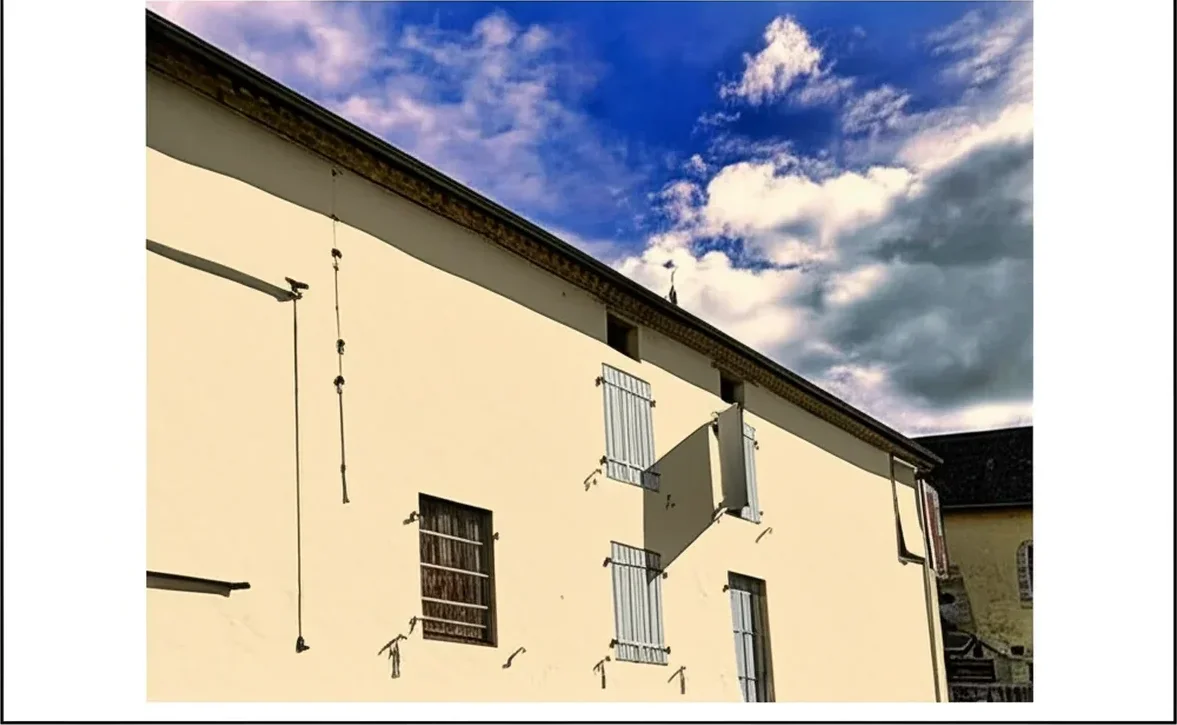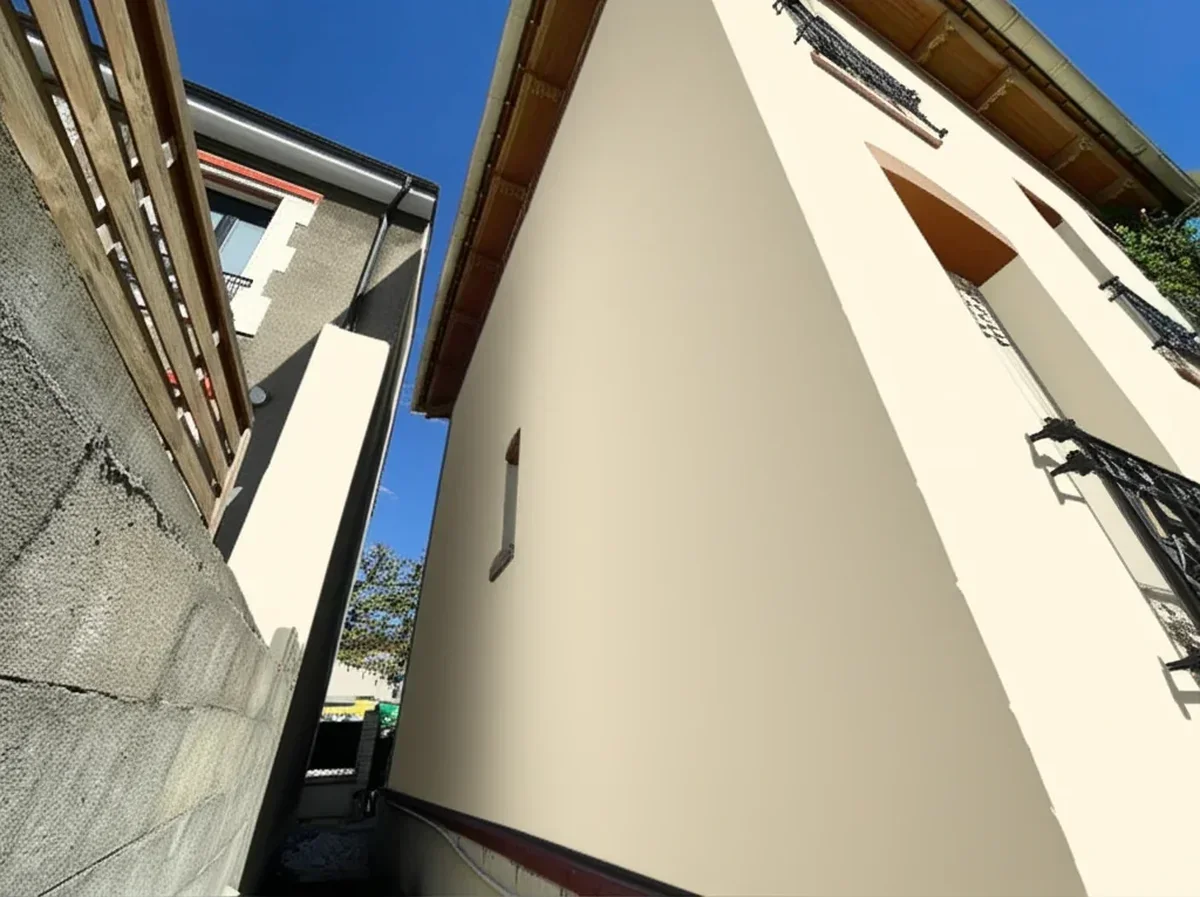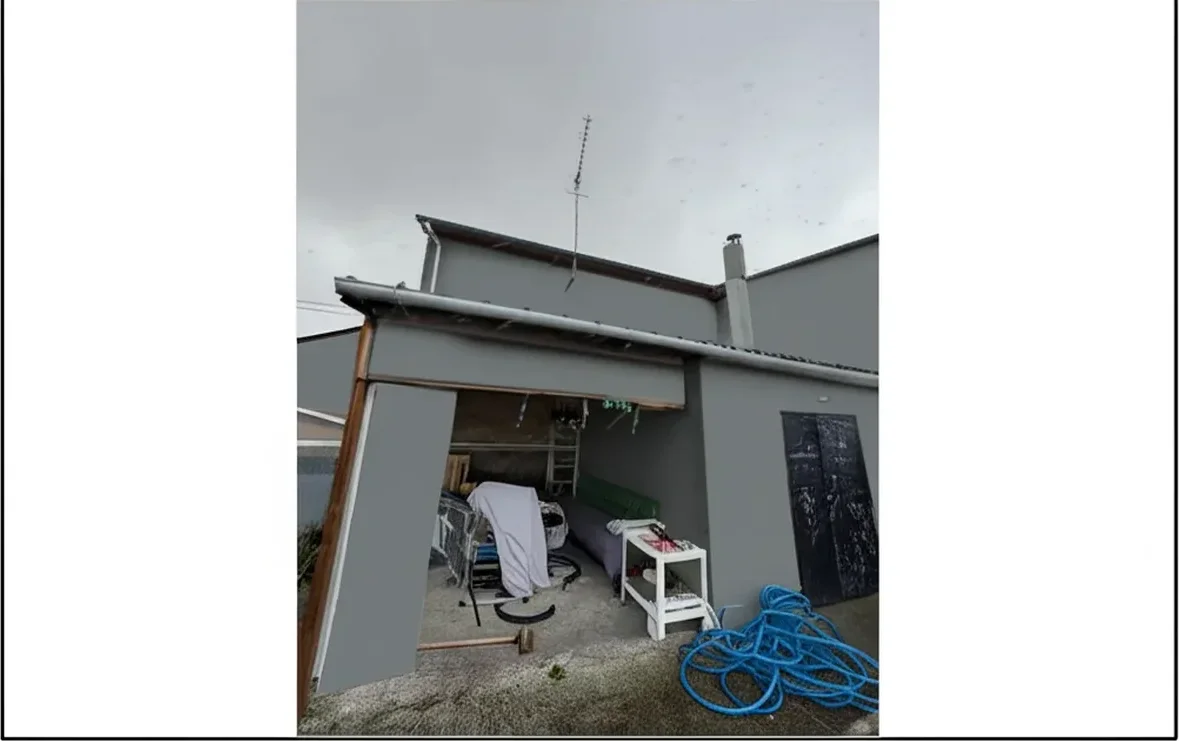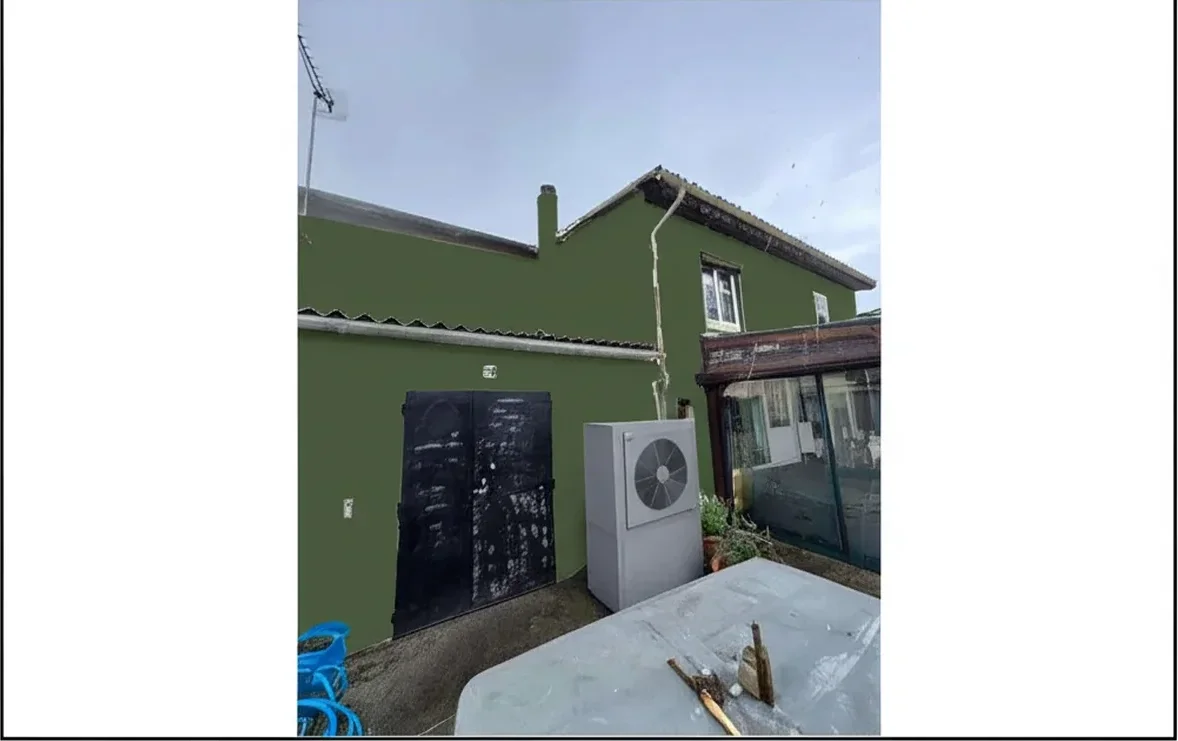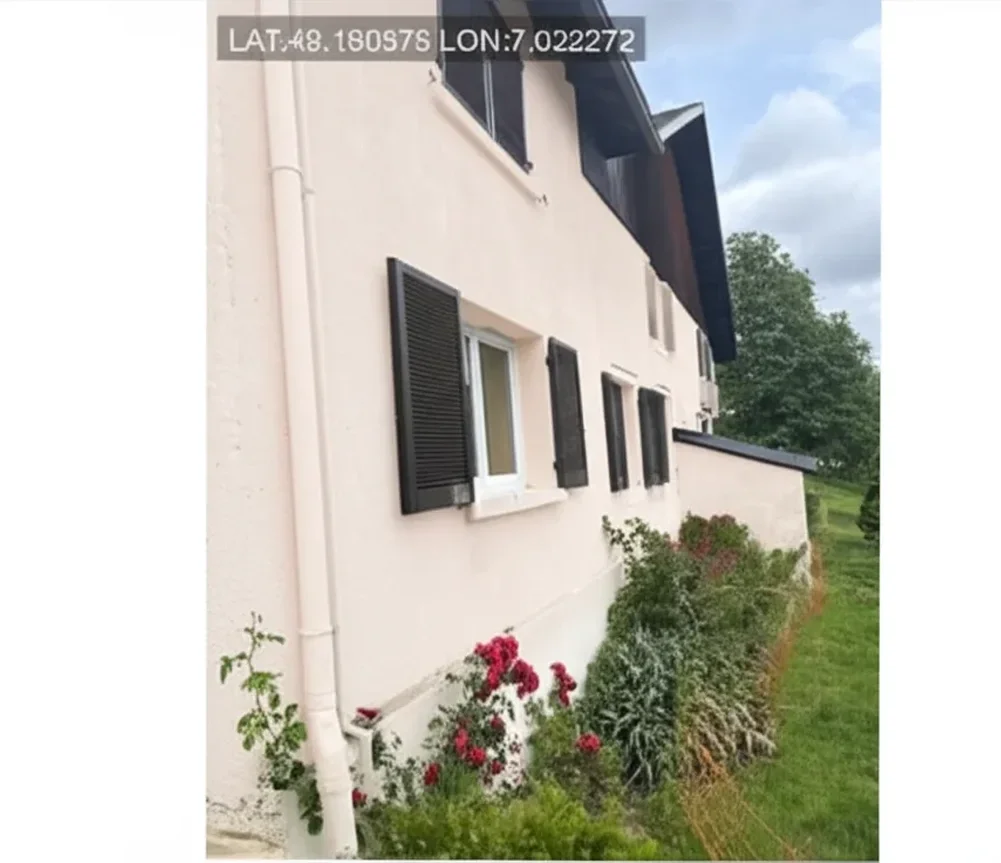

Benjamin Moore® Saybrook Sage HC-114 is one of the three sage hues Benjamin Moore itself suggests as popular picks on its sage green colors page, alongside October Mist 1495 and Soft Fern 2144-40. Sitting in the Historical Colors collection at hex #B1B7A2 and LRV 45.46 (both published by Benjamin Moore), it is the sage homeowners reach for when "bright sage" reads too minty and "olive" reads too earthy. Saybrook Sage splits the difference, a balanced gray-green muted sage with a soft drab-olive cast, settled enough to read as a true neutral sage and clear enough to hold its color across all four orientations.
This 2026 guide is the practical answer to one question, "Is Saybrook Sage the right sage for my Cottage or Craftsman?" Below you will find the full technical spec, comparisons against October Mist 1495 (near-twin in lightness), Louisburg Green HC-113 (deeper sibling), and Sherwin-Williams Evergreen Fog SW 9130 (the best-known Sherwin-Williams sage), the Cottage and Craftsman architectural fit, eight frequent questions, and a step-by-step protocol to preview Saybrook Sage on a photo of your own home with our sage green exterior paint guide 2026. For the 2026 Color of the Year companion, see our pillar guide on Benjamin Moore Silhouette AF-655.
Upload one photo, get a photorealistic HC-114 preview in 30 seconds. No signup.
1. What is Benjamin Moore Saybrook Sage HC-114?
Saybrook Sage HC-114 is a muted, balanced gray-green sage in the Benjamin Moore® Historical Color (HC) Collection. The "Saybrook" reference points to the colonial-era town of Old Saybrook, Connecticut, and the "Sage" reference is the color family designation. The underlying technical reading is more useful than either piece of naming history, because it explains why HC-114 reads as a "true sage" instead of drifting into mint, olive, or pure gray on different facades.
| Attribute | Value |
|---|---|
| Official name | Saybrook Sage |
| Benjamin Moore code | HC-114 (Historical Color Collection) |
| Family | Muted gray-green sage |
| Hex (Benjamin Moore digital value) | #B1B7A2 |
| RGB | 177, 183, 162 |
| LRV (Light Reflectance Value) | 45.46 (Benjamin Moore color page) |
| Value class (Benjamin Moore) | Medium |
| Benjamin Moore description | "A soothing aloe hue cooled with a splash of gray" |
| Undertone | Balanced gray-green, soft drab-olive cast, minimal yellow pull |
| Best recommended product | Aura® Exterior, Regal® Select Exterior |
| Sherwin-Williams® cross-shop | Evergreen Fog SW 9130 is the best-known SW sage but deeper (LRV 30.4); ask a SW store to computer-match HC-114 |
Try it on your house
- 1Your photoPhoto
- 2Your colorColor
- 3HD render in ~30 sHD render in ~30 s
Your photo is used only to create your preview. JPG, PNG, HEIC (iPhone)
An LRV of 45.46 puts Saybrook Sage in the middle of the reflectance scale, and Benjamin Moore classes its value as Medium. That is light enough for a north-facing wall to keep its gray-green character, and deep enough to read as a real color from the curb rather than a washed pastel. It also reflects close to half of the visible light, so heat build-up is a smaller concern than with deep greens, though south and west walls in hot climates still call for a premium exterior product. For the wider green exterior paint colors 2026 family map and the best exterior green paint colors 2026 shortlist, see our dedicated guides on the green pillar.
2. Why Saybrook Sage works as an everyday exterior sage
Benjamin Moore's sage colors page lists dozens of sage-family shades, and Saybrook Sage HC-114 answers three common homeowner briefs at the same time.
- The "I want a sage that is not minty" brief. Benjamin Moore describes HC-114 as an aloe hue cooled with a splash of gray, and that gray is what keeps it from reading as a pastel mint on a sunlit wall.
- The "I want a sage that is not olive" brief. Deeper historic greens such as Louisburg Green HC-113 (LRV 33.79) read noticeably heavier on a full elevation. At LRV 45.46, Saybrook Sage stays in the light-to-mid range and reads as green-gray rather than drab brown.
- The "I want a sage that is not a gray with a green hint" brief. Sherwin-Williams describes Evergreen Fog SW 9130 as green-meets-gray with just a bit of blue, a cooler read. Saybrook Sage keeps enough green that nobody mistakes it for a greige.
For the Sherwin-Williams side, the sage green house with white trim and black door 2026 recipe walks through the textbook composition, and our green house paint colors 2026 roundup ranks the field across all brands.
See Saybrook Sage on your facade. Free, 30 seconds.
3. Saybrook Sage and the 2026 palette
Benjamin Moore's 2026 Color of the Year, Silhouette AF-655, is a deep brown that the brand describes as espresso with refined notes of charcoal, and it pairs naturally with a muted sage. Saybrook Sage HC-114 and Silhouette together make a complete facade palette: sage body with a deep brown door, or deep brown body with sage shutters or a sage door, depending on which color carries the elevation weight.
4. Saybrook Sage vs October Mist 1495, Louisburg Green HC-113, and SW Evergreen Fog
Three colors make useful benchmarks for Saybrook Sage: BM October Mist 1495, a near-twin in lightness that Benjamin Moore lists next to HC-114 among its popular sages; Louisburg Green HC-113, the deeper historic sage from the same collection, the one to reach for when Saybrook reads too soft on a sunlit elevation; and SW Evergreen Fog SW 9130, the Sherwin-Williams 2022 Color of the Year. Hex and LRV below are the values each manufacturer publishes (October Mist, Louisburg Green, Evergreen Fog).
| Attribute | Saybrook Sage HC-114 | October Mist 1495 | Louisburg Green HC-113 | SW Evergreen Fog 9130 |
|---|---|---|---|---|
| Manufacturer description | Aloe hue cooled with a splash of gray | Gently shaded sage | Medium green, cool and muted by gray undertones | Green-meets-gray with a bit of blue |
| Hex | #B1B7A2 | #B6B8A5 | #9C9E87 | #95978A |
| LRV | 45.46 | 46.54 | 33.79 | 30.4 |
| Depth vs HC-114 | Reference | About 1 point lighter | About 12 points darker | About 15 points darker |
The headline distinction is depth. October Mist 1495 sits almost level with Saybrook Sage (46.54 against 45.46), so choosing between them comes down to cast: Benjamin Moore calls October Mist a gently shaded sage and Saybrook Sage an aloe hue cooled with gray. Louisburg Green HC-113 and SW Evergreen Fog sit 12 to 15 points lower, which reads noticeably deeper on a full elevation, and Evergreen Fog's touch of blue makes it the coolest of the four. Homeowners cross-shopping the Sherwin-Williams side of the catalog should see our Sherwin-Williams vs Benjamin Moore exterior comparison for the full brand matchup and our Benjamin Moore Aura Exterior review 2026 for the product spec recommendation on a sage facade.
See both side by side on your own home. Free, 30 seconds.
5. Cottage and Craftsman style fit
Saybrook Sage HC-114 suits the two architectural styles where a sage exterior feels most at home, the American Cottage (Benjamin Moore tags HC-114 with the Cottage style) and the Craftsman bungalow. Both styles share design language that depends on a muted, nature-leaning body color that does not compete with stone foundations, wood detailing, or planted landscaping. HC-114 holds all three of those material partnerships without forcing a redesign of the rest of the elevation.
Cottage style fit, the textbook composition
On Cottage-style homes (storybook English Cottage, Cape Cod cottage, Carmel-style Cottage, coastal cedar-shake cottage), Saybrook Sage works on lap siding, board-and-batten, or shingles, and pairs with three standard partners, a warm white trim (White Dove OC-17), a soft cream door (Swiss Coffee OC-45) or a true black door (Wrought Iron 2124-10), and natural-wood porch elements. The combination reads as "garden cottage" rather than "spa cottage" because HC-114's drab-olive cast resists the mint shift that would push the facade toward "beach house." For more on the Cottage side specifically, see our roundup of the cottage style exterior paint colors 2026 top 12.
Craftsman style fit, the bungalow recipe
On Craftsman bungalows (1905-1930 originals plus 2010s+ revivals), Saybrook Sage replaces the standard "earth tone tan" of the historical Craftsman palette with the modern "sage neutral" without losing the warm-natural character of the style. Pair HC-114 body with Branchport Brown HC-72 trim and a dark brown or natural-wood front door. The single biggest mistake on a Craftsman is pairing sage with a cool-white trim, the bungalow porch detailing, exposed rafter tails, and natural stonework all need warm trim to hold the period feel. For the full Craftsman editorial, see our ranking of the craftsman house exterior paint colors 2026 top 15.
Upload one front-elevation photo. Free AI render, 30 seconds.
6. Trim, shutter, and door pairings on Saybrook Sage
Saybrook Sage is forgiving on trim, but the wrong white can still strip out the warmth that gives HC-114 its Cottage and Craftsman character. LRVs below are the values Benjamin Moore publishes on each color page.
| Role | Color | BM code | LRV | Use |
|---|---|---|---|---|
| Trim, warm white | White Dove | OC-17 | 83.16 | Default trim, Cottage and Craftsman |
| Trim, crisp white | Simply White | OC-117 | 89.52 | Modern Cottage and Farmhouse |
| Trim, cream | Swiss Coffee | OC-45 | 81.91 | Storybook English Cottage |
| Door, black anchor | Wrought Iron | 2124-10 | 8.17 | Soft black, modern Cottage |
| Door, navy | Hale Navy | HC-154 | 8.36 | Coastal Cottage, Cape |
| Door, deep brown | Silhouette | AF-655 | 10.18 | 2026 COTY warm anchor |
| Door, warm brown | Branchport Brown | HC-72 | 10.02 | Craftsman traditional |
| Door, oxblood | Caliente | AF-290 | 8.82 | English Cottage statement |
The textbook composition on Saybrook Sage is White Dove OC-17 trim with a Wrought Iron 2124-10 black door. The 2026 update on that classic is to swap Wrought Iron for Benjamin Moore's 2026 Color of the Year, Silhouette AF-655, which keeps the deep-anchor function but adds a warm-brown undertone that ties HC-114 into the broader "soft naturals" palette dominating 2026. Worth knowing where the retreat lies: if a full sage body turns out to be more color than the elevation can carry, the move that keeps the same muted, non-shouty character is to drop the hue and climb the value scale. Benjamin Moore Stonington Gray HC-170 sits at LRV 59.36, about fourteen points above HC-114, and reads as a silvery neutral gray from the curb rather than as a color, while the White Dove trim and the Wrought Iron door in the table above still work unchanged. Our Benjamin Moore Stonington Gray exterior guide covers that composition.
7. How to test Saybrook Sage on your house (step-by-step)
Two methods, the AI photo render and the physical sample board. For a mid-tone sage as forgiving as Saybrook Sage, either method works on its own, but combining the two is the responsible approach before committing to 8-12 gallons of premium exterior paint at $90 a gallon.
Method A, the AI photo render (15 minutes, free)
- Take one front-elevation photo on an overcast day around 10 AM or 2 PM. Avoid harsh midday sun (blows out the green) and golden hour (warms HC-114 into a fake olive).
- Upload to FacadeColorizer's free AI exterior visualizer. No signup required for the first render.
- Enter Saybrook Sage HC-114 as a custom hex value (#B1B7A2, Benjamin Moore's digital value) or pick from the Benjamin Moore palette.
- Generate three trim variants, White Dove OC-17, Simply White OC-117, Swiss Coffee OC-45. The free tier includes one HD render plus three free previews.
- Pull a second photo at a different time of day and re-render to spot the north-vs-south orientation effect described above.
Method B, the physical sample board (3 days, ~$30)
- Buy a Benjamin Moore Color Sample pint of Saybrook Sage HC-114 (~$10) and a 24" x 36" primed white foamboard (~$10).
- Roll two coats of HC-114 on the foamboard, 24 hours between coats.
- Tape the foamboard to the actual elevation at roughly 5 feet up, where most of the wall will sit.
- Observe at 9 AM, 1 PM, and 6 PM. Photograph each.
- If the color reads too light or washed out in full sun, sister-test the deeper Louisburg Green HC-113 (LRV 33.79). If you like the depth but want a slightly different cast, compare it against October Mist 1495 (LRV 46.54).
Test White Dove vs Simply White vs Swiss Coffee on your facade. Free.
8. Frequently asked questions
What is the LRV of Benjamin Moore Saybrook Sage HC-114?
Benjamin Moore publishes an LRV of 45.46 for Saybrook Sage HC-114 on its official color page. That is about twelve points lighter than Louisburg Green HC-113 (33.79), fifteen points lighter than SW Evergreen Fog 9130 (30.4), and almost level with October Mist 1495 (46.54). The figure places HC-114 mid-scale: it reads as a real color from the curb while staying well clear of the dark-color range where heat build-up becomes a product-selection issue.
Saybrook Sage vs Louisburg Green HC-113, which is the right sage?
Both come from Benjamin Moore's Historical Colors collection. Louisburg Green HC-113 is the deeper one (LRV 33.79), a medium green that Benjamin Moore describes as cool and muted by gray undertones. Saybrook Sage HC-114 (LRV 45.46) is lighter and reads as a soft gray-green. Pick Louisburg Green when the house needs more weight, for example on a large, sunny elevation; pick Saybrook Sage when you want a lighter everyday sage for a Cottage, Craftsman, Cape, or Modern Farmhouse facade.
Saybrook Sage vs October Mist 1495, which is lighter?
They are near twins in lightness: Benjamin Moore publishes LRV 46.54 for October Mist 1495 and 45.46 for Saybrook Sage HC-114, and lists both among its popular sage hues. Benjamin Moore describes October Mist as a gently shaded sage and Saybrook Sage as an aloe hue cooled with gray, so the difference is cast rather than depth. Compare them side by side on a photo of your house or on two sample boards.
What is the closest Sherwin-Williams® color to Saybrook Sage?
Sherwin-Williams' best-known sage, Evergreen Fog SW 9130 (2022 Color of the Year), is noticeably deeper than HC-114 (LRV 30.4 against 45.46) and a touch cooler, so it is a different color rather than a substitute. If you want Saybrook Sage in a Sherwin-Williams product, ask the store to computer-match HC-114 and compare the result against a Benjamin Moore sample before you commit. For the full brand matchup, see our Sherwin-Williams vs Benjamin Moore exterior comparison.
Does Saybrook Sage work on a Cottage or only on a Craftsman?
Both. Benjamin Moore tags Saybrook Sage HC-114 with the Cottage style, and it works on storybook English, Cape Cod, Carmel, and coastal cedar-shake cottages as well as on Craftsman bungalows (1905-1930 originals plus 2010s+ revivals). The HC-114 plus White Dove OC-17 trim plus Wrought Iron 2124-10 or Silhouette AF-655 door recipe works for both styles. On a Craftsman, swap White Dove for Swiss Coffee OC-45 plus a Branchport Brown HC-72 door for the period-correct warm-trim composition.
What trim and door colors work best with Saybrook Sage?
For the door, Wrought Iron 2124-10 is the classic soft black, Hale Navy HC-154 is the coastal navy, and Silhouette AF-655 is the 2026 Color of the Year warm-brown anchor that pairs natively with HC-114.
Which Benjamin Moore paint product is best for Saybrook Sage exterior?
Benjamin Moore Aura® Exterior for south and west elevations in warm climates (the Southeast, the Southwest, inland California), Regal® Select Exterior for north and east elevations or cooler climates (Pacific Northwest, New England). Aura is Benjamin Moore's top-tier exterior line, built on its Color Lock® technology. See our Benjamin Moore Aura Exterior review 2026 for the full product analysis.
Will Saybrook Sage look dated in five years?
No paint color is trend-proof. Saybrook Sage belongs to Benjamin Moore's Historical Colors collection rather than to a seasonal trend palette, and Benjamin Moore still lists it among its popular sage hues, which makes it a lower-risk pick than a shade of the moment. Preview it on a photo of your facade and on a sample board before you buy gallons.
Test Saybrook Sage HC-114 on your home photo. 1 HD render + 3 trim variations, no signup.
Bottom line. Saybrook Sage HC-114 works as an everyday exterior sage because it solves a real architectural need, a balanced gray-green sage body that flexes between Cottage, Craftsman, Cape, and Modern Farmhouse facades without the mint drift of brighter sages, the olive drift of deeper sages, or the gray-with-a-green-hint drift of SW Evergreen Fog. Pair it with White Dove OC-17 trim and either a Wrought Iron 2124-10 black door or a Silhouette AF-655 warm-brown door for the textbook 2026 composition. Test on a photo of your own facade, in your own light, with at least three trim variants, before you commit to 8-12 gallons of Aura Exterior at $90 a gallon. Authoritative outbound references: the official Benjamin Moore Saybrook Sage HC-114 page, HGTV reveal-episode sage palette archives, and the Better Homes & Gardens 2026 exterior color trend coverage.
Trademark notice. Benjamin Moore®, Saybrook Sage®, October Mist®, Louisburg Green®, Silhouette®, Hale Navy®, White Dove®, Simply White®, Swiss Coffee®, Wrought Iron®, Branchport Brown®, Caliente®, Aura®, Regal® Select, Ben®, Color Lock®, Historical Color®, and Affinity® are trademarks of Benjamin Moore & Co. Sherwin-Williams®, Evergreen Fog®, Alabaster®, Duration®, and Emerald® are trademarks of The Sherwin-Williams Company. HGTV® is a trademark of Scripps Networks LLC. Better Homes & Gardens® is a trademark of Dotdash Meredith. Houzz® and Pinterest® are trademarks of their respective owners. FacadeColorizer is not affiliated with, endorsed by, or sponsored by Benjamin Moore & Co., Sherwin-Williams, HGTV, Better Homes & Gardens, Houzz, or Pinterest. References to brand and product names are made for descriptive and editorial purposes only, consistent with nominative fair use under the Lanham Act (15 U.S.C. § 1125). Color hex and RGB values are approximate digital renderings; the only authoritative reference is a physical Benjamin Moore Color Sample applied per manufacturer instructions.
Trademarks mentioned (Sherwin-Williams, Benjamin Moore, Behr, Caparol, Brillux, Sto, Alpina, Valspar, PPG, Glidden, Dulux, Crown Trade, Sandtex, Farrow & Ball, Johnstone's, Leyland) are property of their respective owners. FacadeColorizer is independent and not affiliated with any of them. Nominative fair use under Lanham Act §1125.