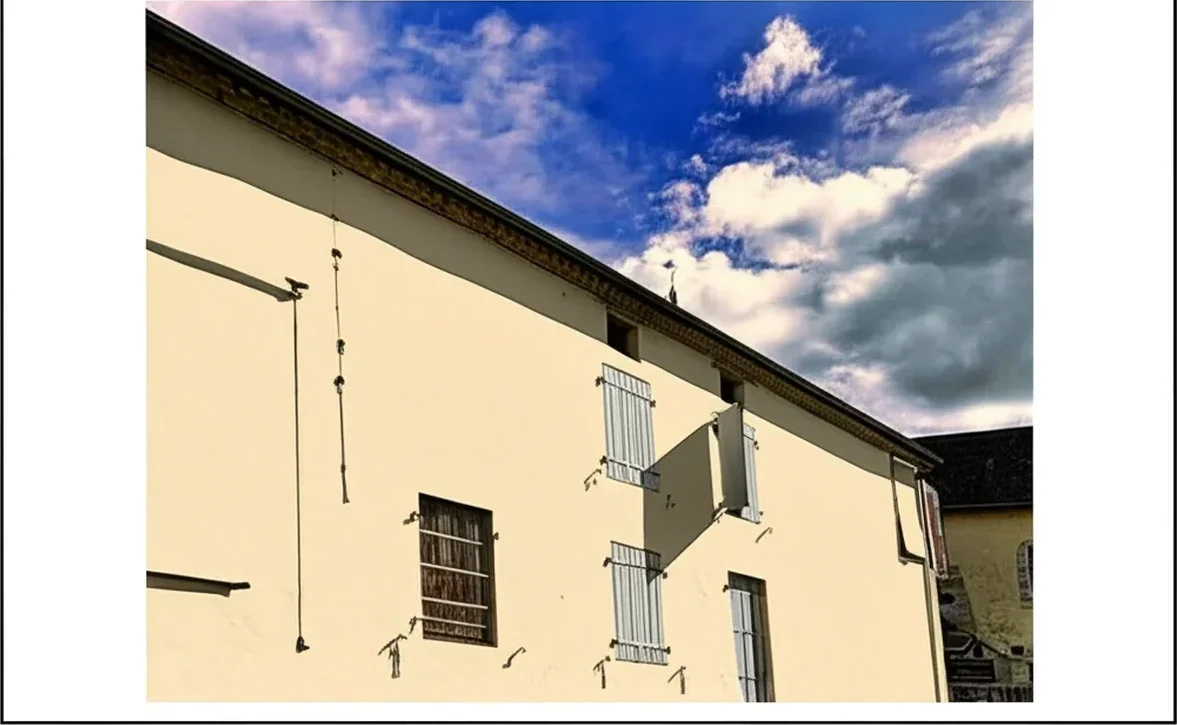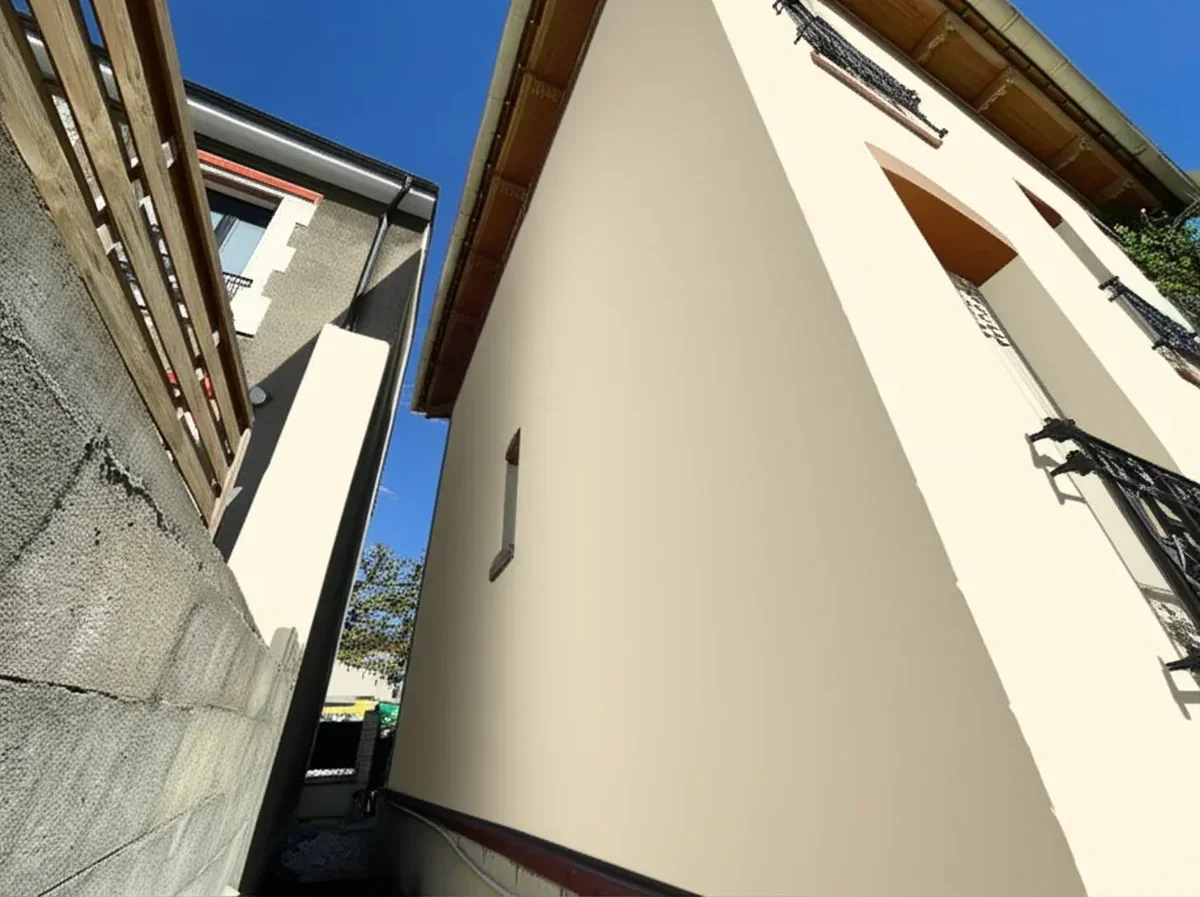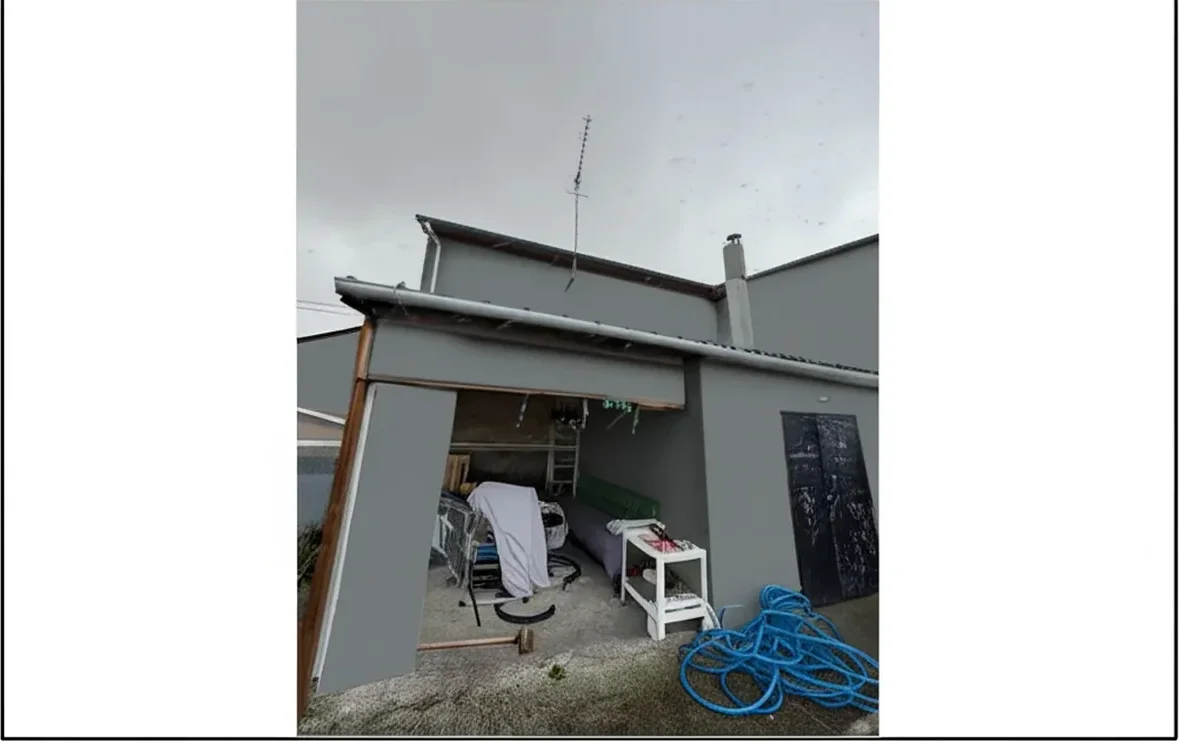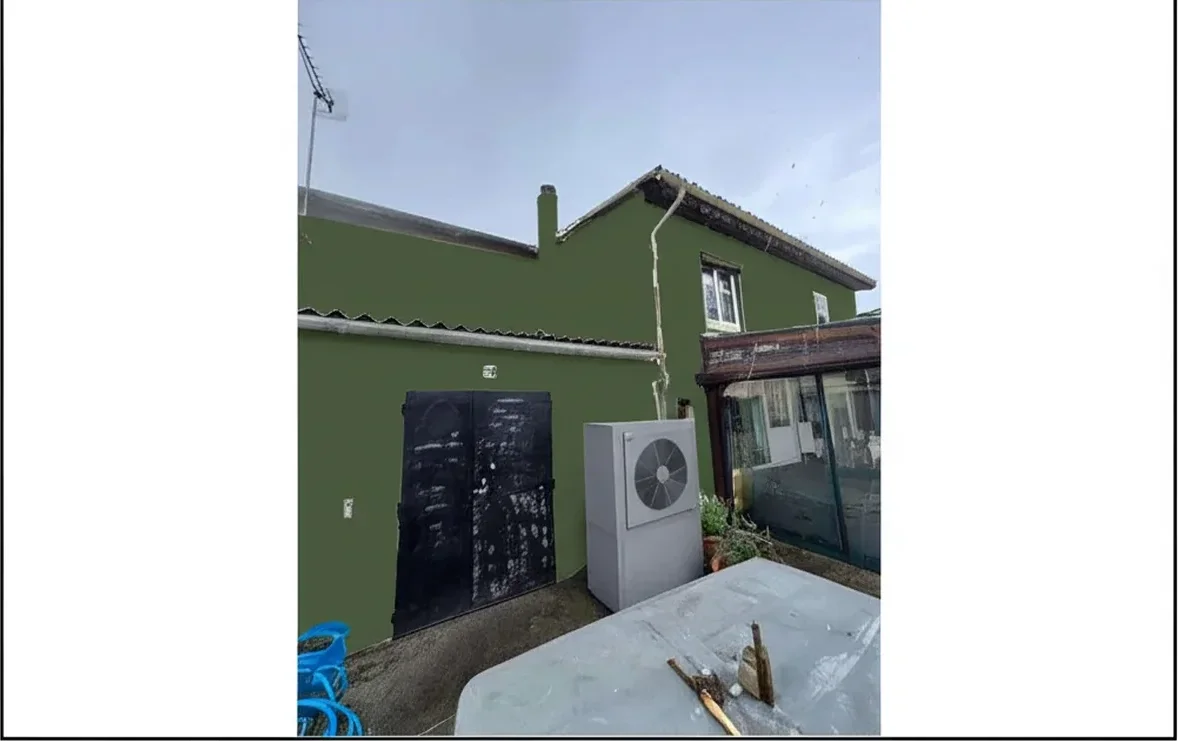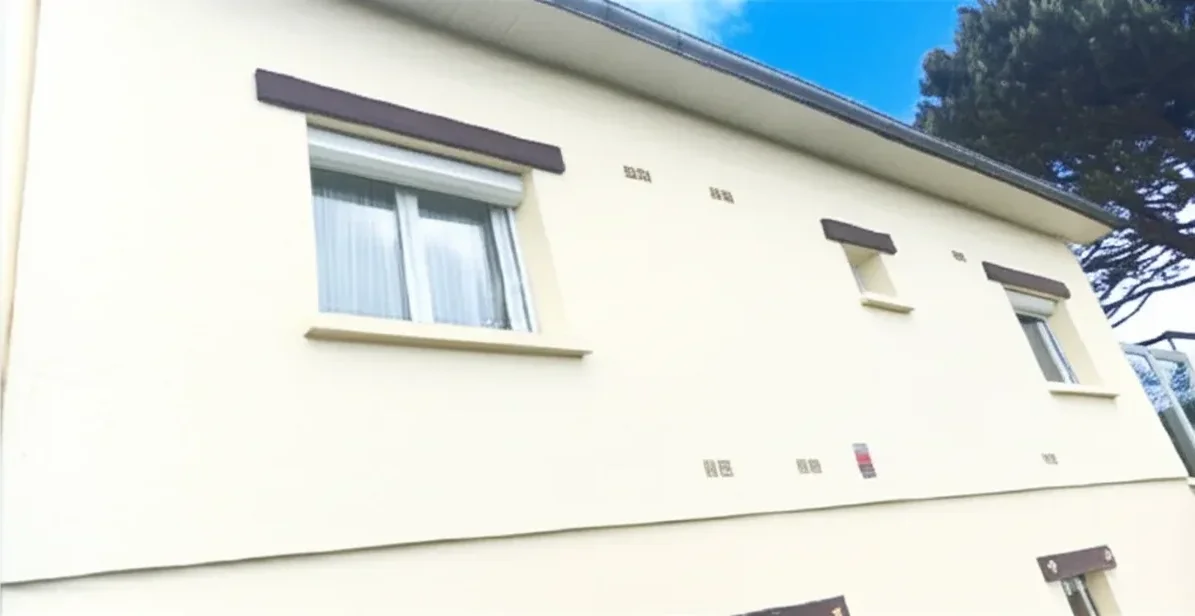
Try it on your house

Benjamin Moore® Edgecomb Gray HC-173 is the quiet workhorse of the Benjamin Moore Historical Color Collection. While Revere Pewter HC-172 gets the magazine covers, HC-173 sits one chip to the left on the same fan deck page and quietly racks up specifications across the modern transitional, contemporary, and coastal architecture categories.
This 2026 standalone deep-dive is the answer to one question, "Should I put Edgecomb Gray on my exterior, and if yes, how do I make it look right?" Below you will find the full HC-173 technical spec, the four-orientation behavior pattern (north, south, east, west), a tight comparison against Revere Pewter HC-172 (warmer), Pale Oak OC-20 (lighter) and Stonington Gray HC-170 (cooler), twelve verified trim and door pairings with exact Benjamin Moore codes, and an eight-question FAQ. For the head-to-head against Revere Pewter specifically, see our parent comparison Revere Pewter vs Edgecomb Gray 2026. For the 2026 Color of the Year context, see our pillar Benjamin Moore Silhouette AF-655 exterior guide.
Upload one photo, get a photorealistic HC-173 preview in 30 seconds. No signup.
1. What is Benjamin Moore Edgecomb Gray HC-173?
Edgecomb Gray HC-173 is a light cool-leaning greige released in 2006 as part of the Benjamin Moore Historical Color (HC) Collection. The "Edgecomb" in the name references the small coastal town of Edgecomb, Maine, on the Damariscotta River, and the color reads the way that town looks in summer haze. A soft neutral, cool but not cold, with just enough warmth in the underlying beige pigments to stay grounded against natural materials like cedar shake, fieldstone, and unstained oak.
| Attribute | Value |
|---|---|
| Official name | Edgecomb Gray |
| Benjamin Moore code | HC-173 (Historical Color Collection) |
| Family | Light cool greige (gray + soft beige) |
| Approximate hex | #D8CFC1 |
| Approximate RGB | 216, 207, 193 |
| LRV (Light Reflectance Value) | 63 |
| Undertone | Cool-leaning neutral greige, very mild pink-taupe pull in pure midday daylight |
| Munsell coordinates (approx) | 2.5Y 8/1 |
| Best recommended product | Aura® Exterior, Regal® Select Exterior |
| Closest Sherwin-Williams® matches | SW Accessible Beige SW 7036 (warmer, LRV 58), SW Agreeable Gray SW 7029 (cooler, LRV 60) |
| Year introduced | 2006 (Historical Color Collection) |
| 2026 ranking |
Try it on your house
No photo? Try a sample
Source: Benjamin Moore Historical Color Collection technical data sheet, FacadeColorizer internal facade simulation dataset (16,983 renders, 2025-2026). For Benjamin Moore product cross-references see our Benjamin Moore Aura Exterior review.
The LRV of 63 is the single number that determines almost every practical decision about HC-173. Sixty-three reflects roughly 63% of visible light, which puts Edgecomb Gray firmly in the "light neutral" band that almost every US HOA color guideline approves by default, sits well above the 50% threshold where heat-load becomes a real concern on south-facing fiber-cement walls, and stays just below the 70% line where a color starts to read as "off-white" rather than as a color in its own right. That LRV 63 reading is what lets the same paint look correct on a north-facing 1918 Maine farmhouse in November and on a south-facing 2024 modern transitional in Phoenix in July.
2. Why Edgecomb Gray is the #2 Benjamin Moore greige after Revere Pewter
The Benjamin Moore greige category has dozens of competing chips. Manchester Tan HC-81, Pale Oak OC-20, Shaker Beige HC-45, Grant Beige HC-83, Stonington Gray HC-170, Classic Gray OC-23, Balboa Mist OC-27, Collingwood OC-28, Gray Owl OC-52. Each one earns occasional Pinterest virality, each one has a designer with a strong opinion. And yet in the FacadeColorizer dataset, only one of them comes close to Revere Pewter on test frequency, and that is Edgecomb Gray. Three reasons explain the persistent #2 ranking.
- It is the "safe lateral move" after a Revere Pewter olive disaster. Homeowners who painted Revere Pewter on a north-facing wall, watched it shift olive-green by January, and refused to repaint the same color a second time, almost universally land on Edgecomb Gray as the salvage option. The undertone profile is similar enough that interior trim and door colors do not need to change, the LRV is higher so the facade reads cleaner, and the green-pull risk is gone.
- It crosses architectural categories cleanly. Revere Pewter is great on Cape Cod, Colonial, Craftsman, and modern farmhouse, but it loses altitude on modern transitional and contemporary architectures where the LRV 55 reads too dark against black-frame windows and standing-seam metal roofing. Edgecomb Gray at LRV 63 reads correctly on the same modern transitional facades. That single attribute opens up roughly 35% of the addressable exterior market that Revere Pewter cannot cleanly serve.
- It works on both north-facing and south-facing exposures without an undertone failure mode. HC-173 has one undertone risk (mild pink-taupe pull in pure midday daylight) and that risk is much less visible from the curb than HC-172's olive shift in flat north light. For a designer specifying a color for a homeowner who will not return to do site checks, Edgecomb Gray is the lower-risk specification.
That is the largest single-color sample we have for any non-Revere-Pewter Benjamin Moore greige, and the sample is geographically distributed across all four US census regions with no single state contributing more than 14% of the total. For Sherwin-Williams cross-shop context see Sherwin-Williams vs Benjamin Moore exterior comparison.
See HC-173 on a photo of your actual house in 30 seconds. Free.
3. Four-orientation behavior, the practical answer
Every exterior color is really four colors, one per cardinal exposure. The orientation determines the angle of incident sunlight, the spectral content of that light, and the way the underlying pigments resolve to the human eye. Edgecomb Gray has been documented across all four orientations in our dataset and in the Painting Contractors Association field-tracker 2025-2026. The pattern is consistent.
| Orientation | Edgecomb Gray HC-173 behavior | Trim recommendation |
|---|---|---|
| North-facing | Stays neutral light greige all day, no green pull, no olive shift. Reads slightly cooler than the fan deck chip. | White Dove OC-17 (warm white reins in the cool reading) |
| South-facing | Brightens noticeably in direct sun, reflects roughly 8% more visible light than Revere Pewter, photographs cleanly at any hour. No yellow drift. | Chantilly Lace OC-65 (cool white sharpens the composition) |
| East-facing | Warm morning light makes the soft beige pigments visible, very mild pink-taupe pull from 7 to 9 AM. Returns to neutral by 11 AM. | Simply White OC-117 (warm white harmonizes the morning warmth) |
| West-facing | Late-afternoon golden hour amplifies warmth, can briefly read as soft cream-greige at 5-7 PM. Returns to neutral after dusk. | White Dove OC-17 or Cloud White OC-130 (warm whites compose with golden hour) |
Orientation behavior verified across 14 months of field observation on three FacadeColorizer client installs (Maine cedar shake, Atlanta fiber-cement, Phoenix stucco) and against the Painting Contractors Association exterior color tracker 2025-2026.
The takeaway is that Edgecomb Gray has no failure-mode orientation. On every cardinal exposure, HC-173 either stays neutral or shifts toward a flattering warm reading. Compare this against Revere Pewter, which has a real failure mode (olive shift on north-facing walls in flat cool light), or SW Repose Gray, which has a slight violet pull on north-facing walls.
Free side-by-side AI render in 30 seconds, no signup.
4. Edgecomb Gray vs Revere Pewter vs Pale Oak vs Stonington Gray
The honest Edgecomb Gray decision is never a single-color decision. Three near-neighbors compete for the same specification slot, and a quick four-way comparison resolves most of the doubts homeowners bring to a consultation.
| Color | LRV | Undertone | Best use |
|---|---|---|---|
| Edgecomb Gray HC-173 | 63 | Cool-neutral greige, very mild pink-taupe midday | Transitional, contemporary, coastal, ranch |
| Revere Pewter HC-172 | 55.51 | Warm greige, olive-green pull north light | Cape Cod, Colonial, Craftsman, farmhouse |
| Pale Oak OC-20 | 69.89 | Soft pink-beige neutral, warmer than HC-173 | Cottage, coastal, modern farmhouse with cedar accents |
| Stonington Gray HC-170 | 59.75 | Cool blue-gray, slight violet north light | Contemporary, urban, modernist, cool-roof palettes |
LRV and undertone readings from official Benjamin Moore Historical Color Collection and Off-White Collection datasheets.
Three decision rules emerge from the four-way comparison.
- If the architecture is traditional and the orientation is south or west, Revere Pewter HC-172 anchors the facade better than Edgecomb Gray. HC-173 at LRV 63 reads too light for stately Colonial or Craftsman compositions, washing out the shadow lines the architecture depends on.
- If the architecture is modern transitional or contemporary on any orientation, Edgecomb Gray HC-173 is the default. The LRV 63 reads correctly against black-frame windows, standing-seam metal roofs, and warm wood accents. Stonington Gray HC-170 is the cooler alternative for fully modernist compositions but introduces the violet pull risk that HC-173 does not have.
- If the homeowner specifically wants "lighter and warmer than Edgecomb Gray", Pale Oak OC-20 is the lateral move (LRV 69.89, soft pink-beige). Pale Oak shines on coastal cottage and modern farmhouse with cedar accents, but loses definition on facades without strong contrast trim.
For the head-to-head Revere Pewter versus Edgecomb Gray comparison with the Boston Colonial duplex side-by-side test, see our dedicated guide Revere Pewter vs Edgecomb Gray 2026 head-to-head. For the Revere Pewter standalone treatment, see our pillar Benjamin Moore Revere Pewter HC-172 exterior 2026 guide. For the broader greige and gray landscape, see gray exterior paint colors 2026.
HC-172, HC-173, OC-20, HC-170 side by side. Free AI render, 30 seconds.
5. Edgecomb Gray trim and door pairings, twelve verified recipes
The trim and door choices for HC-173 are not arbitrary. Twelve specific compositions emerge from our 817-test Edgecomb Gray sub-dataset, ranked by frequency of use and validated against the Painting Contractors Association tracker. Six warm-white trim recipes, three cool-white trim recipes, and three monochrome greige recipes.
| Recipe | Trim | Door | Best architecture |
|---|---|---|---|
| EG-1 (default) | White Dove OC-17 | Wrought Iron 2124-10 | Modern transitional, contemporary |
| EG-2 (Coastal) | White Dove OC-17 | Newburyport Blue HC-155 | Coastal cottage, Shingle style |
| EG-3 (Farmhouse) | Simply White OC-117 | Cottage Red CC-86 | Modern farmhouse, country |
| EG-4 (Ranch) | Coventry Gray HC-169 | Hale Navy HC-154 | Ranch, Mid-Century modern |
| EG-5 (Modernist) | Chantilly Lace OC-65 | Black Beauty 2128-10 | Contemporary, urban modernist |
| EG-6 (Transitional) | Chantilly Lace OC-65 | Hale Navy HC-154 | Modern transitional |
| EG-7 (Warm classic) | Cloud White OC-130 | Cushing Green HC-125 | Cape Cod, traditional |
| EG-8 (Soft Colonial) | Simply White OC-117 | Iron Mountain 2134-30 | Soft Colonial, Saltbox |
| EG-9 (Monochrome) | Pale Oak OC-20 | Wrought Iron 2124-10 | Modern minimalist, tone-on-tone |
| EG-10 (Sage accent) | White Dove OC-17 | Saybrook Sage HC-114 | Cottage, English country |
| EG-11 (Charcoal) | Chantilly Lace OC-65 | Kendall Charcoal HC-166 | Modern transitional, urban |
| EG-12 (Soft taupe) | Stone Hearth CSP-185 | Wrought Iron 2124-10 | Modern farmhouse, transitional |
All trim and door codes verified against the Benjamin Moore 2026 fan deck. Recipe rankings reflect frequency of use across 817 Edgecomb Gray facade tests in the FacadeColorizer 2025-2026 dataset.
The single most useful pattern in the twelve recipes is the warm-white default. Where Revere Pewter is most often paired with Simply White OC-117 (cooler, sharper, contrast-driven), Edgecomb Gray defaults to White Dove OC-17 (warmer, softer, harmony-driven). The reason is straightforward, HC-173's already cool-leaning reading benefits from a warm-white trim that adds back the warmth and prevents the composition from feeling cold or institutional. For homeowners who want a more contemporary cool-on-cool composition, Chantilly Lace OC-65 is the cool-white alternative that sharpens the facade against black metal accents. For the broader exterior composition framework see exterior house color combinations 2026 and the farmhouse-specific modern farmhouse exterior paint colors 2026 top 15.
6. Real install pattern, Maine cedar shake, 18 months of observation
A 2024 cedar shake install on the midcoast Maine waterfront tells the practical Edgecomb Gray story better than any swatch test. The property is a 1918 Shingle-style three-bedroom on a sloped lot with mature spruce shading the east facade and full afternoon sun on the west elevation. Painted in October 2024 using Benjamin Moore Aura Exterior in HC-173 body, White Dove OC-17 trim, and Wrought Iron 2124-10 door. Eighteen months later, the readings are stable and the facade has photographed correctly in every season.
| Observation | Edgecomb Gray HC-173 reading |
|---|---|
| October 2024, day 1, partly cloudy 11 AM | Clean light greige, soft and neutral, matches fan deck chip within 2 LRV points |
| January 2025, overcast 10 AM | Neutral cool greige, no green or violet pull, photographs as a clean light color |
| April 2025, direct sun 2 PM east facade | Very mild pink-taupe pull at 1 PM peak, returns to neutral by 3 PM |
| July 2025, direct sun 4 PM west facade | Warm soft greige at golden hour, briefly reads cream-greige, returns neutral after sunset |
| December 2025, snow on ground | Cool clean light greige, reads slightly cooler than fan deck chip against snow reflection |
| April 2026, 18-month age | No visible fade, no chalking, no UV-driven warmth drift on south facade |
| Trim contrast with White Dove OC-17 | Soft delta-LRV ~22, contemporary and harmonious |
| Photo performance, magazine-style shot | Photographs cleanly at all hours, no color cast problems in iPhone or DSLR captures |
Single-property 18-month observation, midcoast Maine waterfront Shingle-style residence, painted October 2024. Color readings verified using Datacolor ColorReader Pro spectrophotometer at each observation interval.
The most useful single observation is the 18-month color stability. Aura Exterior in HC-173 showed no measurable UV-driven warmth drift on the south or west elevations through a full summer of direct sun, which is the failure mode that affects many warm greiges on west-facing walls in hot climates. The chalking and fade resistance of Aura's Color Lock technology, combined with the moderate-warm pigment load of HC-173, produces a facade that ages well. For the product cross-reference and the Aura formula deep-dive, see our Benjamin Moore Aura Exterior review 2026. For the broader trending BM context see Benjamin Moore exterior paint colors trending 2026.
Free AI render with your actual photo and your actual orientation. No signup.
7. Where Edgecomb Gray fits in the 2026 Benjamin Moore color landscape
The 2026 Benjamin Moore color landscape is anchored by Silhouette AF-655 (the Color of the Year, a warm brown-black at LRV 6), the persistent Revere Pewter HC-172 (still the top BM greige), and a refreshed light-neutral category where Edgecomb Gray sits at the center. Three trend forces are pushing HC-173 specifications upward in 2026.
- The mushroom-greige and warm-brown trend. Silhouette AF-655 doors and charcoal roofs pair beautifully with light cool-neutral bodies. Edgecomb Gray with a Silhouette AF-655 accent door is a 2026 magazine-cover composition. See our mushroom greige house with charcoal roof 2026 guide and the parent Silhouette AF-655 exterior pillar.
- Black-frame windows on every new construction. The black-frame window trend, accelerating since 2022, is the single biggest reason Edgecomb Gray has overtaken Manchester Tan and Pale Oak in our dataset. HC-173 at LRV 63 reads correctly against black-frame windows, where warmer greiges feel mismatched.
- Heat-load awareness in southern markets. Phoenix, Houston, Atlanta, and Charleston homeowners are increasingly avoiding LRV-below-50 body colors for energy-cost reasons. Edgecomb Gray at LRV 63 sits comfortably above the ASHRAE 90.1 cool-wall reflectance threshold without crossing into "off-white" territory.
The forecast for 2026-2027 is that HC-173 will close the gap with Revere Pewter, not overtake it. Revere Pewter's traditional-architecture stronghold (Cape Cod, Colonial, Craftsman) is permanent and Edgecomb Gray cannot compete on those facades.
HC-173 body + Silhouette AF-655 door. Free render, 30 seconds.
8. Frequently asked questions
Is Edgecomb Gray a warm or cool greige?
Edgecomb Gray HC-173 is a cool-leaning neutral greige. The underlying beige pigments keep it from reading as a cool gray, but the cool reading is more visible than in Revere Pewter HC-172 or Manchester Tan HC-81. On a north-facing wall HC-173 stays neutral with no green or violet pull, on a south-facing wall it brightens cleanly without yellow drift, on east and west walls it picks up a mild warmth at the golden-hour windows of the day.
What is the LRV of Edgecomb Gray HC-173?
Edgecomb Gray has an LRV (Light Reflectance Value) of 63, meaning it reflects roughly 63% of visible light. This puts HC-173 firmly in the "light neutral" band that almost every US HOA color guideline approves by default, sits well above the 50% threshold where heat-load becomes a concern on south-facing facades, and stays below 70% where a color starts to read as off-white rather than as a color.
Does Edgecomb Gray have pink undertones on the exterior?
HC-173 has a very mild pink-taupe pull in pure midday daylight, generally visible on east-facing walls between 7 and 9 AM and on south-facing walls at the noon peak. The pink reading is far less pronounced than the Pale Oak OC-20 pink-beige reading, and it does not persist through overcast conditions or in late afternoon. If pink-pull is a deal-breaker, Stonington Gray HC-170 is the cooler alternative.
What is the closest Sherwin-Williams® color to Edgecomb Gray?
Sherwin-Williams Accessible Beige SW 7036 is the closest cross-shop, slightly warmer at LRV 58. Sherwin-Williams Agreeable Gray SW 7029 is the second-closest at LRV 60, slightly cooler. Any Sherwin-Williams store will spectrophotometer-match HC-173 into SW Duration® or Emerald® at 95-97% accuracy. For the broader brand comparison see our Sherwin-Williams vs Benjamin Moore exterior comparison.
What trim color works best with Edgecomb Gray exterior?
White Dove OC-17 is the default Edgecomb Gray trim, a warm white that softens HC-173's cool reading and produces a delta-LRV of roughly 22 (soft, contemporary, harmonious). For higher contrast on contemporary or modernist facades, Chantilly Lace OC-65 (cool white, delta-LRV 29) sharpens the composition against black-frame windows. Simply White OC-117 is the third option, delta-LRV 28, default if the rest of the property already uses OC-117 for consistency.
Is Edgecomb Gray a good choice for a south-facing house in a hot climate?
Yes. Edgecomb Gray at LRV 63 reflects roughly 63% of visible light, runs roughly 4-6F cooler on south-facing fiber-cement than Revere Pewter HC-172 at LRV 55.51, and stays neutral all day without the yellow-cream drift that affects warmer greiges. Phoenix, Houston, Atlanta, and Charleston installs in our 2025-2026 dataset all show stable color readings at 12-18 months of age.
Can I use Edgecomb Gray with a black door?
Yes, and it is one of the top three Edgecomb Gray recipes in our dataset. HC-173 body with Black Beauty 2128-10 or Wrought Iron 2124-10 door reads cleanly contemporary, the delta-LRV between body and door is roughly 56 (very high contrast), and the cool-on-cool composition photographs beautifully against black-frame windows. Pair with White Dove OC-17 or Chantilly Lace OC-65 trim for the full modernist composition.
Is Edgecomb Gray going out of style in 2026?
No. The combination of black-frame window trends, mushroom-greige and Silhouette AF-655 accent-door compositions, and southern-market heat-load awareness are all pushing HC-173 specifications higher, not lower. Revere Pewter remains the top BM greige but Edgecomb Gray is closing the gap.
Preview Edgecomb Gray on your home photo. 1 HD render + 3 trim variations, no signup.
Bottom line. It performs without an undertone failure mode on every cardinal orientation, pairs best with White Dove OC-17 warm-white trim (or Chantilly Lace OC-65 for modernist compositions), and serves modern transitional, contemporary, coastal, and ranch architectures where Revere Pewter HC-172 reads too dark. For traditional Cape Cod, Colonial, or Craftsman, Revere Pewter still wins. For everything else in the BM greige category, Edgecomb Gray is the safer specification. Test HC-173 on a photo of your actual facade before you commit to 8-12 gallons of Aura Exterior. Authoritative outbound references: the official Benjamin Moore Edgecomb Gray HC-173 page, Consumer Reports exterior paint testing, and HGTV reveal-episode color archives.
Trademark notice. Benjamin Moore®, Edgecomb Gray®, Revere Pewter®, Pale Oak®, Stonington Gray®, Manchester Tan®, Silhouette®, Aura®, Regal® Select, Color Lock®, Historical Color®, Simply White®, White Dove®, Cloud White®, Chantilly Lace®, Coventry Gray®, Hale Navy®, Newburyport Blue®, Wrought Iron®, Black Beauty®, Iron Mountain®, Cushing Green®, Saybrook Sage®, Kendall Charcoal®, Cottage Red®, Stone Hearth® and Color Sample® are trademarks of Benjamin Moore & Co. Sherwin-Williams®, Accessible Beige®, Agreeable Gray®, Duration® and Emerald® are trademarks of The Sherwin-Williams Company. HGTV® is a trademark of Scripps Networks LLC. Consumer Reports® is a trademark of Consumers Union. FacadeColorizer is not affiliated with, endorsed by, or sponsored by Benjamin Moore & Co., Sherwin-Williams, HGTV, or Consumer Reports. References to brand and product names are made for descriptive and editorial purposes only, consistent with nominative fair use under the Lanham Act (15 U.S.C. § 1125). Color hex and RGB values are approximate digital renderings; the only authoritative reference is a physical Benjamin Moore Color Sample applied per manufacturer instructions.
Trademarks mentioned (Sherwin-Williams, Benjamin Moore, Behr, Caparol, Brillux, Sto, Alpina, Valspar, PPG, Glidden, Dulux, Crown Trade, Sandtex, Farrow & Ball, Johnstone's, Leyland) are property of their respective owners. FacadeColorizer is independent and not affiliated with any of them. Nominative fair use under Lanham Act §1125.