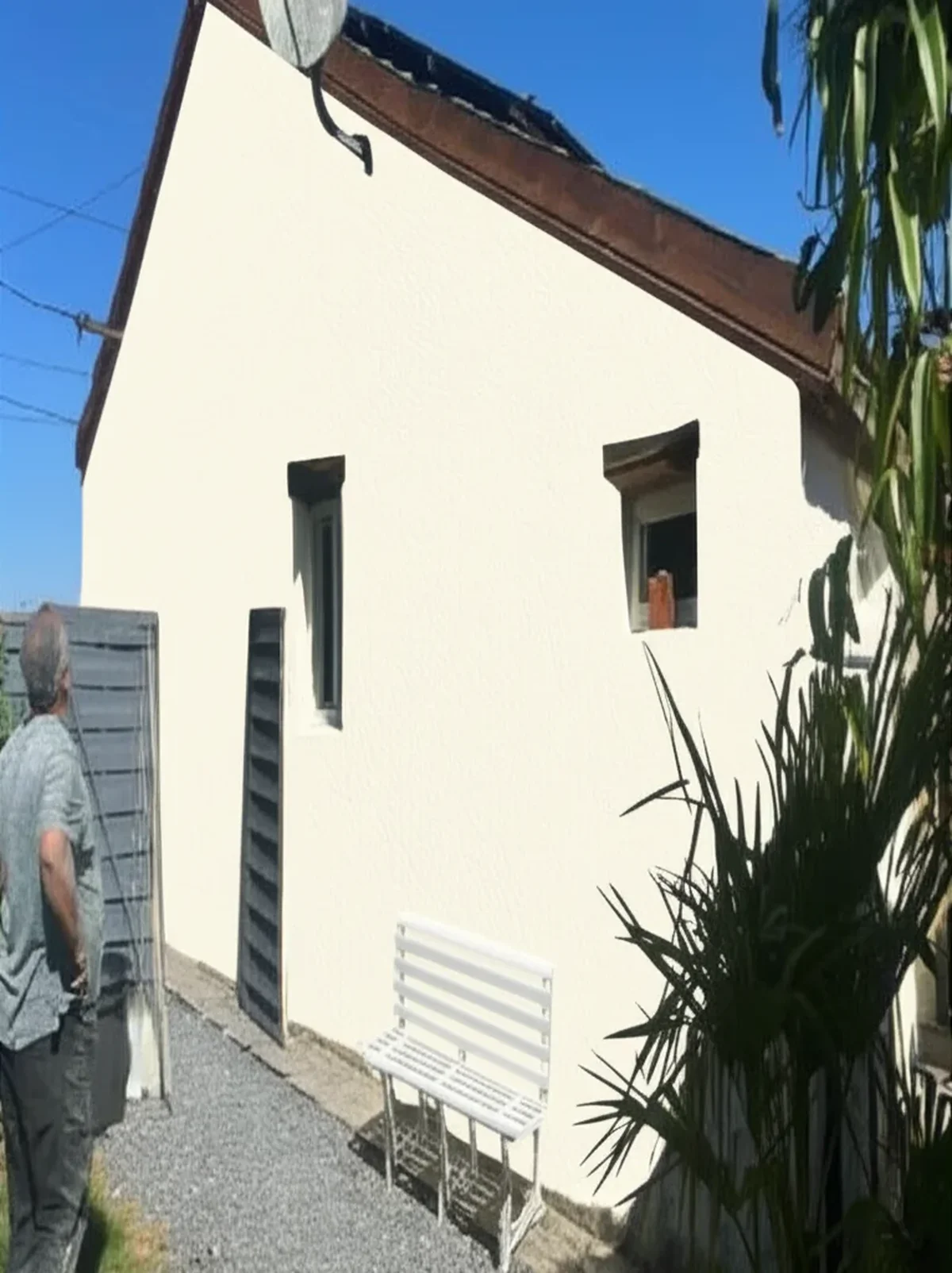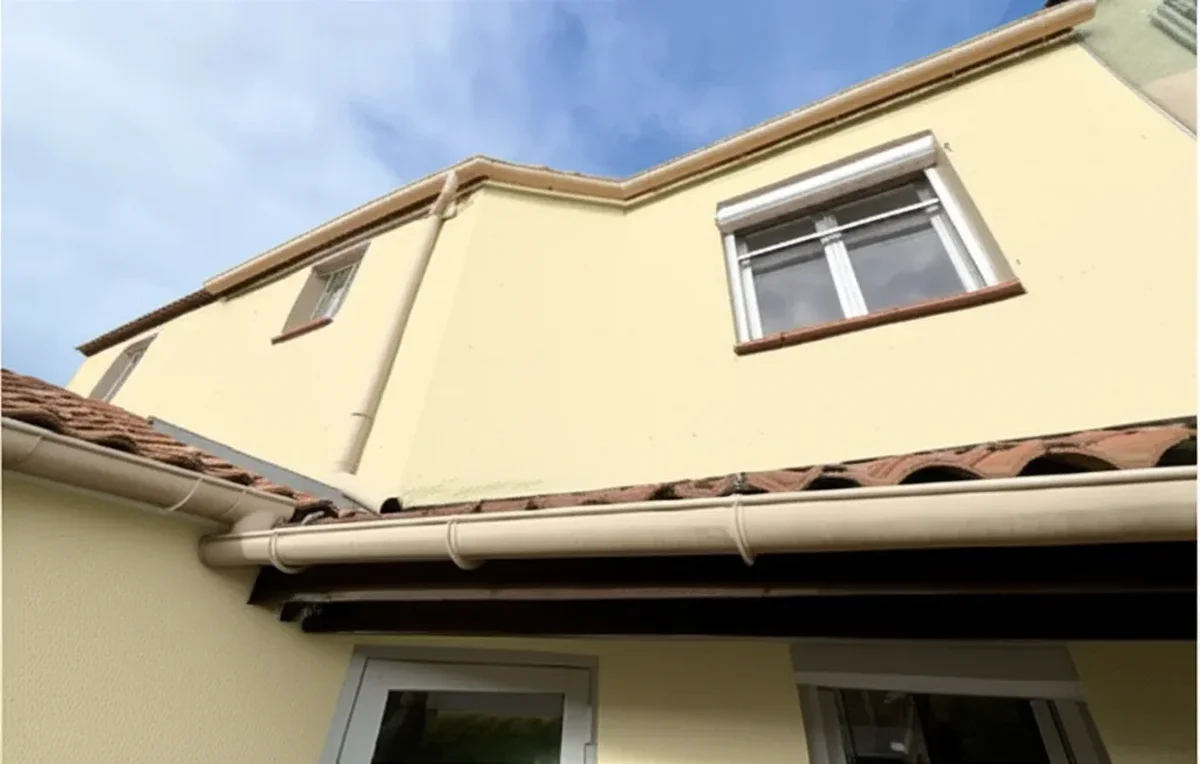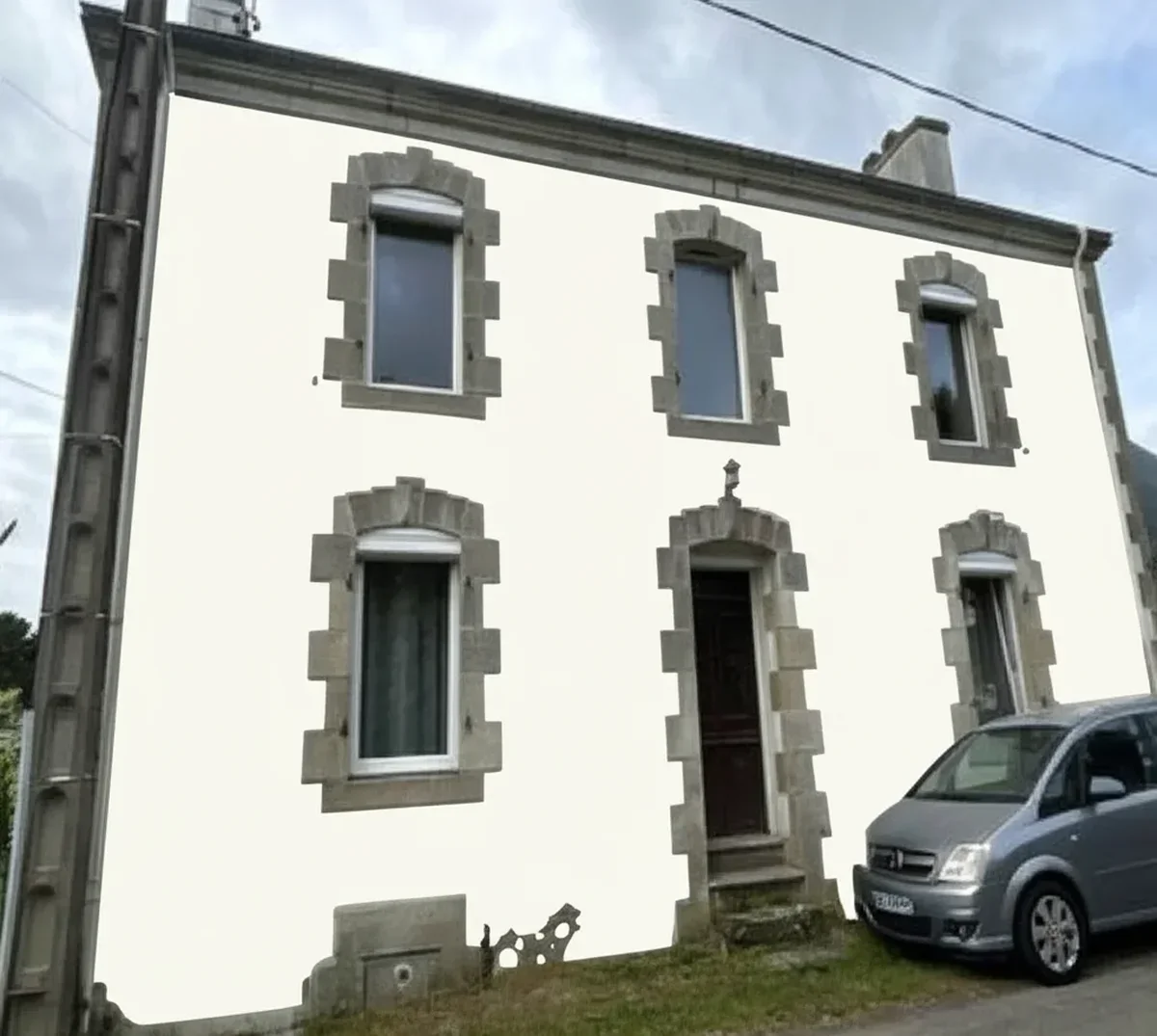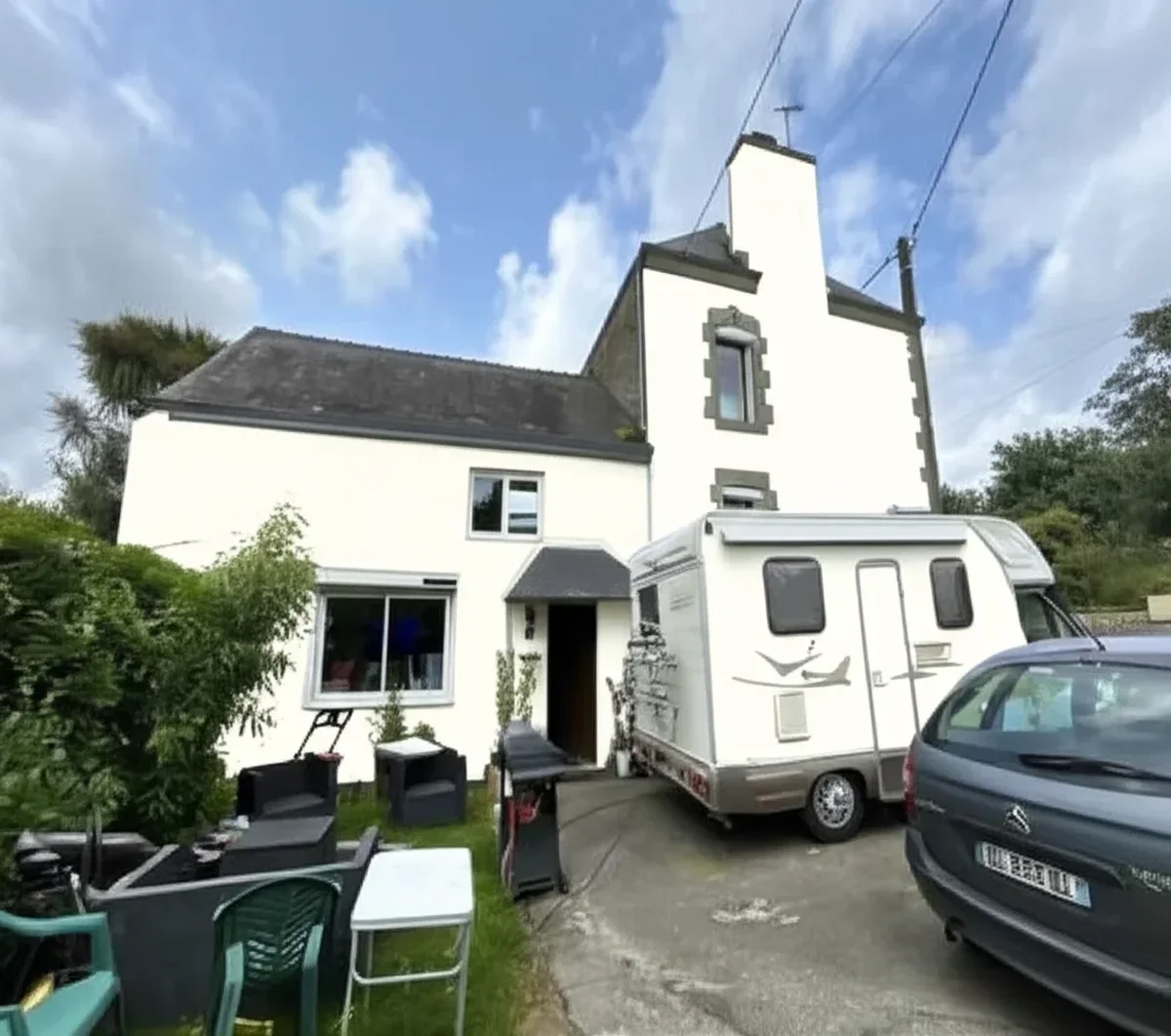
Try it on your house

Quick answer: The best exterior house color combinations in 2026 pair a body color (60% of the facade), a trim color (30%), and a front door or accent (10%) using the 60-30-10 rule. Top trios include warm greige body + crisp white trim + black door, sage green body + cream trim + natural wood door, and white body + navy trim + espresso door. Preview any combination free on your own house photo with AI in 30 seconds, no signup.
FacadeColorizer is a free AI exterior paint visualizer. A great exterior house color combination is never one color in isolation; it is a balanced trio of a body color, a trim color, and a front-door or accent color tuned with matching undertones.
This guide gives you 20 tested body / trim / door trios with exact Sherwin-Williams and Benjamin Moore codes, organized by architectural style, plus the 60-30-10 rule, undertone matching, and roof-color coordination so the three colors actually work together. If you want single-color inspiration rather than full combinations, see our companion guide to outside house color ideas for 2026. To paint a combo onto your facade instantly, use the free exterior paint visualizer.
20 Tested Exterior House Color Combinations (2026)
Each row below is a complete three-color scheme: a body, a trim, and a door/accent, with real SW (Sherwin-Williams) and BM (Benjamin Moore) codes you can take straight to Home Depot, Lowe's, or your paint dealer. Combinations are grouped by the architectural style they suit best, but most cross over freely. If you are drawn to the coastal and Cape Cod trios below, see our dedicated coastal exterior palettes guide for more seaside-tested schemes. Test any trio on your own facade before you buy a single gallon.
| Body (60%) | Trim (30%) | Door / Accent (10%) | Style |
|---|---|---|---|
| SW Agreeable Gray 7029 (greige) | SW Pure White 7005 | SW Tricorn Black 6258 | Modern Farmhouse |
| SW Alabaster 7008 (warm white) | SW Iron Ore 7069 | SW Naval 6244 (navy) | Modern Farmhouse |
| BM Sherwood Tan HC-95 | BM Swiss Coffee OC-45 | BM Salamander 2050-10 (deep green) | Craftsman |
| SW Rookwood Sash Green 2812 | SW Roycroft Vellum 2833 | SW Rookwood Red 2802 | Craftsman |
| BM White Dove OC-17 | BM Hale Navy HC-154 | BM Caliente AF-290 (red) | Coastal Colonial |
| SW Sea Salt 6204 (soft blue-green) | SW Extra White 7006 | SW Drizzle 6479 (teal) | Coastal Cottage |
| SW Evergreen Fog 9130 (sage) | SW Creamy 7012 | Natural cedar / wood door | Mid-Century / Ranch |
| BM October Mist 1495 (sage) | BM Simply White OC-117 | BM Black Beauty 2128-10 | Cottage |
| SW Iron Ore 7069 (charcoal) | SW Alabaster 7008 | SW Sundried Tomato 7585 (warm red) | Contemporary |
| BM Wrought Iron 2124-10 (near-black) | BM Chantilly Lace OC-65 | Natural wood / SW Cavern Clay 7701 | Modern |
| SW Universal Khaki 6150 | SW Extra White 7006 | BM Silhouette AF-655 (espresso) | Transitional |
| BM Revere Pewter HC-172 (greige) | BM White Dove OC-17 | BM Hale Navy HC-154 | Traditional |
| SW Repose Gray 7015 (gray) | SW Pure White 7005 | SW Cascades 7623 (teal-green) | Transitional |
| BM Hale Navy HC-154 (navy body) | BM Simply White OC-117 | Natural oak / SW Roycroft Copper Red 2839 | Coastal / Cape Cod |
| SW Dovetail 7018 (warm gray) | SW Snowbound 7004 | SW Greenblack 6994 | Modern Farmhouse |
| BM Edgecomb Gray HC-173 (greige) | BM White Heron OC-57 | BM Soot 2129-20 (charcoal) | Traditional |
| SW Pewter Green 6208 (deep sage) | SW Shoji White 7042 | SW Cavern Clay 7701 (terracotta) | Spanish / Mediterranean |
| BM Gray Owl OC-52 (light gray) | BM Cloud White OC-130 | BM Newburyport Blue HC-155 | Cape Cod |
| SW Accessible Beige 7036 (warm tan) | SW Aesthetic White 7035 | SW Black Fox 7020 (warm black) | Tudor / Ranch |
| BM Simply White OC-117 (white body) | BM Kendall Charcoal HC-166 | BM Salamander 2050-10 (deep green) | Scandinavian / Minimal |
Try it on your house
No photo? Try a sample
Codes are starting points, not guarantees. Sun exposure, roof color, brick, and stone shift how each combination reads on your specific facade. Before committing, preview these trios on YOUR house, free.
The 60-30-10 Rule for Exterior Color Combinations
Every balanced exterior scheme follows the 60-30-10 rule, the same proportion designers use indoors. It keeps three colors working together instead of competing:
- 60% - the body color: Your siding, stucco, or board-and-batten. This is the dominant tone and the safest place to stay neutral (greige, gray, sage, white, navy). It sets the mood for the whole facade.
- 30% - the trim color: Window casings, fascia, soffit, corner boards, columns, and railings. Trim should contrast the body by at least two steps in value, never sit one shade away. White and off-white trim is the most requested, but charcoal or near-black trim is the fastest-growing 2026 choice.
- 10% - the accent: The front door, shutters, and sometimes the garage door. This is where you add personality with a saturated color (red, teal, deep green, espresso) because it is the smallest, lowest-commitment area to repaint later.
The percentages are a guideline, not a measuring exercise. The goal is hierarchy: one dominant color, one supporting color, one pop. When all three fight for attention (three saturated colors, or three near-equal values), the facade looks busy and dates fast. For the full decision framework including sun exposure and HOA rules, read how to choose an exterior house color in 2026.
How to Match Undertones So the Trio Works
The single most common combination mistake is mixing warm and cool undertones. A greige with a pink undertone fights a trim with a green undertone, and the result looks "off" without anyone being able to say why. Three rules prevent this:
- Keep the body and trim in the same temperature. A warm body (Accessible Beige, Sherwood Tan, Universal Khaki) wants a warm white trim (Alabaster, Swiss Coffee, Creamy). A cool body (Repose Gray, Gray Owl) wants a cooler white (Pure White, Chantilly Lace, Extra White).
- Let the door go warmer or cooler, not both. The 10% accent is your one chance for contrast. A cool gray body with a warm wood or terracotta door reads intentional; a warm beige body with a cool teal door also works. Avoid muddy in-between accents that match nothing.
- Use the color wheel for the accent. Complementary pairings (blue body + warm wood door, green body + red door) carry energy; analogous pairings (sage body + teal door) feel calm. Both are valid; just pick one logic and commit.
Whites are the trickiest part of any trio because they carry strong undertones at scale. For a deep dive on choosing and pairing grays, see our gray exterior paint colors guide, and for door pairings specifically, our front door colors for a gray house roundup.
The most searched version of this question is a beige body with shutters: brown (Tobacco Brown SW 6049, LRV 8) under a brown or terracotta roof, Iron Ore or Tricorn Black under a gray roof, Pewter Green on nearly any beige. Our guide to shutter colors for a beige house gives eight pairings with codes and the undertone rule that decides between them.
Coordinating the Combination With Your Roof Color
Your roof is a fixed element that covers a huge share of the facade, yet most homeowners pick a body color and ignore it. The roof must agree with all three colors in your trio. Here is how the most common roof colors pair:
| Roof Color | Best Body Direction | Safe Combo Example |
|---|---|---|
| Charcoal / Black | Cool grays, navy, white, sage | SW Repose Gray + Pure White + SW Naval door |
| Brown / Weathered Wood | Warm greige, tan, olive, cream | SW Accessible Beige + Aesthetic White + Black Fox door |
| Terracotta / Clay Tile | Warm white, sand, soft sage | SW Shoji White + Pewter Green trim + Cavern Clay door |
| Gray / Slate | Greige, blue-gray, white, charcoal | BM Revere Pewter + White Dove + Hale Navy door |
| Green / Patina | Cream, warm white, soft tan | BM Sherwood Tan + Swiss Coffee + Salamander door |
If your roof has a strong color, treat it as a fourth element in the 60-30-10 logic and let it pull your body toward its temperature. A brown roof over a cool gray body is the most common clash we see in our simulation data.
How Many Colors Should an Exterior Use?
Most homes look best with three colors: body, trim, and accent. Highly detailed styles can stretch to four. Use this as a guide:
- Two colors (body + trim): Clean and modern. Works for contemporary, Scandinavian, and minimalist homes where the door is left natural wood or matched to the trim.
- Three colors (body + trim + door): The default for nearly every style. This is the classic 60-30-10 trio and the safest resale choice.
- Four colors (body + trim + accent + door): Reserved for Victorian, Queen Anne, and ornate Craftsman homes with brackets, spindles, and multiple trim layers. The fourth color should be a close relative of one of the first three, never a brand-new hue.
When in doubt, fewer colors age better. A two- or three-color scheme reads timeless; a five-color "painted lady" scheme reads as a deliberate historical statement that not every buyer wants.
Best Combinations by Architectural Style
The table above is sortable by style for a reason: a combination that sings on a Modern Farmhouse can fall flat on a Tudor. Quick guidance per style:
- Modern Farmhouse: High-contrast neutrals. Warm greige or white body, charcoal-to-black trim, black door (rows 1, 2, 15). Black metal hardware and a metal porch roof complete the look.
- Craftsman: Earthy, layered, often four colors. Tan or sage body, cream trim, a saturated green or red door (rows 3, 4). This style rewards a fourth accent on window sashes.
- Coastal & Cape Cod: White or navy body, crisp white trim, a blue, teal, or natural-wood door (rows 5, 6, 14, 18). Lean cool and bright. Navy bodies are where depth choice does the most work: a true mid-navy and a near-black slate-blue behave very differently once they cover a whole elevation, and the trim and door that flatter one can look thin on the other. Our roundup of navy and dark blue siding shades runs the range with SW and BM codes and a trim plus door pairing for each depth.
- Contemporary & Modern: Two or three colors, high drama. Charcoal or near-black body, white trim, one warm accent like terracotta or wood (rows 9, 10).
- Spanish & Mediterranean: Warm white or soft sage body, terracotta accents that echo a clay-tile roof (row 17).
- Log and timber homes: The one style the table above does not stretch to. The body is stained wood rather than a chosen color, so the 60-30-10 split collapses into trim and roof decisions taken on top of a field you inherit. Work the stain opacity first, then the trim: our log cabin exterior color schemes guide covers that order.
If you prefer to build your combination entirely from one brand's deck, our Sherwin-Williams exterior color combinations guide pairs SW codes only, and the Sherwin-Williams color visualizer lets you apply them directly to your photo.
Color Combinations That Increase Home Value
Combinations are not just an aesthetic choice; the right trio measurably affects resale price and days on market. Real estate data from Zillow and the National Association of Realtors points to a few consistent winners:
- Warm greige body + white trim + black door: The highest-resale neutral trio (rows 1 and 16). Homes in warm greige sell for an average of 3 to 5 percent above asking. It photographs cleanly, appeals to the widest buyer pool, and reads "move-in ready."
- Soft sage body + cream trim + wood door: The fastest-rising value combination for 2026, especially on Craftsman and Ranch homes. The nature-forward palette signals a recently updated, well-maintained property.
- White or navy body + crisp trim + navy or red door: Coastal and Cape Cod buyers respond strongly to high-contrast classic schemes. A dark front door alone is the single highest-ROI accent because it transforms curb appeal for the cost of one quart.
- Avoid three bold colors: A saturated body, saturated trim, and saturated door can shrink your buyer pool by up to 30 percent. Keep boldness in the 10% accent only.
If your home has an HOA, submit your full trio for pre-approval before buying paint; many boards keep an approved palette favoring neutral bodies and muted accents.
5 Combination Mistakes That Make a Facade Look Off
Most failed exterior schemes come down to the same handful of pairing errors. Avoid these and almost any trio in the table above will land:
- Body and trim too close in value. If they are within one shade of each other, the trim disappears and the facade looks flat. Keep at least two steps of contrast.
- Mixed undertones. A pink-leaning greige body under a green-leaning white trim is the classic "why does this look wrong" problem. Match temperatures.
- Ignoring the roof. A cool gray body under a warm brown roof reads as a mismatch from the curb. Pull the body toward the roof temperature.
- An accent that matches nothing. A muddy in-between door color (a dusty mauve that is neither warm nor cool) reads as indecision. Commit the door to warm or cool.
- Too many colors. Four or five competing hues date a home fast unless the architecture (Victorian, Queen Anne) specifically calls for it.
How to Test a Combination Before You Commit
Still weighing the wider palette? Our pillar guide to the 2026 Best Exterior Paint Colors ranks the shades that are actually selling this year, with the exact Sherwin-Williams and Benjamin Moore codes for each.
A trio that looks perfect on a screen or a fan deck can read completely differently on 2,000 square feet of your own siding under your own light. Here is the process professional color consultants use:
- Start with the fixed elements. Roof, brick, stone, and driveway do not change. Pull your body color from their temperature first.
- Preview the full trio digitally. Upload a photo of your home to FacadeColorizer and apply body, trim, and door at once. Seeing all three together on your real facade eliminates most bad combinations before you buy anything.
- Order peel-and-stick samples. Once the digital trio looks right, get large physical swatches and tape them to north- and south-facing walls.
- Watch them for 48 hours. Check at dawn, noon, and dusk. Undertones and the relationship between body and trim shift dramatically with light.
- Confirm contrast. Stand across the street. If body and trim blur into one color, increase the contrast; if the door disappears, saturate it.
Preview Any Combination on Your Home - Free
Why gamble with a $5,000+ project? FacadeColorizer lets you upload a photo of your home and apply any body, trim, and door combination from Sherwin-Williams, Benjamin Moore, Behr, PPG, and Valspar to your siding, trim, fascia, soffit, and front door in seconds. Compare three to five complete trios side by side, then share the winner with your painting contractor, your HOA board, or your partner before committing. It is 100% free, requires no signup, and works on phone or desktop. For single-color browsing instead of full combinations, start with our outside house color ideas guide. Preview these combinations on YOUR house, free.
Frequently asked questions
What are the best exterior house color combinations for 2026?
What is the 60-30-10 rule for exterior paint?
How do I match exterior color undertones?
How many colors should a house exterior have?
How do I coordinate exterior colors with my roof?
What trim color goes with a gray house?
Can I preview an exterior color combination on my house before painting?
How many simulations is the 2026 Facade Color Barometer based on?
Trademarks mentioned (Sherwin-Williams, Benjamin Moore, Behr, Caparol, Brillux, Sto, Alpina, Valspar, PPG, Glidden, Dulux, Crown Trade, Sandtex, Farrow & Ball, Johnstone's, Leyland) are property of their respective owners. FacadeColorizer is independent and not affiliated with any of them. Nominative fair use under Lanham Act §1125.