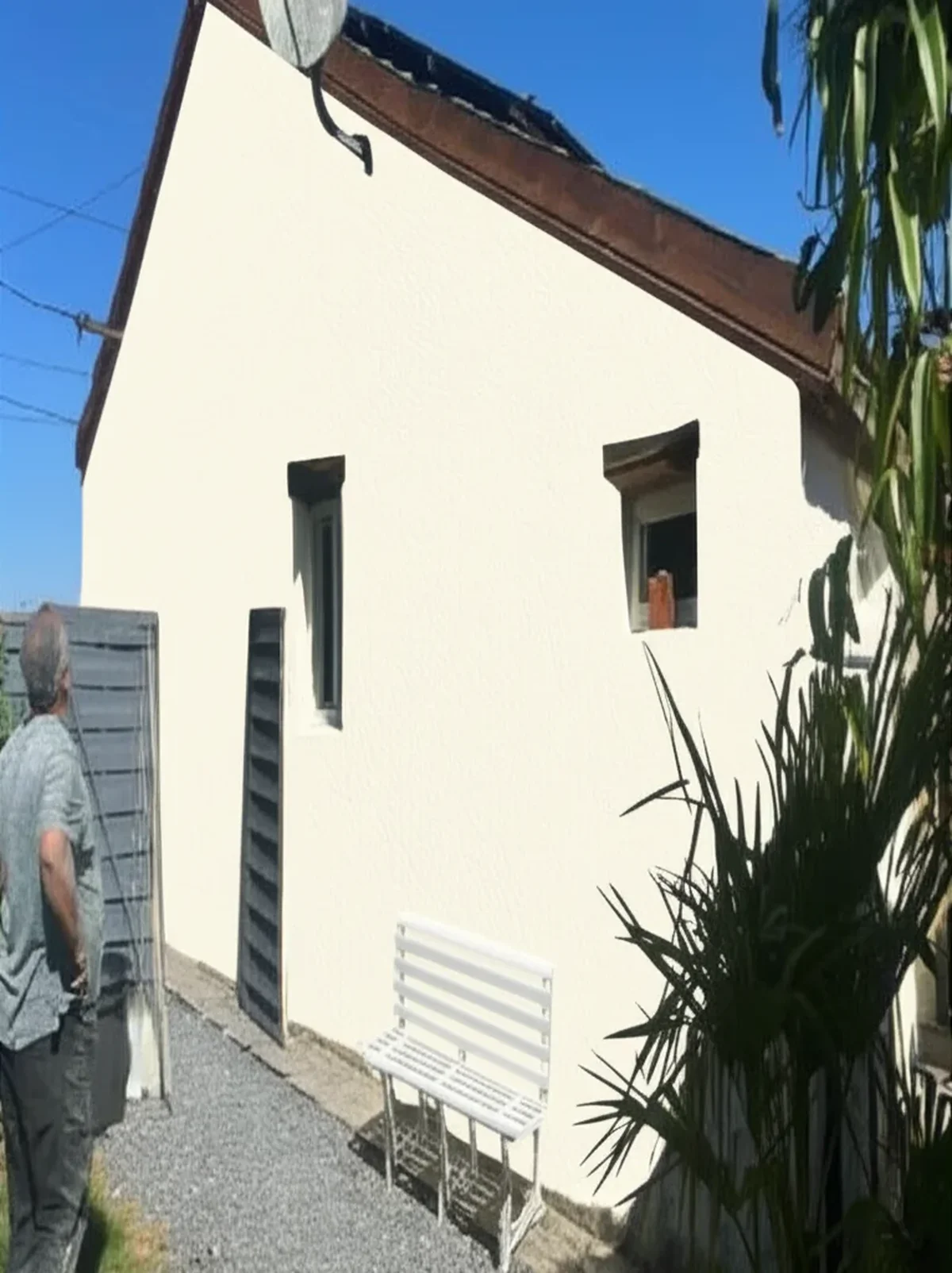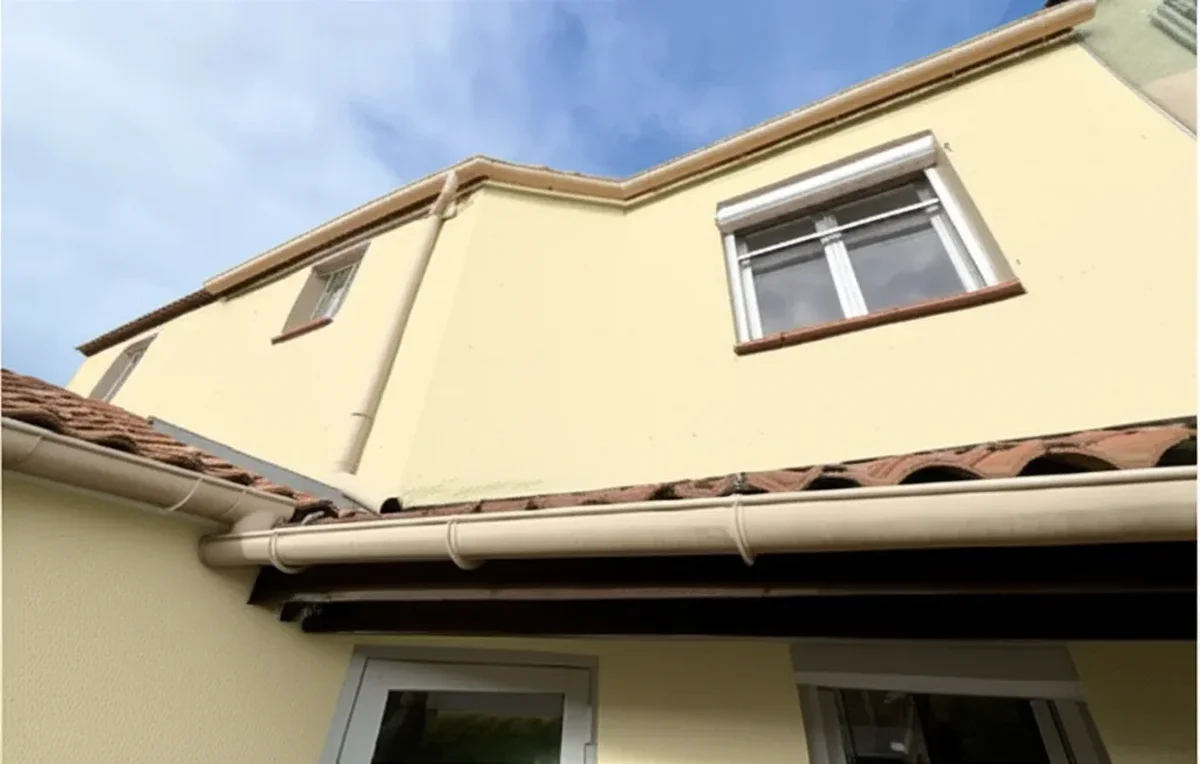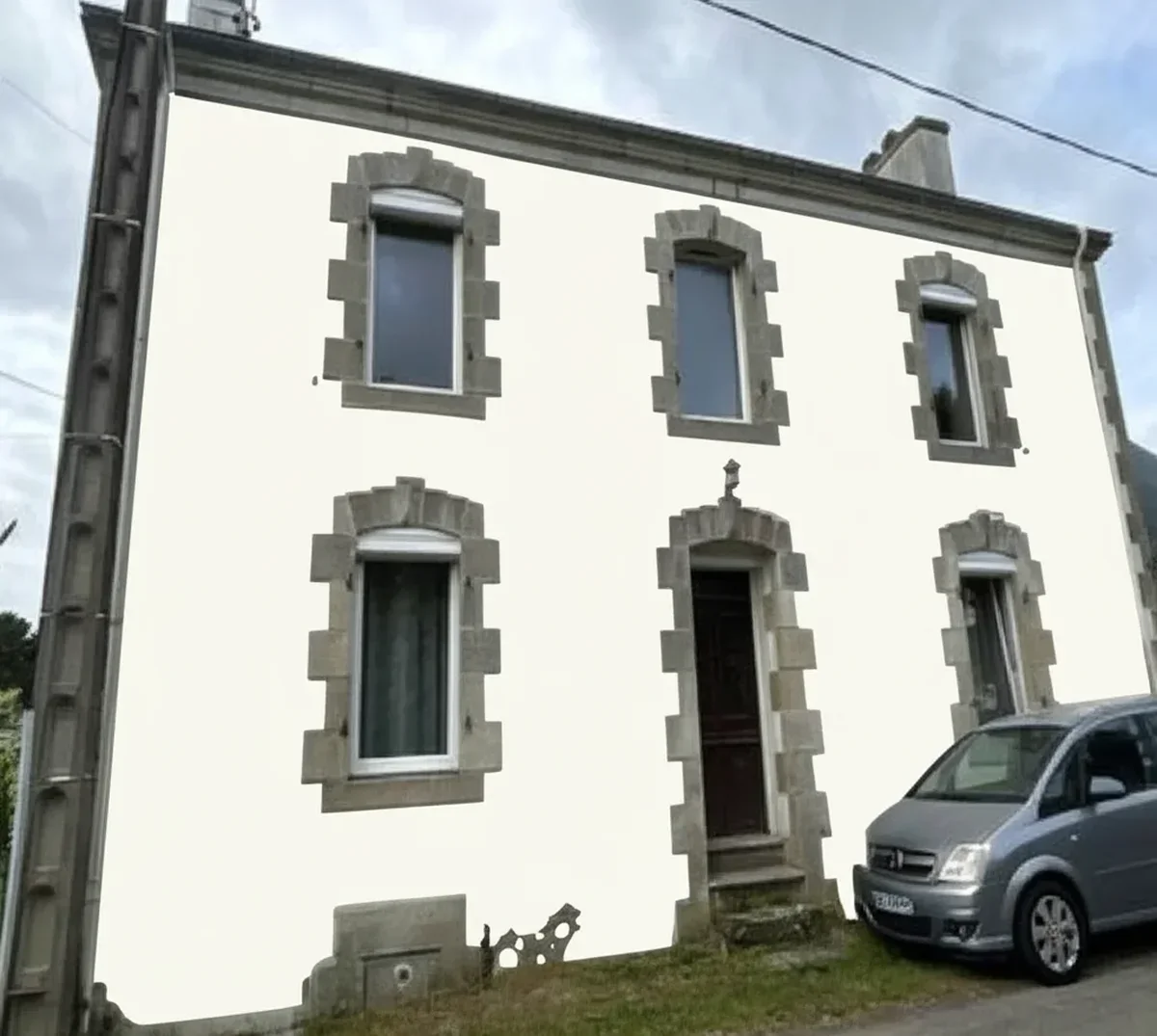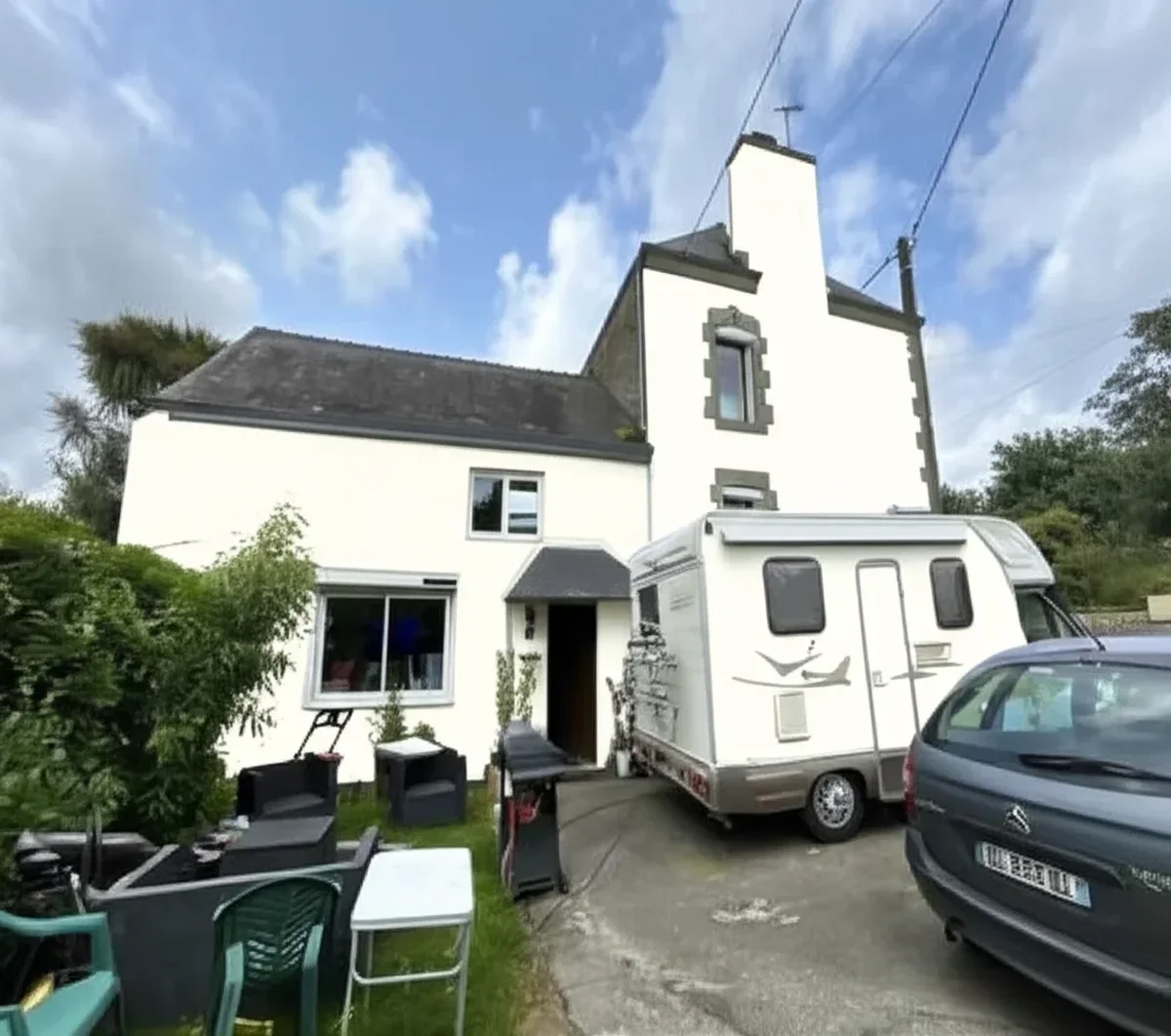
Try it on your house

Quick answer: A tan house with green shutters is the most heritage-correct of all traditional American exterior schemes, rooted in the 1930s restoration of Colonial Williamsburg. Green shutters bring forest depth without the harshness of black, and pair naturally with brick, slate, cedar, and asphalt brown roofs. Top tested trios include SW Latte 6108 + Pewter Green 6208, BM Manchester Tan HC-81 + Boxwood Green CC-554, and BM Bleeker Beige + Hunter Green 2041-10. Preview any pairing free on your own house in 30 seconds, no signup.
A tan house with green shutters is the architectural equivalent of a well-cut blazer: quietly correct, slightly understated, and impossible to date. This guide lists the 5 best tan + green shutter pairings for 2026, with exact Sherwin-Williams and Benjamin Moore codes, roof and door coordination, and the architectural styles where each pairing belongs. You can preview any pairing free on your own home in about 30 seconds. For the broader 60-30-10 framework, start with our pillar guide on exterior house color combinations 2026.
Why tan + green shutters works: the Williamsburg-Federal rule
Tan and green are split-complementary on the color wheel: tan carries a warm yellow-red base, green pulls cool blue-yellow. When you pair them on a facade, the green shutters introduce just enough contrast to register as architectural punctuation, but never enough to fracture the composition. The result is the unmistakable look of Colonial Williamsburg, Federal, Cape Cod, and traditional New England homes, where the goal is rootedness rather than punch. For context on how warm tan neutrals behave across a full facade, see our overview of warm exterior paint colors for 2026.
The pairing also has a defensible historical pedigree. When John D. Rockefeller funded the restoration of Colonial Williamsburg in the 1930s, the team led by W.A.R. Goodwin scraped 18th-century paint samples from clapboard and shutter fragments. The dominant scheme that emerged was warm putty-tan bodies with forest-green shutters, drawn from natural pigments (yellow ochre for the body, verdigris and chromium green for the shutters) that were locally available in colonial Virginia. Modern SW and BM Williamsburg-collection codes are direct descendants of these scraped originals, which is why the look reads as authentically heritage rather than themed-restaurant.
Upload a photo of your home and preview all 5 tan + green pairings in 30 seconds.
The 5 best tan house + green shutter pairings for 2026
1. SW Latte 6108 + Pewter Green SW 6208 shutters
The most popular tan + green pairing in the Sherwin-Williams lineup. Latte (LRV 47) is a creamy, slightly golden tan that reads warm without going yellow, anchoring the facade in heritage territory. Pewter Green SW 6208 (LRV 12) is a deep, gray-shifted forest green that registers as distinctly green from the curb but never goes saturated. This pairing is the safest universal choice for traditional Colonials, two-story Federals, and Cape Cods built between 1920 and 1985. For Pewter Green's full undertone breakdown, see Sherwin-Williams' official Pewter Green page.
2. BM Manchester Tan HC-81 + Boxwood Green CC-554 shutters
The Benjamin Moore Historical Collection answer, and the closest thing to a literal Williamsburg-restoration palette available off the shelf. Manchester Tan HC-81 (LRV 62) is a soft, slightly green-shifted tan, paler than Latte but with the same warm gravity. Boxwood Green CC-554 (LRV 19) is a mid-tone forest green named for English boxwood hedges. Both colors live in BM's Historical Collection, which means HOA approval in heritage neighborhoods is essentially automatic. Best for Cape Cods, saltboxes, and side-gabled Colonials. For Manchester Tan's full breakdown, see Benjamin Moore's official Manchester Tan page.
3. SW Practical Beige 6100 + Olive Grove SW 9410 shutters
The olive-leaning option for owners who want the Williamsburg look without the deep forest green. Practical Beige (LRV 56) is a slightly cooler, more gray-leaning tan that reads modern-traditional. Olive Grove SW 9410 (LRV 18) is a muted olive green with a yellow base, which echoes Mediterranean olive groves rather than New England forests. This pairing works on tract Colonials, transitional homes, and any property where the surrounding landscape is more meadow than woods. Strong choice in California, the Carolinas, and the Mid-Atlantic.
4. BM Tate Olive HC-112 trim + Soft Cream OC-15 body
The inverted heritage option: a near-white tan body with deeper olive trim and shutters. Soft Cream OC-15 (LRV 78) is a buttery off-white that reads as tan in shadow and cream in sun, an effect documented across Colonial Williamsburg's clapboard frame houses. Tate Olive HC-112 (LRV 22) is a brown-olive that lives in the Historical Collection and reads as distinctly green-brown rather than pure forest. Best for narrow Federal townhouses, two-story Colonials with prominent trim, and any home where a paler body is desired. Pair with a Soft Cream OC-15 trim around the windows themselves to layer the warm whites.
5. BM Bleeker Beige HC-80 + Hunter Green 2041-10 shutters
The boldest of the five, for owners who want the green shutters to actually read green from across the street. Bleeker Beige HC-80 (LRV 56) is a balanced greige-tan that holds its own against high-contrast trim. Hunter Green 2041-10 (LRV 7) is a saturated, true forest green with a slight blue base, deeper than Pewter Green or Boxwood Green. This is the pairing for traditional Colonials where the architecture can carry the visual weight: tall narrow shutters, six-over-six windows, and a symmetrical entry. Pair with a white door and brass hardware for the textbook Federal look. Try Bleeker Beige + Hunter Green on your facade before committing.
Full color table with hex, SW/BM codes, and LRV
| # | Body (Tan) | Body Hex | Body LRV | Shutters (Green) | Shutter Hex | Shutter LRV |
|---|---|---|---|---|---|---|
| 1 | SW 6108 Latte | #C6A98A | 47 | SW 6208 Pewter Green | #5B6A5C | 12 |
| 2 | BM HC-81 Manchester Tan | #D9CDB6 | 62 | BM CC-554 Boxwood Green | #6B7059 | 19 |
| 3 | SW 6100 Practical Beige | #CFBFA6 | 56 | SW 9410 Olive Grove | #74704F | 18 |
| 4 | BM OC-15 Soft Cream | #E9DFC7 | 78 | BM HC-112 Tate Olive | #6C6147 | 22 |
| 5 | BM HC-80 Bleeker Beige | #CFBFA7 | 56 | BM 2041-10 Hunter Green | #2B3A2E | 7 |
Try it on your house
No photo? Try a sample
Why green shutters: rooted in colonial Williamsburg restoration palettes
Most homeowners asking about green shutters in 2026 are reaching, knowingly or not, for the Colonial Williamsburg palette that was codified in the 1930s. When the Rockefeller-funded restoration began in 1928, the curatorial team faced a problem: most 18th-century buildings had been overpainted dozens of times, and no comprehensive paint record existed. The solution was painstaking scraping of original surfaces, color matching against samples preserved under hardware and beneath later coats, and consultation with surviving colonial paint recipes.
What emerged was a palette of warm putty-tan and ochre body colors paired with verdigris and chromium-green shutters. The greens were never the harsh emerald of Victorian-era trim; they were muted, slightly gray-shifted, and read as forest rather than fern. Sherwin-Williams' Preservation Palette (launched in 2014 with the Colonial Williamsburg Foundation) and Benjamin Moore's Williamsburg Collection (launched 2009) both translate these scraped colors into modern formulations. This is why a Pewter Green or Boxwood Green shutter on a tan Colonial does not look themed: it is literally the same color family the original 18th-century painters used.
The practical upshot for modern homeowners: green shutters in this muted forest family are nearly always HOA-approved in heritage districts, including registered historic neighborhoods in Annapolis, Williamsburg, Boston, Charleston, and Savannah. For full HOA logic, see our HOA-approved exterior colors guide for 2026.
Hunter green vs sage vs olive: choosing the right green spectrum
Not all greens read the same on shutters. Three distinct sub-families to choose from, each with a different facade outcome:
- Hunter green (LRV 6 to 10): deep, blue-shifted forest green. Reads as nearly black from a distance, with the green only emerging up close. BM Hunter Green 2041-10, SW Rookwood Dark Green 2816, BM Essex Green HC-188. Best for high-contrast Federal and traditional Colonials.
- Forest / Pewter / Boxwood (LRV 11 to 22): muted mid-tone greens with gray undertones. The Williamsburg-correct family. SW Pewter Green 6208, BM Boxwood Green CC-554, BM Tate Olive HC-112. Best for Cape Cods, saltboxes, and tan-bodied Colonials.
- Sage / Olive (LRV 17 to 30): paler, gray-green or yellow-green tones. Modern and softer. SW Olive Grove 9410, SW Evergreen Fog 9130, BM Sage Tint 458. Best for transitional Colonials and modern-traditional rebuilds.
- Avoid: pure Kelly green, emerald, and any saturated bright green. These read as Irish-pub themed, not heritage.
For homeowners considering a full green facade rather than just shutters, our deep-dive on best exterior green paint colors for 2026 covers body-color logic in detail.
Free. No signup. All 5 pairings rendered on your own house photo.
Roof pairings: asphalt brown, slate, cedar shake
A tan + green shutter facade reads best when the roof reinforces either the warm body or the cool shutters without competing. The three roof types that consistently work:
- Asphalt brown shingle: the universal default for pairings 1, 2, and 5. Look for CertainTeed Weathered Wood, GAF Barkwood, or Owens Corning Driftwood. The brown picks up the tan body and lets the green shutters punctuate.
- Natural slate: the heritage-correct choice for Federal and high-budget Colonial restorations. Slate's gray-blue base reinforces the green shutters and reads as period-correct, especially in the Mid-Atlantic and New England.
- Cedar shake (natural or stained): best with pairings 2 (Manchester Tan + Boxwood Green) and 4 (Soft Cream + Tate Olive). The wood grain adds texture that elevates the Cape Cod feel.
- Avoid: bright terracotta tile (clashes with green shutters), and pure-black asphalt shingles, which can make Hunter Green shutters disappear entirely.
For full roof-and-body coordination logic, see our exterior trim paint colors guide for 2026, or render your roof + tan body + green shutters together in 30s to confirm the trio before painting.
Door accent: black, brass, or warm white
The front door is the 10 percent accent in the 60-30-10 rule. With a tan body and green shutters already establishing the heritage scheme, the door has three correct options:
- Black door: the resale-safe baseline. Tricorn Black (SW 6258), Black Beauty (BM 2128-10), or Onyx (BM 2133-10). Pairs with all 5 trios above. Adds Federal-traditional weight without competing with the green shutters.
- Brass-toned door (deep mustard or aged brass paint): the unexpected heritage move. BM Old Gold 169 or SW Roycroft Bottle Green 2847 work well for owners wanting a true 18th-century reference. Pair with brass hardware.
- Warm white door: BM White Dove OC-17 or SW Alabaster 7008 for a Cape Cod or saltbox where the door should feel like a continuation of the trim rather than a punch. Best with pairing 4 (Soft Cream + Tate Olive).
- Avoid: bright red doors with green shutters (Christmas-themed), navy doors (competes with green), and pure cool gray doors (clashes with warm tan).
That mustard door has a much louder relative, and the comparison explains why the tan version has to stay muted. On a cool body the same yellow can be taken all the way up: the five pairings in our guide to a dark blue house with yellow door run from a golden yellow with brown depth to a clean citrus, and the facade absorbs it because the body is cool. On a tan body the yellow is landing on warmth that is already there, so deep mustard or aged brass is about as far as it can go before the door and the walls start competing.
For homeowners weighing white trim choices around the door itself, our breakdown of warm whites in the exterior trim paint colors guide covers undertone matching across the trim, door, and gutter system.
Style fit: Colonial, Federal, Williamsburg, Cape Cod
Tan + green shutters is a deliberately narrow palette tuned for four style families. Outside these styles, the scheme can read as themed or out of place:
- Traditional Colonial (1700-1830 originals, plus modern reproductions): two-story symmetrical homes with central entry, six-over-six windows. All 5 pairings work; start with pairing 1 (Latte + Pewter Green) or pairing 5 (Bleeker Beige + Hunter Green). For the full style guide, see our colonial home exterior paint colors 2026.
- Federal (1780-1840): taller, more vertical Colonials with narrow trim, fanlight transoms, and prominent shutters. Pairing 5 (Bleeker Beige + Hunter Green) is the textbook Federal scheme.
- Williamsburg-restoration (any decade, any reproduction): homes built or restored to reference the 1930s Williamsburg palette. Pairing 2 (Manchester Tan + Boxwood Green) is literally drawn from this collection.
- Cape Cod (1920-1985): low-slung side-gabled homes with dormers, central chimney, and shingled or clapboard siding. Pairings 2 and 4 are strongest. For deep coverage, see our Cape Cod house exterior paint colors top 15 guide.
- Avoid on: Mediterranean homes, Spanish revivals, Modern farmhouses, mid-century Ranches, and Craftsman bungalows. Each of these styles wears different shutter palettes.
If you are weighing tan + green against the warmer tan + brown shutter family, our companion guide on beige house brown shutters for 2026 covers when to pick brown over green.
Common mistakes with tan + green shutters
- Picking a saturated kelly or emerald green: instantly themes the facade. Stay in the muted forest, pewter, boxwood, hunter, or olive families.
- Pairing with a tan body that is too yellow: greens look acidic against yellow-tan. Pick a tan with a slight gray or pink base (Latte, Manchester Tan, Bleeker Beige) rather than a butterscotch tan.
- High-gloss shutter finish: looks plastic, defeats heritage. Use satin or low-sheen.
- Matching the door to the shutters: kills layering. Door should be black, brass, or warm white, not green.
- Skipping the drawdown sample: green shifts dramatically with light. A muted Pewter Green at noon can read teal at golden hour. Always test a 2-by-3-foot drawdown on the actual facade.
- Picking shutters out of LRV range: shutters that are too pale (LRV above 28) vanish on a mid-tone tan body; shutters too dark (Hunter Green at LRV 7) need a higher-LRV body to read at all. Aim for 25-40 LRV points of separation.
For the broader 2026 exterior color shortlist, see our overview of the best exterior paint colors 2026. Independent inspiration on heritage tan and green-shutter facades is widely cataloged on Better Homes & Gardens, which publishes exterior color galleries refreshed every spring.
Visualize any tan + green pairing on your home
Reading about Manchester Tan and Pewter Green is one thing. Seeing the exact pair on YOUR house, with your roof, your driveway, and your landscaping, is what tells you whether it works. Use our free AI paint visualizer to upload a photo of your home and preview all 5 tan + green shutter pairings in about 30 seconds. No signup, no credit card. Updated June 2026 with the full SW Preservation and BM Williamsburg palette codes.
Free. Instant results. All 5 tan + green pairings rendered.
Frequently asked questions
What is the best green shutter color for a tan house?
Sherwin-Williams Pewter Green SW 6208 and Benjamin Moore Boxwood Green CC-554 are the two most popular green shutter colors for tan houses in 2026. Both sit in the muted forest range (LRV 12 to 19), dark enough to register as distinct shutters but gray-shifted enough to avoid looking themed. For bolder Federal-style facades, step to Hunter Green BM 2041-10 (LRV 7).
Are green shutters out of style in 2026?
No. Green shutters were briefly out of fashion from 2010 to 2020 when all-black-everything dominated traditional exteriors, but they have returned strongly in 2024 to 2026 as the Williamsburg-Colonial palette regained cultural authority. Both Sherwin-Williams Preservation Palette and Benjamin Moore Williamsburg Collection (the two green-shutter gold standards) are accepted by virtually every HOA and historic district in the US.
What is the difference between hunter green, sage, and olive shutters?
Hunter green is the deepest (LRV 6-10, blue-shifted, near-black from distance). Forest/Pewter/Boxwood greens are mid-tone (LRV 11-22, gray-shifted, the Williamsburg-correct family). Sage and olive are paler (LRV 17-30, yellow or gray-green). On a tan house, mid-tone forest greens (Pewter Green, Boxwood Green) are the safest universal choice; Hunter Green is for bold Federal-style facades; sage and olive are for transitional Colonials.
What roof color goes with tan siding and green shutters?
Three best options: asphalt brown shingle (CertainTeed Weathered Wood, GAF Barkwood) is the universal default; natural slate is the heritage-correct choice for Federal and Colonial restorations; and cedar shake works on Cape Cods and saltboxes. Avoid bright terracotta tile (clashes with green) and pure black asphalt (makes Hunter Green shutters disappear).
What door color works with tan house and green shutters?
Three correct choices: a black door (SW Tricorn Black 6258 or BM Black Beauty 2128-10) for resale safety and Federal-traditional weight; a brass-toned door (BM Old Gold 169) for an 18th-century reference paired with brass hardware; or a warm white door (BM White Dove OC-17, SW Alabaster 7008) on Cape Cods. Avoid bright red doors (Christmas-themed with green shutters), navy doors (competes with green), and cool gray doors (clashes with warm tan).
Is tan with green shutters HOA-approved?
Yes, in virtually every US HOA, and especially in heritage districts. Codes from the BM Williamsburg Collection (Manchester Tan HC-81, Boxwood Green CC-554, Tate Olive HC-112) and the SW Preservation Palette appear on pre-approved palettes in registered historic neighborhoods from Annapolis to Charleston. Submission turnaround is typically 14 to 30 days; include drawdown samples and a heritage-palette reference with your application.
What style of house looks best with tan and green shutters?
Four style families: traditional Colonial (1700-1830 originals and modern reproductions), Federal (1780-1840 with narrow trim and fanlight transoms), Williamsburg-restoration homes, and Cape Cods (1920-1985 with dormers). Outside these styles, the scheme can read as themed. Mediterranean homes, Spanish revivals, Modern farmhouses, mid-century Ranches, and Craftsman bungalows wear different shutter palettes.
How do I test a tan and green shutter combo before painting?
Two steps. First, use a free AI exterior paint visualizer like FacadeColorizer to preview the exact SW or BM codes on a photo of your actual home in about 30 seconds. This rules out 80 percent of bad pairings instantly. Second, buy 8oz sample pots of your top 2 pairings and paint 2-by-3-foot drawdowns on the actual facade, observed at morning, noon, and golden-hour light over 48 hours. Green shifts dramatically with light angle (a muted Pewter Green at noon can read teal at golden hour), so on-house testing is essential.
Trademarks mentioned (Sherwin-Williams, Benjamin Moore, Behr, Caparol, Brillux, Sto, Alpina, Valspar, PPG, Glidden, Dulux, Crown Trade, Sandtex, Farrow & Ball, Johnstone's, Leyland) are property of their respective owners. FacadeColorizer is independent and not affiliated with any of them. Nominative fair use under Lanham Act §1125.