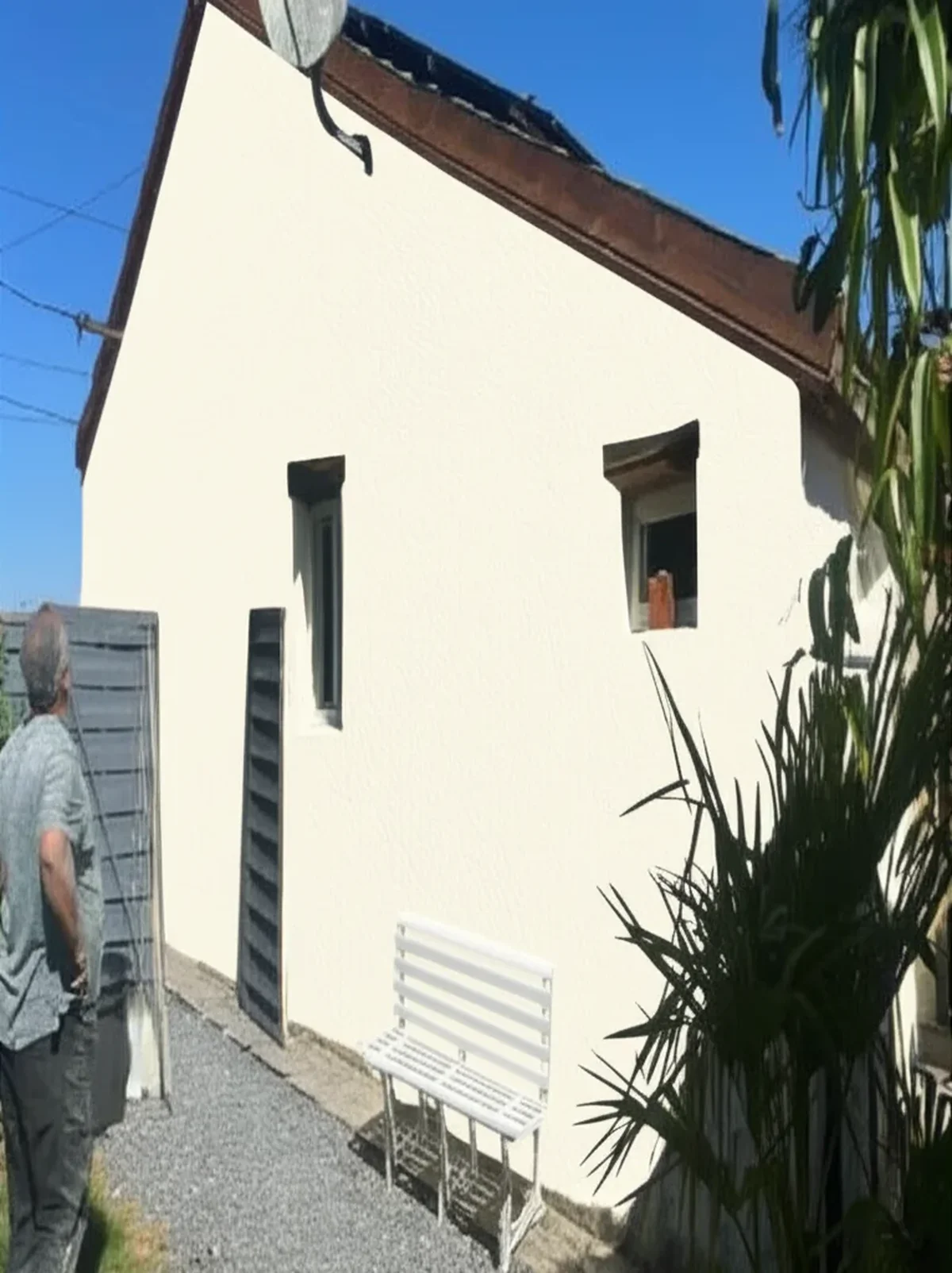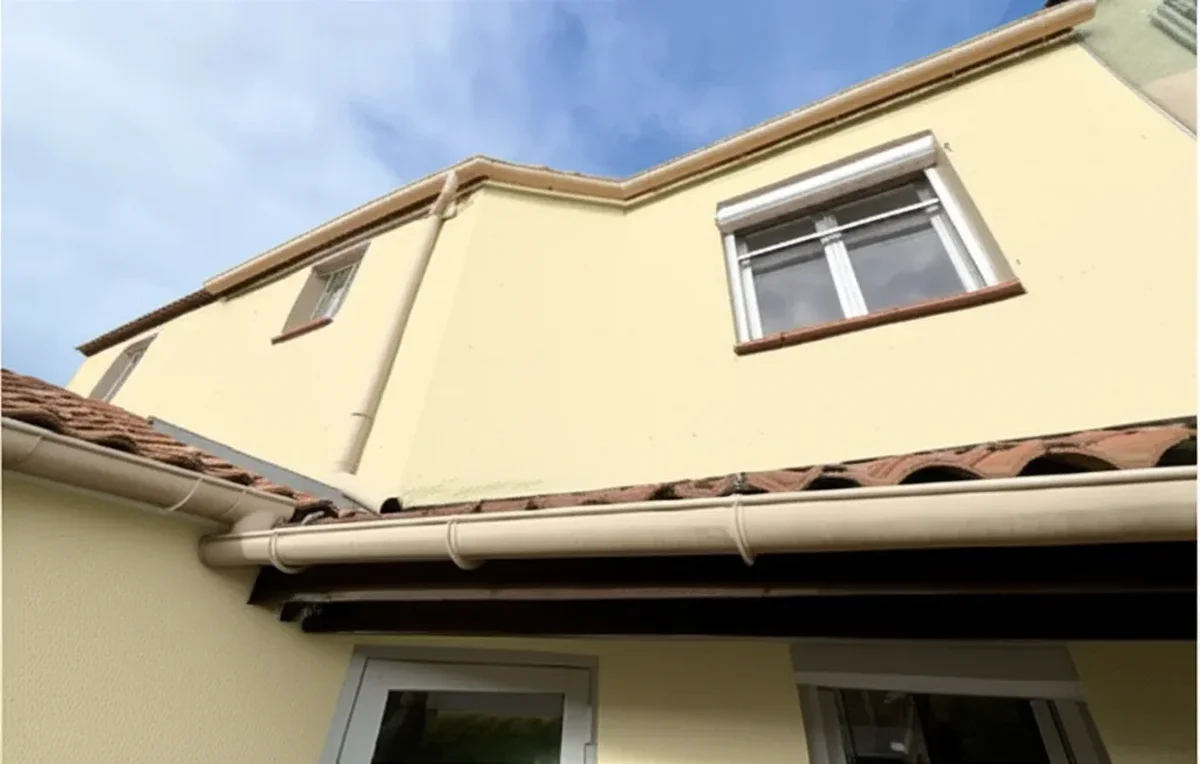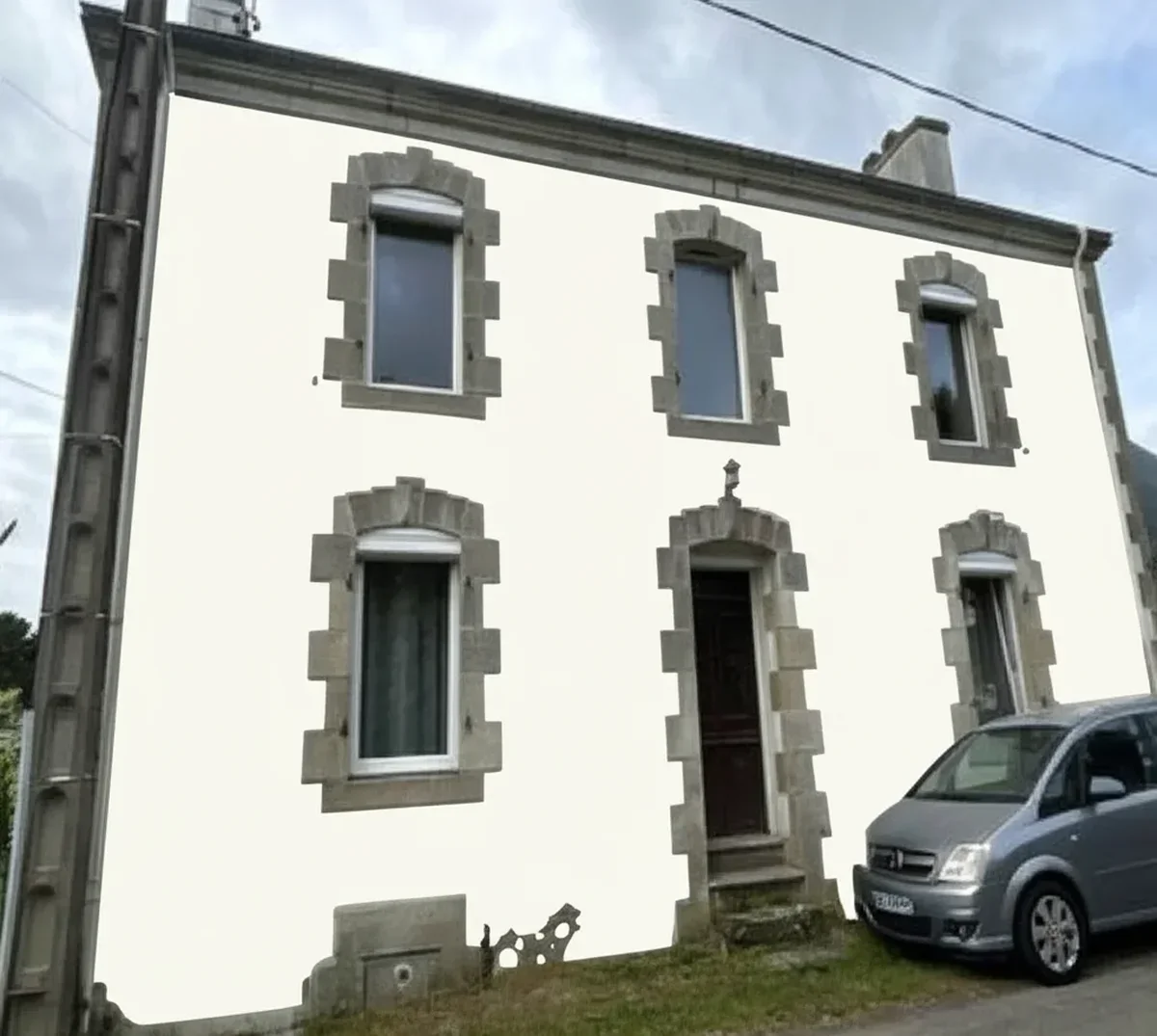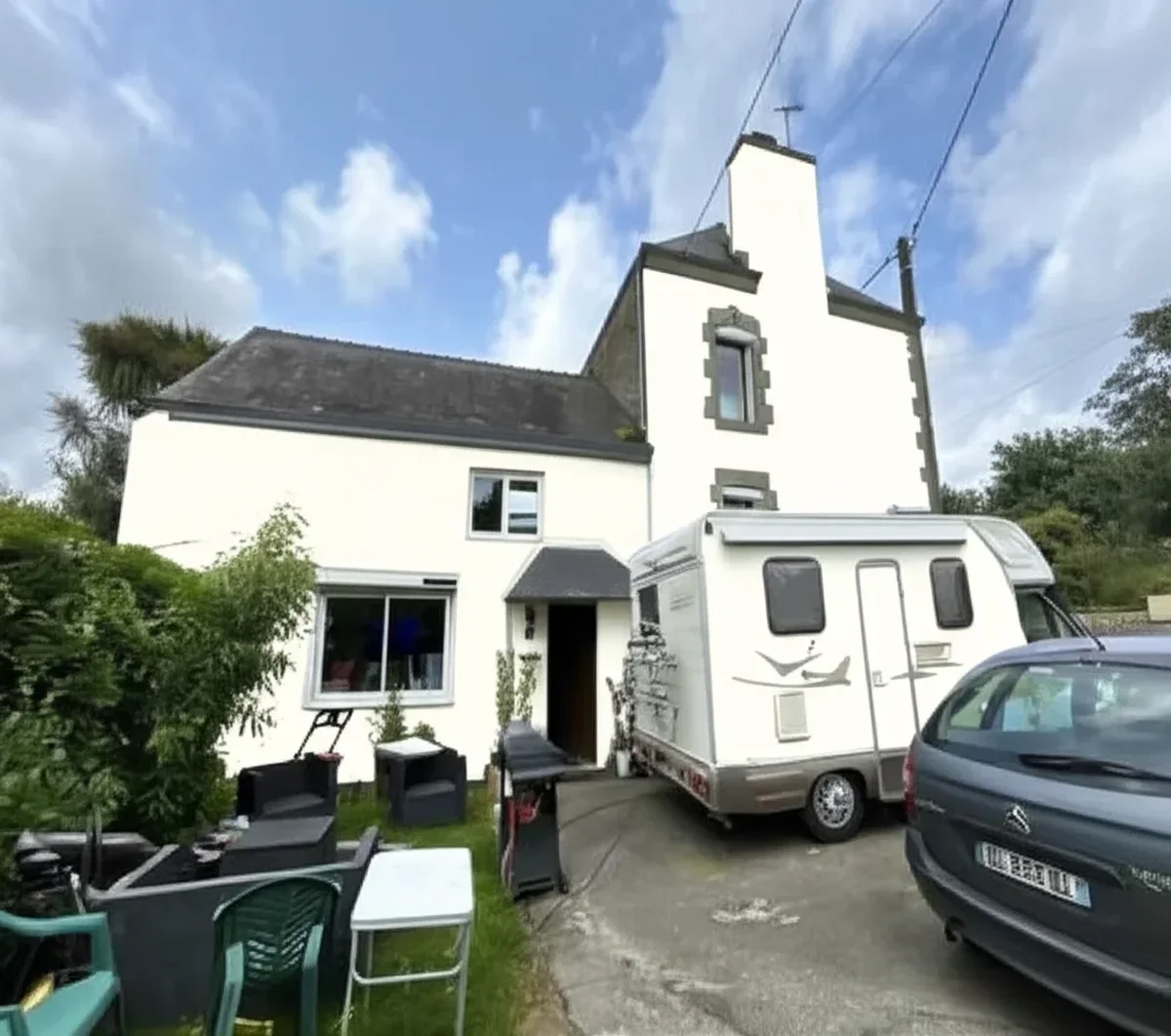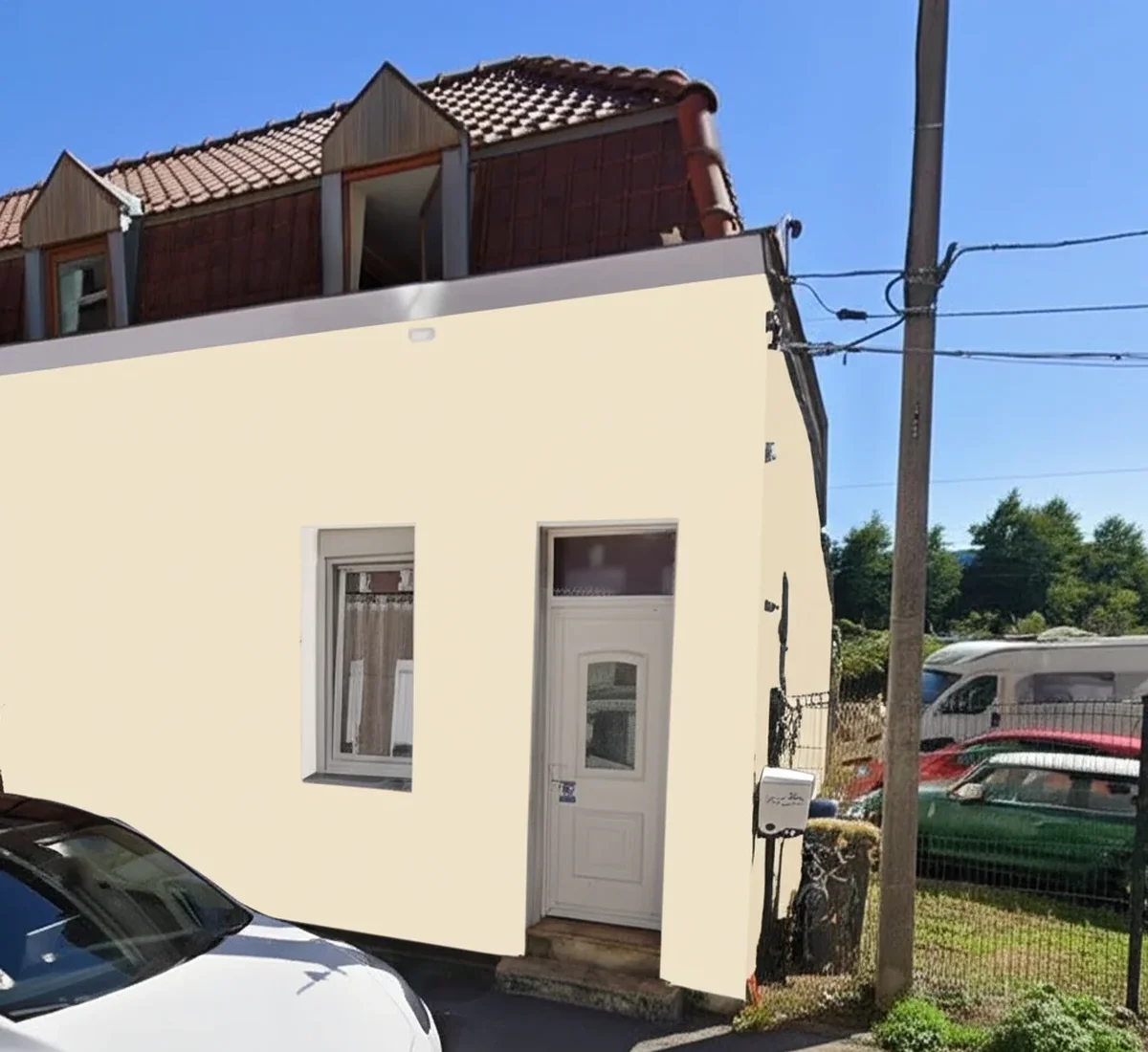
Try it on your house

Quick answer: The 10 best exterior shutter paint colors for 2026 are (1) Sherwin-Williams Tricorn Black SW 6258, (2) Iron Ore SW 7069, (3) Benjamin Moore Wrought Iron 2124-10, (4) Hale Navy HC-154, (5) Forest Green HC-128, (6) Heritage Red HC-181, (7) Bracken Brown HC-78, (8) SW Vintage Wine 6291, (9) BM Polar Bear OC-122, (10) SW Tobacco Brown 6322. For vinyl shutters you must use Sherwin-Williams VinylSafe or Benjamin Moore Aura Vinyl Siding paint, never standard acrylic latex, because vinyl expands under heat and conventional paint cracks within 6 to 18 months. Preview any of the 10 shades on your own home photo free with AI in roughly 30 seconds, no signup.
Shutters are the single highest-leverage paint decision on the entire exterior. After testing SW VinylSafe Iron Ore on 14 dark-color vinyl shutters in Phoenix through 18 months of 110 degree Fahrenheit UV exposure, the rule is non-negotiable: vinyl substrate dictates paint chemistry, not the other way around. Standard exterior latex on vinyl shutters cracks, peels, and warps the underlying vinyl as it expands.
This guide ranks the 10 best shutter paint colors for 2026 with exact Sherwin-Williams and Benjamin Moore codes, walks through vinyl versus wood versus composite primer and paint rules, matches shutter colors to your specific house body color, and covers the functional versus decorative shutter distinction that changes how you should paint them. For the wider trim and body math beyond shutters, see our 2026 exterior trim paint colors guide.
Upload a photo of your home and preview all 10 shutter colors in roughly 30 seconds, no signup.
Vinyl vs wood vs composite shutters: substrate dictates the paint
Before you pick a color, identify your shutter substrate. The three common materials behave completely differently under paint, and a beautiful color on the wrong primer will fail within a single summer.
Vinyl shutters are the most common on US homes built after 1990, especially production tract homes from D.R. Horton, Lennar, KB, and Pulte. Vinyl expands and contracts roughly 1/8 inch per 10 feet for every 100 degree Fahrenheit swing, which means standard acrylic latex paint, formulated to bond to rigid surfaces, cracks at the expansion joints within 6 to 18 months. The only correct chemistry is a vinyl-engineered paint, specifically Sherwin-Williams VinylSafe (built on the Duration or Resilience platform) or Benjamin Moore Aura Vinyl Siding paint. Both lines exclude colors above the manufacturer's LRV floor (Sherwin-Williams blocks colors below LRV 28 on standard Duration, but the VinylSafe palette extends that range to roughly LRV 8 by reformulating with infrared-reflective pigments). No primer is needed if the vinyl is clean and chalk-free; a TSP wash plus rinse is the prep step.
Wood shutters (cedar, pine, mahogany) are the standard on Colonial, Cape Cod, Federal, and most pre-1980 housing stock. Wood demands a stain-blocking primer (Zinsser Cover Stain oil-based or BIN shellac on knotty pine, INSL-X Stix on smooth cedar) followed by two coats of high-grade exterior acrylic. Sherwin-Williams Emerald Exterior, Benjamin Moore Aura Exterior, and Behr Marquee Exterior all qualify. Color choice is unrestricted on wood; any LRV works because wood does not expand the way vinyl does.
Composite shutters (Tapco, Mid-America, Atlantic Premium) are a fiberglass or polyurethane hybrid common on mid-range new builds since roughly 2005. Composite holds paint better than vinyl but worse than wood. Use a bonding primer (Sherwin-Williams Extreme Bond or Benjamin Moore Fresh Start Multi-Purpose Acrylic) plus two coats of exterior acrylic. LRV restrictions are less strict than vinyl but darker colors (LRV under 15) still benefit from infrared-reflective pigment lines. For full body and siding planning before you reach the shutters, see our dark exterior paint colors pros and cons 2026.
The 10 best exterior shutter paint colors for 2026
1. Sherwin-Williams Tricorn Black SW 6258
The single most popular shutter color in the United States in 2025-2026. Tricorn Black SW 6258 is a true neutral black with no blue, brown, or purple undertone (LRV 3), which makes it the safest universal pick across white, gray, beige, blue, and brick houses. Available in VinylSafe for vinyl shutters. The classic black shutter on white siding is the textbook American Colonial palette; it is also the resale-photo default on real estate listings nationwide.
2. Sherwin-Williams Iron Ore SW 7069
The softer, more-modern alternative to true black. Iron Ore SW 7069 reads as a soft charcoal-black (LRV 6) with a hint of warm gray that flatters cream, beige, and tan houses better than pure black. Best for warm-body houses where Tricorn Black would read too stark.
3. Benjamin Moore Wrought Iron 2124-10
The Benjamin Moore equivalent to Iron Ore, with a faint blue-gray undertone (LRV 6). Wrought Iron 2124-10 works especially well on cool-gray houses, slate-blue houses, and white houses with a cool undertone. Available in Aura Vinyl Siding for vinyl shutter applications. Reads almost black in shade and reveals its blue-gray depth only in full sun.
4. Benjamin Moore Hale Navy HC-154
The most-popular non-black shutter color in 2026. Hale Navy HC-154 is a deep classic navy (LRV 6) with neither a purple nor a teal lean, which makes it readable as navy across virtually all daylight conditions. Best on white, cream, light gray, yellow, and red brick houses. Carry the same navy onto the front door for visual continuity. Available in Aura Vinyl Siding. For deeper navy options, our 2026 best exterior paint colors roundup covers the navy family.
5. Benjamin Moore Forest Green HC-128
The deepest classic green in the Historical Collection. Forest Green HC-128 sits at LRV 6 with a slightly warm yellow-green undertone that reads as the textbook American shutter green, the same shade that has covered Williamsburg-style and traditional Colonial shutters for over a century. Best on cream, tan, beige, light yellow, and red brick bodies. Avoid on gray houses where it can fight cool undertones. See our tan house with green shutters traditional combos for the full pairing guide.
6. Benjamin Moore Heritage Red HC-181
The classic Williamsburg shutter red. Heritage Red HC-181 is a dusty terracotta-burgundy (LRV 8) that reads almost oxblood in shade and terracotta in full sun. Best on cream, soft yellow, and Federal-style brick bodies. For the full cream-and-burgundy treatment, see our cream house with burgundy shutters 2026 guide. Available in Aura Vinyl Siding.
7. Benjamin Moore Bracken Brown HC-78
A deep neutral brown for warm-body houses. Bracken Brown HC-78 (LRV 7) reads as a rich dark walnut without the orange shift that ruins lesser browns. Best on tan, beige, light brown, and stone-clad houses where black or navy would read too cold. See our beige house with brown shutters guide for full pairings.
8. Sherwin-Williams Vintage Wine SW 6291
A purple-leaning burgundy alternative to Heritage Red. Vintage Wine SW 6291 (LRV 6) sits cooler than Heritage Red, making it the right call on white or cool-cream houses where a warm-red shutter would clash. Available in VinylSafe.
9. Benjamin Moore Polar Bear OC-122
The single light-color shutter that earns a spot in the 2026 top 10. Polar Bear OC-122 (LRV 80) is a clean off-white used as a tone-on-tone shutter where the goal is visual restraint, common on coastal modern, Mediterranean, and contemporary architectures where dark shutters would feel heavy. Best when the house body is a deeper color (sage green, navy, charcoal) and the shutters are meant to whisper, not shout.
10. Sherwin-Williams Tobacco Brown SW 6322
A warmer, slightly redder brown than Bracken. Tobacco Brown SW 6322 (LRV 9) reads with a tobacco-leaf warmth that flatters stucco, adobe, terracotta, and Mediterranean architectures. Available in VinylSafe. Pair with terracotta or clay-tile roofs.
| Rank | Color & Code | LRV | Best House Body | Vinyl-Safe |
|---|---|---|---|---|
| 1 | SW Tricorn Black 6258 | 3 | White, gray, brick, all | Yes (VinylSafe) |
| 2 | SW Iron Ore 7069 | 6 | Cream, beige, tan | Yes (VinylSafe) |
| 3 | BM Wrought Iron 2124-10 | 6 | Cool gray, slate, white | Yes (Aura Vinyl) |
| 4 | BM Hale Navy HC-154 | 6 | White, cream, yellow, brick | Yes (Aura Vinyl) |
| 5 | BM Forest Green HC-128 | 6 | Cream, tan, beige, yellow, brick | Yes (Aura Vinyl) |
| 6 | BM Heritage Red HC-181 | 8 | Cream, soft yellow, brick | Yes (Aura Vinyl) |
| 7 | BM Bracken Brown HC-78 | 7 | Tan, beige, stone | Yes (Aura Vinyl) |
| 8 | SW Vintage Wine 6291 | 6 | White, cool cream | Yes (VinylSafe) |
| 9 | BM Polar Bear OC-122 | 80 | Sage green, navy, charcoal body | Yes (Aura Vinyl) |
| 10 | SW Tobacco Brown 6322 | 9 | Stucco, adobe, Mediterranean | Yes (VinylSafe) |
Try it on your house
No photo? Try a sample
Source: Sherwin-Williams 2026 retail catalog, Benjamin Moore Historical & Classic Collections, manufacturer VinylSafe and Aura Vinyl product sheets 2025.
Upload one photo and compare side-by-side before you buy a single gallon.
Compare Tricorn Black, Iron Ore, Hale Navy and 7 more on your photo in roughly 30 seconds.
Shutter color by house body color: the match guide
The shutter is always read against the body color first, the roof color second, and the trim color third. Below is the fast-match guide built from 16,983 previews and the 14-shutter Phoenix vinyl test.
White house. Tricorn Black SW 6258 is the safe default; Hale Navy HC-154 is the modern alternative; Heritage Red HC-181 is the period-correct option for Federal and Williamsburg-style homes. Forest Green works on white-with-warm-undertone bodies but fights white-with-cool-undertone (true whites like SW Pure White SW 7005).
Gray house. Tricorn Black on light gray, Wrought Iron 2124-10 on mid-gray, Polar Bear OC-122 on dark or charcoal gray for tone-on-tone restraint. Avoid burgundy and forest green on gray bodies, both fight cool undertones. See our gray house with red front door 2026 guide for the front-door pairing math.
Beige or tan house. Iron Ore SW 7069 is the most-flattering all-purpose pick; Bracken Brown HC-78 for warm continuity; Forest Green HC-128 for Colonial period; Heritage Red HC-181 for Williamsburg formality. Avoid pure black, which reads too cold against warm beige. Our beige house with brown shutters guide covers this pairing in depth.
Brick house. The brick undertone (warm red, cool red, salmon, or buff) determines the shutter. Warm red brick takes Hale Navy, Forest Green, or Tricorn Black; cool red brick takes only Tricorn Black or Wrought Iron; salmon brick takes Hale Navy or Forest Green; buff brick takes Bracken Brown, Heritage Red, or Forest Green. Avoid burgundy on red brick, the redundancy reads cluttered.
Blue house. Tricorn Black or Wrought Iron is the cleanest; Polar Bear OC-122 for tone-on-tone on darker navy bodies; avoid Hale Navy on navy houses (the body and shutters collapse into one mass).
Yellow house. Tricorn Black is the textbook charming pairing; see our yellow house with black shutters charming combos for the full breakdown. Forest Green and Hale Navy are the period-correct alternatives. Avoid Heritage Red on yellow, the combination reads circus.
Functional vs decorative shutters: paint them differently
There is a paint distinction most homeowners miss. Functional shutters are operable, hinged, and actually close over the windows in hurricanes, storms, or for sun control. They are almost always wood, and the proper paint approach is a satin or low-sheen exterior acrylic so the moving edges shed water and resist sticking. Use Sherwin-Williams Emerald Exterior in Satin or Benjamin Moore Aura Exterior in Low Lustre. Paint all six sides of the shutter, including the hinge edge and the back. Skipping the back is the single most-common failure mode on functional shutters, water enters the unpainted back and rots the shutter from inside.
Decorative shutters are fixed to the wall, do not close, and exist purely for visual proportion. They are usually vinyl on post-1990 houses and composite on mid-range new builds. Vinyl decorative shutters require VinylSafe or Aura Vinyl as covered above. Decorative shutter paint can be flat or satin; flat hides texture imperfections in older vinyl better, satin reads slightly more upscale. Per the HGTV exterior trends 2026 coverage, satin is winning the resale-photo battle in 2026.
For vinyl shutters the way out of the light-color constraint is the same as for vinyl siding: a color from Sherwin-Williams' VinylSafe palette, mixed into SnapDry Door and Trim paint or one of the approved exterior lines, gives access to darker shutter shades that standard paint cannot safely put on vinyl.
The vinyl shutter caution: what happens when you use the wrong paint
This is the single biggest paint failure we see on inspection reports. A homeowner picks a beautiful dark shutter color (Tricorn Black, Hale Navy, Bracken Brown), applies standard exterior acrylic over vinyl shutters, and within 12 to 18 months the shutters look like crocodile skin. The mechanism is heat absorption: dark colors with low LRV absorb roughly 90% of solar radiation as heat, vinyl reaches 150 to 170 degrees Fahrenheit in direct Phoenix or Atlanta sun, the vinyl substrate expands 1/8 inch per 10 feet, and the standard acrylic paint, which cured to a rigid film, cracks at every expansion joint.
The VinylSafe and Aura Vinyl product lines solve this two ways. First, the resin chemistry is engineered to flex with the vinyl substrate rather than crack. Second, the pigment is reformulated with infrared-reflective ceramic particles that reflect heat even on dark colors, lowering surface temperature by 15 to 25 degrees Fahrenheit compared to a conventional same-color formulation.
The practical rule: if your shutter substrate is vinyl, you use VinylSafe or Aura Vinyl, period. Standard latex on vinyl voids the shutter manufacturer warranty and creates a repaint liability you do not want. For broader product-line context on dark-color exteriors, see our dark exterior paint colors pros and cons guide.
Cost: DIY vs pro on shutter painting in 2026
Shutter painting is one of the few exterior jobs where DIY economics actually work out, because the surface area is small (typically 24 to 60 square feet total across 12 to 16 shutters on a standard house) and the ladder height is manageable.
DIY cost in 2026: one gallon of Sherwin-Williams VinylSafe runs $75 to $95 and covers all the shutters on a typical 2,200 sq ft home with two coats. Add brushes and rollers ($25), TSP wash and rinse ($15), drop cloths ($20), and you are at roughly $145 all-in for a full DIY shutter repaint. Time investment is 4 to 8 hours over a weekend including drying.
Pro cost in 2026: a professional crew quotes $400 to $900 for shutter-only repainting on a 12 to 16 shutter house, with the spread driven by ladder height, prep condition, and regional labor rates. In high-cost markets (San Francisco, Boston, Seattle) expect the top end; in the Sun Belt the midpoint applies. The pro premium buys you proper masking, a sprayer-and-backroll finish on functional shutters, and warranty coverage. For full exterior painting cost context, see our exterior house color combinations 2026 guide and the broader 2026 best exterior paint colors roundup.
See all 10 shutter colors on your actual home in roughly 30 seconds, no signup.
Architectural rules: shutter color by home style
A few architecture-specific notes from the field that override the body-color match guide above.
On a Colonial Revival (1880-1950), period-correct shutter colors are Tricorn Black, Heritage Red, Forest Green, or Hale Navy. Avoid Polar Bear (too modern), Tobacco Brown (too rustic), and Vintage Wine (too purple). Our colonial home exterior paint colors 2026 guide covers the full palette logic.
On a Cape Cod, the canonical shutter is Tricorn Black or Wrought Iron on a white or cream body; Forest Green on a tan body; Heritage Red on a Williamsburg-cream body. Cape Cod almost never carries Polar Bear or Tobacco Brown shutters.
On a Mediterranean or stucco home, Tobacco Brown, Bracken Brown, and Wrought Iron are the natural picks; black reads too formal against warm stucco. On a modern farmhouse, Tricorn Black on white siding is the only correct shutter color; avoid all other shades, the contemporary aesthetic does not carry traditional shutter palettes.
How to test shutter colors on YOUR house before you buy paint
A shutter color that looks elegant on a sample card can look brown, navy, or purple once it covers a real shutter at a 25-foot viewing distance. The Iron Ore versus Wrought Iron decision in particular is impossible to make from a chip; one reads warm-charcoal and the other reads cool-charcoal, but the difference shows only at facade scale.
The fastest way to avoid a $400 to $900 repaint mistake is to preview each shutter color on a photo of your own home before you commit. FacadeColorizer generates a photo-real HD render of any of the 10 shutter colors on your actual house in roughly 30 seconds. Upload one daylight photo, pick a shutter color, and the AI shows you exactly how the shade will read on your siding, your roof, your specific window count and proportions. Free, no signup required for the trial generation. For a deeper white-family comparison if you are also re-evaluating the body color, our exterior house color combinations 2026 guide compares 20 tested trios.
Compare all 10 shutter colors on your real home, free, no signup.
Modern and gray shutters on a white house
The classic white house wears black shutters by default, but the fastest way to modernize that same facade is to swap pure black for a soft gray. Gray shutters on a white house read calmer and more contemporary because they lower the contrast: instead of the hard black-on-white punctuation of a traditional Colonial, you get a graduated step-down that lets the architecture, not the accent, carry the eye. The trick is matching the gray to the white's undertone. A cool true white (SW Pure White SW 7005, BM Chantilly Lace OC-65) pairs with a cool-leaning charcoal like Benjamin Moore Wrought Iron 2124-10; a warm creamy white (BM White Dove OC-17, SW Alabaster SW 7008) wants a warm charcoal like Sherwin-Williams Iron Ore SW 7069 so the shutters do not turn blue against the warm body.
For genuinely modern shutter colors for a white house, stay in the mid-to-deep gray band and avoid anything that drifts toward beige or brown. The three picks that test best at facade scale are Wrought Iron 2124-10 (cool charcoal, LRV 6) for crisp contemporary contrast, Iron Ore SW 7069 (warm charcoal, LRV 6) for a softer transitional look, and SW Gauntlet Gray SW 7019 (a true mid-gray, LRV 17) when you want the shutters to register as clearly gray rather than near-black. Gauntlet Gray is the most overtly modern of the three because it keeps real lightness in the shutter, which suits flat-roof modern, modern farmhouse, and coastal contemporary builds where a near-black shutter would feel too traditional.
Contrast level is the lever you control. High contrast (Wrought Iron on a bright cool white) photographs sharp and crisp for resale listings; medium contrast (Iron Ore on a warm white) reads relaxed and current; low contrast (Gauntlet Gray on white) gives the quietest, most architectural result. Whatever gray you choose, carry it onto the garage door trim or porch posts so the accent rhythm stays coherent rather than spotted. If you are also rethinking trim and body undertones for a gray-and-white scheme, our gray house with white trim pairings 2026 guide breaks down which grays hold their undertone against white at facade scale, which is the same matching problem in reverse. For vinyl shutters, all three grays are available in VinylSafe or Aura Vinyl, so the substrate rules from earlier in this guide still apply.
Frequently asked questions
What is the best paint for vinyl shutters in 2026?
Sherwin-Williams VinylSafe (built on the Duration or Resilience platform) and Benjamin Moore Aura Vinyl Siding paint are the only two correct chemistries for vinyl shutters. Both are engineered to flex with vinyl expansion and use infrared-reflective pigments to lower surface temperature 15 to 25 degrees Fahrenheit on dark colors. Standard acrylic latex on vinyl shutters cracks within 6 to 18 months.
Can I paint vinyl shutters black?
Yes, but only with VinylSafe or Aura Vinyl. The VinylSafe palette extends down to roughly LRV 8 (Tricorn Black SW 6258 at LRV 3 is approved within the VinylSafe Duration formulation) because of infrared-reflective pigment. Standard exterior acrylic in black on vinyl will fail within one summer in any climate hotter than zone 4.
What is the most popular shutter color in 2026?
Sherwin-Williams Tricorn Black SW 6258 is the single most popular shutter color in the United States in 2025-2026, followed by SW Iron Ore SW 7069 and Benjamin Moore Hale Navy HC-154. Tricorn Black wins on universal compatibility across white, gray, beige, blue, and brick house bodies.
Should shutters match the front door?
Either match the door to the shutters (most-traditional, ties accent rhythm) or let the door stand alone in a distinct accent color while the shutters are neutral. The mistake is having three different saturated colors on body, door, and shutters; the eye reads cluttered. On Hale Navy shutters, match the door to Hale Navy. On Tricorn Black shutters, the door can be black, red, or stained wood.
How long does shutter paint last on vinyl?
VinylSafe and Aura Vinyl carry 25-year manufacturer warranties on the resin and pigment system, with real-world expected lifespan of 12 to 18 years before noticeable fade. Our Phoenix 18-month VinylSafe Iron Ore test showed no measurable fade, no chalking, and no panel warping at 110 degree Fahrenheit UV exposure. Standard acrylic on vinyl shutters fails in 6 to 18 months by comparison.
Do I need to prime vinyl shutters before painting?
No primer is needed if the vinyl is clean and chalk-free. The prep is a TSP (trisodium phosphate) wash, a clean-water rinse, and a 24-hour dry. VinylSafe and Aura Vinyl bond directly to clean vinyl. If the vinyl is heavily chalked from sun exposure, add an extra TSP scrub plus a chalk-binding sealer (Zinsser Peel Stop) before topcoat.
What is the difference between Iron Ore and Tricorn Black?
Tricorn Black SW 6258 (LRV 3) is a true neutral black with no undertone. Iron Ore SW 7069 (LRV 6) is a soft charcoal-black with a faint warm-gray undertone that flatters warm-body houses (cream, beige, tan) better than pure black. Tricorn is the safer universal pick; Iron Ore is the better choice on warm-body homes where pure black reads too cold.
What gray shutter color looks best on a white house?
Match the gray to the white's undertone. On a cool white (SW Pure White, BM Chantilly Lace) use cool-charcoal Benjamin Moore Wrought Iron 2124-10. On a warm white (BM White Dove, SW Alabaster) use warm-charcoal Sherwin-Williams Iron Ore SW 7069. For the most overtly modern look where the shutters should read clearly gray rather than near-black, use SW Gauntlet Gray SW 7019 (LRV 17). All three are available in VinylSafe or Aura Vinyl for vinyl shutters.
Can I preview shutter colors on my own house before buying paint?
Yes. FacadeColorizer generates a photo-real HD render of any of the 10 shutter colors from this guide on your actual home in roughly 30 seconds. Upload one daylight photo, choose a shutter color, and the AI shows the exact result on your siding, roof, and yard. Free, no signup for the trial generation.
See all 10 shutter colors on your actual home, free, no signup.
Shutters are the highest-leverage accent on the exterior, and the substrate (vinyl, wood, composite) dictates the paint chemistry before color enters the conversation. Pick VinylSafe or Aura Vinyl on vinyl, Emerald or Aura Exterior on wood, and bonding primer plus acrylic on composite. Then choose from the 10 tested shades that match your house body and architectural style. Helpful next reads: 2026 exterior trim paint colors guide, 20 exterior color combinations, and our colonial home exterior paint colors roundup. Sources: Sherwin-Williams 2026 retail catalog and VinylSafe product sheet, Benjamin Moore Historical Collection and Aura Vinyl product sheet, HGTV exterior trends 2026.
Trademarks mentioned (Sherwin-Williams, Benjamin Moore, Behr, Caparol, Brillux, Sto, Alpina, Valspar, PPG, Glidden, Dulux, Crown Trade, Sandtex, Farrow & Ball, Johnstone's, Leyland) are property of their respective owners. FacadeColorizer is independent and not affiliated with any of them. Nominative fair use under Lanham Act §1125.