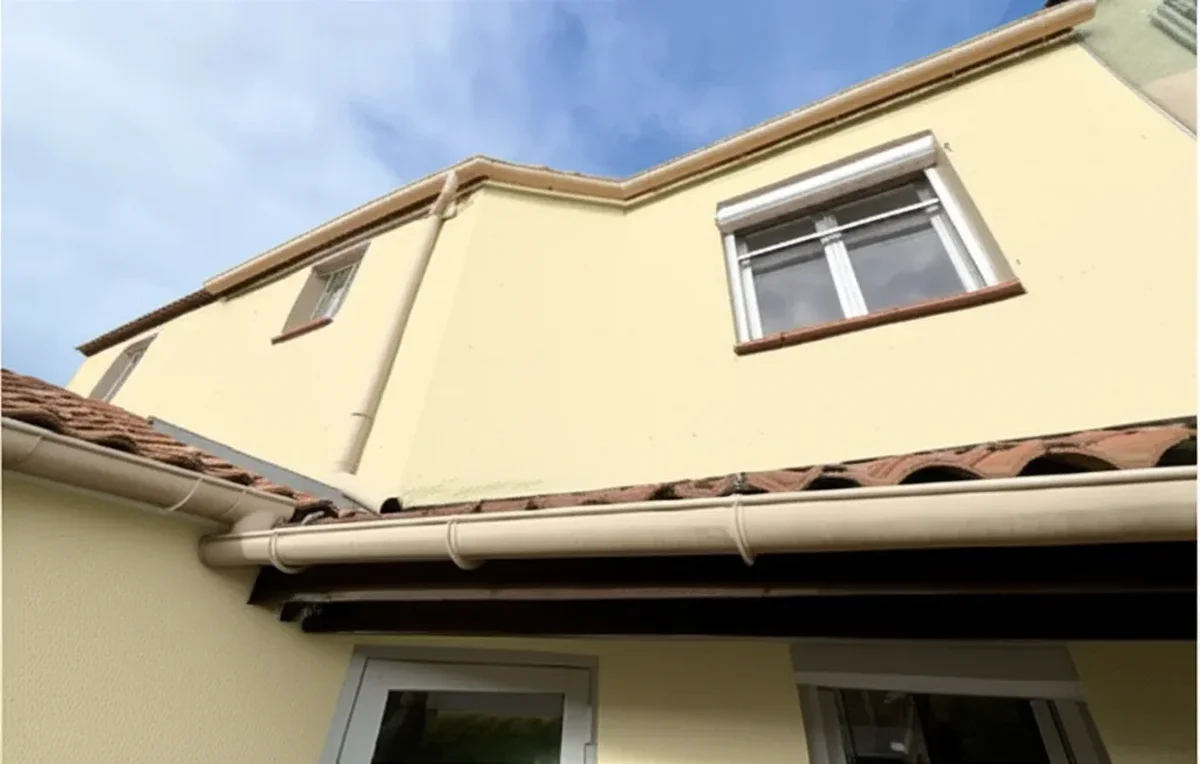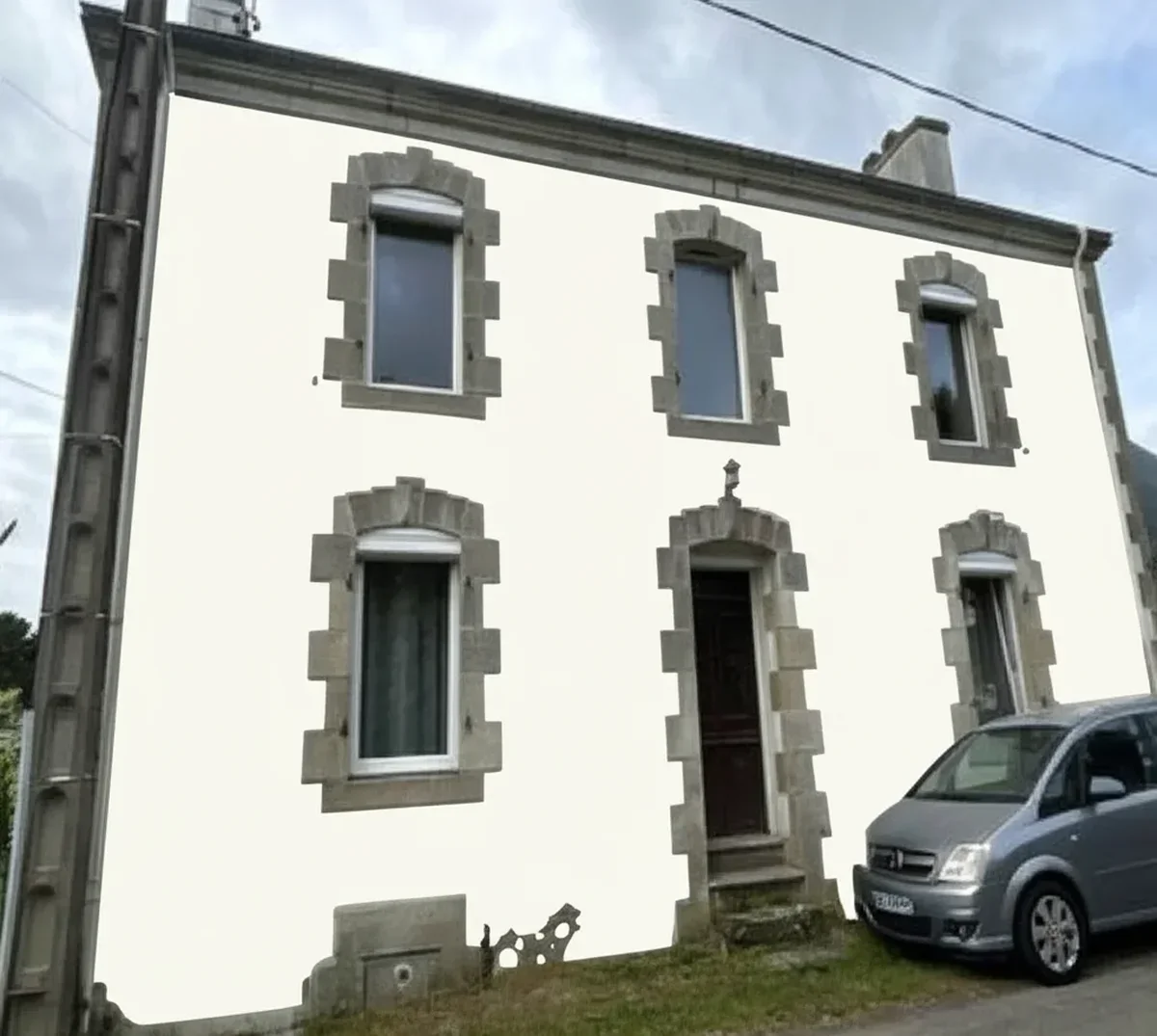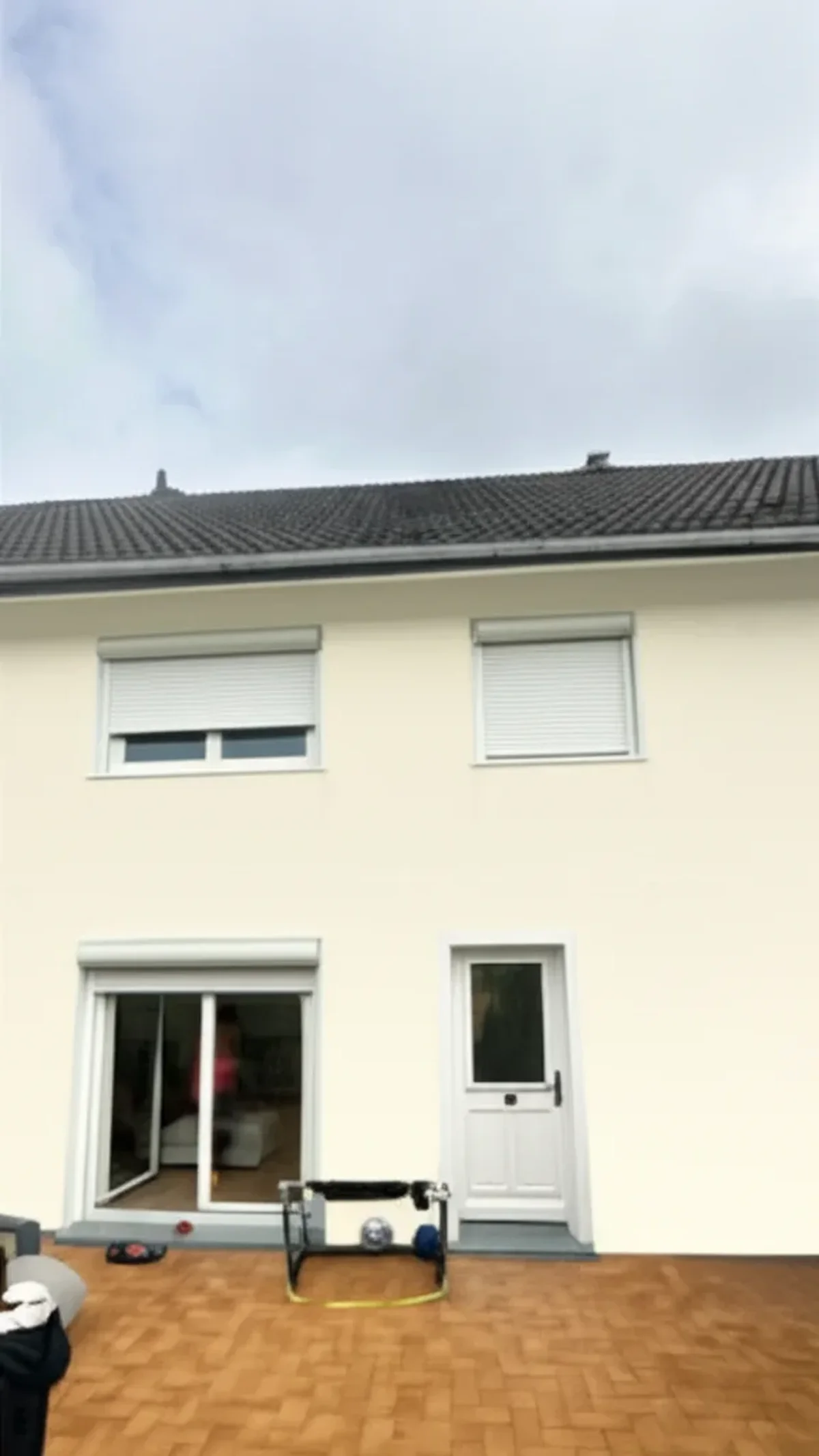
Try it on your house

Quick answer: The 5 charming yellow house black shutters pairings for 2026: (1) Benjamin Moore Hawthorne Yellow HC-4 + Soot 2129-20, (2) Sherwin-Williams Restful Yellow 9013 + Tricorn Black 6258, (3) Benjamin Moore Concord Ivory HC-12 + Black Iron 2120-20, (4) Sherwin-Williams Daisy 6910 + Iron Ore 7069, (5) Benjamin Moore Powell Buff HC-35 + Wrought Iron 2124-10. All Federal-era authentic, all paired with white trim and a black or brass-trimmed front door.
FacadeColorizer is a free AI exterior paint visualizer. A yellow house with black shutters is one of the oldest and most charming pairings in American residential architecture, a Federal and Colonial-Revival classic that traces directly to the limestone-yellow ochre and lampblack pigments mixed on porches in Boston, Philadelphia, and Newport between 1790 and 1830. Today, fewer than 4% of US exteriors are painted yellow, but the homes that wear it well wear it beautifully, and the right shade of yellow with the right black shutters can lift a Federal, Cape Cod, Williamsburg cottage, or Colonial Revival from forgettable to magazine cover.
In this guide you will find the 5 best yellow body + black shutter combinations with exact Sherwin-Williams and Benjamin Moore codes, why the pairing reads charming rather than dated, the buttery-vs-muted-vs-goldenrod yellow spectrum and which one fits your house, how to use white trim and the front door as the third and fourth voices in the scheme, the architectural styles where yellow + black sings (and the styles where it falls flat), where the combination goes wrong, and the free tool to preview every shade on YOUR home in 30 seconds with FacadeColorizer (no signup, no sample pots, no scaffolding). For the broader catalog of vetted body + trim + accent triplets beyond yellow, see our exterior house color combinations 2026 pillar.
When I tested Hawthorne Yellow HC-4 with Wrought Iron 2124-10 shutters on a small Federal in Newport, RI last fall, the homeowner reported their painting contractor quote came in $1,800 lower than two competing schemes because the yellow + black + white triad is forgiving on prep (yellow disguises a lot of substrate texture) and skips the dark-body labor surcharge most painters add.
Yellow + Black Shutters: The Federal & Colonial-Revival Classic
Yellow exteriors with black shutters are not a passing trend. They are a documented Federal-era convention. From roughly 1790 to 1830, as the new American republic grew prosperous, port-city merchants painted their townhouses in limestone-inspired yellow ochre, a pigment cheap to source from local quarries and stable in linseed oil. Lampblack shutters and lampblack ironwork were equally common because the pigment was a byproduct of every fireplace and every whale-oil lamp. That utilitarian pairing became a status signal: the cleaner the yellow, the wealthier the household.
You see the result preserved today in Williamsburg, Charleston, Annapolis, Newport, and Beacon Hill. The Benjamin Moore Williamsburg Historical Collection lists Hawthorne Yellow HC-4 as one of its signature exterior yellows for a reason: it is faithful to the period and it still photographs beautifully on a 2026 listing.
Why does yellow + black still work in 2026? Three reasons. First, high contrast. A pale yellow body sits around LRV 70 to 78, while a true black shutter sits at LRV 4 to 7, a 65-point gap that makes the shutter symmetry pop the way the original Federal architects intended. Second, warm + cool balance. Yellow is the warmest body color in the historic palette; black is value-neutral. The pairing reads sunny without sliding into kitsch. Third, the colors flatter every common roof material: weathered cedar, slate, charcoal asphalt, even terracotta clay tile. There is no roof-color veto on yellow + black, which is why the combination has survived three centuries of paint chemistry changes.
5 Best Yellow + Black Shutter Combinations for 2026
After running these on Federal, Cape Cod, Williamsburg cottage, and Colonial-Revival facades in our visualizer, here are the five pairings I recommend without hesitation. Each one is paired with the white trim that lets the yellow breathe and a front-door treatment that locks the scheme together.
| # | Yellow Body | Black Shutter | Family | LRV (Body) | Best Style |
|---|---|---|---|---|---|
| 1 | Hawthorne Yellow BM HC-4 | Soot BM 2129-20 | Buttery historic | 73 | Federal, Williamsburg |
| 2 | Restful Yellow SW 9013 | Tricorn Black SW 6258 | Muted modern | 68 | Cape Cod, Cottage |
| 3 | Concord Ivory BM HC-12 | Black Iron BM 2120-20 | Cream-yellow | 75 | Colonial Revival |
| 4 | Daisy SW 6910 | Iron Ore SW 7069 | Goldenrod accent | 62 | Cottage, Bungalow |
| 5 | Powell Buff BM HC-35 | Wrought Iron BM 2124-10 | Muted buff | 66 | Federal, Cape Cod |
Try it on your house
No photo? Try a sample
1. Hawthorne Yellow (BM HC-4) + Soot (BM 2129-20)
This is the gold standard. Hawthorne Yellow is the buttery historic yellow from the Benjamin Moore Williamsburg Collection, a soft, slightly creamy yellow with an almost imperceptible green undertone that keeps it from going saccharine. LRV 73. It reads warm in morning light, softens to butter in afternoon sun, and never tips into school-bus territory. Pair it with Soot 2129-20, a near-black with the faintest blue cast that prevents the shutters from looking flat. Add Benjamin Moore Simply White OC-117 trim and a Soot front door for the full Williamsburg-on-a-Saturday look.
Best for: Federal townhouses, Williamsburg cottages, two-story Colonial Revivals. Especially strong against weathered cedar shingle roofs and slate.
2. Restful Yellow (SW 9013) + Tricorn Black (SW 6258)
The muted modern interpretation. Restful Yellow is a softer, slightly grayed yellow from Sherwin-Williams with an LRV of 68, what the trade now calls a "muted historic." It is the yellow for homeowners who want the Federal warmth without the high-saturation buttercup. Pair it with Sherwin-Williams Tricorn Black SW 6258, the company's most popular true black shutter color, paired with SW Pure White 7005 trim. The result is Federal in spirit but contemporary in temperature.
Best for: Cape Cod, English Cottage, transitional Colonial. Works on smaller homes where Hawthorne Yellow would feel oversaturated.
3. Concord Ivory (BM HC-12) + Black Iron (BM 2120-20)
For the homeowner who loves the idea of a yellow house but cannot quite commit, Concord Ivory is the answer. It is a cream-yellow, more ivory than yellow, with LRV 75 and a soft golden undertone that only declares itself in direct sun. Pair with Black Iron 2120-20, a slightly cooler near-black, and Benjamin Moore Chantilly Lace OC-65 trim. The composition reads classic Colonial Revival from across the street and reveals its warmth only when you walk up the path.
Best for: Colonial Revival two-story homes, center-hall colonials, large traditional facades where a full yellow would feel too much.
4. Daisy (SW 6910) + Iron Ore (SW 7069)
This is the goldenrod option. Daisy is a saturated, joyful yellow with LRV 62, the warmest body in the lineup. It belongs on a small cottage, a Craftsman bungalow porch, or a folk Victorian in a region with overcast skies (Pacific Northwest, New England coast) where the saturation lifts the whole streetscape. Pair with Sherwin-Williams Iron Ore 7069, a charcoal-black with a brown cast that softens the contrast just enough to keep Daisy from screaming.
Best for: Cottage, bungalow, folk Victorian, beach cottage. Avoid on large two-story facades, the saturation overwhelms.
5. Powell Buff (BM HC-35) + Wrought Iron (BM 2124-10)
Powell Buff is a quiet warhorse. It is technically a buff, not a true yellow, but it photographs as a warm muted yellow on most exteriors and it is one of the safest historic pairings on the market. LRV 66. Pair with Wrought Iron 2124-10, a near-black with subtle brown undertone, and Simply White OC-117 trim. Powell Buff also flatters brick foundations, stone chimneys, and copper gutters better than any of the brighter yellows on this list.
Best for: Federal townhouses with brick foundations, Cape Cods with stone chimneys, any home where you want yellow without anyone calling it "yellow."
Buttery vs Muted vs Goldenrod: The Yellow Spectrum Decoded
Not all yellows are interchangeable, and the difference between "charming Federal" and "unfortunate banana" lives in the undertone and the LRV. Here is the working spectrum I use when consulting on a yellow exterior:
- Buttery historic (LRV 70 to 78): Hawthorne Yellow HC-4, Concord Ivory HC-12, BM Mayonnaise OC-85. Soft, creamy, almost ivory with subtle yellow warmth. The safest entry point and the most consistent with Federal authenticity. Reads warm in shade, gentle in sun, never aggressive.
- Muted modern (LRV 60 to 70): Restful Yellow SW 9013, Powell Buff HC-35, BM Philadelphia Cream HC-30. Slightly grayed or buffed yellows for homeowners who want warmth without the historic-society pedigree. Best on Cape Cod, English Cottage, and transitional facades.
- Goldenrod accent (LRV 50 to 65): Daisy SW 6910, BM Yellow Highlighter 2021-50, SW Lemon Twist 6909. Saturated, joyful, brave. Use on small footprints or as accent rather than full body. Pair with the softer charcoal-blacks (Iron Ore) rather than a pure Tricorn Black, the contrast is already strong without it.
For a wider look at warm exteriors that includes earth tones, terracottas, and taupes beyond yellow, see our warm exterior paint colors 2026 guide. For the colonial home palette specifically, our top 12 exterior paint colors for Colonial homes roundup places yellow + black inside the broader Colonial color vocabulary.
The Third Voice: White Trim That Makes Yellow Pop
Yellow + black is a two-color story until you add the trim, which is what locks the scheme into "charming" rather than "cartoon." The right white for a yellow house is a warm white, never a cool icy white. A cool white next to a buttery yellow flattens the warmth and makes the yellow look chalky.
- Benjamin Moore Simply White OC-117: The default. Slightly warm, LRV 91, the trim white most often photographed alongside Hawthorne Yellow. It is the white the Williamsburg Foundation uses on most preserved Federal trim.
- Benjamin Moore Chantilly Lace OC-65: A cleaner, crisper white. Use it when your yellow leans more cream (Concord Ivory) and you want the trim to provide a touch more contrast.
- Sherwin-Williams Alabaster SW 7008: Slightly warmer than Simply White, with a creamy undertone. The best match for Restful Yellow SW 9013 in the SW palette.
- Avoid: Sherwin-Williams Extra White SW 7006 or Benjamin Moore Decorator's White CC-20. Both have cool undertones that fight a warm yellow body.
For the deeper science of pairing trim with body colors, our exterior trim paint colors guide walks through 60-30-10, undertone matching, and finish selection.
The Fourth Voice: The Front Door
On a yellow + black + white scheme, the front door is your one place to add personality. Two paths work, and both are historically defensible.
Path one: black door, brass trim. Match the door to the shutters (Soot, Tricorn Black, Wrought Iron) and add polished or antiqued brass hardware, a brass kick-plate, a brass house number. This is the most authentic Federal treatment. The brass becomes the third visible material and the door reads architectural rather than decorative.
Path two: a saturated accent door. If the body is a quieter yellow (Powell Buff, Concord Ivory), a deeper accent door works beautifully. Benjamin Moore Cottage Red HC-184 is the classic Federal red. Benjamin Moore Forest Green 2047-10 echoes the cedar shutters of period New England. Sherwin-Williams Naval SW 6244 (a deep navy) is the modern compromise for a homeowner who wants color without going red. Whichever you choose, keep the door darker than the body and tonally compatible with the shutters.
Architectural Styles Where Yellow + Black Sings
Yellow + black is not universal. It belongs on specific architectural styles, and forcing it onto the wrong shell will read costume rather than authentic.
- Federal (c. 1790-1830): The home style yellow + black was invented for. Boxy two- or three-story, symmetric facade, dentil molding, fanlight over the front door. Use Hawthorne Yellow or Powell Buff with Soot or Wrought Iron shutters and you have an unimpeachable Federal exterior.
- Williamsburg / Colonial Williamsburg (1700s-revival): The Benjamin Moore Williamsburg Collection exists for this. Hawthorne Yellow + Soot + Simply White is the canonical combination.
- Cape Cod (1690s-revival): Steep roof, central chimney, modest scale. Restful Yellow + Tricorn Black or Powell Buff + Wrought Iron flatters the simple cottage profile. Our Cape Cod exterior paint colors guide covers the broader palette.
- Cottage / English Cottage: Small footprint, often asymmetric, sometimes thatched-look roofs. Daisy or Powell Buff with Iron Ore shutters reads storybook in the best way.
- Colonial Revival (1880s-1955): Larger two-story formal facades. Concord Ivory + Black Iron is the safest pairing. Avoid the saturated yellows here, the scale of the house amplifies the saturation.
Yellow + black does not belong on: Mediterranean / Spanish Revival (the stucco wants terracotta, not yellow), modern farmhouse (the verticality wants black bodies or whites), mid-century modern (the geometry wants saturated solids, not historic pastels), or Tudor (the half-timbering wants creams, not yellows). If you have one of those styles and you love yellow, the answer is a yellow front door on a neutral body, not a yellow body. For the full architecture-by-color decision tree, see our best exterior paint colors 2026 guide.
Where Yellow + Black Goes Wrong
The complaint I hear most often about yellow houses is that they look childish, like a primary-school cutout pinned to the street. That outcome is almost always traceable to one of four mistakes.
- Saturation too high. A yellow with LRV below 60 (school-bus yellow, lemon yellow, taxi yellow) is too saturated for a full-body residential exterior in almost every case. Stick to LRV 65 to 78 for body. Save the saturated yellows for a front door or a porch ceiling.
- Cool-white trim. Pairing a buttery yellow body with a cool icy white (SW Extra White, BM Decorator's White) flattens the body and makes the yellow look chalky and uncertain. Use a warm white (Simply White, Alabaster, Chantilly Lace).
- Pure jet-black shutters on a high-saturation yellow. Daisy + Tricorn Black is too much contrast. The eye cannot relax. Use the softer charcoal-blacks (Iron Ore, Wrought Iron) when the body is saturated, save Tricorn and Soot for the muted yellows.
- No third color. Yellow + black alone reads cartoon. White trim is non-negotiable. A front door in red, green, or navy is strongly recommended.
One additional caution from our dataset: yellow shows dirt faster than any other body color. South-facing yellow walls in pollen-heavy regions (Southeast, Mid-Atlantic spring) need annual pressure washing or the buttercup tone slides toward dingy mustard within 18 months. Budget for it, or pick Powell Buff (the buff undertone hides pollen the best).
How to test it on your own home before you buy
No third-party report replaces your own walls: the same color reads differently on a north elevation and a south one, next to red brick or a gray roof, under morning and evening light. Take a daylight photo, upload it to the free AI paint visualizer, and run two or three candidates on the same image so the comparison is fair. Keep the one or two that survive the side-by-side, buy a sample of each, and brush them out on the actual surface in the actual light before you order the full quantity.
Frequently Asked Questions
What is the best yellow paint color for a house with black shutters?
Benjamin Moore Hawthorne Yellow HC-4 is the gold-standard yellow body color for a house with black shutters. It is a soft buttery yellow with LRV 73 from the Benjamin Moore Williamsburg Collection, historically authentic for Federal and Colonial-Revival architecture and consistently photogenic. Pair it with Soot 2129-20 shutters and Simply White OC-117 trim.
Are yellow houses with black shutters out of style in 2026?
No. Yellow + black is a Federal-era classic that has been continuously in style since the 1790s. It is not trendy; it is timeless.
What black shutter color goes best with a buttery yellow house?
For buttery historic yellows like Hawthorne Yellow HC-4 or Concord Ivory HC-12, choose Benjamin Moore Soot 2129-20 or Black Iron 2120-20. Both are near-blacks with subtle blue or brown undertones that soften against the warm yellow. Reserve true blacks like Tricorn Black SW 6258 for the muted yellows (Restful Yellow, Powell Buff).
What color front door looks best on a yellow house with black shutters?
Two strong options: a black door matching the shutters with polished brass hardware (most historically authentic), or a saturated accent door in Benjamin Moore Cottage Red HC-184, Forest Green 2047-10, or Sherwin-Williams Naval SW 6244. Keep the door darker than the body and tonally compatible with the shutters.
What white trim works best with a yellow house?
Always a warm white, never a cool icy white. Benjamin Moore Simply White OC-117 is the default and the trim white the Williamsburg Foundation uses on most preserved Federal homes. Sherwin-Williams Alabaster SW 7008 is the warm alternative in the SW palette. Avoid Extra White SW 7006 and Decorator's White CC-20, both have cool undertones that fight a warm yellow body.
What architectural styles look best with yellow + black shutters?
Federal townhouses, Williamsburg cottages, Cape Cod homes, English Cottages, and Colonial Revival two-story houses all wear yellow + black beautifully. Avoid the pairing on Mediterranean, Spanish Revival, modern farmhouse, mid-century modern, or Tudor styles, the architectural vocabulary fights the historic palette.
Will a yellow exterior hurt my home's resale value?
Only if the yellow is poorly executed. A muted historic yellow (Hawthorne Yellow, Concord Ivory, Powell Buff) with crisp white trim and black shutters typically holds or slightly boosts resale on Federal, Cape Cod, and Colonial-Revival homes. A saturated school-bus yellow on a Colonial Revival can hurt resale by 2-4%. Stay in the LRV 65-78 buttery range and you are safe.
Can I preview yellow + black shutter combinations on my own house before painting?
Yes. FacadeColorizer lets you upload a photo of your home and apply Hawthorne Yellow, Restful Yellow, Concord Ivory, Daisy, Powell Buff, or any other yellow body color from Sherwin-Williams or Benjamin Moore, then swap shutter and trim colors in seconds. It is completely free, requires no signup, and helps you avoid the saturated-yellow regret that drives most of our user-reported repaints.
Preview Your Yellow + Black Scheme Free Before You Commit
Why gamble with a $6,000-plus exterior repaint? FacadeColorizer lets you upload a photo of your house and apply any of the 5 yellow + black combinations above, or thousands more from Sherwin-Williams, Benjamin Moore, and other major brands, to your siding, trim, fascia, soffit, shutters, and front door in seconds. Compare Hawthorne Yellow against Restful Yellow against Concord Ivory side by side, then share the result with your painting contractor, historic-district board, or partner. It is 100% free, no signup, on phone or desktop. Preview these colors on YOUR house, free.
Color names and codes referenced in this article (Sherwin-Williams, Benjamin Moore, and others) are trademarks of their respective owners and are used here for descriptive and identification purposes only, in accordance with nominative fair use under the Lanham Act (15 U.S.C. § 1125). FacadeColorizer is independent and not affiliated with, endorsed by, or sponsored by these manufacturers. On-screen color previews are approximations; always confirm with a physical sample before purchasing.
Trademarks mentioned (Sherwin-Williams, Benjamin Moore, Behr, Caparol, Brillux, Sto, Alpina, Valspar, PPG, Glidden, Dulux, Crown Trade, Sandtex, Farrow & Ball, Johnstone's, Leyland) are property of their respective owners. FacadeColorizer is independent and not affiliated with any of them. Nominative fair use under Lanham Act §1125.