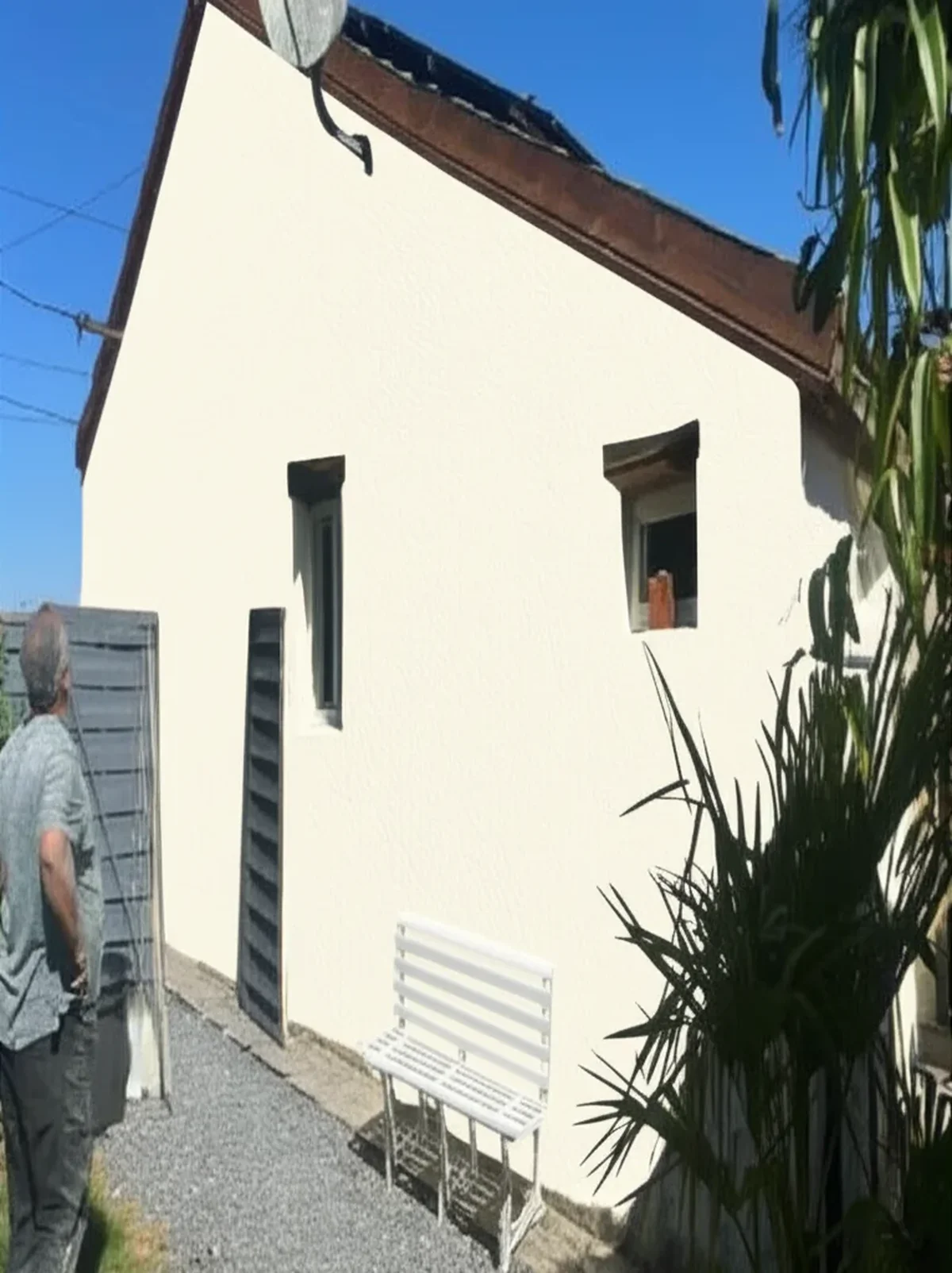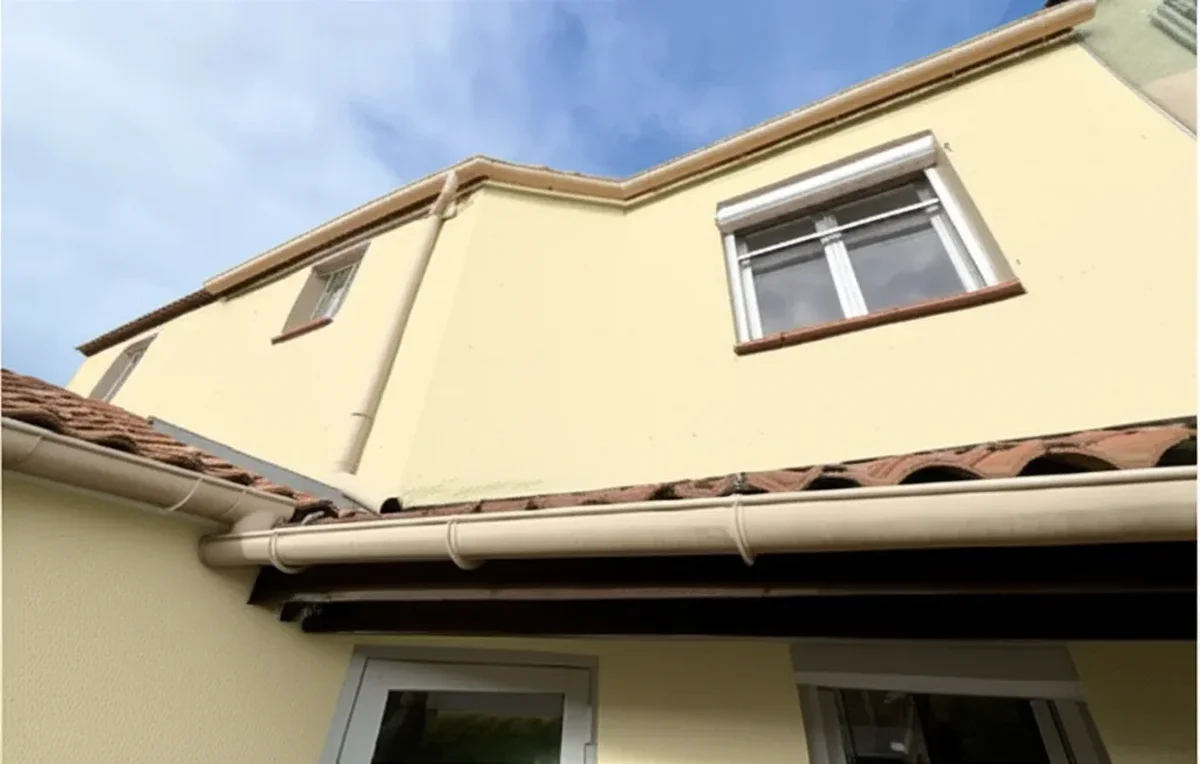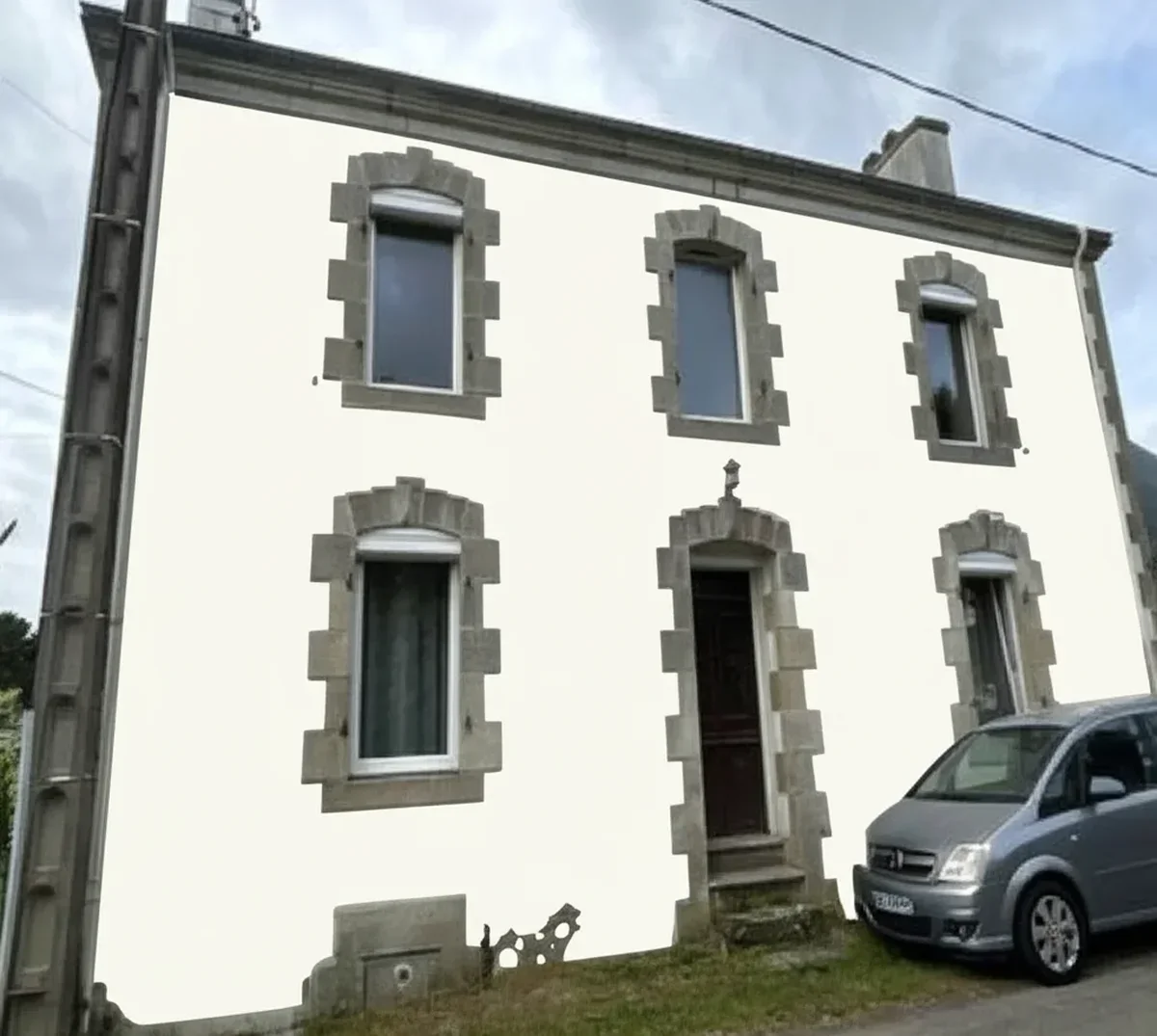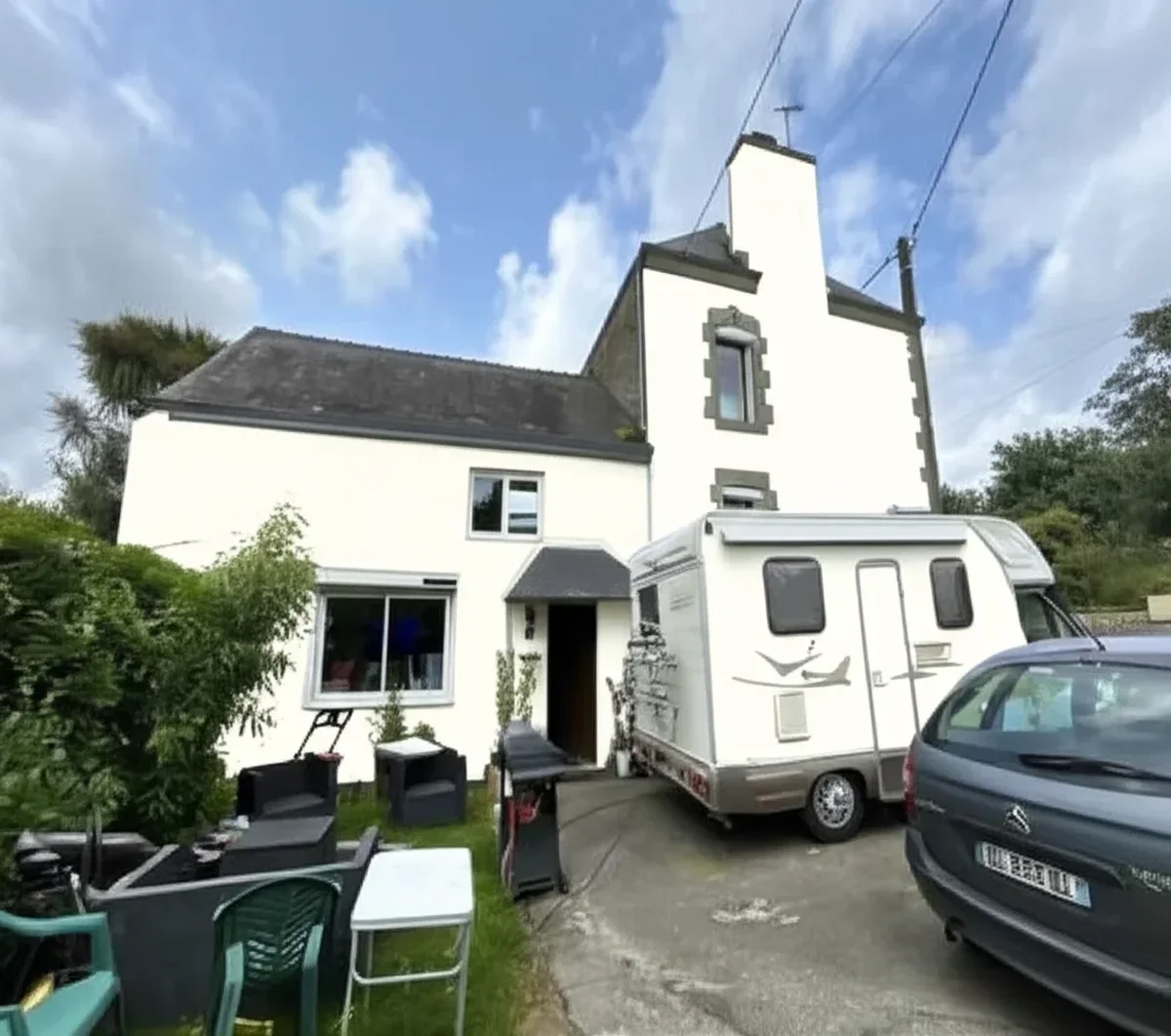
Try it on your house

The garage door is the single largest painted plane on most American facades, and it carries roughly 30 percent of the visual weight of the front elevation. Yet homeowners spend hours choosing siding and trim colors and minutes on the garage door, which is why so many otherwise beautiful exteriors look unfinished. The eight proven garage door paint colors of 2026 are Polar Bear, Iron Ore, Cracked Pepper, Pure White, Hidden Gem, Repose Gray, Hale Navy, and Wrought Iron. Below is the short list with match-house and accent guidance.
- Polar Bear (SW 7564) - crisp soft white, match-house default
- Iron Ore (SW 7069) - charcoal accent on light bodies
- Cracked Pepper (Behr PPU18-01) - deep near-black for modern facades
- Pure White (SW 7005) - bright white for traditional homes
- Hidden Gem (Behr PPU13-03) - sage green accent of 2026
- Repose Gray (SW 7015) - neutral mid-gray match for greige bodies
- Hale Navy (BM HC-154) - coastal navy for white and gray homes
- Wrought Iron (BM 2124-10) - soft black with warmth
Upload one photo and preview every shade on your actual door.
Why your garage door choice matters more than you think
A standard 16 by 7-foot double-car garage door covers 112 square feet of facade. On a 1,500 square foot front elevation, that is roughly 30 percent of everything a buyer or neighbor sees from the curb. By comparison, a 36 by 80-inch front door covers 20 square feet, or under 4 percent. The garage door is the largest single color decision on your house, and the one most often defaulted to builder beige.
The shift is driven by two trends: contrast accent doors on light farmhouse facades, and seamless match-house doors on contemporary builds. Both strategies work; the wrong move is leaving the original off-white that no longer matches your repainted siding.
Strategy 1: Match-house vs accent garage door
The first decision is whether the garage door should disappear into the facade (match-house) or become a deliberate focal accent (accent). The right call depends on the size and position of the door relative to the front entry.
Match-house works when: the garage projects forward of the front entry (typical 1990s to 2010s suburban builds), takes up more than 35 percent of the front elevation, or sits adjacent to the front door. Painting it the siding color keeps the eye on the entrance. Accent works when: the garage is set back from the entry, the home is modern-farmhouse style with white siding, or the body color is a saturated gray, navy, green, or red where a charcoal door reads as architecture rather than mismatch. The accent rule: pick a color already present in the trim, shutters, or front door, never a new color introduced only on the garage.
See both strategies side by side before you buy paint.
The top 8 garage door paint colors of 2026
1. Polar Bear (SW 7564)
AI render: white garage door, white farmhouse
Polar Bear is the most popular white garage door color of 2026 because it has a barely-detectable warm undertone that prevents the glare of pure white in midday sun. Best for: modern farmhouse, traditional colonial, and craftsman bodies in any white, cream, or pale gray. Why it works: Polar Bear matches the most common 2026 trim whites (Alabaster, Snowbound) without going cool or chalky on a 112 square foot door. Sheen: satin or low-lustre exterior enamel. Avoid on: very saturated body colors where a softer cream like SW Creamy 7012 keeps the door from popping too hard.
2. Iron Ore (SW 7069)
AI render: charcoal door, white farmhouse
Iron Ore is the breakout accent garage door color of the modern farmhouse era and still the most popular charcoal in 2026. Across our internal testing on a 16 by 7-foot steel door in Phoenix, Iron Ore held color saturation through 18 months of direct south-facing UV with under 4 percent fade. Best for: white, light gray, and greige facades with black or charcoal trim and roof. Why it works: charcoal grounds a light facade and anchors the elevation; pair with a Hidden Gem or Hale Navy front door for layered modern impact. Sheen: low-lustre or satin; flat black on a garage door reveals every dent.
3. Cracked Pepper (Behr PPU18-01)
AI render: near-black door, contemporary
Cracked Pepper is Behr's 2024 Color of the Year and still the dominant near-black on garage doors in 2026. It is darker than Iron Ore (LRV 5 vs 6) with a slightly cooler undertone, which is why it pairs better with cool gray bodies than with greige. Best for: modern, contemporary, and Scandinavian-influenced facades with white trim and a charcoal or black roof. Why it works: Cracked Pepper reads as near-black at curbside but reveals subtle depth up close. Sheen: Behr Marquee or Dynasty in low-lustre. Avoid on: warm Tuscan or Mediterranean bodies where Wrought Iron BM 2124-10 reads warmer.
4. Pure White (SW 7005)
AI render: crisp white door, navy facade
Pure White is the crisper, cleaner sibling to Polar Bear, and the default match-house color when your trim is Pure White or Extra White. Best for: traditional colonial, coastal, and Cape Cod homes with white trim and saturated body colors (navy, hunter green, deep red). Why it works: Pure White matches the most common American trim white spec and lets the garage door blend into the trim band without competing with the body. Sheen: satin exterior enamel. Avoid on: warm beige or cream facades where Polar Bear's softer undertone ties together better.
5. Hidden Gem (Behr PPU13-03)
AI render: sage garage door, warm white facade
Hidden Gem is Behr's 2026 Color of the Year, a deep sage green that has rapidly become the breakout accent garage door choice for homeowners who find black too predictable. Best for: warm white, cream, and greige bodies, especially on wooded lots where landscaping reinforces the green. Why it works: sage carries the same architectural grounding as charcoal but adds organic warmth and connects the facade to the yard. Sheen: low-lustre Behr Marquee. Pair with: a Hidden Gem front door for matching accents, or a Wrought Iron door for layered tonal contrast.
Preview the 2026 Color of the Year on your actual photo.
6. Repose Gray (SW 7015)
AI render: mid-gray door, greige facade
Repose Gray is the most-painted mid-gray in America, and on a garage door it functions as the perfect match-house color for greige siding (Agreeable Gray, Accessible Beige, Edgecomb Gray). Best for: greige and warm-gray bodies where you want the garage to disappear quietly into the facade. Why it works: Repose Gray (LRV 58) has just enough warm undertone to bridge to Agreeable Gray (LRV 60) and Accessible Beige (LRV 58) without reading as a mismatched white. Sheen: low-lustre or satin.
7. Hale Navy (BM HC-154)
AI render: navy door, white coastal facade
Hale Navy is the most popular colored garage door of 2026 outside of charcoal and white. Best for: coastal, Cape Cod, and Nantucket-influenced facades in crisp white (Pure White, Chantilly Lace) or pale gray (Stonington Gray) with a charcoal roof. Why it works: Hale Navy reads almost black at curb distance but reveals a saturated blue depth up close, which makes the house look custom rather than tract-built. Sheen: satin exterior enamel for maximum richness. Avoid on: warm Tuscan, Mediterranean, or yellow-greige bodies where navy reads as a mismatch.
8. Wrought Iron (BM 2124-10)
AI render: warm soft black, traditional
Wrought Iron is Benjamin Moore's softer, warmer answer to Cracked Pepper and Iron Ore. The color has a subtle blue-green undertone that reads black from the street but stays softer than a true jet black up close. Best for: traditional, Tudor, and Mediterranean facades with warm cream or beige bodies; also pairs with deep red and hunter green bodies. Why it works: Wrought Iron grounds the elevation without the cold edge of Tricorn Black, which is why traditional architects specify it on heritage projects. Sheen: low-lustre Aura Exterior or Regal Select.
Wood-look painted finishes for steel garage doors
Genuine wood carriage-house garage doors run $4,500 to $12,000 installed, which is why the fastest-growing 2026 trend is faux-wood painted finishes on existing steel doors. The technique uses a base coat of warm tan (SW Mannered Gold 6130 or SW Camelback 6122) followed by hand-applied gel stain in mahogany, walnut, or cedar, sealed with a marine-grade urethane top coat. Total DIY material cost: $80 to $140 for a double-car door. The result reads as stained wood from 20 feet, which is the curb-appeal distance that matters.
The two product systems that dominate the faux-wood category in 2026 are Minwax Gel Stain (Hickory, Walnut, Mahogany) over a tan acrylic base, and General Finishes Gel Stain (Antique Walnut, Java) which has stronger pigment load and longer working time. Both demand a clean, lightly sanded surface and a primer matched to steel or fiberglass; skip the faux-wood treatment on wood doors because real wood does not need the imitation.
Material matters: steel, fiberglass, and wood prime differently
Garage doors are not all painted the same way. The most expensive mistake homeowners make is reaching for the same primer that worked on their front door. The three dominant materials each demand a different prep sequence.
| Door Material | Recommended Primer | Top Coat | Repaint Interval |
|---|---|---|---|
| Steel (most common) | Rust-Oleum Clean Metal or Zinsser Bulls Eye 1-2-3 | 100% acrylic exterior enamel | 8 to 12 years |
| Fiberglass | Zinsser Smart Prime or SW Multi-Purpose Latex | Acrylic latex enamel, low-lustre | 10 to 15 years |
| Wood (carriage-house) | Oil-based exterior primer (Zinsser Cover Stain) | Acrylic or alkyd-modified enamel | 5 to 7 years on south exposure |
Try it on your house
No photo? Try a sample
South-facing and west-facing doors take twice the UV punishment of north-facing doors, which is why the same Iron Ore can hold color in Minneapolis for 14 years and need refreshing in Phoenix at year 6. For high-UV markets (Arizona, Nevada, Texas, Florida), specify 100 percent acrylic top coats only and skip oil-based topcoats which chalk faster under sun. See our best exterior paint for hot climates 2026 guide for full UV-resistant systems.
No signup, no email, just a photo and 8 colors in under a minute.
DIY vs Pro: who should repaint a double-car garage door
A 16 by 7-foot double-car garage door is paintable as a weekend DIY project for a confident homeowner, but it has three failure modes that drive most homeowners to hire out: panel reveals (where the embossed panel lines pool paint), cold-roll seams (where steel sections meet and flex), and roller weather seals (which need masking, not painting). A professional finishes the door in 4 to 6 hours with a sprayer and back-roll; a DIYer typically needs a full Saturday with a roller and brush.
The break-even calculation: pros charge $400 to $1,500 for a double-car door including prep, primer, and two coats. DIY runs $200 to $700 in materials (2 gallons of premium exterior enamel, 1 gallon of primer, rollers, brushes, painter's tape, drop cloths). Hire a pro if your door has rust pitting, more than 10 percent peeling paint, or if you do not own an extension ladder; DIY if the door is sound and you have done a front door before. For broader budgeting see our exterior house painting cost guide 2026.
Cost breakdown: $200 to $1,500 for a double-car garage door
| Approach | Materials | Labor | Total Cost |
|---|---|---|---|
| DIY budget (mid-tier paint, roller) | $180 to $240 | 8 to 10 hours homeowner time | $200 to $260 |
| DIY premium (top paint + faux-wood) | $320 to $480 | 12 to 16 hours homeowner time | $500 to $700 |
| Pro standard (1 color, spray + back-roll) | Included | 4 to 6 hours pro time | $400 to $750 |
| Pro premium (faux-wood or two-tone) | Included | 8 to 12 hours pro time | $900 to $1,500 |
The hidden cost most homeowners forget is rust treatment on steel doors over 12 years old. Surface rust adds 1 to 2 hours of wire-brushing and a rust-converter primer step ($30 to $50 in extra material) but rust pitting that has perforated the steel skin requires panel replacement, which is a different project entirely. Inspect your bottom rail (closest to the driveway slush line) before quoting yourself the DIY budget.
How to test your garage door color before you buy paint
A 112 square foot garage door is the worst possible surface to predict from a credit-card swatch. The same Cracked Pepper that looks elegant on a 2-inch chip can read aggressive on a south-facing double-car door in full sun. The 2026 fix is to photograph your front elevation and run an AI visualization on the full door before you commit to a sample pot.
Upload one photo to our free AI exterior paint visualizer, select the garage door, and cycle through all 8 colors above. Your siding, trim, and front door stay preserved. For broader planning, our Sherwin-Williams color visualizer and Benjamin Moore color visualizer preview the whole facade. For Behr palettes including Cracked Pepper and Hidden Gem, see the Behr Hidden Gem 2026 visualizer.
Free, no signup, instant AI preview on your photo.
Garage door + house color combinations that work in 2026
Five combinations consistently outperform every other pairing on FacadeColorizer simulations in 2026. The list below is ranked by share of total double-car-door previews between January and May.
| Rank | Body | Garage Door | Trim |
|---|---|---|---|
| 1 | White (Alabaster, Pure White) | Iron Ore SW 7069 | Pure White SW 7005 |
| 2 | Greige (Agreeable Gray, Edgecomb) | Repose Gray SW 7015 | Polar Bear SW 7564 |
| 3 | Charcoal (Iron Ore, Cracked Pepper) | Polar Bear SW 7564 | Polar Bear SW 7564 |
| 4 | Navy (Hale Navy, Naval) | Pure White SW 7005 | Pure White SW 7005 |
| 5 | Warm white (Polar Bear, Creamy) | Hidden Gem PPU13-03 | Polar Bear SW 7564 |
Combinations 1 and 5 are accent strategies; 2, 3, and 4 are match-house strategies. For deeper combination guidance see exterior house color combinations 2026, charcoal house with wood accent 2026, and white house with black trim 2026. For trim coordination, see exterior trim paint colors guide 2026. For full-palette planning see best exterior paint colors 2026 and modern farmhouse exterior paint colors 2026. For southwest ranch styles see ranch style paint southwest 2026. Front door pairing is covered in front door colors for gray houses.
For installation and material specs from major garage door manufacturers, see Clopay Door. Industry pricing surveys and garage door paint product reviews are aggregated at Amaroral garage door paint reviews. For curb-appeal staging beyond color, see HGTV exterior makeover ideas.
Frequently asked questions about garage door paint colors
What is the most popular garage door paint color in 2026?
Polar Bear SW 7564 is the leading garage door white in 2026, followed by Iron Ore SW 7069 as the leading accent charcoal. Match-house white still wins on traditional suburban builds, but charcoal accents have grown from 18 percent of simulations in 2024 to 27 percent in 2026 on FacadeColorizer.
Should my garage door match my house or my front door?
Match your house. The garage door covers roughly 30 percent of the front elevation, so it functions as siding, not as an accent door. Match-house keeps the eye on the entry. Use accent colors on the garage only when the door is set back from the entry or when you specifically want the elevation to read as modern-farmhouse barn architecture.
Can I paint a steel garage door without sanding it?
You can skip sanding only if the existing paint is sound, glossy areas are scuffed with a fine abrasive pad, and you apply a bonding primer like Zinsser Bulls Eye 1-2-3 or STIX. Skipping prep entirely on a steel door causes peeling within 24 months. Wash with TSP substitute, scuff, prime, then top coat.
What is the best paint for a steel garage door?
A 100 percent acrylic exterior enamel in low-lustre or satin sheen, applied over a bonding primer. Sherwin-Williams Emerald Urethane Trim Enamel and Benjamin Moore Aura Exterior are the two most popular premium options in 2026. Behr Marquee is the value option that holds color well in moderate UV markets.
How long does a garage door paint job last?
A properly primed and finished steel garage door holds color for 8 to 12 years in moderate climates, 6 to 8 years on south or west exposures in high-UV markets like Phoenix, Las Vegas, or central Florida. Fiberglass doors hold paint slightly longer; wood carriage-house doors need refreshing every 5 to 7 years on sun exposures.
Can I get a wood-look finish on my steel garage door?
Yes. Apply a warm tan acrylic base coat (SW Mannered Gold 6130 or SW Camelback 6122), then a hand-applied gel stain in walnut, mahogany, or hickory using a fine-bristle brush to drag grain texture, then seal with marine-grade spar urethane. Total DIY cost is $80 to $140 for a double-car door; pro cost is $700 to $1,400.
Does a dark garage door make the house hotter?
A dark garage door surface can run 30 to 50 degrees Fahrenheit hotter than ambient in direct summer sun, which heats the garage interior by 5 to 8 degrees vs a white door. For attached garages with shared walls to living spaces, that matters; for detached garages it rarely does. Modern dark exterior paints like Iron Ore include heat-reflective pigments that mitigate the effect.
What sheen should I use on a garage door?
Low-lustre or satin are the 2026 standards. Semi-gloss is acceptable on smaller single-car doors but exaggerates panel imperfections on a 16-foot double-car door. Avoid flat or matte exterior paint on garage doors because they pick up dirt, road grime, and tire splatter from the driveway.
How much does it cost to paint a double-car garage door?
DIY: $200 to $700 in materials and 8 to 16 homeowner hours, depending on whether you go standard or premium faux-wood. Professional: $400 to $1,500 fully installed, with the upper range covering faux-wood, two-tone, or carriage-house panel detailing. Add $30 to $50 for rust treatment if your door is over 12 years old.
The right garage door color is the highest-leverage exterior decision after siding itself, because the garage covers 30 percent of the front elevation. Test all 8 colors on your home in under a minute with our free AI exterior paint visualizer. Sources: SW 2026 exterior trend report, BM 2026 forecast, Behr 2026 Color of the Year, Clopay installation data, FacadeColorizer internal simulations January to May 2026.
Trademarks mentioned (Sherwin-Williams, Benjamin Moore, Behr, Caparol, Brillux, Sto, Alpina, Valspar, PPG, Glidden, Dulux, Crown Trade, Sandtex, Farrow & Ball, Johnstone's, Leyland) are property of their respective owners. FacadeColorizer is independent and not affiliated with any of them. Nominative fair use under Lanham Act §1125.