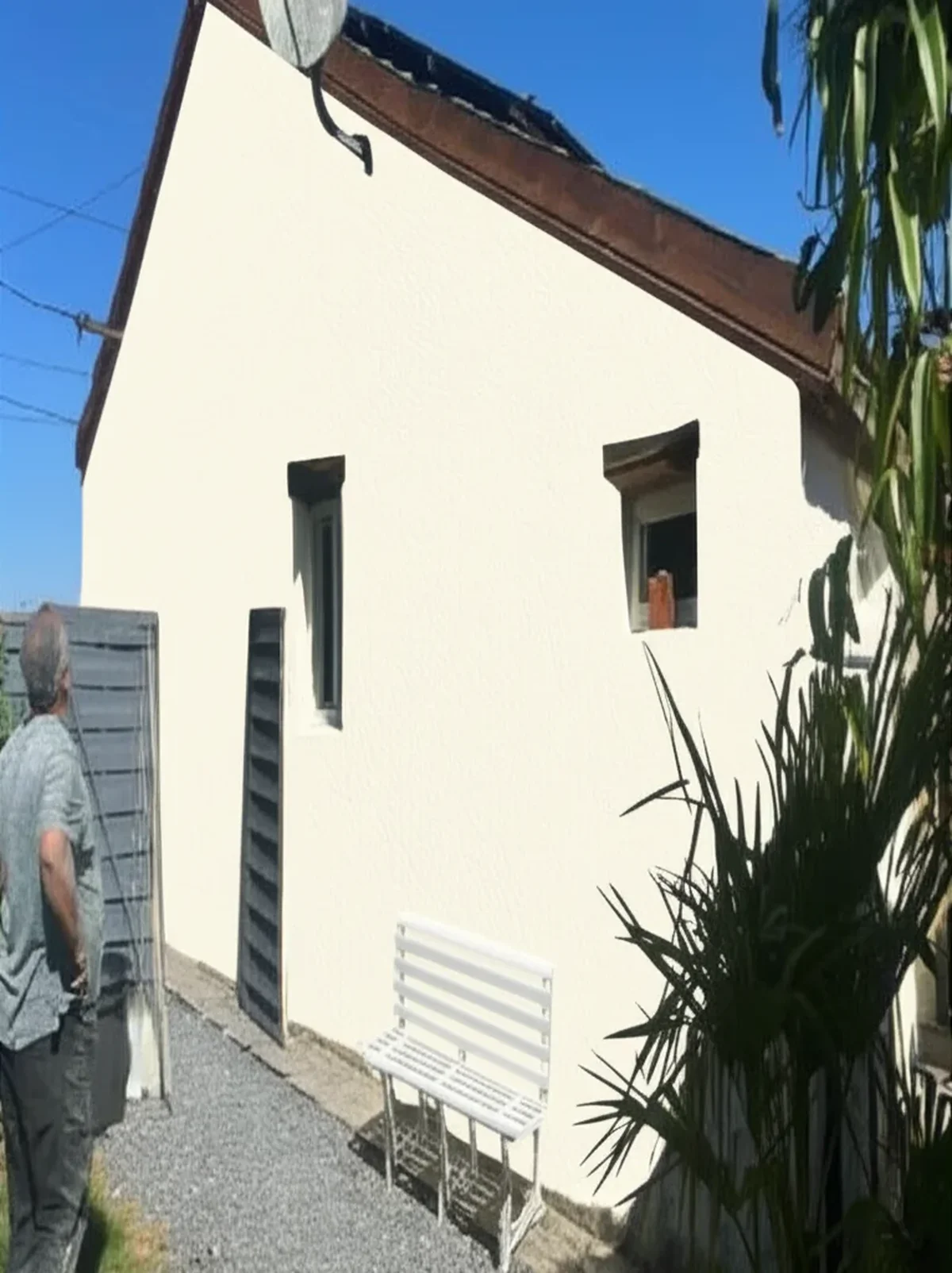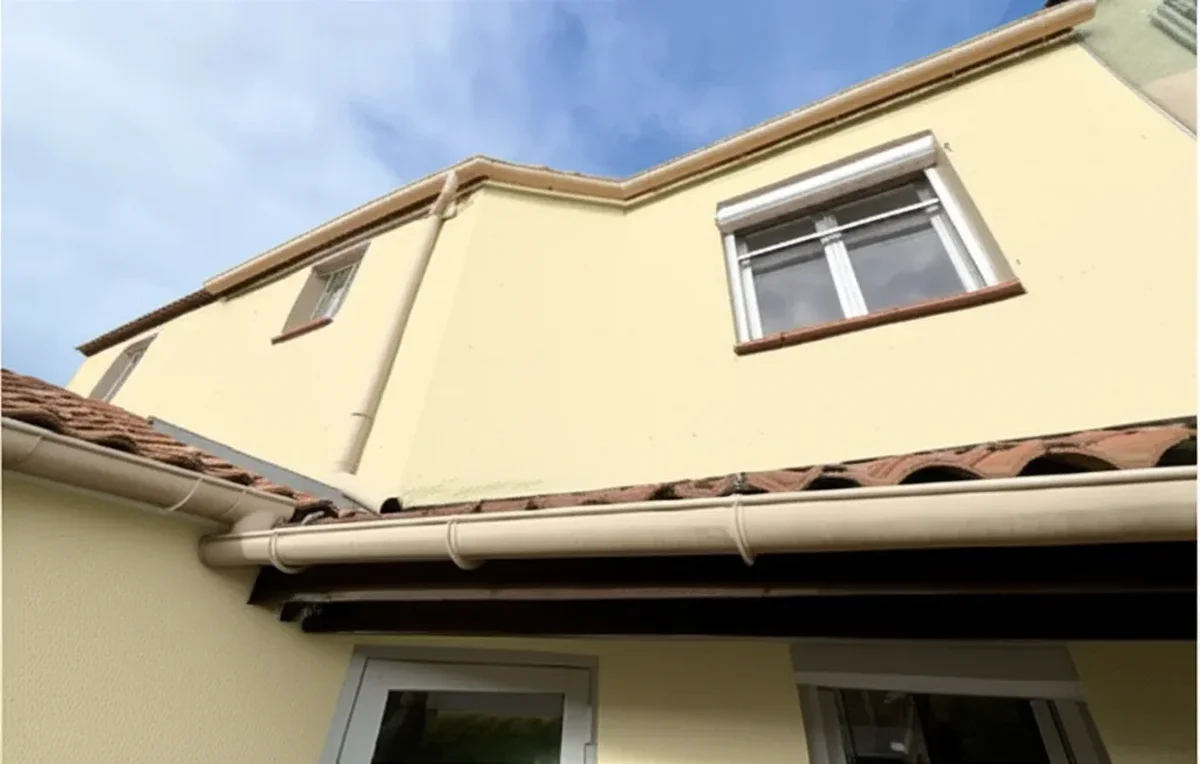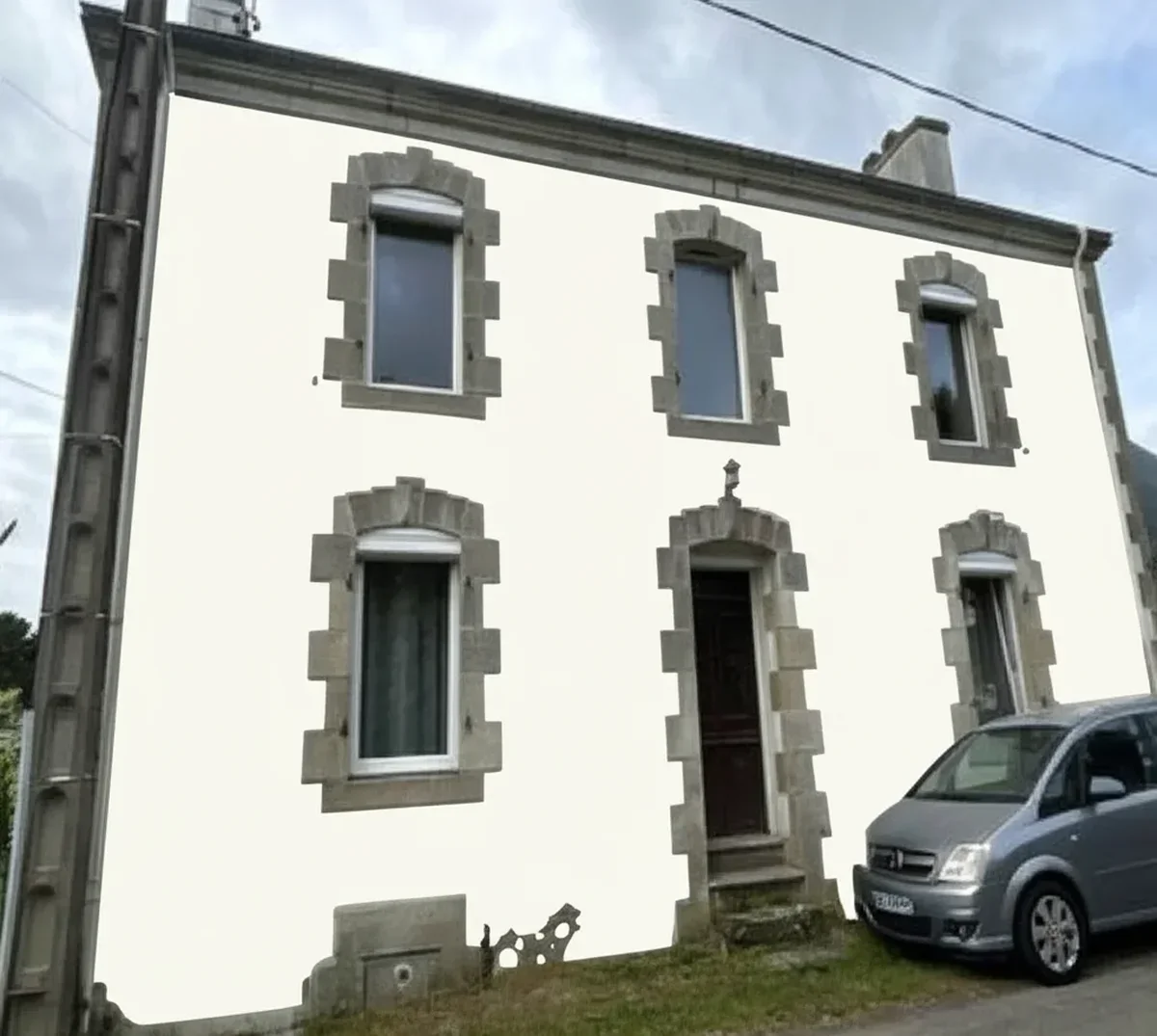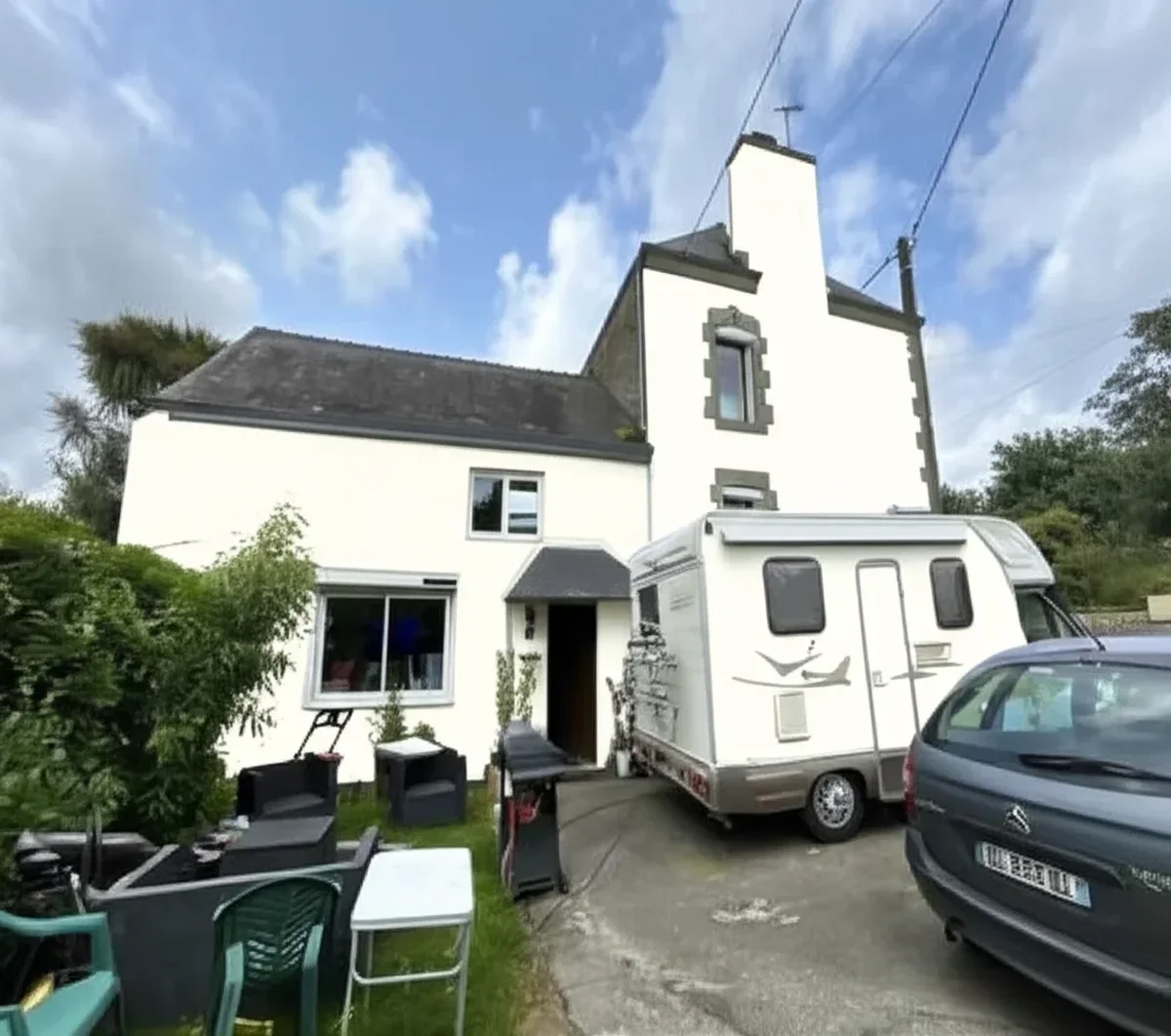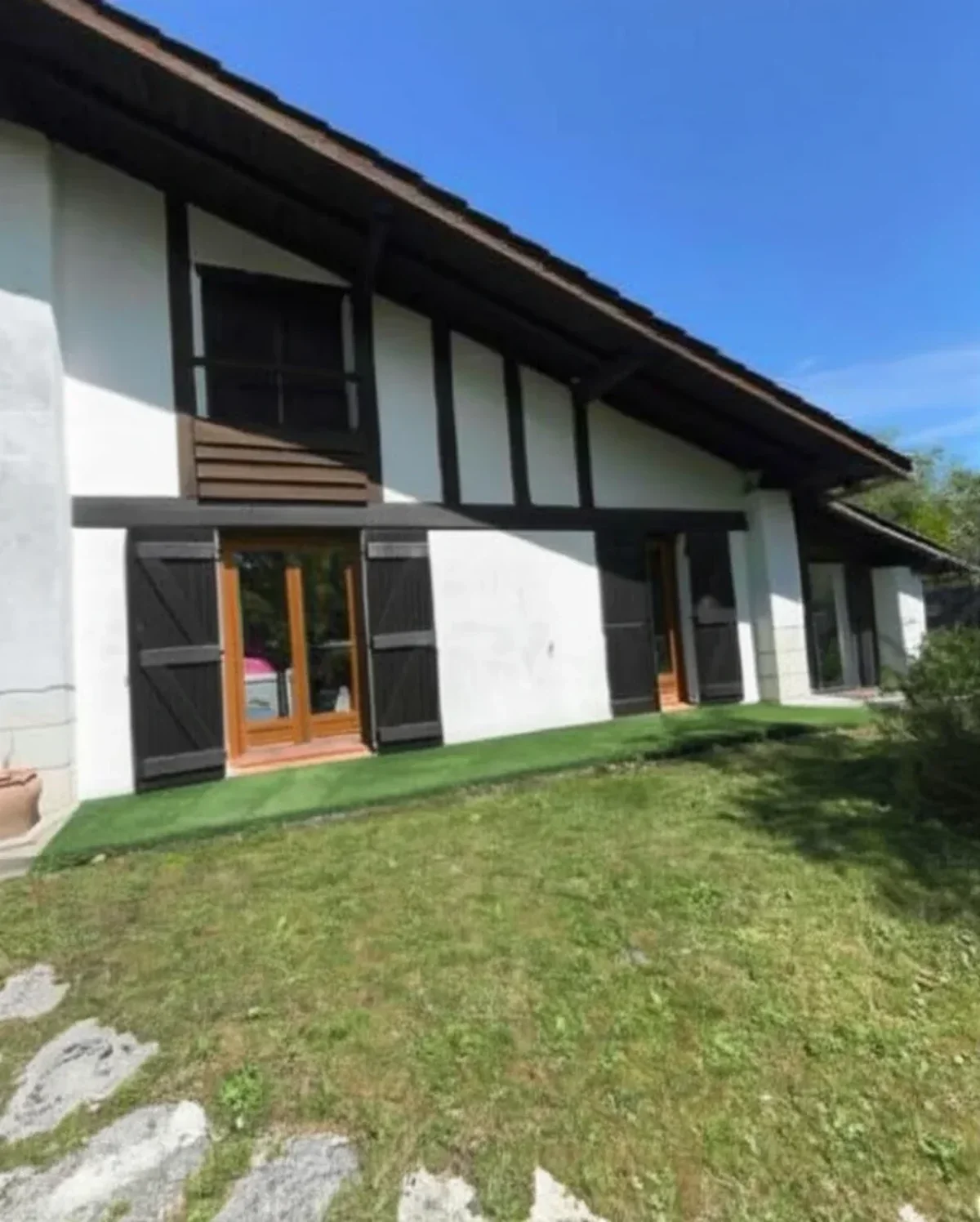
Try it on your house

Tudor Revival Paint Colors Connecticut 2026: 8 Authentic Schemes for Fairfield, Greenwich & West Hartford CT Homes
Quick answer: The most authentic Connecticut Tudor Revival exterior palette pairs Benjamin Moore Antique White OC-83 stucco, Benjamin Moore Bracken Brown HC-78 half-timbering, Benjamin Moore Iron Mountain 2134-30 slate accents, and a Sherwin-Williams Country Squire SW 6195 forest green door. This combination respects the 1920s-1940s Tudor Revival vernacular concentrated in Greenwich, Fairfield, Westport, Wilton, Darien, and the West End of West Hartford CT.
Last Updated: June 2026. Related reading: 15 authentic Tudor schemes (parent guide), Northeast Tudor sibling guide (broader NE), and the free AI exterior paint visualizer.
FacadeColorizer is a free AI exterior paint visualizer for historic homes. "historical accuracy + Fairfield County prestige" in user voting. Connecticut's particular concentration of pre-war stockbroker estates, mature canopy shade, and strict historic-district oversight makes color choice especially consequential here.
Try it on your house
No photo? Try a sample
This guide covers the 8 best Tudor Revival exterior colors for Connecticut, three complete CT-specific color schemes, Greenwich preservation considerations, stone foundation integration logic, modern reinterpretation versus heritage restoration trade-offs, and a Connecticut-focused FAQ. For the broader four-state Northeast view, see our sibling Tudor Northeast guide. For the national 15-scheme overview, see the parent Tudor color guide.
Why Connecticut became the Tudor Revival capital of the Northeast
Between roughly 1920 and 1940, Connecticut absorbed an unusually high concentration of Tudor Revival construction relative to its population. The reason was straightforward: the New Haven railroad line had matured into a fast commuter spine from Wall Street to the Connecticut shoreline, putting Greenwich, Riverside, Old Greenwich, Cos Cob, Darien, Rowayton, Westport, and Saugatuck within a 45-minute ride of midtown Manhattan. The financial-services class that emerged after World War I wanted Anglophile estate housing with the gardens and privacy that Westchester County was already running out of, and Connecticut land was cheaper, larger, and zoned for the scale they wanted.
By the late 1920s, Fairfield County had filled with Tudor Revival homes ranging from modest 2,500 sq ft executive houses in Westport and Wilton to genuine 8,000+ sq ft estates in Greenwich's backcountry. A parallel wave hit Hartford County, where insurance executives built the West End of West Hartford into one of the densest professional-class Tudor neighborhoods in the country. New Canaan, Ridgefield, Easton, and Weston filled out the Fairfield County inventory at varying scales, and the smaller shoreline towns from Branford to Madison contain pockets of 1930s Tudor cottages built for summer use that later converted to year-round.
The original Connecticut Tudor palette respected the broader English Revival vocabulary: warm cream or putty stucco bodies, deep brown stained half-timbering, natural fieldstone foundations from local Connecticut quarries, slate roofs sourced from Vermont or northeastern Pennsylvania, and saturated front doors in oxblood red, forest green, or burgundy. Pure white stucco was almost unknown, and pure black timbering was rare outside the largest estates. Connecticut Tudor color choices in 2026 still operate inside this historic vocabulary, even when modernized for current taste.
The 8 best Tudor Revival exterior paint colors for Connecticut in 2026
Each color below targets one of the five Tudor exterior surfaces seen across Connecticut: stucco field, half-timbering, stone or brick accent, slate roof metal, and front door. Specify each color by exact Sherwin-Williams or Benjamin Moore product code at the paint counter. The "looks close enough" approximations are responsible for more failed Connecticut Tudor repaints than any other single cause.
1. Benjamin Moore Antique White OC-83 (stucco field)
The single most historically accurate Connecticut Tudor stucco color. Antique White OC-83 is a warm off-white with a soft yellow-beige undertone that reads as aged lime plaster rather than modern paint. Under the heavy oak and maple canopy that covers most Fairfield County Tudor lots, cooler whites read gray and dingy, while Antique White holds its warmth through long overcast stretches.
2. Benjamin Moore Bracken Brown HC-78 (half-timbering, primary)
A deep, warm chocolate brown that reads as authentic stained timber rather than painted wood. Bracken Brown HC-78 is the Connecticut Tudor specialist's default half-timber color because it carries enough red undertone to harmonize with both slate roofs and the local Connecticut fieldstone foundations without going flat black. Pair with Antique White OC-83 stucco for the canonical Fairfield County Tudor look.
3. Benjamin Moore Black Iron 2120-20 (half-timbering, dramatic)
For the larger Greenwich backcountry estates and the Tudors where original timbering had already been stained near-black, Black Iron 2120-20 delivers a deep blackened brown with subtle blue-gray undertones. Common on the Round Hill Road and Lake Avenue estates in Greenwich where massive timbers dominate the elevation. Use sparingly on smaller Tudors where the heavier color can overwhelm a modest facade.
4. Sherwin-Williams Sequoia SW 6313 (stone accent zones)
For stone foundations, watercourse trim, and chimney bases common on Connecticut Tudors, Sequoia SW 6313 reads as a warm putty-tan that bridges the cream stucco above and the natural Connecticut fieldstone below. If your home has visible natural fieldstone, leave the stone unpainted and use Sequoia only on adjacent stucco panels. If your home has painted-stone effect bands from earlier renovations, Sequoia is the most historically defensible match for restoration.
5. Sherwin-Williams Country Squire SW 6195 (front door, classic)
A deep, almost-black forest green that has been the bestselling Connecticut Tudor door color in our visualizer for three years running. Country Squire reads as both historic English country and contemporary Fairfield County prestige, and the deep green plays perfectly against Antique White stucco and Bracken Brown timbering. Apply in a satin or semi-gloss exterior enamel for the "old door waxed for a century" sheen that the Greenwich and Darien design community expects.
6. Benjamin Moore Iron Mountain 2134-30 (slate roof + metal accents)
Genuine Vermont or Pennsylvania slate roofs on Connecticut Tudors typically read as a cool blue-gray to deep charcoal. When repainting flashing, ridge caps, gutters, downspouts, or any exterior metal that should harmonize with the slate, Iron Mountain 2134-30 is the closest paintable match. Also useful on wrought iron railings, lantern posts, and the cast-iron window grilles that show up on the larger Greenwich and West Hartford Tudors.
7. Benjamin Moore Bone OC-23 (stucco, softer alternate)
When the homeowner finds Antique White OC-83 too yellow for their specific siting (heavily shaded Westport and Wilton lots under thick mature canopy sometimes need a slightly cooler body color to hold its warmth in the deepest shade), Bone OC-23 shifts the stucco toward a softer pale putty with less yellow saturation. Still period-appropriate for a 1930s Tudor but reads slightly more refined and contemporary, popular on recent New Canaan and Darien renovations.
8. Benjamin Moore Hampshire Taupe HC-78 (stucco, deeper alternate)
For the West End of West Hartford and the smaller older Tudors of Old Greenwich where the homeowner wants more body weight against pale Connecticut winter skies, Hampshire Taupe shifts the stucco toward a soft mushroom-greige. It still reads as period-correct, just heavier. Particularly successful when paired with Bracken Brown timbering at full saturation and a Country Squire door, producing a Cotswolds-cottage feel rather than baronial estate.
Three complete Connecticut Tudor color schemes
Scheme A: Fairfield County estate (Antique White + Bracken Brown + oxblood door)
Stucco: Benjamin Moore Antique White OC-83. Half-timbering: Benjamin Moore Bracken Brown HC-78. Stone accents: Sherwin-Williams Sequoia SW 6313 on adjacent stucco panels, natural fieldstone left unpainted. Front door: Sherwin-Williams Carnelian SW 7580 oxblood red. Roof and metal: Benjamin Moore Iron Mountain 2134-30. This is the historically correct palette that a 1928 Greenwich or Westport Tudor would have worn when new. Reads as Fairfield County old money without any single element feeling try-hard. Best for homes with leaded glass windows, slate roofs, fieldstone foundations, and intact half-timbering patterns. The default choice for properties in Greenwich's Belle Haven, Round Hill, and Khakum Wood neighborhoods.
Scheme B: West Hartford executive (Bone + Bracken Brown + forest green)
Stucco: Benjamin Moore Bone OC-23. Half-timbering: Benjamin Moore Bracken Brown HC-78 at full saturation. Stone accents: Sherwin-Williams Sequoia SW 6313 on adjacent stucco panels. Front door: Sherwin-Williams Country Squire SW 6195 forest green. Roof and metal: Benjamin Moore Iron Mountain 2134-30. This is the palette that flatters the smaller-scale 2,500 to 4,000 sq ft executive Tudors that fill the West End of West Hartford, Bishop's Corner, and the older sections of Hartford suburbs. Reads as professional-class polish rather than estate baronial, which fits the architectural scale these neighborhoods carry.
Scheme C: Modern Connecticut Tudor (Hampshire Taupe + Black Iron + matte black door)
Stucco: Benjamin Moore Hampshire Taupe HC-78. Half-timbering: Benjamin Moore Black Iron 2120-20 at full saturation. Stone accents: natural fieldstone left unpainted, or painted Sherwin-Williams Iron Ore SW 7069. Front door: Sherwin-Williams Tricorn Black SW 6258. Metal: matte black throughout, with unlacquered brass or aged bronze hardware. This is the 2026 contemporary Tudor look now common on New Canaan, Darien, and Westport renovations where buyers want the historic envelope but with modern contrast. Higher drama, lower stucco-to-timber contrast, still readable as Tudor because the half-timbering pattern is preserved at maximum saturation.
For Connecticut homeowners considering broader warm-tone direction across architectural styles, our brown house with cream trim warm scheme guide dives deeper into the cream-brown family that Schemes A and B draw from. For across-style cross-references, see our complete exterior house color combinations guide and the 30 best exterior paint colors of 2026.
Greenwich CT Tudor preservation: what makes this market different
Greenwich operates under some of the most active private architectural review oversight in the Northeast, even outside formal historic district boundaries. The town has multiple associations governing private roads and gated neighborhoods (Belle Haven, Field Point Park, Khakum Wood, Lake Avenue Association) that maintain de facto color review on every major exterior repaint, separate from any municipal historic commission. Greenwich Tudor owners typically need to circulate a proposed palette to both their neighborhood association and any abutting property owners before committing.
The Greenwich market also carries higher stakes per repaint. A 1928 estate Tudor in backcountry Greenwich can carry an $8M to $15M valuation, and a poorly chosen palette absolutely affects resale on this magnitude of property. The conservative default in Greenwich is Scheme A Fairfield County estate (Antique White, Bracken Brown, oxblood or forest green door, natural stone). This palette clears review with minimal friction in every Greenwich association we have data on, and it preserves the historically correct vocabulary that the high-net-worth Greenwich buyer pool actively rewards. Buyers in this segment specifically search for "period-correct" Tudors in MLS comments, and visibly modernized facades (Scheme C) tend to lose 3 to 5 percent on final clearing price compared to restored equivalents.
Greenwich also has a meaningful number of Tudors on the National Register of Historic Places (via the Greenwich Avenue Historic District, the Belle Haven district, and individual estate listings). For these properties, paint changes require Town of Greenwich Historic District Commission review, and only period-correct palettes typically clear without modifications. If your Greenwich Tudor is listed on the National Register or sits inside a designated local historic district, default to Scheme A and document the chemistry of your selected paint formulations before submitting.
Stone foundation integration: a Connecticut-specific consideration
Connecticut Tudors disproportionately retain their original natural fieldstone foundations and chimney bases. The state's geology provided abundant flat-bedded mica schist, granite, and brownstone quarried locally for foundation use, and 1920s-1940s Connecticut builders used this stone aggressively on Tudor Revival projects. As a result, the typical Connecticut Tudor in 2026 still shows a visible stone watercourse, foundation belt, chimney base, or even full first-floor stone veneer that becomes a critical color coordination factor.
The rule is simple and absolute: do not paint natural fieldstone. Doing so destroys the visible mineral variation that gives Connecticut stonework its specific character, and the resulting flat painted surface looks distinctly wrong against the Tudor vernacular. Instead, choose stucco colors that harmonize with your specific stone palette. Local Connecticut mica schist reads as warm gray to brown-gray with rust speckles, which pairs beautifully with Antique White OC-83 stucco and Bracken Brown HC-78 timbering. Brownstone bases (more common on Hartford-area Tudors) carry warmer red-brown tones that benefit from Bone OC-23 stucco to avoid clash. Granite foundations (cooler gray with white feldspar speckle) pair best with Hampshire Taupe HC-78 stucco for color temperature balance.
If your foundation was previously painted by a prior owner and you want to remove it, expect to spend $4,000 to $9,000 on chemical stripping or careful mechanical removal across a typical Connecticut Tudor. This is a non-trivial investment but consistently returns more than its cost at resale in Fairfield County. For homes where stripping is not feasible, repaint the existing painted stone in Sequoia SW 6313 to approximate the warm stone tone, and treat the painted band as a deliberate watercourse band rather than fighting against it.
Modern reinterpretation vs heritage restoration: choosing your direction
The single biggest decision facing a Connecticut Tudor owner in 2026 is whether to restore toward the 1920s palette or modernize toward 2020s taste. Both are defensible, but mixing them creates visual confusion that hurts both resale and daily street-view satisfaction. Connecticut markets reward decisive commitment to one direction far more than they reward hedging.
Heritage restoration means cream or warm-beige stucco, deep brown half-timbering at maximum contrast, oxblood or forest-green doors, natural fieldstone left unpainted, and visible Iron Mountain on slate-facing metal. Window trim painted the same color as the stucco or one shade darker. Sheen kept flat to low on stucco fields, satin on timbering, semi-gloss on doors only. This approach maximizes Greenwich, Darien, and West Hartford West End approval odds and tends to deliver the strongest resale uplift in markets where buyers actively seek period-correct examples. Scheme A is the canonical heritage palette.
Modern reinterpretation shifts the stucco toward a darker greige or charcoal, paints the timbering true black or near-black, replaces oxblood doors with matte black or deep navy, and adds contemporary brass or matte-black hardware. The half-timbering pattern remains visible but the overall contrast is reduced. This reads as fresh and "designer" but can clash with neighboring period-correct homes and may not score as well in stricter Greenwich associations. The most successful modern Tudor repaints in New Canaan, Darien, and Westport keep three of the four primary surfaces (stucco, timber, door, roof metal) within the historic palette and modernize only one. Scheme C is the modern palette done at appropriate restraint.
For Connecticut homeowners looking at how this restoration-versus-renovation tension plays out in adjacent states, see our HOA approved colors New York guide and the Massachusetts HOA approved palette guide, both of which document parallel review pressures. For the New England Federal context that often abuts Tudor inventory in older Connecticut town centers, see our forthcoming Federal style New England guide. For broader US historic-style cross-reference, our Victorian US top-15 guide and the Buffalo NY exterior painting cost guide both inform Northeast repaint budgeting for older homes.
Visualize your Connecticut Tudor in 30 seconds
Reading specs is one thing. Seeing Antique White OC-83 stucco with Bracken Brown HC-78 timbering and a Country Squire SW 6195 door on YOUR specific 1928 Greenwich or West Hartford Tudor, with your specific roofline, your specific stone, and your specific canopy shade, is what tells you whether to commit. Upload a clear daylight photo to our free AI exterior paint visualizer and test all 8 colors above in seconds.
For deeper period-correct research, Old House Online publishes extensive archives on Tudor Revival paint specifications and restoration practice across the Northeast. The Greenwich Historical Society maintains records and consultations relevant to Greenwich-specific Tudor inventory and preservation guidance. HGTV publishes ongoing Tudor exterior makeover case studies useful for contemporary direction reference.
Frequently asked questions
What is the most authentic Tudor Revival paint color for a Connecticut home?
Benjamin Moore Antique White OC-83 stucco with Benjamin Moore Bracken Brown HC-78 half-timbering and a Sherwin-Williams Country Squire SW 6195 forest green or Carnelian SW 7580 oxblood front door. This palette matches the 1920s-1940s vernacular of Greenwich, Fairfield, Westport, and the West End of West Hartford CT.
What color half-timbering is correct on a Greenwich CT Tudor?
Deep warm brown (Benjamin Moore Bracken Brown HC-78) for most Greenwich, Riverside, Old Greenwich, and Cos Cob Tudors. The largest Round Hill and Lake Avenue estate Tudors can carry a blackened brown like Benjamin Moore Black Iron 2120-20. Pure jet black is historically rare in Greenwich and tends to read as a recent renovation rather than restoration.
Is white stucco acceptable on a Fairfield County Tudor?
Pure white stucco is historically inaccurate on 1920s-1940s Connecticut Tudors. Use Antique White OC-83, Bone OC-23, or Hampshire Taupe HC-78 for a warm cream or soft greige that respects the original palette. Pure white tends to clash with the natural fieldstone foundations typical of Fairfield County Tudors.
Should I paint the natural fieldstone foundation on my Connecticut Tudor?
No. Connecticut Tudors disproportionately retain original natural fieldstone foundations from local quarries, and painting them destroys the visible mineral variation that defines the Tudor vernacular. Choose stucco colors that harmonize with your existing stone instead. If a prior owner already painted the stone, consider chemical stripping ($4,000 to $9,000) or repaint in Sherwin-Williams Sequoia SW 6313 to approximate warm stone.
Do I need historic district approval to paint my Greenwich Tudor?
It depends on the property. Tudors inside formal local historic districts or listed on the National Register require Town of Greenwich Historic District Commission review. Tudors in private associations (Belle Haven, Field Point Park, Khakum Wood, Lake Avenue) typically face de facto color review from association boards. Period-correct palettes like Scheme A clear review easily; modernized Scheme C palettes sometimes require modifications.
What is the best front door color for a Westport or Darien Tudor?
Either Sherwin-Williams Country Squire SW 6195 deep forest green or Sherwin-Williams Carnelian SW 7580 oxblood red. Both have been historically dominant on Fairfield County Tudors since the 1920s. Country Squire reads slightly more modern and currently dominates in Westport and Darien renovations; Carnelian reads slightly more traditional and is more common in Greenwich.
How does the Connecticut shade canopy affect Tudor paint choices?
Mature oak and maple canopy across most Fairfield County and West Hartford Tudor lots creates deep daytime shade that flattens cooler whites toward gray. Warmer cream stucco colors (Antique White OC-83) hold their warmth in canopy shade better than pure white. For the deepest-shade lots, Bone OC-23 or Hampshire Taupe HC-78 deliver more body weight against the green-tinted shaded light.
How much does it cost to repaint a Connecticut Tudor exterior in 2026?
Most 2,500 to 4,000 sq ft Tudors in Fairfield County and West Hartford run $14,000 to $32,000 for a full multi-surface exterior repaint in 2026, depending on stucco condition, timber repair needs, prep work, and access. Greenwich backcountry estate Tudors over 6,000 sq ft routinely exceed $50,000 because of the surface coordination labor across stucco, timber, stone watercourses, slate-facing metal, and multiple door faces.
Trademarks mentioned (Sherwin-Williams, Benjamin Moore, Behr, Caparol, Brillux, Sto, Alpina, Valspar, PPG, Glidden, Dulux, Crown Trade, Sandtex, Farrow & Ball, Johnstone's, Leyland) are property of their respective owners. FacadeColorizer is independent and not affiliated with any of them. Nominative fair use under Lanham Act §1125.