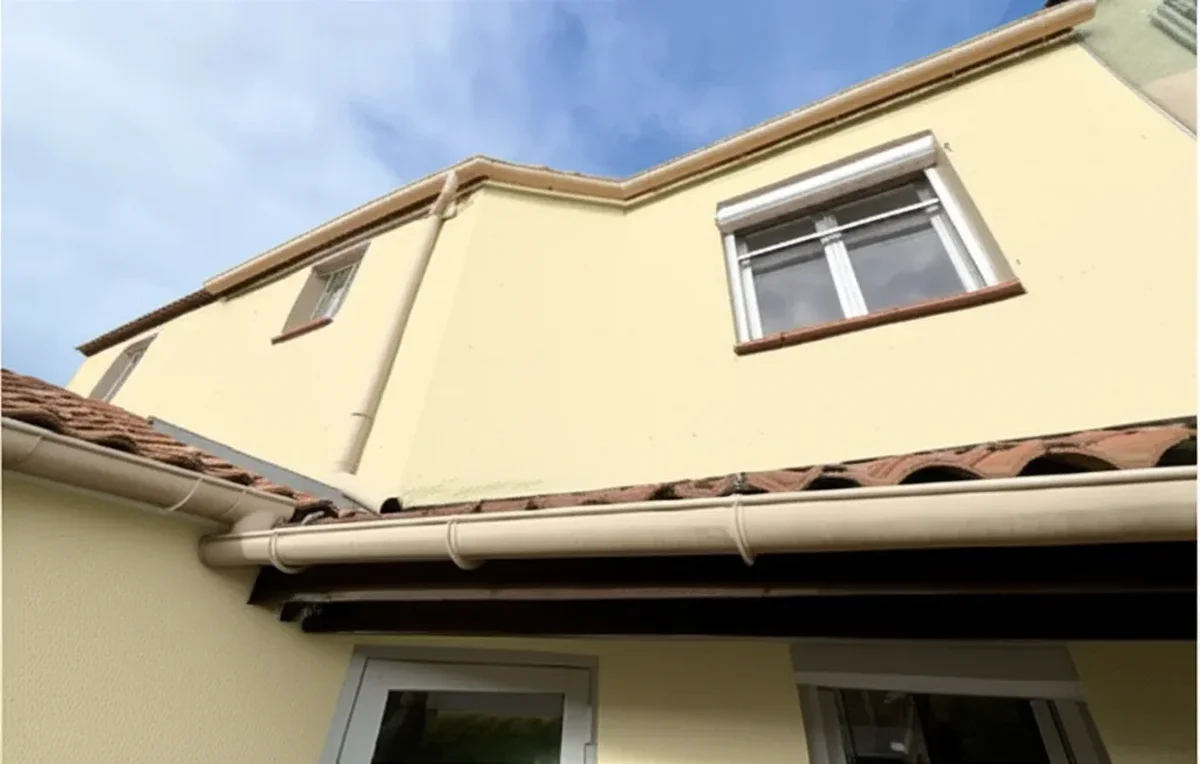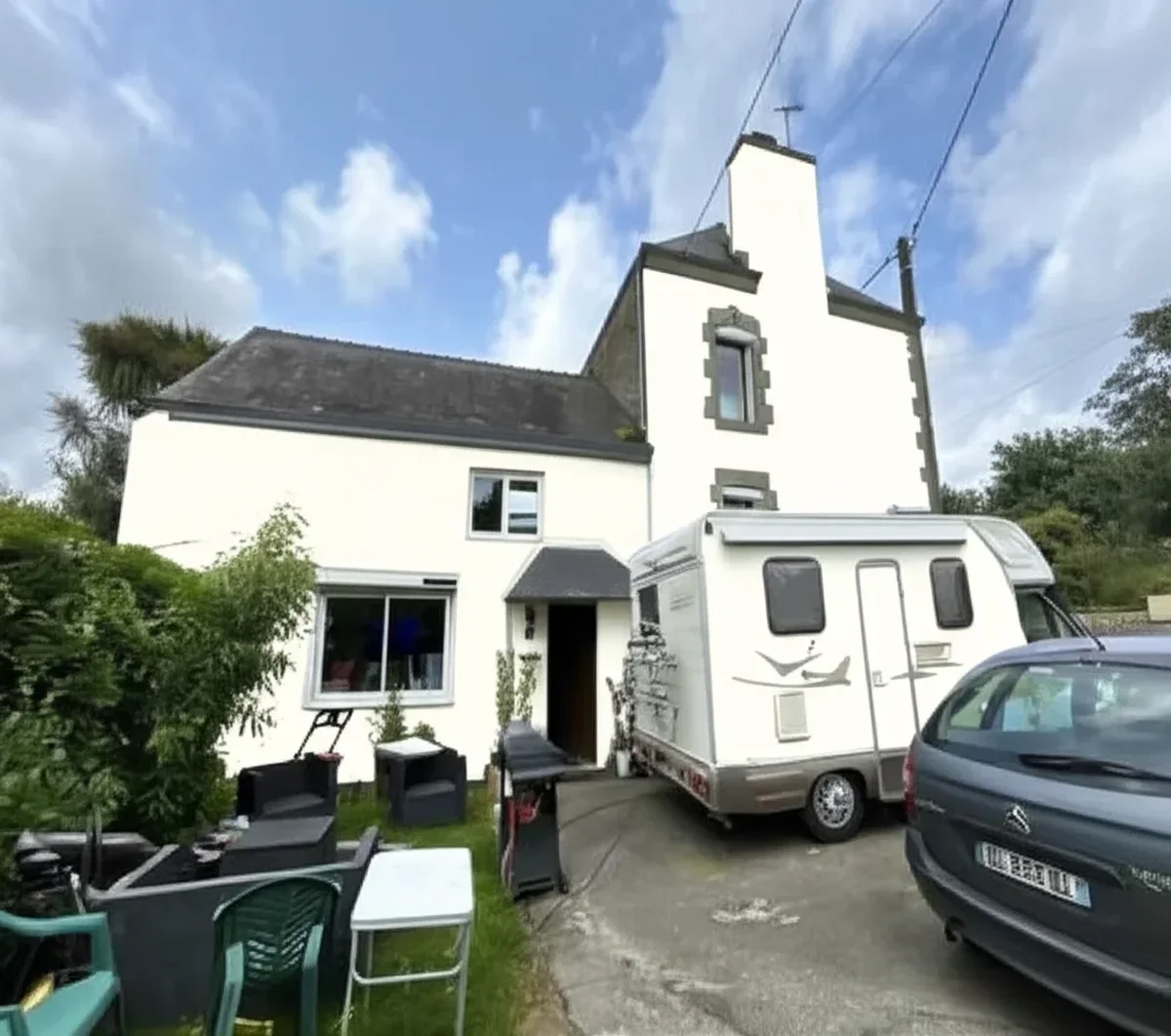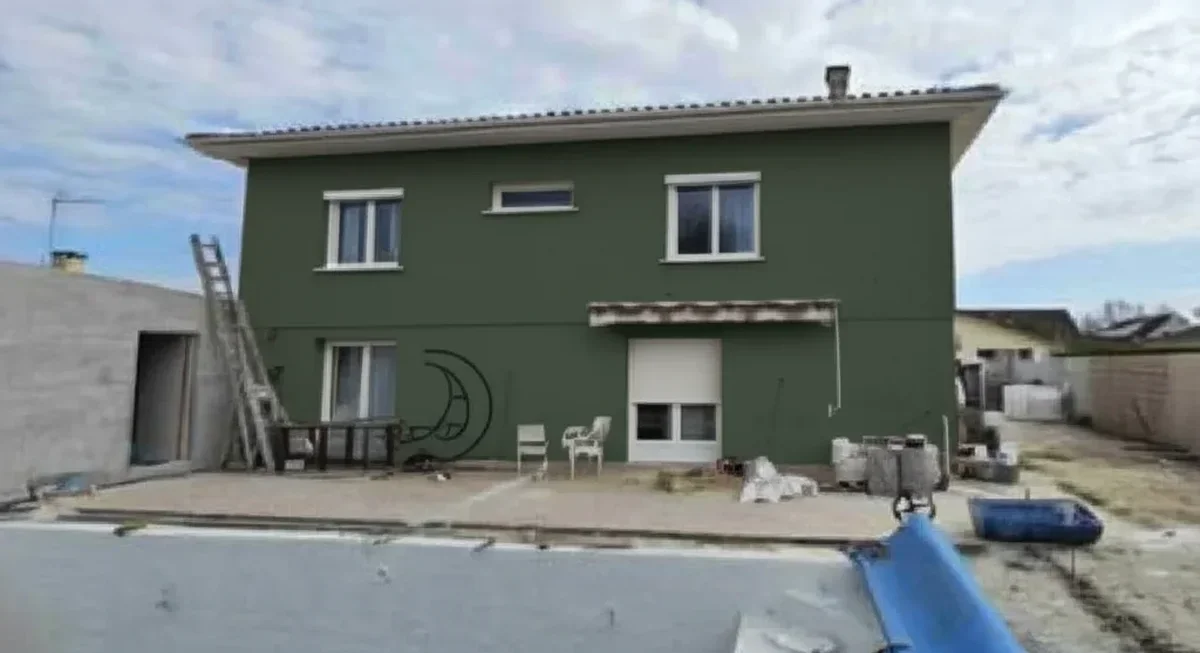
Try it on your house

Quick answer: The best siding and brick color combinations for 2026 follow a 60/40 split: 60% siding and 40% brick (or the reverse), with a trim color tying both together. Top trios include red brick + crisp white siding + black trim, gray brick + sage green Hardie + cream trim, and tan brick + warm white vinyl + espresso shutters. Always pull the siding color from an undertone already living inside the brick. Preview any combination free on your real house photo in 30 seconds, no signup.
FacadeColorizer is a free AI exterior paint visualizer. A great siding and brick color combination is never two materials chosen in isolation; it is a coordinated trio where the siding color pulls an undertone directly from the brick, the trim ties both materials together, and an accent door lifts the whole facade.
This guide gives you 10 tested combinations for vinyl siding and brick, Hardie (fiber cement) and brick, and LP SmartSide and brick, plus the 60/40 mixed-material rule, color theory for clay-toned brick, and the vinyl color-limit rule no painter will tell you. For the full trio framework that underpins this guide, start with our exterior house color combinations 2026 guide. To paint a combo onto your facade instantly, use the free exterior paint visualizer.
The Mixed-Material Facade Trend: Why 60/40 Splits Win in 2026
Almost every new build and major renovation in 2026 mixes two cladding materials: typically brick on the lower third or one wing, with siding (vinyl, Hardie, or LP SmartSide) covering the rest. The most balanced ratio is a 60/40 split: 60% of the facade in one material and 40% in the other. Going beyond a 70/30 split tips the design back into a single-material look, while a 50/50 split fights for visual dominance and tends to date faster.
- 60% siding + 40% brick: The most common modern arrangement, with brick wainscoting on the bottom third or wrapping the porch and chimney. Lets the siding color carry the curb appeal.
- 60% brick + 40% siding: Traditional ranch and Colonial homes where brick dominates the body, and siding fills the gables, dormers, and second story. The siding color reads as an accent against the brick.
- 50/50 splits: Reserved for craftsman and farmhouse styles where a clear horizontal break between materials is part of the architecture. The trim line between brick and siding becomes a design feature.
Whichever ratio you have, the rule is the same: do not introduce a third dominant color. Body siding, brick, and a single trim color is plenty. If you have brick already, your siding color is not an independent choice; it must answer the brick (or the brick can be shifted first with a mineral brick stain, which changes the color but keeps the texture). For homeowners deciding whether to leave brick natural or paint it, our paint vs natural brick decision guide covers the cost and resale tradeoffs in depth.
10 Tested Siding and Brick Color Combinations (2026)
Each row below pairs a real brick color with a specific siding color, trim, and door accent, using Sherwin-Williams and Benjamin Moore codes. The combos are sortable by brick base tone (red, gray, tan, white-washed) because the brick is your fixed element and the siding has to follow.
| Brick (40-60%) | Siding (40-60%) | Trim | Door / Shutter Accent | Style |
|---|---|---|---|---|
| Classic red brick | SW Pure White 7005 (crisp white) | SW Pure White 7005 | SW Tricorn Black 6258 | Colonial / Traditional |
| Classic red brick | BM Hale Navy HC-154 (navy Hardie) | BM Simply White OC-117 | Natural cedar / wood | Modern Colonial |
| Gray manganese brick | SW Evergreen Fog 9130 (sage Hardie) | SW Creamy 7012 | SW Iron Ore 7069 | Modern Farmhouse |
| Gray manganese brick | BM Revere Pewter HC-172 (greige vinyl) | BM White Dove OC-17 | BM Hale Navy HC-154 | Transitional |
| Tan / buff brick | BM Edgecomb Gray HC-173 (warm greige Hardie) | BM White Heron OC-57 | BM Silhouette AF-655 (espresso) | Craftsman |
| Tan / buff brick | SW Accessible Beige 7036 (warm tan vinyl) | SW Aesthetic White 7035 | SW Black Fox 7020 (warm black) | Ranch / Tudor |
| White-washed brick | SW Iron Ore 7069 (charcoal Hardie) | SW Alabaster 7008 | Natural wood door | Modern Farmhouse |
| White-washed brick | BM Wrought Iron 2124-10 (near-black LP SmartSide) | BM Chantilly Lace OC-65 | BM Salamander 2050-10 (deep green) | Contemporary |
| Brown / chocolate brick | BM Swiss Coffee OC-45 (warm white vinyl) | BM Swiss Coffee OC-45 | BM Caliente AF-290 (red) | Traditional |
| Pink / salmon brick | SW Shoji White 7042 (warm off-white) | SW Shoji White 7042 | SW Pewter Green 6208 | Cottage / Tudor |
Try it on your house
No photo? Try a sample
Codes are starting points, not guarantees. Sun exposure, mortar color, and the actual brick blend (most bricks contain three to five overlapping tones) shift how each combination reads on your real facade. Preview these trios on YOUR house, free.
When the brick half of the pairing is going white, the system matters as much as the shade. Our guide to a white painted brick house compares acrylic paint, limewash and mineral paint and lists the whites with published LRV values.
Hardie + Brick Combinations: The Premium Pairing
James Hardie fiber cement siding is the most popular pairing with brick in 2026, especially on new construction in the South and Midwest, because it accepts saturated colors and dark values that vinyl cannot hold. Hardie can wear deep navy, charcoal, true black, forest green, and brick-red siding without warping or chalking, which opens combinations that would be impossible on vinyl.
- Red brick + navy Hardie: The single most popular mixed-material combo of 2026. The navy pulls the cool undertones in red brick forward and reads as crisp and architectural. Hale Navy HC-154 and Naval 6244 are the safest navies.
- Gray brick + sage Hardie: A nature-forward pairing that performs best on craftsman and modern farmhouse facades. Evergreen Fog 9130 and October Mist 1495 both work; the sage cools the warm gray in the brick.
- White-washed brick + charcoal Hardie: A high-contrast combination that photographs beautifully in real estate listings. Iron Ore 7069 or Kendall Charcoal HC-166 anchor the brighter brick.
- Tan brick + warm greige Hardie: Edgecomb Gray HC-173 or Accessible Beige 7036 keeps the warm temperature throughout, so the materials read as a single coordinated facade rather than two separate ideas.
Hardie also comes pre-painted with ColorPlus Technology, which limits you to a fixed palette but gives a 15-year color warranty. If you are choosing between Hardie and LP SmartSide before committing to a color, read our Hardie vs LP SmartSide comparison, which covers paint adhesion, color range, and total cost. Once your siding choice is locked in, our modern farmhouse exterior paint colors roundup has the top 15 colors that pair with brick wainscoting. To see any Hardie color rendered against your existing brick, upload a photo and preview it free.
Vinyl Siding + Brick Rules: The LRV 55 Limit
Vinyl siding with brick has one rule that vinyl alone does not: every color choice must respect the LRV (Light Reflectance Value) 55 minimum. Painting vinyl darker than LRV 55 traps heat, warps the panels, and voids most manufacturer warranties. This rules out almost every charcoal, navy, forest green, and true black on the brick + vinyl combinations many homeowners want.
- What works: Warm whites (Pure White 7005, Swiss Coffee OC-45, LRV 75-83), greiges (Accessible Beige 7036, Edgecomb Gray HC-173, LRV 58-63), and light sages (October Mist 1495 LRV 60). All sit safely above the LRV 55 floor.
- What does not work: Hale Navy HC-154 (LRV 6), Iron Ore 7069 (LRV 6), Tricorn Black (LRV 3), Evergreen Fog 9130 (LRV 30, borderline). These darken vinyl beyond the safe range.
- The workaround: Use the dark color you want on the trim, shutters, or front door (which are usually fiber cement or wood, not vinyl), and keep the vinyl body in the LRV 55+ range. This is how almost every contractor delivers the "navy and brick" or "black and brick" look on vinyl homes.
If you are repainting existing vinyl rather than replacing, the same LRV 55 rule applies and most vinyl-safe paints (Sherwin-Williams VinylSafe, Behr Premium Plus) carry their own approved palette. For full repaint pricing, see our vinyl siding painting cost guide. Before you choose a vinyl-safe color, preview it against your brick free on FacadeColorizer.
Color Theory for Brick + Siding: Pulling the Right Undertone
Every brick contains multiple colors: a dominant tone (red, gray, tan, white), a secondary tone (rust, charcoal, cream), and the mortar (typically gray, white, or buff). The single best technique for a clean combination is to pull your siding color from the brick's secondary tone rather than competing with the dominant tone.
- Identify the brick's three colors. Stand 20 feet back and look for the dominant, secondary, and mortar tones. Red brick almost always contains charcoal, rust, and cream undertones; gray brick contains warm tan and charcoal undertones.
- Match the temperature. A warm brick (red, tan, brown, salmon) wants a warm siding color. A cool brick (gray, white-washed, manganese) wants a cool siding color. Mixed-temperature combos (red brick + cool gray siding) almost always look "off."
- Choose siding from a secondary tone. If the brick contains a cream undertone, a creamy white siding will tie the facade together. If the brick contains a charcoal undertone, a charcoal Hardie wing will read as intentional rather than added on.
- Use the mortar as your trim color. Gray mortar tells you trim should lean gray-white (Chantilly Lace OC-65, Snowbound 7004). Buff mortar tells you trim should lean warm-white (Swiss Coffee, Alabaster).
- Let only the door go bold. The accent color is your one place to introduce a third hue: navy, red, deep green, or terracotta. Keep brick + siding + trim coordinated and let the door carry the personality.
For more depth on door, shutter, and trim choices specifically on brick homes, our brick house trim paint ideas and exterior shutter paint colors guides cover the accent layer in detail. If you are also weighing whether to paint the brick itself, our forthcoming painted brick exterior complete guide has the full prep and cost framework.
Combinations by Brick Color
Quick guidance by brick base tone, organized so you can find your facade fast:
- Red brick: The classic American facade. Best siding choices are crisp white (rows 1 and 9) for a Colonial look, or navy Hardie (row 2) for a Modern Colonial. Avoid pink, peach, or salmon siding, which fights the red.
- Gray brick: The fastest-growing brick color in new construction. Best siding choices are sage Hardie (row 3) or warm greige (row 4). Avoid bright white siding, which makes gray brick look dirty.
- Tan or buff brick: Common on ranch and Tudor homes. Best siding choices are warm greige (row 5) or tan vinyl (row 6). Use espresso or warm-black accents to ground the warm palette.
- White-washed brick: The 2026 luxury look. Best siding choices are charcoal Hardie (row 7) or near-black LP SmartSide (row 8) for maximum contrast. Avoid pairing with white siding, which loses all visual interest.
- Brown or chocolate brick: Often seen on 1970s and 1980s ranches. Best siding choice is warm white (row 9) to lighten the facade. A red or terracotta door reinforces the warm scheme.
- Pink or salmon brick: Older Tudor and cottage homes. Best siding is a creamy off-white (row 10) that neutralizes the pink. A deep green or sage door balances the warmth.
For a 100% white-and-black contemporary take on a brick facade, see our white house black trim guide; for the full body palette without brick in the picture, our best exterior paint colors of 2026 roundup ranks the top 25.
5 Mistakes That Make Brick + Siding Look Off
Most failed mixed-material facades come down to the same handful of errors. Avoid these and almost any trio above will land:
- Mismatched temperature. A cool gray siding under warm red brick is the single most common clash. Match the brick's dominant temperature.
- Competing dominant colors. Saturated siding plus saturated brick reads as two separate houses bolted together. Keep one material neutral.
- Trim that disappears. If your trim white is the same tone as your siding, the facade flattens. Use a trim that contrasts the siding by two value steps and ties back to the brick mortar.
- Going darker than LRV 55 on vinyl. Heat warping voids the warranty. Use Hardie or wood for any siding color below LRV 55.
- Ignoring the mortar. Buff mortar over cool-white siding looks dirty; gray mortar over warm-cream siding looks mismatched. Pull trim white from the mortar tone.
How to Test a Brick + Siding Combination Before You Commit
A combination that looks great on a screen or fan deck can read entirely differently against 1,500 square feet of your actual brick under your actual light. Use this process:
- Start with the brick. Brick is permanent and expensive to change. Identify its dominant, secondary, and mortar tones first.
- Preview the full trio digitally. Upload a photo of your home to FacadeColorizer and apply siding, trim, and door at once. Seeing all four elements (brick + siding + trim + door) together eliminates 80% of bad combinations before you buy anything.
- Order peel-and-stick samples. Once the digital trio looks right, tape large physical swatches directly to the brick and to existing siding.
- Check at three times of day. Dawn, noon, and dusk. Brick undertones shift dramatically; what reads as "warm tan" at noon can read as "pink" at sunset.
- Stand across the street. Mixed-material facades have to work from 50 feet, not 5. If the materials blur or fight, increase trim contrast or pick a neutral siding tone.
Frequently Asked Questions
What siding color goes best with red brick?
The two safest siding colors for red brick are crisp white (SW Pure White 7005, BM Simply White OC-117) for a Colonial look, and navy Hardie (BM Hale Navy HC-154, SW Naval 6244) for a Modern Colonial look. Both pull the cool undertones already in red brick. Avoid pink, peach, salmon, or warm yellow siding, which competes with the brick's dominant red.
Can you paint vinyl siding to match brick?
Yes, with one rule: the new color must have an LRV of 55 or higher. Vinyl absorbs heat and warps when painted darker than LRV 55, which voids most manufacturer warranties. Sherwin-Williams VinylSafe and Behr Premium Plus offer pre-approved vinyl palettes. For darker brick + siding looks (navy, charcoal, black), use Hardie or wood siding instead.
What is the 60/40 mixed-material rule?
On a brick + siding facade, the most balanced split is 60% of one material and 40% of the other. Going past 70/30 makes the design look single-material; going to 50/50 makes the two materials compete for dominance. Most modern builds use 60% siding on the upper levels with 40% brick wainscoting or accent walls below.
Should siding be lighter or darker than brick?
For most red and brown brick, siding should be lighter than the brick by at least two value steps. This keeps the brick as the visual anchor and prevents a heavy, top-heavy facade. For white-washed and light gray brick, the opposite is true: siding should be darker (charcoal, navy, black Hardie) to anchor the lighter brick.
What trim color works with brick and siding?
Trim should tie the two materials together by matching the mortar undertone. Gray mortar wants a cool white trim like SW Pure White 7005, BM Chantilly Lace OC-65, or BM White Heron OC-57. Buff or cream mortar wants a warm white trim like BM Swiss Coffee OC-45, SW Alabaster 7008, or SW Aesthetic White 7035. Match the trim to the mortar, not the brick.
Does navy Hardie really pair with red brick?
Yes, and it is the single most popular mixed-material combination of 2026. Navy works because red brick contains cool charcoal and gray undertones that the navy pulls forward. Use saturated, balanced navies like BM Hale Navy HC-154 or SW Naval 6244 rather than royal or electric blues. Pair with crisp white trim and a natural-wood or black front door. If the brick stays the body and only the door changes, the front door colors for a red brick house guide ranks navy, black, green and white by the brick's undertone, with published LRV values.
How do I coordinate brick siding with the roof color?
The roof is your second fixed element after the brick. Pull both the brick and the roof into the same temperature family: charcoal or black roofs work with cool gray and white-washed brick + cool siding tones. Brown or weathered-wood roofs work with red, tan, or brown brick + warm siding tones. A mismatched roof (cool slate over warm red brick) is the most common clash; balance it with neutral siding rather than amplifying either temperature.
Can I preview a brick + siding combination on my house?
Yes. FacadeColorizer lets you upload a photo of your brick home and apply siding, trim, and door colors from Sherwin-Williams, Benjamin Moore, Behr, PPG, and Valspar in seconds. The AI keeps your existing brick untouched and renders the new siding color around it, so you see exactly how the trio will look on your real facade. It is completely free, requires no signup, and works on phone or desktop.
Preview Any Combination on Your Home - Free
Why gamble with a $10,000+ siding repaint or new Hardie install? FacadeColorizer lets you upload a photo of your home and apply any siding, trim, and door combination from Sherwin-Williams, Benjamin Moore, Behr, PPG, and Valspar to your vinyl, Hardie, or LP SmartSide in seconds, with the brick left untouched. Compare three to five complete mixed-material trios side by side, then share the winner with your painting contractor, your HOA board, or your partner before buying a single panel or gallon. It is 100% free, requires no signup, and works on phone or desktop. Preview these brick + siding combinations on YOUR house, free.
For broader exterior trends in 2026, see our best exterior paint colors of 2026 roundup and the parent exterior house color combinations 2026 framework.
Further Reading
- HGTV: Exterior home color combinations
- Better Homes & Gardens: Exterior paint colors
- Old House Online: Historic brick house colors
Related deep-dives in this hub
- Exterior house color combinations 2026
- Paint vs natural brick decision 2026
- Brick house trim paint ideas 2026
- Painted brick exterior complete guide 2026
- Vinyl siding painting cost guide 2026
- Hardieboard vs LP SmartSide comparison 2026
- Modern farmhouse exterior paint colors 2026
- Exterior shutter paint colors 2026
- White house black trim 2026
- Best exterior paint colors 2026
Trademarks mentioned (Sherwin-Williams, Benjamin Moore, Behr, Caparol, Brillux, Sto, Alpina, Valspar, PPG, Glidden, Dulux, Crown Trade, Sandtex, Farrow & Ball, Johnstone's, Leyland) are property of their respective owners. FacadeColorizer is independent and not affiliated with any of them. Nominative fair use under Lanham Act §1125.