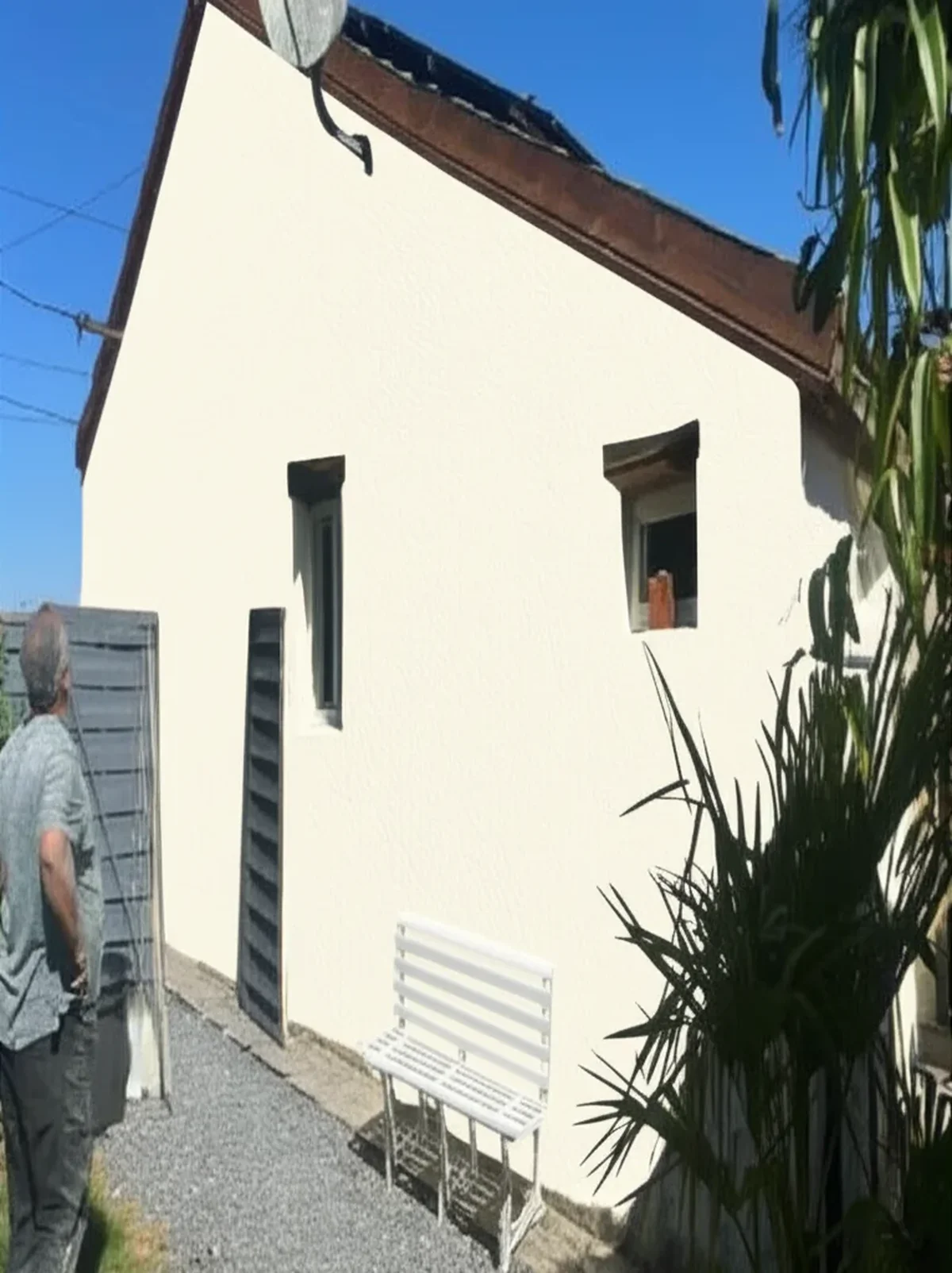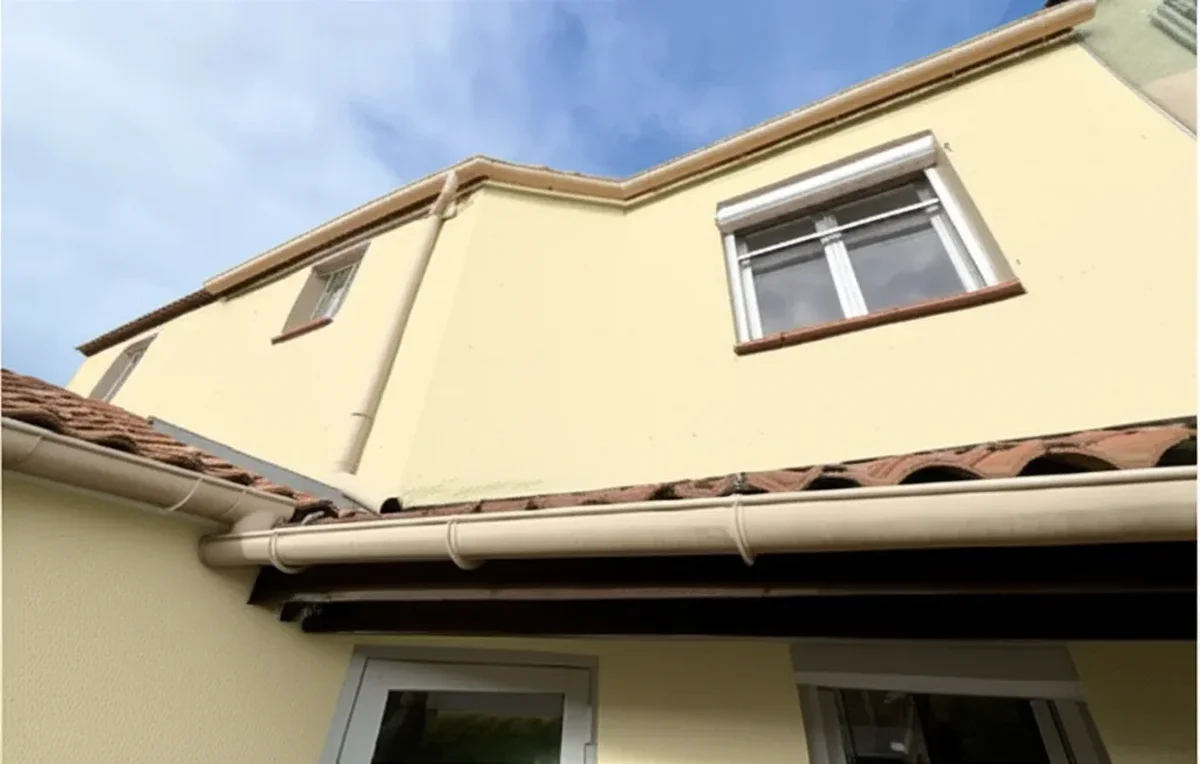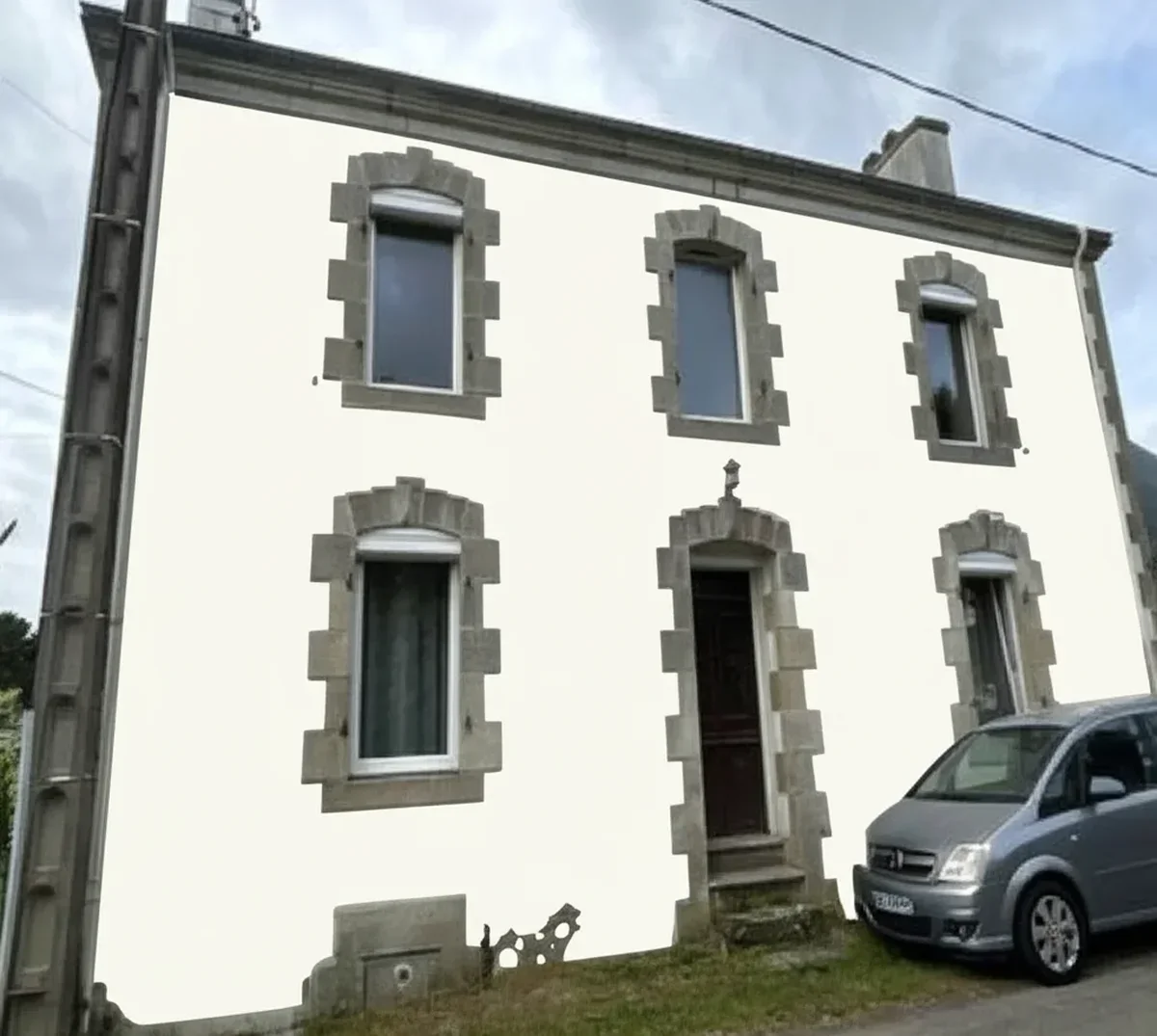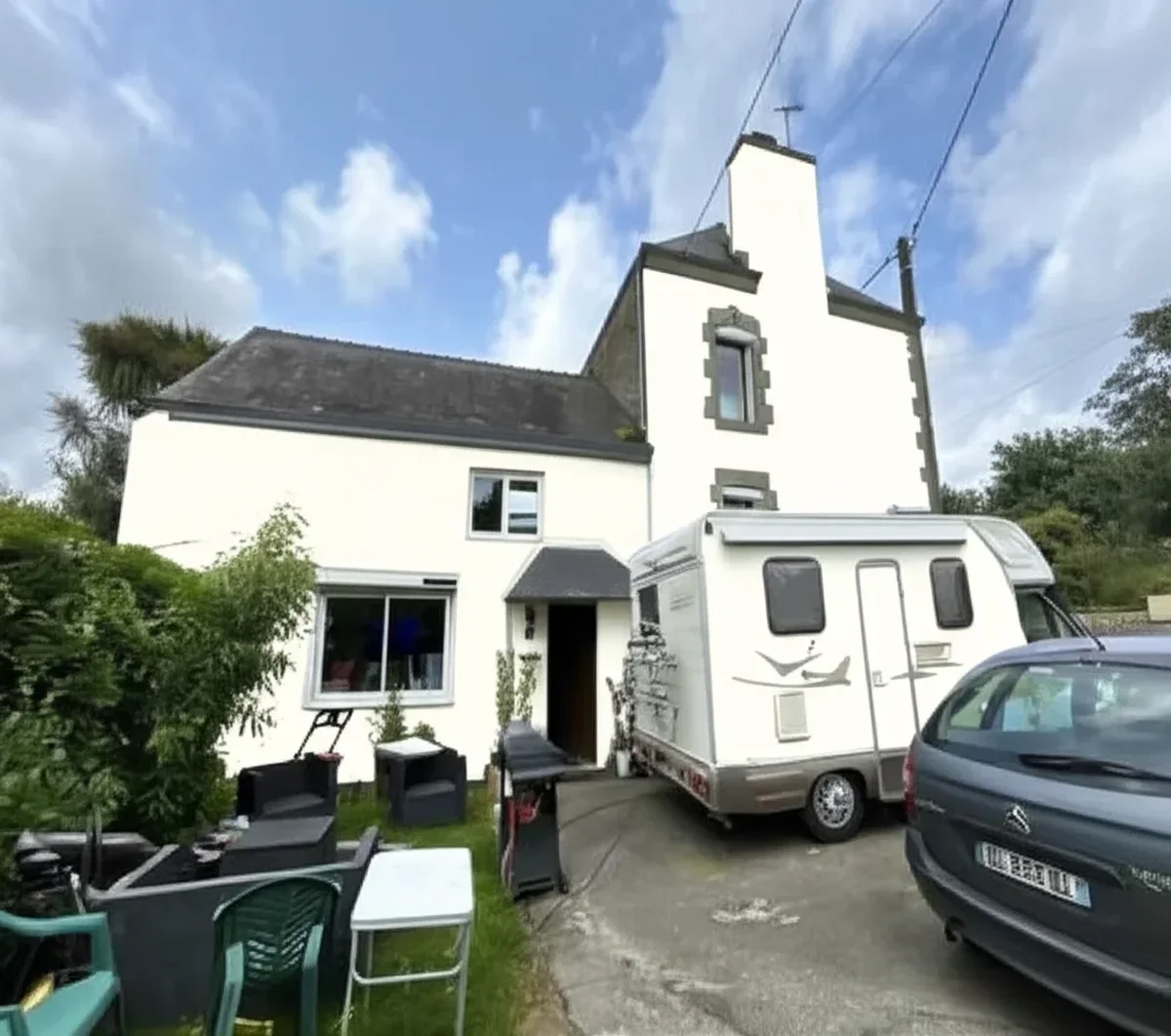
Try it on your house

Tudor Style Paint Colors Northeast 2026: 8 Salt-and-Snow-Tested Schemes for NY, MA & NJ Revival Homes
Quick answer: The best winter-resilient Northeast Tudor palette for NY, MA, and NJ pairs Benjamin Moore Manchester Tan HC-81 stucco, Benjamin Moore Tudor Brown HC-77 half-timbering, Sherwin-Williams Wrought Iron SW 7069 snow-line trim, and a Benjamin Moore Caliente AF-290 oxblood door. This combination is built specifically around Northeast winter humidity, freeze-thaw cycles, sidewalk road-salt spray, and the long overcast stretch between November and March that defeats palettes designed for milder regions.
Last Updated: June 2026. Related reading: 15 authentic Tudor schemes (parent guide), the free AI exterior paint visualizer, Connecticut Tudor Revival palettes (Fairfield County), Colonial home exterior palettes, and Cape Cod exterior schemes.
FacadeColorizer is a free AI exterior paint visualizer for historic homes. Northeast climate, with its 90 to 130 freeze-thaw cycles a year, dense wet snow loads, and chloride-heavy plow runoff against ground-level stucco, demands paint formulations and color choices that hold up where Mid-Atlantic or coastal Northeast palettes simply fail.
Try it on your house
No photo? Try a sample
This guide is focused tightly on the three states with the densest Tudor Revival inventory facing the harshest interior Northeast winter pattern: New York (Westchester, Rockland, Orange counties), Massachusetts (Middlesex and Norfolk counties around Boston), and New Jersey (Essex and Bergen counties). Fairfield County Connecticut Tudors carry different fieldstone conditions and milder coastal microclimate covered in our dedicated Connecticut Tudor Revival guide. This article covers the 8 best winter-tested colors, three complete schemes built around snow-line wear, the Northeast-specific markets where these homes cluster, road-salt and freeze-thaw paint chemistry, and a winter-focused FAQ.
Why Tudor Revival exploded across NY, MA, and NJ (1920s-1940s)
Between roughly 1900 and 1940, Tudor Revival architecture swept across the affluent commuter suburbs of New York, eastern Massachusetts, and northern New Jersey. The style was driven by post-World War I Anglophilia, the maturing rail and automobile networks that allowed Wall Street and Boston professionals to live outside the city, and a romantic reaction against industrial-era brick row houses. By the late 1920s, Tudor Revival had overtaken Colonial Revival as the dominant new-construction style in several Westchester County and inner Essex County NJ neighborhoods.
Architects like William A. Bates and Lewis Bowman designed dozens of Tudors in Bronxville and surrounding Westchester villages, while Tuxedo Park NY and the older sections of Newton MA, Wellesley MA, Montclair NJ, and Short Hills NJ filled with stucco-and-timber houses imitating medieval English vernacular. These homes were almost never painted pure white. The original palettes were warm putty, manchester-tan, soft sage, and warm-greige stucco bodies, set against deep brown or near-black timbering, slate or terracotta tile roofs, and saturated accent doors in oxblood, hunter green, or burgundy. Northeast Tudor color choices in 2026 still respect that historic vocabulary, but the smart choices also account for the winter conditions these specific markets carry: dense wet snow on north-facing elevations, freeze-thaw expansion across porous stucco, and chloride-heavy plow spray against the bottom three feet of every street-facing wall.
The 8 best Tudor exterior paint colors for the Northeast in 2026
Each color below targets one of the five Tudor exterior surfaces: stucco field, half-timbering, snow-line zone, slate-tile roof, and front door. The palette deliberately steps away from the warmer Connecticut Tudor selections because the harder winter exposure in inland Westchester, the Boston metro, and inner-ring NJ Tudor neighborhoods requires colors that mask plow-spray staining at the snow line and hold color reading through long overcast stretches. Specify them by exact Sherwin-Williams or Benjamin Moore product code at the paint counter to avoid the "looks close enough" trap that ruins more Tudor repaints than any other single mistake.
1. Benjamin Moore Manchester Tan HC-81 (stucco field)
The single most winter-resilient Tudor stucco color for the interior Northeast. Manchester Tan HC-81 is a warm putty-beige with enough yellow-gray weight to hold its color reading under the long overcast January through March stretch typical of Westchester, Boston metro, and Bergen County. Lighter creams tend to read gray or dingy through that long flat-light season. Manchester Tan also masks the inevitable spring residue from winter wet-snow runoff better than any pure white or pale cream alternative.
2. Benjamin Moore Tudor Brown HC-77 (half-timbering, primary)
A deep, slightly cooler chocolate brown developed specifically for Tudor exteriors and named for the architectural style. Tudor Brown HC-77 carries less red undertone than the warmer Bracken Brown commonly specified on coastal Tudors, which makes it a better match for the cooler slate roofs and bluestone walkways common across NY, MA, and NJ Tudor properties. The slightly cooler hue also resists the visible UV-warming that lighter timber colors show after a few winters of intense low-angle sun reflecting off snow cover.
3. Sherwin-Williams Wrought Iron SW 7069 (snow-line trim and lower stucco band)
The Northeast Tudor color that almost no other regional guide specifies. Wrought Iron SW 7069 is a deep blackened iron-gray ideal for the bottom 18 to 30 inches of street-facing stucco walls and for foundation-level trim that absorbs the worst of the plow-spray and road-salt chloride exposure during a typical NY, MA, or NJ winter. Used as a deliberate watercourse band, Wrought Iron masks the salt-staining that would render a Manchester Tan or Bone stucco visibly compromised within two seasons.
4. Benjamin Moore Kendall Charcoal HC-166 (half-timbering, dramatic)
For larger Tuxedo Park NY estates, the more imposing Short Hills NJ and Newton MA centre-entrance Tudors, or any home where the original timbering had been stained near-black, Kendall Charcoal HC-166 delivers a deep blue-leaning charcoal that reads as authentic weathered timber under the cool-temperature Northeast winter light. The slight blue undertone harmonizes with the cooler slate roofs and the bluish cast of January snow shadows in ways that warmer-brown alternatives cannot match.
5. Benjamin Moore Caliente AF-290 (front door, traditional oxblood)
A saturated brick-red oxblood that has become the dominant Northeast Tudor door color in our visualizer through the snow-shoulder months when entrance visibility matters most. Caliente AF-290 reads as historically correct against Manchester Tan stucco and Tudor Brown timbering, and the warm-red saturation is the single most reliable color for visual entrance contrast against winter snow cover. Apply in a satin or semi-gloss exterior enamel for the proper "old door waxed for a century" sheen.
6. Sherwin-Williams Peppercorn SW 7674 (slate roof + accent metal)
Genuine slate roofs on Northeast Tudors typically read as a warm-leaning blue-gray to deep charcoal. When repainting flashing, ridge caps, gutters, downspouts, lantern posts, or any exterior metal that should harmonize with the slate, Peppercorn SW 7674 is the closest paintable match across the NY, MA, NJ Tudor inventory. It carries enough warmth to bridge the gap between the Tudor Brown timbering and the cooler slate, which the more neutral charcoals fail to do. Also useful on wrought iron railings, where the slight warm cast resists the dingy reading that pure black takes on after a few salt-cycle winters.
7. Benjamin Moore Sandy Hook Gray HC-108 (stucco, deeper alternate)
When the homeowner finds Manchester Tan HC-81 too warm for their specific siting (north-facing Newton MA or upper-Bergen NJ Tudors that sit in deep winter shadow for months often need a slightly cooler body color to avoid looking jaundiced under reflected snow-light), Sandy Hook Gray shifts the stucco toward a soft cool greige. Still period-appropriate but with enough cool weight to coexist with the long Northeast winter light without yellowing visually.
8. Benjamin Moore Forest Green 2047-10 (front door, deep green alternative)
The traditional alternative to Caliente AF-290 oxblood. Forest Green 2047-10 is a deep, true forest green that reads as "1925 country club door" rather than modern hunter or sage. It performs particularly well against the Manchester Tan stucco and Tudor Brown timbering combination, and the deep green saturation holds entrance visibility through Northeast winter snow cover almost as effectively as the oxblood. It is also the historically dominant door color on the Lawrence Park section of Bronxville NY and on Lewis Bowman designed Tudors throughout the lower Westchester villages.
Three complete Northeast Tudor color schemes (winter-tested)
Scheme A: Snow-line resilient classic (Manchester Tan + Tudor Brown + oxblood door)
Stucco field: Benjamin Moore Manchester Tan HC-81. Snow-line band (lower 24 inches of street-facing walls): Sherwin-Williams Wrought Iron SW 7069. Half-timbering: Benjamin Moore Tudor Brown HC-77. Front door: Benjamin Moore Caliente AF-290 oxblood red. Slate roof, metal, gutters: Sherwin-Williams Peppercorn SW 7674. This is the winter-engineered classic palette for any Bronxville NY, Tuxedo Park NY, Newton MA, or Montclair NJ Tudor that faces a typical inland-Northeast street with regular plow runs. Reads as period-correct old-money East Coast, and the deliberate Wrought Iron snow-line band turns an inevitable salt-staining problem into an intentional architectural feature.
Scheme B: Modern Northeast Tudor (Sandy Hook Gray + Kendall Charcoal + black door)
Stucco field: Benjamin Moore Sandy Hook Gray HC-108. Snow-line band: Sherwin-Williams Wrought Iron SW 7069 (continued or extended higher on heavily exposed elevations). Half-timbering: Benjamin Moore Kendall Charcoal HC-166 at full saturation. Front door: matte black exterior enamel against unlacquered brass or aged bronze hardware. Slate and metal: Sherwin-Williams Peppercorn SW 7674. This is the 2026 contemporary Tudor look now spreading across Short Hills NJ, Newton Centre MA, and Pelham NY renovations. Higher contrast, more dramatic, but still readable as Tudor because the half-timbering pattern is preserved. The cooler stucco and charcoal timber also handle the long flat-light winter stretch better than warmer modern palettes.
Scheme C: Wooded-lot English cottage Tudor (Manchester Tan + Tudor Brown + Forest Green door)
Stucco: Benjamin Moore Manchester Tan HC-81. Snow-line band: Sherwin-Williams Wrought Iron SW 7069 used minimally, only on direct-street elevations. Half-timbering: Benjamin Moore Tudor Brown HC-77 softened by a satin-rather-than-flat finish. Front door: Benjamin Moore Forest Green 2047-10. Wrought iron, lanterns, and railings: matte black or Peppercorn SW 7674. Reads as Cotswolds-cottage rather than baronial estate, and works particularly well on the smaller (under 3,500 sq ft) Northeast Tudors typical of the older sections of Wellesley MA, Newton Highlands MA, and the deeper-lot sections of Montclair NJ where mature canopy provides natural protection from the harshest direct salt-spray exposure.
For broader 2026 warm-tone direction across architectural styles, see our complete warm exterior paint color guide, which dives deeper into the cream-brown-sage family these Tudor schemes draw from.
Northeast winter chemistry: what salt, snow, and freeze-thaw do to Tudor paint
The single most underestimated factor in Northeast Tudor repaint planning is winter chemistry. Westchester, the Boston metro, and inner Essex / Bergen County NJ all run 90 to 130 freeze-thaw cycles a year between November and April. Each cycle pulls moisture into porous stucco and pushes it back out as it refreezes, mechanically stressing the paint film. Compound that with magnesium-chloride and sodium-chloride sidewalk de-icer, plow-spray slush deposited against the bottom three feet of every street-facing wall, and the long flat overcast that prevents normal UV-driven self-cleaning, and you have a recipe for paint failure that simply does not exist in milder regions.
The practical implications. First, the bottom 18 to 30 inches of any street-facing wall behaves like a different surface than the rest of the stucco field. Painting it the same color as the field guarantees visible staining within two winters. Adopting a deliberate Wrought Iron SW 7069 watercourse band reframes that band as intentional architecture and masks the inevitable wear pattern. Second, stucco should be repainted with breathable elastomeric or high-acrylic systems (Benjamin Moore Ultra Spec Masonry Acrylic, Sherwin-Williams Loxon XP) rather than oil-based topcoats that trap freeze-thaw moisture and accelerate spalling. Third, timber must use exterior alkyd-modified water-based enamels with documented freeze-thaw cycling test data, not standard interior-grade trim enamels.
Door paint chemistry matters too. The Northeast winter door takes more thermal stress than any other painted surface on the house, swinging between warm interior air and sub-freezing exterior across multiple cycles per day. A satin or semi-gloss exterior enamel rated for sub-zero application and freeze-thaw cycling is non-negotiable. Caliente AF-290 and Forest Green 2047-10 both perform reliably in the appropriate Aura Grand Entrance or Pro Industrial Pre-Catalyzed formulations for this specific use case.
Where NY, MA, and NJ Tudors cluster: the local markets
Bronxville and Lawrence Park, NY (Westchester County)
The Lawrence Park Historic District contains nearly 100 contributing structures spanning Tudor Revival, Colonial Revival, and Shingle styles, many designed by William A. Bates between the 1890s and 1920s. Lewis Bowman later designed dozens more Tudors throughout the village, including his own 1922 residence. Bronxville Tudors tend to be larger and more elaborate than the regional average and lean strongly toward Scheme A: Manchester Tan stucco, Tudor Brown timbering, oxblood or Forest Green doors. The narrow street layout intensifies plow-spray exposure, which is why the Wrought Iron snow-line band has become almost standard on repaints completed since 2024.
Tuxedo Park, NY (Orange County)
A late-19th-century gated community that became a Tudor Revival hotspot for the Wall Street crowd. The Tudors here are the largest in the New York metro, often estate-scale, with massive visible timbering that benefits from Kendall Charcoal HC-166 rather than the softer Tudor Brown. Roof slate is genuine and rarely needs paint. The interior-county location pushes Tuxedo Park into the harder side of the Northeast winter pattern, with deeper freeze-thaw exposure than Westchester proper.
Newton, MA (Middlesex County)
Newton carries the densest concentration of 1920s-1940s Tudor Revival homes in the Boston metro area. Older sections (Newton Centre, Newton Highlands, Chestnut Hill) lean toward Scheme A, while recent renovations in Newton Corner and West Newton have driven Scheme B modern Tudor adoption faster than any other Northeast market. Peppercorn SW 7674 metal accents are particularly common here because slate roof retention is high and the cooler Boston winter light favors the Peppercorn warm-charcoal reading over neutral grays.
Wellesley, MA + Brookline, MA (Norfolk and Suffolk overflow)
Wellesley carries a substantial Tudor pocket concentrated near the Wellesley Hills station and along Cliff Road. Brookline holds Tudors mainly in the Fisher Hill and Aspinwall Hill neighborhoods. Both lean toward the smaller-scale Scheme C English cottage palette, with Manchester Tan stucco, Tudor Brown timbering, and Forest Green doors. Snow-line banding is less critical here because the prevalent deeper setbacks moderate direct plow-spray contact.
Montclair, NJ + Short Hills, NJ (Essex County)
Montclair contains meaningful Tudor inventory from the 1920s-1940s wave concentrated in the Upper Montclair and Estates section. Short Hills carries larger executive Tudors throughout the Old Short Hills and Hartshorn neighborhoods. Both run Scheme B modern Tudor adaptations more aggressively than the NY or MA equivalents, with darker Sandy Hook Gray stucco bodies and Kendall Charcoal timbering becoming common on renovations completed since 2024. The inner-NJ winter exposure runs slightly milder than Westchester but still requires Wrought Iron snow-line treatment on direct-street elevations.
Ridgewood, NJ + Glen Ridge, NJ + Pelham, NY + Scarsdale, NY (secondary markets)
All four contain meaningful Tudor inventory from the same 1920s-1940s wave. Palette choices tend to follow the larger neighbors (Montclair in NJ, Bronxville in NY), with the secondary NJ markets often the most experimental and willing to push toward Scheme B modern adaptations.
For homeowners in older European countries facing historic-district paint rules similar to American historic preservation, see our German market guide to denkmalschutz facade color regulations, which covers the same restoration-vs-renovation tension under stricter heritage protection rules.
Restoration vs renovation: how to choose your Northeast Tudor paint
For full historic restoration, use Benjamin Moore Aura Exterior or Sherwin-Williams Emerald in a flat or low-sheen finish on stucco fields to mimic the matte plaster look of original lime-based Tudor stucco. Avoid satin or semi-gloss on stucco, which reads as plastic and modern. On timbering, a satin alkyd-modified water-based enamel delivers the deep, slightly waxed look of historically stained beams. On doors, a true semi-gloss exterior enamel rated for sub-zero application is non-negotiable for Northeast climates.
For modern renovations, you have more flexibility on the upper portions of the facade. Stucco can move to a low-sheen or eggshell finish for easier maintenance. Timbering and doors can use modern hybrid enamels (Benjamin Moore Advance, Sherwin-Williams Pro Industrial Multi-Surface) for faster recoat cycles. The snow-line band is the one Northeast Tudor surface where modern chemistry actually beats traditional, because high-acrylic elastomeric coatings shed plow-spray better than any historic formulation.
Window and door trim deserves a separate decision. Our exterior trim paint color guide covers the full coordination logic, particularly important on Tudors where trim choices can either reinforce or undermine the half-timbering pattern.
Visualize any of these colors on your Northeast Tudor
Reading specs is one thing. Seeing Manchester Tan HC-81 stucco with Tudor Brown HC-77 timbering, a deliberate Wrought Iron SW 7069 snow-line band, and a Caliente AF-290 door on YOUR specific 1931 Bronxville, Newton, or Montclair Tudor, with your specific roofline and your specific street exposure, is what tells you whether to commit. Upload a clear daylight photo to our free AI exterior paint visualizer and test all 8 colors above in seconds. For broader cross-style inspiration, browse the 30 best exterior paint colors of 2026 and our cottage style exterior color schemes, which share significant DNA with the English cottage Tudor scheme above.
For deeper research on specific historic codes, Sherwin-Williams maintains a full historic color collection. Benjamin Moore's Historical Color Collection includes Manchester Tan HC-81, Tudor Brown HC-77, Sandy Hook Gray HC-108, and Kendall Charcoal HC-166. For broader period-correct guidance, Old House Online publishes deep archives on Tudor Revival paint specifications and restoration practice.
Sherwin-Williams, Benjamin Moore, and the specific color names referenced (Manchester Tan, Tudor Brown, Wrought Iron, Kendall Charcoal, Caliente, Peppercorn, Sandy Hook Gray, Forest Green) are trademarks of their respective owners. Use here is descriptive and nominative under the Lanham Act 15 U.S.C. 1125 and does not imply endorsement or affiliation. FacadeColorizer is an independent AI visualization service.
Frequently asked questions
What is the most winter-resilient Tudor exterior paint color for an NY, MA, or NJ home?
Benjamin Moore Manchester Tan HC-81 stucco with Benjamin Moore Tudor Brown HC-77 half-timbering, a Sherwin-Williams Wrought Iron SW 7069 snow-line band on street-facing walls, and a Benjamin Moore Caliente AF-290 oxblood or Forest Green 2047-10 front door. This palette is engineered around freeze-thaw cycles, plow-spray exposure, and the long overcast Northeast winter that defeats lighter cream stucco bodies.
Why do you recommend a Wrought Iron snow-line band on Northeast Tudors?
The bottom 18 to 30 inches of any street-facing Northeast Tudor wall absorbs the worst of the plow-spray and road-salt chloride exposure across a typical winter. Painting that zone Sherwin-Williams Wrought Iron SW 7069 as a deliberate watercourse band reframes inevitable salt-staining as intentional architecture, and masks the wear pattern that would otherwise render a Manchester Tan stucco visibly compromised within two seasons.
Is white stucco acceptable on an NY, MA, or NJ Tudor?
Pure white stucco is historically inaccurate on 1920s-1940s Northeast Tudors. It also fails practically: pure white reads dingy or blue under the long flat-light Northeast winter stretch and amplifies every spring residue mark from snow-melt runoff. Use Manchester Tan HC-81, Sandy Hook Gray HC-108, or another warm-cream-to-greige body that respects both the original palette and the climate.
What is the best front door color for a Bronxville or Newton Tudor?
Benjamin Moore Caliente AF-290 oxblood red or Benjamin Moore Forest Green 2047-10 deep forest green. Both have been historically dominant on lower-Westchester and Boston-metro Tudors since the 1920s. Caliente reads slightly more traditional and delivers stronger entrance visibility against winter snow cover; Forest Green reads slightly more reserved and is the historic Lewis Bowman default in Bronxville.
How does Northeast winter actually affect Tudor paint choices?
Three specific impacts. First, 90 to 130 annual freeze-thaw cycles require breathable elastomeric or high-acrylic stucco systems and freeze-thaw-rated door enamels. Second, plow-spray and de-icer chloride concentrate against the bottom three feet of street-facing walls, which is the reason for the Wrought Iron snow-line band. Third, the long flat-light January through March stretch flattens cooler whites toward gray, which is why Manchester Tan HC-81 holds visual reading better than pure white in this climate.
Can I modernize a Northeast Tudor without losing historic character?
Yes. Keep three of the four primary surfaces (stucco field, half-timbering, snow-line band, front door) within the historic palette and modernize only one. The most common successful modernization shifts the stucco toward Sandy Hook Gray HC-108 cool greige while keeping Tudor Brown timbering, the Wrought Iron snow-line band, and a Caliente or Forest Green door.
Do historic districts in NY, MA, and NJ require approval for paint colors?
It varies. Bronxville's Lawrence Park Historic District and Tuxedo Park have strict review processes. Newton, Wellesley, Montclair, and Short Hills run looser private review through neighborhood associations rather than formal commissions. Always check with your local historic preservation commission before painting if your home is in a listed district. Choosing a period-correct palette like Scheme A typically clears review easily.
How much does it cost to repaint a Northeast Tudor exterior in 2026?
Most 2,500 to 4,000 sq ft Tudors in NY, MA, and NJ run between $13,000 and $30,000 for a full multi-surface exterior repaint in 2026, depending on stucco condition, timber repair needs, snow-line band installation, and prep work. Tudors with extensive intact half-timbering, slate roofs, and high salt-exposure street frontage sit at the higher end because of the elastomeric snow-line work and the surface coordination labor.
Trademarks mentioned (Sherwin-Williams, Benjamin Moore, Behr, Caparol, Brillux, Sto, Alpina, Valspar, PPG, Glidden, Dulux, Crown Trade, Sandtex, Farrow & Ball, Johnstone's, Leyland) are property of their respective owners. FacadeColorizer is independent and not affiliated with any of them. Nominative fair use under Lanham Act §1125.