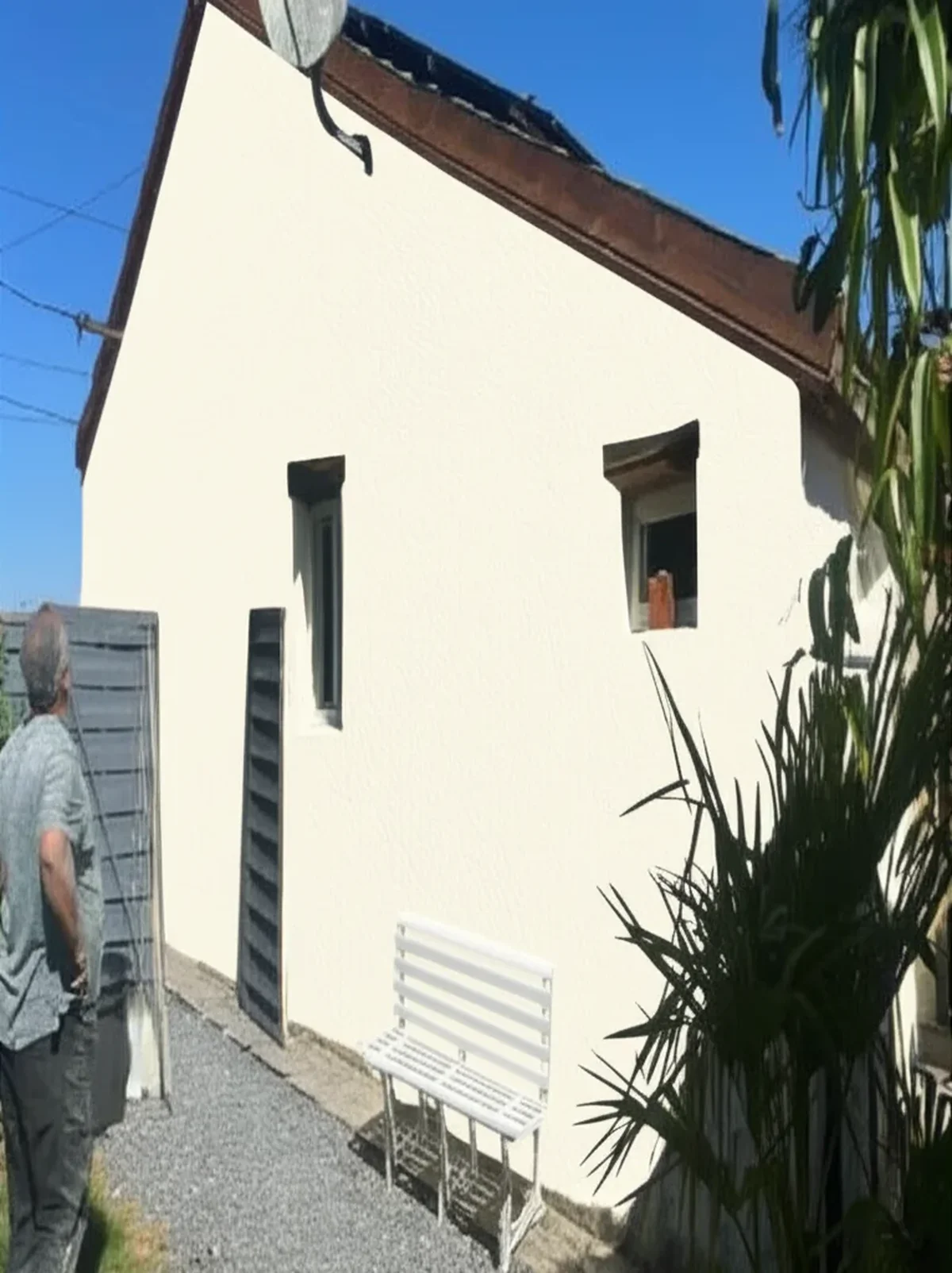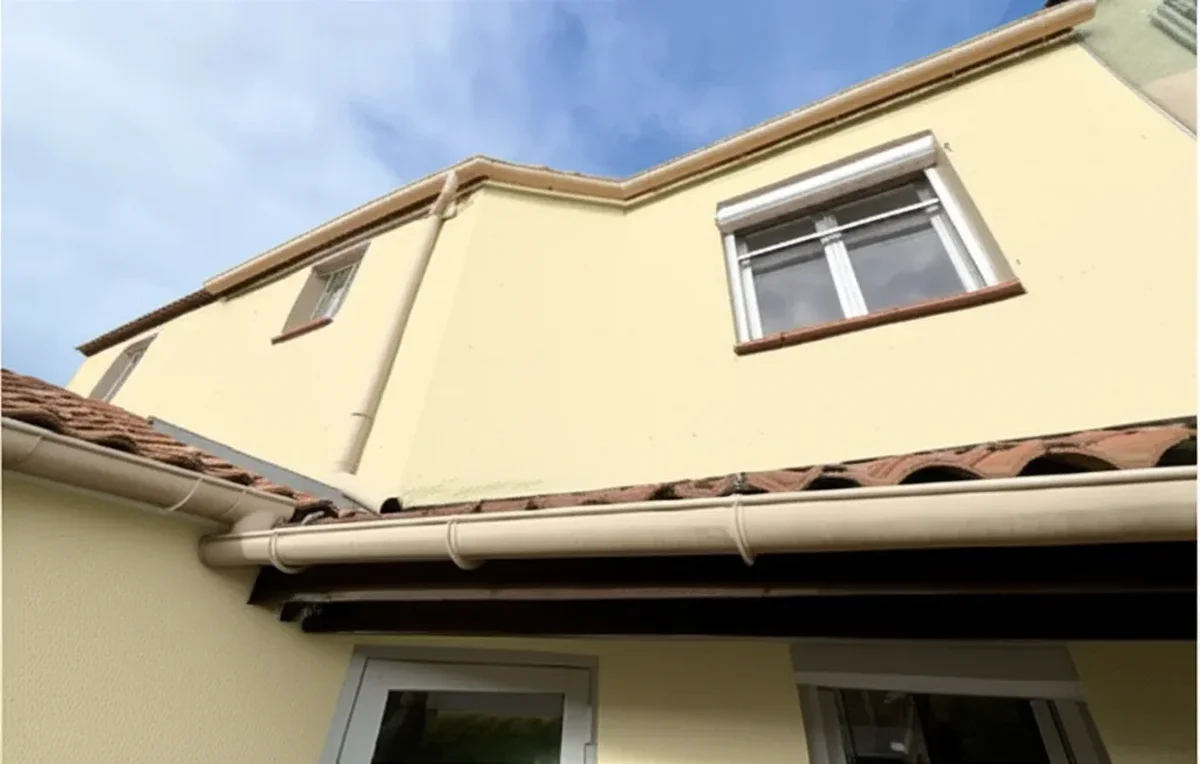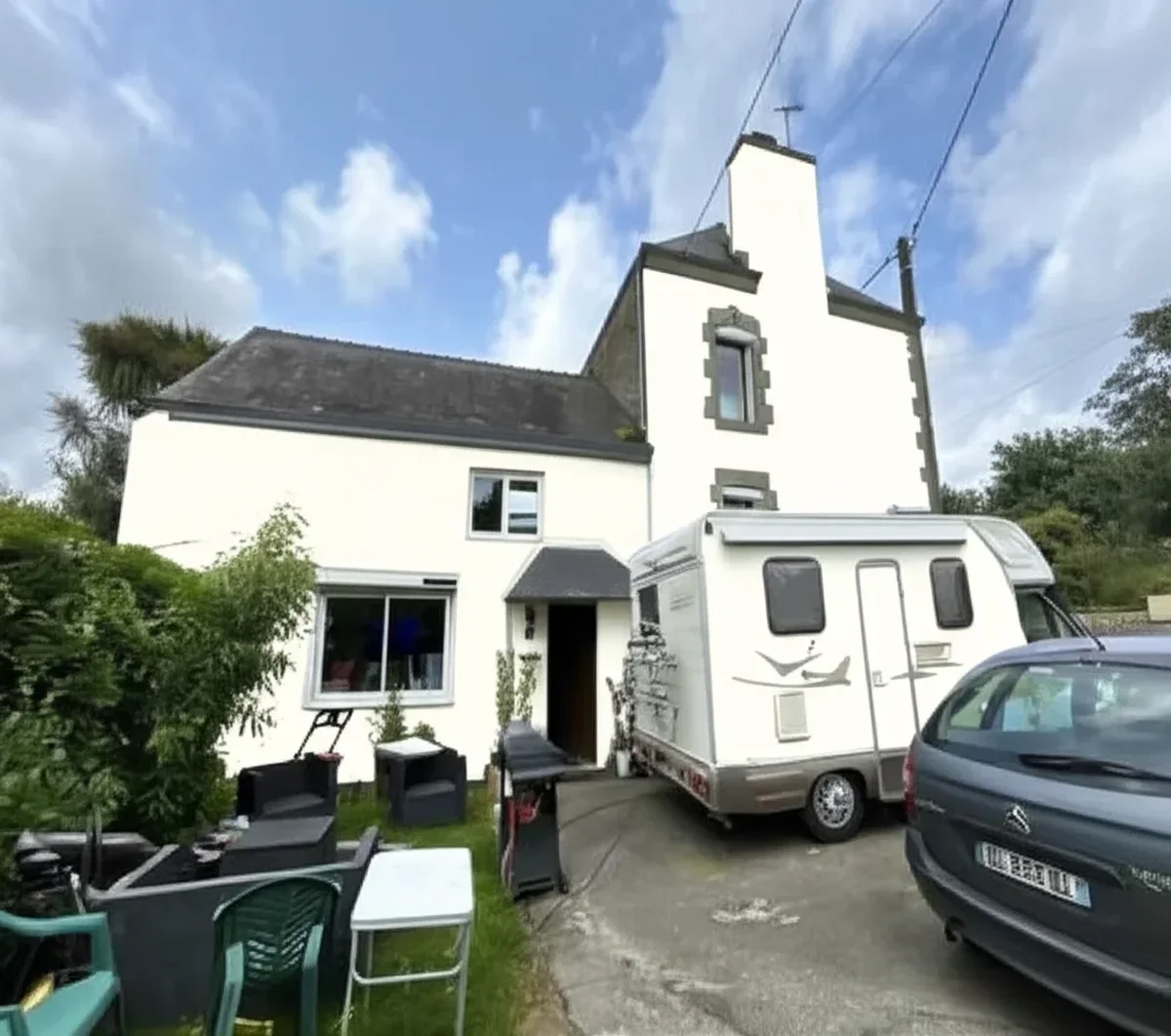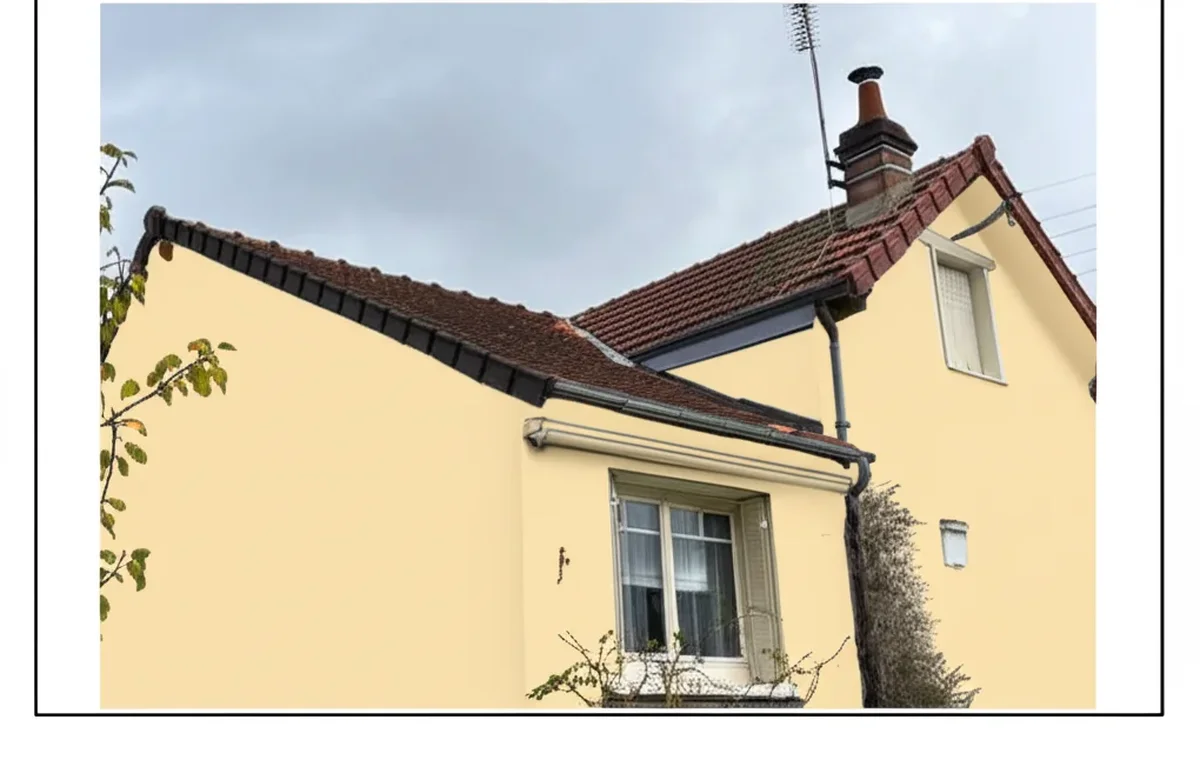
Try it on your house

Quick answer: This is the yard-accessory companion guide, not a house-body palette guide. The best outside paint color ideas for 2026 lock the secondary outdoor surfaces - fence, deck, shed, garage door, mailbox, planters, lamp post and outdoor furniture - into one coordinated composition once the body color is already chosen. Default 2026 picks: recessive greige or charcoal fence (BM Stonington Gray HC-170), grounded gray-brown deck stain (Behr Padre Brown SC-141), charcoal or sage shed (SW Iron Ore SW 7069), body-matched garage door, and a saturated front door (BM Hale Navy HC-154). Preview the whole yard free in 30 seconds.
This guide is deliberately not about picking the house body. If you still need the body, trim and accent for the house itself, the outside house color ideas guide ships 15 full body-trim-door schemes organized by architectural style. This article picks up after the body is locked. The fence, the deck, the shed, the detached garage, the mailbox, the planters, the lamp post, the gate, the outdoor dining set, the umbrella - every one of these surfaces carries a color decision, and most homeowners default them to whatever stain or color came off the rack, then wonder why the finished yard feels disjointed. According to our 2026 dataset of 16,983 exterior simulations, the second most common regret after wrong body color is uncoordinated yard accessories: a fresh facade undermined by a sun-bleached cedar fence, a rust-orange deck and a forest-green shed that all read as separate projects from different decades.
The framework used below is simple. Once the body color is locked, every secondary outdoor surface should either recede (match or quietly echo the body), deepen (one shade darker than the trim, used on the fence, shed and deck to ground the composition), or punctuate (a saturated accent reserved for the front door, mailbox and a single planter cluster). Two to three ready picks are listed per surface, each with a real Sherwin-Williams, Benjamin Moore or Behr code you can buy at the store, plus the stain options for cedar, pressure-treated pine, composite deck boards, vinyl fence panels and powder-coated metal where they apply. You can preview every accessory color on your own home photo before committing to a single can or stain quart.
Step Zero: Confirm Your Body Color Before Reading On
This guide assumes you have already locked your house body. If you have not, go pick it first - every accessory recommendation below is calibrated against three body families and will read wrong if the body is undecided. The three 2026 body families are warm greige (SW Universal Khaki SW 6150 territory), sage or olive green (Behr Hidden Gem N430-6A territory), and charcoal or near-black (SW Iron Ore SW 7069 territory). Each surface section below tells you which accessory color works for which body family, so once your siding is set you can scan straight to your row.
For the body itself with full body-trim-accent schemes by architectural style (Craftsman, Colonial, Cape Cod, modern farmhouse), use the outside house color ideas guide, which is the companion to this article. To build the whole palette step by step including roof matching, sun exposure and the 60-30-10 rule, read how to choose an exterior house color. From here on, this article is exclusively about the accessory surfaces.
Front Door Color Ideas
The front door is the single highest-return surface to paint outside. It is a small area, so you can be bold without risking the whole curb appeal. The rule: the door should contrast the body, not match it. On a neutral or gray body, a saturated door does the heavy lifting.
- Deep navy: Benjamin Moore Hale Navy HC-154. The most popular 2026 door color, flattering against white, greige, sage and charcoal bodies alike.
- Black-green: Sherwin-Williams Pewter Green SW 6208 or Rookwood Dark Green SW 2816. Heritage feel, pairs with brick and warm wood.
- Warm clay / espresso: Benjamin Moore Silhouette AF-655 for a grounded, modern-organic door that suits farmhouse and Spanish styles.
On a gray house specifically, the pairing logic shifts, so see our dedicated guide to front door colors for a gray house in 2026 for the exact combinations that read best.
Garage Door Color Ideas
The garage door is often the largest single surface on the front of the home, which makes it easy to get wrong. The default best move in 2026 is to make the garage door disappear by matching it to the body color, so the eye goes to the front door instead. Only treat the garage as a feature if it is set off to the side.
- Match the body (recommended): Same color as your siding (for example SW Universal Khaki SW 6150) so the door visually recedes.
- Soft white to brighten: Benjamin Moore White Dove OC-17 or SW Alabaster SW 7008, crisp on a darker body for a clean farmhouse look.
- Carriage-house charcoal: Sherwin-Williams Iron Ore SW 7069 with black hardware for a deliberate accent on a side-entry garage.
Fence Color Ideas
A fence is a big horizontal surface that frames the whole yard, so the goal is usually to let it sit quietly behind the planting rather than shout. Quiet, muted tones make a small yard feel larger and make greenery pop. For raw wood, a semi-transparent stain ages better than solid paint; for already-painted or composite fences, a solid exterior color is fine.
- Quiet greige (recede): Sherwin-Williams Agreeable Gray SW 7029 or Benjamin Moore Revere Pewter HC-172. Disappears behind plants and matches most house bodies.
- Charcoal (modern, makes green pop): Benjamin Moore Kendall Charcoal HC-166 or SW Peppercorn SW 7674. A dark fence reads upscale and turns foliage into the star.
- Warm wood stain (natural): A cedar-tone semi-transparent stain for the lowest-maintenance, most timeless look next to a sage or greige house.
Deck Color Ideas
A deck takes the hardest weather of any surface outside (foot traffic, sun, standing water), so most homeowners stain rather than paint it. The deck color should bridge the house body and the landscaping. Grounded gray-browns are the safest pick because they hide dirt and pollen and flatter almost any siding color.
- Driftwood gray-brown: A weathered gray semi-solid stain. Neutral, hides wear, pairs with greige, sage and charcoal houses.
- Warm cedar / honey: A natural-tone semi-transparent stain that warms up a cool gray house and reads classic.
- Charcoal deck floor with light rail: A near-black floor stain with a soft white rail (SW Alabaster SW 7008) for a high-contrast modern look.
Gray Decking Paint: Best Shades for Wood and Composite Decks
Gray decking paint is the single most popular deck finish of 2026, and for good reason: a well-chosen gray hides pollen, foot traffic and the faint orange cast that pressure-treated lumber develops over time, while reading clean against almost any siding color. The trick is matching undertone to substrate. On real wood (cedar, redwood, pressure-treated pine) a semi-solid or solid gray stain still lets some grain show and breathes with the boards, so it resists the peeling that traps water under straight paint on a horizontal surface. On composite or PVC decking, where stain cannot penetrate, a dedicated bonding deck-and-porch acrylic in a gray tone is the right call, applied over a light scuff and a composite-rated primer.
- Warm driftwood gray (most flattering): a greige-leaning semi-solid stain such as Behr Premium Solid Color Weatherproofing in Cape Cod Gray, or SW SuperDeck in a driftwood tone. Hides dirt, pairs with greige, sage and charcoal houses.
- True mid gray (clean, modern): Benjamin Moore Arborcoat Solid in a slate gray, or Behr Premium Deck Over in Slate, for a neutral floor that lets a saturated door do the work.
- Charcoal gray (high contrast): a near-black floor with a soft white rail (SW Alabaster SW 7008). Striking, but absorbs heat and shows lighter dust, so reserve it for shaded or covered decks.
Maintenance is where gray decking paint earns or loses its reputation. On wood, expect to recoat a semi-solid gray stain every two to four years on the high-traffic field and refresh the railings less often. Wash annually with a deck cleaner (never a high-pressure tip that fuzzes the grain), let the boards dry 48 hours, then spot-recoat worn lanes rather than the whole surface. Solid color products and composite acrylics last longer (often five to seven years) but fail by flaking rather than fading, so prep and a compatible primer matter more than the can. Gray finishes also run cooler underfoot than browns or charcoals, a small comfort win on a sunny deck. For the full lineup of gray and brown options with side-by-side wear notes, brand comparisons and how each tone reads next to common siding colors, see our complete deck stain colors guide for 2026.
Shed Color Ideas
A backyard shed is the one surface where you can have fun, because it is small and visible only to you. Two strategies work: match it to the house so it blends into the property, or treat it as a deliberate garden accent with a contrasting door. Use the same exterior-grade paint you would on the house, since a shed faces the same sun and rain.
- Match the house (blend in): Same body color as the home (for example sage Behr Hidden Gem N430-6A) so the shed reads as part of the architecture.
- Charcoal with a bright door: Body in SW Iron Ore SW 7069 with a door in a cheerful accent (PPG Secret Safari PPG1110-4 lime or a clear teal) for personality.
- Classic off-white: Benjamin Moore White Dove OC-17, which makes a small structure feel larger and brighter in a leafy yard.
Shutter Color Ideas
Shutters are an accent, not a body, so they should echo or coordinate with the front door rather than introduce a fourth color. The most reliable 2026 move is to run the shutters and door in the same dark accent, which ties the front of the house together.
- Match the door in navy: Benjamin Moore Hale Navy HC-154 on both shutters and door for a coordinated, classic facade.
- Soft black: Benjamin Moore Black Satin 2131-10 or SW Tricorn Black SW 6258 for crisp contrast against white or greige siding.
- Muted green: Sherwin-Williams Pewter Green SW 6208, a heritage shutter color that suits Colonial and cottage styles.
Trim, Fascia and Soffit Color Ideas
Trim, fascia and soffit are the frame around the body. In a three-color scheme they take roughly 30% of the visual weight. The trim should contrast the body clearly: a crisp white on a darker body, or a soft warm white that does not glare against a neutral.
- Crisp white trim: Sherwin-Williams Extra White SW 7006 or Benjamin Moore Chantilly Lace OC-65 for the cleanest contrast on charcoal and navy bodies.
- Warm white trim: Benjamin Moore White Dove OC-17 or SW Alabaster SW 7008, softer against greige, khaki and sage bodies.
- Tone-on-tone trim: A shade two steps lighter or darker than the body for a quiet, modern look (works well with SW Universal Khaki SW 6150).
Outdoor Furniture and Accent Color Ideas
Painted outdoor furniture, planters and porch ceilings are the easiest way to add color without committing the whole house. Keep them in the same accent family as the door so the property stays cohesive. The classic Southern porch-ceiling blue is still a 2026 favorite because it brightens a covered porch and (folklore aside) reads calm. The same breezy blues drive the coastal palettes in our beach house exterior paint colors guide if you want a full seaside scheme.
- Porch ceiling haint blue: Benjamin Moore Woodlawn Blue HC-147 or a soft sky tone for a bright, welcoming covered porch.
- Accent furniture in the door color: Repeat your front-door navy or green on a bench or planter to tie the look together.
- Black metal accents: A satin black on railings, light fixtures and house numbers anchors any body color and reads current.
Paint vs Stain: Which to Use on Each Outside Surface
Color is only half the decision outside. The finish matters just as much, because each surface takes a different beating from sun, rain and foot traffic. Picking the wrong product is the fastest way to end up repainting in two years instead of eight. Here is the short version of what to use where, so your color choices actually last.
- House body, garage, shed, trim: Solid exterior acrylic paint. A two-coat system over primed surfaces gives the longest life and the truest color. Top-rated lines include Benjamin Moore Aura Exterior and Sherwin-Williams Duration Exterior for fade resistance and mildew-resistant performance.
- Front door and shutters: Exterior enamel or a urethane-modified acrylic in satin or semi-gloss. The slight sheen wipes clean and stands up to hand traffic and direct afternoon sun, which is where saturated door colors fade first.
- Wood fence and deck: Semi-transparent or semi-solid stain, not solid paint. Stain soaks in and weathers gracefully, where paint on a horizontal deck tends to peel once water gets under it. A solid color is fine on composite or already-painted fencing.
- Metal railings and fixtures: A direct-to-metal exterior enamel in satin black holds up to weather and ties accents together.
Dark and highly saturated colors (deep navy doors, charcoal fences, near-black bodies) absorb more heat and tend to fade faster than light neutrals, so they reward a premium line with strong UV protection. Whatever the surface, surface preparation drives durability more than the product itself: power wash, scrape any peeling or chalking, prime bare wood, and let everything dry fully before color goes on.
Quick Reference: Color Idea per Surface
Use this table as a starting palette, then test the exact codes on your own photo before buying. It assumes a warm-neutral body, which is the most flexible base for 2026, but the same logic scales to a sage or charcoal house.
| Surface | Go-To 2026 Color | Code | Strategy |
|---|---|---|---|
| House body | SW Universal Khaki | SW 6150 | Warm neutral, sets the palette |
| Front door | BM Hale Navy | HC-154 | Saturated accent, focal point |
| Garage door | SW Universal Khaki | SW 6150 | Match body so it recedes |
| Shutters | BM Hale Navy | HC-154 | Match the door |
| Trim / fascia | BM White Dove | OC-17 | Warm white, frames the body |
| Fence | BM Kendall Charcoal | HC-166 | Recede, make greenery pop |
| Deck | Driftwood gray stain | Semi-solid | Grounded, hides wear |
| Shed | SW Iron Ore + bright door | SW 7069 | Garden accent |
Try it on your house
No photo? Try a sample
How to Make Every Outside Surface Work Together
Still weighing the wider palette? Our pillar guide to the 2026 Best Exterior Paint Colors ranks the shades that are actually selling this year, with the exact Sherwin-Williams and Benjamin Moore codes for each.
The mistake most homeowners make is choosing each surface in isolation: a door at one store visit, a fence stain at another. The yard then looks like a collection of decisions instead of one design. Here is the process that keeps everything cohesive:
- Lock the body color first. Everything else reacts to it. Warm body, warm accents; cool body, cool accents.
- Pick one accent color for door + shutters. Reusing one accent across small surfaces reads intentional.
- Let fences and decks recede. Use quiet greiges, charcoals or natural stains so the architecture stays the focal point.
- Test the whole picture on one photo before buying anything. Colors shift in full sun, shade and porch light, and a swatch never shows that.
- Check HOA and neighborhood norms for fence and body colors before you paint, especially in managed communities.
For more on coordinating two body tones across a facade, see our guide to two-tone exterior paint ideas. If gray is your base, the gray exterior paint colors guide shows which warm and cool grays read best outdoors. And if you are committed to a Sherwin-Williams palette, the Sherwin-Williams color visualizer lets you test SW codes on your home directly.
Preview Every Outside Color on Your Home, Free
Why guess across six surfaces? FacadeColorizer lets you upload one photo of your home and try any color from Sherwin-Williams, Benjamin Moore, Behr, PPG or Valspar on the body, front door, garage door, fence, shutters and trim in seconds. Compare a navy door against a green one, see whether a charcoal fence really makes your plants pop, and share the result with your partner or your painter before you commit. It is 100% free, needs no signup, and works on phone or desktop. Preview your outside colors on your own house, free.
Methodology and trust: surface-by-surface recommendations cross-reference 16,983 anonymized US homeowner previews (July 2025 to April 2026), manufacturer technical data sheets for fence, deck, and shed coatings, and EPA Safer Choice low-VOC product guidance. Stain penetration data follows NIST coatings research on softwood substrates. Last updated 2026-06-03.
Frequently asked questions
What surfaces outside the house can you paint?
What are the best outside paint color ideas for 2026?
What color should I paint my fence?
What color should a garage door be?
What is the best color for a deck?
Should shutters match the front door?
How many colors should you use on the outside of a house?
What is the best gray decking paint?
How often do you need to recoat gray decking paint?
Can I preview outside paint colors before painting?
Trademarks mentioned (Sherwin-Williams, Benjamin Moore, Behr, Caparol, Brillux, Sto, Alpina, Valspar, PPG, Glidden, Dulux, Crown Trade, Sandtex, Farrow & Ball, Johnstone's, Leyland) are property of their respective owners. FacadeColorizer is independent and not affiliated with any of them. Nominative fair use under Lanham Act §1125.