Try it on your room

Three white chips, held up together under the store fluorescents, look identical. One of them is Benjamin Moore Chantilly Lace (OC-65), and back home, under your own daylight, it will not look like the other two. Chantilly Lace is the white designers reach for when they want clean, not creamy: a bright, near-neutral white with an LRV of 90 and almost no visible yellow. No white in the Benjamin Moore deck gets specified more, and that popularity is earned. The catch is just as real: put it in the wrong room and it turns cold on you.
This profile breaks down exactly how Chantilly Lace behaves: its real undertone, where the LRV of 90 helps and where it hurts, the rooms it was made for, and the trim, cabinet, and floor pairings that keep it crisp instead of clinical. If you are still choosing between bright whites, our Benjamin Moore interior paint colors hub maps the full lineup, and our best interior paint colors of 2026 guide shows where Chantilly Lace fits among the year's top whites.
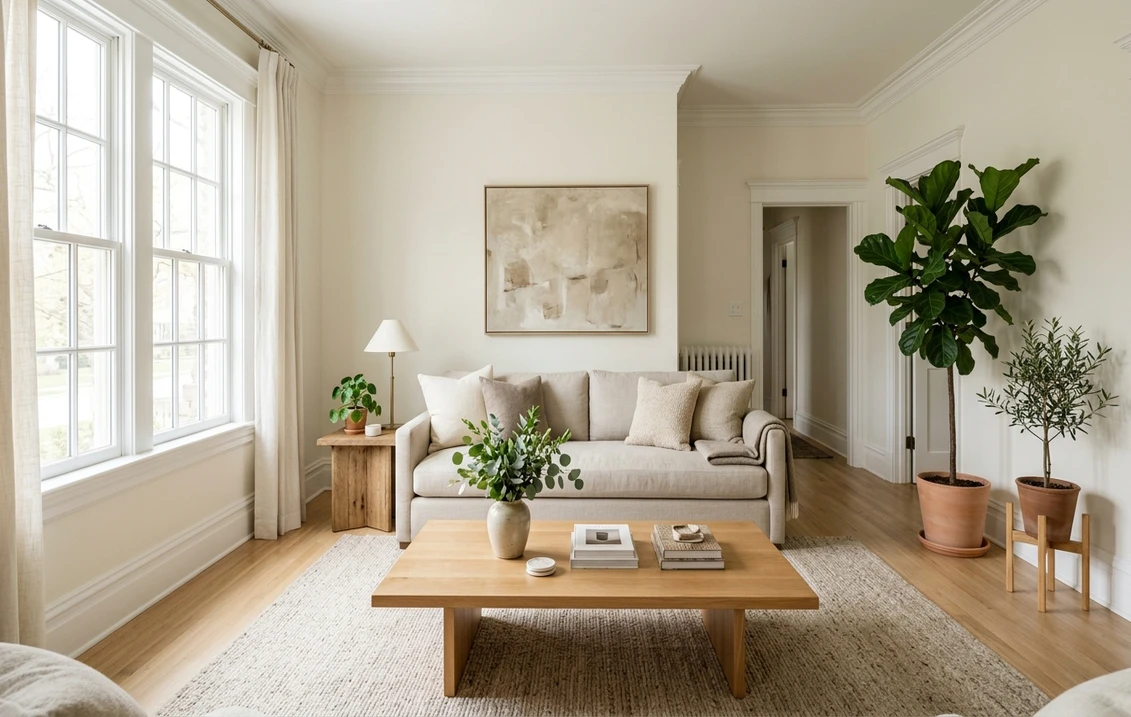
Upload one photo of your room and preview Chantilly Lace under your own light in about 30 seconds, free.
Chantilly Lace OC-65 at a glance
Benjamin Moore files Chantilly Lace inside its Off-White Color Collection, but do not let the label fool you. On the wall it reads as a true bright white, not a soft off-white like White Dove. The published numbers tell the rest of the story:
- Color code: OC-65 (also sold as 2121-70 on some fan decks).
- LRV (Light Reflectance Value): 90.04 on the Benjamin Moore data sheet, placing it near the top of the brightness scale for an architectural white.
- Undertone: clean and near-neutral. There is the faintest cool, barely-there gray base, with no yellow and no obvious blue. It reads crisper than almost any warm white.
- Color family: white. It is one of the four or five whites Benjamin Moore recommends most often for trim, ceilings, and cabinetry.
- Best described as: the white that looks like a fresh sheet of printer paper in a sunny room, and like soft snow in a shaded one.
That LRV of 90 is the whole story. It reflects almost all the light that hits it, which is why Chantilly Lace makes small rooms feel larger and dim rooms feel brighter. The same property is why, in a north-facing room with no direct sun, it can tip slightly cool. The color does not change. The light does.
The undertone, decoded
Every white has a base pigment that decides which way it leans. Warm whites like Simply White (OC-117) and White Dove (OC-17) carry a yellow or yellow-gray base that reads as softness. Chantilly Lace carries almost none of that. Its base is so close to neutral that in bright, warm light it simply reads clean and white, full stop.
Where it gets interesting is in cool or indirect light. With no warm pigment to fall back on, Chantilly Lace borrows whatever cast the room provides. In a north-facing bedroom on an overcast afternoon, it can pick up a whisper of cool gray or the faintest blue. Designers describe this as the color "reading crisp" in good light and "reading cool" in flat light. It is not a flaw. It is the trade-off you accept for a white this clean.
A practical rule: if your room gets generous south or west sun for part of the day, Chantilly Lace will glow without ever looking dingy. If the room is permanently shaded or faces north in a cold climate, test it carefully or step up to a white with a touch more warmth. Our interior paint color families guide explains how undertones shift across the whole color wheel, not just whites.
Best rooms for Chantilly Lace
Chantilly Lace is a generalist, but a few jobs are where it pulls ahead. In these rooms it beats a warmer white almost every time:
- Trim, doors, and millwork: this is the number-one use. Against almost any wall color, Chantilly Lace trim reads as a clean, intentional frame. It is bright enough to pop against a saturated wall and crisp enough not to muddy a pale one.
- Kitchen cabinets: for a modern or transitional kitchen, Chantilly Lace cabinets photograph bright and fresh. Pair it with brass or matte-black hardware and the contrast sings. It is the go-to when a creamy white would feel too traditional.
- Bathrooms: the high LRV bounces light around tile and mirrors, making a small or windowless bath feel larger. It also reads clean next to white fixtures, where a yellow-based white can look mismatched.
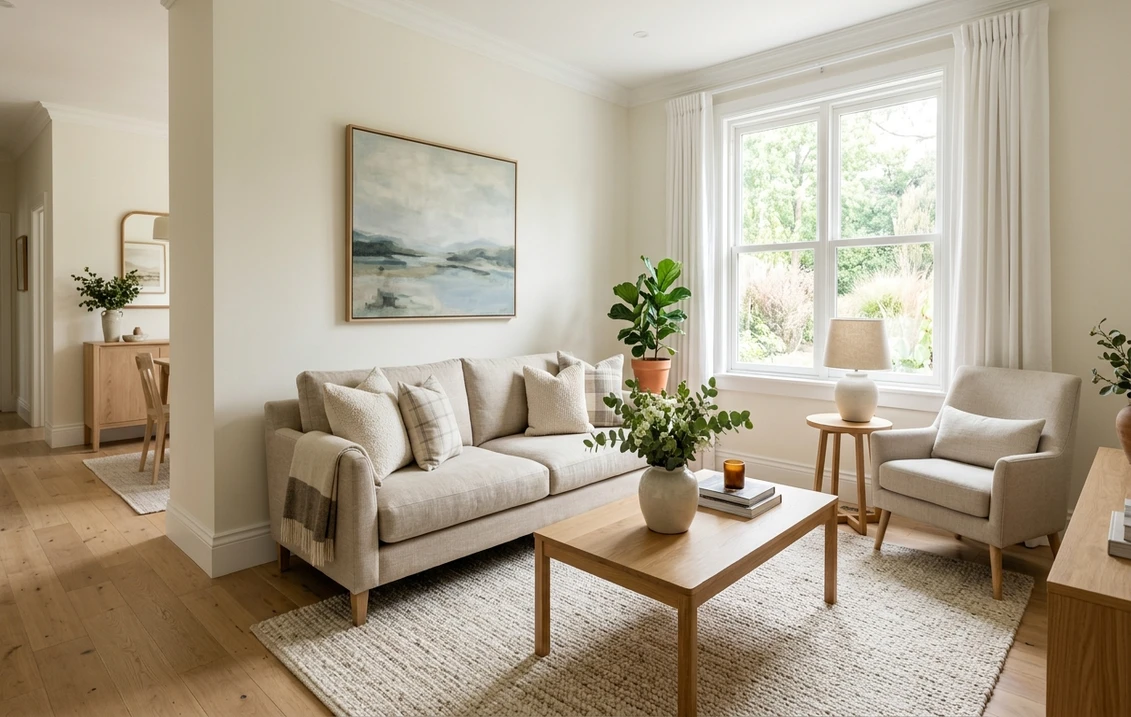
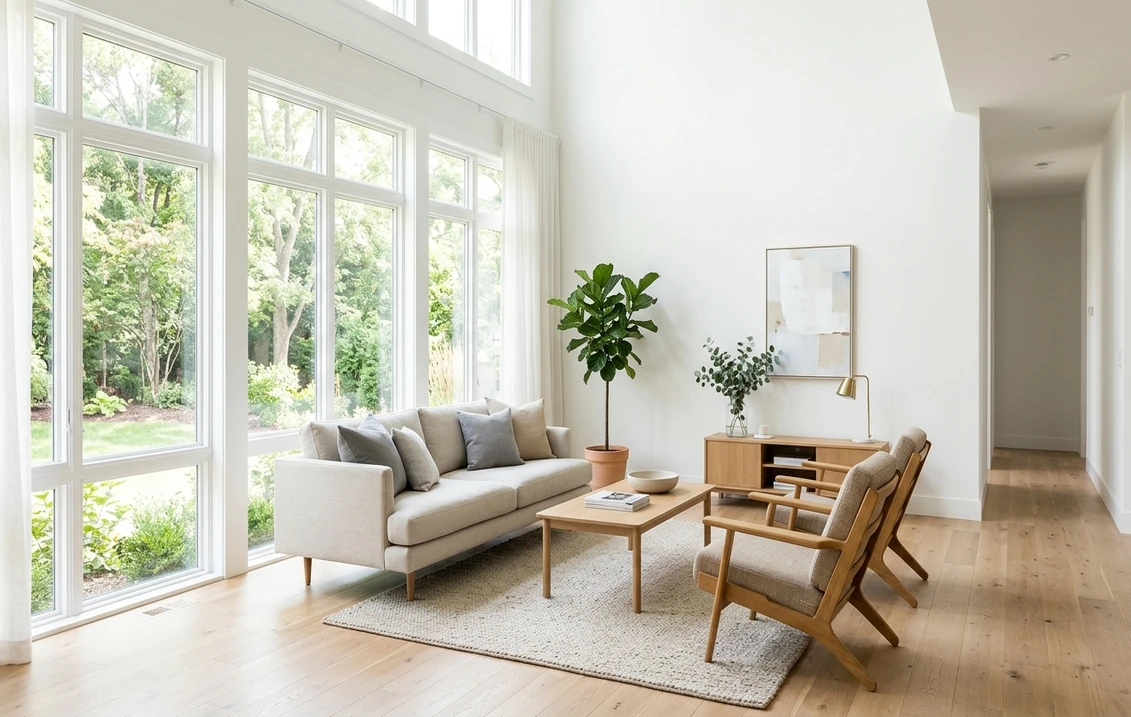
- Modern and contemporary living spaces: in rooms with big windows, white-oak floors, and minimal decor, Chantilly Lace walls deliver that gallery-bright, magazine-clean look without going stark.
- Ceilings throughout the house: as a ceiling white it keeps overhead planes feeling open and recedes cleanly above warmer wall colors.
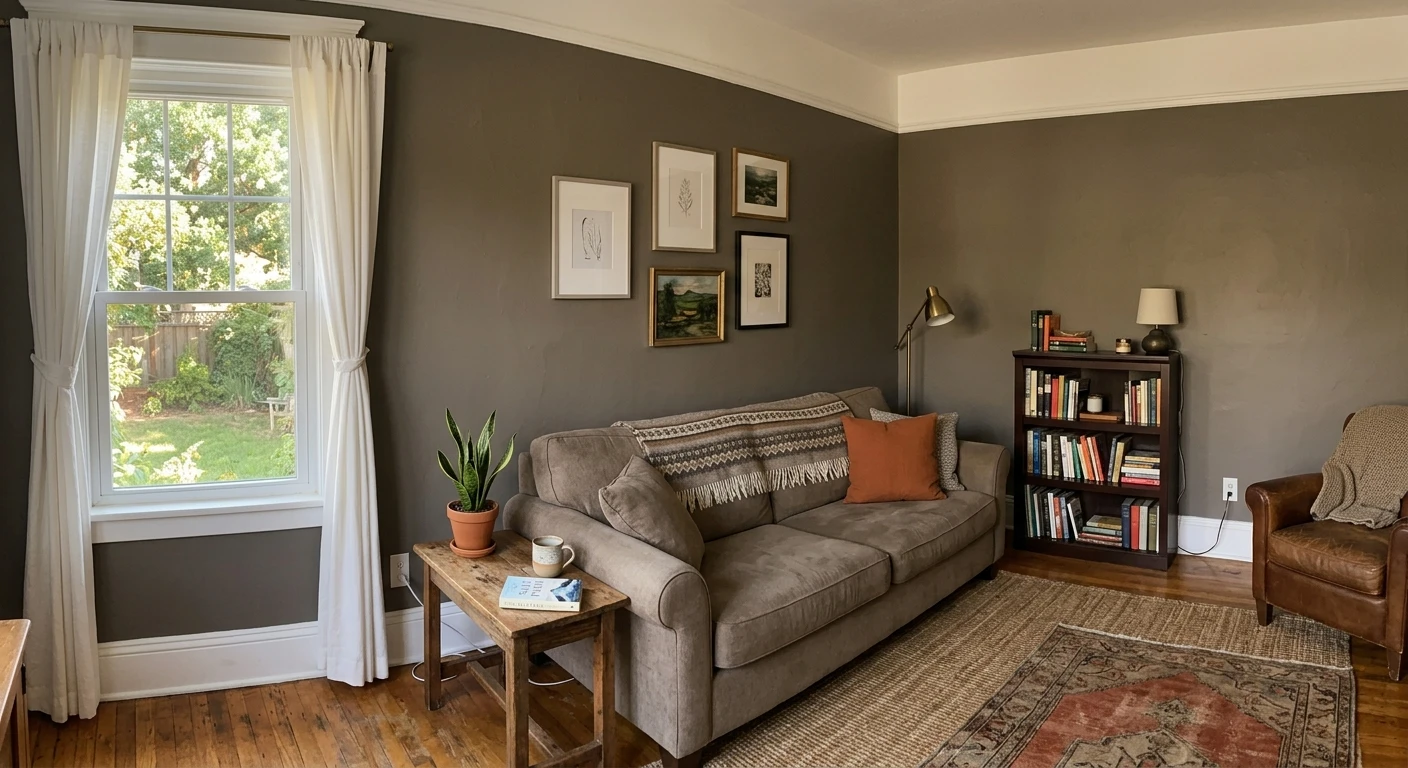
Where it is riskier: cozy, low-light dens, north-facing bedrooms in cold climates, and traditional rooms full of warm wood and antiques. In those spaces a warmer white usually feels more inviting. For the full room-by-room repaint budget, see our interior house painting cost guide.
Test it on cabinets, trim, or walls from your own photo before you commit to a sample pot. Free.
Chantilly Lace vs other Benjamin Moore whites
On an exterior, Chantilly Lace's LRV of 90.04 makes it the brightest of the usual whites, which suits a contemporary house with black steel and reads stark on a farmhouse; our white exterior paint shades guide compares it with Simply White, White Dove, Swiss Coffee and the Sherwin-Williams whites by official LRV.
The fastest way to understand Chantilly Lace is to line it up against the whites people most often cross-shop. The differences are small on a chip and obvious on a wall:
| Color | LRV | Undertone | Reads as |
|---|---|---|---|
| Chantilly Lace (OC-65) | 90 | Clean, faint cool-neutral | Crisp bright white |
| Simply White (OC-117) | 91 | Warm, soft yellow | Bright but warmer, sunnier |
| White Dove (OC-17) | 85 | Warm gray-yellow (greige base) | Soft, creamy, easygoing |
| Decorator's White (OC-149) | 83 | Cool blue-gray | Cooler, slightly steely white |
Try it on your room
No photo? Try a sample
Sources: Benjamin Moore OC-65, OC-117, OC-17, and OC-149 technical data sheets, 2026. LRV values rounded to whole numbers.
Read that table as a spectrum. Decorator's White is the cool end, White Dove the warm-soft end, and Simply White the warm-bright end. Chantilly Lace sits in a sweet spot: nearly as bright as Simply White but without the yellow, and far cleaner than White Dove. If you have been weighing the two most popular options head to head, our deep dives on White Dove OC-17 and Simply White OC-117 spell out when softness or warmth wins. Chantilly Lace is the answer when you want the wall or trim to read unmistakably white. Simply White (OC-117), by comparison, is the pick when you want that same brightness with a sunnier, warmer cast; our Simply White vs Chantilly Lace side-by-side verdict settles that matchup room by room. And if White Dove is the finalist on your list, read the full White Dove vs Chantilly Lace comparison before you buy a sample.
Trim, cabinet, and decor pairings
Because Chantilly Lace is so clean, it plays well with bold color and high contrast. It also pairs beautifully with itself, walls and trim in the same white for a seamless modern envelope. Here is what works:
- Deep navy: Chantilly Lace trim or built-ins against a navy wall is a classic, high-contrast combination. See how it works with our Hale Navy HC-154 profile, a pairing designers use constantly in studies and entryways.
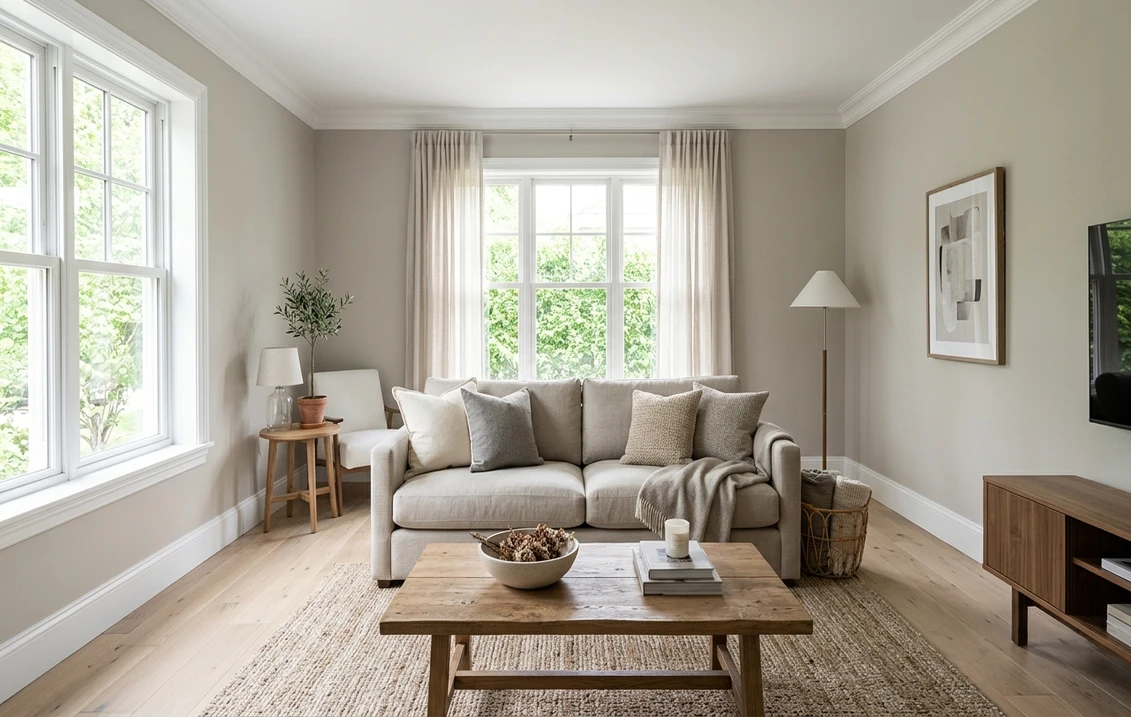
- Warm greige walls: for a softer scheme, use Chantilly Lace on the millwork and a warm greige on the walls. Our Revere Pewter HC-172 guide shows the warm-wall, crisp-trim look. Keep the wall warm so the white does not read cold by comparison.
- Black accents: matte-black window frames, hardware, or a black interior door turn Chantilly Lace walls into a clean modern backdrop.
- Natural wood: white-oak and light-walnut floors add just enough warmth to keep a Chantilly Lace room from feeling sterile. Avoid gray-washed floors, which push the whole room cool.
- Brass and warm metals: against a cool-clean white, warm metals add the glow the paint itself does not provide. This is the easiest way to soften a Chantilly Lace bathroom or kitchen.
A finish note: most painters spray or roll Chantilly Lace in a satin or semi-gloss on trim and cabinets, and a flat or matte on walls and ceilings. Higher sheen exaggerates whatever undertone the light is throwing, so on a north wall a flat finish keeps it reading cleaner than a semi-gloss would.
Sherwin-Williams and Behr equivalents
No two brands match exactly, but if you are pricing across stores, the closest cross-brand neighbors to Chantilly Lace are Sherwin-Williams Extra White (SW 7006, a crisp cool-neutral white) and, a touch warmer, SW High Reflective White (SW 7757) at the very bright end. On the Behr deck, Ultra Pure White and Polar Bear (75) sit in the same clean, high-LRV territory. None is a drop-in twin, so always confirm against a sample. For a full brand-to-brand breakdown, read our Sherwin-Williams vs Benjamin Moore interior comparison.
How to test Chantilly Lace before you commit
A white this clean is unforgiving of bad lighting, so testing matters more than with a forgiving greige. Two reliable methods:
- Peel-and-stick sample. Benjamin Moore sells 12-inch Color Samples. Put one on the wall that gets the least direct light and one on the wall that gets the most. Check both at 9 a.m., at 2 p.m., and after dark under your normal bulbs. If it stays clean and white in all three, it is right for the room.
- Digital preview first. Before you buy any sample, upload a photo of the actual room into our visualizer workflow and apply Chantilly Lace alongside White Dove and Simply White. Seeing all three on your own walls at once narrows the field in seconds and tells you whether you want clean, soft, or sunny before you spend a dollar.
One warning that catches people out: never judge a white from the 2-inch fan-deck chip. It reads up to a third lighter than a fully rolled wall and shows none of the undertone shift. The chip is for narrowing options, never for the final call.
Preview Chantilly Lace, White Dove, and Simply White side by side on your real room. Free, no sample pots.
Frequently asked questions
Is Benjamin Moore Chantilly Lace a warm or cool white?
It is a clean, near-neutral white that leans very slightly cool. It carries almost no yellow, so in bright south or west light it reads crisp and white. In flat or north light, with no warm pigment to lean on, it can pick up a faint cool or gray cast, which is why it is described as crisp in good light and cool in dim light.
What is the LRV of Chantilly Lace OC-65?
Chantilly Lace has a Light Reflectance Value of 90.04 on the Benjamin Moore technical data sheet, near the top of the brightness scale for an architectural white. That high reflectance brightens small or dim rooms, and also makes it lean cool when the only available light is indirect.
What is the difference between Chantilly Lace and White Dove?
Chantilly Lace (LRV 90) is a brighter, cleaner, cooler white with almost no undertone. White Dove (OC-17, LRV 85) carries a warm gray-yellow base that reads soft and creamy. Choose Chantilly Lace for crisp, modern, unmistakably white trim or walls; choose White Dove for warmth and a more forgiving white.
Is Chantilly Lace a good color for trim and cabinets?
Yes. Trim, doors, millwork, and cabinets are its single best use. Its high LRV and clean base make it pop against saturated wall colors and read as a sharp, intentional frame without muddying paler walls. It is the standard Benjamin Moore pick for crisp white cabinetry rather than a creamy traditional look.
See exactly how OC-65 reads in your own light before buying a single sample.
Disclaimer: Benjamin Moore, Chantilly Lace, and OC-65 are trademarks of Benjamin Moore & Co. Sherwin-Williams and Behr are trademarks of their respective owners. FacadeColorizer is an independent paint visualization service and is not affiliated with, endorsed by, or sponsored by Benjamin Moore, Sherwin-Williams, or Behr. Color reproduction on screens approximates the manufacturer's chip; always confirm with a physical sample before purchase. Sources: Benjamin Moore OC-65 Chantilly Lace technical data sheet 2026, Benjamin Moore OC-117 Simply White, OC-17 White Dove, and OC-149 Decorator's White data sheets 2026, and designer undertone references from The Spruce and Benjamin Moore Color Stories.
Trademarks mentioned (Sherwin-Williams, Benjamin Moore, Behr, Caparol, Brillux, Sto, Alpina, Valspar, PPG, Glidden, Dulux, Crown Trade, Sandtex, Farrow & Ball, Johnstone's, Leyland) are property of their respective owners. FacadeColorizer is independent and not affiliated with any of them. Nominative fair use under Lanham Act §1125.