Try it on your room

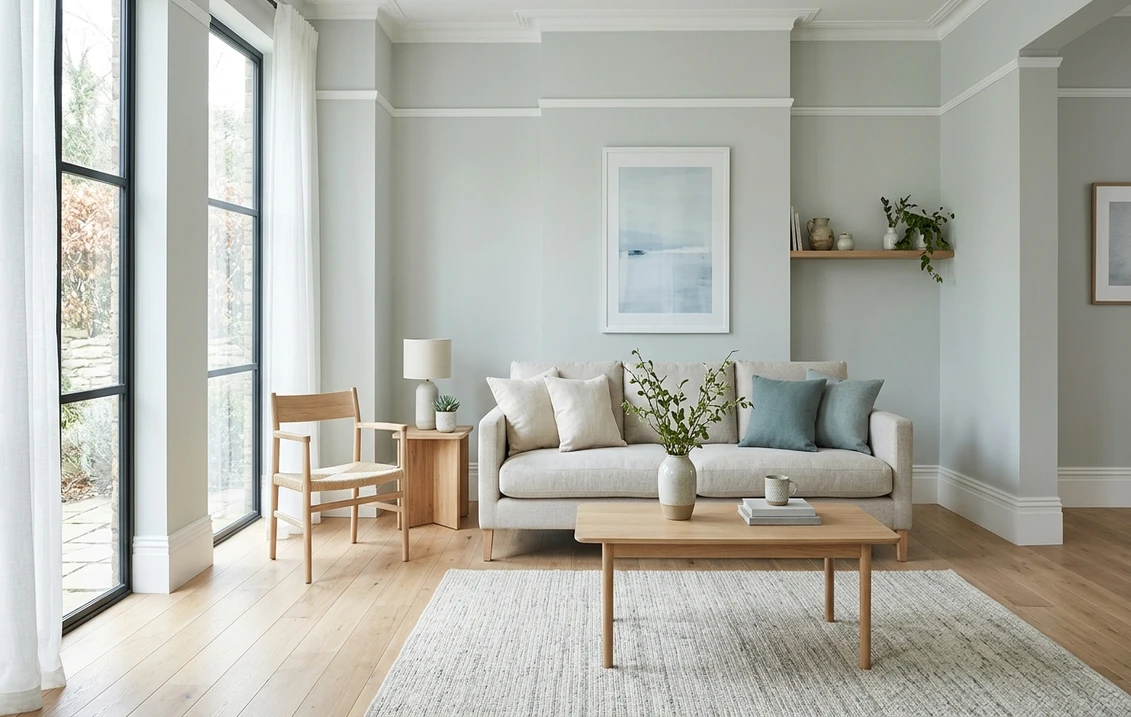
Benjamin Moore Gray Owl (OC-52) is the gray that almost never goes wrong, the closest thing to a no-regret pick in the light-gray category. Two things explain that track record. An LRV of 61 keeps a room bright, and a chameleon green-blue undertone lets the same gallon read crisp and modern in one house and soft, almost spa-like, in the next. That flexibility is also the catch. Gray Owl does not look the same on every wall, and the homeowners who get burned are usually the ones who judged it from a fan-deck chip under the store's fluorescent light.
This is a working profile of Gray Owl indoors: what the undertone does, how the color behaves room by room and hour by hour, the trim and flooring that flatter it, and the near-twin grays it gets mixed up with. If you are weighing it against the warmer end of the lineup, our 2026 Benjamin Moore interior paint colors guide maps where Gray Owl sits on the full chart.
Upload a photo of your room and preview Benjamin Moore Gray Owl under your actual light in about 30 seconds, free.
Gray Owl OC-52 at a glance
Gray Owl belongs to the Benjamin Moore Off-White Collection (the "OC" prefix), which is a little misleading: it reads as a true light gray, not an off-white. The numbers and character that matter before you sample:
- Benjamin Moore code: OC-52.
- LRV (Light Reflectance Value): 61. Light enough to keep a space airy and bounce daylight around, but with enough depth to read clearly as gray rather than white.
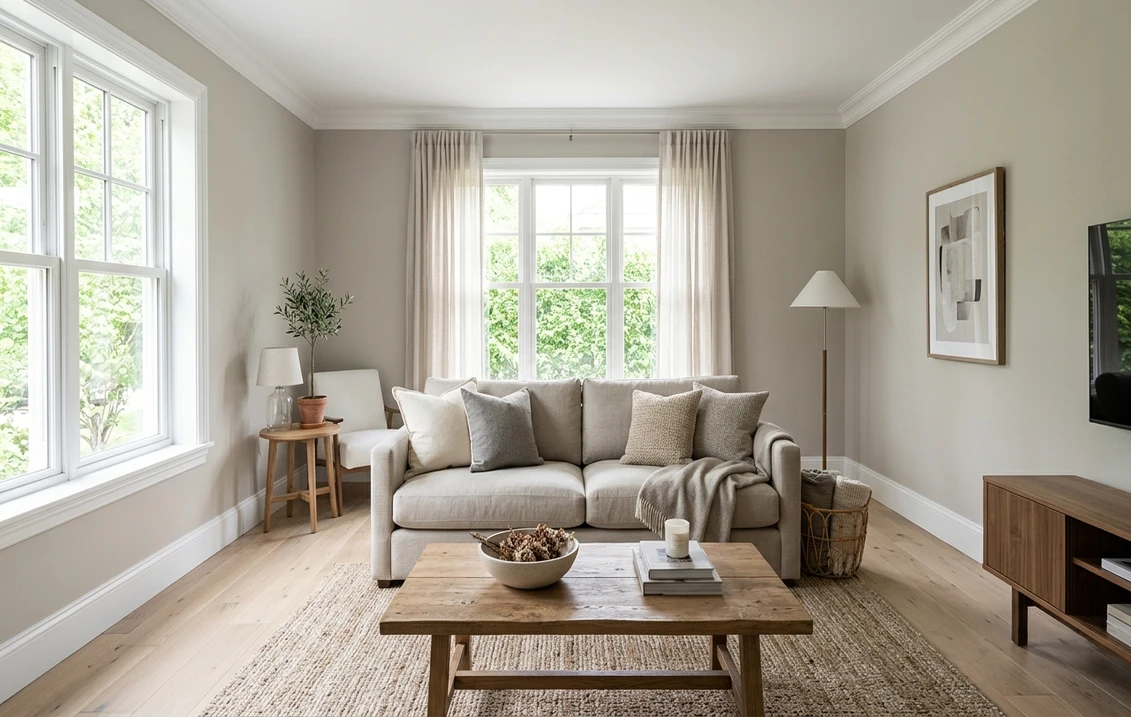
- Undertone: a cool green-blue base. In most light it reads as a clean, neutral light gray; in soft or low light the green-blue surfaces and pushes toward a faint sage or silver.
- Temperature: cool, but gentle. Not a steely industrial gray, not a warm greige either. It sits in between, which is why it works in so many homes.
- Closest relatives: Stonington Gray (HC-170, LRV 59, more clearly blue), Classic Gray (OC-23, LRV 73, warmer and lighter), and Coventry Gray (HC-169, a step darker). More on those below.
Balance. That is the one word that keeps coming up. Because the color is light and its undertone is mixed rather than dominant, it behaves like a near-neutral, then quietly picks up the temperature of whatever surrounds it. Cool flooring and white trim nudge it bluer; warm wood and brass nudge it toward greige. That responsiveness is the appeal and the risk.
What the green-blue undertone actually does
A paint color is just the wavelengths it reflects, and a room's light decides which of those are available. Gray Owl carries a small green pigment and a small blue pigment under its gray. Flood it with bright, balanced light and the two quietly cancel each other out, leaving a clean, slightly cool gray. Let the light go soft, dim, or blue, though (an overcast afternoon, a north window, a shaded room), and the green-blue stops being subtle and starts to read. In practice that gives three faces:
- Bright, direct daylight: clean neutral light gray, the "chip" version most people expect.
- Soft or overcast daylight: a faint green-sage softness, calm and slightly spa-like.
- Cool artificial light or deep shade: the blue surfaces and the color reads cooler, a touch icy next to a pure-white trim.
None of those are flaws, they are simply different. The mistake is expecting the bright-daylight version everywhere, then being surprised when a windowless powder room reads sage at night. Once you know the undertone is green-blue (not violet, not beige), every shift Gray Owl throws at you makes sense. For how undertones group together, our interior paint color families guide puts cool grays like this one in context.
Best rooms for Gray Owl (and where to think twice)
Light and cool-neutral, Gray Owl forgives more mistakes than most grays you could put on a wall. What it cares about is orientation, not what the room is used for, so here is how it behaves by exposure.
South and west-facing rooms
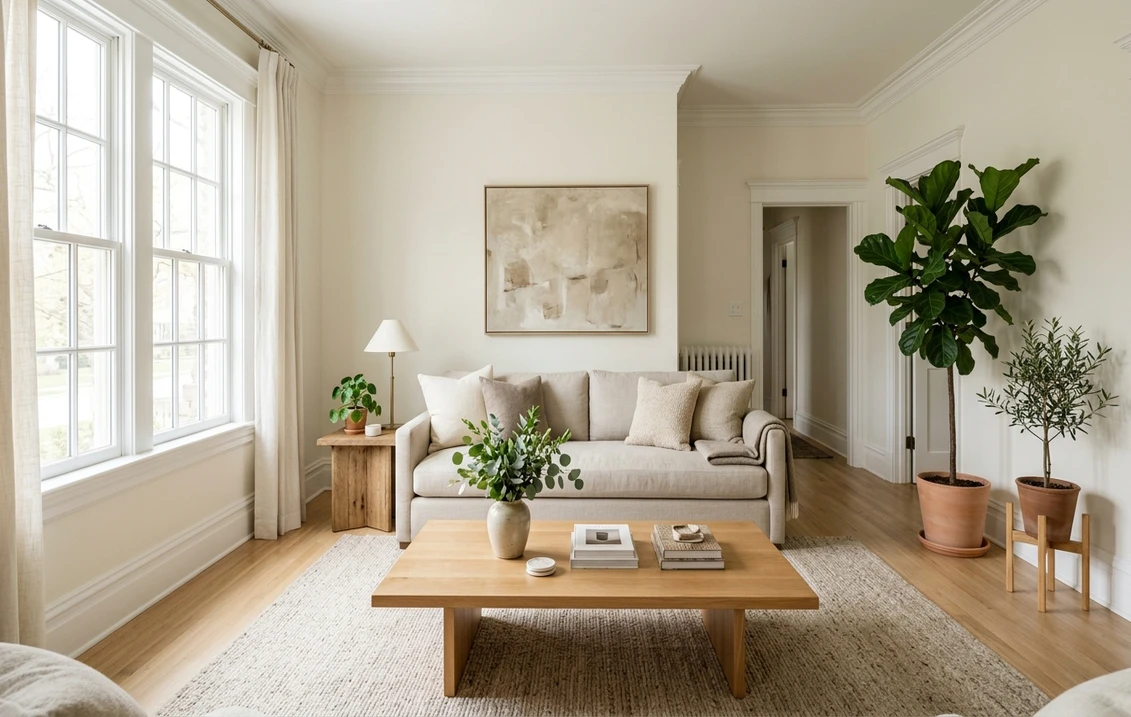
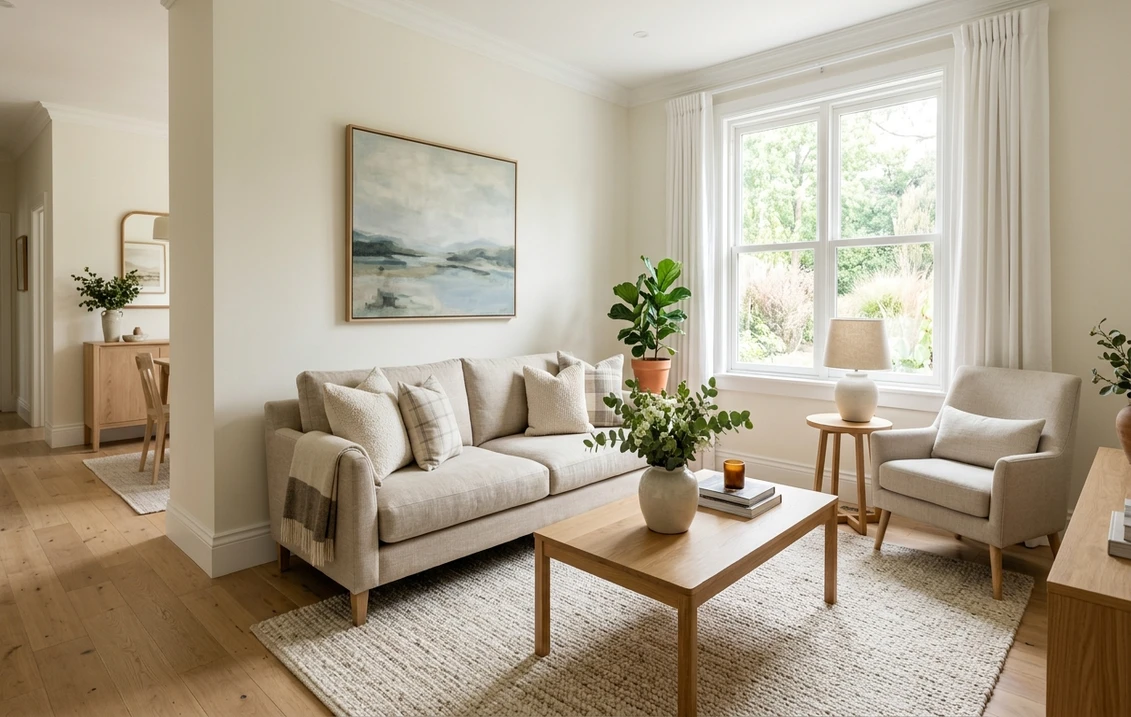
This is Gray Owl at its best. Warm afternoon light keeps the green-blue in check and the gray reads clean, fresh, and bright. South-facing living rooms and west-facing kitchens hold the neutral version most of the day, a low-risk choice for the main living spaces.
North-facing rooms
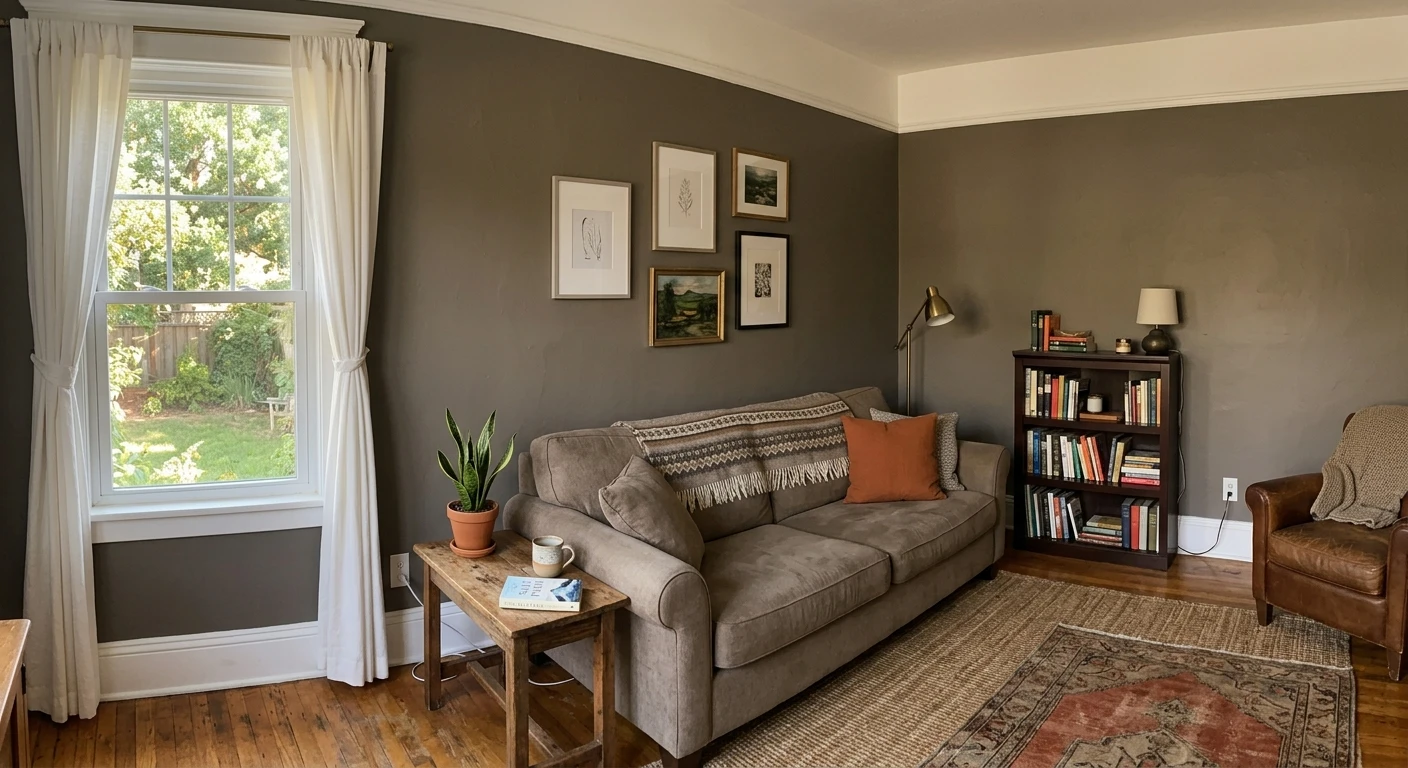
North light is cool and indirect, and it coaxes the blue-green forward. In a north-facing bedroom or office, Gray Owl reads cooler and softer, sometimes with a whisper of sage. Many people love that restful, modern feel, but if you want a warmer north-facing room, a greige like our Revere Pewter HC-172 is the more flattering pick.
Bathrooms and bedrooms
Gray Owl is a long-standing favorite for modern bathrooms because the green-blue undertone plays beautifully with white tile, chrome, and marble. In a bedroom it reads serene and a little cocoon-like at low light. A windowless bathroom lit only by cool LED bulbs is where the blue shows most, so test the bulb you actually use.
Open-concept and whole-home use
Run Gray Owl through a whole floor and it holds together, because an LRV of 61 stays consistent enough from room to connected room. The one thing to watch: in a single open space, a south wall can read neutral while a north wall reads slightly cooler at the very same moment. Every light gray does this. It is physics, not a flaw in the paint.
Free AI paint visualizer. Upload your real room photo and watch how Gray Owl shifts under your light before buying a sample.
Trim, ceiling, and decor pairings
Gray Owl is cool, so it asks for a crisp, clean white rather than a creamy one. Next to a warm yellow-based white the wall can look slightly dingy; next to a true bright white the gray snaps into focus.
- Best trim: a clean, bright white. Chantilly Lace (OC-65) at LRV 90 is the classic crisp-white partner and keeps the scheme fresh and modern.
- Softer option: if Chantilly Lace feels too stark, White Dove (OC-17) is a gentle warm-leaning white that still reads clearly lighter without fighting the gray.
- Ceiling: match the trim. A flat ceiling white in Chantilly Lace keeps the room bright and lets the walls stay the star.
- Floors: Gray Owl is flexible here. Cool gray-washed or white oak floors lean it modern and bluer; warm honey oak or walnut warms it toward greige. Pick the flooring first and you will know which face of Gray Owl you are getting.
- Accents and metals: chrome, nickel, and matte black sharpen the cool, modern read; brass and warm woods soften it. Deep navy is a natural high-contrast partner, which is why Gray Owl walls with a navy accent (think Hale Navy HC-154 on a built-in or island) is such a durable combination.
Gray Owl vs the grays it gets confused with
Most "is this the right gray?" headaches come down to a few near-neighbors. Here is how Gray Owl compares to the colors people most often hold a chip up against.
| Color | Code | LRV | How it differs from Gray Owl |
|---|---|---|---|
| Gray Owl | OC-52 | 61 | The reference: light, cool, green-blue, flexible |
| Stonington Gray | HC-170 | 59 | Very close, but reads more clearly blue (coastal). A touch darker. |
| Classic Gray | OC-23 | 73 | Lighter and warmer, a barely-there warm off-white. |
| Revere Pewter | HC-172 | 55 | A greige, not a gray. Warm taupe base, opposite temperature. |
| Coventry Gray | HC-169 | 42 | A step darker, a mid-tone gray for contrast walls. |
Try it on your room
No photo? Try a sample
LRV figures rounded from publicly published Benjamin Moore color data; confirm exact values on the current technical data sheet. Undertone descriptions reflect designer references and The Spruce paint guides.
The two that genuinely look alike on a chip are Gray Owl and Stonington Gray. The tell: Stonington commits to blue, while Gray Owl keeps its options open with that green-blue mix. Want gray that can flex toward sage? Choose Gray Owl. Want a confident coastal blue-gray? Choose Stonington. We settle that exact matchup room by room in our Stonington Gray vs Gray Owl side-by-side verdict. If your chip reads warm and taupe instead, you are looking at a greige like Revere Pewter, a different animal. Torn between Gray Owl and the much lighter Classic Gray? See how Gray Owl and Classic Gray compare wall to wall before you sample. Picking between brands too? Our Sherwin-Williams vs Benjamin Moore interior comparison covers the cross-brand light-gray equivalents.
How to test Gray Owl before you commit
A small fan-deck chip is the single biggest reason people end up disappointed with a gray. A 3-inch chip reflects far more of the surrounding white card than a painted wall, so it reads lighter and more neutral than the real thing. With a chameleon color like Gray Owl, that gap is the difference between "clean modern gray" and "why is my bathroom sage at night."
The reliable method is a peel-and-stick sample or a sample pot brushed onto a 12-inch square on two walls, viewed at three moments: mid-morning, mid-afternoon, and after dark under the bulbs you actually own. Watch the north wall and the windowless corner especially, that is where the green-blue declares itself.
The fastest no-paint option is to preview it digitally first. Upload a real photo of your room into our AI paint visualizer and apply Gray Owl (plus its near-twins), so you only pay to sample the one or two finalists. For project planning, our interior house painting cost guide sets expectations on cost, and the 2026 best interior paint colors guide shows the wider palette Gray Owl sits inside.
Compare Gray Owl, Stonington Gray, and Classic Gray on your actual room before spending a cent on samples, free.
Frequently asked questions
What undertone does Benjamin Moore Gray Owl have?
Gray Owl (OC-52) has a cool green-blue undertone under a light gray. In bright, balanced light the green and blue cancel out and it reads as a clean neutral gray. In soft, overcast, or cool artificial light the undertone surfaces and the color can lean faintly sage or cooler. That mixed undertone is why Gray Owl behaves like a chameleon from room to room.
What is the LRV of Gray Owl?
Gray Owl has a Light Reflectance Value of about 61 in publicly published Benjamin Moore color data. That is light enough to keep a room bright and bounce daylight, while still reading clearly as gray rather than as an off-white. For comparison, Classic Gray (OC-23) is lighter at LRV 73 and Coventry Gray (HC-169) is darker at LRV 42.
Is Gray Owl warm or cool?
Cool, yes, but gently so. Gray Owl skips the steely industrial edge on one side and the warm greige on the other, settling in between. The green-blue base keeps it on the cool side of neutral, which is why it pairs so well with crisp white trim, chrome, and marble. If you want a warmer light neutral, a greige like Revere Pewter (HC-172) is the warmer alternative.
What white trim goes best with Gray Owl?
Because Gray Owl is cool, a clean bright white flatters it best. Chantilly Lace (OC-65, LRV 90) is the classic crisp-white partner and keeps the scheme fresh and modern. If that feels too stark, White Dove (OC-17) is a softer warm-leaning white that still reads clearly lighter without fighting the gray. Avoid heavy creamy whites, which can make Gray Owl look dingy by contrast.
See Benjamin Moore Gray Owl under your real light, with the right white trim, before you buy a single sample pot.
Disclaimer: Benjamin Moore and the color names and codes referenced here (including Gray Owl OC-52, Stonington Gray HC-170, Classic Gray OC-23, Coventry Gray HC-169, Revere Pewter HC-172, Chantilly Lace OC-65, White Dove OC-17, and Hale Navy HC-154) are trademarks of Benjamin Moore and Co. Sherwin-Williams and Behr are trademarks of their respective owners. FacadeColorizer is an independent paint visualization service and is not affiliated with, endorsed by, or sponsored by Benjamin Moore, Sherwin-Williams, or Behr. LRV figures are rounded from publicly published Benjamin Moore color data and may differ slightly from the current technical data sheet; always confirm the exact value and a physical sample before purchase. Color reproduction on screens approximates the manufacturer's chip. Sources: Benjamin Moore published color data and the Off-White Collection, The Spruce paint color guides, and designer color references.
Trademarks mentioned (Sherwin-Williams, Benjamin Moore, Behr, Caparol, Brillux, Sto, Alpina, Valspar, PPG, Glidden, Dulux, Crown Trade, Sandtex, Farrow & Ball, Johnstone's, Leyland) are property of their respective owners. FacadeColorizer is independent and not affiliated with any of them. Nominative fair use under Lanham Act §1125.