Try it on your room

Why 2026 Is the Year of Warm, Earthy Interiors
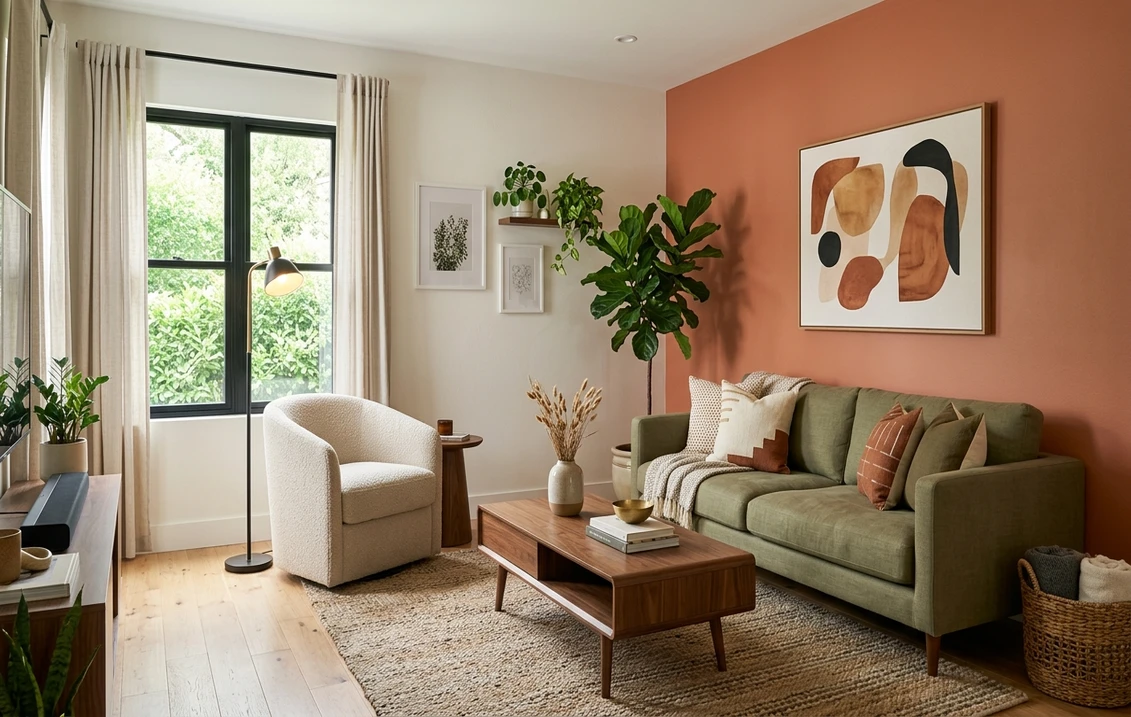
If you are planning an interior painting project this year, the color trends for 2026 could not be clearer: warm neutrals, nature-inspired greens, and rich earthy tones are replacing the cool grays that dominated the last decade. Every major paint brand-Sherwin-Williams, Benjamin Moore, Behr, PPG, and Valspar-has anchored its 2026 palette around colors that feel grounded, sophisticated, and livable. Whether you are hiring a painting contractor or tackling room painting yourself, choosing the right color affects everything from daily mood to property value at resale.
According to Zillow research, homes painted in warm off-white and greige tones sell faster and at higher prices than those with stark white or bold, trendy colors. A well-chosen color consultation paired with quality wall preparation-including drywall repair, spackle, sanding, and primer-can deliver one of the best returns on investment in home improvement. Before you commit, try our free AI color visualizer to preview any shade on your actual walls instantly. For full pricing context, see our complete interior painting cost guide.
2026 Colors of the Year: Brand-by-Brand Breakdown
Each year, the top paint manufacturers announce a signature color that sets the tone for interior painting nationwide. Here are the official 2026 picks and how to use them in your home:
| Brand | 2026 Color of the Year | Description | Best Rooms |
|---|---|---|---|
| Sherwin-Williams | Universal Khaki SW 6150 | Earthy mid-tone tan with warm yellow undertone | Living room, hallway, home office |
| Benjamin Moore | Silhouette AF-655 | Rich espresso brown with charcoal undertones | Accent wall, dining room, den |
| Behr | Hidden Gem N430-6A | Smoky jade-a dynamic blue-green blend | Bedroom, bathroom painting |
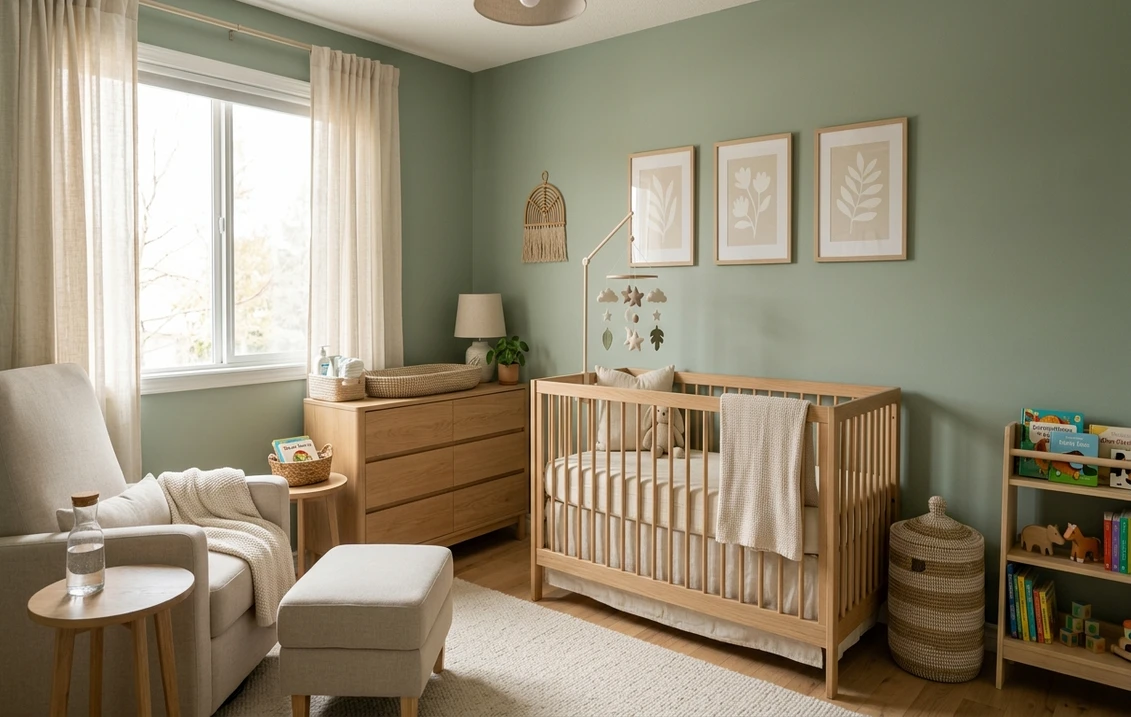
| Valspar | Warm Eucalyptus 8004-28F | Serene, silver-tinted green with warm undertones | Bedroom, spa bathroom, nursery |
Try it on your house
No photo? Try a sample
The common thread is unmistakable: 2026 is all about colors drawn from the natural world. From the sandy warmth of Universal Khaki to the botanical calm of Warm Eucalyptus, these hues create spaces that feel both comfortable and refined. You can find all of these at Home Depot, Lowe's, and independent paint retailers, typically priced between $45 and $75 per gallon for premium lines. Expect roughly 250–400 sq ft of coverage per gallon depending on the surface and paint sheen.
Best Interior Paint Colors by Room
Not every color works in every space. Lighting, function, and the existing finishes in your home all influence which shades look best. Before you commit to a shade, it helps to understand what LRV (light reflective value) means for a color and how it changes the way each hue reads in your light. Here is a room-by-room guide for 2026, backed by designer recommendations and color psychology research:
| Room | Recommended Colors | Best Sheen | Why It Works |
|---|---|---|---|
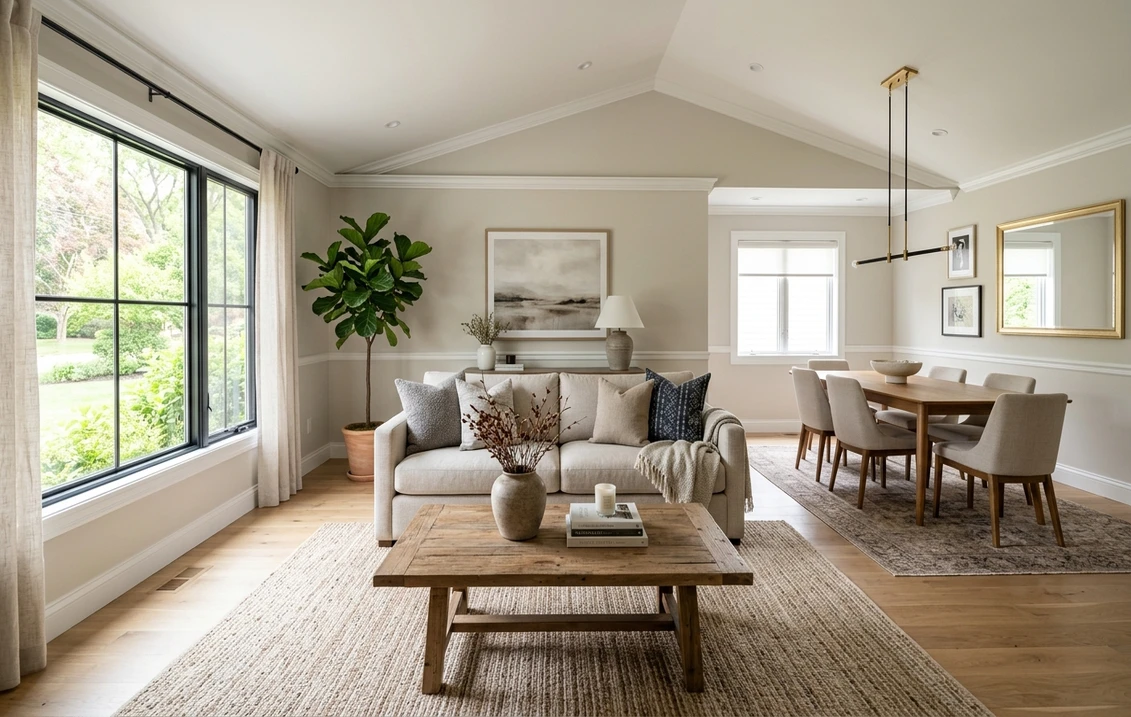
| Living Room | Universal Khaki, olive green, warm greige | Eggshell | Earthy neutrals create a welcoming, open feel; eggshell hides wall imperfections |
| Bedroom | Warm Eucalyptus, soft sage, misty blue | Flat / eggshell | Cool-toned greens and blues promote relaxation and better sleep quality |
| Kitchen Painting | Cream, warm white, mushroom, buttery yellow | Satin / semi-gloss | Satin resists grease and scrubbing; warm whites brighten without sterility |
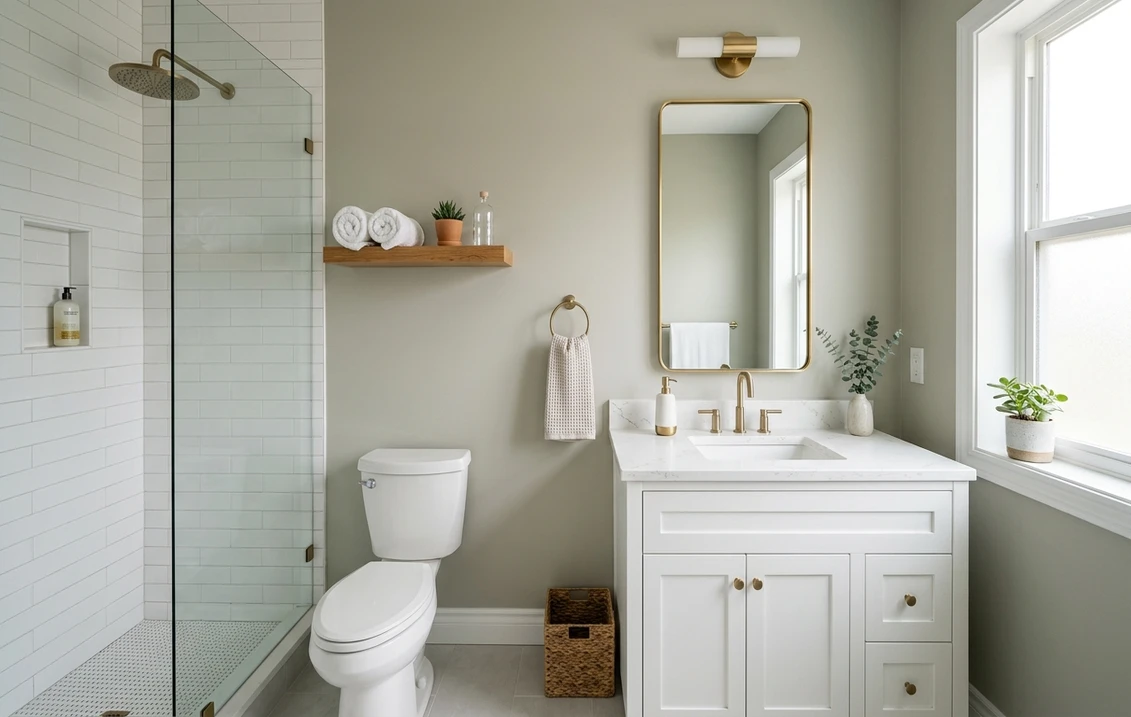
| Bathroom Painting | Hidden Gem, soft taupe, spa green | Semi-gloss | Moisture-resistant semi-gloss prevents mildew; blue-green tones evoke spa calm |
| Home Office | Sage, muted olive, warm beige | Eggshell | Green tones reduce eye strain and boost focus; neutrals minimize visual distraction |
| Dining Room | Silhouette AF-655, oxblood, terracotta | Eggshell / satin | Rich, deep hues create intimacy and elevate evening entertaining |
For trim painting, baseboard, crown molding, and door painting, a crisp white in semi-gloss remains the standard-it highlights architectural details and is easy to wipe clean. Benjamin Moore's Swiss Coffee OC-45 and Sherwin-Williams' Alabaster SW 7008 are two top-selling trim whites that pair beautifully with every wall color on this list.
Note from FacadeColorizer
Bathrooms skewed Hidden Gem and spa-blue at 31 percent. The dataset confirms brand-designer room positioning.
Indoor air quality and lead-safe context
US interior latex paint caps at 50 g/L VOC (flat) and 100 g/L (non-flat) under the EPA Architectural Coatings Rule. See the CDC/NIOSH VOC overview and EPA IAQ program. Pre-1978 color-change repaints trigger the EPA RRP rule and the HUD Lead-Safe Housing Rule.
Color Psychology and Home Value Impact
Color psychology is not just design jargon-it directly influences how buyers perceive your home. Earth-toned palettes reduce stress and create feelings of warmth and stability, which is why interior house painter professionals consistently recommend warm neutrals for resale-oriented projects. According to the National Association of Realtors, a professional interior painting project returns roughly 107% of its cost at resale, making it one of the highest-ROI home improvements you can make.
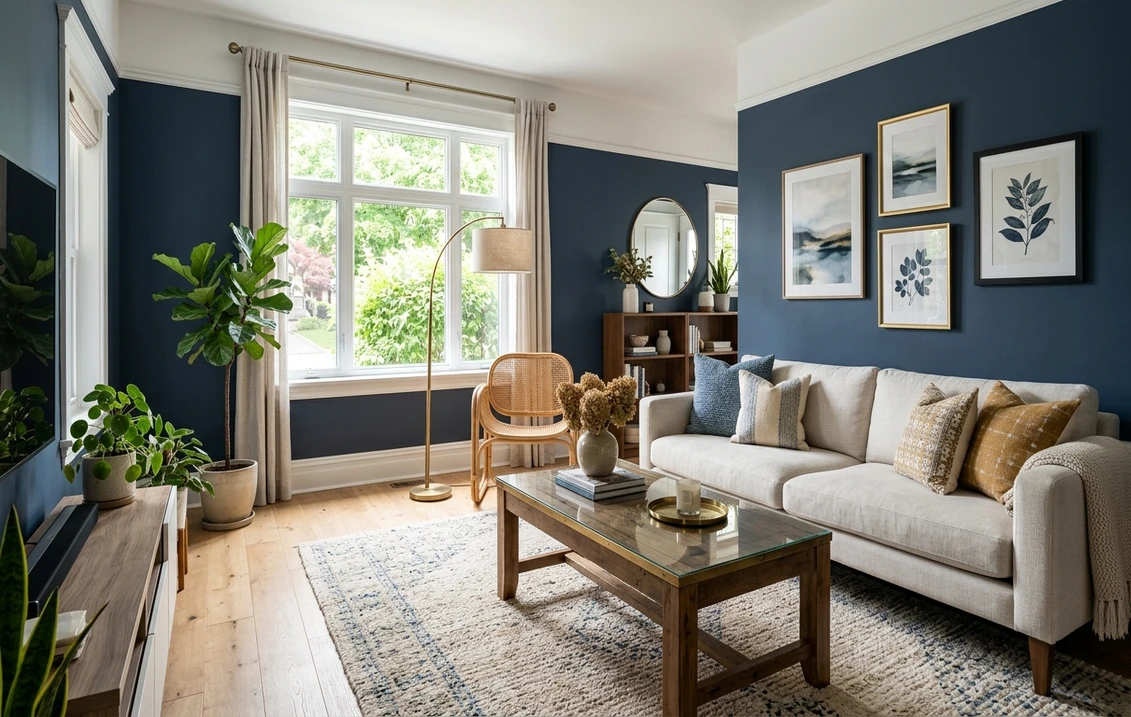
Stick to universally appealing tones for main living areas-greige, warm white, soft khaki-and reserve bold statements like Silhouette or Hidden Gem for accent wall features or powder rooms. This approach maximizes buyer appeal while still giving your home personality. The same logic runs outside, with a harsher penalty attached: a bold body color narrows the buyer pool in a way an accent wall never does, which is why a resale-minded exterior keeps its statement on the front door. Worth noting before you budget both jobs in one year, the best exterior house colors for 2026 carry a noticeably lower return than the 107% above, so the two projects do not justify themselves the same way. For a full breakdown of what professional interior painting costs, see our interior painting cost per room guide.
Choosing the Right Paint and Sheen
The color on the swatch is only half the equation. Paint sheen dramatically changes how a color looks and performs on your walls. Here is a quick breakdown:
- Flat: Zero shine, hides imperfections, ideal for ceiling painting and low-traffic bedroom walls. Less durable and harder to clean.
- Eggshell: Subtle luster, the most popular sheen for living rooms, hallways, and bedroom walls. Wipes clean easily.
- Satin: Soft shine with excellent durability. Best for kitchen painting, bathroom painting, kids' rooms, and any high-traffic area.
- Semi-gloss: Reflective and moisture-resistant. The go-to for trim painting, baseboard, crown molding, door painting, and bathrooms.
When shopping for paint, look for low-VOC or zero-VOC formulas to minimize odor and indoor air pollution. Latex paint and acrylic paint are the standard for interior walls-they dry quickly, produce minimal fumes, and clean up with water. Premium lines from Sherwin-Williams (Emerald Interior), Benjamin Moore (Regal Select), and Behr (Dynasty) offer excellent one-coat coverage and stain resistance. A two-coat system (one primer plus one or two topcoats) remains the professional standard for the longest-lasting finish. Typical drying time between coats is 2–4 hours; ensure proper ventilation by opening windows or running fans.
Pro Tips for a Flawless Interior Paint Job
Whether you hire a licensed and insured painting contractor or go the DIY route, these steps ensure the best results:
- Wall preparation is everything. Fill holes with spackle, sand smooth, repair any drywall repair issues, and apply tape and float to seams. A solid primer coat ensures true color and prevents bleed-through.
- Protect your space. Use drop cloth on floors and furniture protection covers. Apply painter's tape along trim, ceilings, and window frames for razor-sharp lines.
- Invest in quality tools. A premium roller cover (3/8″ nap for smooth walls) delivers even coverage. Use an angled brush for cutting in around trim painting and baseboard details.
- Test before you commit. Buy sample pots and paint large swatches on two or three walls to observe the color in morning, afternoon, and evening light. Or upload a photo of your room to our free color simulator for instant AI-powered previews.
- Get multiple estimates. Request a free estimate from at least three contractors. The average cost per room for professional interior painting runs $300–$800 depending on size and ceiling height. See our full exterior and interior cost guide for detailed pricing by cost per square foot.
Visualize Your New Colors Before You Paint
Choosing between Universal Khaki and Warm Eucalyptus? Wondering if Silhouette will overpower your dining room? Stop guessing. Upload a photo of any room in your home to our free AI color simulator and test unlimited color combinations in seconds. You can compare Sherwin-Williams, Benjamin Moore, and Behr palettes side by side-no paint samples, no wasted weekends, and no buyer's remorse.
Ready to find your perfect interior color?
Upload a photo and preview 2026's trending paint colors on your walls-free, instant, no signup required.
Try the Color Simulator →Editorial methodology and updates
Last updated 2026-06-03. Colors of the Year cross-referenced with official manufacturer 2026 trend announcements (Sherwin-Williams, Benjamin Moore, Behr, Valspar). Resale-ROI claim references the National Association of Realtors annual remodeling impact data. Sheen and washability ranges follow ASTM D2486 and ASTM D4828 - see the ASTM standards portal.
Frequently asked questions
What is the most popular interior paint color for 2026?
What paint sheen should I use for interior walls?
Do interior paint colors affect home value?
What are the best paint colors for a small room?
Should I use low-VOC or zero-VOC paint for interiors?
Trademarks mentioned (Sherwin-Williams, Benjamin Moore, Behr, Caparol, Brillux, Sto, Alpina, Valspar, PPG, Glidden, Dulux, Crown Trade, Sandtex, Farrow & Ball, Johnstone's, Leyland) are property of their respective owners. FacadeColorizer is independent and not affiliated with any of them. Nominative fair use under Lanham Act §1125.