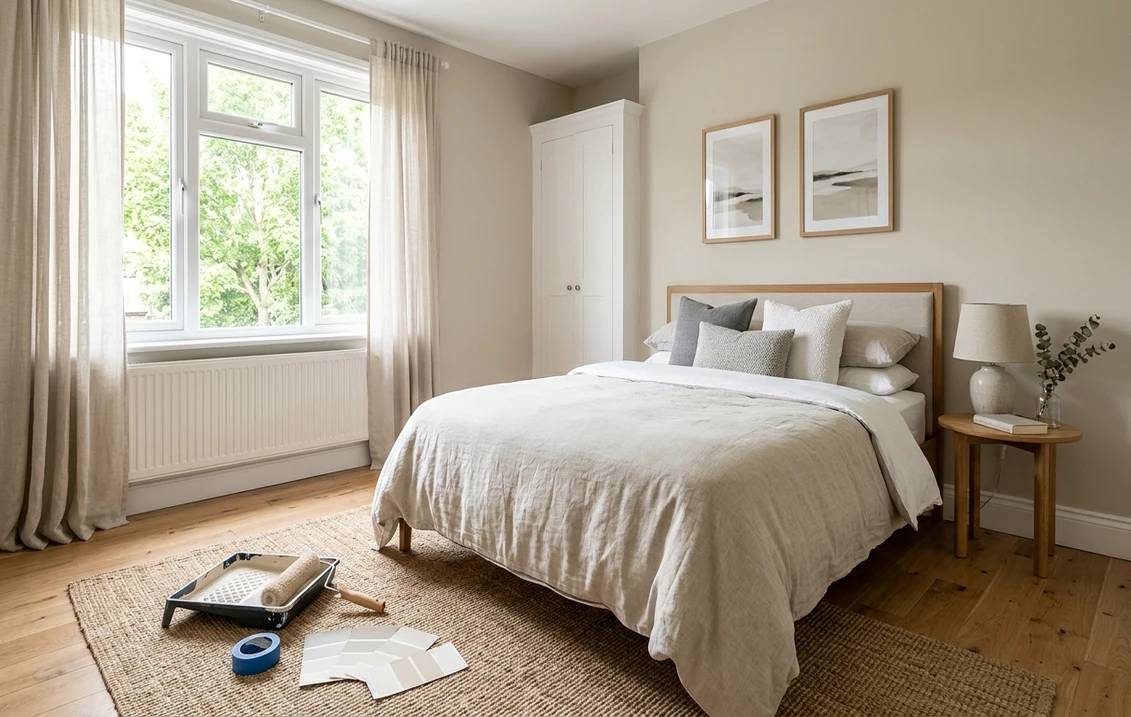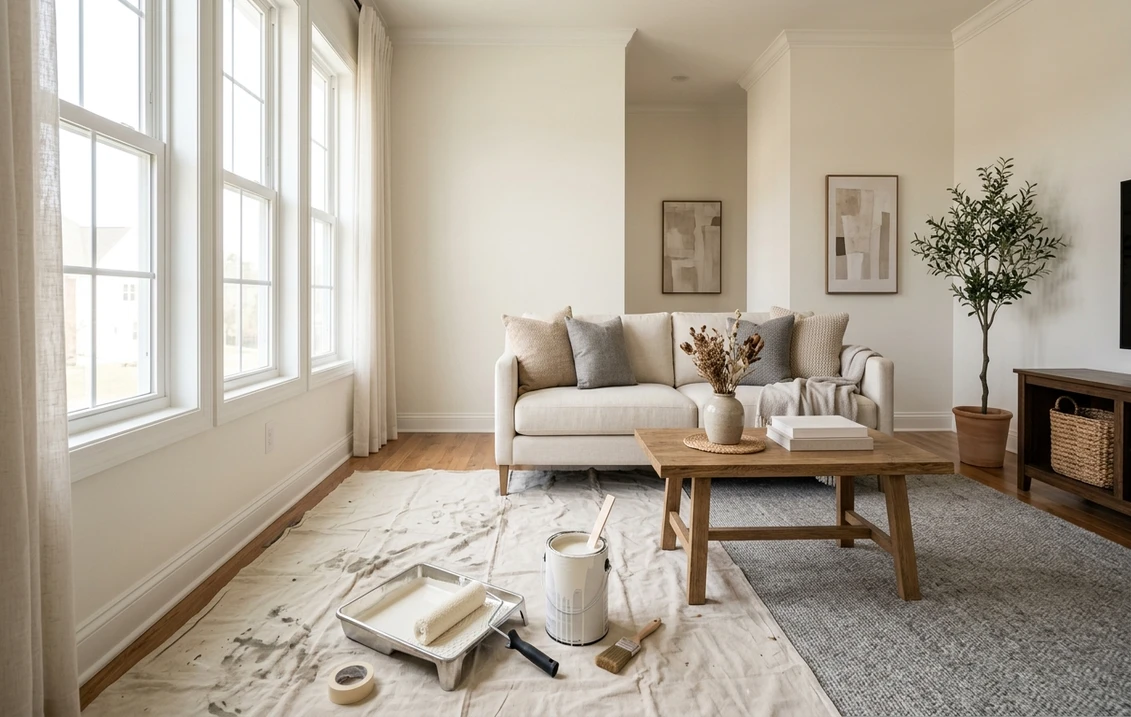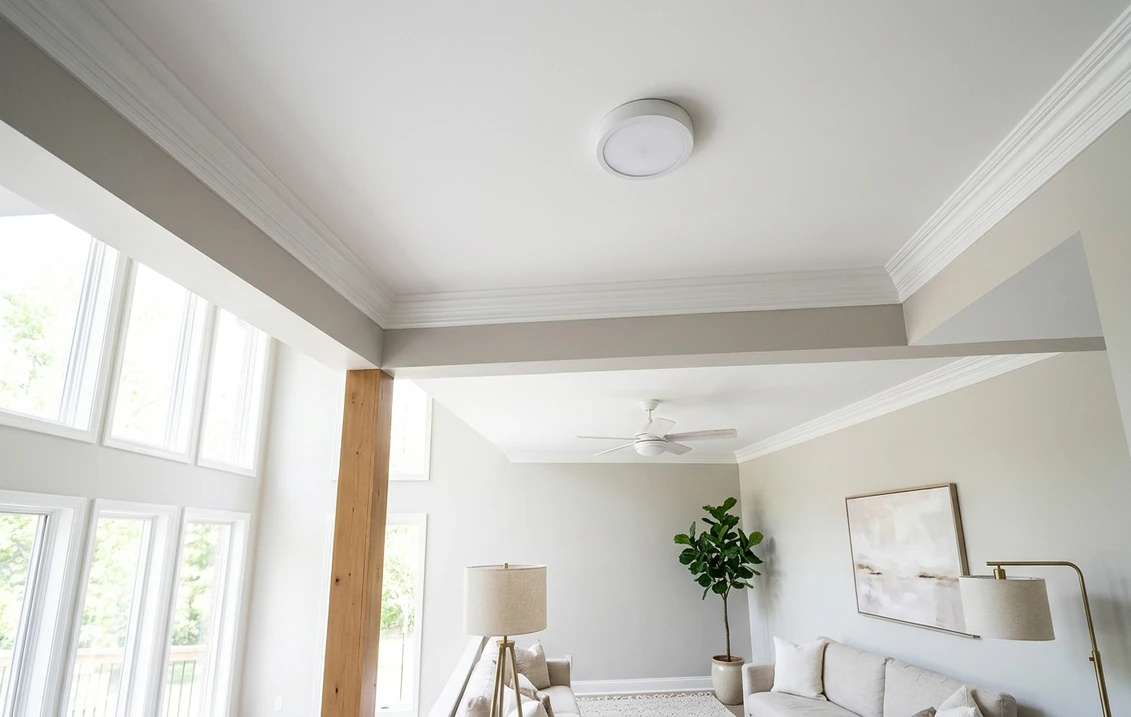

What does ceiling painting cost in 2026? Ceilings are often the most overlooked surface in a home, yet a fresh coat can dramatically brighten a room and increase your property's appeal. Whether you're dealing with water stains, popcorn texture, or simply outdated yellowing paint, this comprehensive guide breaks down the average costs by room size and ceiling type, compares DIY vs. professional pricing, and recommends the best ceiling paints on the market. Experiment with room colors using our free AI color visualizer.
Average Ceiling Painting Cost in 2026
The cost to paint a ceiling depends on room size, ceiling height, texture, and whether you hire a professional or do it yourself. Standard flat ceilings in good condition are the least expensive. Textured, vaulted, or water-damaged ceilings require additional prep work and specialized techniques, which increase the total cost. Painters in major metro areas charge more than those in suburban or rural markets.
| Ceiling Type | Cost per Sq Ft (Pro) | Cost per Sq Ft (DIY) | Avg. Room (12x12) |
|---|---|---|---|
| Flat ceiling (good condition) | $1.50 – $3.00 | $0.30 – $0.60 | $215 – $430 |
| Textured / popcorn | $2.00 – $4.00 | $0.40 – $0.80 | $290 – $575 |
| Vaulted / cathedral | $2.50 – $5.00 | - | $360 – $720 |
| Water-damaged (stain blocking) | $2.50 – $4.50 | $0.50 – $1.00 | $360 – $650 |
| Coffered / decorative | $3.50 – $7.00 | - | $500 – $1,010 |
Try it on your room
- 1Your photoPhoto
- 2Your colorColor
- 3HD render in ~30 sHD render in ~30 s
Your photo is used only to create your preview. JPG, PNG, HEIC (iPhone)
DIY vs. Professional Ceiling Painting
Painting a ceiling yourself can save 60–75% on labor costs, but it's physically demanding and technique-sensitive. A DIY ceiling paint job for a standard 12x12 room costs $40–$90 in materials (paint, roller, tape, drop cloth). Professional painters charge $200–$500 per room for standard ceilings, which includes prep, primer if needed, and two coats. The math shifts for vaulted or two-story ceilings, scaffolding rental alone costs $150–$300/day, making professional crews more cost-effective for tall spaces.
The biggest risk with DIY ceiling painting is visible roller marks and lap lines. Professionals maintain a wet edge and use airless sprayers for large areas, achieving a flawless finish that's difficult to replicate with a roller. If you do go DIY, invest in a quality thick-nap roller (3/4 inch) and work in one continuous direction, always from the window side.
If a contractor quotes your ceilings, the product line will usually be Sherwin-Williams ProMar 200 in flat or a comparable contractor paint: good hide, no sheen to flash, and touch-ups that disappear after the other trades, which is why professionals rarely spend more above eye level. Our guide to ProMar 200 explains what the line is, in Sherwin-Williams' own words, and why ceilings are its natural home.
Best Ceiling Paints for 2026
The right ceiling paint makes all the difference, and the three usual names are built for different jobs, going by what their makers publish. Benjamin Moore describes Waterborne Ceiling Paint as an ultra-flat finish that drastically minimizes spatter, lap marks and imperfections. Sherwin-Williams pitches ProMar Ceiling Paint on a super-flat, self-priming finish designed for spray application with no back-rolling; its brighter Premium Ceiling Paint and the CHB flat are compared with it in our Sherwin-Williams ceiling paint guide. Behr Ultra Stain-Blocking Ceiling Paint is a flat paint and primer that Behr lists as spatter and drip resistant, and that can spot-prime light stains before the full coat.
On their data sheets, the first two differ more than the marketing suggests: Benjamin Moore lists Waterborne Ceiling Paint at 400 to 450 square feet per gallon with a 1 to 2 hour recoat, while Sherwin-Williams lists ProMar Ceiling at 350 to 400 square feet and 4 hours. Our Waterborne Ceiling Paint vs ProMar Ceiling comparison lays the two sheets side by side.
For kitchens and bathrooms, choose a paint with mildew-resistant properties. If you're covering stubborn water stains, apply a shellac-based primer like Zinsser BIN before your topcoat. Whatever the brand, those mildew claims cover the paint film only: clean and dry any existing mildew before painting, as our mold-resistant bathroom paint guide explains. A ceiling that is already flaking needs the cause fixed and the loose paint scraped first: see our guide to paint peeling off walls and ceilings.
How to Get the Best Price on Ceiling Painting
To get the best deal on professional ceiling painting, bundle multiple rooms together and ask for a whole-house price. Schedule during the off-season (November through February) when painters have lighter workloads. Get at least 3 quotes and ask each contractor to break down their estimate by prep, materials, and labor. Verify they carry liability insurance and check recent reviews on Google or Yelp.
Read more: Interior House Painting Cost Guide 2026 and Exterior House Painting Cost Guide.
Preview Your Room Colors for Free
Thinking about going beyond white for your ceiling? Upload a photo of your room and test dozens of colors instantly with our AI-powered interior paint visualizer. See photorealistic results in seconds, completely free. Try the free paint visualizer →
Frequently asked questions
How much does it cost to paint a ceiling in 2026?
Is it worth hiring a professional to paint a ceiling?
What is the best paint for ceilings?
Should I paint my ceiling white or a different color?
Trademarks mentioned (Sherwin-Williams, Benjamin Moore, Behr, Caparol, Brillux, Sto, Alpina, Valspar, PPG, Glidden, Dulux, Crown Trade, Sandtex, Farrow & Ball, Johnstone's, Leyland) are property of their respective owners. FacadeColorizer is independent and not affiliated with any of them. Nominative fair use under Lanham Act §1125.