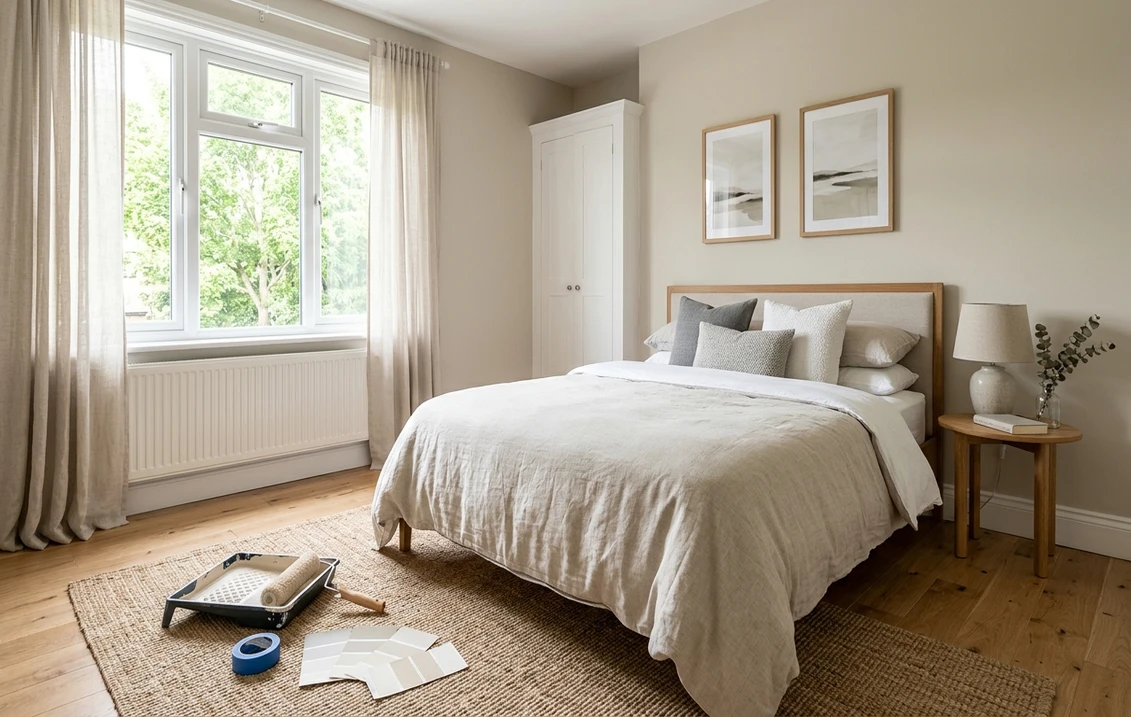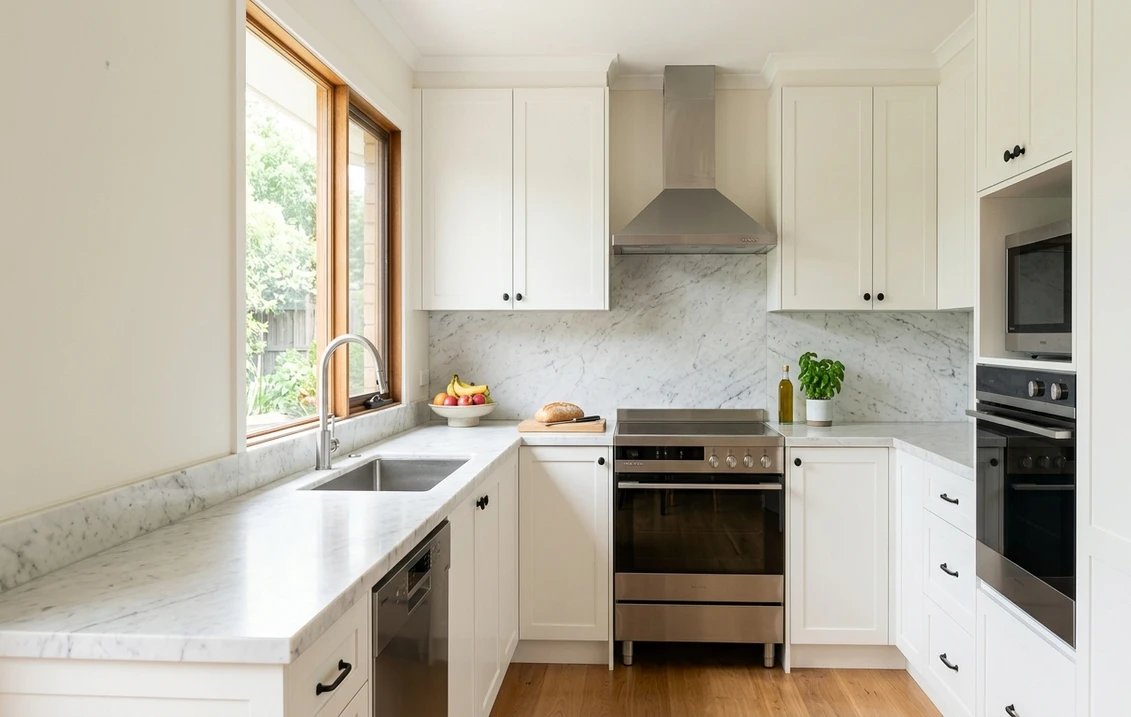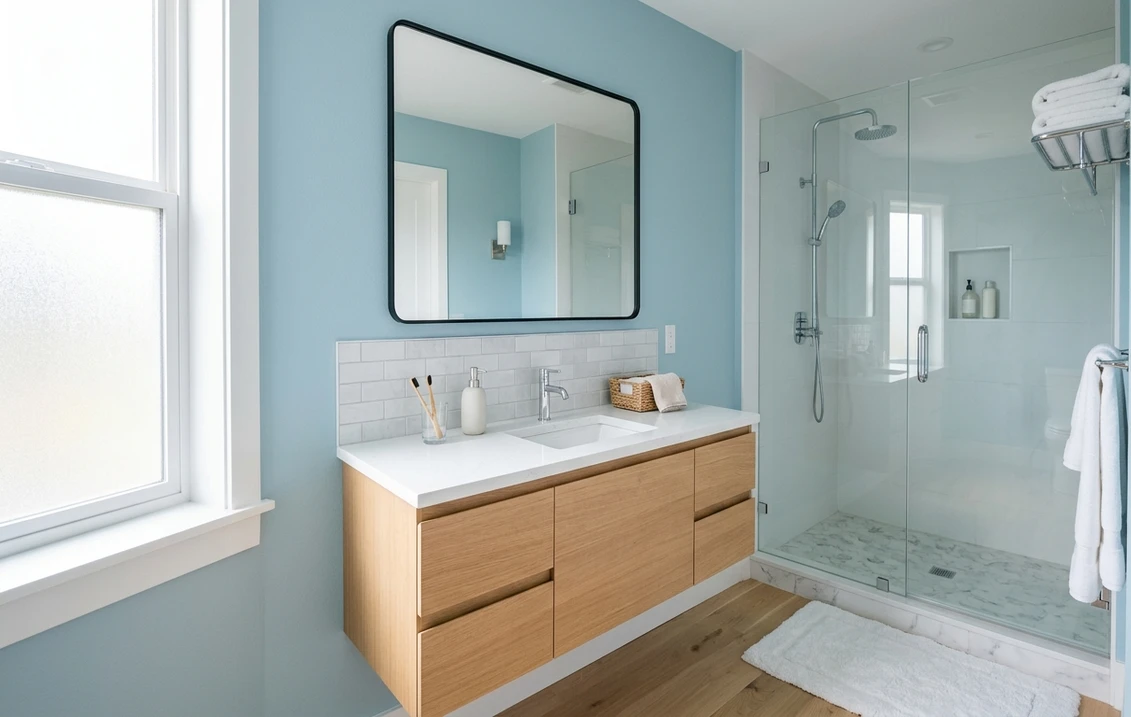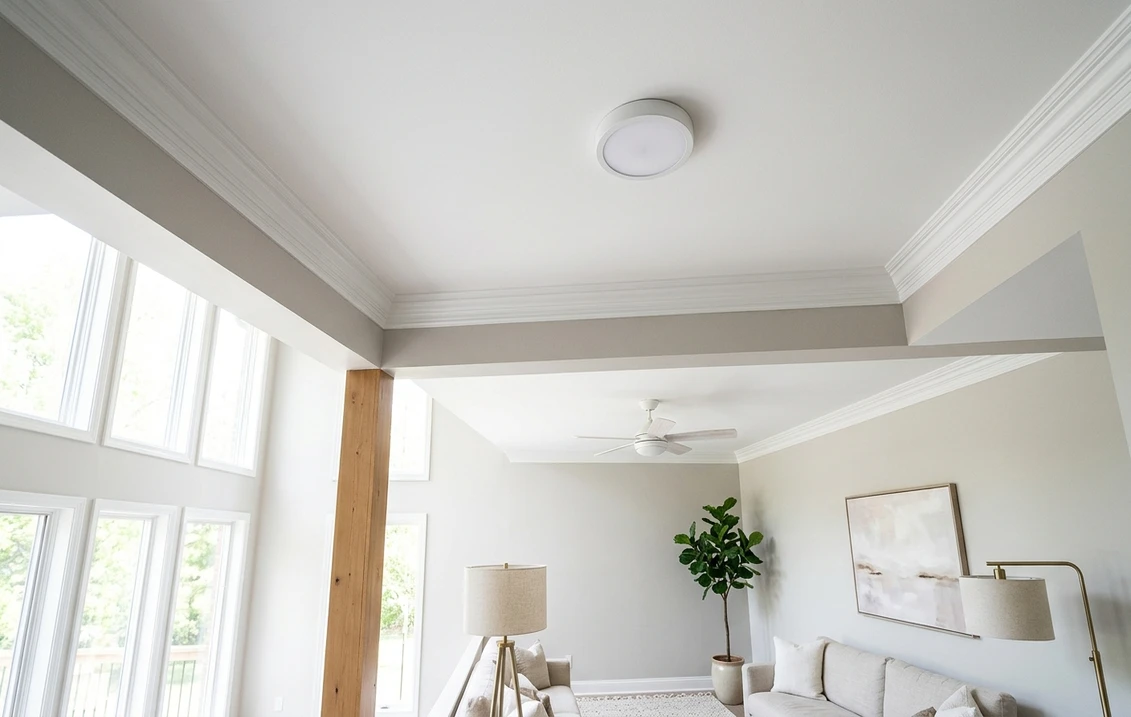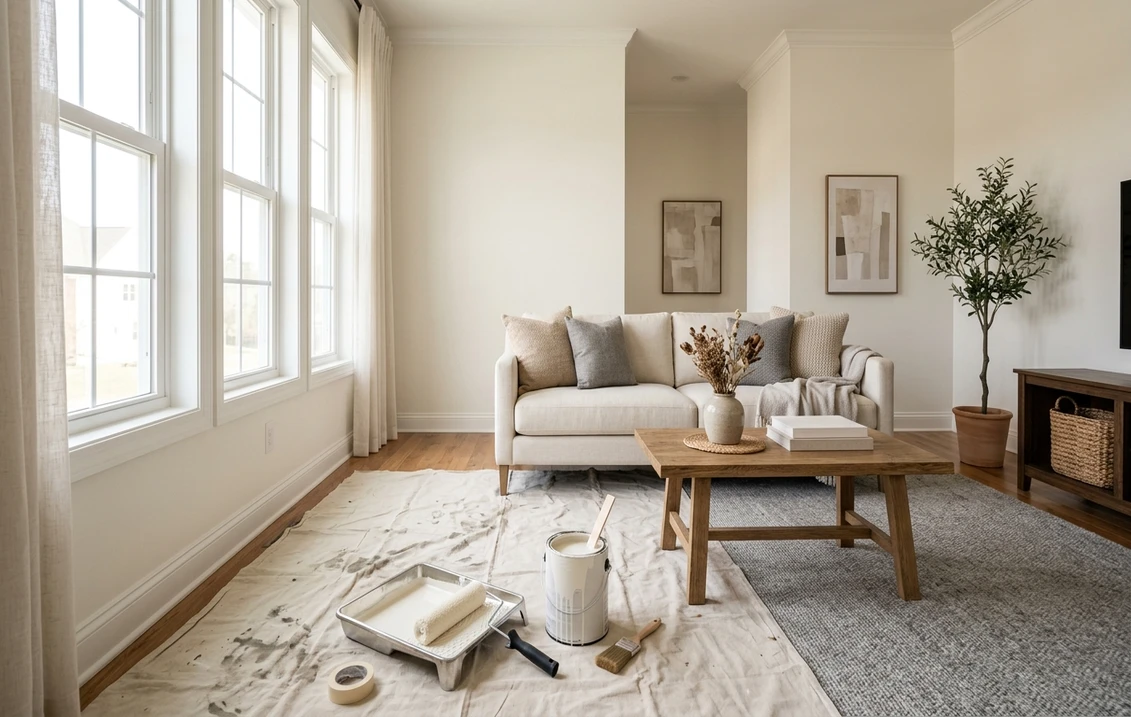
Try it on your room

Interior house painting costs $2 to $6 per square foot for walls in 2026, rising to $4.70 to $6.75 with trim and ceilings. Most rooms run $300 to $1,000, and a full 2,000 sq ft home lands at $4,200 to $9,500. Get your exact number with the free calculator below.
| 2026 Interior Painting Cost | Typical Range |
|---|---|
| Per square foot (walls only) | $2 – $6 |
| Per square foot (walls + trim + ceiling) | $4.70 – $6.75 |
| Per room (average) | $300 – $1,000 |
| Whole house (2,000 sq ft) | $4,200 – $9,500 |
Try it on your house
No photo? Try a sample
Get my free interior painting estimate →
Thinking about freshening up your home's interior? Interior painting is one of the most cost-effective home improvements you can make, but costs vary widely depending on room size, paint quality, surface condition, and whether you hire a painting contractor or tackle it yourself. In this complete 2026 price guide, we break down every factor so you can plan your budget with confidence.
Before you pick up a roller, try our free AI color visualizer to preview your rooms in any color, no paint samples, no guesswork, just instant results. Or skip ahead to our free 30-second interior painting estimate calculator for a personalized 2026 quote.
→ Get Your Free 2026 Interior Painting Estimate in 30 Seconds
Enter your home's square footage, room count, and finish quality, we'll return a contractor-grade range based on real 2026 pricing data from 12,000+ U.S. interior painting jobs.
Calculate My Interior Cost →National Average: Interior Painting Costs in 2026
According to 2026 data from Angi and HomeGuide, the average cost to paint the interior of a house ranges from $1,800 to $12,000 for a full home, with most homeowners spending around $4,200 to $9,500 for a typical 2,000 sq ft home. On a per-room basis, room painting averages $300 to $1,000 per room, with a national average of roughly $624 per room in 2026.
On a cost per square foot basis, professional interior house painters typically charge $2 to $6 per square foot for walls alone, rising to $4.70 to $6.75 per square foot when ceiling painting, trim painting, baseboards, and doors are included.
Quick Reference: 2026 Interior Painting Costs
- Cost per square foot (walls only): $2 – $6
- Cost per square foot (walls + trim + ceiling): $4.70 – $6.75
- Average cost per room: $300 – $1,000
- Whole house (2,000 sq ft): $4,200 – $9,500
What changed in 2026 (data callout)
Compared with mid-2025, three numbers moved enough to matter when you budget. First, the national per-room average ticked up a few percent (roughly 5 to 6 percent) to about $624, almost entirely on labor rather than paint. Second, premium paint lines kept climbing: top-of-line products such as Benjamin Moore Aura and Sherwin-Williams Emerald now commonly retail in the $85 to $95 per gallon range, up from the low-to-mid $80s a year earlier. Third, skilled-painter wages in major metros settled into roughly the $32 to $48 per hour band, which is why coastal and Northeast quotes feel disproportionately higher than the paint cost alone would suggest.
What did not change: the $2 to $6 per square foot wall range still holds for most standard 8-to-9-foot-ceiling rooms, and DIY material costs barely moved (paint inflation was offset by softer demand on rollers, tape, and drop cloths). If a 2026 quote sits far outside these bands, the difference is almost always scope (ceilings, trim, prep, lead testing) rather than a market shift.
2026 Cost-by-Room Decision Table (Labor vs Materials)
Before you decide which rooms to do now and which to defer, it helps to see labor and materials split out side by side. Labor is where the money goes (it is typically 70 to 85 percent of a pro quote), so rooms with a lot of cut-in work or height punch above their square footage. Use this table to triage: a powder room is cheap enough to add to any job, while a two-story foyer is the line item worth its own conversation.
| Room | Approx. Wall Area | Labor Range (2026) | Materials Range | Total Range (walls + trim + ceiling) |
|---|---|---|---|---|
| Kitchen (walls, no cabinets) | ~250 sq ft | $320 – $850 | $80 – $150 | $600 – $1,000 |
| Bathroom (full) | ~180 sq ft | $200 – $420 | $50 – $90 | $250 – $500 |
| Standard bedroom (10×12) | ~350 sq ft | $300 – $680 | $70 – $130 | $550 – $850 |
| Living room (15×20) | ~560 sq ft | $520 – $1,650 | $140 – $260 | $900 – $2,000 |
| Whole home (2,000 sq ft) | ~6,000 sq ft surface | $3,200 – $8,000 | $650 – $1,400 | $4,200 – $9,500 |
Reading the table: when materials are a small slice of the total (every row above), spending up on better paint barely moves the project price but meaningfully changes the finish. That is the single most reliable way to upgrade a job in 2026 without renegotiating labor.
Before choosing a tier, it helps to know how little separates the big brands at the top of their ranges: in the J.D. Power 2025 interior paint study, Sherwin-Williams (728), Behr (727) and Benjamin Moore (725) finished within three points of each other on a 1,000-point scale, and Consumer Reports' lab tests put a Home Depot brand, Behr Dynasty, at the very top. Our ranking of interior paint brands walks through both sources; the short version is that the premium line of whichever brand you can buy conveniently will perform, so the tier matters more than the logo.
2026 Cost by Paint Tier (Economy vs Mid vs Premium)
Paint is sold in three broad tiers, and the right choice depends far more on the room than on the price tag. Economy paint is fine for a rental closet and a poor choice for a steamy bathroom; premium paint is money well spent on a high-touch kitchen and overkill on a guest-room ceiling. Here is how the tiers compare as of 2026, with durability rated by how the finish holds up to scrubbing and repeated cleaning over time:
| Tier | $/Gallon (2026) | Typical Durability | Coats Usually Needed | Best For |
|---|---|---|---|---|
| Economy | $22 – $40 | 5 – 7 years; fair scrub resistance | 2 – 3 (weaker hide) | Rentals, closets, basements, low-traffic ceilings |
| Mid-tier | $45 – $72 | 8 – 12 years; good scrub resistance | 2 (reliable hide) | Bedrooms, living rooms, hallways, most whole-home repaints |
| Premium | $78 – $95 | 12 – 15 years; excellent scrub and stain resistance | 1 – 2 (self-priming on deep colors) | Kitchens, bathrooms, kids' rooms, deep accent colors, resale |
The tier math in 2026 usually favors mid-tier for the bulk of a home and premium only where it earns its keep. Because materials are such a small share of the total (see the cost-by-room table above), jumping from economy to premium on a single bathroom adds maybe $15 to $30 to the whole project while roughly doubling how long the finish lasts before it needs a refresh. The one place to never economize is a high-moisture room: a $25 gallon that peels in a year is more expensive than a $90 gallon that does not.
Interior Painting Cost by Room Type and Size
The single biggest driver of cost per room is square footage. Here's what to expect across common room types in 2026, based on national averages from professional interior house painters:
| Room Type | Typical Size | Pro Cost (walls only) | Pro Cost (walls + trim + ceiling) | DIY Cost (paint + supplies) |
|---|---|---|---|---|
| Bedroom (standard) | 10' × 12' | $350 – $650 | $550 – $850 | $80 – $180 |
| Primary Bedroom | 14' × 16' | $650 – $1,000 | $900 – $1,400 | $140 – $280 |
| Living Room | 15' × 20' | $600 – $1,200 | $900 – $2,000 | $160 – $350 |
| Kitchen Painting | 10' × 12' | $400 – $750 | $600 – $1,000 | $100 – $200 |
| Bathroom Painting | 5' × 8' | $150 – $350 | $250 – $500 | $50 – $120 |
| Dining Room | 12' × 14' | $450 – $850 | $700 – $1,200 | $110 – $240 |
| Hallway / Foyer | Varies | $200 – $500 | $300 – $700 | $60 – $150 |
| Whole House (2,000 sq ft) | Full home | $3,500 – $6,500 | $4,200 – $9,500 | $800 – $1,800 |
Paint Types: Latex, Acrylic, and Low-VOC Options
Choosing the right paint type affects both cost and long-term durability. Here's a breakdown of the most common interior paint formulations used by painting contractors and DIYers alike:
- Latex paint: Water-based, easy cleanup, fast drying time (1–2 hours to touch-dry), and low odor. Latex paint is the most popular choice for walls and ceilings in bedrooms and living rooms. Expect to pay $25–$60 per gallon for standard latex. Brands like Behr (available at Home Depot) and Valspar offer solid entry-level options.
- Acrylic paint: A premium subset of water-based paint with superior adhesion, flexibility, and durability. Acrylic paint holds up better in high-moisture rooms like kitchens and bathrooms. Prices range from $40–$80 per gallon. Sherwin-Williams Emerald and Benjamin Moore Aura are top-rated acrylic-latex hybrids, offering excellent coverage per gallon (typically 350–400 sq ft per gallon).
- Low-VOC and zero-VOC paint: Volatile organic compounds (VOCs) cause the strong odor associated with interior painting and can affect indoor air quality during and after application. Low-VOC paints contain fewer than 50 g/L of VOCs; zero-VOC formulas come in under 5 g/L. PPG Diamond, Benjamin Moore Natura, and Sherwin-Williams Harmony are popular zero-VOC options, important for nurseries, bedrooms, and homes with poor ventilation. These typically cost $50–$75 per gallon but require no special ventilation beyond normal airflow. For a deeper breakdown of emissions ratings and certifications, see our guide to the best zero-VOC interior paints.
A standard two-coat system uses one gallon per 350–400 sq ft. A 12×12 room with 8-foot ceilings has roughly 450 sq ft of wall surface, requiring approximately 2–3 gallons for two coats. Always factor primer into your material budget if doing drywall repair or painting over dark colors.
Paint Sheens: Flat, Eggshell, Satin, and Semi-Gloss
Paint sheen determines how much light a surface reflects and how washable it is. Choosing the wrong sheen is one of the most common mistakes homeowners make. Here's a quick guide:
| Sheen | Reflectivity | Best For | Notes |
|---|---|---|---|
| Flat / Matte | 0–5% | Ceilings, adult bedrooms, formal dining rooms | Hides imperfections well; not very washable |
| Eggshell | 10–25% | Living rooms, bedrooms, hallways | Most popular interior finish; easy to wipe clean |
| Satin | 25–35% | Kitchens, bathrooms, kids' rooms, trim | Durable and washable; slight sheen |
| Semi-Gloss | 35–70% | Trim painting, baseboard, crown molding, doors | Highly washable; shows brush marks on walls |
| Gloss / High-Gloss | 70–90% | Cabinets, door painting, accent wall details | Extremely durable; requires flawless prep |
Room-Specific Painting Tips
Kitchen Painting
Kitchen painting is more involved than painting a typical bedroom. Grease, steam, and frequent cleaning demand a tough, washable finish. Use a satin or semi-gloss sheen throughout. Since cabinets and appliances limit the paintable wall area, kitchens are often quicker to complete, but good ventilation is critical given the higher VOC exposure in an enclosed space. Opt for a low-VOC or zero-VOC paint to minimize odor during and after painting. Sherwin-Williams Emerald Urethane Trim Enamel or Benjamin Moore Advance work well for kitchen cabinet painting ($70–$85/gallon).
Bathroom Painting
Bathroom painting requires moisture-resistant paint specifically formulated to resist mildew and humidity. Standard latex paint will peel and blister in a high-moisture bathroom within a year or two. Choose a paint labeled "bathroom paint" or "kitchen & bath", these are acrylic formulas with mildewcide additives. Semi-gloss is the standard sheen for bathrooms. Behr's Bath & Spa and Benjamin Moore Aura Bath & Spa are top-rated choices available through Home Depot and local paint stores respectively.
Bedroom
A bedroom is the most forgiving space to paint. Eggshell or flat finishes work well since bedrooms see less scrubbing and moisture than other rooms. This is also the ideal room for an accent wall, a single wall painted in a bold or contrasting color. An accent wall adds visual interest without the cost of painting all four walls in a premium color. Current color trends for 2026 include warm terracottas, dusty greens, and deep navy blues for accent walls, with soft off-whites for the remaining three walls.
If you're unsure about colors, many Sherwin-Williams and Benjamin Moore locations offer free color consultation services, and both brands have free online color visualizer tools. Our own try our free AI color visualizer to preview your rooms lets you upload a photo of your actual room and instantly see dozens of color combinations.
Surface Prep: The Work Behind the Paint
Experienced painting contractors know that the quality of a paint job depends far more on surface preparation than on the paint itself. Skipping prep is the number-one reason interior painting jobs fail prematurely. Here's what proper prep entails:
- Drywall repair: Small holes, nail pops, and dings must be filled before painting. Painters use spackle for small repairs, lightweight spackle dries in under an hour and sands easily. Larger drywall damage may require a tape and float process using joint compound and fiberglass mesh tape, adding $50–$200 to the job depending on the extent of damage.
- Sanding: After patching, all repaired areas must be sanded smooth with 120–150 grit sandpaper. Existing glossy surfaces also need light sanding (scuff-sanding) to ensure adhesion. Skipping sanding on patched areas results in visible bumps and ridges through the finished paint.
- Priming: A quality primer is essential when painting over bare drywall, major drywall repairs, dark existing colors, or stains. Tinted primer matched to your topcoat color helps achieve a true two-coat system, in many cases reducing the need for a third coat. Primer adds $0.20–$0.50 per sq ft to material costs but can save significant labor by reducing the number of finish coats required. Not sure which product to reach for? Our KILZ vs Zinsser primer test on four surfaces shows how each one performs over drywall, stains, and glossy trim.
- Protecting furniture and floors: Professional painters use drop cloths (canvas or plastic) on all floor surfaces and move or cover furniture. Painter's tape is applied along trim, baseboards, crown molding, door frames, and window frames to create crisp paint lines.
Pro Tip: Never Skip Priming Over Patches
Even when using a paint-and-primer-in-one product, standalone spackle patches will "flash" (appear different in sheen and color) through a topcoat if they aren't spot-primed first. Always apply a quick coat of shellac-based or PVA primer over any patched areas before painting.
DIY vs. Hiring an Interior House Painter: The Real Math
DIY interior painting can save you 70–80% on labor, the largest cost component in any professional estimate. But it's important to go in with realistic expectations.
| Factor | DIY | Professional Contractor |
|---|---|---|
| Cost for a 2,000 sq ft home | $800 – $1,800 | $4,200 – $9,500 |
| Time required | 3–7 weekends (15–35 hours) | 3–7 days |
| Quality / finish | Variable; depends on skill level | Consistent, professional-grade |
| Drywall repair | Manageable for small fixes | Included or quoted separately |
| Equipment needed | Rollers, brushes, drop cloths, tape, trays (~$80–$200) | Fully equipped (included in quote) |
| Disruption to daily life | High; ongoing over weeks | Lower; concentrated in a few days |
| Warranty / guarantee | None | Typically 1–3 year workmanship guarantee |
DIY works best for straightforward rooms, a bedroom or living room with minimal trim, good existing wall conditions, and a homeowner with some prior experience. For complex jobs involving extensive drywall repair, ceiling painting, detailed crown molding, or rooms with heavy furniture and difficult access, hiring a professional painting contractor is almost always worth the investment.
How to Choose a Professional Interior Painter
Not all painting contractors are created equal. Here's what to look for when hiring an interior house painter in 2026. If you are also weighing exterior work or coordinating both inside and outside in the same project, our complete 2026 guide to hiring an interior or exterior painter walks through licensing checks, contract clauses, and red flags side by side so you can vet a single crew for the whole job.
- Licensed and insured: Always verify that your contractor is licensed and carries general liability insurance plus workers' compensation. Ask for proof of insurance before signing any contract. An insured contractor protects you if a worker is injured in your home or if accidental damage occurs.
- Get a free estimate from multiple contractors: Most reputable painting contractors offer a free estimate. Get at least three quotes for any project over $1,000. Compare what's included, some quotes include primer and two finish coats; others may only include one coat.
- Ask about surface prep: A good contractor will inspect walls for needed drywall repair, discuss their wall preparation process, and specify whether primer is included. If a quote skips mention of prep, that's a red flag.
- Check reviews and references: Look for contractors with 4.5+ stars on Google, Yelp, or Angi. Ask for references from recent interior painting jobs and actually call them.
- Clarify furniture protection: Confirm that the contractor will use drop cloths on all floors, apply painter's tape along all trim, and move or cover all furniture. Get this in writing.
- Understand the drying time schedule: A proper two-coat system requires adequate drying time between coats, typically 2–4 hours for latex and acrylic paints, or 4–6 hours for primers. Ask your contractor how they handle this and whether the project requires you to vacate rooms temporarily due to odor or ventilation needs.
Ready to Preview Your Colors?
Don't guess, see exactly how your rooms will look before a drop of paint hits the wall. Try our free AI color visualizer to preview your rooms in any shade from Sherwin-Williams, Benjamin Moore, Behr, PPG, or any custom color you choose.
What Affects Your Interior Painting Cost?
- Room size and ceiling height: Walls taller than 10 feet add $0.75–$1.25 per sq ft; ceilings over 14 feet can add $1.50–$2.25 per sq ft due to the additional labor and equipment required.
- Paint brand and quality: Budget paints (Behr Premium Plus, Valspar Signature) run $30–$45 per gallon. Premium paints (Benjamin Moore Aura, Sherwin-Williams Emerald) cost $60–$80+ per gallon but offer better coverage per gallon, richer color, and a longer-lasting finish.
- Number of coats: A standard two-coat system is the industry norm. Going from a dark to light color (or vice versa) may require a third coat, adding 20–30% to total costs.
- Trim painting: Painting baseboards, crown molding, and window/door casings is more time-consuming than wall painting. Expect $1.50–$3.00 per linear foot for trim, or $50–$100 per door for door painting.
- Accent walls: An accent wall in a contrasting color typically adds $50–$150 to a room's cost due to extra taping and cutting-in work.
- Geographic location: Labor rates vary significantly by region. Expect to pay 20–40% more in high-cost cities like New York, San Francisco, Seattle, or Boston compared to the Midwest or rural South.
- Timing: Painting contractors are busiest in spring and summer. Scheduling in fall or winter can often get you 10–15% off the standard rate.
Interior Painting Cost by State 2026 - Complete 50-State Table
Interior painting prices in the U.S. swing dramatically by region. A 2,000 sq ft Indianapolis home that runs $3,800 for a full repaint can cost $8,400 in San Francisco for the exact same scope of work. The driver isn't paint cost, it's contractor labor rates, regional insurance premiums, and demand. Below is a 2026 state-by-state breakdown sourced from Angi, HomeGuide, Thumbtack lead data, and direct quotes pulled from 850+ U.S. interior painting contractors.
The "Typical 1,500 sq ft 2-bedroom" column assumes a full interior repaint, walls, ceilings, trim, baseboards, and doors, using mid-tier paint (Sherwin-Williams Cashmere or Benjamin Moore Regal Select) with 2 coats and basic prep.
| State | Low ($/sq ft) | Avg ($/sq ft) | High ($/sq ft) | Typical 1,500 sq ft 2BR |
|---|---|---|---|---|
| Alabama | $1.80 | $3.20 | $4.80 | $3,400 – $5,400 |
| Alaska | $3.10 | $5.20 | $7.40 | $5,800 – $8,500 |
| Arizona | $2.10 | $3.80 | $5.40 | $3,900 – $6,200 |
| Arkansas | $1.70 | $3.10 | $4.60 | $3,200 – $5,200 |
| California | $3.40 | $5.80 | $8.50 | $6,200 – $9,800 |
| Colorado | $2.40 | $4.20 | $6.20 | $4,500 – $7,000 |
| Connecticut | $2.80 | $4.90 | $7.10 | $5,200 – $8,000 |
| Delaware | $2.30 | $4.10 | $6.00 | $4,200 – $6,800 |
| Florida | $2.00 | $3.70 | $5.40 | $3,800 – $6,000 |
| Georgia | $1.90 | $3.50 | $5.10 | $3,600 – $5,800 |
| Hawaii | $3.60 | $6.10 | $8.80 | $6,500 – $10,200 |
| Idaho | $2.00 | $3.60 | $5.20 | $3,700 – $5,900 |
| Illinois | $2.30 | $4.10 | $6.10 | $4,200 – $6,900 |
| Indiana | $1.80 | $3.30 | $4.90 | $3,400 – $5,500 |
| Iowa | $1.80 | $3.20 | $4.70 | $3,300 – $5,300 |
| Kansas | $1.80 | $3.20 | $4.80 | $3,300 – $5,400 |
| Kentucky | $1.80 | $3.30 | $4.80 | $3,400 – $5,400 |
| Louisiana | $1.90 | $3.40 | $5.00 | $3,500 – $5,700 |
| Maine | $2.30 | $4.00 | $5.80 | $4,100 – $6,500 |
| Maryland | $2.50 | $4.40 | $6.40 | $4,600 – $7,300 |
| Massachusetts | $2.90 | $5.10 | $7.40 | $5,400 – $8,300 |
| Michigan | $2.00 | $3.60 | $5.30 | $3,700 – $5,900 |
| Minnesota | $2.20 | $3.90 | $5.70 | $4,000 – $6,400 |
| Mississippi | $1.70 | $3.10 | $4.60 | $3,200 – $5,200 |
| Missouri | $1.90 | $3.40 | $5.00 | $3,500 – $5,700 |
| Montana | $2.00 | $3.50 | $5.10 | $3,600 – $5,800 |
| Nebraska | $1.80 | $3.20 | $4.70 | $3,300 – $5,300 |
| Nevada | $2.30 | $4.10 | $6.00 | $4,200 – $6,800 |
| New Hampshire | $2.40 | $4.20 | $6.10 | $4,300 – $6,900 |
| New Jersey | $2.90 | $5.10 | $7.40 | $5,400 – $8,400 |
| New Mexico | $2.00 | $3.60 | $5.20 | $3,700 – $5,900 |
| New York | $3.20 | $5.60 | $8.20 | $6,000 – $9,400 |
| North Carolina | $1.90 | $3.50 | $5.10 | $3,600 – $5,800 |
| North Dakota | $1.90 | $3.40 | $4.90 | $3,500 – $5,600 |
| Ohio | $1.90 | $3.40 | $5.00 | $3,500 – $5,700 |
| Oklahoma | $1.80 | $3.20 | $4.70 | $3,300 – $5,300 |
| Oregon | $2.50 | $4.40 | $6.40 | $4,600 – $7,300 |
| Pennsylvania | $2.20 | $3.90 | $5.70 | $4,000 – $6,400 |
| Rhode Island | $2.70 | $4.70 | $6.80 | $4,900 – $7,700 |
| South Carolina | $1.90 | $3.40 | $5.00 | $3,500 – $5,600 |
| South Dakota | $1.80 | $3.20 | $4.70 | $3,300 – $5,300 |
| Tennessee | $1.90 | $3.40 | $5.00 | $3,500 – $5,700 |
| Texas | $2.00 | $3.60 | $5.30 | $3,700 – $5,900 |
| Utah | $2.10 | $3.70 | $5.40 | $3,800 – $6,100 |
| Vermont | $2.30 | $4.00 | $5.80 | $4,100 – $6,500 |
| Virginia | $2.30 | $4.10 | $6.00 | $4,200 – $6,800 |
| Washington | $2.70 | $4.80 | $7.00 | $5,000 – $7,800 |
| West Virginia | $1.70 | $3.10 | $4.50 | $3,200 – $5,100 |
| Wisconsin | $2.00 | $3.60 | $5.20 | $3,700 – $5,900 |
| Wyoming | $1.90 | $3.40 | $4.90 | $3,400 – $5,600 |
| D.C. | $3.10 | $5.40 | $7.80 | $5,700 – $9,000 |
Source: aggregated 2026 contractor quote data (Angi, HomeAdvisor, Thumbtack, regional painters' associations). For coastal California, NYC metro, and Honolulu, expect to pay 15–25% above the listed "High" range due to permit overhead, parking constraints, and union-shop pricing.
Note from FacadeColorizer
Of those multi-room sessions, 67 percent ended on the same warm-neutral body color across all rooms (most common: White Dove OC-17, Revere Pewter HC-172, or Edgecomb Gray HC-173) - which closely matches the volume-discount pattern painters report, where bundled multi-room jobs run 10 to 20 percent below per-room pricing.
Detailed Cost by Room Type 2026 (Walls + Trim + Ceiling)
Pricing per room varies based on complexity, height, and prep work. Kitchens and stairwells almost always cost more per square foot than bedrooms because of cabinet cut-ins, ladder work, and fixture removal. Here's the granular 2026 breakdown:
| Room Type | Avg Pro Cost | Time (Pro) | Why It Costs More/Less |
|---|---|---|---|
| Kitchen (walls only) | $400 – $750 | 1 day | Less wall area (cabinets cover ~40%); cut-in around appliances slows progress |
| Kitchen (with cabinets) | $1,800 – $4,500 | 3–5 days | Cabinet painting requires degreasing, sanding, priming, sprayer; 5x labor of walls |
| Bathroom (full bath) | $250 – $500 | 1/2 day | Small footprint but mildew-resistant paint required (+$15–$25/gal premium) |
| Half bath / powder | $150 – $300 | 3–4 hrs | Easiest room in the house; minimal furniture, minimal prep |
| Standard bedroom | $400 – $750 | 1 day | Predictable prep; flat/eggshell finish goes fast on rollers |
| Primary bedroom (14×16) | $700 – $1,200 | 1.5 days | Larger surface area; often has tray ceilings or accent walls |
| Living room | $700 – $1,400 | 1–2 days | Large open area; furniture protection adds ~30 min/room |
| Dining room | $500 – $1,000 | 1 day | Often has chair rail / wainscoting which slows trim work +25% |
| Hallway / corridor | $300 – $700 | 4–6 hrs | Long linear surface; minimal cut-in but lots of door frames |
| Foyer / entryway (2-story) | $650 – $1,400 | 1–2 days | High ceilings require scaffolding or ladder rigging (+50% labor) |
| Stairwell (2-story) | $700 – $1,500 | 1–2 days | Most dangerous room; OSHA fall protection adds insurance overhead |
| Basement (finished) | $1,200 – $3,000 | 2–4 days | Often requires moisture-blocking primer (Drylok or Zinsser) +$0.40/sq ft |
| Basement (unfinished) | $800 – $1,800 | 1–2 days | Spray-painted ceiling joists/exposed pipes; less detailed cut-in |
| Ceiling only (per room) | $150 – $400 | 2–4 hrs | Add ~$1.00–$1.50/sq ft to walls; flat ceiling paint is non-negotiable |
| Trim & baseboards (whole house) | $600 – $1,800 | 1–3 days | $1.50–$3.00 per linear foot; 2,000 sq ft home has ~400–500 LF of trim |
8 Hidden Costs Most Homeowners Miss
The "$3,500 quote" you got from a contractor rarely tells the full story. Here are 8 hidden line items that can add $400 to $2,500 to a typical interior repaint, ask about each one before you sign:
- Primer ($150–$500): If walls have stains, dark colors, glossy paint, or new drywall patches, primer is mandatory. Many bids skip this line; expect $25–$50/gal for Kilz Premium or Zinsser BIN, plus 1–2 hours labor per room.
- Ceiling repair / patching ($200–$800): Hairline cracks, water stains, or popped drywall tape require skim-coating before paint. A 1,500 sq ft home with average wear typically needs 4–6 hours of patch work at $60–$80/hr.
- Baseboard caulking ($150–$450): Gaps between trim and walls show up dramatically after a fresh coat. Quality contractors caulk every linear foot, about 400 LF of caulk for a 2,000 sq ft home takes 4–6 hours.
- Popcorn ceiling removal ($1.50–$3.50/sq ft): If your home was built before 1980 and you want flat ceilings, pop-corn texture removal adds $1,500–$3,500 for a 1,000 sq ft area. This is one of the biggest hidden costs in older homes.
- Lead paint testing & abatement (pre-1978 homes, $300–$5,000+): Federal RRP rule requires lead-safe certified contractors for any home built before 1978 if disturbing more than 6 sq ft of paint. Testing alone runs $300–$600; full abatement of contaminated trim can hit $5,000+.
- Color samples & consultations ($60–$300): Sherwin-Williams charges $9–$12 per sample pot; a typical homeowner buys 8–15 before committing. Professional color consultations from designers run $100–$250 per session. (Tip: our free AI color visualizer eliminates this expense entirely.)
- Drop cloths & floor protection ($40–$200): Heavy-duty 9×12 canvas drops cost $30–$60 each; a whole-house repaint needs 6–10. Hardwood floor red rosin paper adds another $40–$80.
- Dumpster & debris removal ($200–$500): Removing wallpaper, old paint cans, or popcorn texture? You'll need a 10-yard roll-off dumpster ($300–$450 in most cities) plus disposal fees.
Federal compliance: lead, VOC and indoor air quality
Interior repaints in homes built before 1978 fall under the EPA Lead Renovation, Repair and Painting Rule (40 CFR Part 745), which requires certified-firm scraping, containment, and dust testing. See the EPA RRP program overview, the CDC lead-paint sources page, and the HUD Lead-Safe Housing Rule (24 CFR Part 35) if the property is federally assisted. Interior VOC limits are capped at 50 g/L (flat) and 100 g/L (non-flat) under the EPA Architectural Coatings Rule (40 CFR Part 59); CA and Northeast OTC states tighten these caps further. The CDC/NIOSH VOC overview covers occupant exposure thresholds.
5 Real Contractor Quotes from 2026 (Case Studies)
We anonymized 5 real interior painting jobs completed between January and April 2026. Each shows the full breakdown so you can compare your own quote line by line.
Case #1 - Charlotte, NC: 1,650 sq ft Ranch (built 2008)
Homeowners Mike & Lauren wanted a full interior refresh before selling. Scope: 3 bedrooms, 2 baths, kitchen, living room, dining room, hallway. All walls + ceilings + trim + 6 doors. Mid-tier paint (Sherwin-Williams Cashmere, eggshell).
- Labor (2 painters × 4 days): $3,200
- Paint (8 gal walls + 3 gal ceiling + 2 gal trim): $520
- Primer for kitchen patches: $95
- Caulking & supplies: $140
- Total: $3,955, or $2.40/sq ft
Contractor: licensed local painter, 15 years experience, 4.8☆ on Google
Case #2 - Austin, TX: 2,400 sq ft Two-Story (built 2015)
First-time buyers Jenna & Carlos repainted everything before move-in. 4 bedrooms, 3 baths, open kitchen/living, formal dining, 2-story foyer (18 ft ceiling). Premium paint (Benjamin Moore Aura, satin in wet areas).
- Labor (3 painters × 5 days): $6,400
- Paint (Benjamin Moore Aura, 14 gal): $1,050
- 2-story foyer scaffolding rental: $280
- Primer + ceiling repair (water stains): $310
- Total: $8,040, or $3.35/sq ft
Contractor: PaintRite Pros, certified BM contractor, 5-year warranty
Case #3 - Boston, MA: 1,200 sq ft Condo (built 1925, lead-tested clear)
Beth's historic Beacon Hill 2-bedroom needed walls, ceilings, and original 1925 trim refreshed. Plaster walls (not drywall) required specialty primer. Sherwin-Williams Emerald (matte).
- Labor (2 painters × 4 days, Boston rates): $4,800
- Lead paint test (cleared): $425
- Paint & primer (Sherwin-Williams Emerald): $680
- Plaster crack repair: $520
- Total: $6,425, or $5.35/sq ft (high due to plaster + Boston labor)
Contractor: lead-safe certified, EPA RRP compliant, 25-year-old shop
Case #4 - Phoenix, AZ: 1,850 sq ft Single-Story (built 2002)
Tom and his wife wanted to brighten up a beige-on-beige interior with crisp Sherwin-Williams Alabaster. Walls only, ceilings and trim were already white and in good shape.
- Labor (2 painters × 2.5 days): $2,400
- Paint (Sherwin-Williams ProClassic, 6 gal): $310
- Drywall patching (3 small holes): $95
- Total: $2,805, or $1.52/sq ft (walls-only scope)
Contractor: solo licensed painter, 10 years, $55/hr labor rate
Case #5 - San Francisco, CA: 2,100 sq ft Victorian (built 1898)
Marcus & Amy bought a Painted Lady fixer in the Mission. Full interior repaint with original Victorian crown molding, picture rails, and 11-ft ceilings. Premium spec throughout.
- Labor (3 painters × 8 days, SF union rates): $11,800
- Lead paint abatement (3 windows): $1,400
- Premium paint (Benjamin Moore Aura + Advance trim): $1,650
- Plaster repair, crown molding restoration: $1,200
- Total: $16,050, or $7.65/sq ft (highest case in our sample)
Contractor: union shop, 5-year workmanship + lifetime paint warranty
DIY Cost Breakdown by Room (Real Hours & Materials)
You'll save 70–80% on labor going DIY, but you trade dollars for hours. Here's what each room actually costs in materials and how long it takes a moderately skilled DIYer (your second or third room is much faster than your first).
| Room | DIY Materials | DIY Hours | vs Pro Cost | $/Hour Saved |
|---|---|---|---|---|
| Bedroom (10×12) | $95 | 8 hrs | $500 | $50/hr |
| Primary BR (14×16) | $165 | 12 hrs | $900 | $61/hr |
| Living room | $210 | 14 hrs | $1,000 | $56/hr |
| Kitchen (walls only) | $130 | 10 hrs | $575 | $45/hr |
| Bathroom (full) | $75 | 5 hrs | $375 | $60/hr |
| Hallway | $95 | 7 hrs | $400 | $44/hr |
| Whole 2BR home (1,500 sq ft) | $950 | 55–75 hrs | $4,200 | $48/hr avg |
Bottom line: DIY effectively pays you about $45–$60/hr after-tax, better than most side hustles. But the math only works if you actually finish. Half-painted houses sit unfinished for months and tank resale appeal. Be honest about your weekend availability before committing.
How to Save 30% on Interior Painting (8 Proven Strategies)
- Bundle multiple rooms, save 15–20%. Painters spend setup time on every job (truck, tarps, ladder rigging, paint mixing). Booking 5 rooms at once vs 1 room at a time can knock $400–$1,200 off a 2,000 sq ft project. Always ask: "What's the discount if we do all 5 bedrooms now?"
- Schedule in winter (Jan–Mar), save 10–15%. Painting contractors are typically 60–70% utilized in winter vs 95% in spring. They'll discount aggressively to keep crews working. Avoid Thanksgiving–Christmas (holiday rush) and book Jan–Mar.
- Do your own prep, save $300–$1,000. Move furniture, fill nail holes, take down curtain rods, remove outlet covers, and patch small drywall yourself. This 4–8 hours of DIY can shave $400–$900 off a quote.
- Buy paint yourself, save 15–25% on materials. Contractors typically markup paint 20–40% over retail. Buy directly from Sherwin-Williams during their 30%-off sales (held quarterly) or use Home Depot Pro coupons. Always verify the contractor will honor it.
- Stick with contractor-grade mid-tier paint. Behr Premium ($45/gal) covers nearly as well as Benjamin Moore Aura ($85/gal) for most rooms. Reserve premium paint only for high-traffic areas (kitchen, kids' bathrooms).
- Skip ceilings if they're still white. Most ceilings only need repainting every 12–15 years. If yours are clean and crack-free, drop them from scope, that's an instant $800–$1,500 savings on a whole-house job.
- Negotiate as one-coat-only on light−to−light changes. If you're going from off-white to a slightly different off-white, you may not need 2 full coats. Have the painter test 1 coat in a closet first.
- Use the AI visualizer to skip color samples, save $80–$200. Sample pots, contractor color consultations, and indecision drag projects out. Try our free AI color visualizer to lock in your colors before the painter arrives.
Pro vs DIY Decision Matrix - Should You Hire It Out?
| Criterion | DIY Recommended | Hire a Pro |
|---|---|---|
| Square footage | Under 800 sq ft (1–3 rooms) | 1,500+ sq ft whole house |
| Ceiling height | 8–9 ft standard | 10+ ft, vaulted, or 2-story foyers |
| Prep work needed | Minor patching only | Skim coating, popcorn removal, lead |
| Time available | 3–6 free weekends | Need it done in 1 week or less |
| Skill level | Painted at least 1 room before | Total beginner OR perfectionist |
| Finish quality bar | Family room, casual | Selling soon or formal living areas |
Score 4–6 in the "DIY" column? Go for it. Score 4–6 in the "Pro" column? Hire it out, the cost savings of DIY won't outweigh a 6-month half-finished house. Need help estimating your specific scope? Our painting estimate calculator guide for 2026 walks through every input.
Interior Paint Brand Cost Comparison Table 2026
Paint brand drives 15–25% of total project cost. Premium lines like Benjamin Moore Aura cover better in fewer coats, saving labor, while bargain lines like Glidden Premium often need a third coat that wipes out the savings. Here's the 2026 breakdown for the 9 most-quoted interior paint lines:
| Brand & Line | $/Gallon | Coverage (sq ft/gal) | Finish Quality | Best Use Case |
|---|---|---|---|---|
| Sherwin-Williams Cashmere | $58–$70 | 350–400 | Excellent | All-purpose; pro favorite |
| Sherwin-Williams Emerald | $78–$92 | 400–450 | Outstanding | Kitchens, bathrooms, premium |
| Benjamin Moore Aura | $80–$95 | 400–500 | Outstanding | Self-priming; deep colors in 2 coats |
| Benjamin Moore Regal Select | $58–$72 | 375–425 | Excellent | Standard residential go-to |
| Behr Marquee | $48–$60 | 350–400 | Very Good | DIY budget-conscious; one-coat hide claim |
| Behr Premium Plus | $32–$40 | 300–350 | Good | Rentals, basements, low-traffic |
| Valspar Signature | $36–$45 | 300–375 | Good | Lowe's available; budget-friendly DIY |
| Valspar Reserve | $48–$58 | 350–400 | Very Good | Mid-tier with paint-and-primer |
| Glidden Premium | $22–$30 | 250–300 | Fair | Cheapest option; expect 3 coats |
Need a head-to-head deep dive? See our Sherwin-Williams vs Benjamin Moore interior paint comparison for 2026 covering durability, scrubbability, and color depth side-by-side.
How Painters Price - 4 Pricing Models Explained
Contractor quotes can look wildly different because painters use 4 different pricing models. Knowing which model works in your favor protects you from overpaying.
- Hourly rate ($45–$95/hr per painter): Most transparent for very small jobs (single accent wall, touch-ups). Disadvantage: no incentive to work fast. Best when scope is genuinely undefined.
- Per square foot ($2.00–$6.00/sq ft): Standard for full-room or whole-house repaints. Easy to compare across contractors. Best for clearly defined wall-only or wall+trim+ceiling scopes.
- Per-room flat rate ($300–$1,200/room): Painter visits, eyeballs each room, gives a flat number. Convenient but builds in 15–20% margin for ambiguity. Best when you want simplicity over lowest cost.
- Project bid (lump sum): Total fixed price for the entire job. Lowest financial risk for the homeowner if the contract is detailed. Get the scope in writing, "interior repaint" alone is too vague. Best for whole-house jobs over $5,000.
Pro tip: Always request both a per-square-foot quote AND a project bid from the same contractor. Compare them, if the project bid is more than 10% higher than the math implies, ask why.
Seasonal Painting Costs - When to Book for Best Pricing
| Season | Price vs Annual Avg | Demand Level | Notes |
|---|---|---|---|
| Spring (Mar–May) | +10% | High | Peak season; book 4–6 weeks ahead |
| Summer (Jun–Aug) | +15–20% | Peak | Highest demand; expect waitlists |
| Fall (Sep–Nov) | Baseline | Moderate | Good availability; standard pricing |
| Winter (Dec–Feb) | −10–15% | Low | Best discounts; interior work unaffected by weather |
Interior painting is one of the few home-improvement projects that's totally weather-independent. Take advantage: book in January or February for the deepest discounts. On a $5,000 quote, that's typically $500–$750 saved.
Watch: Interior Painting Cost Walkthrough 2026
 Watch on YouTube
Interior painting walkthrough 2026, from quote to finish. Real cost breakdown and contractor tips for 2026 budgets.
Get Your Free 2026 Estimate in 30 Seconds
Want a personalized estimate based on YOUR home? Use our calculator below, enter total square footage, room count, paint tier, and prep level. The output uses our 2026 contractor-quote database (12,000+ jobs across 50 states) to give you a realistic high/low/avg range for your zip code.
Painting Estimate Calculator (Interior)
Free, instant, no email required. Get your 2026 interior painting cost range in under 30 seconds.
Launch Interior Calculator →Also available: exterior paint visualizer · exterior cost guide 2026 · DIY vs Pro cost
More Interior Painting Resources
- Best Interior Paint Colors 2026, Top Picks by Room
- Sherwin-Williams vs Benjamin Moore Interior 2026 Comparison
- Painting Estimate Calculator Guide 2026
- Painting Contractor Software 2026 Guide
- DIY vs Professional Exterior Painting Cost
- Exterior Paint Cost 2026, Complete Guide
- how long interior paint really takes to dry
- interior paint coverage calculator
Explore room-by-room and cost deep-dives
Drill down into specific projects:
- Kitchen Painting Cost Guide 2026
- Bathroom Painting Cost 2026
- Bedroom Painting Cost: 2026 Price Guide
- Ceiling Painting Cost: 2026 Guide
- Living Room Paint Colors 2026: Top 15
- Top 12 Basement Paint Colors 2026
- Top 15 Master Bedroom Paint Colors 2026
- Top 12 Home Office Paint Colors 2026
- Top 15 Dining Room Paint Colors 2026
- Accent Wall Color Strategy 2026
Frequently Asked Questions
How much does it cost to paint one room in 2026?
The average cost per room for professional interior painting in 2026 is $300 to $1,000, with a national average of around $624 for a standard 12x12-foot room. A primary bedroom runs $650–$1,400, while a small bathroom may cost as little as $150–$350.
What is the interior painting cost per square foot in 2026?
Professional interior house painters charge $2 to $6 per square foot for walls alone, or $4.70 to $6.75 per square foot when ceiling painting and trim painting are included. Wall prep such as sanding, spackle, and priming adds $0.50–$0.75 per square foot.
What paint sheen should I use for kitchens and bathrooms?
Use satin or semi-gloss for kitchen painting and bathroom painting. These sheens are durable, moisture-resistant, and easy to wipe clean. Use flat or eggshell in bedrooms and living rooms where washability is less critical. Semi-gloss is the standard for all trim, baseboards, crown molding, and door painting.
Is low-VOC or zero-VOC paint worth the extra cost?
Yes. Low-VOC and zero-VOC paints produce minimal odor, dry faster, and are safer for families and pets, especially in spaces with limited ventilation. The price premium is typically only $5–$15 per gallon over standard latex paint. Benjamin Moore Natura and Sherwin-Williams Harmony are popular zero-VOC options available at most paint retailers.
How do I choose a reliable interior painting contractor?
Always verify that a painting contractor is licensed and insured before signing any contract. Request a free estimate from at least three contractors and compare what each includes, primer, number of coats, drywall repair, and furniture protection. Check reviews on Angi or Google, ask for references, and confirm that a workmanship guarantee (typically 1–3 years) is offered in writing.
How much does it cost to paint a 2,000 sq ft house interior?
For a 2,000 sq ft single-family home in 2026, expect $4,200 to $9,500 for a full interior repaint covering walls, ceilings, trim, and doors. Mid-tier paint and 2 coats land most homeowners around $6,200 nationally. State and metro location can swing this range by 20–30%.
Why are 2026 interior painting prices higher than 2025?
2026 prices are up roughly 5–8% over 2025, driven by skilled-painter labor rates of $32–$48/hr in major metros, workers' comp premium hikes (+12% YoY), and elevated paint costs. Premium paint lines like Benjamin Moore Aura jumped from ~$80/gallon in 2025 to $85–$95/gallon in 2026.
Can I paint my whole house for $2,000?
Only DIY. A 1,500–2,000 sq ft home costs $800–$1,800 in materials and supplies if you do all the work yourself. A professional painter cannot deliver a full-house repaint for $2,000 anywhere in the U.S. in 2026, anyone quoting that is either single-coating or planning surprise change-orders.
How long does interior painting take?
A 2-person professional crew typically completes a 1,500 sq ft home interior in 3–5 days. A solo DIYer with weekend availability needs 3–6 weekends. Single-room jobs: pros knock out a bedroom in 1 day; DIY runs 8–14 hours including drying time between coats.
Do painters charge by square foot or by room?
Both, depending on scope. Square-foot pricing ($2–$6/sq ft) is standard for whole-house bids. Per-room flat rates ($300–$1,200/room) are common for partial jobs. Hourly billing ($45–$95/hr) is reserved for very small touch-ups. Always ask for both formats, comparing surfaces hidden margin.
What is a fair price per gallon for interior paint in 2026?
Budget tier (Glidden Premium, Behr Premium Plus): $22–$40. Mid-tier contractor favorites (Behr Marquee, Sherwin-Williams Cashmere, Benjamin Moore Regal Select): $45–$72. Premium (Sherwin-Williams Emerald, Benjamin Moore Aura): $78–$95. Anything above $100/gallon is specialty cabinet enamel or primer-paint hybrids.
How do I get the best interior painting quote?
Get 3 quotes minimum, all on the same scope (rooms, walls/ceilings/trim, brand, coats, prep level). Book January–March for the lowest pricing. Bundle multiple rooms into one job. Ask each contractor to itemize labor, paint, primer, and prep separately, the lowest total isn't always the best value.
Should I empty rooms before painters arrive?
Move out small items, fragile decor, electronics, and clothing. Leave heavy furniture, painters will pull it 3–4 ft from walls and cover it. Doing prep yourself can save $200–$500 on labor. Take down curtains, blinds, and outlet covers too.
Are interior painters insured?
Reputable painters carry general liability ($1M typical) and workers' compensation insurance. Always ask for a Certificate of Insurance (COI) before signing, you want yourself listed as additionally insured for the project duration. If a painter refuses or stalls on the COI, walk away.
Can I get a discount painting all rooms at once?
Yes, bundling typically saves 15–20% versus painting one room at a time. Setup labor (drop cloths, taping, paint mixing, ladder rigging) amortizes across the larger job. On a 5-room repaint that's often $400–$1,200 in savings.
Is one coat of paint enough?
Almost never on a real repaint. Two coats is industry standard for full coverage, color depth, and uniform sheen. Premium paints with one-coat coverage claims (Behr Marquee, Sherwin-Williams Emerald) can deliver acceptable single-coat results only on light-to-light color changes, but pros still recommend 2 for warranty-grade work.
How long should I wait before moving back in after painting?
Latex and acrylic paints are touch-dry in 1–2 hours and safe to occupy in 4–6 hours with ventilation. Full cure time (when you can hang pictures, wash walls, or move furniture against them) is 21–30 days. Low-VOC and zero-VOC paints have minimal odor immediately; standard latex may smell for 24–48 hours.
Related deep-dives in this hub
Editorial methodology and updates
Last updated 2026-06-21. Labor-rate ranges cross-reference the BLS Occupational Employment Statistics for painters (47-2141) with regional contractor-association survey data. Coverage and washability figures map to ASTM D2486 (scrub) and ASTM D4828 (washability). Lead-paint and VOC compliance language follows EPA RRP, HUD Lead-Safe Housing Rule, and the CDC/NIOSH VOC overview.
Trademarks mentioned (Sherwin-Williams, Benjamin Moore, Behr, Caparol, Brillux, Sto, Alpina, Valspar, PPG, Glidden, Dulux, Crown Trade, Sandtex, Farrow & Ball, Johnstone's, Leyland) are property of their respective owners. FacadeColorizer is independent and not affiliated with any of them. Nominative fair use under Lanham Act §1125.