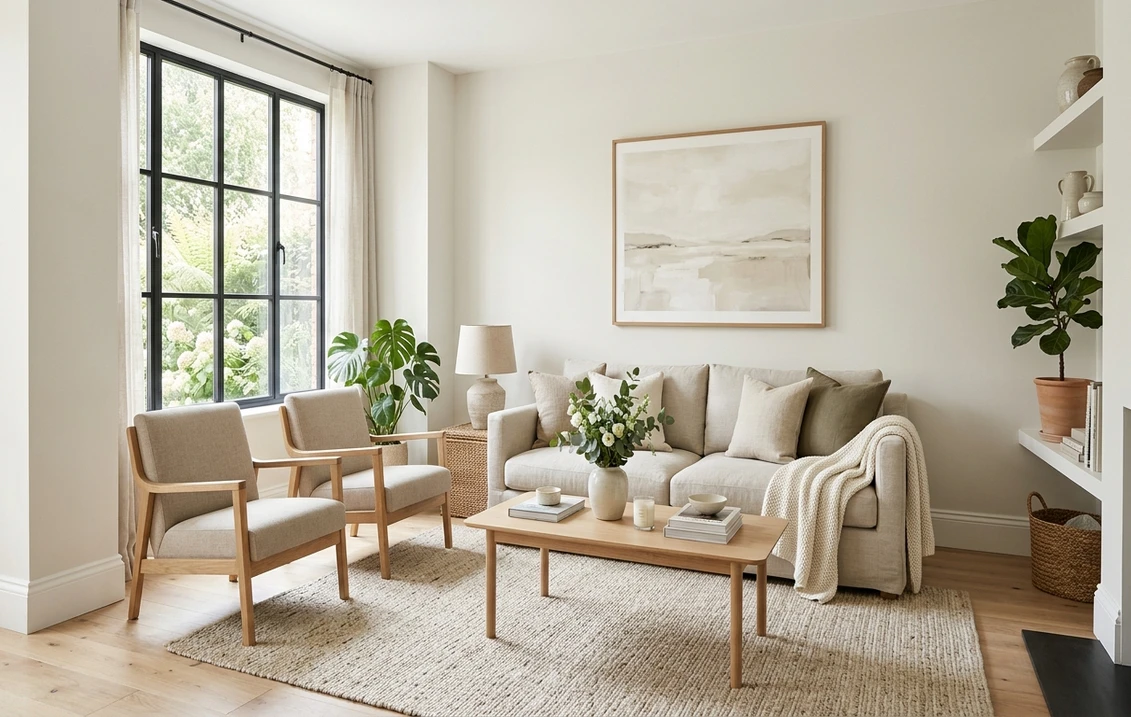
Try it on your room

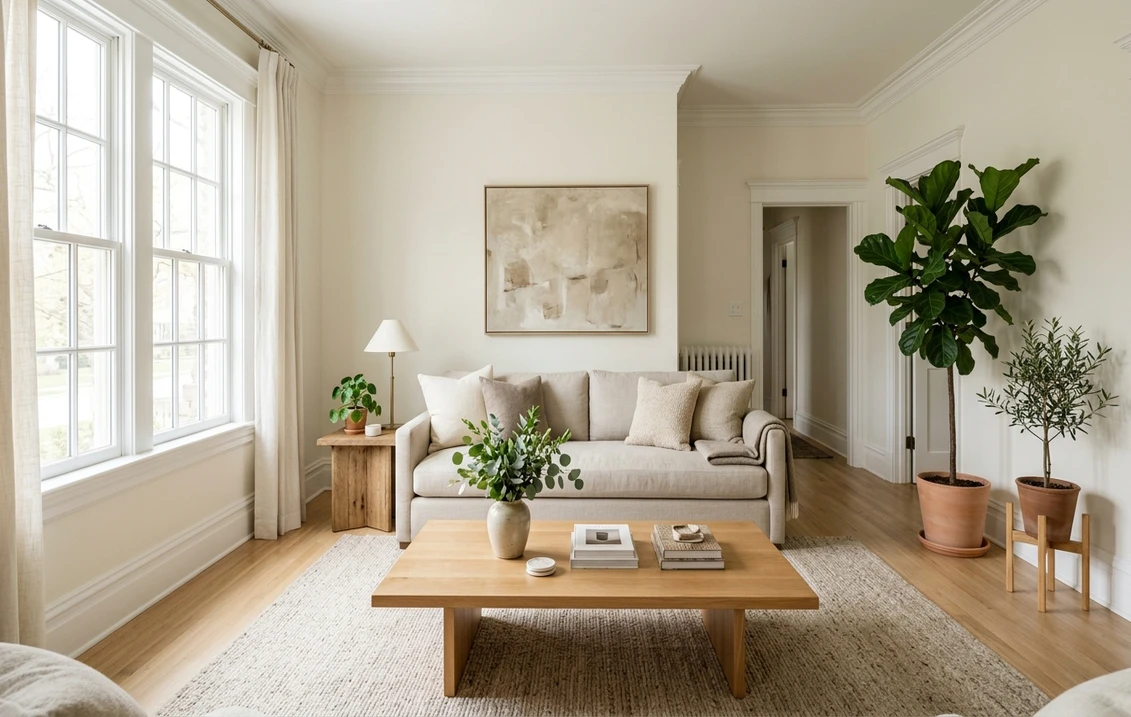
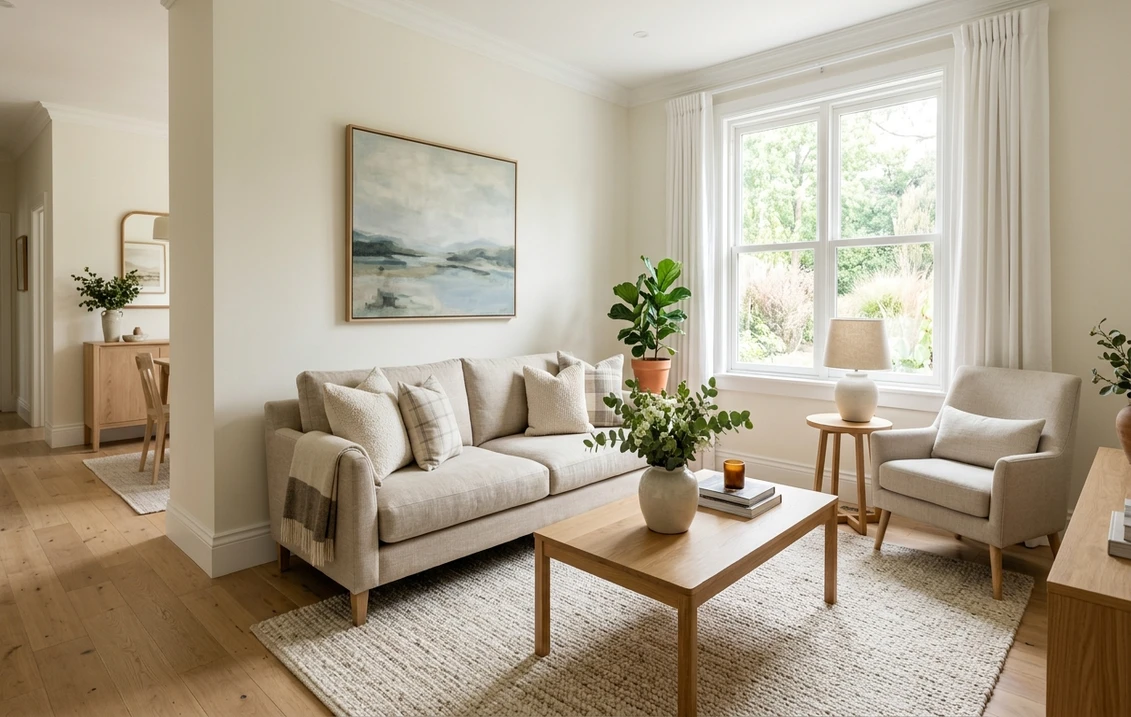
Most homeowners pull Benjamin Moore Classic Gray (OC-23) off the fan deck expecting a gray, and that is the first surprise. Despite the name, OC-23 lives on the Off-White Collection, not the gray chart, and on most walls it reads closer to a soft warm off-white than to anything you would call "gray." With a high Light Reflectance Value of 73.42, it bounces a lot of light, so it can feel near-white in a bright room and a quiet greige in shade. That shape-shifting is exactly what people love about it. It is also what trips them up.
This is a deep profile of OC-23 as an interior wall color: its real undertones, how light pulls it warm or cool, the rooms it flatters, the pairings that hold it steady, and how it compares to the other Benjamin Moore neutrals. Still narrowing the field? Our Benjamin Moore interior paint colors guide maps the full lineup.
Upload one photo of your room and preview OC-23 under your actual light in 30 seconds, free.
Classic Gray OC-23 by the numbers
Before the design talk, the published specs. These are the figures that actually predict how OC-23 will behave on your wall:
- BM code: OC-23, Off-White Collection.
- LRV (Light Reflectance Value): 73.42. High enough to read almost like an off-white in a sunny room, low enough to settle into a soft gray in shade, and far brighter than a true mid-greige like Revere Pewter HC-172 (LRV 55.51).
- Undertone: a warm greige base with a subtle green-gray cast. There is a whisper of violet that can surface in cool, low light, which is the single behavior that catches people off guard.
- RGB approximation: around 229, 226, 217, a hair warmer and lighter than a neutral gray, which is why it never reads cold or steely.
- Closest cross-shop: Sherwin-Williams shoppers usually land near Eider White (SW 7014), a similar pale warm-gray that runs a touch cooler. Any paint counter can spectrophotometer-match OC-23 into another brand's base.
Classic Gray is a "barely there" neutral. It is the color designers reach for when they want the furniture, art, and architecture to lead, and the walls to recede into a soft, light envelope.
The undertone, and why it shifts
Paint never reflects what the light never sent it. So the bulb in the room is half the color. Classic Gray carries a warm greige base, but layered underneath is a quiet green-gray with a trace of violet. In warm, generous light those undertones stay buried and OC-23 reads as a clean, soft off-white. Strip the warmth out of the light and the undertones step forward.
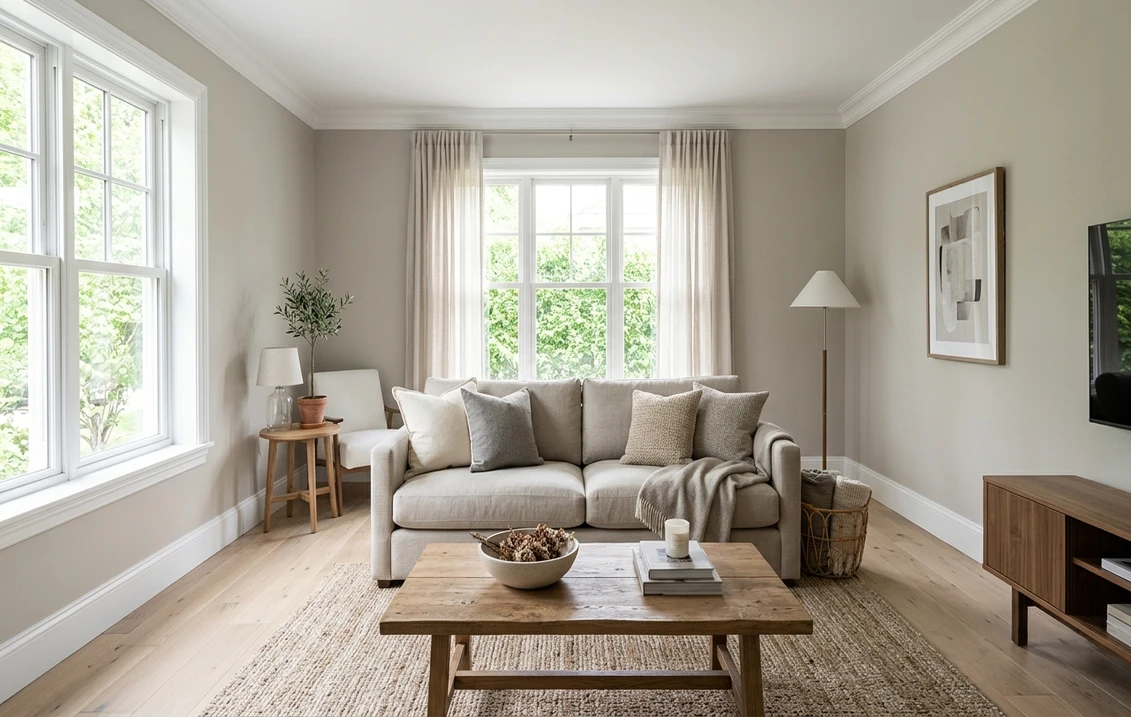
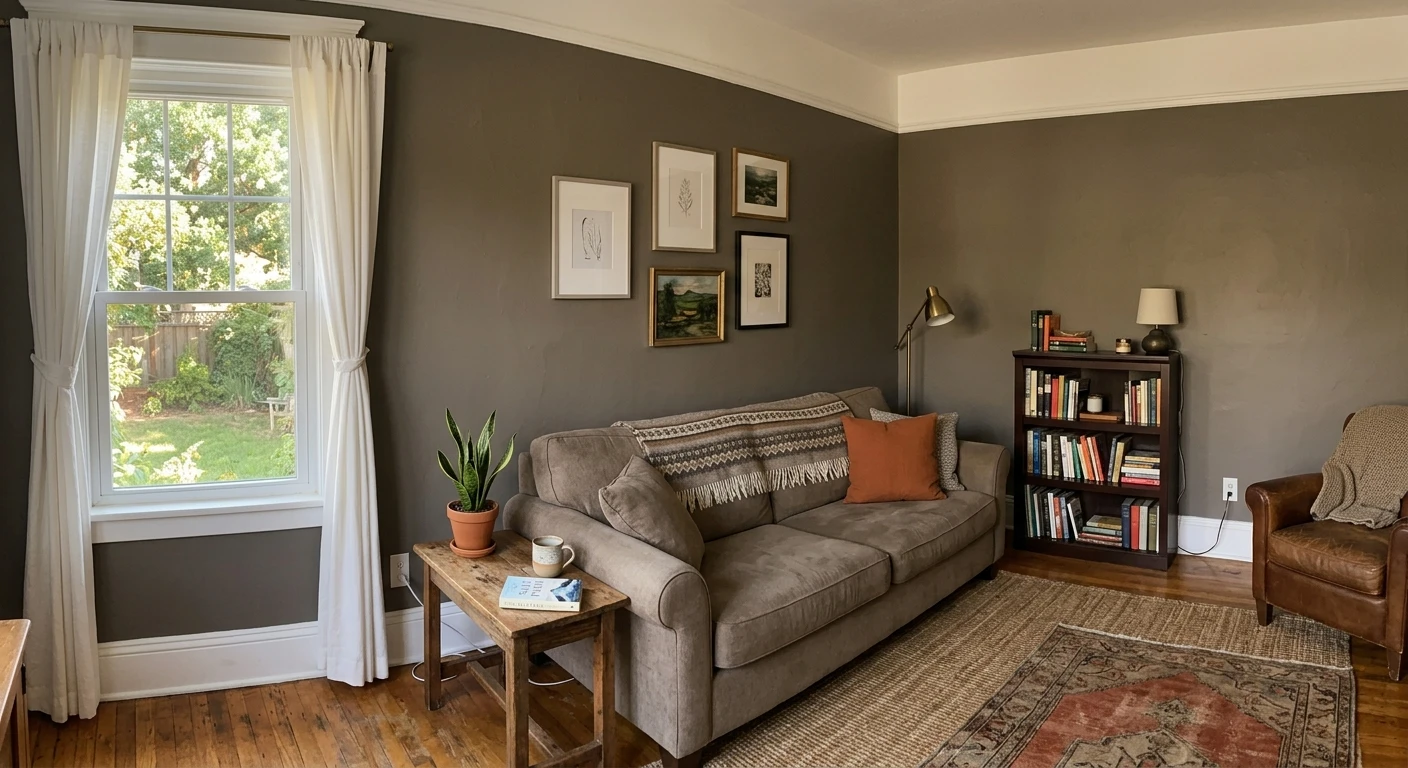
That is why the same can of paint can look like three slightly different colors in one house. Under incandescent bulbs or a 2700K warm LED, the greige warms up and reads almost cream. Under bright midday sun it reads as a light, neutral gray-white. In a north room on an overcast afternoon, the green-gray and faint violet become visible and OC-23 can drift toward a cool, slightly mauve-gray. None of these are defects; they are a high-LRV greige doing its job. The trick is making sure the version you get is the version you wanted.
How room orientation pulls OC-23
Daylight is not neutral, and its color temperature changes with the direction your windows face. Here is how that translates onto a Classic Gray wall:
| Room orientation | Light character | How Classic Gray reads |
|---|---|---|
| South-facing | Warm, abundant, all day | Soft warm off-white, the greige stays gentle |
| West-facing | Cool by morning, very warm at sunset | Neutral by day, glows faintly creamy late afternoon |
| East-facing | Warm early, cooler and flatter after noon | Clean light gray-white that cools slightly by evening |
| North-facing | Cool, indirect, no direct sun | Settles into true soft gray, can flash faint violet on gray days |
Try it on your room
No photo? Try a sample
Sources: Benjamin Moore Off-White Collection published color data (OC-23); The Spruce and designer color references on north-light undertone behavior.
The practical takeaway: in a south or west room, Classic Gray is one of the most forgiving neutrals Benjamin Moore makes. In a north room, test it. If you live above the 40th parallel (Boston, Chicago, Seattle, Minneapolis) where winter light runs cold, the cool-light read is more pronounced, and the violet hint, while subtle, is more likely to show. None of that disqualifies OC-23 for a north room. It just means a sample on the wall matters more there than in a sun-drenched living room.
Best rooms for Classic Gray
OC-23 reflects a lot of light and never picks an obvious warm or cool lane. That is what makes it one of the easiest whole-home neutrals to flow from room to room. A few placements where it shines:
- Open-concept main floors: the high LRV keeps an open living-kitchen-dining footprint feeling bright and continuous, and the soft greige reads as intentional rather than builder-grade flat white.
- Bedrooms: calm, restful, and flattering to almost any bedding palette. In a warm-lit bedroom it leans soft and cozy rather than cold.
- Kitchens with white or wood cabinets: Classic Gray on the walls gives crisp white cabinetry just enough separation without contrast that feels harsh, and it flatters white oak and walnut.
- Hallways and stairwells: spaces that often lack direct light benefit from a high-LRV neutral that still has enough body to avoid looking like primer.
- Home offices and reading nooks: quiet enough to stay out of the way, warm enough to feel inviting on video calls.
Where to be careful: windowless powder rooms and basements lit only by cool LEDs, where the violet undertone is most likely to surface. There, warm the bulbs to 2700K or sister-test Pale Oak OC-20 for a guaranteed warmer read. For how undertone families behave across a home, see our interior paint color families guide.
Free AI paint visualizer. Upload your real room photo to see Classic Gray under your actual light before buying a sample.
Trim, ceiling, and decor pairings
Classic Gray is light enough that your trim choice sets the mood. Because OC-23 already sits high on the LRV scale, you have two clean directions: a crisp bright-white trim for contrast, or a softer warm-white for a seamless, tone-on-tone look.
- Crisp trim: Chantilly Lace OC-65 (LRV 90.04), the brightest cool white Benjamin Moore sells, gives sharp, modern contrast against Classic Gray walls. Use it when you want the architecture to pop. Our Chantilly Lace OC-65 profile covers its behavior in depth.
- Soft trim: White Dove OC-17 (LRV 85) is the most-loved warm white in the United States and pairs beautifully for a gentle, low-contrast envelope. See our White Dove OC-17 review for the full picture.
- Ceiling: match the trim, or use a flat ceiling white. Avoid a starkly cooler ceiling above a north-facing OC-23 wall, which amplifies the cool read below.
- Cabinetry and built-ins: white oak, walnut, and warm brass lean into the greige warmth; matte black and steel give it a modern, architectural edge.
- Accent color: OC-23 takes both warm and cool accents, but pick a lane per room. Against a cool wall read, a deep navy like Hale Navy HC-154 on a built-in or door is a designer-favorite contrast.
One finish note: flat and matte sheens mute the undertone shift; satin and semi-gloss exaggerate whatever cast the room throws. On a north wall, matte or eggshell keeps OC-23 calm.
Classic Gray vs the BM neutrals people cross-shop
Most people deciding on OC-23 are also looking at two or three neighbors on the chart. The quick comparison:
- vs Pale Oak OC-20 (LRV 68.64): the warmer, slightly deeper cousin, more taupe body and almost no risk of a cool flash. Pick Classic Gray for lighter and airier, Pale Oak for cozier and more enveloping. For the full breakdown, read our Classic Gray vs Pale Oak side-by-side verdict.
- vs Gray Owl OC-52 (LRV 65.77): the cooler, truer gray of the pair, with a green-blue lean where Classic Gray stays warm. We compare them room by room in Gray Owl vs Classic Gray: which gray wins where.
- vs White Dove OC-17 (LRV 85): a true warm white, not a greige. If OC-23 tests "too gray," White Dove is the step toward white. If White Dove reads "too plain," Classic Gray adds just enough soft color.
- vs Revere Pewter HC-172 (LRV 55.51): not really rivals. Revere Pewter is a committed mid-tone greige; OC-23 is its pale, barely-there relative. Choose Revere Pewter to make the walls a color, OC-23 to make them whisper. Our Revere Pewter HC-172 profile goes deeper.
- vs Edgecomb Gray HC-173 (LRV 63.09): sits between the two in depth, with a steadier greige read and less tendency to cool. A good middle option if OC-23 feels too light.
Weighing the equivalent Sherwin-Williams neutrals? Our Sherwin-Williams vs Benjamin Moore comparison lines up the two brands' light grays and greiges, and our best interior paint colors for 2026 roundup sets OC-23 in the wider trend context.
How to test Classic Gray before you commit
Skip the fan deck for a color this bright. A 3-inch chip reads 25 to 35 percent lighter than a rolled wall, and it is far too small to reveal an undertone shift, so it tells you almost nothing about a high-LRV neutral. Two reliable methods:
- Physical sample: roll two coats of a Benjamin Moore Color Sample pint onto a 24 by 36 inch piece of white foamboard (so the existing wall color does not bias you), then move it around the room. Observe at three moments: morning around 9 a.m., midday around 1 p.m., and after dark under your normal bulbs. Watch the north corner of the room specifically, that is where the cool read appears first.
- Digital preview first: before you spend on samples, upload a real photo of your room and preview Classic Gray, plus Pale Oak and White Dove, on your actual walls in seconds. It is the fastest way to rule colors in or out before the paint counter. Once you have the shortlist, our interior house painting cost guide helps you plan the repaint budget around the room you are doing.
Whichever route you take, judge the color on the wall it is actually going on, in the light it will actually live in. A greige that looks perfect under the store's 4000K fluorescents is a different color in your north bedroom at dusk.
Upload your room photo and preview Classic Gray, Pale Oak, and White Dove side by side, free.
Frequently asked questions
What is the LRV of Benjamin Moore Classic Gray OC-23?
73.42, per the Benjamin Moore Off-White Collection data. That is a high-reflectance neutral: bright enough to behave almost like an off-white in a sunny room, but with enough greige body to settle into a soft gray in shade. It sits well above Revere Pewter HC-172 (LRV 55.51) and about five points brighter than Pale Oak OC-20 (LRV 68.64).
Is Classic Gray warm or cool?
Fundamentally a warm greige, but it shapeshifts. Under warm bulbs and in south or west light it reads as a soft warm off-white. In cool north light, the green-gray base and a faint violet undertone surface and it can drift slightly cool or mildly mauve. That flexibility is why a sample on the actual wall is worth the effort in low-light rooms.
What trim color goes with Classic Gray?
Two clean options. For crisp contrast, Chantilly Lace OC-65 (LRV 90.04), the brightest cool white Benjamin Moore makes, sharpens the architecture against OC-23 walls. For a soft, seamless envelope, White Dove OC-17 (LRV 85), a warm white, keeps the look gentle and tone on tone. Both are reliable; the choice is about how much contrast you want.
Classic Gray or Pale Oak, which should I choose?
Choose Classic Gray when you want lighter, airier, and more reflective; it keeps rooms feeling open and bright. Choose Pale Oak OC-20 when you want warmer, cozier, and more enveloping, with slightly more taupe body and essentially no risk of a cool flash. In a north-facing or low-light room where you are nervous about the violet undertone, Pale Oak is the safer warm bet.
See OC-23 and its warmer and whiter alternatives on your actual room before buying a single sample.
Disclaimer: Benjamin Moore and the color names and codes referenced here (including Classic Gray OC-23, Pale Oak OC-20, White Dove OC-17, Chantilly Lace OC-65, Revere Pewter HC-172, Edgecomb Gray HC-173, and Hale Navy HC-154) are trademarks of Benjamin Moore and Co. Sherwin-Williams and Eider White are trademarks of The Sherwin-Williams Company. FacadeColorizer is an independent paint visualization service and is not affiliated with, endorsed by, or sponsored by Benjamin Moore or Sherwin-Williams. LRV and RGB figures are taken from publicly published manufacturer color data and may differ slightly from the current technical data sheet; always confirm the exact value and a physical sample before purchase. Color reproduction on screens approximates the manufacturer's chip. Sources: Benjamin Moore Off-White Collection published color data 2026, The Spruce paint color guides, and designer color references.
Trademarks mentioned (Sherwin-Williams, Benjamin Moore, Behr, Caparol, Brillux, Sto, Alpina, Valspar, PPG, Glidden, Dulux, Crown Trade, Sandtex, Farrow & Ball, Johnstone's, Leyland) are property of their respective owners. FacadeColorizer is independent and not affiliated with any of them. Nominative fair use under Lanham Act §1125.