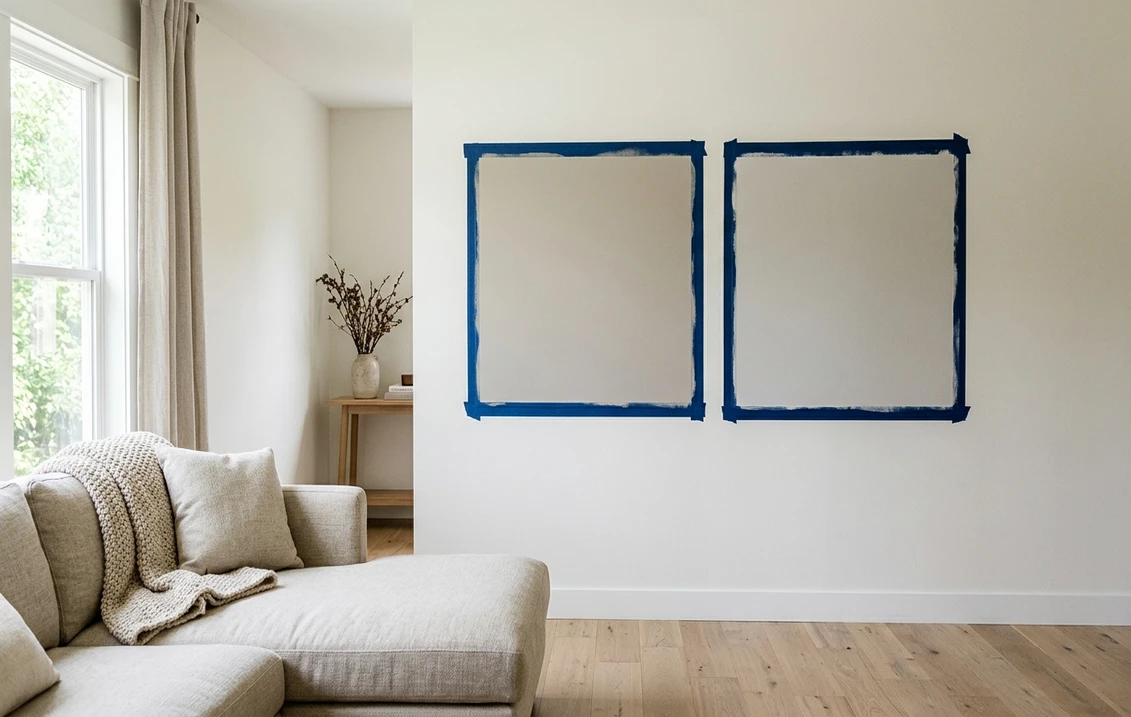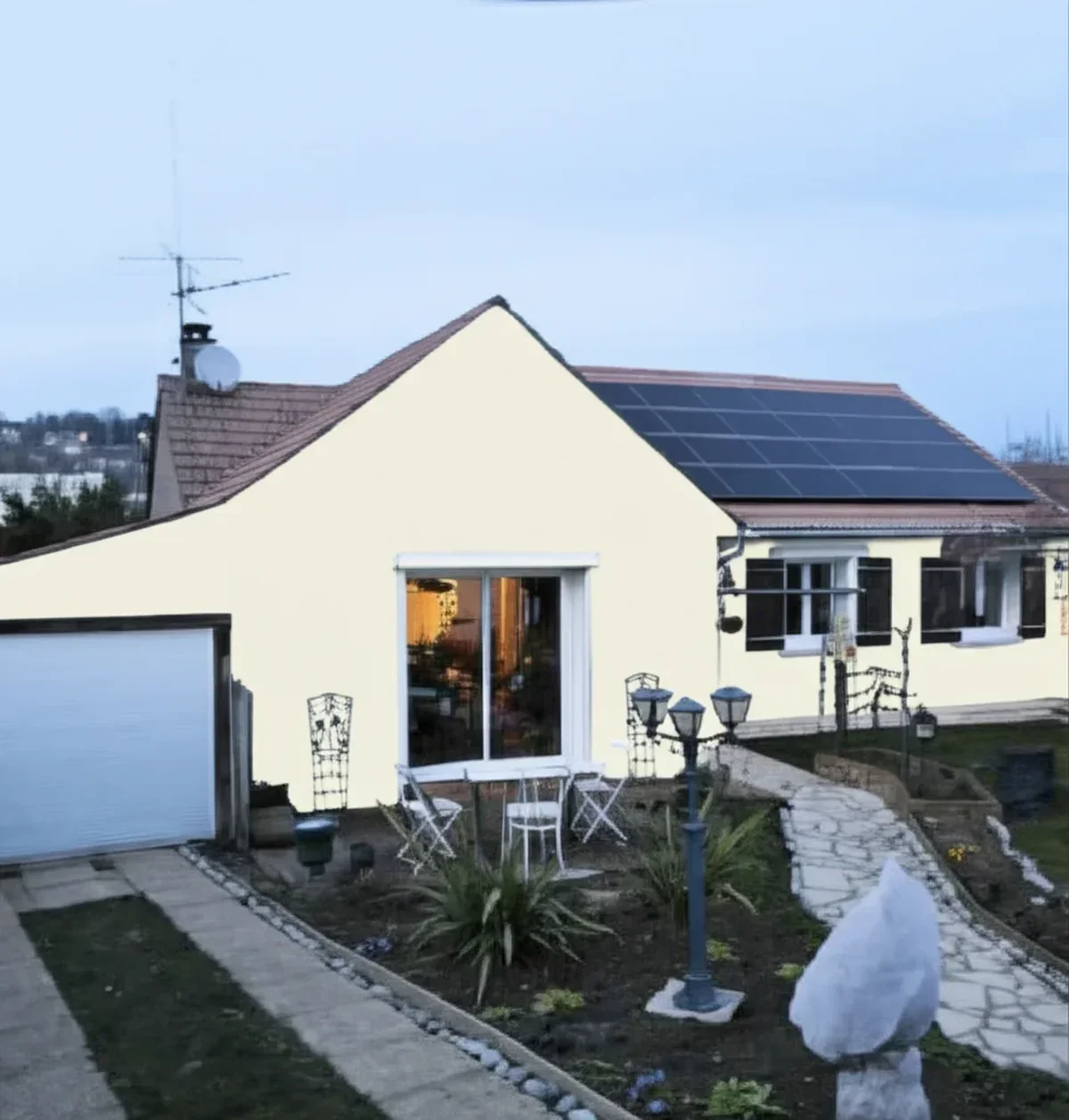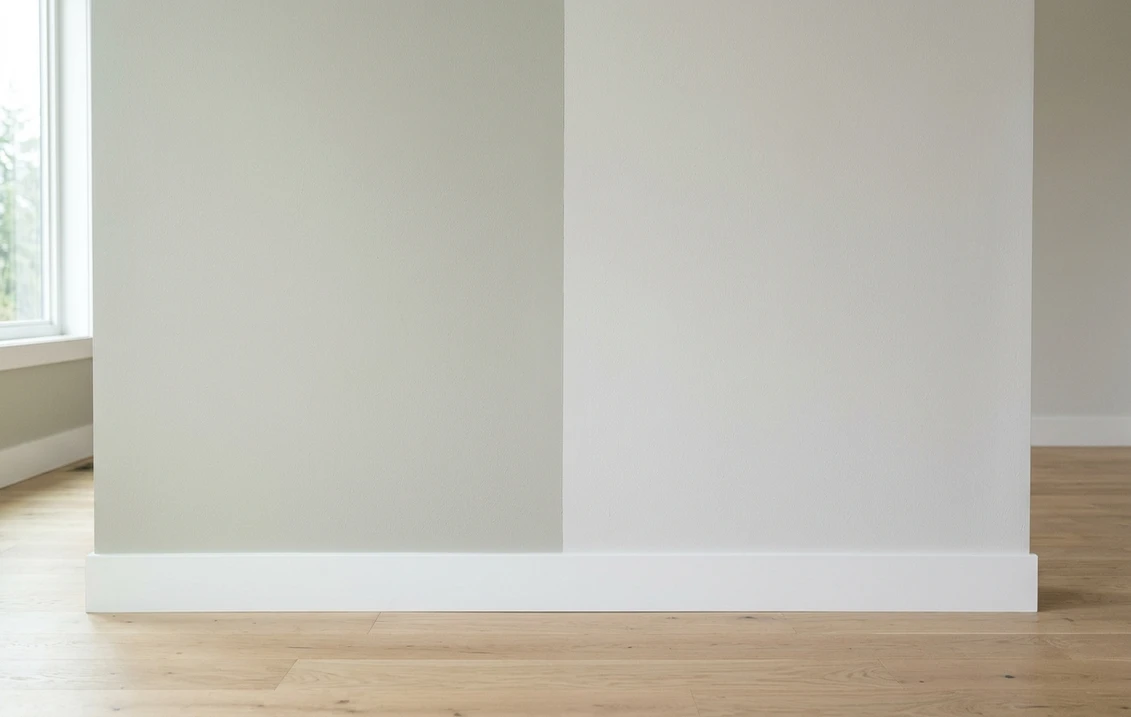
Try it on your house

The verdict in three lines. Gray Owl OC-52 (LRV 65.77) is the true light gray: cool, with green-blue undertones, and clearly a color on the wall.
Classic Gray OC-23 (LRV 74.78) is the near-white: a soft warm gray from Benjamin Moore's Off-White collection that reads like a gently shadowed white.
Nine LRV points is a gap you can see across the room. Decide how much gray you actually want first, then confirm the undertone on a photo of your own walls.
Benjamin Moore Gray Owl (OC-52) and Classic Gray (OC-23) get shortlisted together constantly: both are best-selling light neutrals near the pale end of the Benjamin Moore deck. But this duel is no coin-flip between near-twins. Nine points of light reflectance and a warm-versus-cool split separate them, and the wrong pick changes the whole character of a room. This head-to-head puts the numbers side by side, walks the duel room by room, and tells you exactly when each color wins. For the general method behind any two-color decision, start with our side-by-side method for comparing paint colors.
The numbers side by side
| Attribute | Gray Owl OC-52 | Classic Gray OC-23 |
|---|---|---|
| Family | Light cool gray | Warm gray-tinted off-white |
| LRV | 65.77 | 74.78 |
| Approximate hex | #D4D5CD | #E4E1D8 |
| Approximate RGB | 212, 213, 205 | 228, 225, 216 |
| Undertone | Cool, with green-blue flashes in bright light | Warm, with a whisper of taupe in soft light |
| Loves | Crisp white trim, marble, chrome, black metal | Oak floors, cream stone, linen, brass |
| Watch out for | Can flash blue or green in cool daylight | Can wash out to plain white in strong sun |
| Overall vibe | Serene, spa-like, visibly gray | Airy, barely-there, warm and quiet |
Try it on your house
No photo? Try a sample
LRV values are the published Benjamin Moore figures. Hex and RGB are approximate digital renderings; the authoritative reference is a physical Benjamin Moore chip or sample pot.
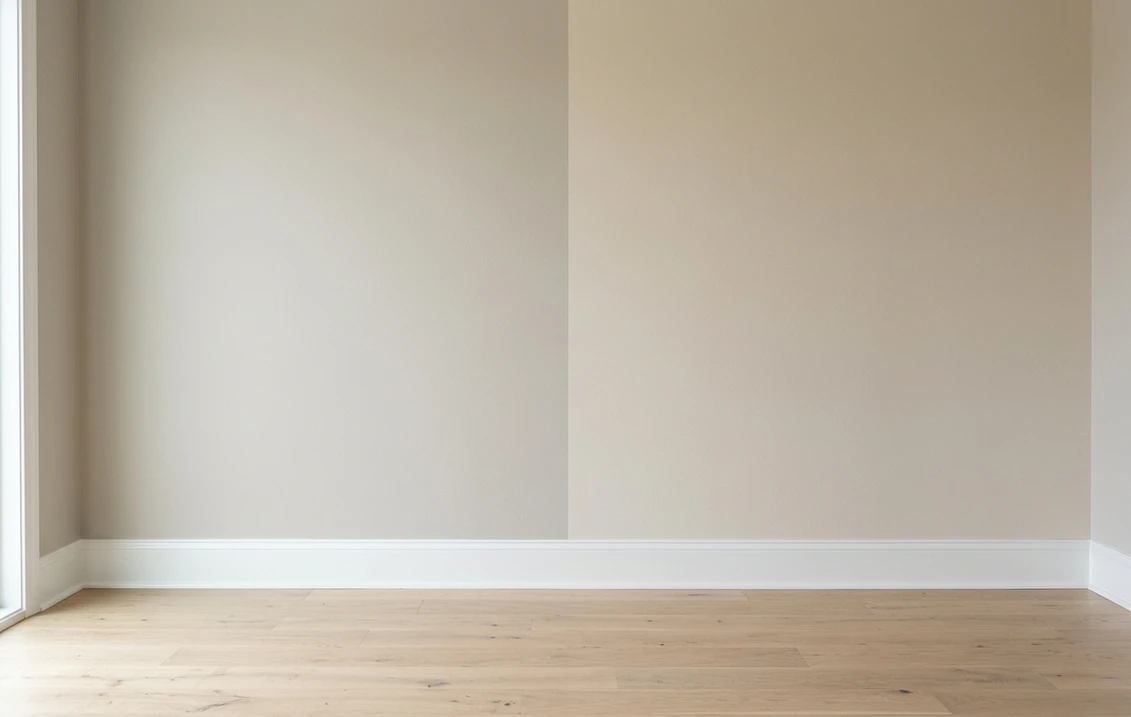
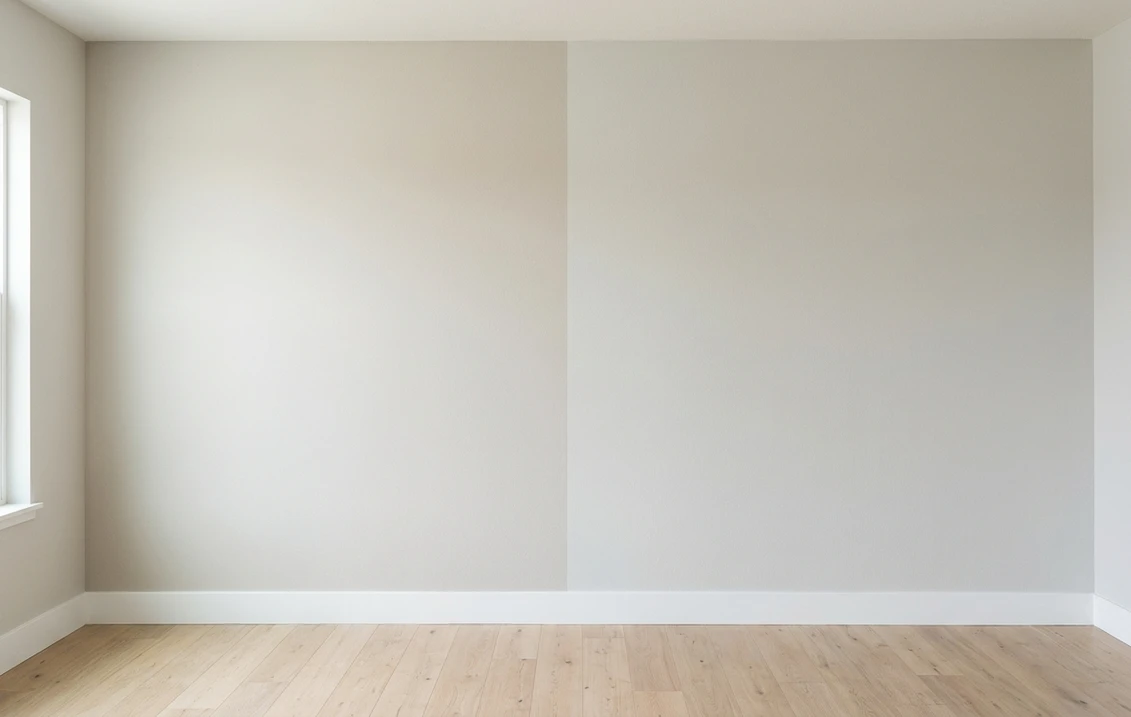
Read that table once and the shape of the duel is clear: unlike most gray-versus-gray matchups, depth decides first. At LRV 74.78, Classic Gray sits in off-white territory; on a sunny wall many visitors will simply call it white. At LRV 65.77, Gray Owl is unmistakably a gray, light enough to keep a room bright but present enough to outline every wall against white trim. Undertone is the second filter: Gray Owl runs cool and can flash green or blue, while Classic Gray stays warm and soft. Hold each chip against white printer paper and both differences jump out in seconds, the same white-paper trick taught in the pillar guide linked above.
Upload one photo, get a photorealistic render, then swap to Classic Gray in one click. Free, no signup.
Room by room, exposure by exposure
Because one contender is a real gray and the other is nearly a white, light, room size, and fixed finishes decide the winner. Here is how the duel typically plays out across the most common situations.
| Situation | Usual winner | Why |
|---|---|---|
| North-facing living room | Classic Gray | Its warmth softens flat, cool light; Gray Owl can turn steely or faintly blue |
| Bright south-facing room | Gray Owl | Strong sun keeps it a poised light gray; Classic Gray can wash out to plain white |
| Small room or windowless hallway | Classic Gray | The higher LRV bounces every bit of available light and keeps tight spaces airy |
| Kitchen with white cabinets | Gray Owl | It has enough depth to outline white cabinetry; Classic Gray can look like a tired version of the cabinet color |
| Bedroom aiming for a calm, spa feel | Gray Owl | The cool green-blue base is the classic recipe for that serene, restful gray |
| One quiet color for the whole house | Classic Gray | A famously forgiving whole-home envelope that lets furniture and art lead |
If this matchup has you weighing grays one notch apart rather than a gray against a near-white, two sibling duels cover that ground: the Coventry Gray vs Stonington Gray duel compares two deeper Benjamin Moore blue-grays, and the Revere Pewter vs Edgecomb Gray comparison settles the warm greige bracket.
When to choose Gray Owl
- You want walls that read unmistakably gray. If the brief is "light gray, but a real one," Gray Owl is that chip. Nobody will mistake it for white.
- Your fixed finishes are cool. Crisp white trim, marble or quartz, chrome, black window frames. Gray Owl's cool base sits cleanly in that company.
- You are pairing it with white cabinets or wainscoting. The nine-point depth gap over Classic Gray is exactly what makes white millwork pop instead of blur.
- You like a soft blue-green cast. If Gray Owl's daylight shift toward green or blue reads as coastal calm to you rather than a flaw, it is the more interesting color of the two.
For its full undertone breakdown, lighting behavior, and best rooms, see the dedicated Gray Owl OC-52 undertones and rooms profile.
When to choose Classic Gray
- You want light and warmth more than color. Classic Gray behaves like a white with the glare taken off: the room stays bright, the walls stay quiet.
- The room is small, north-facing, or short on windows. At LRV 74.78 it returns far more light than a true gray, and its warmth keeps dim corners from going cold.
- Your finishes are warm. Oak or walnut floors, cream stone, brass hardware, linen textiles. Classic Gray's subtle taupe warmth joins that family instead of fighting it.
- You want a gallery-quiet backdrop. As a whole-home envelope it lets art, rugs, and furniture carry the color story.
The full room-by-room treatment, including trim pairings and companion shades, lives in the Classic Gray OC-23 undertone review.
Same wall, both colors, your actual light. Free render in about 30 seconds.
Frequently asked questions
What is the real difference between Gray Owl and Classic Gray?
Depth first, undertone second. Gray Owl OC-52 (LRV 65.77) is a true light gray with cool green-blue undertones, while Classic Gray OC-23 (LRV 74.78) is a warm gray-tinted off-white that can read as a soft white on a sunny wall. The nine-point LRV gap is visible across a room, so the first question is how much gray you actually want to see.
Is Classic Gray lighter than Gray Owl?
Yes, clearly. Classic Gray's published LRV is 74.78 against 65.77 for Gray Owl, which puts Classic Gray in off-white territory and leaves Gray Owl as the obviously gray wall. Classic Gray is also the warmer of the two, while Gray Owl runs cool and can flash green or blue in bright daylight.
Which is better for a north-facing room, Gray Owl or Classic Gray?
Classic Gray, in most homes. North light is cool and flat, and it can push Gray Owl toward a steely or faintly blue reading. Classic Gray's warmth and higher reflectance keep the same room soft and bright. If your finishes are strongly cool, Gray Owl can still work, but sample it on that specific wall first.
Can I use Gray Owl and Classic Gray together in the same house?
Yes, and unlike most look-alike pairs they layer well, because the depth gap makes the contrast look deliberate. A common plan is Classic Gray as the whole-home wall color with Gray Owl on a home office, bedroom, or built-ins for one step more presence. Keep trim a single consistent white so the two grays read as a family.
Settle it on your photo
Chips lie, screens lie, and a quiet store-shelf gray can read white, blue, or beige on your wall at 6 pm. The fastest honest answer is to test both colors on a photo of your actual room and let your own light, trim, and floors pick the winner. If the duel widens into a full shortlist, the 2026 Benjamin Moore interior color guide maps the rest of the deck.
1 HD render plus 3 free color variations. Start with Gray Owl, swap to Classic Gray in one click.
Trademark notice. Benjamin Moore®, Gray Owl®, Classic Gray®, Stonington Gray® and Balboa Mist® are trademarks of Benjamin Moore & Co. FacadeColorizer is not affiliated with, endorsed by, or sponsored by Benjamin Moore & Co. Brand and color names are used for descriptive and editorial purposes only, consistent with nominative fair use. Hex and RGB values are approximate digital renderings; the only authoritative reference is a physical Benjamin Moore color sample.
Trademarks mentioned (Sherwin-Williams, Benjamin Moore, Behr, Caparol, Brillux, Sto, Alpina, Valspar, PPG, Glidden, Dulux, Crown Trade, Sandtex, Farrow & Ball, Johnstone's, Leyland) are property of their respective owners. FacadeColorizer is independent and not affiliated with any of them. Nominative fair use under Lanham Act §1125.