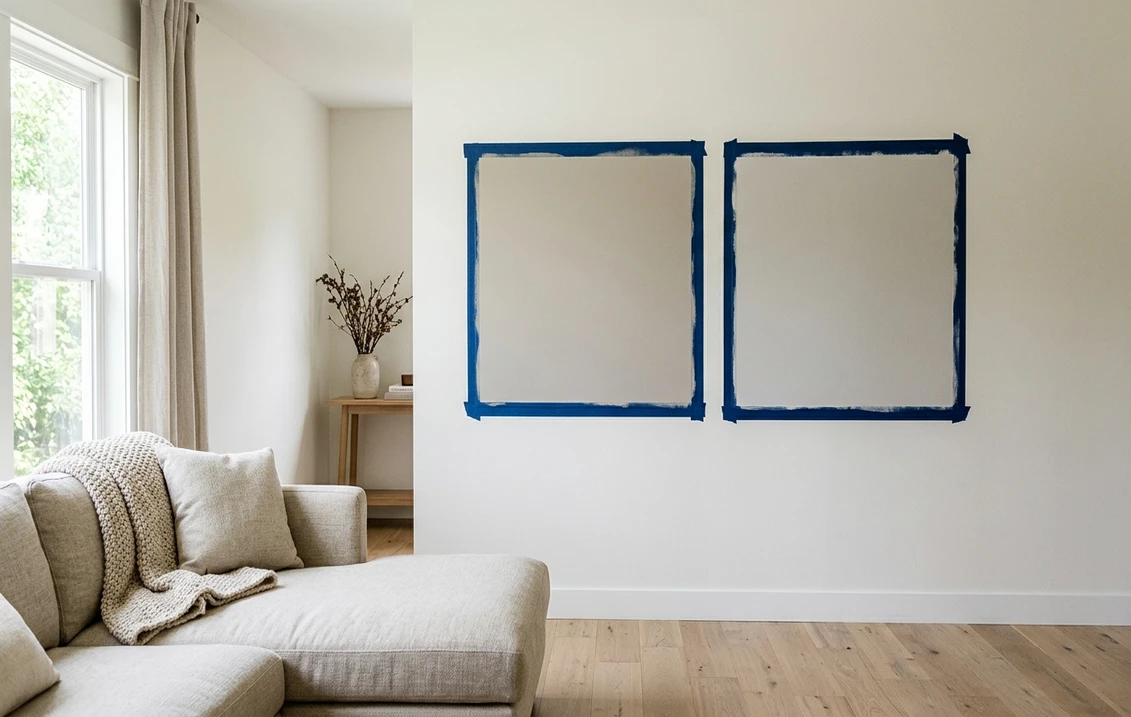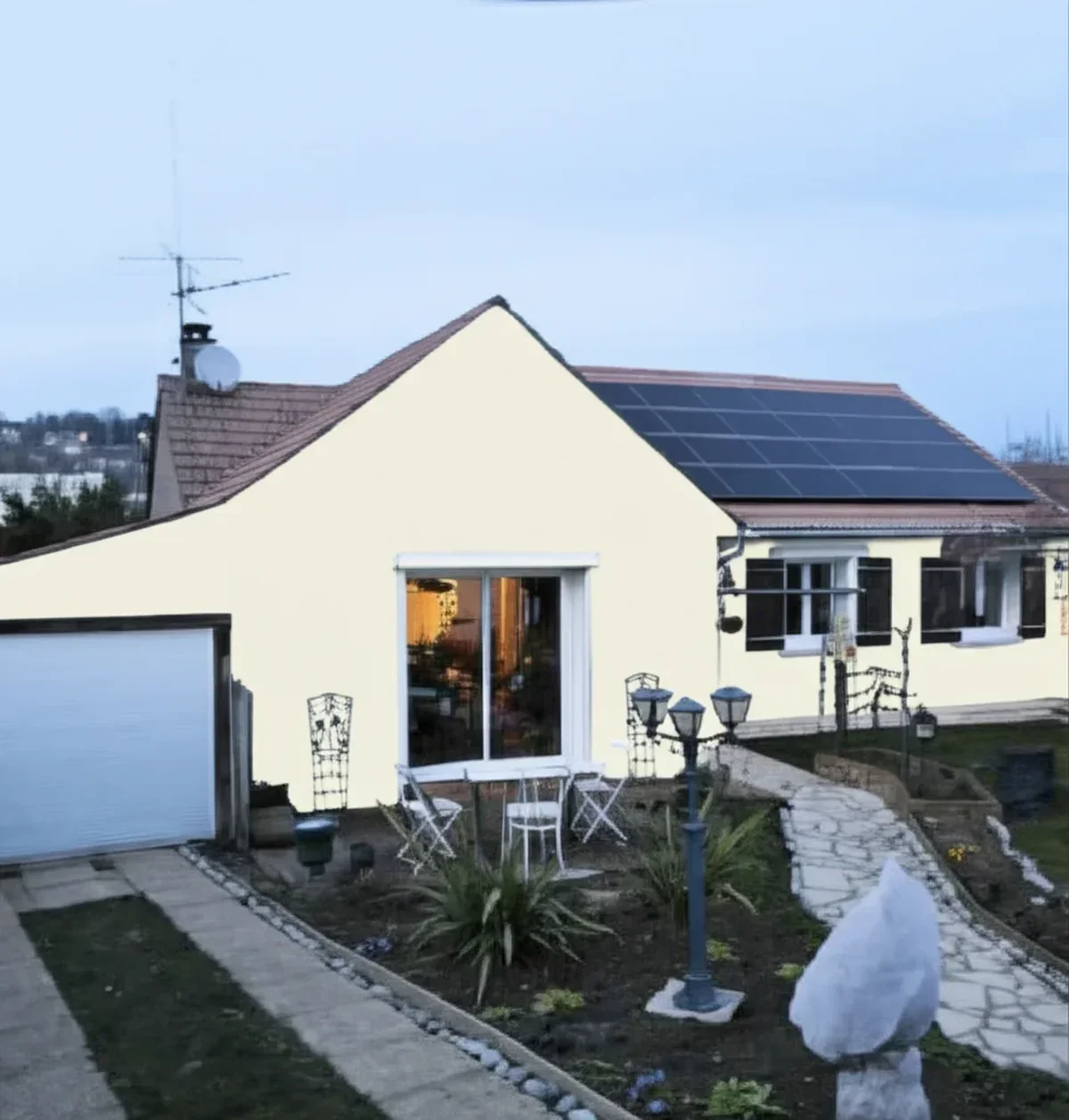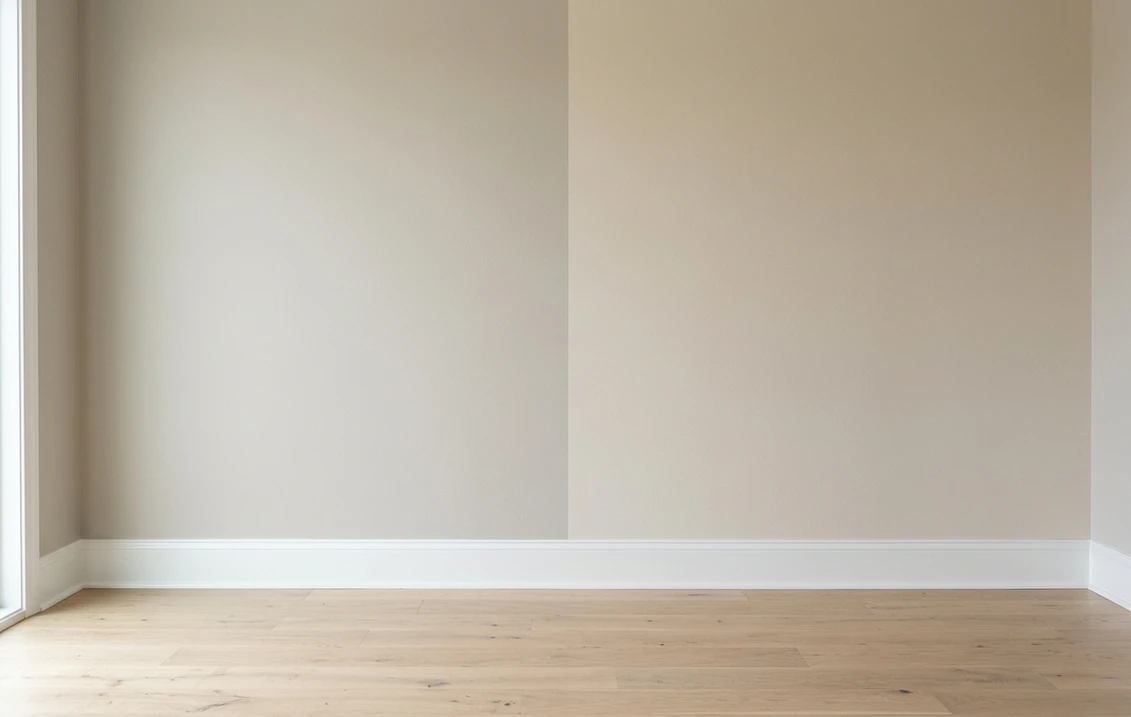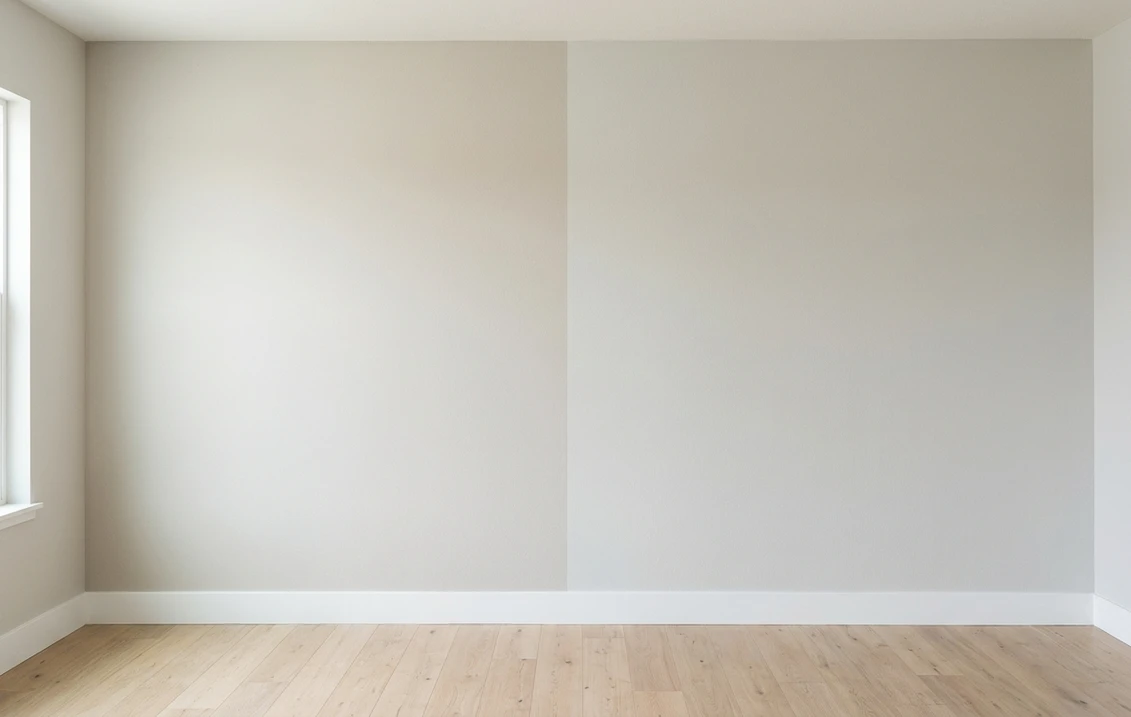
Try it on your house

The 10-second verdict
- Pick Stonington Gray HC-170 if you want a light, silvery gray that keeps rooms open and bright (LRV around 59).
- Pick Coventry Gray HC-169 if you want a committed mid-tone blue-gray with real presence on the wall (LRV around 48).
- They sit on the same fan-deck strip and share the same cool family, so this duel is decided by depth, not undertone. Test both on a photo of your room before buying a single sample.
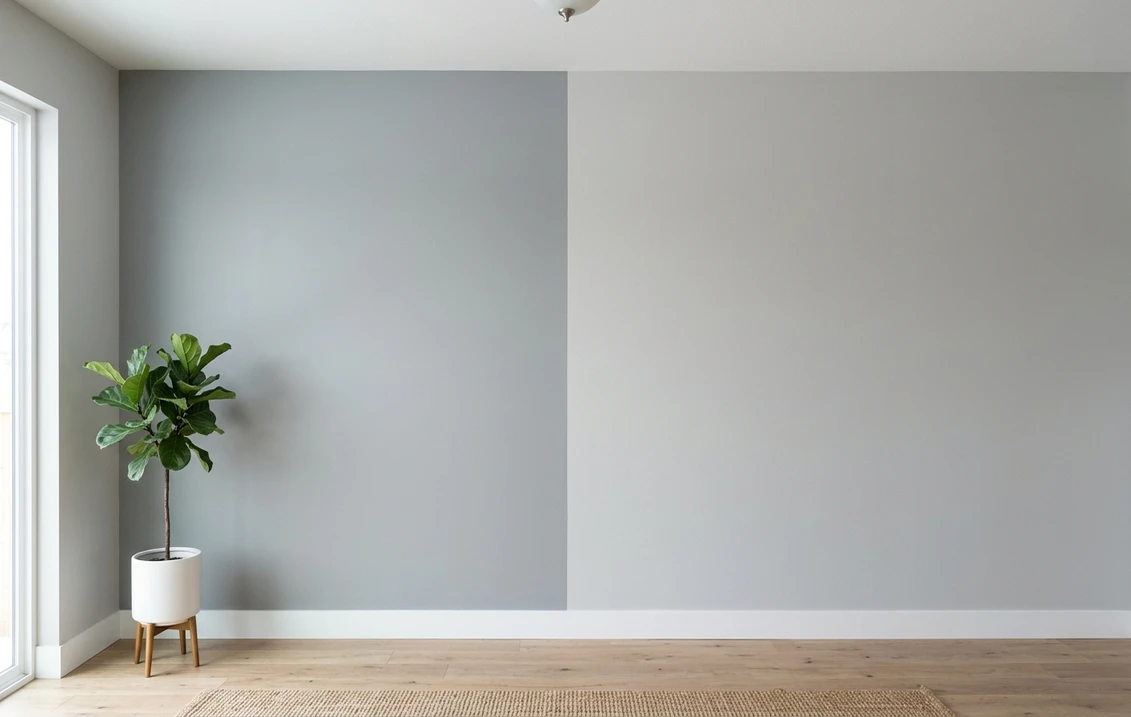
Coventry Gray HC-169 and Stonington Gray HC-170 are neighbors on the same Benjamin Moore Historical Color strip, which is exactly why people get stuck between them. On a 2-inch chip they look like two versions of the same gray. On a full wall they behave like two different decisions: one is a light gray that quietly brightens a room, the other is a visible blue-gray that gives the room a color. This duel breaks down the numbers, the light, and the rooms where each one wins.
For the deep standalone treatments, see the full Coventry Gray HC-169 profile and the Stonington Gray HC-170 undertone review. This page is about the head-to-head, following the same framework as our side-by-side paint comparison method.
The numbers, side by side
Both colors come from the Historical Color collection and both lean cool. The spec that separates them is Light Reflectance Value: Stonington Gray reflects clearly more light, a gap of roughly 11 points. Per the comparison method, a gap that large means you are not really choosing an undertone, you are choosing how light you want the room to be.
| Spec | Coventry Gray HC-169 | Stonington Gray HC-170 |
|---|---|---|
| Collection | Historical Color | Historical Color |
| LRV | Around 48 (true mid-tone) | Around 59 (light gray) |
| Hex / RGB (approx.) | #B8BAB6 / 184, 186, 182 | #CACBC5 / 202, 203, 197 |
| Family | Medium cool gray | Light cool gray |
| Undertone | Light blue, clearly visible at this depth | Subtle blue-silver, quieter because the color is lighter |
| Reads as | A real blue-gray color on the wall | An airy silver neutral |
| Natural roles | Feature walls, dining rooms, islands, exteriors | Whole-home walls, small rooms, open plans |
Try it on your house
No photo? Try a sample
LRV figures are drawn from Benjamin Moore published color data; hex and RGB values are approximate digital renderings of the physical chips.
Upload one photo of your room or facade and preview HC-169 under your own light in about 30 seconds, free.
Room by room, exposure by exposure
Because the two grays share a cool, blue-leaning base, they respond to light the same way; what changes is how far each response goes. The deeper the color, the more the undertone shows.
- North-facing rooms. Cool light pushes both colors toward blue. Stonington Gray stays bright and reads like a crisp silver; the room stays open even on an overcast morning. Coventry Gray goes noticeably moodier, a steel-blue that reads dramatic to some and cold to others. A warm white trim such as White Dove OC-17 takes the chill off either one.
- South-facing rooms. Warm afternoon light softens both grays. Coventry relaxes into a classic medium gray and holds its presence all day. Stonington can wash toward near-white at the sunniest hours, which is fine if "barely there" is the goal and disappointing if you wanted to see the color you paid for.
- Living rooms and open plans. Stonington Gray is the lower-risk whole-home pick: light enough to run through connected spaces without closing anything in. Coventry works in large, well-lit living rooms but asks for more commitment across a big open plan.
- Bedrooms and dining rooms. This is Coventry territory. At LRV around 48 it wraps a room in the evening instead of disappearing, and it photographs as a real color behind a bed or a dining table.
- Kitchens. The classic split: Stonington on the walls, Coventry on the island. If the island wants to go darker still, the strip continues down to Chelsea Gray HC-168, the usual next stop for cabinetry.
- Exteriors. Both are Historical Colors with long exterior track records. Stonington is the more popular siding gray of the two; the Stonington Gray exterior guide covers trim and shutter pairings. Coventry makes a stronger, deeper facade statement that holds shadow lines well.
Same photo, the lighter contender. Free preview in about 30 seconds, no signup.
When to choose Coventry Gray HC-169
- You keep saying "I want actual color on the walls" and every light gray you sample reads as off-white by noon.
- The room is bright, south- or west-facing, and can afford to give up some light in exchange for depth.
- You are painting a feature wall, a dining room, a bedroom, or an island that needs presence without going as dark as charcoal.
- You like a visible blue undertone. Coventry does not hide it, and that honesty is the appeal.
When to choose Stonington Gray HC-170
- You want one gray for a whole floor of connected rooms, including the darker corners.
- The room is small, north-facing, or short on windows, and keeping it bright matters more than making a color statement.
- You want gray that reads elegant and silver in photos rather than moody.
- You were burned before by a gray that "turned into a color" at dusk. Stonington's undertone is the quieter of the two.
Or use both: the same-strip advantage
Because they are one step apart on the same strip, Coventry and Stonington combine almost automatically: same undertone, two depths. Stonington on the main walls with Coventry on a feature wall, a hallway below a chair rail, or the kitchen island is a tone-on-tone scheme that always resolves. Most duels do not offer that luxury: when the finalists come from different families, like the taupe-greige pair in our Revere Pewter vs Edgecomb Gray face-off, mixing them is much riskier.
Frequently asked questions
Is Stonington Gray lighter than Coventry Gray?
Yes, clearly. Stonington Gray HC-170 has an LRV around 59 while Coventry Gray HC-169 sits around 48, a gap of roughly 11 points. On chips they look like close cousins; on full walls, Stonington reads as a light gray and Coventry reads as a true mid-tone, and the difference is visible from the doorway.
Do Coventry Gray and Stonington Gray have the same undertone?
They are in the same cool, blue-leaning family, which is why they pair so well. The undertone simply shows more in Coventry because the color is deeper: what reads as a faint silver-blue cast in Stonington becomes an unmistakable blue-gray in Coventry, especially in north light.
Can I use Coventry Gray and Stonington Gray together?
Yes, and it is one of the easiest two-color schemes in the Benjamin Moore deck. Since they sit one step apart on the same strip, they share an undertone at two depths: Stonington on the main walls, Coventry on a feature wall, island, or built-ins. Keep the trim consistent, ideally a soft warm white like White Dove OC-17.
Which is better for a north-facing room, Coventry Gray or Stonington Gray?
Both lean bluer in cool northern light, so the question is how much of that shift you can live with. Stonington keeps the room bright and reads as crisp silver, making it the safer default. Coventry turns into a moodier steel-blue, beautiful in a dining room or study, riskier in a space where you want daytime warmth. Warm white trim softens either choice.
Upload one photo, preview HC-169 and HC-170 on your actual walls, and walk into the store already decided. 1 HD render plus 3 free color variations.
Bottom line. This is a depth decision wearing an undertone costume. Stonington Gray HC-170 (LRV around 59) is the bright, silvery, whole-home gray; Coventry Gray HC-169 (LRV around 48) is the committed blue-gray with presence. Same strip, same cool family, two different rooms as a result. The only comparison that settles it is the one run on your own walls, in your own light, at full scale.
Trademark notice. Benjamin Moore, Coventry Gray, Stonington Gray, Chelsea Gray, White Dove, and Historical Color are trademarks of Benjamin Moore & Co. FacadeColorizer is an independent paint visualization service and is not affiliated with, endorsed by, or sponsored by Benjamin Moore & Co. Hex and RGB values are approximate digital renderings; always confirm with a physical color sample before purchase. LRV figures are drawn from the manufacturer's published color data (2026).
Trademarks mentioned (Sherwin-Williams, Benjamin Moore, Behr, Caparol, Brillux, Sto, Alpina, Valspar, PPG, Glidden, Dulux, Crown Trade, Sandtex, Farrow & Ball, Johnstone's, Leyland) are property of their respective owners. FacadeColorizer is independent and not affiliated with any of them. Nominative fair use under Lanham Act §1125.