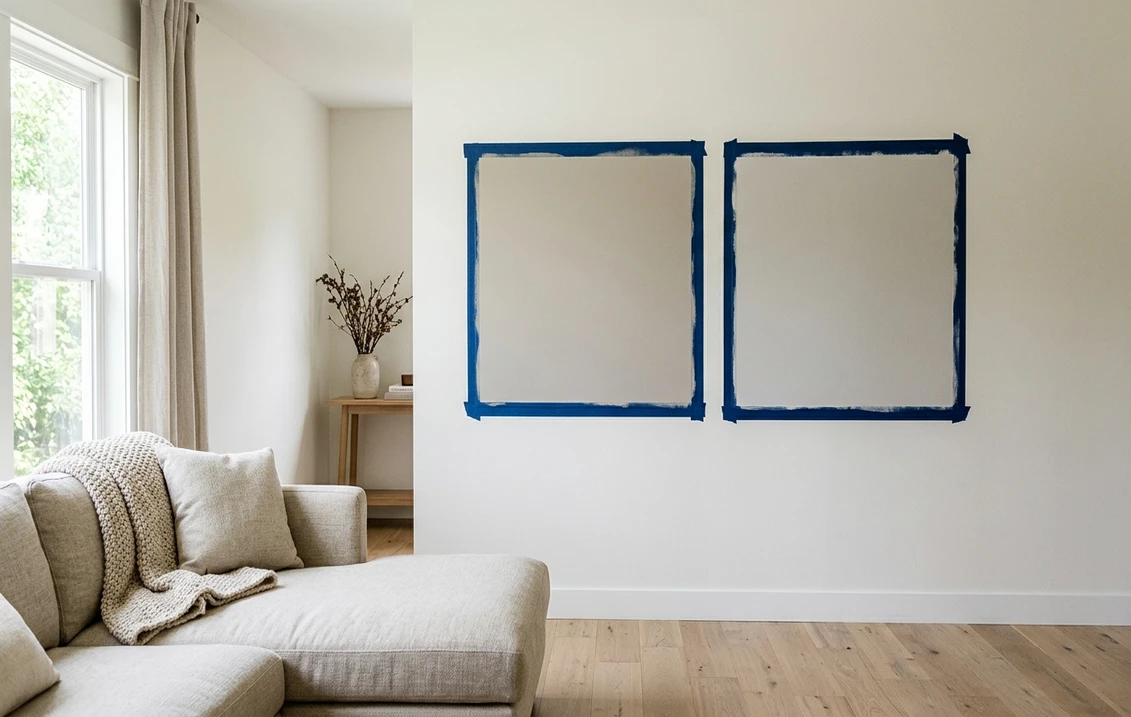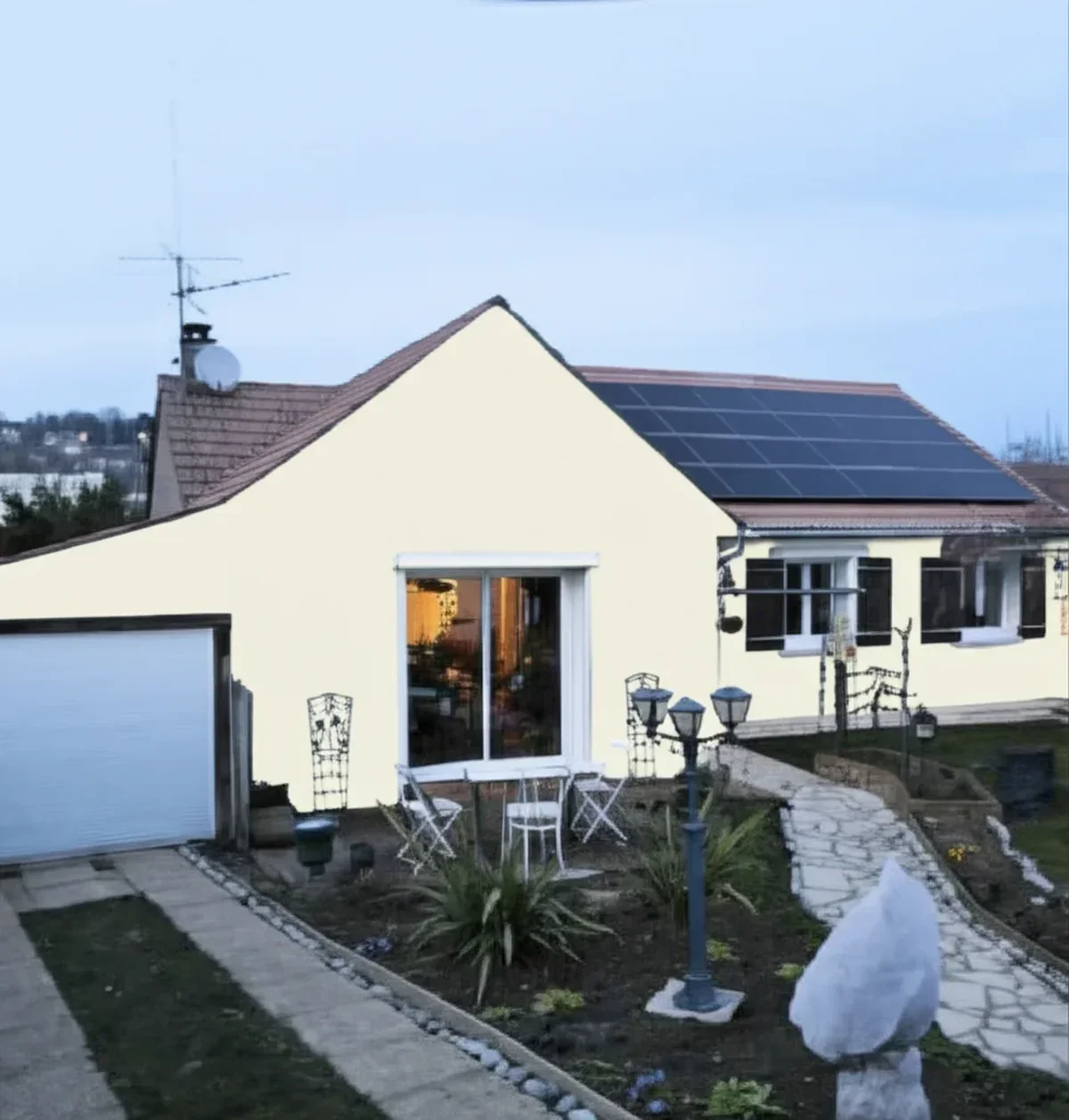
Try it on your house

The verdict in three lines. Swiss Coffee (Behr 12 and Benjamin Moore OC-45) is the warmer contender: an unmistakable yellow-cream off-white that reads cozy and a little vintage, at its best where you want walls to feel warm on purpose.
Alabaster SW 7008 (LRV 82) is the more neutral cream: it still reads white from across the room, which makes it the safer whole-house and open-plan pick, and a proven exterior star.
Brightness is a wash: both live in the low-to-mid 80s LRV. Undertone decides this duel, so the only honest tiebreaker is seeing both on a photo of your own room.
Swiss Coffee and Sherwin-Williams Alabaster (SW 7008) are the two cream whites Americans shortlist most often when a stark white feels too cold. One wrinkle: Swiss Coffee is a shared name, sold by Behr (color 12) and by Benjamin Moore (OC-45), close cousins rather than twins. We treat Swiss Coffee here as that warm family and point you to our full Swiss Coffee profile, Behr vs Benjamin Moore OC-45 for the intra-family tiebreak. For the general method behind any two-color decision, start with our side-by-side method for comparing paint colors.
The numbers side by side
| Attribute | Swiss Coffee (Behr 12 / BM OC-45) | Alabaster SW 7008 |
|---|---|---|
| Family | Warm yellow-cream off-white | Neutral-leaning soft cream |
| LRV | About 84 (Behr), about 82 (BM OC-45) | 82 |
| Approximate hex | #F3F2E6 (Behr version) | #EDEAE0 |
| Approximate RGB | 243, 242, 230 (Behr version) | 237, 234, 224 |
| Undertone | Clear warm yellow-cream; OC-45 adds a faint green-yellow note | Soft warm base kept close to neutral |
| Loves | Wood tones, brass, vintage trim, cozy bedrooms | Open plans, whole-house schemes, exteriors, greige palettes |
| Watch out for | Can read plainly yellow in strong south or west sun | Can go flat gray-green in cool north light |
| Overall vibe | Cozy, creamy, a little nostalgic | Calm, soft, quietly modern |
Try it on your house
No photo? Try a sample
LRV values rounded from each manufacturer's published data. Hex and RGB are approximate digital renderings; the physical chip is the only authoritative reference.
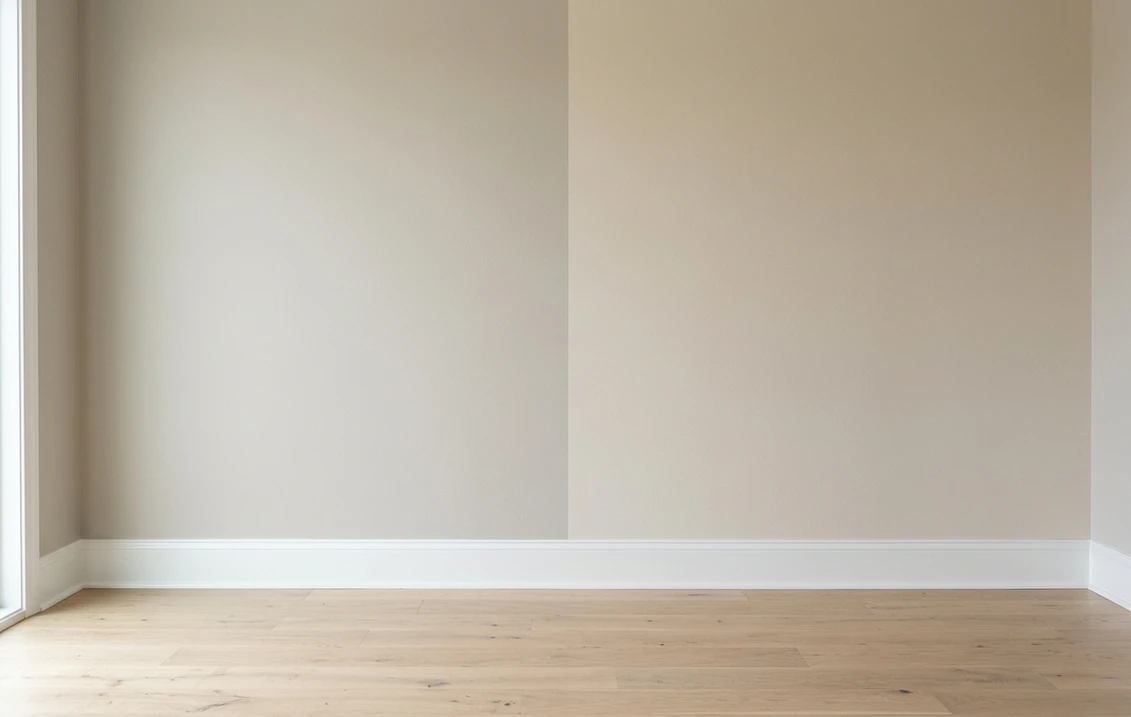
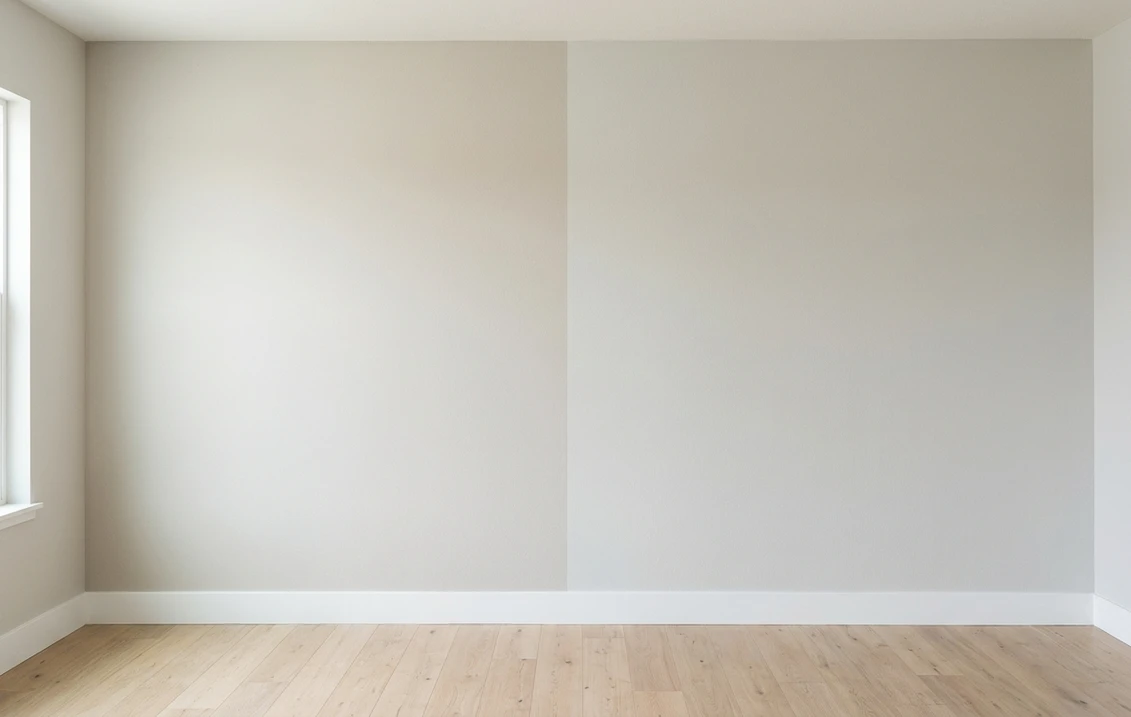
On brightness the two are effectively tied: nobody can see one or two LRV points on a rolled wall. What separates them is how much yellow they admit to. Swiss Coffee commits to cream. Alabaster flirts with it, then pulls back toward neutral, which is why Alabaster passes as "white" in photos while Swiss Coffee reads as "cream" next to a true white trim.
Upload one photo of your room, apply Alabaster and Swiss Coffee side by side. Free render in 30 seconds, no signup.
Room by room, exposure by exposure
North-facing rooms
This is where the duel is most lopsided. Cool, indirect north light mutes warmth and lets the hidden undertone step forward. Alabaster's near-neutral base has less warmth to spare, so it can land flat, gray-green, or chalky; our Alabaster north-facing undertone guide unpacks exactly when. Swiss Coffee's stronger yellow base resists the cool shift and usually keeps reading like cream, though Behr's version can drift toward putty and OC-45 can show its faint green note. Advantage: Swiss Coffee, with a mandatory sample either way.
South- and west-facing rooms
Reverse the light and you reverse the winner. Under hours of warm direct sun, Swiss Coffee's yellow saturates and the walls can read plainly yellow by mid-afternoon. Alabaster keeps its composure: the warm base glows without tipping into butter, which is exactly why it took off as a whole-house color. Advantage: Alabaster.
Kitchens, cabinets, and trim
Benjamin Moore's OC-45 has a long designer track record on cabinetry and millwork, where its extra depth reads custom rather than builder-grade. Alabaster answers with versatility: it works on walls, cabinets, and trim in the same kitchen for a seamless one-color look. Cabinets only? OC-45 is the character pick. Whole kitchen? Alabaster is the simpler system. How Alabaster behaves door by door, next to quartz, brass or black hardware, is the subject of the Alabaster kitchen cabinets guide.
Exteriors
Alabaster is one of the most-painted white exteriors in the country, holding its soft cream identity on siding without glare; the full orientation and trim playbook is in our SW Alabaster exterior complete guide. Swiss Coffee appears outside too, but full sun exaggerates its yellow, so it suits shaded elevations and covered porches more than wide-open south walls. Advantage: Alabaster.
When to choose Swiss Coffee
- You want the room to feel warm on purpose. Swiss Coffee never pretends to be white. Bedrooms, dens, dining rooms, and reading corners wear its cream like candlelight.
- The room faces north or east. The stronger yellow base holds warmth where Alabaster is most likely to fall flat.
- The palette is vintage or organic. Oak, walnut, rattan, brass, and aged bronze all amplify Swiss Coffee's lived-in warmth, especially the OC-45 version.
- You are painting trim or cabinets for character. OC-45 is a beloved millwork cream; pick your version with our Behr vs BM Swiss Coffee breakdown.
When to choose Alabaster
- You want soft, not creamy. Alabaster reads as a white with the chill removed, not as a color. In photos and listings it still says "white walls."
- The space is open plan or the scheme is whole-house. One near-neutral cream across connected rooms with mixed exposures is a safer bet than a committed yellow-cream.
- The project includes the exterior. Alabaster is a proven siding color; Swiss Coffee outside is a sampling exercise.
- Your palette leans greige or khaki. Alabaster is the standard warm-white partner for today's earthy neutrals, where Swiss Coffee's yellow can clash.
Then swap to Alabaster on the same photo and compare. Free, 30 seconds.
Frequently asked questions
Are Swiss Coffee and Alabaster the same color?
No. Both are creamy off-whites with LRVs in the low-to-mid 80s, so they are equally bright in practice, but Swiss Coffee (Behr 12, BM OC-45) carries a clearly warmer yellow-cream undertone while Alabaster SW 7008 stays closer to neutral. On the same wall, Swiss Coffee reads as cream and Alabaster reads as a softened white.
Which is warmer, Swiss Coffee or Alabaster?
Swiss Coffee, in both of its versions. Behr's take is a clean warm yellow-beige cream and Benjamin Moore's OC-45 adds a faint green-yellow note with extra depth. Alabaster has a soft warm base but holds it near neutral, which is why it passes as white where Swiss Coffee visibly does not.
Can I use Swiss Coffee and Alabaster together in one house?
Yes, but keep them in separate sightlines. Side by side on connected walls the pair reads like a mismatch rather than a design choice, because they are too close in brightness and too different in undertone. A cleaner system is one of them on walls plus a brighter white on trim, such as BM White Dove or SW Pure White.
Which is better for a north-facing room, Swiss Coffee or Alabaster?
Usually Swiss Coffee. Its stronger yellow base keeps some cream alive in cool indirect light, while Alabaster's near-neutral base can land flat or gray-green on a north wall. Neither is guaranteed: sample both on the actual wall, or apply both to a photo of the room and compare them in your own light first.
More white and cream face-offs
If Alabaster is winning your duel but you want one more challenger, the Alabaster vs White Dove face-off pits it against Benjamin Moore's best-selling soft white. And if both finalists here feel too warm, our Snowbound vs Pure White verdict covers the cooler end of the soft-white shelf.
Test Swiss Coffee and Alabaster on your own photo. 1 HD render plus 3 free color variations, no signup.
Bottom line. This is an undertone decision, not a brightness decision. Choose Swiss Coffee when the brief is warmth: north or east rooms, vintage palettes, wood and brass, character trim and cabinets. Choose Alabaster when the brief is a white that simply feels soft: open plans, whole-house schemes, sunny exposures, greige palettes, and exteriors. Then confirm the winner the honest way, on a photo of your actual room in your actual light, before you buy the first gallon.
Trademark notice. Behr and Swiss Coffee (12) are trademarks of Behr Process Corporation. Benjamin Moore, Swiss Coffee OC-45 and White Dove are trademarks of Benjamin Moore & Co. Sherwin-Williams, Alabaster, Snowbound and Pure White are trademarks of The Sherwin-Williams Company. FacadeColorizer is an independent paint visualization service, not affiliated with or endorsed by these brands; names are used for descriptive purposes only. Hex and RGB values are approximate digital renderings; always confirm with a manufacturer sample before purchase.
Trademarks mentioned (Sherwin-Williams, Benjamin Moore, Behr, Caparol, Brillux, Sto, Alpina, Valspar, PPG, Glidden, Dulux, Crown Trade, Sandtex, Farrow & Ball, Johnstone's, Leyland) are property of their respective owners. FacadeColorizer is independent and not affiliated with any of them. Nominative fair use under Lanham Act §1125.