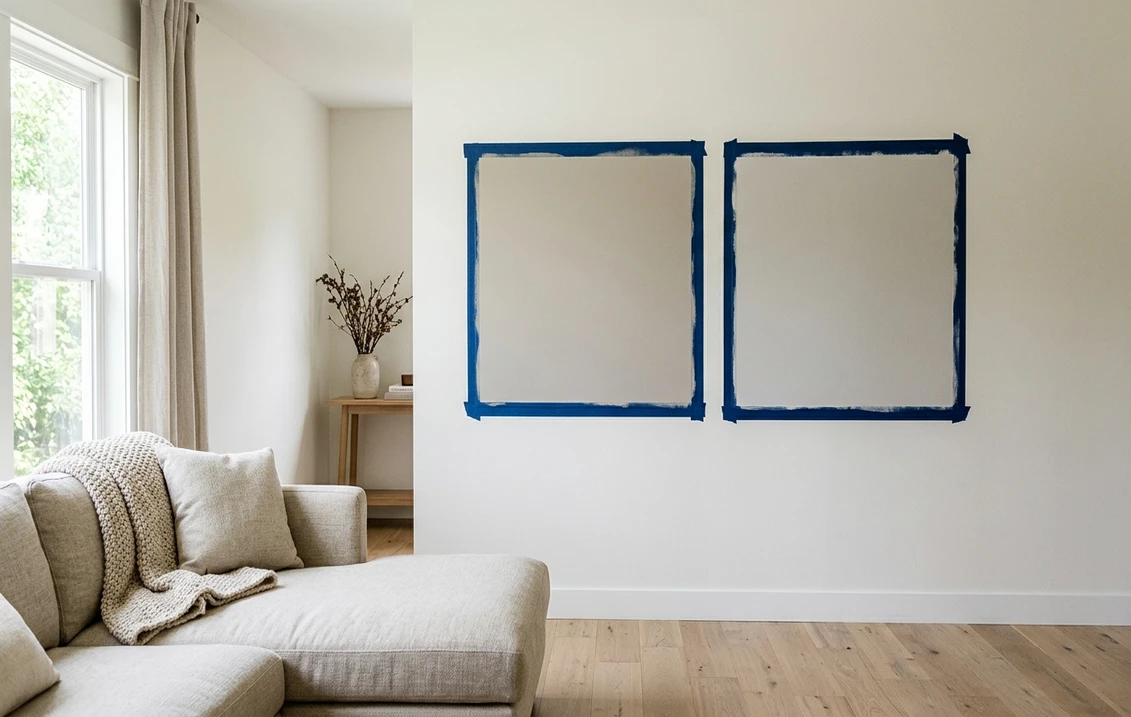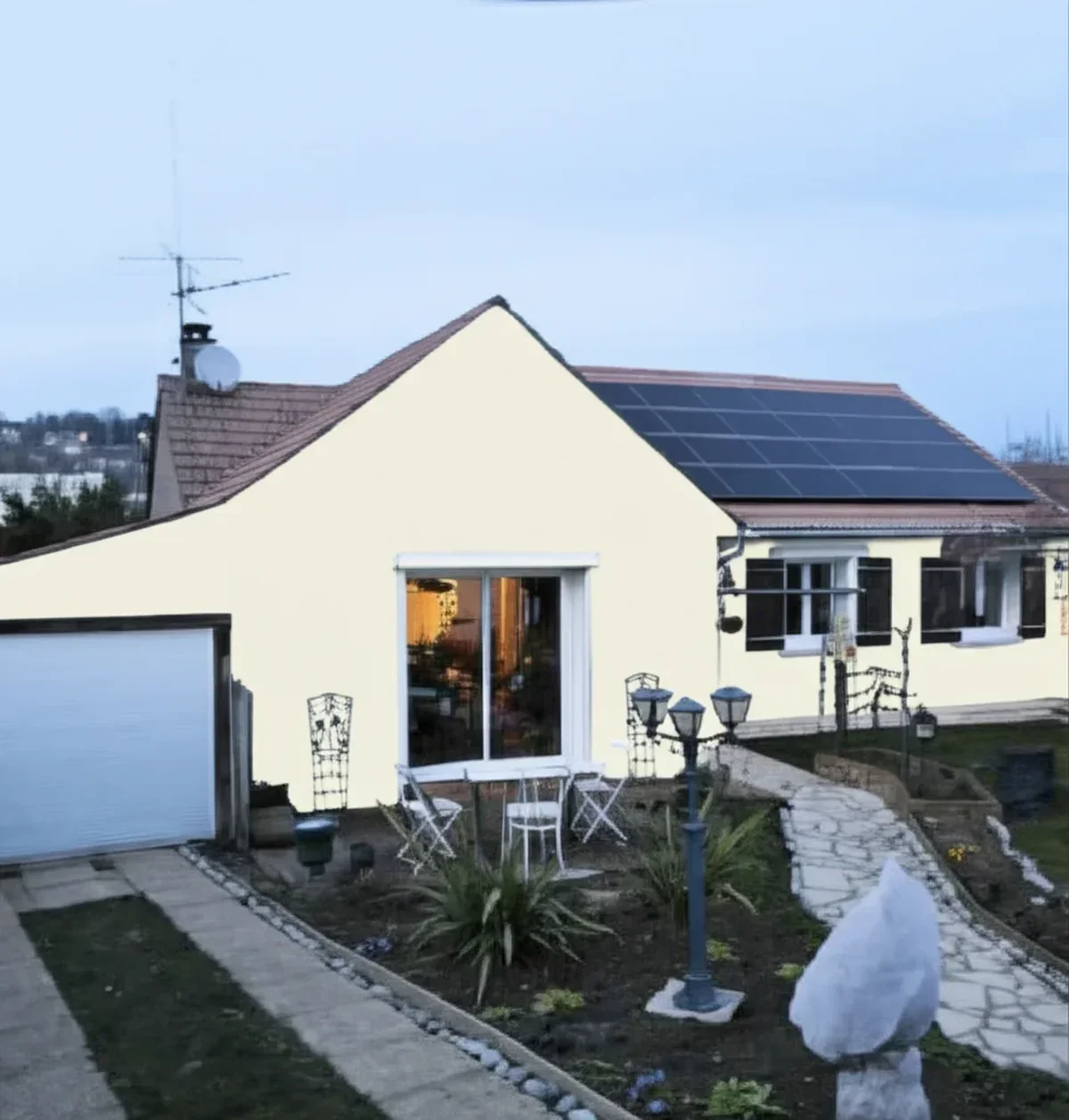
Try it on your house

The verdict in three lines. Pure White SW 7005 (LRV 84) is the safe everyday white: soft, neutral, with the barest warm touch, and the reason it is Sherwin-Williams' best-selling white for walls, trim, and cabinets.
Snowbound SW 7004 (LRV 83) is the cooler, moodier pick: a white softened with gray and a faint pink whisper that flatters crisp modern rooms, marble, and black hardware.
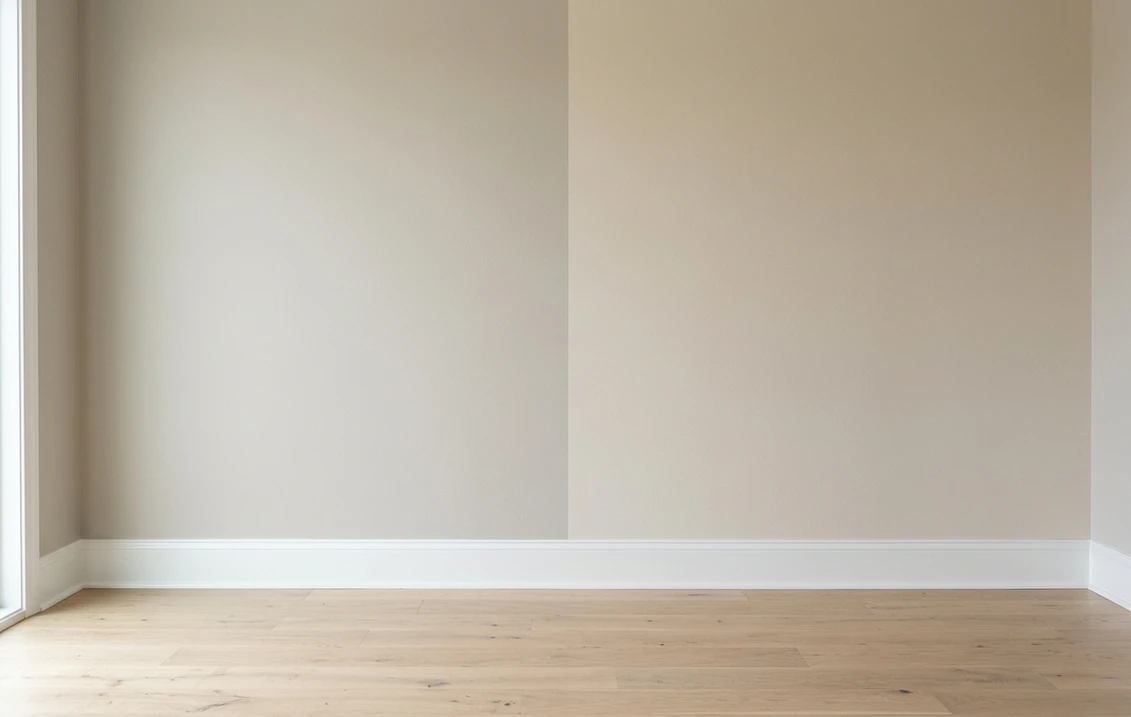
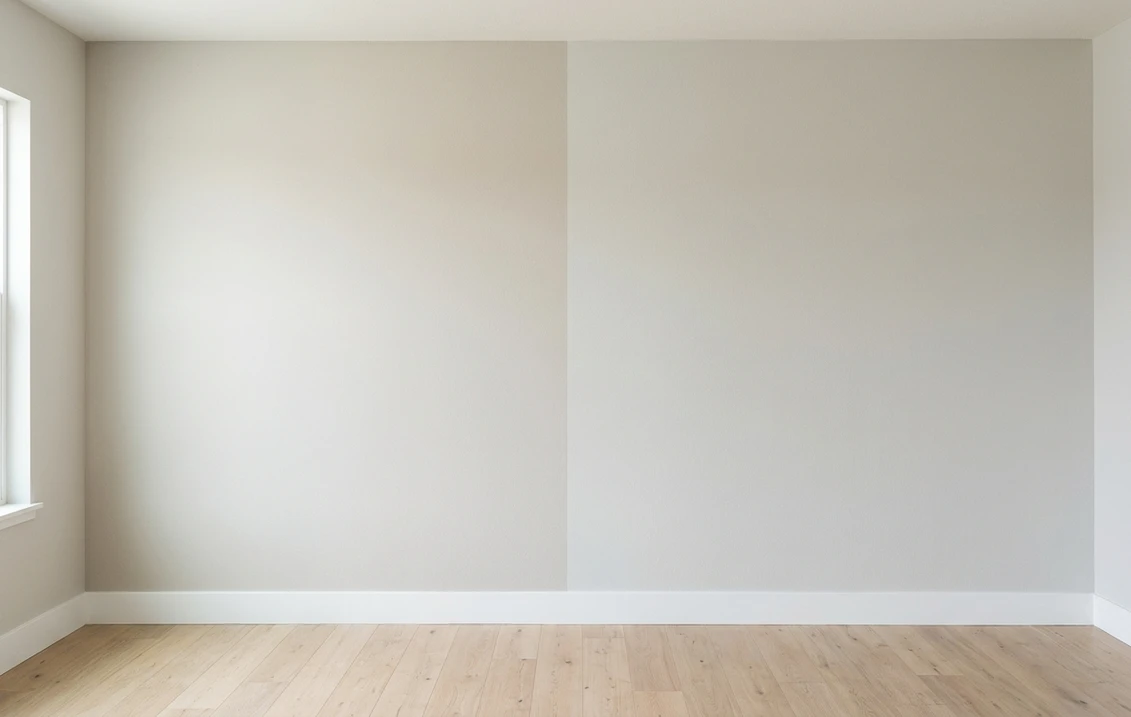
The single LRV point between them is invisible on a wall. Undertone decides this duel, so the only honest tiebreaker is seeing both on a photo of your own room.
Sherwin-Williams Snowbound (SW 7004) and Pure White (SW 7005) sit one number apart in the deck and get shortlisted together constantly. On chips they look like twins. Once a full wall wears them, they part ways: one leans quietly cool, the other quietly warm. This head-to-head puts the numbers side by side, walks the duel room by room, and tells you exactly when each white wins. For the general method behind any two-color decision, start with our side-by-side method for comparing paint colors.
The numbers side by side
| Attribute | Snowbound SW 7004 | Pure White SW 7005 |
|---|---|---|
| Family | Cool-leaning off-white | Neutral soft white |
| LRV | 83 | 84 |
| Approximate hex | #EDEAE5 | #EDECE6 |
| Approximate RGB | 237, 234, 229 | 237, 236, 230 |
| Undertone | Gray softener with a faint pink whisper | Nearly neutral, the slightest warm touch |
| Loves | Marble, black metal, cool grays, modern lines | Wood tones, cabinets, trim, almost any palette |
| Watch out for | Can drift toward a mauve-gray reading in flat north light | Next to strongly warm creams it can look slightly gray by comparison |
| Overall vibe | Crisp, tailored, slightly reserved | Soft, easy, famously drama-free |
Try it on your house
No photo? Try a sample
LRV values are the published Sherwin-Williams figures. Hex and RGB are approximate digital renderings; the authoritative reference is a physical Sherwin-Williams chip or peel-and-stick sample.
Read the table once and the shape of the duel is clear. Depth is a dead tie: at LRV 83 versus 84, nobody standing in your living room will call either one "the darker white." Everything that matters happens in the undertone row. Pure White carries just enough warmth to stay soft without ever reading yellow. Snowbound holds more gray in its base, plus a pink whisper that only shows on large surfaces, so it reads a step cooler and more architectural. The white-paper chip trick from the pillar method above reveals the gap in seconds.
Upload one photo, get a photorealistic render, then swap to Pure White in one click. Free, no signup.
Room by room, exposure by exposure
Because the LRV gap is negligible, light and fixed finishes crown the winner. Here is how the duel usually plays out.
| Situation | Usual winner | Why |
|---|---|---|
| North-facing living room | Pure White | Its slight warmth survives flat cool light; Snowbound can slip toward mauve-gray |
| Bright south-facing room | Snowbound | Strong sun warms every white; Snowbound's cooler base keeps the room crisp instead of creamy |
| Kitchen with white cabinets | Pure White | It is the default cabinet white, so walls and doors match instead of clashing |
| Bathroom with marble and black hardware | Snowbound | The gray softener sits cleanly next to cool stone and matte black |
| Whole-house walls, trim, and ceilings in one white | Pure White | Neutral enough to work in every exposure at once, which is the whole-house job description |
| Exterior body color | Either, sample outside | Daylight exaggerates both undertones; each has a dedicated exterior guide linked below |
Outdoors the same logic applies in harsher light. If your shortlist is for siding rather than walls, the Snowbound exterior guide and the Pure White exterior guide cover orientation, trim pairings, and siding materials for each color in full.
When to choose Snowbound
- Your fixed finishes are cool. Marble or quartz with gray veining, black window frames, chrome or matte-black hardware, cool gray tile. Snowbound's gray base joins that family instead of fighting it.
- The room is bright and you want crisp, not creamy. In strong sun, warmer whites drift toward cream; Snowbound holds its cooler, tailored reading all day.
- You are layering grays on top. Charcoal sofas, blue-gray accents, and cool art sit more comfortably against Snowbound than against a warm-leaning wall.
- You want a white with a little character. The gray softener gives Snowbound a shadowed, architectural quality that flat neutral whites do not have.
For its full undertone breakdown, lighting behavior, and best rooms, see the dedicated Snowbound undertones and best rooms profile.
When to choose Pure White
- You need one white for everything. Walls, trim, ceilings, doors, cabinets: Pure White handles all of them in every exposure, which is why it outsells the rest of the strip.
- The room faces north or gets little direct sun. Its slight warmth keeps flat light from turning the walls cold, where Snowbound can go mauve-gray.
- Your palette is mixed or undecided. With no strong color pull, Pure White will not veto the rug, the sofa, or next year's repaint.
- You are painting cabinets or millwork. It is a longstanding default for painted kitchens precisely because it stays white without going stark.
The full room-by-room treatment, including trim pairings and companion shades, lives in the Pure White room-by-room profile.
Same wall, both whites, your actual light. Free render in about 30 seconds.
Frequently asked questions
What is the real difference between Snowbound and Pure White?
Undertone, not depth. Snowbound SW 7004 (LRV 83) is a cool-leaning white softened with gray and a faint pink whisper, while Pure White SW 7005 (LRV 84) is a nearly neutral soft white with the barest warm touch. The single LRV point between them is invisible on a wall; the cool-versus-neutral character is what changes how a room feels.
Is Snowbound cooler than Pure White?
In most light, yes. Snowbound carries more gray in its base, so side by side it reads a step cooler and more shadowed, while Pure White's slight warmth keeps it soft. The gap is subtle on chips and obvious on full walls, especially in flat north light, where Snowbound's gray-pink base becomes most visible.
Which is better for a north-facing room, Snowbound or Pure White?
Pure White, in most homes. North light is cool and flat, and it can push Snowbound toward a mauve-gray reading. Pure White's slight warmth absorbs that coolness and stays soft. If the room's finishes are strongly cool and the gray cast is the look you want, Snowbound can still work, but sample it on that specific wall first.
Can I pair Snowbound walls with Pure White trim?
You can, but do not expect contrast: one LRV point apart, they read as a tone-on-tone pairing rather than a wall-and-trim combination. If you want the trim to register as clearly brighter, step up to a higher-LRV white such as Extra White SW 7006 (LRV 86), or simply run one white on both surfaces and let sheen provide the separation.
Settle it on your photo
Chips lie, screens lie, and a sample patch on someone else's wall tells you about their light, not yours. The fastest honest answer to Snowbound vs Pure White is to test both whites on a photo of your actual room and let your own trim, floor, and windows pick the winner. And if both finalists end up feeling a touch too cool or too plain, the warm cross-shop most people try next is covered in our complete Alabaster SW 7008 guide.
1 HD render plus 3 free color variations. Start with Snowbound, swap to Pure White in one click.
Trademark notice. Sherwin-Williams®, Snowbound®, Pure White®, Alabaster® and Extra White® are trademarks of The Sherwin-Williams Company. Benjamin Moore® and White Dove® are trademarks of Benjamin Moore & Co. FacadeColorizer is not affiliated with, endorsed by, or sponsored by The Sherwin-Williams Company or Benjamin Moore & Co. Brand and color names are used for descriptive and editorial purposes only, consistent with nominative fair use. Hex and RGB values are approximate digital renderings; the only authoritative reference is a physical Sherwin-Williams color sample.
Trademarks mentioned (Sherwin-Williams, Benjamin Moore, Behr, Caparol, Brillux, Sto, Alpina, Valspar, PPG, Glidden, Dulux, Crown Trade, Sandtex, Farrow & Ball, Johnstone's, Leyland) are property of their respective owners. FacadeColorizer is independent and not affiliated with any of them. Nominative fair use under Lanham Act §1125.