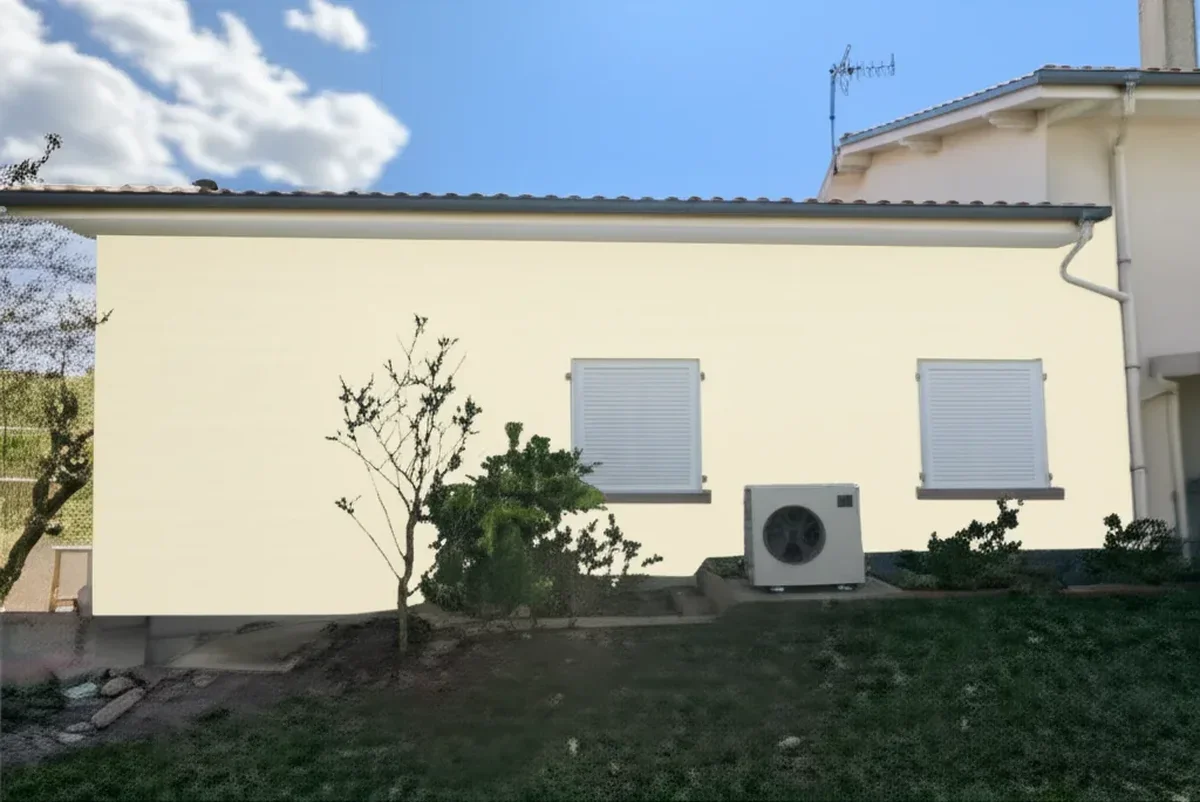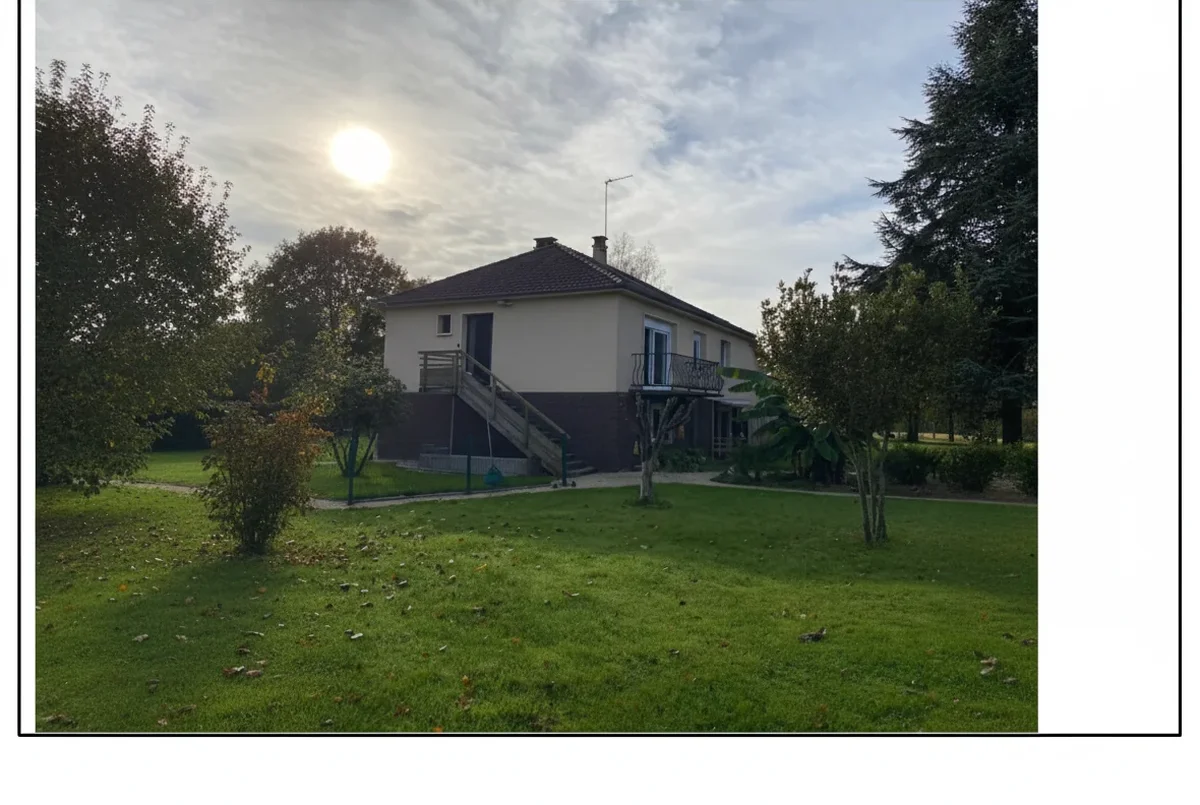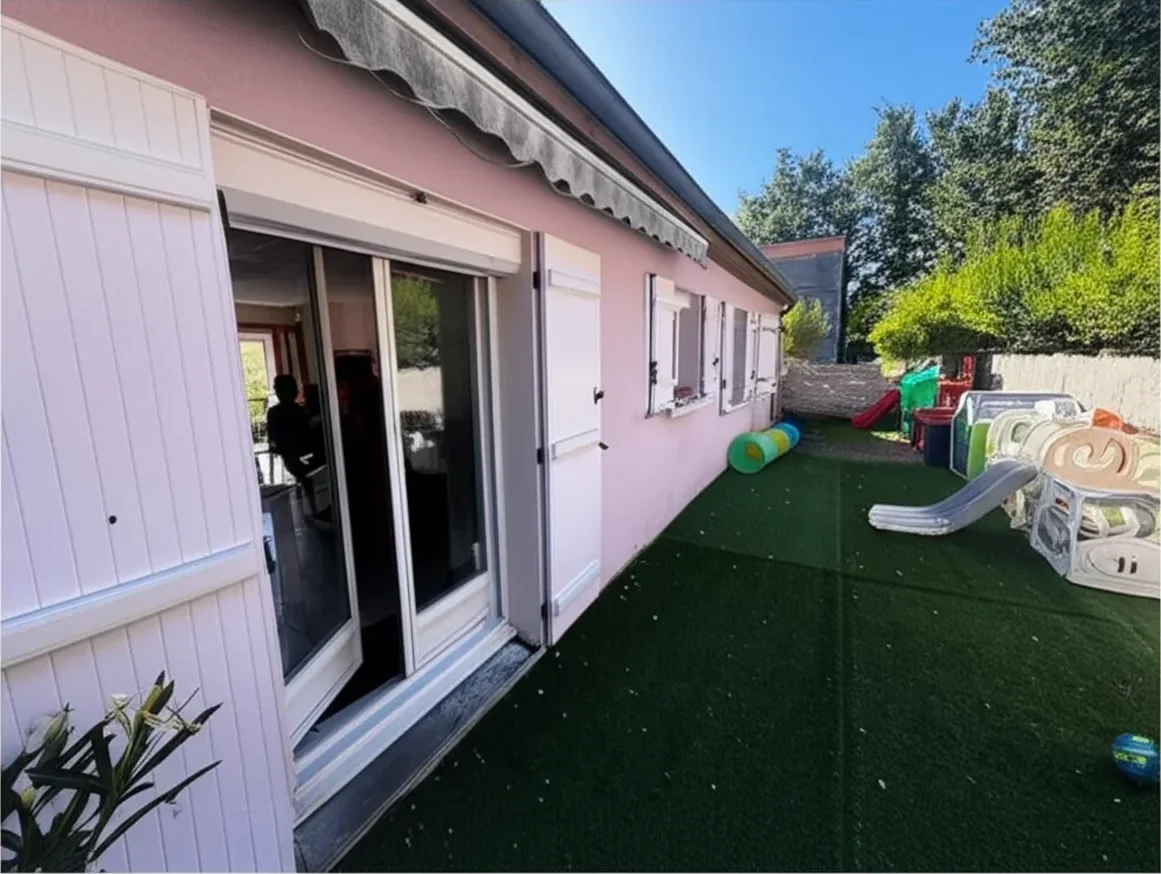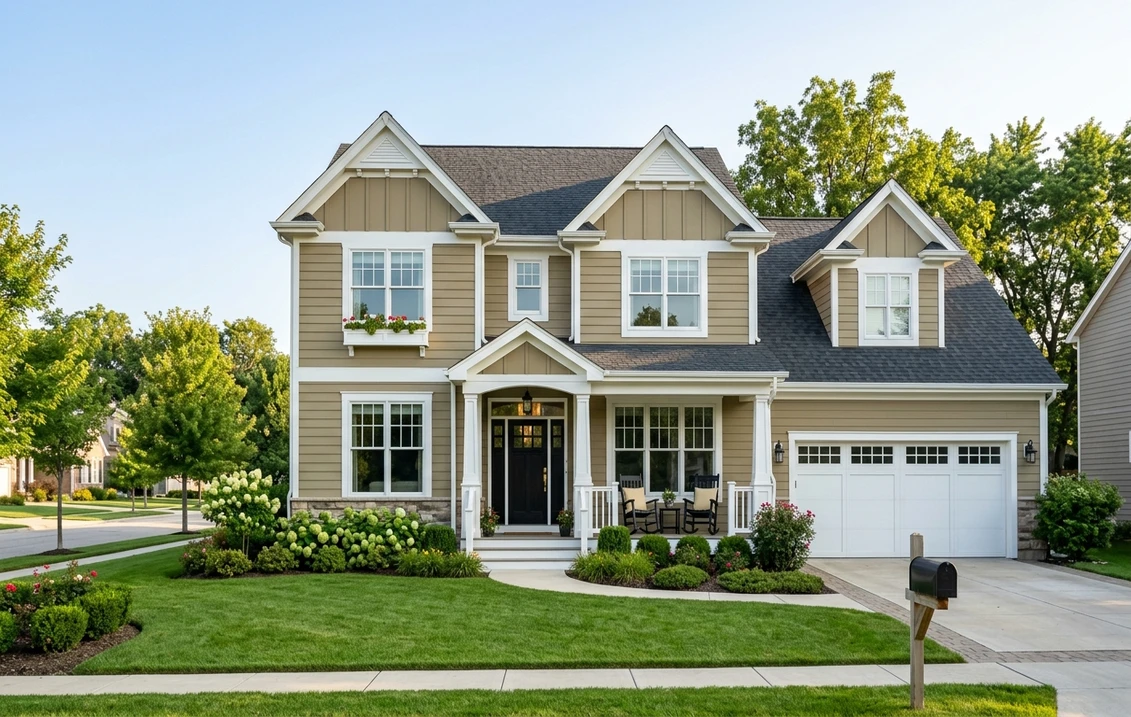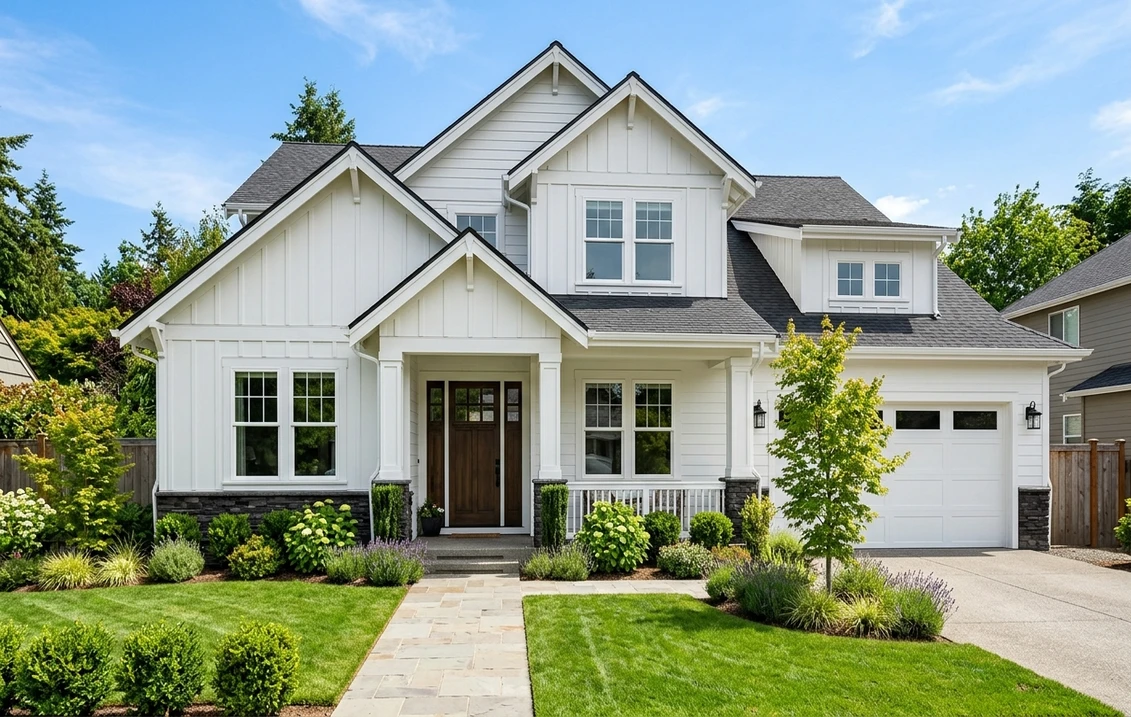

Verdict: Sherwin-Williams Pure White (SW 7005) is the cool, clean, slightly-cooler-than-neutral white that beats SW Alabaster on modern minimalist and contemporary facades. HEX #EDECE6, LRV 84, balanced undertones with a whisper of gray that keeps the wall reading crisp instead of creamy. Pick Pure White for white-on-white aesthetics, cool-light regions (Pacific Northwest, New England, Bay Area), Mid-Century Modern and Scandinavian-influenced builds. Pick Alabaster for warm climates, traditional, transitional and modern farmhouse.
FacadeColorizer is a free AI exterior paint visualizer. Sherwin-Williams Pure White (SW 7005) is the brand's cleanest, most balanced exterior white, with a Light Reflectance Value of 84 and a subtle cool-neutral base that holds its identity from Seattle drizzle to Phoenix glare. It is a natural white for contemporary and modern builds, and often the white a homeowner is actually looking for when Alabaster turns out too creamy on the wall. This guide walks through the SW 7005 spec sheet, how Pure White behaves on north, south, east and west orientations, the trim and door pairings that work (and the ones that fight the cool base), Pure White vs Alabaster as a clear undertone decision, and Pure White vs Benjamin Moore Decorator's White and BM Chantilly Lace OC-65 head-to-head. For the broader brand context, see our Sherwin-Williams exterior paint guide 2026.
Upload your facade photo and preview SW Pure White, Alabaster, BM Decorator's White and BM Chantilly Lace side by side in 30 seconds, free.
SW Pure White 7005: full specs
Pure White sits in the cool-neutral zone of the Sherwin-Williams white-paint matrix. It is not a bright builder white (those reach LRV 90+) and it is not a creamy off-white either; it is the in-between value most designers reach for when they want a crisp result without going icy. The published values:
- SW code: 7005.
- HEX approximation: #EDECE6.
- RGB approximation: 237, 236, 230.
- LRV (Light Reflectance Value): 84, two points brighter than Alabaster (LRV 82) and two points darker than Extra White (LRV 86).
- Hue family: cool-balanced neutral with a barely-there gray base. Reads as a true white in most light conditions.
- Cross-brand near-equivalents: Benjamin Moore Decorator's White (CC-20, LRV 84.61) sits within a single LRV point and shares the cool-neutral feel; BM Chantilly Lace (OC-65, LRV 90.04) is cleaner and brighter; Behr Polar Bear (75) is one to two LRV points warmer. Cross-check with the Benjamin Moore color visualizer and the Behr color visualizer.
- Finish recommendation: Satin for siding, Semi-Gloss for trim and shutters in Sherwin-Williams Emerald, Duration, SuperPaint or A-100 (see our Sherwin-Williams Emerald Exterior review).
That two-point LRV gap above Alabaster is the entire reason Pure White is the architect-preferred white on modern facades: the higher reflectance plus the cooler base together push the wall toward "crisp gallery white" rather than "soft farmhouse cream." On a south-facing modern ranch in Phoenix, the difference is visible from the curb.
When Pure White wins: 5 facade scenarios
Pure White is the right SW exterior white when the design intent is crispness, brightness or contrast. Five scenarios repeatedly favor it:
- Modern minimalist (flat roof, large windows, minimal trim): Pure White reads as a clean architectural plane. Alabaster's cream warmth fights the geometry; Pure White's cool-neutral base lets the volumes do the talking. See our contemporary urban paint colors guide.
- Contemporary urban (townhouse, mixed material, large-format siding): The cool base pairs with concrete, steel, dark window frames and natural wood without competing.
- White-on-white aesthetic (white siding, white trim, white shutters): Pure White lets you go monochromatic without the whole envelope reading dingy or yellow at golden hour..
- Cool-light regions: Coastal Pacific Northwest, Bay Area, New England, Upper Midwest, all the latitudes above 38 where indirect daylight skews 6,500 to 10,000 K. Alabaster's yellow base muddies in that light; Pure White holds.
- Scandinavian-influenced builds: Vertical board-and-batten, steep gables, dark Tricorn or Iron Ore accents. Pure White is the white the Scandi-modern aesthetic actually means.
When Alabaster wins instead
Pure White is not the default white for every project. Pick its sibling SW Alabaster (SW 7008) when the design language calls for warmth, softness or a more traditional read:
- Warmer climates (Southwest, Gulf, Southern California, Florida): Alabaster's yellow-cream base balances the strong warm daylight rather than fighting it. Pure White can read clinical under hot midday sun on stucco.
- Traditional Colonial, Cape Cod, Georgian, Greek Revival: The cream warmth honors the historical reference; a crisp Pure White can read anachronistic.
- Transitional (modern silhouette with traditional detailing): Alabaster softens contrast at shutters and crown trim while staying current.
- Modern farmhouse (board-and-batten, metal roof, shaker shutters): The aesthetic is built around cream warmth. Pure White on farmhouse can look more like a commercial building than a home; see our modern farmhouse exterior paint colors 2026 top 15.
- Trim accenting a colored siding: Alabaster forgives off-white sashes, dormers, soffits on greige or sage walls; Pure White can highlight any tonal inconsistency at the joinery.
If both Pure White and Alabaster feel too bright for a house in strong sun, a deeper off-white is the next option: Oyster White SW 7637 sits about 11 LRV points below Pure White, at 72.491, and softens the glare while still reading as white from the street. Our Oyster White SW 7637 exterior guide covers its trim pairings and the vinyl rule.
A useful rule of thumb: if the facade has more than three trim shadow lines, lean Alabaster. If the facade has fewer than three (modern, contemporary, minimalist), lean Pure White.
4-orientation behavior: how Pure White reads in real daylight
Every exterior white shifts with orientation. Because Pure White's base is cooler than Alabaster's, the shifts move in the opposite direction:
| Orientation | Daylight color temperature | Effect on Pure White |
|---|---|---|
| South-facing | 3,500 to 4,500 K (warm white) | Reads as clean true white. Warm daylight neutralizes the small gray base. |
| East-facing (morning) | 4,500 to 5,500 K (neutral) | Reads as bright, slightly cool white. Photographs well at golden hour. |
| West-facing (afternoon) | 3,000 to 4,000 K (very warm sunset) | Reads as soft warm white at golden hour, then snaps back to crisp white midday. |
| North-facing | 7,500 to 10,000 K (cool blue) | Reads as slightly cool, occasionally with a whisper of gray. Holds white identity better than Alabaster on the same wall. |
Try it on your house
- 1Your photoPhoto
- 2Your colorColor
- 3HD render in ~30 sHD render in ~30 s
Your photo is used only to create your preview. JPG, PNG, HEIC (iPhone)
Sources: Sherwin-Williams SW 7005 technical data sheet 2026; American Institute of Architects 2024 Daylight Reference.
The takeaway for cool-light regions: Pure White is the safer pick. The cooler base means cool light doesn't "subtract warmth" the way it does with Alabaster, so the wall keeps reading white rather than greige or mauve. For the full undertone explanation on the Alabaster side, see our SW Alabaster north-facing undertones guide.
Trim pairings that work with Pure White
The architectural appeal of Pure White on modern facades is largely about contrast. Pair it with deep saturated trim and the whole envelope sharpens. Four SW dark accents that pair well:
- Tricorn Black (SW 6258, LRV 3): The black-on-white modern classic. Use on window frames, fascia, and front door for a graphic Scandinavian-modern result. The 81-point LRV gap is the sharpest contrast in the SW exterior palette. See our white house with black trim guide.
- Iron Ore (SW 7069, LRV 6): A near-black with a soft warm base. Slightly less austere than Tricorn, perfect on board-and-batten Scandi farmhouses and contemporary craftsman builds.
- Naval (SW 6244, LRV 4): Deep navy. The 80-point LRV gap reads dramatic but coastal-coded; the navy adds personality without breaking the Pure White cool palette.
- Wrought Iron (SW 7069's slightly cooler cousin, SW 7069 family, LRV 6): Wrought Iron (SW 7069 is sometimes confused with Tricorn) gives a slightly cooler gray-black that pairs especially well with Pure White's cool base on Pacific Northwest contemporaries. For the full pairing matrix see our Sherwin-Williams exterior color combinations 2026.
Avoid pairing Pure White with very warm browns or beiges on trim (SW Latte, SW Caramel, SW Dover White) on modern facades; the warm-cool collision tends to make Pure White read clinical and the warm trim read muddy. If you want a warm trim, switch the field color to Alabaster.
Door colors compatible with Pure White siding
A front door is the lowest-risk place to add saturation on a Pure White facade. The cool-neutral base lets Pure White play nicely with both jewel tones and earthy mid-darks. Good picks:
- SW Naval (6244): Coastal-modern classic, especially on Cape Cod-modern hybrids and Pacific Northwest contemporaries.
- SW Tricorn Black (6258): Graphic, gallery-like, the standard Scandi-modern door.
- SW Iron Ore (7069): Warmer than Tricorn, reads near-black but softer in golden hour.
- SW Rookwood Red (2802) or SW Cherokee Red (2113): Adds a controlled jolt of saturation without breaking the cool palette.
- SW Evergreen Fog (9130): Soft sage-green, the surprise contender, especially on contemporary craftsman with natural-wood accents.
- SW Studio Mauve (0062) or SW Roycroft Vellum (2833): Earthy mid-darks for buyers who want warmth without abandoning the cool palette.
Pure White also frames a dark blue body. Around Waterloo SW 9141 (official LRV 12.972) it sits about 71 LRV points higher, and our Waterloo SW 9141 exterior guide compares it with the other trim whites for that blue.
On a light gray body the gap is much smaller. On the Rocks SW 7671 (official LRV 61.609) shares Pure White's color strip, number 255, and sits about 22 LRV points below it; our guide to On the Rocks SW 7671 on a house explains how to keep that soft trim contrast readable from the street.
For the broader popular-SW-exterior context, see our popular Sherwin-Williams exterior paint colors 2026.
Style fit: where Pure White belongs
Pure White is not a universal exterior white. It is the right call on a tight subset of architectural styles where the design intent is crispness, geometry, or a gallery-clean read:
- Modern (flat roof, cantilevers, large glass): Pure White is the default architect-spec white.
- Contemporary urban (townhouse, mixed-material facade, dark window frames): Pure White holds against concrete, steel and natural wood without yellowing them.
- Mid-Century Modern (low-pitched roof, broad eaves, Phoenix ranch, Eichler-style): Pure White is the period-appropriate white when the brief is "restore, don't farmhouse-ify."
- Scandinavian-influenced (vertical board-and-batten, steep gable, dark trim): Pure White is the white the look intends.
- Contemporary coastal (Pacific Northwest, Maine modern, Bay Area): Pure White holds well in cool indirect light.
For modern silhouettes that want a slightly warmer feel, an alternative is SW Snowbound (SW 7004, LRV 83). Snowbound reads warmer than Pure White but cooler than Alabaster; it is a useful middle-ground for buyers who want crispness without going clinical.
Pure White vs BM Decorator's White vs BM Chantilly Lace OC-65
The three whites architects most often shortlist against Pure White all sit in the cool-neutral lane, but they read distinctly on a real facade. Here is how they compare on a south-facing Mid-Century Modern ranch wall in Phoenix August light:
| White | LRV | Undertone | Phoenix south-facing read |
|---|---|---|---|
| SW Pure White 7005 | 84 | Cool-neutral, whisper of gray | Clean true white, holds at midday glare |
| SW Alabaster 7008 | 82 | Warm yellow-cream | Soft buttery cream, reads warm and friendly |
| BM Decorator's White CC-20 | 84.6 | Cool-neutral, faint blue base | Slightly icier than Pure White at midday, near-twin in shade |
| BM Chantilly Lace OC-65 | 90.04 | Clean pure white, near-no undertone | Brighter, gallery-bright. Reads almost too bright at midday on south walls |
Sources: Sherwin-Williams technical data sheets (SW 7005, SW 7008); Benjamin Moore technical data sheets (CC-20, OC-65).
The clearest takeaway: Pure White and BM Decorator's White are functionally interchangeable in a 1-pt LRV window; pick whichever brand your contractor stocks. BM Chantilly Lace is for buyers who want maximum brightness; it can read too pure on a south-facing Phoenix wall and lose nuance. For the full brand showdown, see our Sherwin-Williams vs Benjamin Moore exterior comparison. For the broader white-paint context, see our white exterior paint shades 2026.
Pure White vs Alabaster: which white for which house
As a rule of thumb, Pure White rewards modern silhouettes; Alabaster rewards traditional and farmhouse silhouettes. The architecture decides the white, not the other way around. For a deeper cross-cluster compare, see our forward-looking SW Alabaster exterior complete guide.
Where to buy SW Pure White (and how to test it first)
SW Pure White is stocked in every Sherwin-Williams company store across the United States in Emerald, Duration, SuperPaint and A-100 lines, and is also available in stain-resistant interior versions (SuperPaint Interior, Emerald Interior, Cashmere). For exterior projects we recommend SuperPaint Satin or Emerald Satin; for trim we recommend Emerald Semi-Gloss or Duration Semi-Gloss. Authoritative sources to cross-check before purchase:
- The official Sherwin-Williams Pure White SW 7005 product page for current pricing, finishes and coordinated palettes.
- Consumer Reports paint testing for the latest hide-and-fade durability rankings of SW Emerald and Duration in white.
- HGTV exterior color roundups for editorial real-home photography of Pure White on modern and Scandi-modern facades.
The fastest way to avoid a $1,200 repaint regret is to preview Pure White on your actual house photo before buying twelve gallons of Emerald. Upload a daylight photo of your facade into FacadeColorizer, apply Pure White, then toggle Alabaster, Snowbound, BM Decorator's White and BM Chantilly Lace side-by-side in 30 seconds.
Compare SW Pure White, Alabaster, Snowbound, BM Decorator's White and BM Chantilly Lace on your actual house. 30 seconds, no signup.
Frequently asked questions
What is the LRV of SW Pure White?
SW Pure White (7005) has a Light Reflectance Value of 84 on the official Sherwin-Williams technical data sheet. That places it two LRV points brighter than SW Alabaster (LRV 82) and two points darker than SW Extra White (LRV 86). LRV 84 is bright enough to read as a clean true white in most light, soft enough to avoid the glare of a builder white at LRV 90+.
Is SW Pure White warm or cool?
Pure White is a cool-neutral white. The HEX approximation is #EDECE6 and the base carries a whisper of gray rather than yellow or cream. It reads as a true balanced white in most daylight, with a slight cool lean on north-facing walls and a clean crispness on south-facing walls. It is the cooler counterpart to SW Alabaster, which carries a warm yellow-cream base.
Pure White vs Alabaster: which should I pick?
Pure White (cool-neutral, LRV 84) wins on modern, contemporary, Mid-Century Modern and Scandinavian-influenced facades, and in cool-light regions (Pacific Northwest, New England, Bay Area). Alabaster (warm cream, LRV 82) wins on traditional, transitional, modern farmhouse and Colonial homes, and in warm climates (Southwest, Florida, Southern California). The architecture decides the white: more than three trim shadow lines, lean Alabaster; fewer than three, lean Pure White.
Pure White vs BM Decorator's White: are they the same?
They are near-twins. SW Pure White (LRV 84) and BM Decorator's White CC-20 (LRV 84.61) sit within a single LRV point and share a cool-neutral base. On a Phoenix MCM ranch, the two are close to interchangeable for most buyers. Pick whichever brand your contractor stocks closer to the job, or use SW Pure White in Emerald for humid-climate longevity.
Is Pure White too cold for a south-facing exterior?
Not in most cases. On a south-facing wall the warm daylight (3,500 to 4,500 K) neutralizes Pure White's cool base, so the wall reads as a clean true white rather than icy. Pure White can read clinical on south-facing stucco in extreme heat regions (Phoenix midday August), where Alabaster's warmth balances the strong daylight better. For Phoenix, Las Vegas or Tucson stucco, sample both before committing.
What trim color goes with SW Pure White on a modern facade?
The four highest-performing SW dark trims with Pure White siding are Tricorn Black (SW 6258, LRV 3) for graphic Scandi-modern contrast, Iron Ore (SW 7069, LRV 6) for a softer near-black, Naval (SW 6244, LRV 4) for coastal modern, and Wrought Iron (SW 7069 family) for cooler Pacific Northwest contemporaries. Avoid warm browns and beiges (Latte, Caramel, Dover White) on Pure White facades; the cool-warm mismatch makes Pure White read clinical.
Does Pure White work on a modern farmhouse?
Usually no. Modern farmhouse design language is built around cream warmth (board-and-batten, metal roof, shaker shutters, natural wood), and Pure White's cool base tends to make the silhouette read more like a commercial building than a home. For modern farmhouse exteriors, lean Alabaster, Greek Villa or Snowbound rather than Pure White.
Can I preview SW Pure White on my house before buying paint?
Yes. FacadeColorizer lets you upload a photo of your home and apply SW Pure White (and any other Sherwin-Williams color) to your siding, trim, fascia, soffit and front door in about 30 seconds. It is completely free, no signup required, and lets you compare Pure White against Alabaster, Snowbound, BM Decorator's White and BM Chantilly Lace side-by-side.
Preview SW Pure White, Alabaster and the BM equivalents on your real house in 30 seconds.
Disclaimer: SHERWIN-WILLIAMS, PURE WHITE, ALABASTER, SNOWBOUND, EXTRA WHITE, EMERALD, DURATION, SUPERPAINT, A-100, TRICORN BLACK, IRON ORE, NAVAL, WROUGHT IRON, EVERGREEN FOG and COLORSNAP are registered trademarks of The Sherwin-Williams Company. BENJAMIN MOORE, DECORATOR'S WHITE, CHANTILLY LACE, AURA and COLOR LOCK are registered trademarks of Benjamin Moore & Co. BEHR, MARQUEE and POLAR BEAR are registered trademarks of Behr Process LLC. FacadeColorizer is an independent paint visualization service and is not affiliated with, endorsed by, or sponsored by these companies. All product names, trademarks, color codes, prices and specifications are used for identification, comparison and editorial commentary purposes only under nominative fair use (Lanham Act, 15 U.S.C. §1125). Color reproduction on screens approximates the manufacturer's chip; always confirm with a manufacturer sample before purchase. Sources: Sherwin-Williams SW 7005 Pure White technical data sheet 2026, Sherwin-Williams SW 7008 Alabaster technical data sheet 2026, Benjamin Moore CC-20 Decorator's White technical data sheet 2026, Benjamin Moore OC-65 Chantilly Lace technical data sheet 2026, American Institute of Architects 2024 Daylight Reference.
Trademarks mentioned (Sherwin-Williams, Benjamin Moore, Behr, Caparol, Brillux, Sto, Alpina, Valspar, PPG, Glidden, Dulux, Crown Trade, Sandtex, Farrow & Ball, Johnstone's, Leyland) are property of their respective owners. FacadeColorizer is independent and not affiliated with any of them. Nominative fair use under Lanham Act §1125.