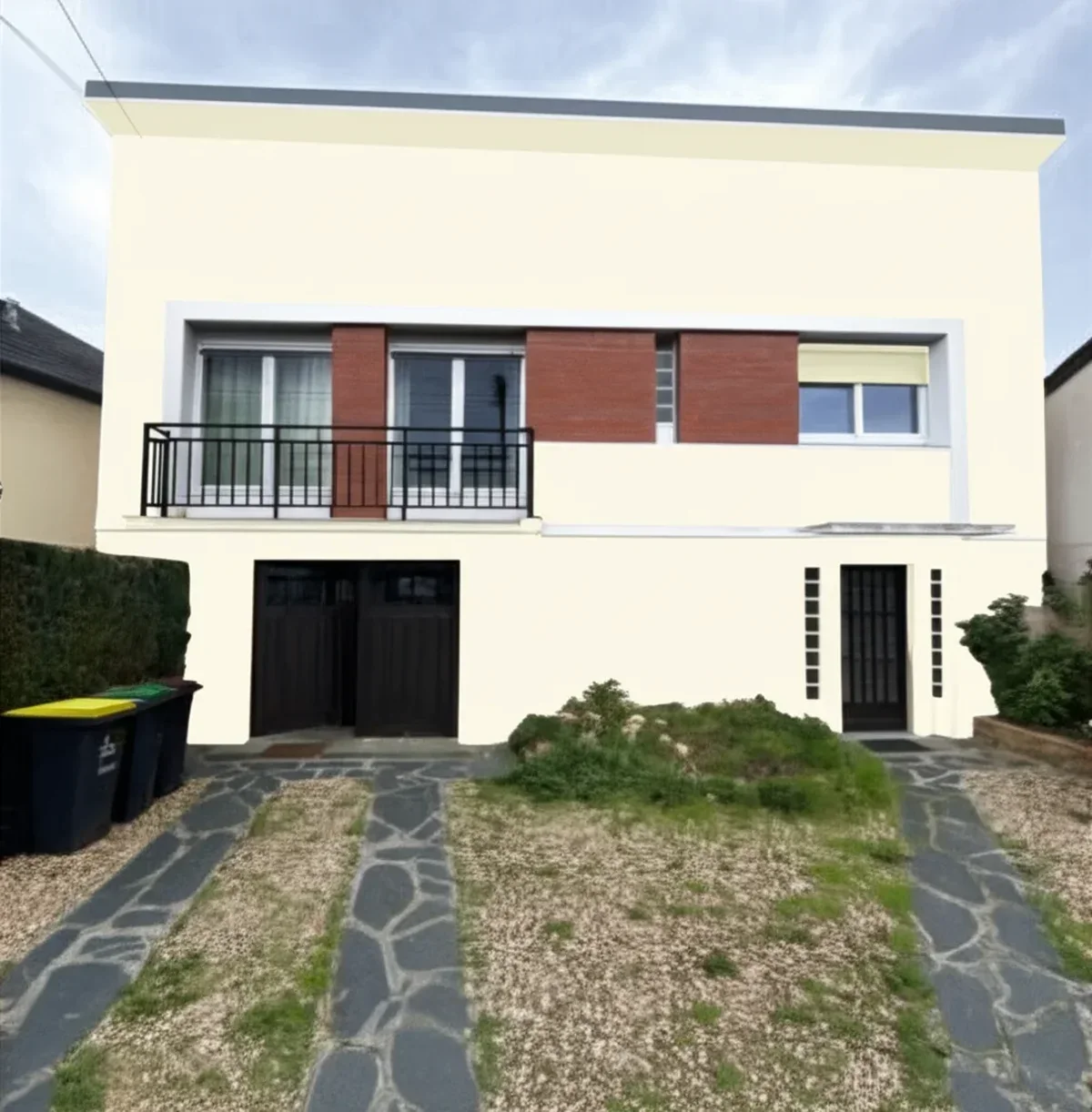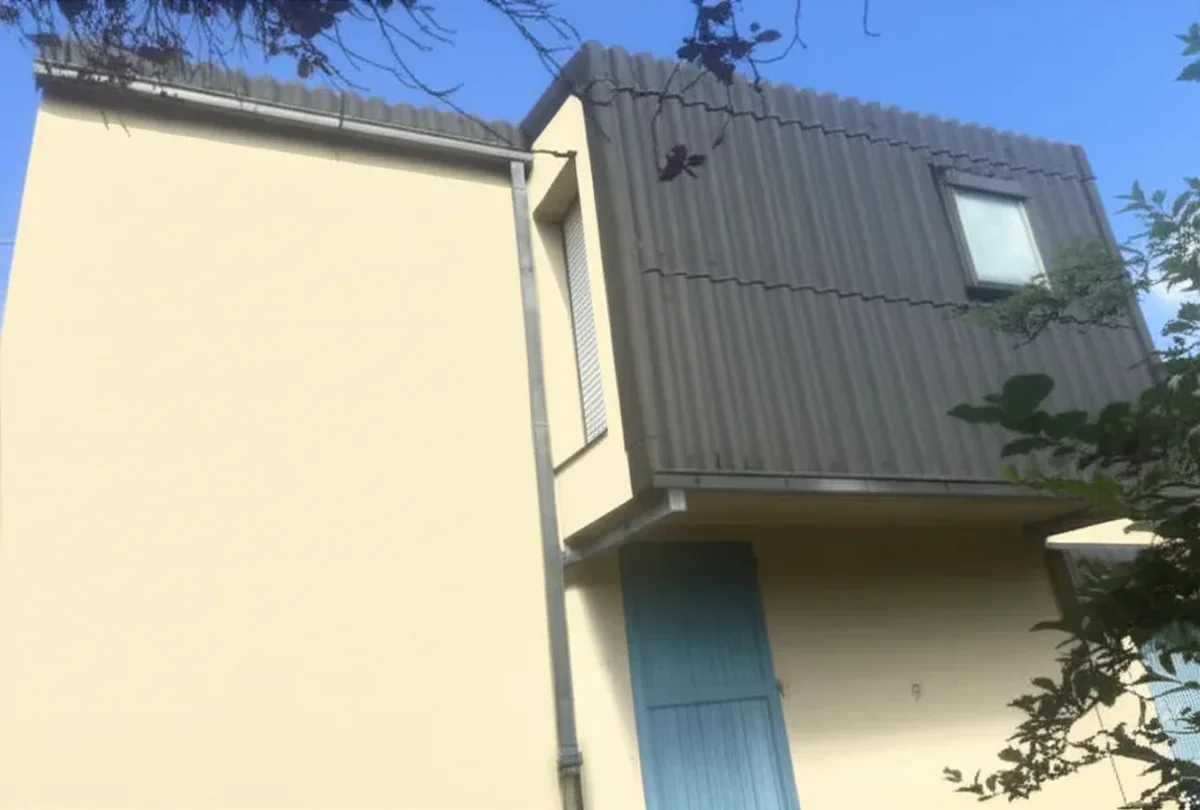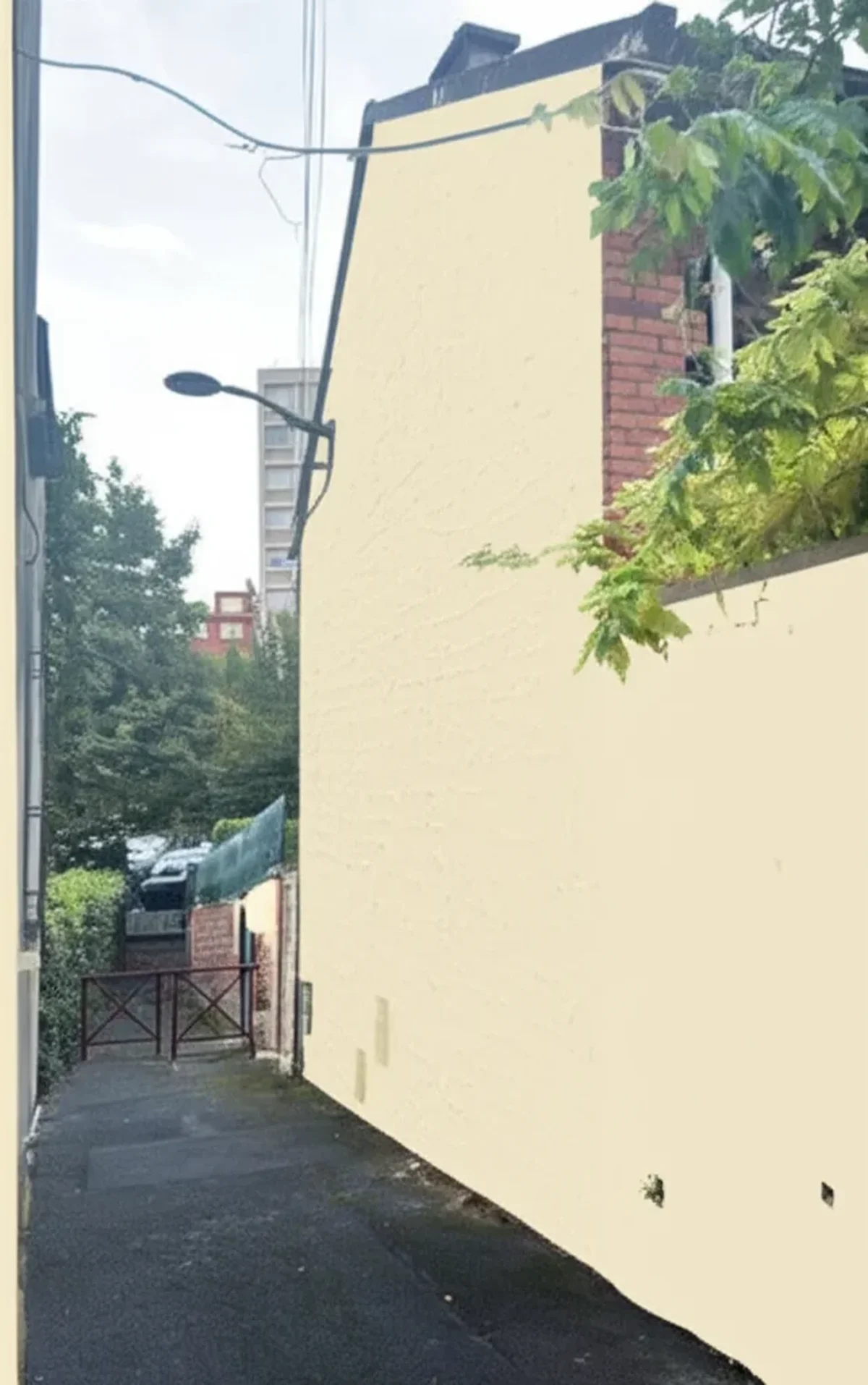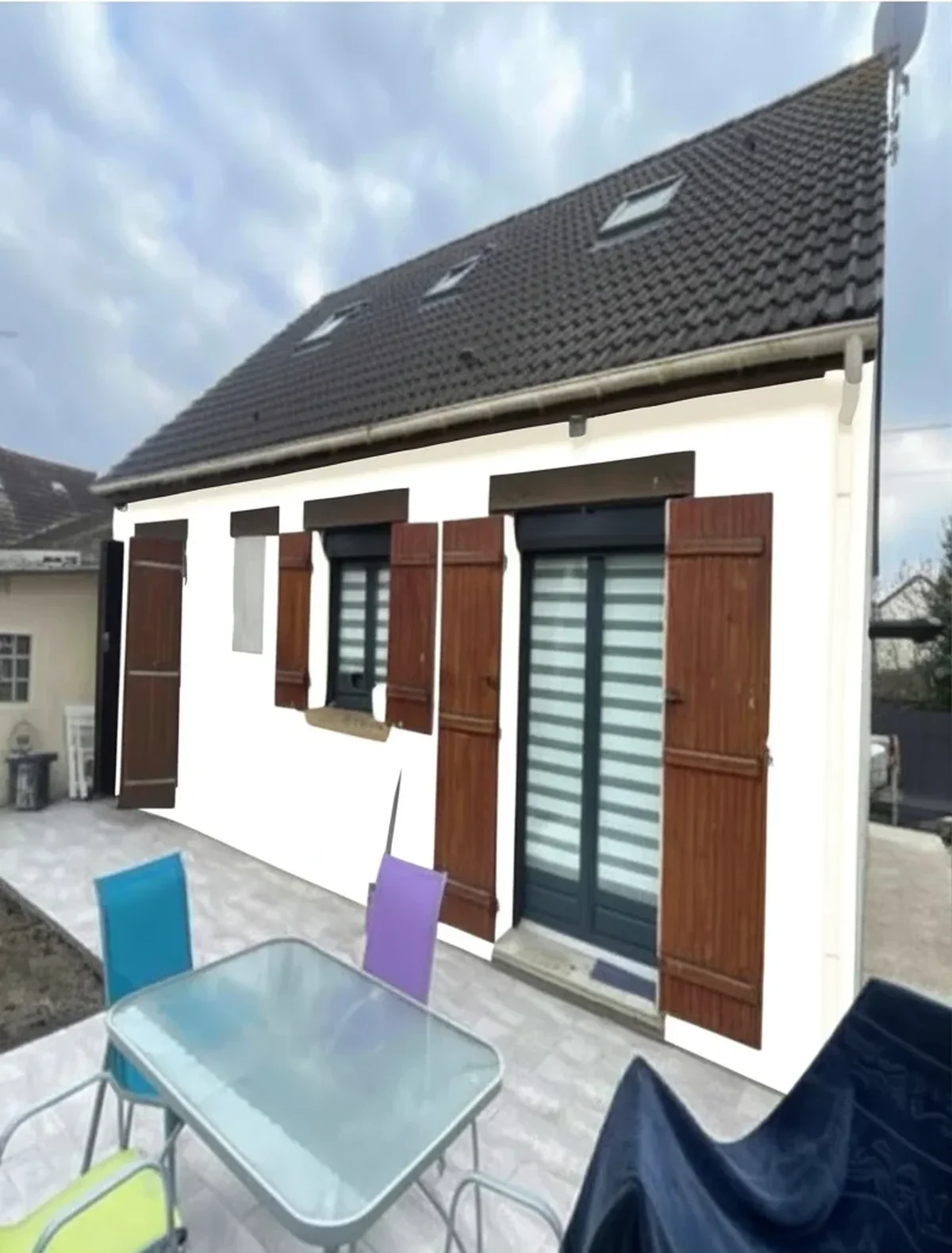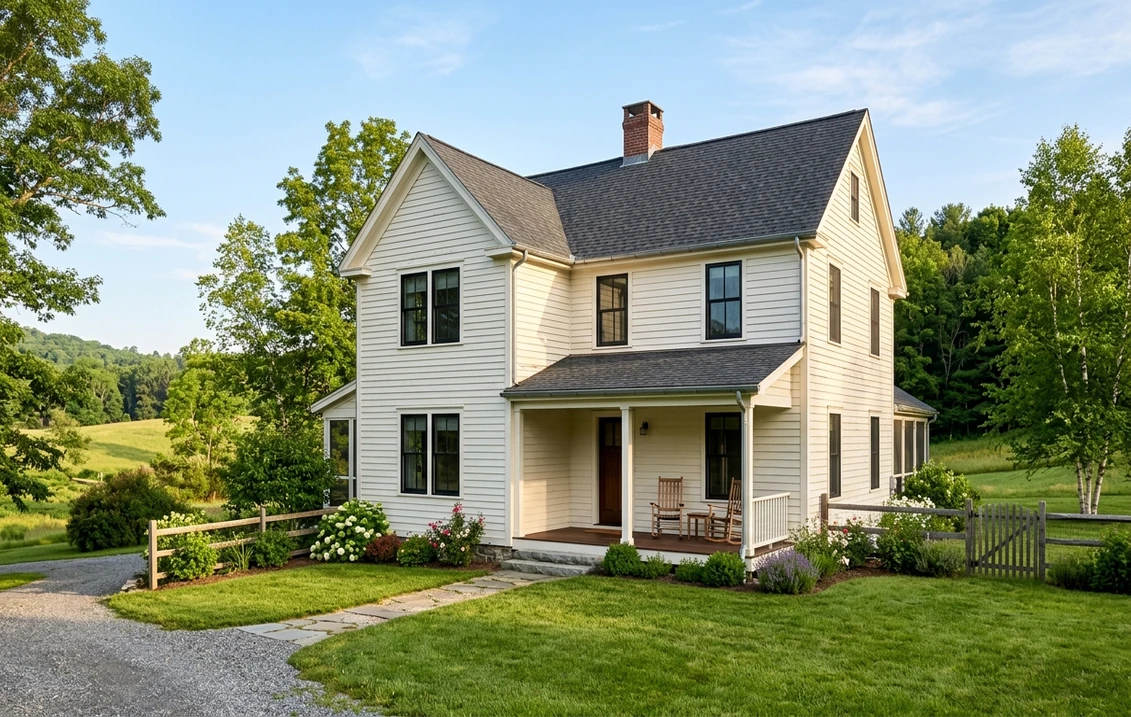
Try it on your house

White is still the exterior color Americans buy most, and in 2026 it is also the one that pairs best with the year's trend colors, because every Color of the Year this season is a deep or earthy shade that wants a white to sit against. The catch is that "white" is a family of a few hundred paints, and the differences between them, undertone and light reflectance, decide whether a house reads crisp, creamy, cold or dingy from the street. This guide uses the figures the manufacturers publish on their own color pages, the Light Reflectance Value of each shade, to rank the ten whites that work on an exterior, explains what the number does on a wall, pairs them with the 2026 trim and door colors, and shows what an HOA color book expects of a white.
Why white is the smartest exterior color in 2026
Three reasons, none of them about fashion. First, heat: a white wall reflects most of the light that hits it and stays cooler than any colored wall, which matters for the siding, for the paint film and for the attic behind it; the darks that are trending this year are the opposite case. Second, resale and approval: white and off-white are on the approved list of almost every homeowners' association, and a color book such as the North Farm HOA's lists "White (PM-4)" and "Cream (2159-60)" among its previously approved siding and trim colors (North Farm HOA, color book guidelines). Third, the 2026 palette itself: Sherwin-Williams' Color of the Year is Universal Khaki SW 6150, "an essential, mid-tone neutral", Benjamin Moore's is Silhouette AF-655, an espresso-charcoal, Behr's is Hidden Gem N430-6A, "a smoky jade", and Valspar's is Warm Eucalyptus (coverage of the 2026 announcements). Every one of them is a trim, door or accent color on a white house.
Understanding LRV: the number that matters most
Light Reflectance Value measures the share of visible light a color reflects, from 0 (absolute black) to 100 (pure white). The manufacturers publish it on each color page, and for whites it is the figure to read before the name. Above about 85 a white reads bright and slightly stark in full sun, and shows every shadow line of lap siding; between 80 and 85 it reads white from the street while softening the glare; between 74 and 80 it is an off-white that looks white on a shaded north wall and cream on a south wall. The second variable is undertone, which the LRV does not capture: a white with a yellow base goes creamy in sun, a white with a gray base goes cold under an overcast sky, and a white with a green or blue trace can look clinical next to warm brick. Both have to be judged on the house, in the actual light, which is why the shades below are given with their official LRVs and a note on where they lean.
The 10 best white exterior paint shades for 2026
| Shade | LRV (manufacturer's page) | Where it leans | Best use on an exterior |
|---|---|---|---|
| Chantilly Lace OC-65 (Benjamin Moore) | 90.04 | Clean, near-neutral; "fresh cotton and pure silk" | Trim on any body; modern bodies with black windows |
| Simply White OC-117 (Benjamin Moore) | 89.52 | "The slightest hint of warmth" | Bright bodies and trim where a pure white looks too blue |
| Extra White SW 7006 | 85.861 | Cool, bright | Trim and windows against a dark body |
| Westhighland White SW 7566 | 85.807 | Soft warm white | Whole-house white on farmhouse and cottage styles |
| Greek Villa SW 7551 | 84.223 | Warm, creamy | Stucco and Mediterranean bodies in strong sun |
| Pure White SW 7005 | 83.957 | Neutral, very slight warmth | The safe trim white; body on contemporary houses |
| White Dove OC-17 (Benjamin Moore) | 83.16 | "Clean and classic", soft | Trim and siding on traditional houses |
| Snowbound SW 7004 | 82.771 | Slightly gray, cool | Bodies in bright southern light where cream goes yellow |
| Alabaster SW 7008 | 82.215 | Warm, creamy, never yellow | The modern farmhouse body white |
| Swiss Coffee OC-45 (Benjamin Moore) | 81.91 | "Just the right amount of warmth" | Off-white bodies with wood and stone |
Try it on your house
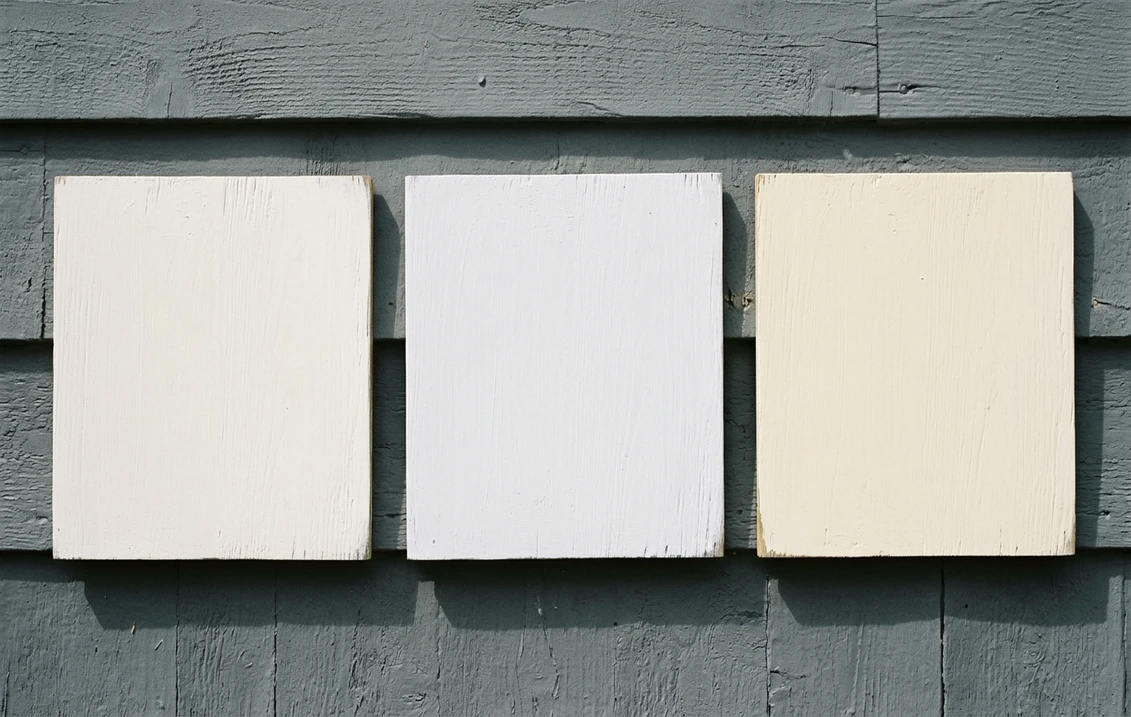
No photo? Try a sample
Two readings of the table. The spread between the brightest and the softest is only eight LRV points, which is why a chip in the store tells you almost nothing: the undertone column is the one that changes the house. And the two best-known farmhouse whites are at the bottom of the range, not the top: Alabaster at 82.215 and Swiss Coffee at 81.91 look white because of what sits next to them, black windows and a dark roof, not because they are the brightest paints in the can. A notch below them, Shoji White SW 7042 (74.345) is the off-white that reads white on a shaded elevation and greige in sun, and the trim of choice for the dark bronze and olive bodies of 2026.
Matching white paint to your home style
Modern farmhouse is built on a warm white body (Alabaster, Westhighland White, Swiss Coffee), black or near-black windows and a metal roof; a bright white like Chantilly Lace makes it look like a new-build rather than a farmhouse. Colonial and Cape Cod houses take the classic whites, Pure White, White Dove, Simply White, with black or dark green shutters and a red, navy or black door. Craftsman and bungalow exteriors are rarely all-white; use the creams (Greek Villa, Swiss Coffee) on the body with a darker trim, or keep white for the trim against an earthy body. Mediterranean and stucco houses in the Sun Belt want the warm, slightly creamy whites (Greek Villa, Alabaster) on the stucco, because a cool white under hard sun reads blue and chalky. Contemporary houses take the brightest, cleanest whites (Chantilly Lace, Extra White) as a flat body with black steel and natural wood; here the stark reading is the point. For the regional and coastal variants, our beach house exterior colors guide takes the whites to the shore.
Trim, shutters and accent pairings that work in 2026
A white house is a background, and 2026's Colors of the Year are the foreground. Universal Khaki SW 6150 on shutters, a garage door or a porch ceiling warms a white body without contrast; it is the pairing for a cream white such as Greek Villa or Westhighland White. Silhouette AF-655, Benjamin Moore's espresso-charcoal, is the front door and window color for a bright white body (Chantilly Lace, Pure White) and the modern replacement for plain black. Hidden Gem N430-6A, Behr's smoky jade, and Valspar's Warm Eucalyptus are the shutter and door colors that keep a white Colonial from looking like every other white Colonial. The perennial pairings still hold: a black door and black windows for maximum contrast; a navy door with white and brass; charcoal gutters and downspouts rather than white, which disappear instead of striping the facade. Our exterior trim colors guide works through the trim side, and our Universal Khaki exterior guide shows the 2026 color on a house.
White and the HOA color book
If you live in an association, white is usually the easiest approval and still needs one. HOA color books specify schemes by paint number for body, trim and accent, and most include several whites and creams: the North Farm HOA guidelines, for example, list "White (PM-4), Cream (2159-60), Platinum Gray (PM-7), Taupe (2110-10), or Wilmington Tan (HC-34)" as previously approved siding and trim colors and ask residents to submit the chosen palette "specifying trim, siding, and accent color locations on the home". The practical rule: pick the white from the book (or its closest match in the brand you are using, with a sample), submit it with the trim and accent colors as a scheme, and keep the approval letter. How to find and read your community's book is in our HOA-approved exterior colors guide.
Best white for wood siding, trim and fences
On wood, the white is only half the decision; the film is the other half. Wood siding moves with the seasons and shows chalking and mildew sooner on a bright white than on a cream, so a 100 percent acrylic in a mid or top line, in satin for the body and semi-gloss for trim, is the standard spec, and the brighter the white, the more a premium line's mildew resistance earns its price on a shaded north wall. Fences and pickets take the same white as the trim in a lower sheen; a fence in the body white looks like part of the house, a fence in brilliant white looks like plastic. Cedar and redwood bleed tannins through a white topcoat unless a stain-blocking primer goes on first; that is the single most common cause of the yellow streaks on a new white house. Our exterior painting cost guide covers the prep that a white finish depends on.
Sheen, product line and how a white ages
A white forgives more than any dark in one respect and less in another. It fades least, because there is almost no pigment to break down, so a mid-tier acrylic carries it for years where a charcoal would need the top line. It also shows dirt, mildew and chalking most, because every grey streak reads against it, which is why the product question on a white house is dirt and mildew resistance rather than fade. On the body, satin is the usual compromise: flat hides siding imperfections but holds dirt, semi-gloss sheds rain and grime but glares and shows every seam. Trim one step glossier than the body; doors in gloss. Expect the north wall of a white house to green first and the south wall to chalk first; a wash every couple of years keeps a white looking painted rather than old, and a white chosen in the 82 to 85 range weathers more gracefully than a brilliant one because the first dust does not read as a change of colour.
Coverage is the other practical point. White over white covers in two coats; white over a mid-tone or a dark body needs a primer plus two finish coats, and a brilliant white (LRV above 88) over a tan or gray may need a third to stop the old color grinning through on the sunny side. Buy the finish in one batch, box the gallons, and keep a quart: a white touch-up from a different batch is as visible as a patch on a navy.
Preview your home in white before you commit
Three whites that look identical on a chip look like three different houses at full scale, and the only way to see the difference is on your own elevation in your own light. Photograph the front of the house in flat daylight, apply a bright white, a soft white and a cream to the body on the photo, and compare them against the roof, the stone and the windows; then paint two-foot sample boards of the finalists and move them from the north wall in the morning to the west wall in the late afternoon. The white that still looks white at 5 p.m. on the sunny side is the one.
Sources and references
- Sherwin-Williams color pages with official LRV: Extra White SW 7006 (85.861), Westhighland White SW 7566 (85.807), Greek Villa SW 7551 (84.223), Pure White SW 7005 (83.957), Snowbound SW 7004 (82.771), Alabaster SW 7008 (82.215), Shoji White SW 7042 (74.345); Color of the Year 2026.
- Benjamin Moore color pages with official LRV: Chantilly Lace OC-65 (90.04), Simply White OC-117 (89.52), White Dove OC-17 (83.16), Swiss Coffee OC-45 (81.91).
- FOX6, 2026 Color of the Year revealed by leading paint brands (24 September 2025): Behr Hidden Gem N430-6A, Valspar Warm Eucalyptus, Sherwin-Williams Universal Khaki.
- North Farm Homeowners Association, Color Book Guidelines (PDF): previously approved whites and creams, submission by scheme.
Frequently asked questions
What is the best white exterior paint color?
What LRV should a white exterior paint have?
Which trim and door colors go with a white house in 2026?
Do HOAs approve white exterior paint?
Trademarks mentioned (Sherwin-Williams, Benjamin Moore, Behr, Caparol, Brillux, Sto, Alpina, Valspar, PPG, Glidden, Dulux, Crown Trade, Sandtex, Farrow & Ball, Johnstone's, Leyland) are property of their respective owners. FacadeColorizer is independent and not affiliated with any of them. Nominative fair use under Lanham Act §1125.